
Recently, I was fortunate to serve as a chaperone for 24 youths who traveled to Ireland and learn more about the culture and agriculture. Agriculture plays a significant role in the economies and cultures of both Ireland and Nebraska, though the two regions differ greatly in terms of climate, farming practices, and agricultural outputs. This article will explore these differences and similarities, shedding light on the unique agricultural landscapes of each region.
First, let’s compare the climates. Nebraska has hot summers and cold winters with varying rainfall amounts from east to west. Ireland has a temperate maritime climate characterized by mild winters, cool summers, and consistent rainfall throughout the year. This contributes to why Ireland is called “the green island” as it is known as the land of many shades of green. Its climate supports lush, green landscapes and is ideal for pasture-based farming.

Secondly, Ireland’s agriculture relies a lot on pasture-based farming. With grass growing abundantly, it is ideal for dairy, sheep, and beef production. Most farms in Ireland are small family-owned with many farmers having second, off-the-farm jobs. Ireland has 127,000 active farmers and 64% of land is suitable for agriculture. In comparison, data from the 2022 Census of Agriculture shows there are 80,283 producers and Nebraska’s farms and ranches utilize 89% of the state’s total land area. The average farm in Ireland is 82.5 acres, while the average Nebraska farm consists of 991 acres. In Ireland, 90% of Irish beef, sheep meat and dairy produce are exported yearly. Nebraska’s top five ag exports in 2022 were soybeans and soybean products, corn, beef, ethanol and pork.
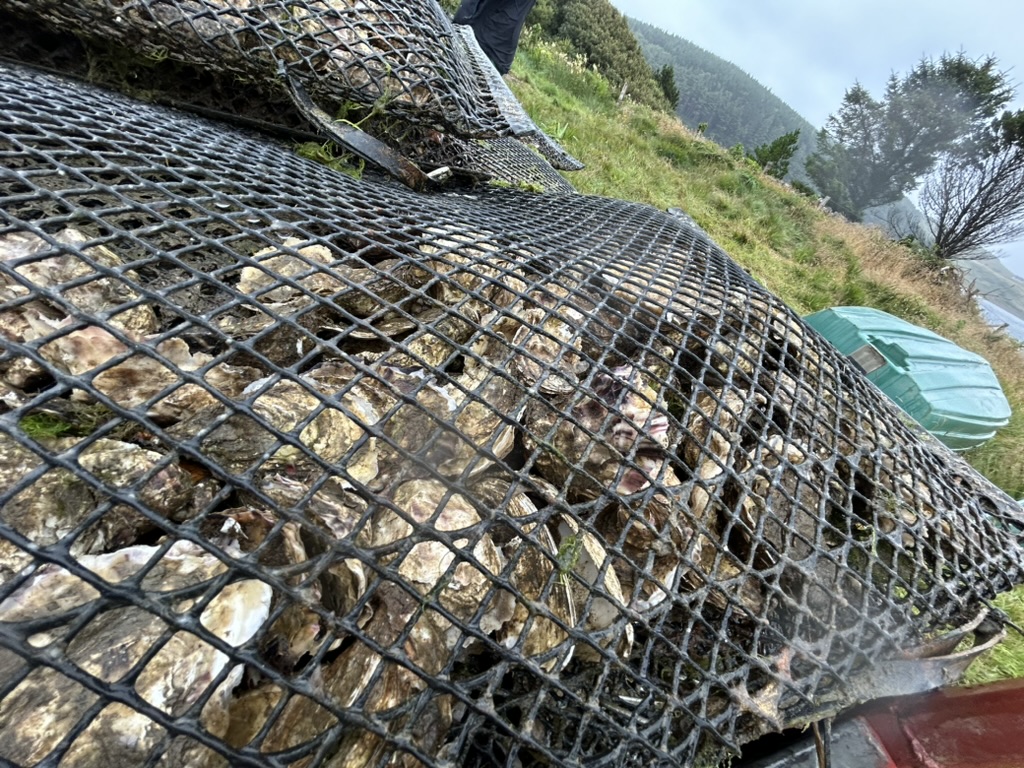
Agriculture is a vital part of Ireland’s economy contributing to exports and rural employment and agriculture is the backbone of Nebraska’s economy as 1 in 4 jobs in Nebraska are related to agriculture. Some of the places in Ireland our group visited were the National Stud Farm, Highbanks Organic Orchards, Wheelock Strawberry Farm, Glengowla Mine & sheepdog herding farm, and a local dairy, beef, vegetable, and oyster farm.
The dairy farm we visited milked 75 head of cows with 1 robotic milker. All Holstein Friesian cows were strictly pasture-fed with a supplement when they were milked. He utilized a pasture rotation and reseeded the pasture about every 5 years with a mix of grasses. During the winter months, cattle are fed mostly haylage with a little bit of corn silage as available. Every farmer is only allowed a certain number of cattle based on acres owned which was a bit of a challenge for him. He purchases replacement heifers and breeds his cows with a beef breed such as Angus or Hereford, selling the calves.
Visiting the beef farm was very interesting. The producer purchases all commercial heifers that feed grass and haylage with some corn silage in the winter. Most beef breeds are commercial and of the Angus, Simmental, Hereford, Charolais, Limousin, or Blue Belgium origin. In the winter, producers are required to move cattle off pastures and put in a drylot situation where some corn silage, haylage, and sometimes fodder beets are fed. Most corn that is grown has around a 170-day maturity and generally requires more input costs than farmers in the U.S. incur.
This was an amazing experience to see other types of agricultural systems, but a couple things Ireland and Nebraska have in common are rich agricultural traditions and a commitment to supporting their rural communities.

 Views from VanDeWalle