Livestock

Get The Most From Grazing Corn Stalks

cropped-cropped-cornweb.jpgMy colleague and Extension Specialist, Bruce Anderson recently provided some tips for grazing corn stalks which I’ve decided to share in the first part of my column this week.

One of the most important decisions in all grazing situations is stocking rate, including corn stalks.  Fortunately, you can get a good estimate for corn stalks by dividing the corn grain yield by 3.5 to estimate grazing days per acre for a 1,200-pound cow.UNADJUSTEDNONRAW_thumb_85d1

So, for a field that yielded 210 bushels per acre, dividing 210 by 3.5 gives 60 grazing days per acre.  Thus, a 160-acre field could provide 9,600 cow grazing days.  That means you could graze 9,600 cows for one day or 1 cow for 9,600 days.  Not very practical, so some other combinations need to be explored.

One possibility is to graze 60 cows for 160 days.  Starting here at the end of October, that could take you all the way through March.  Sounds pretty good but how will this work nutritionally?  Cows will eat the best feed first, any downed grain and the husks.  After a couple months, all that will be left are stalks and leaves that have been walked over, rained or snowed upon.  Without a lot of supplements, these cows will be in very poor shape by the end of March.

Clearly, shorter grazing periods are needed.  Maybe, instead of 60 cows for 160 days you graze 160 cows for 60 days.  Better, but you still may need supplements near the end of the 60 days.  Better still would be to give those 160 cows just one week’s worth of the stalks to start, a little over 18 acres.  By day 6 and 7 those 160 cows will have cleaned up just about everything, but on day 8 you give them a fresh 18 acres, returning them to high quality feed without so much supplement.

Both stocking rate and changes in the quality of grazing with time need consideration as you plan and manage stalk grazing.  Do it right and corn stalks become a great winter feed resource.

Source: Bruce Anderson, Extension Professor- University of Nebraska-Lincoln

Youth

Tips for a Healthier Halloween

For many, autumn events like Halloween are a time to wear costumes, go trick-or-treating, go to parties with friends, and eat sweet treats. Celebrations such as Halloween are a chance to not only have fun, but also provide healthy snack options and be physically active with friends and family. Make your Halloween season healthier this year by getting plenty of physical activity to balance food intake and help children choose wisely and eat their treats in moderation. My colleague, Megan Burda found some great tips on making Halloween healthier. Below are tips to make your Halloween healthier for trick-or-treaters and guests.

holiday autumn orange face
Photo by Public Domain Pictures on Pexels.com

Hand out healthier treats.

  • Give out healthier treats for trick-or-treaters and party guests this year. The calories in all those bite-size treats can add up quickly. There are lots of options when it comes to healthier food treats.
  • Examples include cereal bars, packages of dried fruit, baked pretzels, trail mix, animal crackers, mini boxes of raisins, graham crackers, sugar-free gum or hard candy, snack-sized pudding containers, individual applesauce containers or squeeze pouches, sugar-free hot chocolate or apple cider packets, individual juice boxes (100% juice), or fig cookies.

Try out non-food treats.

  • If you want to steer away from handing out food this year, children will also enjoy non-food treats, such as things you would put in birthday goodie bags. Some non-food items are suitable for all ages, but small items should be limited to kids over age three.
  • Examples include small toys, pocket-sized games, plastic costume jewelry, glow sticks, tiny decks of cards, pencils, pencil toppers, fancy erasers, stickers (including reflective safety stickers), bookmarks, bottles of bubbles, whistles, coloring books, or small packages of crayons.

Promote physical activity.

  • Use party games and trick-or-treat time as a way to fit in 60 minutes of physical activity for kids. You can encourage and pump up the enthusiasm for being more active by providing small and inexpensive toys that promote activity.
  • Items could include a bouncy ball, jump rope, side walk chalk for a game of hopscotch or foursquare, or a beanbag for hacky sack.

Moderation is key.

  • Halloween is a great time to discuss and demonstrate the importance of moderation. Keep track of children’s candy so they don’t go overboard in one sitting. Let them pick out a few treats on Halloween night and then let them have a few pieces each day after that.
  • Show kids treats can fit into a healthy eating plan in small amounts. Combine a treat, such as fun-size candy, with a healthy snack like a piece of fruit. Be sure they eat the fruit first so they don’t fill up on the candy.

Survive sweet treats at work.

close up photography of orange candies
Photo by Mareefe on Pexels.com
  • Snack- or fun-size candies are small and easy to eat, but eating several throughout the day can add up to extra calories. Keep the wrappers where you can see them so they don’t accidentally pile up.
  • If you can’t just eat a few treats at work, start bringing healthier alternatives with you. Stock your snack bag or desk drawer with fruit cups, dried fruit, lightly sweetened whole grain cereal, graham crackers, low-fat pudding cups, popcorn, or granola bars.
  • Remember that friends or co-workers may also be struggling to stay motivated to make healthy changes. Lean on each other and be there when others need encouragement. This year, make an effort to bring healthier treat options to work.

Find recipes and learn more at https://food.unl.edu.

Crops

CropWatch Resources

The year 2019 will definitely go down as one of the most challenging years in recent memory. With flooding in the spring and recent localized flooding last week, many are ready to wrap up this year and hope for a much better year in 2020. Just a reminder that the UNL CropWatch website has many resources to answer your questions and can be accessed by going to cropwatch.unl.edu.

cropped-n_4h-ext-3c.png

Also, please consider helping Nebraska Extension by completing the Nebraska Weed Issues Survey: By completing the survey you will be helping with a research project to update issues impacting you. Survey at: https://www.surveymonkey.com/r/QZV8Z2T

Crops, Irrigation, Livestock, Programming

Free Ag Law and Farm Finance Clinics

Free legal and financial clinics are being offered for farmers and ranchers at seven sites across the state in October. The clinics are one-on-one meetings with an agricultural law attorney and an agricultural financial counselor. These are not group sessions, and they are confidential.

close up court courthouse hammer
Photo by Pixabay on Pexels.com

The attorney and financial advisor specialize in legal and financial issues related to farming and ranching, including financial and business planning, transition planning, farm loan programs, debtor/creditor law, debt structure and cash flow, agricultural disaster programs, and other relevant matters. Here is an opportunity to obtain an independent, outside perspective on issues that may be affecting your farm or ranch.

To sign up for a free clinic or to get more information, call the Nebraska Farm Hotline at 1-800-464-0258.

Funding for this work is provided by the Nebraska Department of Agriculture, Legal Aid of Nebraska, North Central Extension Risk Management Education Center, and the USDA National Institute of Food and Agriculture.

Clinic Sites and Dates

  • North Platte — Thursday, October 10
  • Lexington — Thursday, October 17
  • Fairbury — Wednesday, October 23
  • Valentine — Tuesday, October 29
  • Norfolk — Wednesday, October 30
Programming, Youth

National 4-H Week

NE-4H-820x321_FB-Header.jpgThe anticipation is building for National 4-H Week which will start October 6-12, 2019, during which millions of youth, parents, volunteers and alumni across the country will be celebrating everything The anticipation is building for National 4-H Week, during which millions of youth, parents, volunteers and alumni across the country will be celebrating everything 4-H. Nebraska 4-H will observe National 4-H Week this year by showcasing the incredible experiences that 4-H offers young people, and will highlight the remarkable 4-H youth in our community who work each day to make a positive impact on those around them.

The theme of this year’s National 4-H Week is Inspire Kids to Do, which highlights how 4-H encourages kids to take part in hands-on learning experiences in areas such as health, science, agriculture and civic engagement. The positive environment provided by 4-H mentors ensures that kids in every county and parish in the country  ̶  from urban neighborhoods to suburban schoolyards to rural farming communities  ̶  are encouraged to take on proactive leadership roles and are empowered with the skills to lead in life and career.

In both Fillmore and Clay Counties more than 200 4-H youth and 50 volunteers from the community are involved in 4‑H.  One of the most anticipated events of National 4-H Week every year is 4-H National Youth Science Day, which sees hundreds of thousands of youth across the nation taking part in the world’s largest youth-led STEM challenge. The exciting theme for this year’s challenge is Game Changers, which will run throughout October. Developed by Google and West Virginia University Extension Service, Game Changers will teach kids coding skills through fun exercises including gaming, puzzles and physical activity.

 About 4-H:

4-H, the nation’s largest youth development and empowerment organization, cultivates confident kids who tackle the issues that matter most in their communities right now. In the United States, 4-H programs empower six million young people through the 110 land-grant universities and Cooperative Extension in more than 3,000 local offices serving every county and parish in the country. Outside the United States, independent, country-led 4-H organizations empower one million young people in more than 50 countries. National 4-H Council is the private sector, non-profit partner of the Cooperative Extension System and 4-H National Headquarters located at the National Institute of Food and Agriculture (NIFA) within the United States Department of Agriculture (USDA).

Learn more about 4-H at www.4-H.org, find us on Facebook at www.facebook.com/4-H and on Twitter at https://twitter.com/4H.

Uncategorized

JenREES 9-22-19

More harvest safety tips from my colleague, Jenny Rees.

JenBrhel's avatarJenResources

Harvest: Grateful to see harvest going last week! There’s a good article in CropWatch from Roger Elmore, Tom Hoegemeyer, and Todd Whitney regarding how cool weather and reduced solar radiation (sunlight) in August impacted yields. Part of our problem with stalk quality is also due to this. Yield potential can be reduced by cool, cloudy weather yet it can also increase grain fill period allowing for heavier ears as we’ve also seen. You can read the article with full details at https://cropwatch.unl.edu. We would also ask for your input regarding the most important weed problems/issues in your part of the State by completing this survey at: https://www.surveymonkey.com/r/QZV8Z2T.

A reminder for all of us to please be safe during harvest! It was sobering scrolling

safety1.PNG From Ag Twitter Sept. 18, 2019

through Ag Twitter last week seeing the number of people posting pictures of farm accidents. Most common were…

View original post 533 more words

Horticulture

Do you have uninvited houseguests?  

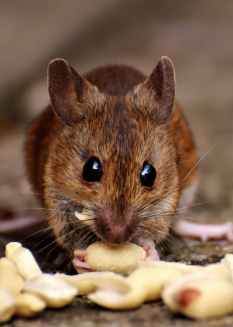
You are sitting at home and all of a sudden a little gray rodent with relatively large ears and small black eyes scurries across the room!   It is about 1/2 ounce in weight and if an adult 5 1/2 to 7 1/2 inches long, including its 3 – 4 inch tail.  Of course, you must know by now that I am describing a house mouse.  The house mouse is considered one of the most troublesome and economically important rodents in the United States.  They can cause damage to property and transmit diseases such as salmonellosis and swine dysentery.  You will know you have mice if you see small droppings, fresh gnaw marks and mouse nests made from fine shredded paper or other fibrous material.  They are active mostly at night, but can occasionally be seen during daylight hours.  Mice are excellent climbers and can jump 10 inches from the floor to a flat surface; they can squeeze through openings slightly larger than 1/4 inch in diameter.  They can also survive a 9-foot drop and climb up most vertical surfaces.

brown rat eating food
Photo by Alexas Fotos on Pexels.com

Exclusion is the most common in the fight against house mice.  Prevent mice from entering buildings by eliminating openings that are 1/4” or larger.  Use sealants or mortar to help fill the gaps.  Spray-in-place foams and steel wool pads will fill the gaps, but they won’t do much to stop mice from entering.  Make sure doors, windows and screens fit tightly.  Cover the edges of doors and windows with metal to prevent gnawing.

Population reduction is the last method for controlling mice.  Traps and baits are two common population reduction methods.  To ensure success with traps, you need to use a sufficient number of traps in areas where mice are living.  Snap traps or multiple-capture traps can be used to capture mice.  Double setting snap traps, placing two traps close to each other, will yield the best results in situations with high activity.  Multi-catch traps can catch several mice at a time without resetting.  Glue boards are another alternative to traps.  These sticky boards catch and hold mice as they try to move throughout the home.  Be sure to use sticky boards in locations where non-target animals or items won’t get stuck in them.  If this does happen, use an oily material, like vegetable or mineral oil, to dissolve the sticky substance.  To make the traps more appealing you can apply a food source such as peanut butter or a chocolate chip melted to the trigger or you can secure a cloth scented with a food source to the traps’ trigger.

Baits are another population reduction method.  Be sure to read and follow all directions on baits.  When choosing baits, consider the location and method of applications and any non-target pets and children.  Choose the type of bait for your specific location and application.  Mice have been known to move pelleted baits without eating them.  Just because you have an empty box, doesn’t mean they have eaten the bait.  Bait stations or bait blocks ensure that the critter actually ate the bait.

Use caution when cleaning up droppings, nests, or mouse remains.   This can help to decrease the potential spread of diseases carried by mice like Hantavirus.  Use protective waterproof gloves and spray the carcass and trap or nest with a household disinfectant or a 10% bleach solution. Use a sealable bag turned inside out to pick up the mouse.  To remove feces or urine, spray the area with a disinfectant until wet and wipe up with a towel, rag or mop.  Don’t use the vacuum or broom to collect dry feces as that can cause the material to go into the air and be inhaled.

For more information on mouse control, refer to NebGuide, Controlling House Mice that can be accessed at http://extensionpubs.unl.edu or through your local extension office.

Crops

Harvest Safety

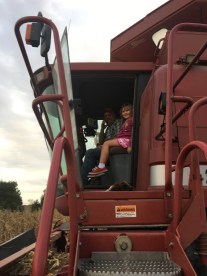
It is hard to believe that harvest is starting and just as a reminder that with harvest comes more traffic on the county roads and other stresses for farmers. It never fails, that equipment can break, there can be delays at the elevator and those extra-long hours can all add extra stress to farmers. That being said, it is important to carefully slow down and realize the many hazards you are being exposed to during harvest.IMG_3695

An Iowa State Extension publication, Harvest Safety Yields Big Dividends points out that injuries can occur by taking shortcuts to perform routine tasks, not getting enough sleep or regular breaks, or failing to follow safety practices. Some injuries occur when operators are pulled into the intake area of harvesting machines, such as balers, combines, or corn pickers, and many injuries occur from slips or falls around these machines. Exposure to powerful machinery is highest during the harvest season. The equipment must be powerful to effectively handle large amounts of agricultural commodities. When equipment plugs, NEVER try to unplug it with live equipment, instead always disengage power and turn off the engine before trying to manually clear a plugged machine. Regular maintenance of these machines can also make harvest go smoother. Also, lots of accidents actually happen by the operator slipping and falling off equipment.

In the same publication listed above, there are several tips for reducing fall hazards:

  • Always keep all platforms free of tools or other objects.
  • Frequently clean the steps and other areas where workers stand to service, mount and dismount, or operate the machine.
  • Wear well-fitting, comfortable shoes with non-slip soles.
  • Use grab bars when mounting or dismounting machinery.
  • Be sure your position is stable before you work on a machine.
  • Recognize that fatigue, stress, drugs or alcohol, and age may affect stability.
img_6564

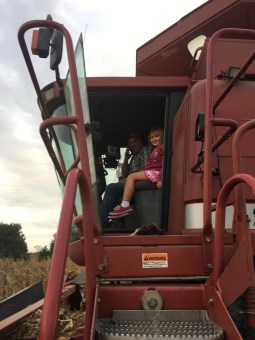
Other helpful tips during harvest are to keep kids away from machinery. Tell them the dangers that can occur and not to play near the equipment, even when it is shut off; you never know when they will be playing in hidden areas of the equipment. Operators should double check where kids are before moving the equipment. Too many accidents can occur when youth are in the path of equipment out of the operator’s view. Operators of all equipment should check in regularly and let someone know where you are. Keep all guards on equipment; it is there for a reason!

It is also important for the public to understand the increased traffic on public roads and be patient. The greatest threat raised between farm equipment and passenger vehicles is the difference in speed. Farm equipment runs at an average speed of 20 miles per hour while passenger vehicles average 60 miles per hour. If the motor vehicle overtakes a tractor, the impact is comparable to a passenger vehicle hitting a brick wall at 40 miles per hour. If the tractor and a car, mini-van or pickup collides head on, the impact is the same as hitting a brick wall at 60 miles per hour.

Farmers can reduce the chances of an accident by using warning lights, reflectors and reflective tape on their machinery to keep passenger vehicle operators aware of their presence on roads. Some farmers may choose to install supplemental lights to increase visibility. It also is a good idea for producers to keep off heavily traveled roads as much as possible and avoid moving equipment during the busiest part of the day.

Some farm equipment, such as combines, can take up more than half of the road. Even so, it is up to both drivers to be aware of their own limitations and adjust accordingly. Farmers should not take up more space than is needed, but other drivers should try to provide as much room as possible. It is a good idea for passenger vehicles to turn off onto side or field roads until larger machinery has passed. Whenever possible, farmers should use an escort vehicle such as a pickup to precede or follow large machinery and equipment on public roads. More than one escort may be necessary. Ideally, the escort vehicle would have extra warning lights and a sign indicating oversized or slow equipment ahead or following.

Have a safe harvest!

Youth

Project Helps Young Flood Survivors Heal Through Reading

Since March 13, several communities in Nebraska have received historic rainfall along with damaging winds. Residents continue to work together as they recover from severe weather events. Flooding5.28.13.jpg

If you or someone you know was directly involved in this disaster, you probably have experienced a wide range of emotions. Like adults, young children may have difficulty expressing their feelings, which may lead to difficulties with coping and understanding their feelings. Young children may exhibit intense emotions and engage in challenging behaviors while others may have separation anxiety, bed-wetting or be very quiet.

In supporting young children with these different reactions and feelings, it is important for adults to remain calm and approach behaviors in a thoughtful way. Parents and childcare providers are in the best position to help young children cope. It is in our calm that children learn how to respond during difficult situations. A particularly engaging way to help young children understand their feelings and reactions is with storybook reading. Using children’s literature in an interactive way can help children heal by better understanding their experiences (Betzalel and Shechtman, 2010) and can improve their coping skills (Burns-Nader & Hernandez-Reif, 2016; Nicholson & Pearson, 2003; Pola & Nelson, 2014). Additionally, it provides the parent or caregiver with tools to increase their own understanding of how young children may experience traumatic events such as natural disasters.

books school stacked closed
Photo by Pixabay on Pexels.com

In response to the March 13 disasters, Nebraska Extension’s The Learning Child team created the Read for Resilience program. The team identified nine children’s books to support their coping and understanding feelings after experiencing a disaster, loss and/or grief. Then team members developed reading guides to accompany the books to provide parents and caregivers with age-appropriate probing questions to explore children’s thoughts and feelings. The guides also include suggested activities to further extend children’s ability to process their feelings and experiences.

Parents and caregivers of youth can receive up to five free books through this program (approximately a $100 value). To request a free book or to download a storybook guide, please visit http://child.unl.edu/read4resilience, complete a short survey and select the book(s) which meets your child’s need. Holly Hatton-Bowers and Amy Napoli, assistant professors of child, youth and family studies and early childhood Extension specialists, are the lead organizers of this program. Team members include Lynn DeVries, Jaci Foged, Carrie Gottschalk, Lisa Poppe, Lee Sherry, Jackie Steffen, LaDonna Werth, Tasha Wulf, Karen Wedding and Kathleen Lodl.

One person who requested books wrote, “Thank you, thank you for your support for our children! We have a 6-year-old daughter and a 2-year-old daughter. We have noticed through conversation and drawing with our 6-year-old that she has been affected by the flooding. The books will assist us greatly in helping our daughters understand the impact the flood has had on our family and reassurance that they are safe. I still have a picture that our 6-year-old drew of a child surrounded by water and she told me that she prayed for ‘all the flooding’ in school that day.”

To ensure that this program continues, The Learning Child team is accepting monetary donations which can be given through the 4-H Foundation. These donations will be used to purchase books so parents and caregivers receive them at no charge.

“We’re hoping Read for Resilience will empower caregivers of young children to support them as they cope and understand their feelings around loss or grief,” Hatton-Bowers said. “This is another way that Nebraska Extension will be there to help families and communities for the long haul.”

Source: Reading For Resilience Program, Jaci Foged, Nebraska Extension in Lancaster County.