Crops

Silent Soybean Yield Robber

For years, Extension has encouraged farmers to soil sample their fields for soybean cyst nematoes (SCN). A recent CropWatch article written by John Wilson and Loren Giesler from Nebraska Extension provided the “Top Five” reasons to sample for SCN this fall so I’ve decided to share that in this week’s article.

Number Five: Poor yielding fields or areas are likely fresh on your mind or evident from yield maps. These are areas where yields didn’t meet expectations and you can’t “blame” it on anything else, such as weeds, compaction, insects, soil type, herbicide injury, etc. What reinforces this is if corn yields continue to increase while soybean yields hit a plateau or even start to drop off.

(Photo from CropWatch)

Number Four: Life is generally less hectic after harvest and you can dedicate time to taking good representative samples. Take 20-25 soil cores from the area and mix the samples together. Then take a sample from this composite sample (representing the area or field) and submit it for analysis. Sample problem areas in a field separate from normal yielding areas and compare SCN egg counts. If you don’t have yield variations and are just trying to determine if SCN is present, sample areas up to 80 acres in size.

Number Three: You, your co-op, or your crop consultant or field scout often pull soil samples in the fall to determine fertilizer needs for the next year. When sampling for fertilizer, sample for SCN. Both need topsoil samples six to eight inches deep, making fall an opportune time to do both samples in one trip. Take a few extra cores in the field, mix them all together, and then split the sample, using half for fertilizer recommendations and half for SCN analysis.

Number Two: The Nebraska Soybean Board promotes sampling by covering the cost of the SCN analysis. Normally there is a $20 fee for soil samples submitted to the University of Nebraska Plant and Pest Diagnostic Clinic for SCN analysis. Commercial labs will charge $15 to $30. If you submit five samples from your farming operation, you will receive the equivalent of $100 of checkoff dollars you have paid. Special sample bags for this free analysis are available at your local Nebraska Extension office.

Number One: The newest reason is for soybean growers who already know they have SCN in their field and have been working to manage it. About 98% of the SCN-resistant soybeans varieties available to farmers all use the same source of resistance (PI88788). The reason for this is simple: It was easiest to breed in this source of resistance and still maintain yields. The downside to this is that there is a lot of variability in the genetics of the SCN in any field and no source of resistance is going to control all of the SCN present. Just like using the same herbicide, insecticide, or fungicide year after year will lead to resistance, using the same source of SCN resistance will eventually allow a portion of that SCN population to survive and reproduce on soybeans with that genetic source of resistance. That is why it is important for soybean growers to check their fields periodically (every six to seven years) to see if the SCN population is increasing or decreasing.

If your initial confirmation of SCN in a field was found in a soil sample taken in the fall after a soybean crop, six or seven years later sample that field again in the fall after a soybean crop. If the SCN population remains constant or decreases, your resistant varieties are doing their job. However, if SCN counts are higher, you will want to select a soybean variety with a different source of SCN resistance the next time you plant soybeans in that field. Your choices will be greatly reduced, but long-term it will be worth it to keep the SCN population in check in your field. It is much easier to identify low levels of SCN in the soil and keep them low than it is to let SCN populations increase, then try to bring them back down.

For more information, check out Nebraska Extension’s CropWatch website.

Youth

Youth Celebrate National 4-H Week

More than 6 million young people across the country today will celebrate National 4-H Week, an annual celebration of 4-H during the first full week of October. During this week, Fillmore County 4-H will showcase the great things 4-H offers young people and highlight the incredible 4-H youth in the community who work each day to make a positive impact on the community. This year, 4-H will also showcase a refresh of its brand, revealing new photography and creative materials that show the various life skills 4-H grows in young people.national_4h_week_logo

Fillmore County 4-H’ers are celebrating with a decorated pumpkin contest, wearing their 4-H shirts with pride, the option to participate in the Quilts of Valor Project, and National 4-H Youth Science Day. Through school-enrichment, community events and regular 4-H enrollment, the Fillmore County Extension Program has impacted approximately 64% of youth ages 8-18. In 2015, there were 190 youth enrolled in the Fillmore County 4-H Program, making it the largest youth organization in the County.

Research has proven that participation in 4-H has a significant positive impact on young people. Recent findings from the Tufts University 4-H Study of Positive Youth Development indicate that, when compared to their peers, young people in 4-H are:

  • Nearly four times more likely to contribute to their communities,
  • Two times more likely to pursue healthy behaviors like, and
  • Two times more likely to engage in Science, Technology, Engineering and Math (STEM) programs in the out-of-school time.

Also during National 4-H Week, hundreds of thousands of youth from all around the nation will complete a single, innovative experiment on 4-H National Youth Science Day, which will be held on Wednesday, October 7, 2015. The 2015 National Science Experiment Motion Commotion empowers youth to explore the physics of motion and distracted driving. Developed by Oregon State University Cooperative Extension, this exciting activity combines a speeding car collision and a distracted driving demonstration in a simulated activity that investigates the physical and human factors of motion. To learn more about National Youth Science Day, please visit http://www.4-h.org/nysd/.Join4H

About 4-H:

4-H, the nation’s largest youth development organization grows confident young people who are empowered for life today and prepared for career tomorrow. 4-H programs empower nearly six million young people across the U.S. through experiences that develop critical life skills. 4-H is the youth development program of our nation’s Cooperative Extension System and USDA, and serves every county and parish in the U.S. through a network of 110 public universities and more than 3000 local Extension offices. Globally, 4-H collaborates with independent programs to empower one million youth in 50 countries. The research-backed 4-H experience grows young people who are four times more likely to contribute to their communities; two times more likely to make healthier choices; two times more likely to be civically active; and two times more likely to participate in STEM programs.

Learn more about 4-H at www.4-H.org, find us on Facebook at www.facebook.com/4-H and on Twitter at https://twitter.com/4H. Locally, we can be found at Fillmore County 4-H FaceBook page.

Horticulture

“Worm” Invasion in the Homes!

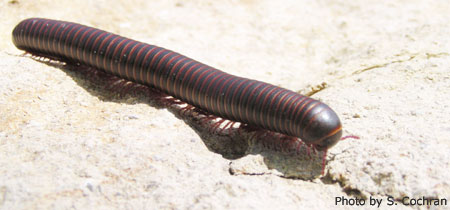
During this time of year I receive calls about worm-like, dark brown to black creatures that are invading people’s houses or garages. Most likely these are millipedes. Millipedes are not harmful in the yard, but can be a nuisance with the first spell of cool temperatures in fall. Millipedes will invade houses (sometimes in large numbers) to find warmth on concrete in and around garages and houses. At times, millipedes can become so abundant; they may constitute a “millipede invasion” entering homes and other buildings. Once they reach indoors, millipedes will die – no sprays are necessary.millipedex450

Millipedes (sometimes called “wireworms” which are the larval stage of a beetle that feeds on plants in farm fields) have two pairs of legs per body segment. They are usually brown to black in color with an elongated body that is round. Millipedes have no poison claws or legs. Once disturbed, they usually coil up to protect themselves. Once found in the home they usually die due to desiccation, although in moist basements they survive longer.

Millipedes live in organic matter such as leaves, mulch, and piles of wood or wood chips. Over mulching and/or watering in the garden can cause millipedes to attack vegetable plants. Reducing mulch thickness, reducing watering schedules, or pulling mulch away from plants and allowing them to dry will help reduce the potential for invading millipedes. To prevent millipedes from entering the home, be sure that screens are tight, that moisture-holding material in window wells is eliminated, and that mulches are at least 6-8 inches away from the foundation. Outdoors, you may wish to treat a 10-15 foot wide barrier strip with carbamate insecticide (Baygon, Ficam, Seven) because they are fast-acting. People and pets should stay off wet insecticides, but can safely walk on the yard once the insecticide is dry.

Once millipedes have entered the house, the safest way to control them is to vacuum or sweep them up. In damp hiding places, an indoor insecticide labeled for this use can be applied. As with any chemical, be sure to read and follow label directions when using any insecticides.

Youth

Agriculture Matters!

With harvest underway for many, it is a time to not only practice road safety, but a time to reflect on the many blessings we have to be thankful. Recently, South Central Cattlewomen and Nebraska Extension teamed up to provide the annual AgVenture Day for over 150 area fourth graders. This is an event I love doing every year because it gets the kids excited and surprised about how important agriculture is in our daily lives. The United States has the best agricultural production in the world and some of the smartest and most innovative farmers and ranchers.

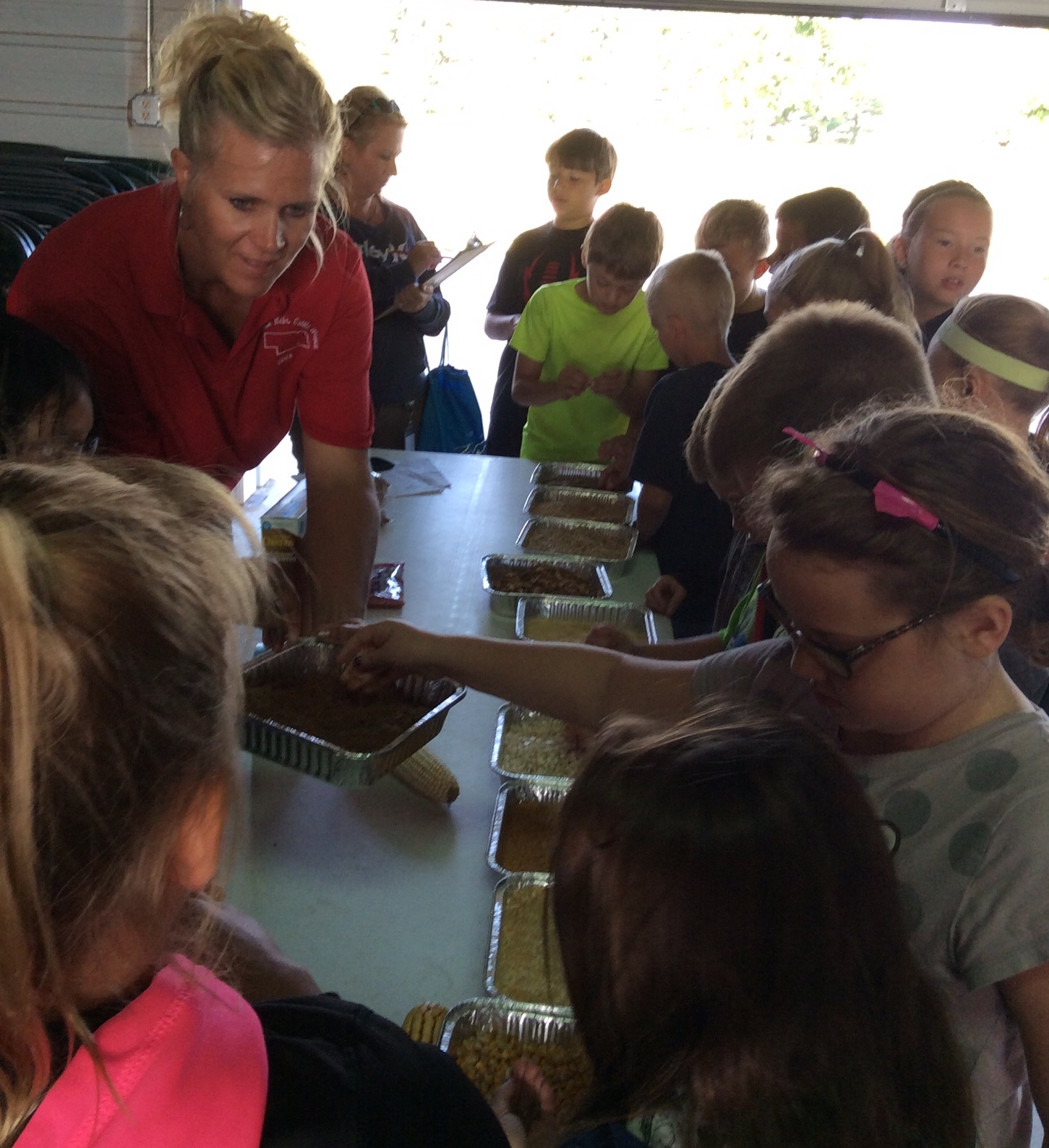
Students from area schools learned about Nebraska’s number one industry, agriculture through hands-on learning.  Youth were actively engaged in hands-on activities such as Great Grains, which showed youth the types of grains grown in Nebraska, in addition to products that we use everyday produced from grains.
Students  learn about Nebraska’s number one industry, agriculture through hands-on learning. Here, youth actively engage in hands-on activities such as Great Grains, which showed youth  types of grains grown in Nebraska, in addition to products that we use everyday produced from grains.

According to the Nebraska Department of Agriculture and USDA National Ag Statistics Service, Nebraska ranks 1st in the following: beef and veal exports, commercial red meat production, all cattle on feed, Great Northern beans production, irrigated land harvested and even popcorn production! We rank second in pinto beans and proso millet production and third in corn for grain production, all dry edible bean production and cash receipts for all farm commodities at over 23.5 billion dollars! Other brief highlights include, ranking fifth in soybean and grain sorghum production, sixth in swine production and 7th for alfalfa production. (Facts based on February 2015 Nebraska Agriculture Fact Card.)

Not only is agriculture the backbone of our economy, one in four jobs in Nebraska is related to agriculture. Nebraska’s farms and ranches cover 45.2 million acres, which is 92% of the state’s total land area!

Still don’t think agriculture is important? Look at the list of products produced from corn and soybeans alone: oils, soaps, cosmetics, plastics, inks, pet food, fuel, crayons, diapers, soda, toothpaste and the list continues! From beef byproducts (products we derive from the animal other than meat) we get leather products such as baseballs, luggage and clothing, but also medicines, tires, fertilizers, gelatin, explosives, asphalt, film, cake mixes, lotions, conditioners, shampoos, etc., etc., etc. In short, what is important to note is that if you eat or use any product from the store, in one way or the other it was impacted directly from agriculture! We can not and could not live a day without agriculture!

At a recent event, youth were able to see livestock first-hand. This session, youth enjoyed learning about sheep production.

Other interesting facts include:

  • A single bushel of corn will sweeten more than 400 cans of soda.
  • Farmers grow corn on every continent except Antarctica.
  • A typical, full-grown Holstein cow produces 60 pounds of milk daily.
  • Heart valves from pigs are used to replace damaged or diseased human heart valves.
  • Soybeans can produce two times as much protein per acre than any other major vegetable or grain crop, which is great for building strong muscles.
  • Grain sorghum is gluten free which is great for those with wheat allergies.

Without agriculture, we cannot survive and would have social unrest. So as you see all of those farmers driving combines, tractors with grain carts and trucks hauling the grain to town, stop and think how important they are so that you and I can live a great and healthy life! Thank you farmers and ranchers for EVERYTHING!

Crops

Harvest Safety Reminders

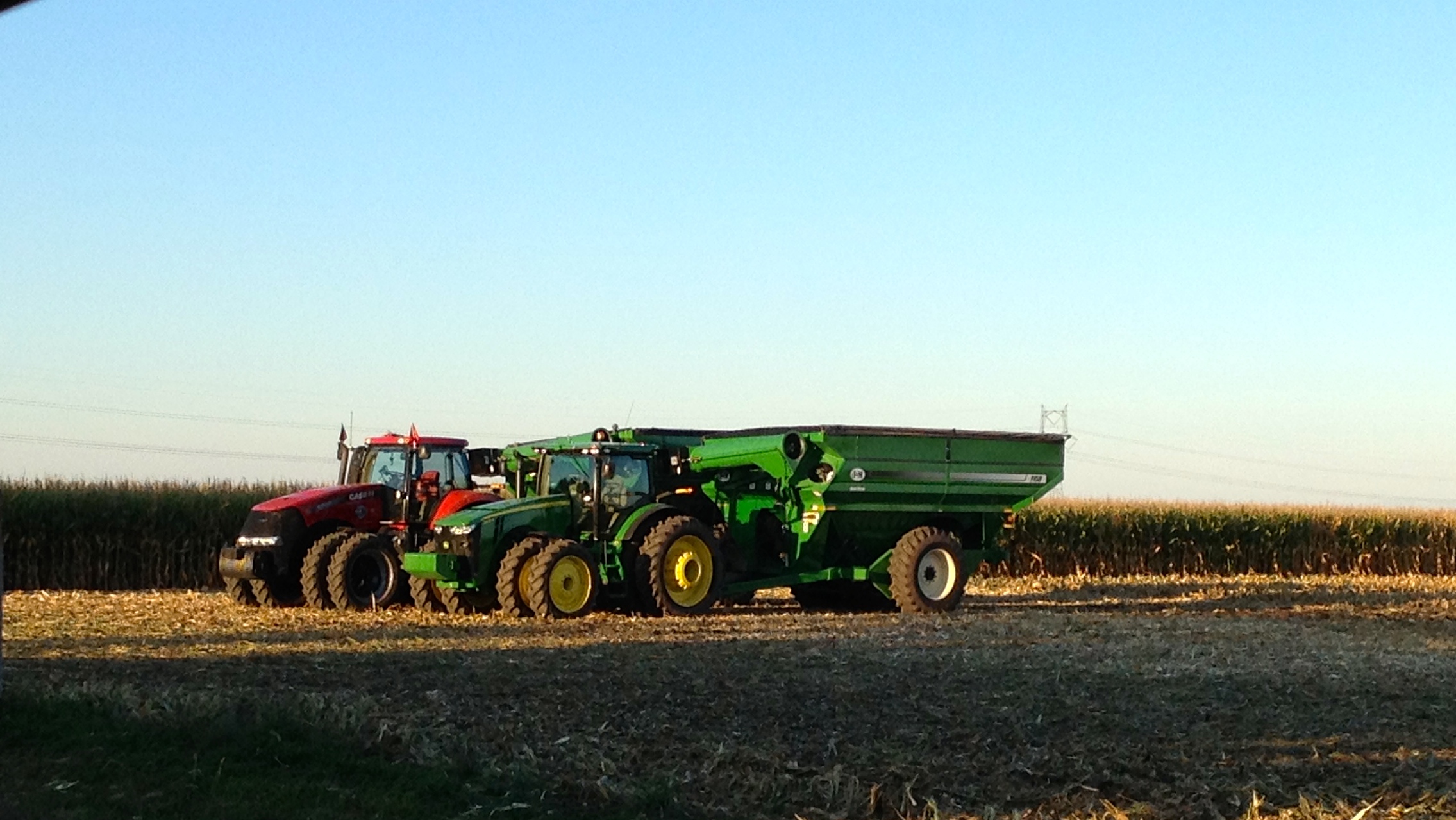
It is hard to believe that harvest will soon be in full swing! With harvest comes more traffic on the county roads and other stresses for farmers. It never fails, that equipment can break, there can be delays at the elevator and those extra-long hours can all add extra stress to farmers. That being said, it is important to carefully slow down and realize the many hazards you are being exposed to during harvest.IMG_2639

An Iowa State Extension publication, Harvest Safety Yields Big Dividends points out that injuries can occur by taking shortcuts to perform routine tasks, not getting enough sleep or regular breaks, or failing to follow safety practices. Some injuries occur when operators are pulled into the intake area of harvesting machines, such as balers, combines, or corn pickers, and many injuries occur from slips or falls around these machines. Exposure to powerful machinery is highest during the harvest season. The equipment must be powerful to effectively handle large amounts of agricultural commodities. When equipment plugs, NEVER try to unplug it with live equipment, instead always disengage power and turn off the engine before trying to manually clear a plugged machine. Regular maintenance of these machines can also make harvest go smoother. Also, lots of accidents actually happen by the operator slipping and falling off equipment.

In the same publication listed above, there are several tips for reducing fall hazards:

  • Always keep all platforms free of tools or other objects.
  • Frequently clean the steps and other areas where workers stand to service, mount and dismount, or operate the machine.
  • Wear well-fitting, comfortable shoes with non-slip soles.
  • Use grab bars when mounting or dismounting machinery.
  • Be sure your position is stable before you work on a machine.
  • Recognize that fatigue, stress, drugs or alcohol, and age may affect stability.

Other helpful tips during harvest are to keep kids away from machinery. Tell them the dangers that can occur and not to play near the equipment, even when it is shut off; you never know when they will be playing in hidden areas of the equipment. Operators should double check where kids are before moving the equipment. Too many accidents can occur when youth are in the path of equipment out of the operator’s view. Operators of all equipment should check in regularly and let someone know where you are. Keep all guards on equipment; it is there for a reason!

It is also important for the public to understand the increased traffic on public roads and be patient. The greatest threat raised between farm equipment and passenger vehicles is the difference in speed. Farm equipment runs at an average speed of 20 miles per hour while passenger vehicles average 60 miles per hour. If the motor vehicle overtakes a tractor, the impact is comparable to a passenger vehicle hitting a brick wall at 40 miles per hour. If the tractor and a car, mini-van or pickup collides head on, the impact is the same as hitting a brick wall at 60 miles per hour.Combining2011 002

Farmers can reduce the chances of an accident by using warning lights, reflectors and reflective tape on their machinery to keep passenger vehicle operators aware of their presence on roads. Some farmers may choose to install supplemental lights to increase visibility. It also is a good idea for producers to keep off heavily traveled roads as much as possible and avoid moving equipment during the busiest part of the day.

Some farm equipment, such as combines, can take up more than half of the road. Even so, it is up to both drivers to be aware of their own limitations and adjust accordingly. Farmers should not take up more space than is needed, but other drivers should try to provide as much room as possible. It is a good idea for passenger vehicles to turn off onto side or field roads until larger machinery has passed. Whenever possible, farmers should use an escort vehicle such as a pickup to precede or follow large machinery and equipment on public roads. More than one escort may be necessary. Ideally, the escort vehicle would have extra warning lights and a sign indicating oversized or slow equipment ahead or following.

Have a safe harvest!

Crops

Proposed Pesticide Certification Rule Changes

As many producers know, in order to obtain a pesticide applicators license and purchase Restricted Use Pesticides (RUPs), every three years you complete a private pesticide certification program or self-study program. The Environmental Protection Agency (EPA) is proposing stricter standards for people to use RUPs and have determined that use of these RUPs would be safer with increased supervision and oversight, and to require all people who apply RUPs to be at least 18 years old (Nebraska currently requires applicators to be 16 years old). These proposed changes apply to the FIFRA/Certification of Pesticide Applicators Rule.pested

Information below has been summarized from the Nebraska Extension Pesticide Safety Education Program which I’ve decided to share with you this week, to make you aware and allow you to provide your feedback as the public comment period for the proposed changes to the certification rule will run through November 23, 2015.

Certifications will continue to be renewed every three years. Additional specialized licensing is also proposed for certain methods of application that can pose greater risks if not conducted properly, such as fumigation and aerial application. State agencies issue licenses to pesticide applicators when they can demonstrate under an EPA-approved program their ability to use these products safely. Many states already have some or many of EPA’s proposed changes in place. The proposal promotes consistency across state programs by encouraging inter-state recognition of licenses, which would reduce the burden on applicators and commercial companies that work across state lines.

The EPA is also proposing that states adopt a Continuing Education Credit (CEU) Training Program. The proposed changes listed on the rule comparison chart define a CEU as 50 minutes of active training time. Currently, applicators in Nebraska are not required to train for a specific time, but requires that each competency be addressed during recertification training. The proposed changes require that both private and commercial applicators receive 6 CEUs covering core content (general standards), 3 CEUs for each private category (new categories proposed: aerial, soil fumigation, and non-soil fumigation), and 6 CEUs for each commercial category.

How do these proposed rule changes impact private pesticide applicators? Every three years, private applicators would need 5 hours of training to recertify, unless they needed to add another category, which would be an additional 3 hours for private categories and 6 hours for commercial applicators. Also, for first time private applicators, a test would be required to prove competency. For more information on this topic, go to Nebraska Extension Pesticide Safety Education Program website.

Horticulture

Fall Lawn & Garden Tips

I love the colors of fall that will soon be upon us, but there are a few gardening tasks to consider for lawn and landscape improvement next year.  While I am not a horticulturalist, I do love gardening and landscaping and have learned a lot from my horticultural colleagues which is why I’m featuring some great tips from them!Yard and Garden Green Logo

Most people ask about killing dandelions in the spring or summer, but actually the best time to control broadleaf perennial weeds such as dandelions, clover and violets starts September 15. During this time of year, more herbicide is likely to move into the plants’ roots as plants prepare for winter dormancy. This increases your success rate by killing the weeds, not just the foliage. Also, applications made now have less chance of affecting nearby trees and ornamentals, unlike spring applications made around non-target species that are just leafing out and/or blooming.

Nebraska Extension’s Hort Update also provided information on fall fertilization of cool season turfgrasses. Fall fertilization encourages production of new tillers and/or rhizomes and stolons that increase turf density. This fertilization encourages rooting and production of storage products that help plants survive the stresses of winter and next year’s growing season. Almost all turf areas should be fertilized with 1 lb N/1000 sq ft using a fertilizer with 25 to 50% of the nitrogen as slow release (sulfur or polymer coated urea, urea formaldehyde, or natural organics). The next most important fertilization is near the last mowing.

Fall is also a good time to divide some perennials such as peonies and irises. If you have herbs or other annuals you overwinter in the house, think about bringing them in the house now before frost warnings. You can start taking root cuttings form annual bedding plants such as begonias, coleus, geraniums and impatiens, which do well in a sunny window and can provide plants for next year’s garden.

For more information on horticultural topics, go to Nebraska Extension’s environment.unl.edu website. There you will find information from the Backyard Farmer show, turfgrass recommendations, acreage insights and subscribe to the HortUpdate newsletter.

Nebraska Extension Horticultural Blogs:
Husker Hort
Plants & Pests with Nicole

Programming

State Fair – Fun is in the Fair!

I’d like to wish all 4-H and FFA exhibitors good luck this at the Nebraska State Fair this weekend. If you are able, check out all of the great activities offered. I’d also like to share information about “The Landing Zone” at the State Fair on September 7th from 9:00 a.m. to 5:00 p.m. on the event tent on the south end of the Fairgrounds. The veterans’ community task force needs your help supporting deployed Nebraska military units and Nebraska veterans in need. Their goal is to assemble 146 care packages, representing one package for each year of the Nebraska State Fair. For more information, email thelz.statefair@gmail.com or call 402-460-2130.

Uncategorized

10 Tips for Eating Healthy on a Budget

Great tips from my colleague, Kayla Colgrove!

Kayla Colgrove's avatarmakinghealthierdecisions

Eating healthy is so expensive! Or, so I hear. I’m going to share with you 10 tips to help you eat healthy on a budget. It all starts with remembering the 3 P’s – Plan, Purchase, and Prepare.

10 Tips for Eating Healthy on a Budget Blog Graphic

Plan

Tip #1: Make a Food Budget

Determine your food budget by completing, “Family Budgets: Developing a Spending Plan that Works.” Next, figure out how much money you can spend for each trip to the store. If you shop weekly, then take your monthly food budget and divide by four. Remember to follow your food budget.

Tip #2: Plan Meals

MyPlate, Healthy MyPlate illustrates the five food groups that are the building blocks for a healthy diet using a familiar image—a place setting for a meal. Before you eat, think about what goes on your plate or in your cup or bowl.

Taking the time to plan your meals ahead of time can help you save money and…

View original post 804 more words

Crops, Youth

Youth Crop Scouting Results

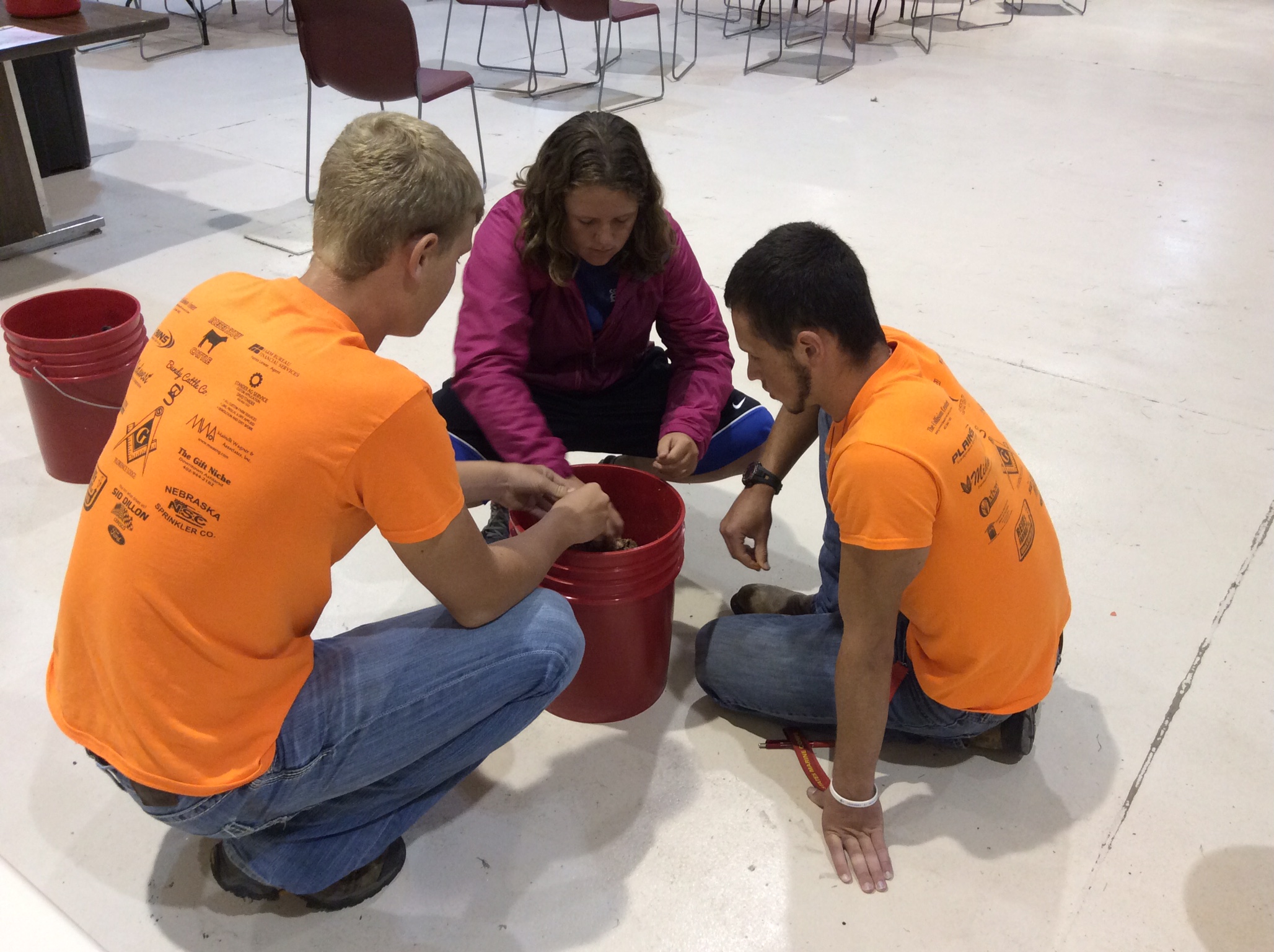
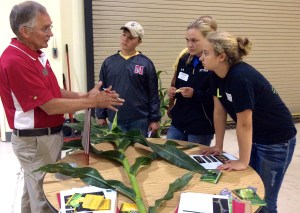
Nebraska Extension is pleased to announce eight teams from across Nebraska competed in the second annual Crop Scouting Competition for Nebraska youth. It was held in at the ARDC near Mead, Nebraska on August 4, 2015. Teams of students (those completing 7-12th grades) participated by completing a written knowledge test and eight crop scouting exercises in field plots.IMG_0078_2

The purpose of the competition was to provide students an opportunity to learn crop scouting and principles of integrated pest management (IPM) for corn and soybeans in Nebraska, to obtain knowledge and skills that will be helpful in future careers and to demonstrate newer crop scouting technologies.

Results from the 2015 competition were as follows:

First place- Colfax County 4-H

Second place – Humphrey FFA IMG_0084_2

Third place – Amherst FFA

Also participating were

  • Ashland-Greenwood FFA
  • Sumner/Eddyville/Miller FFA with two teams
  • Pawnee City FFA with two teams

Top-scoring teams won prizes: $500 for first, $300 for second, $100 for third place.

Teams were expected to know the basics of scouting corn and soybean fields. This included crop staging; looking for patterns of crop injury; disease, insect and weed seedling identification; etc.IMG_0077

More information about the crop scouting competition are available online at cropwatch.unl.edu/youth. Click on the link that says, “Crop Scouting Competition”. Next year’s competition will be held August 2nd, 2015 at UNL’s ARDC again.

This program was sponsored by DuPont Pioneer, the Nebraska Soybean Board, in collaboration with Nebraska Extension.