Crops, Programming

Celebrating the Past, Looking to the Future

As I write this, we just celebrated the Centennial of Cooperative Extension yesterday. On May 8, 2014 the Smith-Lever Act was passed which was introduced by Senator Hoke Smith of Georgia and Representative A. F. Lever of South Carolina to expand the vocational, agricultural, and home demonstration programs in rural America. It was designed to disseminate information from the land grant universities to the people. One hundred years later, we are still doing this, only through different methods and delivery systems.

In 2014, we celebrate the Smith-Lever Act, which established the Cooperative Extension Service, a unique educational partnership between the U.S. Department of Agriculture and the nation’s land-grant universities that extends research-based knowledge through a state-by-state network of extension educators.

All of this got me wondering what was extension like in Fillmore County

Snow storm from 1918 proved to make extension work difficult!

in the beginning so I looked at our archives and found some interesting information. The first reports I found were from 1918 with the first county agricultural agent being J.L. Thomas. Some of the projects he worked on were wheat smut control, soybean inoculation, poultry judging, hog cholera control and black leg control. April 1, 1918 was when the “Fillmore County Farm Bureau” (now known as Fillmore County Extension Board) began active work in Fillmore County.

An excerpt had the following:
“The county board of supervisors assigned to J.L. Thomas a large well lighted, well heated and well ventilated, as well as a well located room on the first floor of the court house, for his office. The farm bureau board at the time Mr. Thomas was selected made arrangements with him to employ his wife, Mary E. Hall Thomas, on half time as office assistant. At the first meeting of the board held on Monday night, April 8th, 1918 the agent was instructed to purchase needed office supplies and equipment.” Some of the emergency projects assigned to him were “testing of seed corn and finding a substitute for sugar which included, keeping of bees, catching of all new swarms, production of sugar cane, location of sorghum mills in the county and making and use of sorghum.”

Thinking back to what was happening in 1918, World War I ended in November 1918. When the U.S. entered WWI, food had become a weapon and no other country produced more food than the U.S. In order to have enough food to feed the allies, Americans were urged to conserve food and eliminate waste, thus the importance of finding sugar substitutes, etc. Also, life on most farms consisted of no electricity or indoor plumbing. Each family member had chores such as milking cows, harnessing horses, gathering eggs, etc. Farm families looked forward to the fun of school programs, trips to town, church gatherings and other social events.

Extension demonstration showing the use of tractors in farming.

In the 1918 narrative it describes that work began at a very busy time of year (planting) and continued until October when it was planned to hold meetings for the community, but at that time the Spanish Influenza caused public schools to be closed and all public gatherings be postponed for five weeks. Organizational work was one of the first things to occupy the county agent in the next year. Some of the first youth programs focused on pig, chicken and garden projects. Canning teams and a war bread team were organized.
Also interesting in the narrative was that “the domestic science department of the Milligan school canned ten bushels of peaches and three bushels of tomatoes and did not lose a quart of the peaches or tomatoes.” It was a dry year as many members appeared to have lost their gardens completely and the pig projects didn’t do as well as some died and some youth were too busy with work in the fields. “Fifty dollars in prizes was given to the project members by the County Fair Board. Six pigs, one calf, one crate of chicks and some garden products were entered by club members.”

As I found some of these interesting points, trying to imagine what it would have been like in 1918 intrigues me. Thinking of how much more travel time across the county was required to reach people and the difficulty of getting things organized and promoted compared to the ease of the Internet we now take for granted. While there were definitely many challenges, extension managed to overcome them, just as our current extension system evolves with new delivery modes and remains strongly committed to “the people”. For 100 years, the Smith-Lever Act has stimulated innovative research and vital educational programs for youth and adults through progressive information delivery systems that improved lives and shaped a nation.

Uncategorized

Happy 100th Birthday Extension!

lindsaychichester's avatarAgricultural with Dr. Lindsay

On May 8, Land-Grant Universities will be celebrating the 100th Birthday of Extension — 2014 marks the 100th anniversary of the Smith-Lever Act!

image_gallery

Before I tell you  about the Smith-Lever Act, let me backtrack a minute and tell you about the Morrill Act. The Morrill Act (named after Vermont Congressman Justin Morrill) was signed into place on July 2, 1862 by President Abraham Lincoln. It was officially titled “An Act Donating Public Lands to the Several States and Territories which may provide Colleges for the Benefit of Agriculture and the Mechanic Arts.” The Morrill Act provided each state with 30,000 acres of federal land for each member in their Congressional delegation. The land was then sold by the states and the proceeds were used to fund public colleges that focused on agriculture and mechanical arts. Sixty-nine colleges were funded by these land grants (aka Land-Grant Universities (great map at this…

View original post 562 more words

Crops, Programming

Farm Bill Webinar

The 2014 Farm Bill provides agricultural producers with a variety of different programs and opportunities to participate; however, the decisions facing them have never been more complex. This bill is designed to offer more of a risk management approach to the federal farm safety net as opposed to the more traditional price and yield support. It is important participants understand how the 2014 Farm Bill works and how these programs may affect their operations. Nebraska offers some unique challenges relative to variability in the type of commodities and the practices in which they grown. In the Spring and Summer of 2014, agricultural producers will be offered an opportunity to update their base acres and program yields. It is important that they understand how these decisions work, to make a well-informed decision.

UNL Extension will be hosting a public webinar open to any interested party, to assist the producer with these decisions. The following are details on how to participate:

Name: Farm Bill Public Webinar
URL: https://connect.unl.edu/publicfarmbill/
Start Time: 10:00 am Central Time Zone
Start Date: May 21, 2014
Duration: 2 hours

Participants will need to have adequate speakers with their computer to hear the presentation. This meeting will also be archived for later viewing; however those connecting live will have an opportunity to ask questions of the speaker. Any additional questions may be directed to Tim Lemmons, Ext. Educator, at tlemmons2@unl.edu.

Youth

Tractor Safety Courses

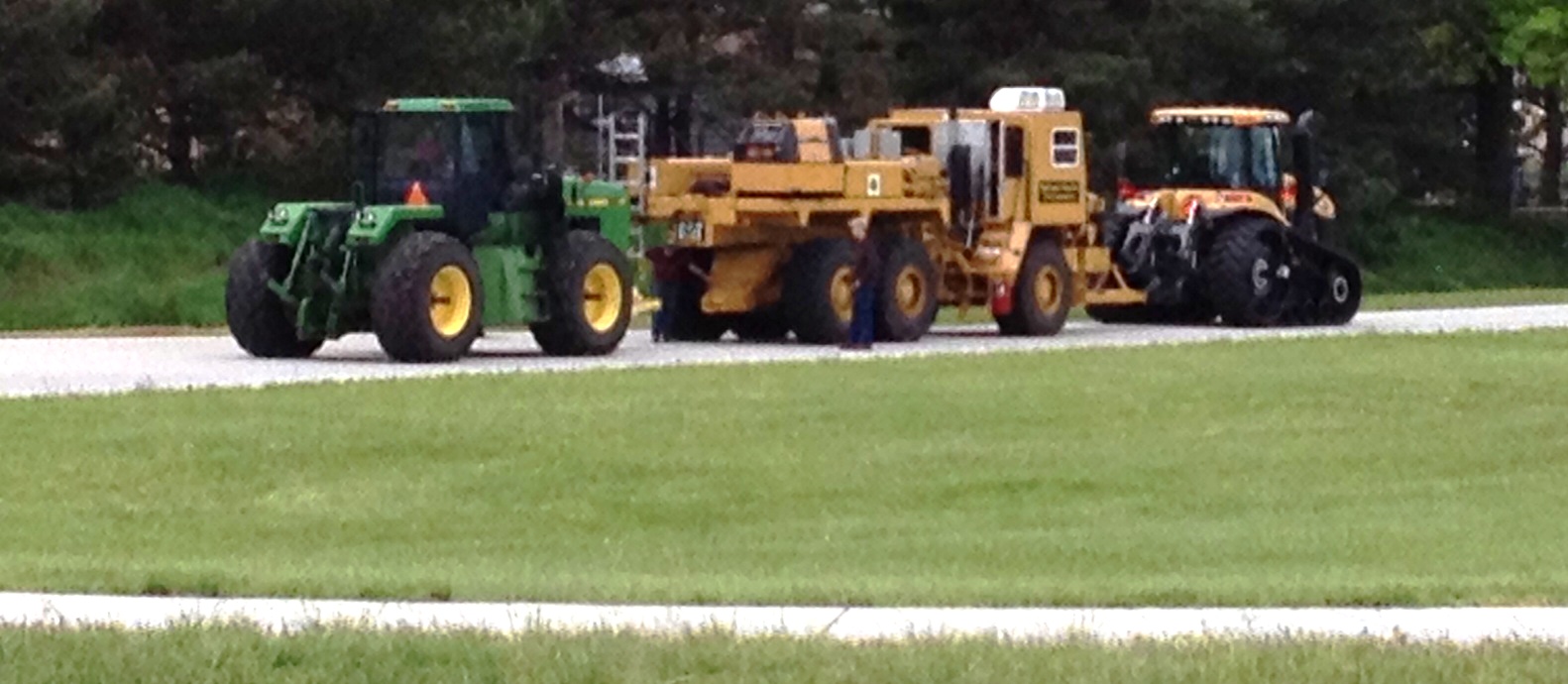
University of Nebraska-Lincoln Extension Tractor Safety/Hazardous Occupations Courses will be offered at seven locations in Nebraska during May and June. Any 14 or 15-year-old teen that plans to work on a farm other than their parents’ should plan to attend. Federal law prohibits youth less than 16 years of age from working on a farm for anyone other than his or her parents. Certification through the course grants an exemption to the law allowing 14- and 15-year-olds to drive a tractor and to do field work with mechanized equipment.tractorTestLabphoto

According to Extension Educator, Sharry Nielsen, the most common cause of death in agriculture accidents in Nebraska is overturn from tractors and all-terrain-vehicles (ATVs). Tractor and ATV overturn prevention are featured in the class work. “Instilling an attitude of ‘safety first’ is a primary goal of the course,” Nielsen said. “Where youth have the chance to learn respect for agricultural jobs and the tools involved.”
Classes consist of two days of instruction plus homework assignments. Classes are from 8 a.m.- 5 p.m. each day. Dates and locations include:
— May 22-23, Fairgrounds, Kearney
— May 28-29, Haskell Ag Lab, Concord
— June 2-3, West Central Research and Extension Center (WCREC), North Platte
— June 5-6, Fairgrounds, Valentine
— June 12-13, Farm and Ranch Museum, Gering
— June 16-17, College Park, Grand Island
–June 19-20, Ag Research and Development Center (ARDC), Mead

Pre-registration is strongly encouraged at least one week before a location’s start date to the Extension Office at the course site. Cost is $60, which includes educational materials, testing, supplies, lunches and breaks. For more information, contact the Extension Office or Sharry Nielsen at (308) 832-0645, snielsen1@unl.edu.

The first day of class will consist of intensive classroom instruction with hands-on demonstrations, concluding with a written test that must be completed satisfactorily before students may continue driving tests the next day. Classroom instruction will cover the required elements of the National Safe Tractor and Machinery Operation Program. Homework will be assigned to turn in the next day. The second day will include testing, driving and operating machinery. Students must demonstrate competence in hitching equipment and driving a tractor and trailer through a standardized course as well as hitching PTO and hydraulic systems.

Irrigation

Irrigation Management Cost Share

ETgageNow is the time to begin planning and thinking about the upcoming irrigation season.  If you’ve been using the ETgages and Watermark Sensors, now is the time to check your inventory to see if you need to replace the ETgage canvas cover, bird spikes etc.  Do you need to replace some of the sensors that were damaged or are not working properly? If you have not been using this equipment, I’d suggest to give it a try,  I’d be happy to assist you installing/using the equipment.  This is a short ink to the Upper Big Blue NRD 2014 Cost share form.  If you are in the Little Blue NRD, check out their website. I hope you’ll consider ordering some of the equipment for you this season. Don’t hesitate to visit with me or the NRD if you have any questions about these tools.

Horticulture

Emerald Ash Borer Update

This week, I’ve decided to take an excerpt from our UNL Extension Hort Update on a pest I receive questions about from time to time – the emerald ash borer.  I highly encourage you to subscribe to this update if you are a horticultural enthusiast!

By now many homeowners have heard of emerald ash borer (EAB) and are concerned about their ash trees.  Now EAB is found in 22 states from Massachusetts south to Georgia, and west to Minnesota and Missouri.  Closest to home, EAB was confirmed in Missouri 2008, Iowa 2010, Kansas 2012 and Colorado 2013.  The nearest confirmed sites are Kansas City, MO, Boulder, CO and Creston, IA.  It is inevitable that EAB will eventually make its way into Nebraska, probably within the next few years.

Now federal Animal and Plant Health Inspection Service (APHIS) quarantines apply to all of Iowa and Missouri.  In Colorado, Boulder County and portions of Jefferson, Larimer, and Weld Counties are quarantined. This means interstate movement of EAB-host wood and wood products are regulated, including firewood of all hardwood species, nursery stock, green lumber, waste, compost, and chips of ash species.

Below are recommendations from the Nebraska Forest Service and the University of Nebraska-Lincoln Extension:

  • Treatment is recommended when EAB is known to be within 15 miles of a location.
  • Treating trees beyond 15 miles will likely provide little or no benefit to the trees and will result in unnecessary exposure of the environment to pesticides.
  • State and federal agencies monitor EAB infestations and will provide updates on infestations in Nebraska.

Visit the Nebraska Forest Service for information about when to begin treatments.

For people concerned EAB might already be here, but has gone undetected, it is important to know that trees already infested with EAB are treatable if the damage is not yet severe.

(Source: UNL Extension HortUpdate)

Youth

UNL Extension Tractor Safety Courses Offered Across Nebraska

University of Nebraska-Lincoln Extension Tractor Safety/Hazardous Occupations Courses will be offered at seven locations in Nebraska during May and June. Any 14 or 15-year-old teen who plans to work on a farm other than their parents’ should plan to attend.Harvest

Federal law prohibits youth under 16 years of age from working on a farm for anyone other than their parents.   Certification through the course grants an exemption to the law allowing 14- and 15-year-olds to drive a tractor and to do field work with mechanized equipment.

The most common cause of death in agriculture accidents in Nebraska is overturn from tractors and all-terrain-vehicles (ATVs), said Sharry Nielsen, UNL Extension Educator. Tractor and ATV overturn prevention are featured in the class work. Classes consist of two days of instruction plus homework assignments. Classes are from 8 a.m.- 5 p.m. each day. Dates and locations closest to us include:

— May 22-23, Fairgrounds, Kearney
— June 16-17, College Park, Grand Island
–June 19-20, Ag Research and Development Center (ARDC), Mead

Pre-registration is strongly encouraged at least one week before a location’s start date to the Extension Office at the course site. Cost is $60, which includes educational materials, testing, supplies, lunches and breaks. For more information, contact the Extension Office or Sharry Nielsen at (308) 832-0645, snielsen1@unl.edu.

The first day of class will consist of intensive classroom instruction with hands-on demonstrations, concluding with a written test that must be completed satisfactorily before students may continue driving tests the next day. Classroom instruction will cover the required elements of the National Safe Tractor and Machinery Operation Program. Homework will be assigned to turn in the next day.

The second day will include testing, driving and operating machinery. Students must demonstrate competence in hitching equipment and driving a tractor and trailer through a standardized course as well as hitching PTO and hydraulic systems.

Youth

Big Red Crops Camp: Youth Discover Crop Science

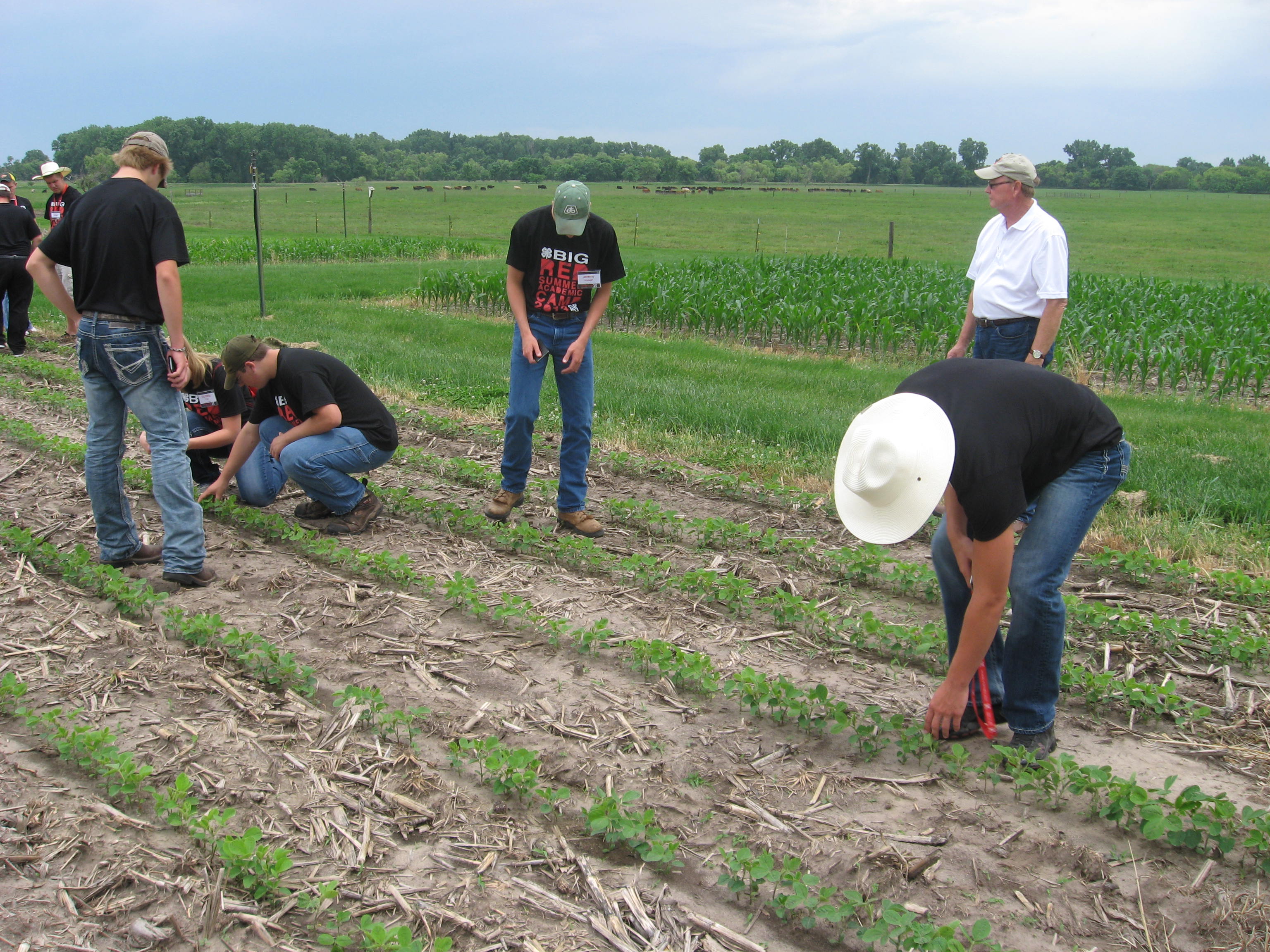
Are you interested in science, agriculture, plants, crops, insects, or diseases? If so, join our team of detectives to solve crop-related problems in the Crop Science Investigation (CSI) Big Red Camp!

Youth participate in hands-on activities and network with University of Nebraska-Lincoln faculty.

Become a detective while participating in hands-on sessions to learn about and increase your knowledge of crops, science, and agricultural careers. Youth detectives will interact with agronomic professionals across Nebraska to solve experiments in: nutrient management; managing disease, insect and weed problems; water management; crop production, and much more! Do you have what it takes to become a CSI detective?

There are a variety of careers related to plant sciences such as: Agricultural Communicator; Agronomist; Crop Consultant; Crop Insurance Adjuster; Educator; Co-op Manager; Farmer or Rancher; Farm Credit Banker; Field or Lab Researcher; Plant Breeder; Soil or Water Conservationist; Seed, Fertilizer, or Chemical Sales; or Technical Representative.

Last year, nine youth participated in the camp and one participant said, “It (the camp) let me see all of what an agronomy career is made up of.” All youth said they would recommend this camp to their friends. As I write this, there are several spots already taken, so be sure and get your registration form in soon to ensure a spot at this year’s camp.

To register or download a camp brochure, visit BIGREDCAMPS.UNL.EDU by May 1st. If you have questions about the camp or the required essays, please feel free to contact Brandy VanDeWalle at brandy.vandewalle@unl.edu or 402-759-3712.

Crops

Cash Rental Rates Released

The cash rental rates survey published by UNL Extension is one of the most popular agricultural publications sought. Last week these were released so I’ve decided to share some of the highlights in this column. Authors Jim Jansen, Research Analyst and Roger Wilson, Budget Analyst Farm Management both from UNL’s Ag Economics Department reported that “even with the strong increases in farmland values over the past several years and the reduction in commodity prices experienced during 2013, agricultural land markets in Nebraska remained steady early in 2014.”

The survey shows that 2014 cash rental rates for cropland on average declined with lower commodity prices, while pasture and cow-calf pair rental rates significantly increased, due to higher beef cattle prices, the lingering effects of the drought and the conversion of some marginal land to crop production. Lower anticipated grain prices in 2014 have led to lower average cash rental rates for dryland, gravity irrigated and center pivot irrigated cropland, as profit margins begin to tighten. This survey data is obtained from land appraisers, farm managers or agricultural finance professionals in Nebraska. Our area is located in the southeast district for the survey and shows that the average value of Nebraska Farmland is $6,105/acre, a 6% increase. Dryland cropland is valued at $5,355/acre in the southeast district, while $8,280/acre was reported for gravity irrigated cropland and $9,745/acre in center pivot irrigated cropland.

Average cash rental rates for the southeast district in center pivot irrigated cropland is $331/acre, a 4% decrease from last year. Average dryland cash rental rates were estimated at $175/acre and gravity irrigated cropland at $290/acre, a 3% decrease. Pasture cash rental rates were estimated at $50/acre in the southeast district. For a copy of this survey, go to the UNL Agricultural Economics webpage at or stop by your local extension office to pick one up.

As always, this survey is not meant to be a “one-size fits all” rate. These are merely guidelines and a starting place. The landlord and tenant must communicate with each other so appropriate factors are taken into consideration and a fair rate is established.

Programming

Nebraska LEAD Program

Several years ago I met twenty-nine talented individuals with a passion of agriculture through the Nebraska LEAD program. To date, I remain friends with many of them and the networking opportunities have been tremendous. The in-state seminars challenged me to think outside of the box and remain an advocate for agriculture. I could go on and on about the excellent opportunities the LEAD program has provided, but I challenge you to experience it yourself!

As a LEAD 27 participant, we traveled to China, South Korea & Hong Kong!

The Nebraska LEAD Program is dedicated to building future Nebraska leaders so that our food and fiber system is preserved and enhanced. If you would like to be a part of the leadership necessary to chart the course . . . now and in the future, and you are presently involved in production agriculture or agribusiness, there will never be a better time to make application to the Nebraska LEAD Program. Fellowship applications for Nebraska LEAD (Leadership Education/Action Development) Group 34 are now available for men and women involved in production agriculture or agribusiness and are due on June 15.

“Up to 30 motivated men and women with demonstrated leadership potential will be selected from five geographic districts across our state,” said Terry Hejny, Nebraska LEAD Program director.

In addition to monthly three-day seminars throughout Nebraska from mid-September through late March each year, Nebraska LEAD Fellows also participate in a 10-day National Study/Travel Seminar during the first year and a two week International Study/Travel Seminar during the second year.

According to Hejny, content essential to leadership focuses on public policy issues, natural resources, community development, interpersonal skill development, communications, education, economics, and social and cultural understanding. Soon beginning its 34th year, the program is operated by the Nebraska Agricultural Leadership Council, a nonprofit organization in collaboration with the University of Nebraska-Lincoln’s Institute of Agriculture and Natural Resources and in cooperation with Nebraska colleges and universities, business and industry, and individuals throughout the state.

Applications are due no later than June 15 and are available via e-mail from the Nebraska LEAD Program.  Please contact Shana at sgerdes2@unl.edu.   You may also request an application by writing Room 318 Biochemistry Hall, University of Nebraska-Lincoln, 68583-0763 or by calling (402) 472-6810.

Nebraska LEAD Program offices are in the Institute of Agriculture and Natural Resources at the University of Nebraska-Lincoln.

If you are even thinking about applying, contact me and I’d be more than happy to share my experiences with you and visit with you about this life-changing opportunity!