Crops, Youth

Youth Crop Scouting Competition Makes a Difference

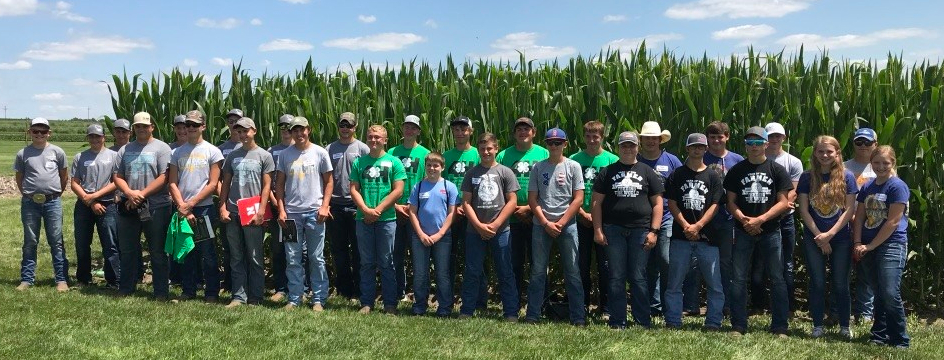
Nebraska Extension strives to recruit the next generation of agronomy professionals by annually conducting the Nebraska Youth Crop Scouting Competition. On August 5, 2025, held at the Eastern Nebraska Research and Extension Center, four teams were able to talk with Extension staff and scout field plots at the Research Center. This competition is a great experience for those wanting to work in many different fields of agriculture. This competition provides a fun competitive environment where teams can receive hands on learning about all aspects of crop scouting.
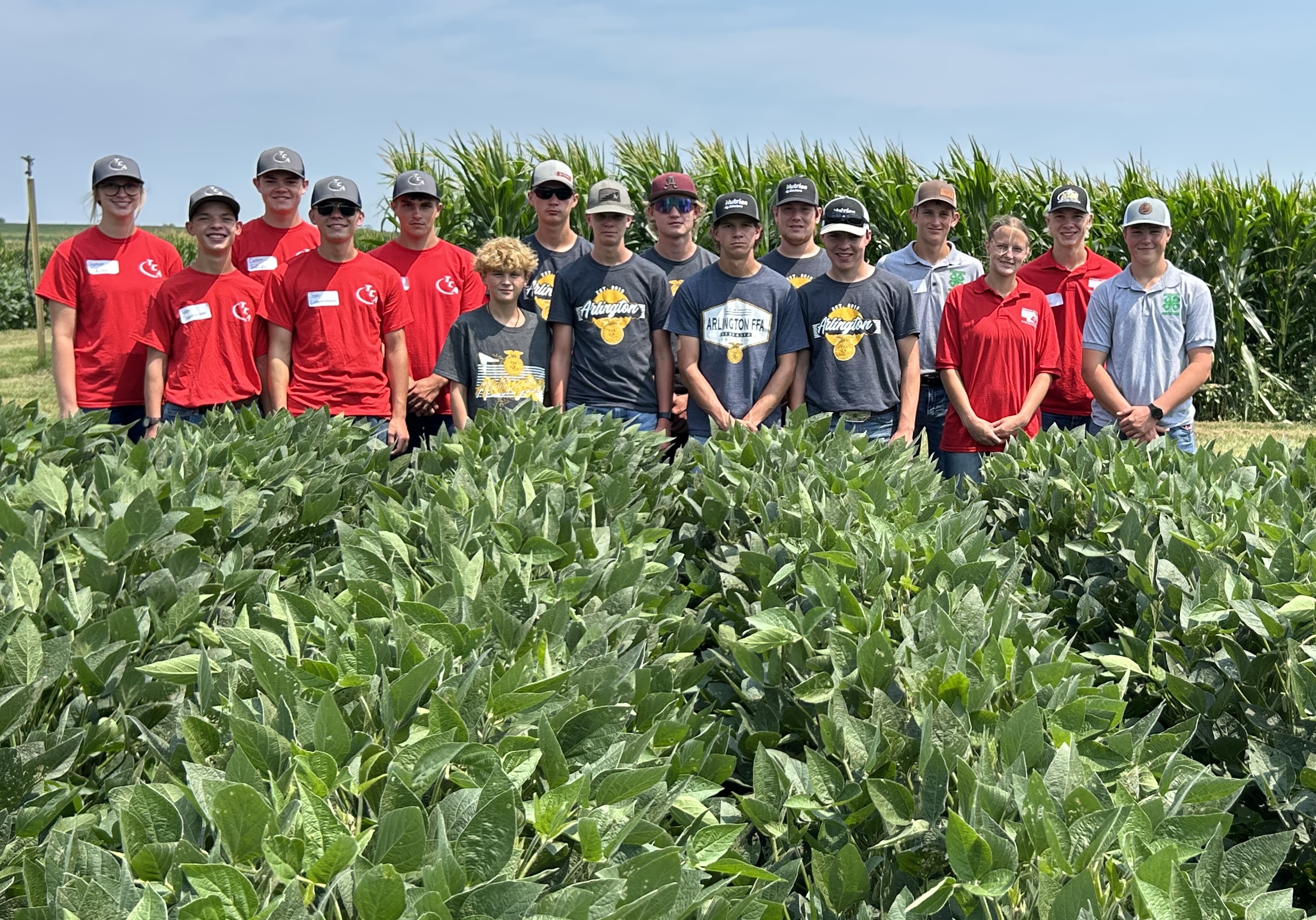
Receiving first place and a cash prize of $500 was Arlington FFA Chapter, team #1 with Aaron Fuchs, Wes Monke, Luke Sharp, and Ethan Hilgenkamp. Kali Agler was their sponsor. In second place and receiving $250 was the Colfax County 4-H team consisting of Justin Eisenmann, Josh Eisenmann Callen, Cody, & Daphne Jedlicka with Korbin Kudera and Justin Zoucha as their sponsors. Third place and receiving $100 was Johnson County 4-H consisting of Wesley Schmid, Cameron Werner, Sophia Schmid, and Levis Othmer with Jon Schmid as their coach. Also participating was Arlington FFA team #2 with Grant Monke, Logan Hilgenkamp and Brody Stark.
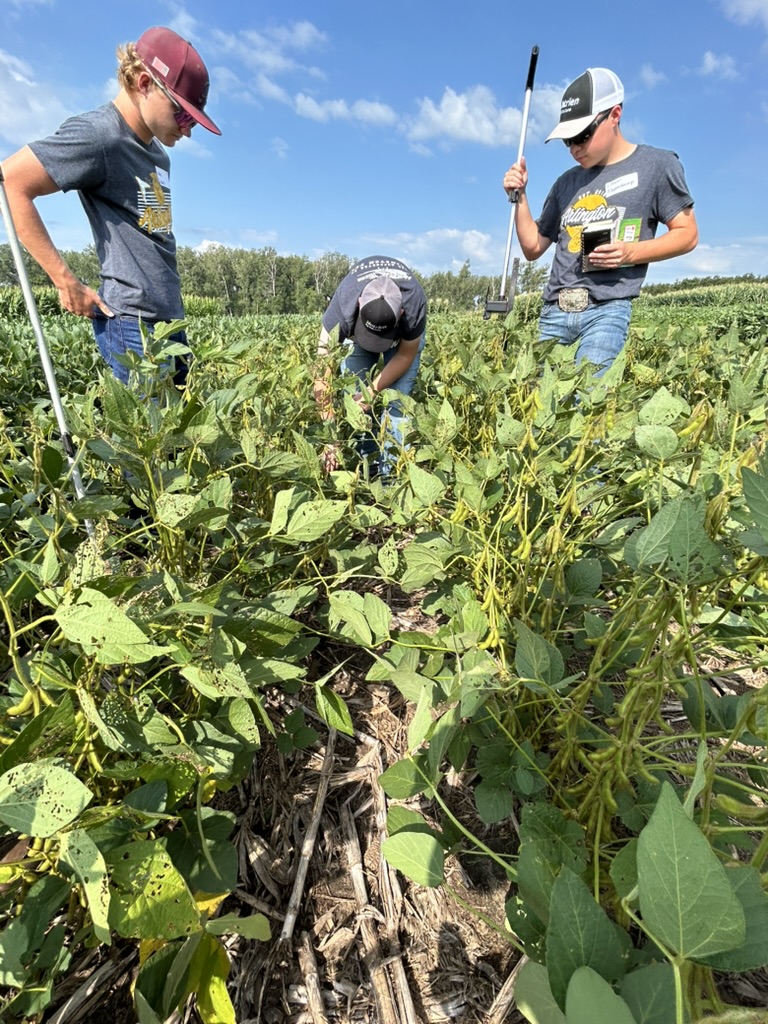
The Nebraska Youth Crop Scouting Competition is a recent national winner of the National Association of County Agricultural Agents, Excellence in 4-H & Youth Programming award. The competition promotes youth engagement and career development while strengthening connections between students and the agricultural industry. A 2024 long-term evaluation revealed that over 80% of participants gained valuable career insights, improved their pest identification skills, and expressed increased confidence in agricultural practices. Furthermore, 27 former participants reported a heightened interest in agricultural careers and enrolling in programs at the University of Nebraska–Lincoln (UNL).     

Feedback from coaches and mentors highlights the program’s lasting impact. One coach shared, “This has been a great learning opportunity for students. They’ve developed relationships with industries in our community that helped us succeed and develop real-world skills. Three students secured jobs through the relationships they built, and two obtained summer jobs.” This testimony underscores how the program creates meaningful industry connections and real career pathways for students.

A regional competition will be held among Nebraska, Iowa, Kentucky, Illinois, Indiana, & Minnesota teams hosted by Iowa State Extension on September 13, 2025. Participants from Colfax County 4-H and Arlington FFA will represent Nebraska this year.

The 2025 Nebraska Youth Crop Scouting Competition was sponsored by the Nebraska Independent Crop Consultant Association and the Nebraska Soybean Board in collaboration with Nebraska Extension.

For more information on the Youth Crop Scouting Competition, contact Brandy VanDeWalle at brandy.vandewalle@unl.edu or go to https://cropwatch.unl.edu/youth

Crops, Youth

Innovative Youth Corn Challenge Update

A 13-year partnership with the NE Corn Board in the Innovative Youth Corn Challenge (IYCC), a youth on-farm research project has successfully engaged youth in agricultural, science-based learning. A long-term program evaluation shows that over 100 IYCC alumni have pursued agricultural or STEM careers, with nearly 300 youth participating. One Arlington FFA ag literacy video alone has nearly 1,000 views and 6 shares.

Latest evaluation results show that:

  • 100% of current IYCC participants enhanced their ability to 1) accurately identify pests, 2) understand crop scouting procedures, 3) set-up research plots, 4) determine profitability of practices and 5) evaluate new products/practices in the field.
  • “I enjoyed having a project last for a long duration and seeing the end results.” -Current Participant
  • As a result of this long-standing program, a former Innovative Youth Corn Challenge advisor reported that, “There have been numerous individuals that have gone into ag fields. Two have went to farming, one ag retail and one agronomy.”

As a result of this long-standing program, a former Innovative Youth Corn Challenge advisor reported that, “There have been numerous individuals that have gone into ag fields. Two have went to farming, one ag retail and one agronomy.”

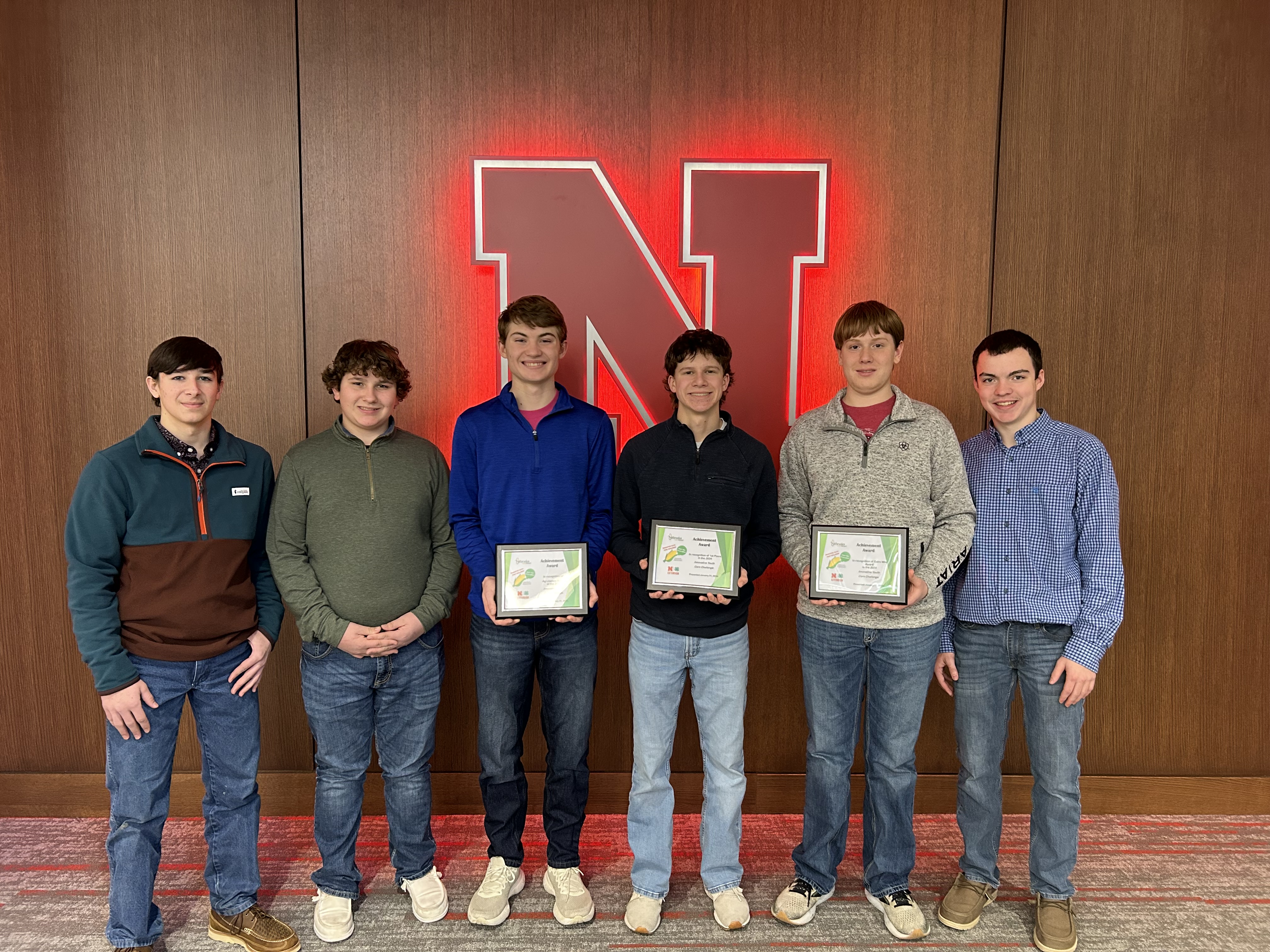
The winning team from the 2024 growing season was the Arlington FFA Chapter from Washington County consisting of Haydn Hegemann, Brock Lauristen, Luke Sharp, Wes Monke, Aaron Fuchs, & Ethan Hilgenkamp with Kali Agler as the team sponsor. The team decided to look at TerraMar, intended for foliar use in row crops which is intended to deliver increased nutrient uptake and enhanced stress mitigation, optimizing plant health and contributing to enhanced yield.

They planted the plot with two populations of 25K plants/acre and 30K plants/acre. On their challenge plots, they tested an application of TerraMar and a foliar fertilizer applied at the V6 growth stage and a drone application of TerraMar at the VT growth stage. Yields were the following:

  • Check Plots with 25K plants/acre yielded 178 bu/ac and 188 bu/acre at 30k plants/acre.
  • Challenge plot with 25K plants/acre with foliar fertilizer and TerraMar at V6 yielded 188 bu/acre.
  • Challenge plot with 30K plants/acre with foliar fertilizer and TerraMar at V6 yielded 199 bu/acre.
  • Challenge plot with 25K plants/acre with a V6 foliar fertilizer and TerraMar application and VT application of TerraMar yielded 188 bu/acre.
  • Challenge plot with 30K plants/acre with a V6 foliar fertilizer and TerraMar application and VT application of TerraMar yielded 203 bu/acre.

Considering all factors, the V6 application was the most efficient due in large part to the fact that application using a ground rig is less expensive than requiring a drone post-spray application. The team concluded that TerraMar did contribute to the plant health of the corn crop, reduce stress via lower canopy temperatures, and overall increased yields at both medium and higher planting rates, but due to the increased cost, not economically feasible at this time.

The Ag Literacy Award and Extra Mile Award was also presented to the Arlington FFA Chapter. This program is for youth aged to 8-18 as of January 1st in 2024. Prizes for participation in this project include 1st place – $1,000, 2nd place – $500, 3rd place -$250, “Extra Mile” Award $250, Ag Literacy Award $250 and $50 for completion of the project.  

In 2025, there is a NEW opportunity to increase involvement for youth with this program!  There will be two pathways for youth to select. The first pathway will be the traditional, “innovative” pathway in which participants choose their own treatments and manage their plots on their own.  The second pathway will be the business/industry pathway; this will include youth working with an industry representative to create a treatment and assist in the implementation of the plot protocol. This new and exciting twist to the Innovative Youth Corn Challenge program enables youth who might not otherwise have physical access to cropland or industry connections. When youth sign-up, they will select which pathway they intend to take.

For more information about this program and to register in 2025, go to https://cropwatch.unl.edu/youth/cornchallenge. Registration is due April 1st.

Contact Brandy VanDeWalle at brandy.vandewalle@unl.edu or (402) 759-3712 for details about this program. This program is possible due to the generous support of the Nebraska Corn Board.

Crops, Programming

Crop Insurance, FarmBill & Weather!

The Farmers & Ranchers College continues to offer high-quality programming to area producers and agribusiness professionals for the 2024-25 season. The college started with its traditional program featuring Dr. David Kohl, which drew nearly 140 attendees! The Cow/Calf College also provided an in-depth, hands-on program with strong learner engagement. The final program of the season is coming up soon.

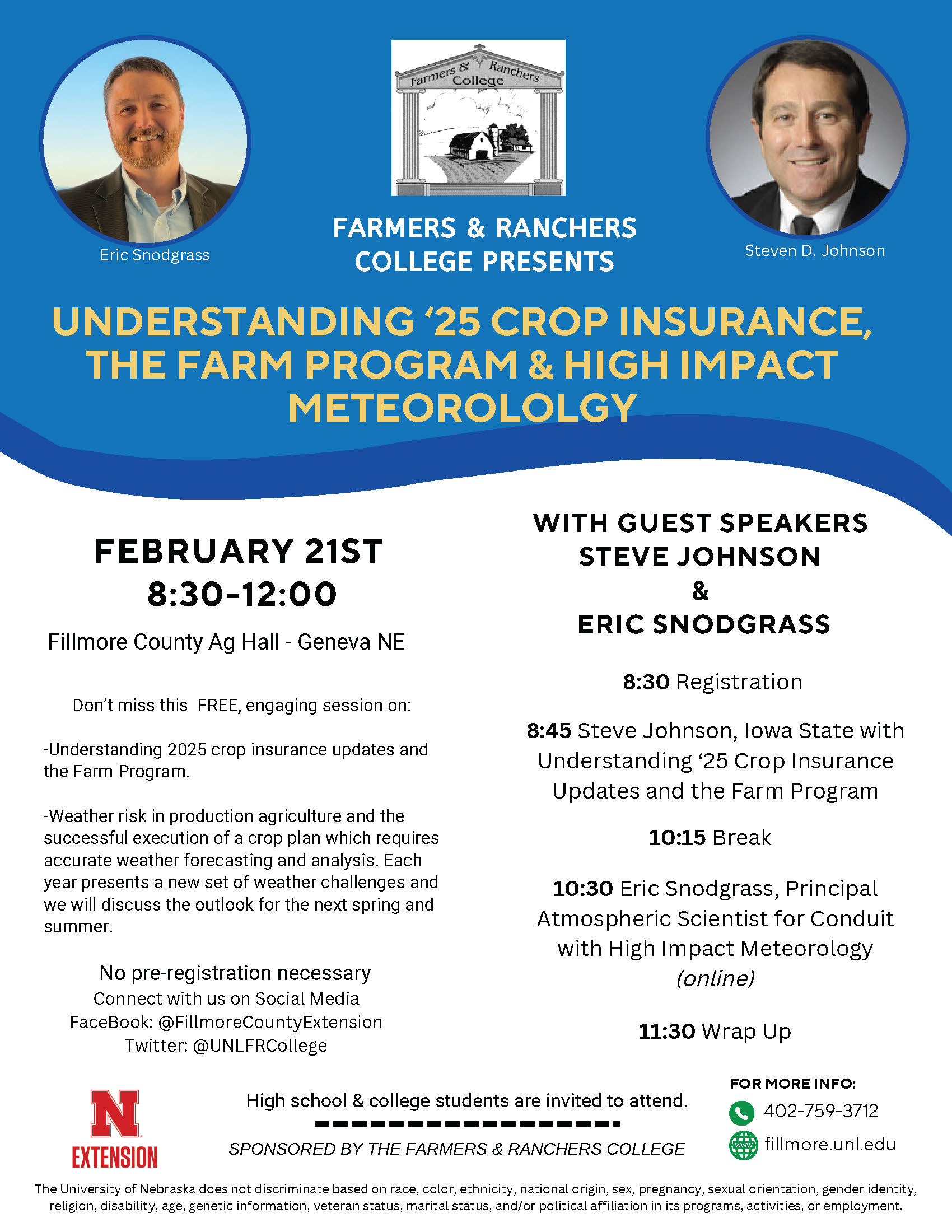
On February 21, 2025, the Farmers & Ranchers College will conclude with a comprehensive session covering crop revenue management and a 2025 weather outlook. Two nationally recognized experts will lead this program, which will be held at the Fillmore County Fairgrounds in Geneva, NE. Registration begins at 8:30 a.m., with the program starting promptly at 8:45 a.m. with Steve Johnson.

Steve Johnson served as the Farm Management Specialist in Central Iowa for Iowa State University Extension and Outreach for 21 years, retiring in early 2021. He now consults with private industry, farm organizations, commodity groups, ag media, and other agriculture-related clients, focusing on crop marketing, government farm programs, crop insurance, and crop risk management strategies. Steve has presented at winter meetings, workshops, seminars, webinars, and conferences across the Corn Belt, delivering his “Managing Crop Revenue & Market Price Risk” program. His session will address both 2024 and 2025 crop supply/demand, crop price outlooks, and strategies to manage crop insurance decisions and create a written marketing plan to capture higher futures prices.

Steve’s topics will include:

  • Latest USDA reports, highlighting 2024 & 2025 crop supply/demand and cash price projections
  • Pre-harvest marketing strategies and seasonal futures price trends
  • Projections for 2024 net farm income, plus crop costs and returns for 2024 & 2025
  • Five strategies for managing tight margins
  • How to develop crop marketing plans with price and time targets for 2024 & 2025 crops
  • Crop risk management resources and websites

Dr. Eric Snodgrass will also provide a weather update and how it relates to your operation. Weather risk is an inherent challenge in agriculture, and successful crop planning relies on accurate forecasting and analysis. We often base our operations on weather averages and recent experiences, but each year brings new challenges. In his session, Eric will discuss how to use the wealth of available weather data to stay ahead of disruptive weather events. He will cover the limits of predictability, resources for monitoring long-range forecasts, lessons learned from the previous growing season, and the risk of severe storms, particularly high winds, hail, and tornadoes. He’ll also discuss the impact of major seasonal drivers like El Niño and La Niña, as well as the outlook for the next growing season in South America, which directly competes with our crops.

Eric Snodgrass is a Principal Atmospheric Scientist for Conduit, where he develops predictive and analytical software solutions to manage weather risk in global agriculture. He provides frequent weather updates on how high-impact weather events affect global agricultural productivity. His research, which uses machine learning to assess field-level weather impacts on yields, helps improve long-range weather predictions. Eric is a sought-after speaker, presenting at over 100 conferences annually to farmers, commodity traders, and other stakeholders.

Pre-registration is not required, but it is appreciated. To register, please call the Fillmore County Extension Office at 402-759-3712 or go online at: go.unl.edu/frcollege.

Crops, Livestock, Programming

Ready, Set, Spread: Manure Application Workshops

Turning manure nutrients into better crop yields while protecting the environment will be the focus of ten Nebraska Extension Land Application Training workshops held across the state this February and March, with one held locally in Geneva on February 6th.

Land Application Training workshops focus on what fields should best utilize manure nutrients and other benefits. Each workshop will be highly participant-led with limited seating. Participants will be given a scenario and asked at the end of each activity to determine whether the field will benefit from manure application or whether there are considerations that make the field less desirable for manure application. Based on the activities, participants will then rank each field within the scenario to determine a priority ranking for the entire scenario. Activity topics will include manure nutrient value, transportation cost, soil health, water quality, neighbors, and odors. Regulations and record-keeping about manure storage and application will also be addressed during each workshop.

These manure workshops meet land application training certification needs for livestock producers that are required to do so, but they are open to anyone interested in using manure as a nutrient source on cropland as well. The Land Application Training events run from 9 am to 4 pm local time. I’ve only included some on the eastern side of the state; if you need others, go to water.unl.edu/lat.

Workshop sessions include:

  • Fillmore County Extension Office in Geneva on February 6
  • Madison County Extension Office in Norfolk on February 26
  • Nielsen Community Center in West Point on March 4
  • Rainforth Animal Health in Wisner (en Español) on March 6
  • Platte County Extension Office in Columbus on March 12

New this year, the UNL animal manure management team added two opportunities to take the workshop in Spanish. The content for the workshop will be the same in both languages, but hoping this will give Spanish speakers a chance to focus on the content of the workshop rather than the translation of English materials.

Because of limited seating and a meal provided during each workshop, registration is required and is requested 1 week ahead of each event. To ensure you can attend the location and date most convenient for you, register at water.unl.edu/lat. Workshops cost $75 per operation requiring certification or $25 per person with no expectation of certification. You can learn more about all things manure including these workshops at manure.unl.edu or by reaching out to Leslie Johnson at leslie.johnson@unl.edu.

Crops

Soybean Cyst Nematode Sampling

Years ago, when I first started Extension, there was lots of talk about soybean cyst nematodes (SCN) and called it the “silent yield robber”. Recently, a producer came into the office and asked about sampling for soybean cyst nematodes because he had a field in areas not yield what he thought it should. This made me remember the importance of sampling for SCN and management strategies. A recent CropWatch article written by Dylan Mangel, Extension Plant Pathologist and Kyle Broderick, Extension Educator shared information on sampling for SCN which I will be sharing a summary of the article below.

The reason this pest is difficult to find is that it can cause up to 30% yield loss with no significant above-ground symptoms. This is why it is an invisible threat, and many producers don’t know they have SCN and not actively managing it in their fields. As of March 15, 2024, SCN has been identified in 60 Nebraska counties. There are options for managing SCN, but the first step is to identify which fields have SCN. The sampling procedure is outlined on the CropWatch article and is recommended to sample area where there is a less than expected yield, areas where soybeans might have appeared stunted, yellow and/or defoliated earlier than the rest of the field, low spots, previously flooded areas, field entryways, field border and finally areas where sudden death syndrome or brown stem rot developed. Samples will then be sent to UNL’s Plant and Pest Diagnostic Clinic.

If you have SCN, there are four broad management recommendations. The first is to rotate between resistant varieties. Secondly, it is recommended to rotate to a non-host crop. Fortunately, corn, wheat and alfalfa are non-hosts that work well with common Nebraska rotation. Rotation can help decrease the number of SCN in the soil. The third management recommendation is to consider the use of a nematode-protectant seed treatment. Finally, continue to monitor SCN populations and levels through testing to determine if your management is effective. Sampling should continue every two to three years.

Many producers are experiencing some yield loss to soybean cyst nematodes. Actively managing these populations will provide the opportunity to recover this yield. Some Extension Offices may have sample bags for free testing. For more information, go to cropwatch.unl.edu.

Upcoming Events:
December 3, 2024, registration at 12:30, program at 1pm – Farmers & Ranchers College will feature Dr. David Kohl with “Economic Realities in the Agricultural Industry: The Pulse.”   At the Opera House in Bruning, NE.,
January 21, 2025, Cow/Calf College at U.S. Meat Animal Research Center near Clay Center
Questions or to register, call Fillmore Co. Extension at (402) 759-3712 or online at go.unl.edu/frcollege.

Crops, Programming

Farmers & Ranchers College 

The Farmers & Ranchers College continues to provide high-quality programming to area producers and agribusiness professionals with 2024-25 programming. Farmers & Ranchers College will kick off with its traditional program featuring Dr. David Kohl. The committee will continue the annual Cow/Calf College in January and end with a crop insurance and weather program in February.

This year Farmers & Ranchers College will kick off December 3rd featuring Dr. David Kohl Registration will start at 12:45 p.m. and the program will start at 1:00 p.m. at the Opera House in Bruning, NE. The program is titled, “Economic Realities in the Agricultural Industry: The Pulse.”  What economic realities can we expect to see in the global and domestic agricultural industry?  Dr. Kohl keeps a pulse on trends and factors to be mindful of during the economic downturn. Some of these topics are land and machinery values, interest rates, concentration of agriculture, importance of cash flows, non-financial factors and much more.  

On the road ahead, the good doctor will draw upon his decades of experience as an educator and businessperson to present common financial and business practices that will proactively position your business regardless of the economic cycle.  Don’t miss this high energy session in preparation for 2025! 

Many to the area are very familiar with Dr. Kohl, but if you are not, here are some details about him. Dr. Dave Kohl is an academic Hall of Famer in the College of Agriculture at Virginia Tech, Blacksburg, VA.  Dr. Kohl has keen insight into the agriculture industry gained through extensive travel, research, and involvement in ag businesses.  He has traveled nearly 10 million miles; conducted more than 6,500 presentations; and published more than 2,250 articles in his career. Dr. Kohl’s wisdom and engagement with all levels of the industry provide a unique perspective into future trends.

In 2025, the Partners in Progress –Beef Seminar (Cow/Calf College) will be at U.S. Meat Animal Research Center near Clay Center on January 21st. More details will follow as the date nears. Finally, in February, Farmers & Ranchers College will host a crop insurance and weather update.

Questions on the Farmers & Ranchers College can be directed to the Fillmore County Extension Office at (402) 759-3712. To participate and register, go to the website: go.unl.edu/frcollege.

Crops, Livestock, Programming, Uncategorized

Manure Management Programming

Turning manure nutrients into better crop yields while protecting the environment will be the focus of seven Nebraska Extension workshops being held across the state this February and March. Leslie Johnson, UNL animal manure management coordinator has announced that these workshops have traditionally focused on livestock producers because they’re required to attend manure training regularly, but efforts have been made to include crop farmers that are often recipients of the manure because the information shared is just as valuable to them and their bottom line. The workshops will still meet the educational requirements for permitted livestock operations laid out by the Nebraska Department of Environment and Energy’s title 130.

 The news release also states that participants who attend the day-long (9 a.m.–4 p.m.) event will receive NDEE land application training certification. The initial land application training certification requires participation in the full-day program, which includes lunch. Attendance at the afternoon session will meet minimum needs for recertification, but participants who only need recertification may choose to attend the full event if they wish for no additional charge. Sessions will include an update on regulations and discussions on how to best use manure on cropland. Anyone is welcome regardless of the need for certification. Crop farmers and livestock operations will learn useful information to apply to their operations.

Sessions will focus on what fields should be chosen to best utilize manure nutrients and other benefits. Each session will be highly participant-led with limited seating. Participants will be given a scenario and asked to determine the priority ranking of each field within the scenario. This ranking will be done at the end of each activity focused on manure nutrients, transportation cost, soil health, water quality, as well as neighbors and odors. Regulations and record-keeping about manure storage and application will also be addressed during each session.

Sessions include:

  • Feb. 12 — Columbus
  • Feb. 13 — Geneva
  • Feb. 19 — Scottsbluff
  • Feb. 20 — Lexington
  • Feb. 29 — Norfolk
  • March 5 — West Point
  • March 6 — Ord

Because of participation limits in each session, registration is required. If registration numbers exceed expectations, more sessions may be added. To ensure your attendance, register online. The cost of the sessions will be $75 per operation requiring certification or $25 per person with no expectation of certification.

The workshops are sponsored by the Nebraska Extension Animal Manure Management Team, which is dedicated to helping livestock and crop producers better utilize manure resources for agronomic and environmental benefits. For additional information on the workshops and other resources for managing manure nutrients, visit UNL Water or contact Leslie Johnson at 402-584-3818.

Register now

Crops, Youth

Future Agronomists at Work

In 2013, I had the opportunity to observe a crop scouting competition conducted by Iowa State University and was fortunate to garner financial and organizational support to bring the program to Nebraska in 2014. Since that time, a group of states including Iowa, Nebraska, Indiana, Kentucky, Minnesota, and Illinois have hosted contests and have been able to allow youth to experience crop production in other states. 

The purpose of the competition is to provide students an opportunity to learn crop scouting and principles of integrated pest management (IPM) for corn and soybeans in Nebraska, to obtain knowledge and skills that will be helpful in future careers and to demonstrate newer crop scouting technologies.

On September 18, 2023, five states competed at the eighth annual Regional Youth Crop Scouting Competition at the Eastern Nebraska Research, Extension and Education Center near Mead, Nebraska. Teams of youth participated by completing nine crop scouting exercises in field plots. This educational, hands-on program provided students an opportunity to learn crop scouting and principles of integrated pest management (IPM) for corn and soybeans, obtain knowledge and skills that will be helpful in future careers and to demonstrate newer crop scouting technologies.

The top two teams from Nebraska, Iowa, Illinois, Minnesota and Indiana qualified for the competition. Extension faculty from Nebraska, Iowa, Minnesota and Illinois served as judges for the program and tested the teams’ knowledge on the basics of scouting corn and soybean fields. This included crop staging; looking for patterns of crop injury; disease, insect and weed identification; precision ag exercise; cover crops, etc.

Results from the 2023 competition were as follows:

  • First place — Iowa team Clayton County #1: Ben Gibson, Amelya Weigand, Keaton Klingman and Jacob Schilling.
  • Second place — Nebraska team Colfax County #2: Callen Jedlicka, Cody Jedlicka, Daphne Jedlicka and Justin Eisennman.
  • Third place — Indiana team Cascade FFA: Will Thompson, Zach Benter, Adryanah Hendershot, Ethan Tames and Evan Fishel.
  • Fourth place (tie) — Nebraska team Colfax County #1: Josh Eisenmann, Rylan Nelson and Hayden Bailey; and Iowa team Clayton County #2: Mindy Keehner, Henry Reimber, Cora Keehner and Carter Hillers

Also participating was the Indiana team of Heritage Hills FFA Chapter with Megan Steinmetz, Riley Steinmetz, Dani Beier, Trenten VanHorn and Owen Foertsch. From Illinois was Wesclin FFA with Camren Ferri, Michael Anderscavage, Lilly Biggs, Cole Friederich and Carson Richter, and Pontiac FFA with Jared Bressner, Brock Clement, Chancey Haas, Cole Rapp and Landen Wilson. Rice/Dakota County from Minnesota consisted of Nick Bayer, Molly Albers, Garrett Ostermann and Lucas Deplazes, and Sebeka FFA with Mindy Keehner, Henry Reimber, Cora Keehner and Carter Hillers.

More information about the crop scouting competition is available online at CropWatch. Click on the link “Crop Scouting Competition”.

This program was sponsored by the Nebraska Independent Crop Consultant Association, Nebraska Soybean Board, Ward Laboratories and UNL’s Doctor of Plant Health Program in collaboration with Nebraska Extension. For more information about the program, please contact Brandy VanDeWalle, Nebraska Extension educator, at (402) 759-3712.

Crops, Irrigation, Livestock

Drought Impacts on People

With the ongoing drought, I decided to examine how this not only impacts our crops, pastures, landscapes, and lawns, but the stress it causes communities and people. The National Drought Mitigation Center based out of the University of Nebraska, provides a summary of impacts drought has in our lives. We all need water for different things in our lives, from growing crops to washing dishes, doing laundry, and recreational uses.

Drought has a ripple effect throughout the community and economy. For example, if a farmer’s yields are way below average and have a larger cost of production because of the need to irrigation more frequently, that results in less income for that farmer. A ripple effect related to that might be less purchases at an implement dealer or other farm-related businesses. If enough farmers lose their crops, those businesses might feel the impacts, potentially causing more negative impacts in the community. The same can be said for livestock producers.

UNL’s Drought Mitigation Center also points out there are usually economic, environmental, and social impacts in drought conditions. Economic impacts of drought cost people and businesses money. In the example described above, when farmers and ranchers are struggling that usually creates economic stress for various businesses in the community. This could cause an issue with people having to pay more for food as well.

Environmental impacts can shrink food and drinking water supplies for fish and wildlife, lead to a migration of wildlife, an increase in wildfires, result in wind erosion of soils, create a loss of wetlands and cause an increase in disease within wild animals, because of food and water supplies. There will also be lower water levels in reservoirs, lakes, and ponds.

Photo by Pedro Figueras on Pexels.com

Social impacts of drought include public safety, health concerns, conflicts between people when there isn’t enough water to go around and changes in lifestyle. Drought can cause anxiety or depression about economic losses, health problems related to dust, a threat to public safety from an increased number of range fires, and reduced incomes. Fewer recreational activities might impact a family’s normal outings and if severe enough, people may have to move from farms to towns or from one town to another to be economically viable.

While there isn’t much we can do about drought, there are resources available on the Nebraska Department of Agriculture’s website at nda.nebraska.gov/drought. Some of the many resources included are the Hay & Forage Hotline, Farm Service Agency Emergency programs, etc. Nebraska also has the Rural Response Hotline which can assist with financial assistance, legal assistance, disaster relief and emotional support. It can be accessed at farmhotline.com or 800-464-0258. Nebraska Extension’s Rural Family Stress and Wellness Team promotes the health and wellness of all Nebraskans and has resources available at ruralwellness.unl.edu. As always, Nebraska Extension has resources to help with all your needs. 

Crops, Programming, Youth

Youth Crop Scouting Competition – Connecting Youth with Crops

Looking for a fun club project? Want to unite your club members? Running out of ideas for club meetings?  If you answered, “yes” to any of these questions, help is on the way!  Nebraska Extension is pleased to present the 10th annual Crop Scouting Competition for Nebraska youth. Youth interested in crops can learn about crop growth & development and basic crop scouting principles. 

Don’t know a lot about crops?  Ask a local agronomist to assist by providing a short lesson on crop production. You can have the agronomist meet with youth a little during each meeting or outside of the meeting. This is one way to engage those youth interested in crops. 

This contest will be held at the Eastern Nebraska Research & Extension Center near Mead, Nebraska on August 2, 2023. The event will include both indoor and outdoor events. Teams of junior high and high school students (those completing 5-12th grades) from across Nebraska are invited to participate. This event is limited to the first ten teams who sign-up! 

Clubs or other organizations may enter a team composed of three to five participants. An adult team leader must accompany each team of students. Team leaders could be FFA advisors, crop consultants, extension staff, coop employees, etc. 

Top-scoring teams win prizes: $500 for first, $250 for second, $100 for third place. Top two teams will be eligible for regional competition held virtually this year.

Teams will be expected to know the basics of scouting corn and soybean fields. This includes crop staging; looking for patterns of crop injury; disease, insect and weed seedling identification; etc. Other topics many include but are not limited to, pesticide safety, nutrient disorders, and herbicide injury. 

More information about the crop scouting competition and instructions on how to register a team are available online at cropwatch.unl.edu/youth. Register at: https://go.unl.edu/cropscoutingreg

Teams must be registered by July 15. This program is sponsored by Nebraska Independent Crop Consultant Association, Ward Laboratories, the Nebraska Soybean Board and Nebraska Extension.