Crops, Programming

Field Assessments To Improve Efficiency Workshops  

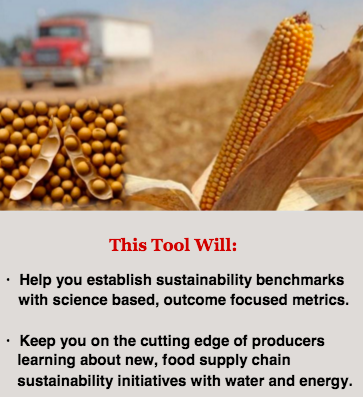
Nebraska Extension in Fillmore County announces that Geneva will be a host site for a new initiative that seeks to enhance the knowledge of Nebraska corn, soybean and wheat producers on their sustainability and operational efficiency measures. Participating farmers will use a new web based tool called the Fieldprint® Calculator. Calculating “Fieldprints” can help growers to establish benchmark data on a field and track improvements overtime, set energy saving and efficiency goals and compare performance against local, state and national benchmarks.FtoMkt1

The Fieldprint Calculator is simple to use, though the technology behind it is very complex.

The new field assessment initiative led by Nebraska Extension is a hands-on workshop and participating growers will take home documentation on eight sustainability and efficiency indicators. These measures are Land Use, Conservation, Soil Carbon, Irrigation Water Use, Water Quality, Energy Use, Greenhouse Gas Emissions and Water Quality. Participants will select a representative crop field for 2015 and complete a data input sheet in advance of the Fieldprint® Calculator workshops. Meals and workshop materials are sponsored thanks to a University of Nebraska Extension Innovation grant. Computer laptops are provided to participants or bring your own.

The workshop instructors include a core team of University of Nebraska Extension Educators and Specialists. They are Randy Pryor, Gary Zoubek, Gary Lesoing, John Hay and Charles Schapiro along with local facilitating Extension Educators.FtoMkt
For more information on the Geneva workshop and to pre-register by the December 3rd deadline, contact the Fillmore County Extension office at 402-759-3712 or email Brandy VanDeWalle at brandy.vandewalle@unl.edu.

Area Workshop Times And Locations:

Lincoln
Monday, December 7, 9 a.m. – 1 p.m.
UNL Extension Office in Lancaster County, 444 Cherrycreek Road
Contact: Tyler Williams, (402) 441-7180 or tyler.williams@unl.edu

Beatrice
Monday, December 7, 5:30 – 9 p.m.
UNL Extension Office in Gage County, 1115 West Scott St.
Contact: Paul Hay, (402) 223-1384 or paul.hay@unl.edu

Auburn
Tuesday, December 8, 9 a.m. – 1 p.m. Nemaha County Hospital Meeting Room, 2022 13th St.
Contact: Gary Lesoing, (402) 274-4755 or gary.lesoing@unl.edu 

Geneva
Tuesday, Dec. 8, 5:30 – 9 p.m. UNL Extension Office in Fillmore County, 1340 G St.
Contact: Brandy VanDeWalle, (402) 759-3712 or brandy.vandewalle@unl.edu

Clay Center
Wednesday, Dec. 9, 9 a.m. – 1 p.m.
UNL Extension Office in Clay County, 111 West Fairfield Contact: Jennifer Rees, (402) 762-3644 or jenny.rees@unl.edu

Central City
Wednesday, Dec. 9, 5:30 – 9 p.m.
UNL Extension Office in Merrick County, 1510 18th St.
Contact: Troy Ingram, (308) 946-3843 or troy.ingram@unl.edu

Fremont
Thursday, Dec. 10, 9 a.m. – 1 p.m. UNL Extension Office in Dodge County, 1206 West 23rd St.
Contact: Nathan Mueller, (402) 727-2775 or nathan.mueller@unl.edu

Mead
Friday, Dec. 11, 9 a.m. – 1 p.m.
UNL Extension Office in Saunders County, 1071 County Road G
Contact: Keith Glewen, (402) 624-8030 or kglewen1@unl.edu


Crops, Programming, Youth

Science & Research SHOULD Matter

Last week, you might recall that I shared how society in general has become more science illiterate over the past decades and basic definitions of science and research. One particular part of the science definition important to consider and has implications on the agricultural industry. Science as defined by Merriam-Webster, “The state of knowing: knowledge as distinguished from ignorance or misunderstanding”. “As distinguished from ignorance or misunderstanding”… When people make decisions based on science, they are using facts to support their decision; however recently, large companies and food chains are making decisions with ignorance and misunderstanding, rather than using science.

As an educator, the first thing I want to do (and often do), when various companies use their money and marketing schemes to attack agriculture convois fire back with facts and data explaining why or how that particular company is wrong with their bold statements that a majority of the time, have no sound science or data to back their decisions. Some people just don’t enough about an issue or haven’t researched an issue from credible sources and providing the science-based information might work; however an overwhelming majority of consumers just believe what they hear from large companies. After all, large companies have deep pockets to spend on advertising and are savvy in their approaches, such as Chipotle. Blasting the average Harvestwebconsumer with facts is usually not the most effective way to communicate with them. First, we must “meet them where they are.” Find something you have in common with them and try to understand why they feel a particular way about an issue.

An example approach I might take is to engage in conversation with an anti-GMO (genetically modified organism) person. First, find some things we have in common. It might be they have two young children like me, so we can talk about what it is like to be a working mother and raising children. Then, ask that person, why they feel a particular way about GMOs. In a non-defensive way, I can share with them my experiences and knowledge of GMOs and that I have no problems with them and they won’t harm my children. Even if this conversation doesn’t change the person’s mind, it might make them have some respect for my point of view and agree there is a place for all kinds of foods and agriculture. While I understand this type of approach takes time and might not always work, whenever one becomes defensive, it never seems to do any good.

When you take the science illiteracy component and add how disconnected consumers are from agriculture, it is inevitable that misinformation and emotion-driven decisions will be made. Our role as agriculturalists is to engage with people first, and then educate – a clear message I received from the AgChat Foundation conference last year. We need to be engaged in these difficult conversations to help educate others.

As a farmer’s daughter, I can assure my non-agricultural friends, famers are some of the hardest working and intelligent people you will ever meet. I also feel privileged to work with farmers and ranchers and the future of agriculture through our youth. Agriculture is and will always be the backbone of our country and without it, we would not be here today.

Crops, Programming, Youth

Does Science & Research Even Matter?

What is science? What is research? Why does science and research matter? Do they even matter anymore? According to Merriam-Webster, science is defined as, “knowledge about or study of the natural world based on facts learned through experiments and observation.” It also goes on to say, “the state of knowing: knowledge as distinguished from ignorance or misunderstanding” or “knowledge covering general truths or the operation of general laws especially as obtained and tested through scientific method.” Merriam-Webster defines research as, “careful study that is done to find and report new knowledge about something” or “the activity of getting information about a subject.”apple

In this article, I’ve decided to write a two-part series focusing on concerns regarding how decisions of large companies and even consumer decisions are made. First of all, I do not claim to be a scientist or researcher, but my role in Extension requires me to provide clientele research-based, scientific driven information. This is one of the great things about all Extension systems! We do not get paid from companies, so we are non-biased and have access to some of the best researchers in their field who are working on cutting-edge research. When a client calls and needs information, I have access to a whole network of researchers or others with higher education in that particular subject. I can provide my client with solid, data-driven information so he/she can make the best decision possible to solve their problem.

For example, if a client has a horticultural question, I might know the answer based on experience of the topic, but if not, I have a network of horticulturists who have been trained in that area to answer the question. If a client has a question related to food safety, we have a great website with reliable information I can direct them or again, a network of educators focused in nutrition and food-science to refer them. The United States is the envy of many countries for having such a system!

You might be wondering where I am going with this and how does this relate to my definition of science and research at the beginning of this article. The point is, University and even industry scientists have an important role in solving important issues ahead of us such as feeding the growing population and dealing with climate variability and weather extremes. According to Anastasiya Borys in an article from the Harvard Political Review, the decline in the United States’ position as the global leader in science could not only diminish U.S. economic growth, but our national security. In 2014, China graduated more English-speaking engineers than the United States and America’s share of high-tech exports fell from 21 to 14 percent, while China’s rose from seven to 20 percent. There are efforts to improve youth’s interest in science, technology, engineering and math underway in the United States, of which Extension and 4-H are involved.

The above facts are evidence that somewhere along the way, the average American lost a firm grasp of basic scientific facts and concepts. In 2004, the National Science Board published information supporting that “scientific literacy in the United States (and in other countries) is fairly low. Scientific literacy is defined as knowing basic facts and concepts about science and having an understanding of how science works.” Michigan State University Professor, Jon Miller reported that “over recent decades, the number of public policy controversies that require some scientific or technical knowledge for effective participation has been increasing…. (including) any number of issues, such as the siting of nuclear power plants…. and the need for an informed citizenry in the formation of public policy.” Miller, who wrote this article in 2007 pointed out, “Having a basic knowledge of scientific principles is no longer a luxury but, in today’s complex world, a necessity.”

Next week, I’ll explain how this relates to the agricultural industry.

Crops

Silent Soybean Yield Robber

For years, Extension has encouraged farmers to soil sample their fields for soybean cyst nematoes (SCN). A recent CropWatch article written by John Wilson and Loren Giesler from Nebraska Extension provided the “Top Five” reasons to sample for SCN this fall so I’ve decided to share that in this week’s article.

Number Five: Poor yielding fields or areas are likely fresh on your mind or evident from yield maps. These are areas where yields didn’t meet expectations and you can’t “blame” it on anything else, such as weeds, compaction, insects, soil type, herbicide injury, etc. What reinforces this is if corn yields continue to increase while soybean yields hit a plateau or even start to drop off.

(Photo from CropWatch)

Number Four: Life is generally less hectic after harvest and you can dedicate time to taking good representative samples. Take 20-25 soil cores from the area and mix the samples together. Then take a sample from this composite sample (representing the area or field) and submit it for analysis. Sample problem areas in a field separate from normal yielding areas and compare SCN egg counts. If you don’t have yield variations and are just trying to determine if SCN is present, sample areas up to 80 acres in size.

Number Three: You, your co-op, or your crop consultant or field scout often pull soil samples in the fall to determine fertilizer needs for the next year. When sampling for fertilizer, sample for SCN. Both need topsoil samples six to eight inches deep, making fall an opportune time to do both samples in one trip. Take a few extra cores in the field, mix them all together, and then split the sample, using half for fertilizer recommendations and half for SCN analysis.

Number Two: The Nebraska Soybean Board promotes sampling by covering the cost of the SCN analysis. Normally there is a $20 fee for soil samples submitted to the University of Nebraska Plant and Pest Diagnostic Clinic for SCN analysis. Commercial labs will charge $15 to $30. If you submit five samples from your farming operation, you will receive the equivalent of $100 of checkoff dollars you have paid. Special sample bags for this free analysis are available at your local Nebraska Extension office.

Number One: The newest reason is for soybean growers who already know they have SCN in their field and have been working to manage it. About 98% of the SCN-resistant soybeans varieties available to farmers all use the same source of resistance (PI88788). The reason for this is simple: It was easiest to breed in this source of resistance and still maintain yields. The downside to this is that there is a lot of variability in the genetics of the SCN in any field and no source of resistance is going to control all of the SCN present. Just like using the same herbicide, insecticide, or fungicide year after year will lead to resistance, using the same source of SCN resistance will eventually allow a portion of that SCN population to survive and reproduce on soybeans with that genetic source of resistance. That is why it is important for soybean growers to check their fields periodically (every six to seven years) to see if the SCN population is increasing or decreasing.

If your initial confirmation of SCN in a field was found in a soil sample taken in the fall after a soybean crop, six or seven years later sample that field again in the fall after a soybean crop. If the SCN population remains constant or decreases, your resistant varieties are doing their job. However, if SCN counts are higher, you will want to select a soybean variety with a different source of SCN resistance the next time you plant soybeans in that field. Your choices will be greatly reduced, but long-term it will be worth it to keep the SCN population in check in your field. It is much easier to identify low levels of SCN in the soil and keep them low than it is to let SCN populations increase, then try to bring them back down.

For more information, check out Nebraska Extension’s CropWatch website.

Crops

Harvest Safety Reminders

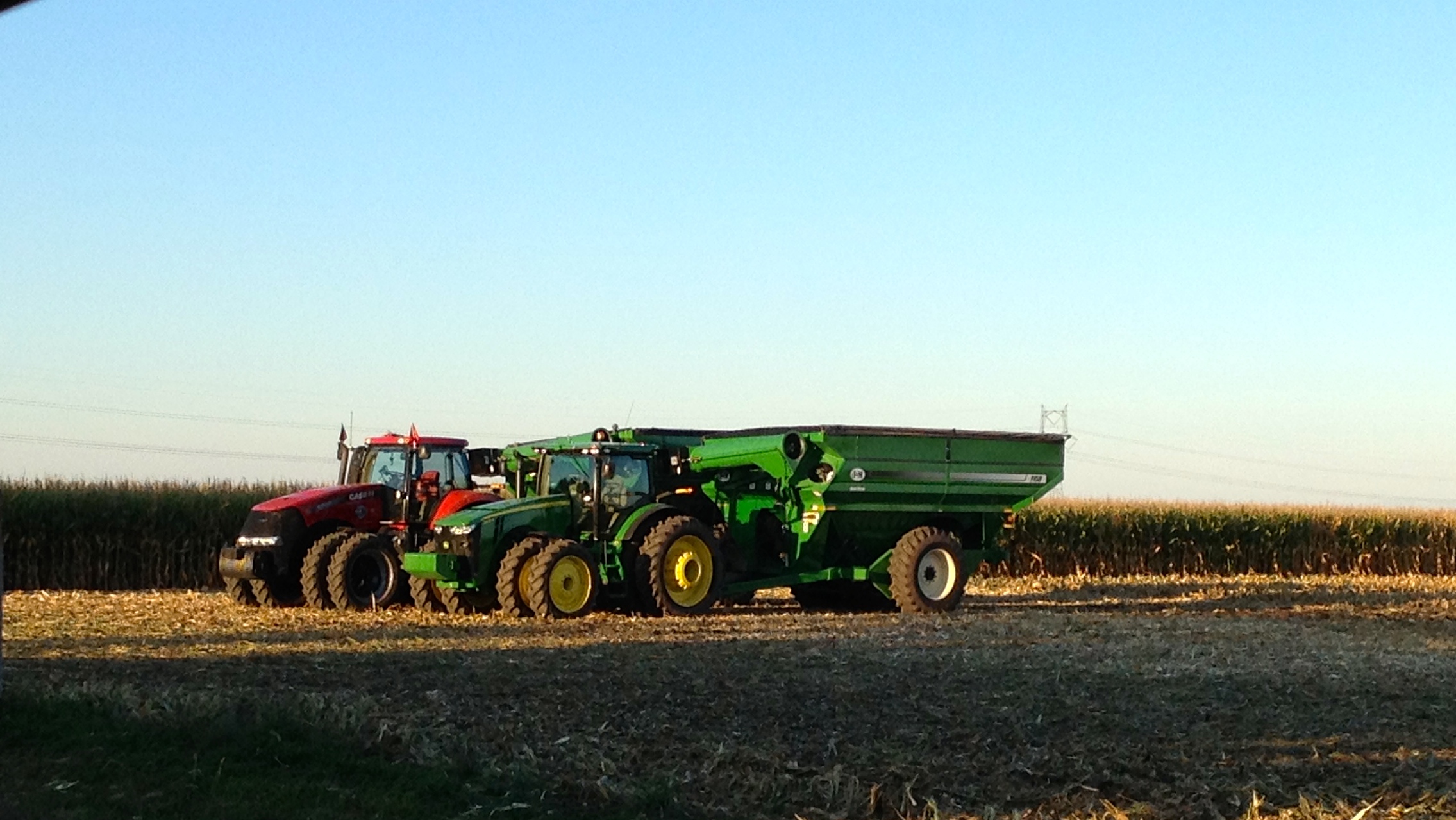
It is hard to believe that harvest will soon be in full swing! With harvest comes more traffic on the county roads and other stresses for farmers. It never fails, that equipment can break, there can be delays at the elevator and those extra-long hours can all add extra stress to farmers. That being said, it is important to carefully slow down and realize the many hazards you are being exposed to during harvest.IMG_2639

An Iowa State Extension publication, Harvest Safety Yields Big Dividends points out that injuries can occur by taking shortcuts to perform routine tasks, not getting enough sleep or regular breaks, or failing to follow safety practices. Some injuries occur when operators are pulled into the intake area of harvesting machines, such as balers, combines, or corn pickers, and many injuries occur from slips or falls around these machines. Exposure to powerful machinery is highest during the harvest season. The equipment must be powerful to effectively handle large amounts of agricultural commodities. When equipment plugs, NEVER try to unplug it with live equipment, instead always disengage power and turn off the engine before trying to manually clear a plugged machine. Regular maintenance of these machines can also make harvest go smoother. Also, lots of accidents actually happen by the operator slipping and falling off equipment.

In the same publication listed above, there are several tips for reducing fall hazards:

  • Always keep all platforms free of tools or other objects.
  • Frequently clean the steps and other areas where workers stand to service, mount and dismount, or operate the machine.
  • Wear well-fitting, comfortable shoes with non-slip soles.
  • Use grab bars when mounting or dismounting machinery.
  • Be sure your position is stable before you work on a machine.
  • Recognize that fatigue, stress, drugs or alcohol, and age may affect stability.

Other helpful tips during harvest are to keep kids away from machinery. Tell them the dangers that can occur and not to play near the equipment, even when it is shut off; you never know when they will be playing in hidden areas of the equipment. Operators should double check where kids are before moving the equipment. Too many accidents can occur when youth are in the path of equipment out of the operator’s view. Operators of all equipment should check in regularly and let someone know where you are. Keep all guards on equipment; it is there for a reason!

It is also important for the public to understand the increased traffic on public roads and be patient. The greatest threat raised between farm equipment and passenger vehicles is the difference in speed. Farm equipment runs at an average speed of 20 miles per hour while passenger vehicles average 60 miles per hour. If the motor vehicle overtakes a tractor, the impact is comparable to a passenger vehicle hitting a brick wall at 40 miles per hour. If the tractor and a car, mini-van or pickup collides head on, the impact is the same as hitting a brick wall at 60 miles per hour.Combining2011 002

Farmers can reduce the chances of an accident by using warning lights, reflectors and reflective tape on their machinery to keep passenger vehicle operators aware of their presence on roads. Some farmers may choose to install supplemental lights to increase visibility. It also is a good idea for producers to keep off heavily traveled roads as much as possible and avoid moving equipment during the busiest part of the day.

Some farm equipment, such as combines, can take up more than half of the road. Even so, it is up to both drivers to be aware of their own limitations and adjust accordingly. Farmers should not take up more space than is needed, but other drivers should try to provide as much room as possible. It is a good idea for passenger vehicles to turn off onto side or field roads until larger machinery has passed. Whenever possible, farmers should use an escort vehicle such as a pickup to precede or follow large machinery and equipment on public roads. More than one escort may be necessary. Ideally, the escort vehicle would have extra warning lights and a sign indicating oversized or slow equipment ahead or following.

Have a safe harvest!

Crops

Proposed Pesticide Certification Rule Changes

As many producers know, in order to obtain a pesticide applicators license and purchase Restricted Use Pesticides (RUPs), every three years you complete a private pesticide certification program or self-study program. The Environmental Protection Agency (EPA) is proposing stricter standards for people to use RUPs and have determined that use of these RUPs would be safer with increased supervision and oversight, and to require all people who apply RUPs to be at least 18 years old (Nebraska currently requires applicators to be 16 years old). These proposed changes apply to the FIFRA/Certification of Pesticide Applicators Rule.pested

Information below has been summarized from the Nebraska Extension Pesticide Safety Education Program which I’ve decided to share with you this week, to make you aware and allow you to provide your feedback as the public comment period for the proposed changes to the certification rule will run through November 23, 2015.

Certifications will continue to be renewed every three years. Additional specialized licensing is also proposed for certain methods of application that can pose greater risks if not conducted properly, such as fumigation and aerial application. State agencies issue licenses to pesticide applicators when they can demonstrate under an EPA-approved program their ability to use these products safely. Many states already have some or many of EPA’s proposed changes in place. The proposal promotes consistency across state programs by encouraging inter-state recognition of licenses, which would reduce the burden on applicators and commercial companies that work across state lines.

The EPA is also proposing that states adopt a Continuing Education Credit (CEU) Training Program. The proposed changes listed on the rule comparison chart define a CEU as 50 minutes of active training time. Currently, applicators in Nebraska are not required to train for a specific time, but requires that each competency be addressed during recertification training. The proposed changes require that both private and commercial applicators receive 6 CEUs covering core content (general standards), 3 CEUs for each private category (new categories proposed: aerial, soil fumigation, and non-soil fumigation), and 6 CEUs for each commercial category.

How do these proposed rule changes impact private pesticide applicators? Every three years, private applicators would need 5 hours of training to recertify, unless they needed to add another category, which would be an additional 3 hours for private categories and 6 hours for commercial applicators. Also, for first time private applicators, a test would be required to prove competency. For more information on this topic, go to Nebraska Extension Pesticide Safety Education Program website.

Crops, Youth

Youth Crop Scouting Results

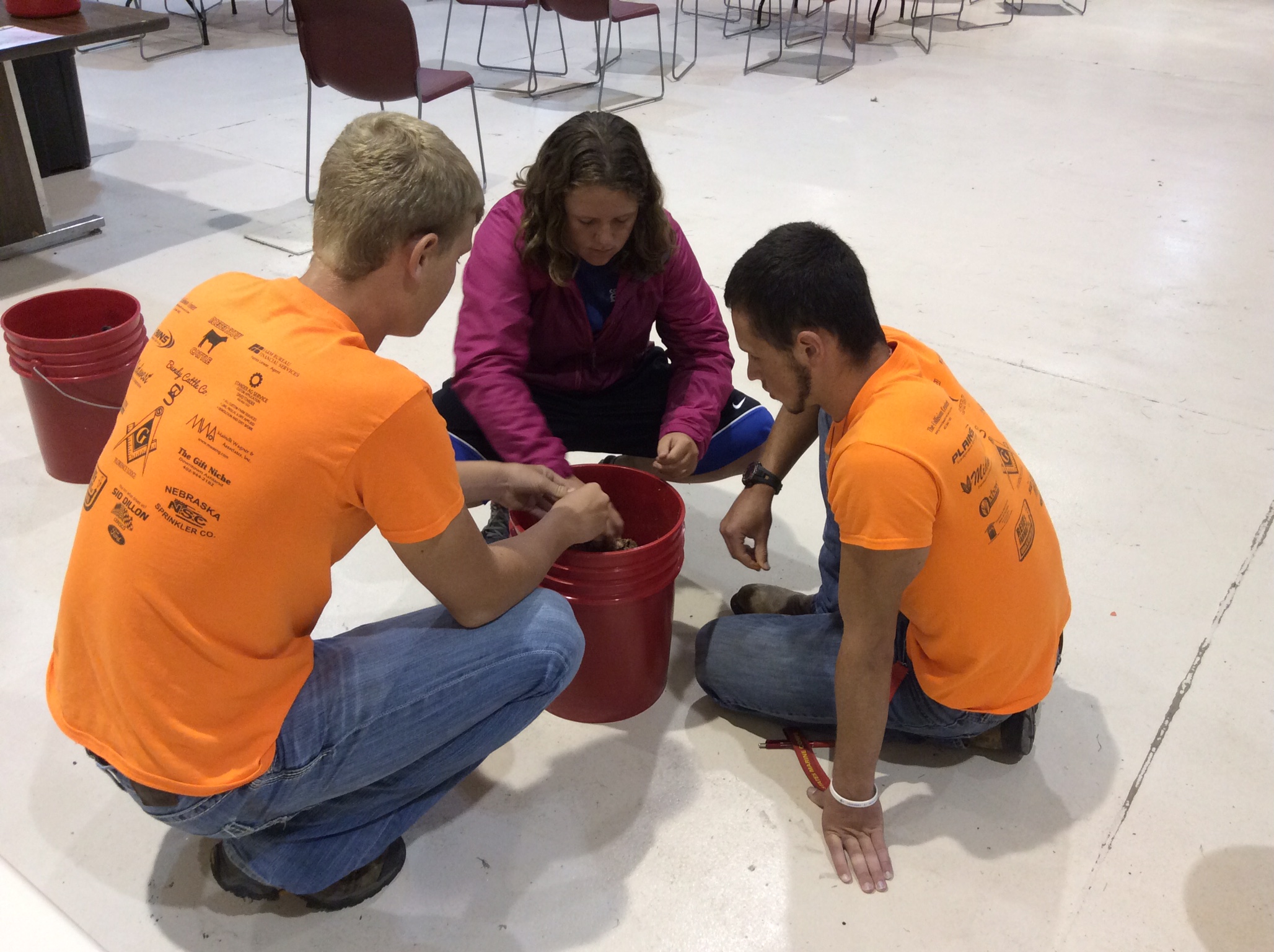
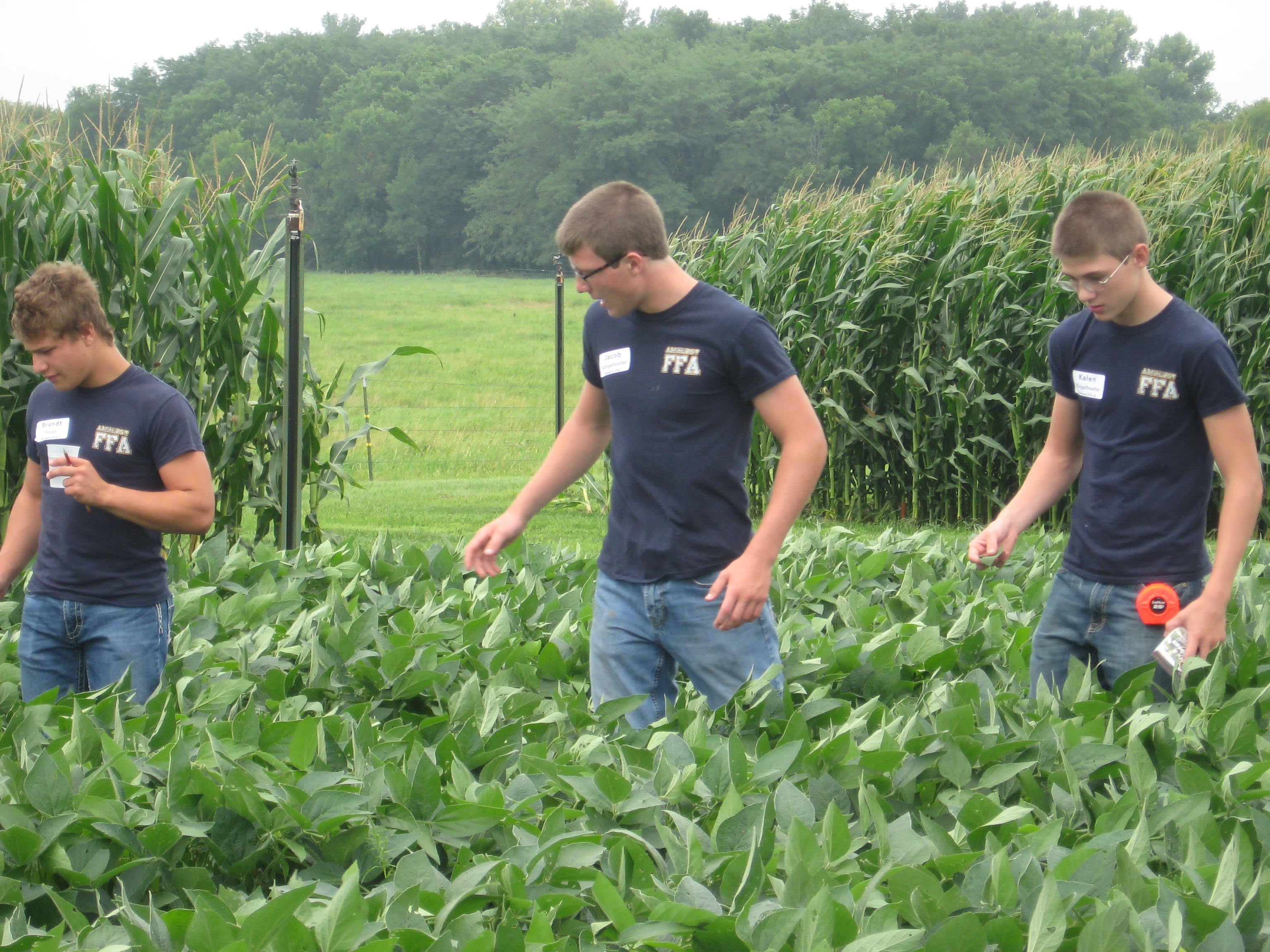
Nebraska Extension is pleased to announce eight teams from across Nebraska competed in the second annual Crop Scouting Competition for Nebraska youth. It was held in at the ARDC near Mead, Nebraska on August 4, 2015. Teams of students (those completing 7-12th grades) participated by completing a written knowledge test and eight crop scouting exercises in field plots.IMG_0078_2

The purpose of the competition was to provide students an opportunity to learn crop scouting and principles of integrated pest management (IPM) for corn and soybeans in Nebraska, to obtain knowledge and skills that will be helpful in future careers and to demonstrate newer crop scouting technologies.

Results from the 2015 competition were as follows:

First place- Colfax County 4-H

Second place – Humphrey FFA IMG_0084_2

Third place – Amherst FFA

Also participating were

  • Ashland-Greenwood FFA
  • Sumner/Eddyville/Miller FFA with two teams
  • Pawnee City FFA with two teams

Top-scoring teams won prizes: $500 for first, $300 for second, $100 for third place.

Teams were expected to know the basics of scouting corn and soybean fields. This included crop staging; looking for patterns of crop injury; disease, insect and weed seedling identification; etc.IMG_0077

More information about the crop scouting competition are available online at cropwatch.unl.edu/youth. Click on the link that says, “Crop Scouting Competition”. Next year’s competition will be held August 2nd, 2015 at UNL’s ARDC again.

This program was sponsored by DuPont Pioneer, the Nebraska Soybean Board, in collaboration with Nebraska Extension.

Crops, Programming, Youth

Connecting Youth with Crops

Nebraska Extension is pleased to present the second annual Crop Scouting Competition for Nebraska youth. Youth interested in crops have the opportunity to learn about crop growth & development and basic crop scouting principles.

Don’t know a lot about crops? Ask a local agronomist to assist by providing a short lesson on crop production. You can have the agronomist meet with youth a little during each meeting or outside of the meeting. This is one way to engage those youth interested in crops.IMG_4473

This contest will be held at the ARDC near Mead, Nebraska on August 4, 2015. The event will include both indoor and outdoor events. Teams of junior high and high school students (those completing 7-12th grades) from across Nebraska are invited to participate.

Clubs or other organizations may enter a team composed of three or four participants. An adult team leader must accompany each team of students. Team leaders could be FFA advisors, crop consultants, extension staff, coop employees, etc.

Top-scoring teams win prizes: $500 for first, $300 for second, $250 for third and $100 for fourth place.

Teams will be expected to know the basics of scouting corn and soybean fields. This includes crop staging; looking for patterns of crop injury; disease, insect and weed seedling identification; etc. Other topics many include but are not limited to, pesticide safety, nutrient disorders, and herbicide injury.

More information about the crop scouting competition and instructions on how to register a team are available online at cropwatch.unl.edu/youth. Click on the link that says, “Crop Scouting Competition”.

Teams must be registered by July 15. Registration is $50/team; the fee will be refunded when the team attends the competition. Payment by check is due along with the registration form by July 15. This program is sponsored by DuPont Pioneer, the Nebraska Soybean Board and Nebraska Extension.

Crops, Programming

Weed Control Field Day

View on-site demonstrations of new weed control technologies and herbicides at the Weed Management Field Day on July 1 at Clay Center. The event, which will be held at the South Central Ag Lab (SCAL), begins at 8:30 and ends at 1 p.m. after a free lunch.

The first morning tour looks at weed control in corn. Demonstrations of new technologies and tours of weed control projects will include:weed field day

  • Comparison of Herbicide Programs for Weed Control in Corn
  • Herbicide Programs in 2,4-D plus Glyphosate-Resistant Corn (Enlist™)
  • Dose Response of Acuron™ Applied PRE for Weed Control in Corn
  • Anthem® Maxx Applied PRE in Corn
  • Evaluate Weed Control and Crop Response of Solstice™
  • Corvus® Followed by DiFlexx™ or Laudis™ plus DiFlexx for Weed Control in Corn

The second tour, starting at 10:30 a.m., includes demonstration of new technologies and herbicides for weed control in soybean, including:

  • Comparison of Herbicide Programs for Weed Control in Soybean
  • Herbicide Programs in Dicamba plus Glyphosate-Resistant Soybean
  • Herbicide Programs in 2,4-D plus Glyphosate-Resistant Soybean (Enlist™)
  • Weed Control in Isoxaflutole-Resistant Soybean (Balance® Bean)
  • Authority®/Anthem®/Marvel™ for Weed Control in Soybean
  • Importance of Soil Residual Herbicides for Weed Contol in Soybean

For more information about this event, see the Program Flyer at cropwatch.unl.edu or contact Amit Jhala , 402-472-1534. Three CEU credits will be awarded. Pre-registrations are requested for a lunch count. Preregister at agronomy.unl.edu/weedresistmgt.

Crops

Managing Windrow Disease In Alfalfa

Recently I received an email from Bruce Anderson about ‘windrow disease’ which I’ve noticed so thought I’d share his information in this week’s column. Windrow disease — that’s the name he gives to the striped appearance in fields where alfalfa windrows remained so long that regrowth was delayed.  Usually it’s due to rained on hay and sometimes, insects.

Windrow disease presents special challenges.  Weeds often invade, requiring spraying to maintain quality and protect stands.  During the next growth period, plants that were not smothered regrow rapidly, while plants underneath the windrow suffer delays.  Part of the field often will begin to bloom while windrow-stressed plants are still short and tender.  So when do you harvest?  When the first plants begin to bloom or do you wait until injured plants are ready?

Bruce suggests using two factors to tell you when you should cut — the health and vigor of your stand and the nutrient needs of your livestock.  For example, is your alfalfa healthy and re-growing well?  If not, wait to cut until stunted plants begin to bloom so you can avoid weakening them even more.

But, if your alfalfa is in good shape, then cut when it will best meet the needs of your animals.  Dairy cows need alfalfa that is cut early, so harvest when the first plants begin to bloom.  Regrowth of injured plants may be slow after cutting, but this sacrifice is needed for profitable milk production.  Beef cows, though, do not need such rich hay.  So if the hay will be fed to beef cattle, let stunted plants recover, and then cut when they are ready to bloom.

Hopefully, by next cut, growth will be more uniform, plants healthy, and production back to normal.