There has been a huge interest in gardening during this time period. For some people, this might be their first time with a garden and for some, we’ve been gardening for years, but are always looking for tips to improve productivity. If you fit into one of those categories, join Nicole Stoner, Gage County Extension Educator, for an online seminar about managing your backyard garden on Tuesday, June 2, 2020, 6:30 PM – 7:30 PM. To receive the Zoom login, contact Nicole by Friday, May 29, 2020 at nstoner2@unl.edu.
When hail strikes and growers have questions, Nebraska Extension has new resources to answer them at Hail Know located online at cropwatch.unl.edu/hailknow. Videos, infographics, and articles by a team of Extension experts in climate science, agronomy, engineering, agricultural technology, economics, and disaster education have been developed to build upon and expand Extension’s hail-related programs. Hail Know focuses on six key topics: Hail formation and storms; damage assessment; crop insurance and risk management; replanting considerations; managing a recovering crop; and cover crops.
In the aftermath of a hailstorm visit Hail Know for the answers and certainty, you need to make sound, research-based decisions to manage your crop. Hail Know is also on social media. Follow @HailKnowUNL on Twitter at twitter.com/HailKnowUNL and like Hail Know on Facebook at facebook.com/HailKnowUNL for all the latest information and updates.
Hail Know is a section of CropWatch.unl.edu, Nebraska Extension’s crop production and crop pest management website. The development of Hail Know was funded by a USDA National Institute of Food and Agriculture (NIFA) Smith-Lever Special Needs Grant with matching funds from the University of Nebraska-Lincoln. The column was co-written with Ashley Mueller, Nebraska Extension Disaster Educator. While you cannot prevent hail, you can prepare for and respond quickly when dealing with hail damage to crops. Nebraska Extension is here to help you make informed, timely decisions. Know your crop, know your tech, know your bottom line.
Nebraska Extension and the Department of Agronomy and Horticulture have launched a new student gardening competition to take place this summer. The Biggest Grower competition offers Nebraska high school students the opportunity to learn how to start their own garden and small growing operation. Students will plant, grow, cultivate, harvest and distribute their own fresh specialty crops in a garden space or in containers. Participants will be placed in virtual teams with one team chosen as The Biggest Grower and each team member will be awarded a $50 Amazon gift card. Additionally, one high school junior or senior will be awarded a College of Agricultural Sciences and Natural Resources Department of Agronomy and Horticulture scholarship of $1,000.
The goal of this competition is to help increase awareness in growing food, improve personal wellness and community involvement, explore opportunities in entrepreneurship and expand the availability of specialty crops in fresh food drought areas. Stacy Adams, an associate professor of practice in agronomy and horticulture and a Nebraska Extension specialist is in charge of the program.
This project can expose Nebraska youth to the fundamentals of plant production and demonstrate career opportunities in agriculture. Funding is provided through the Nebraska Specialty Crop Block Grant Program as a means to enhance the competitiveness of non-commodity specialty crops, such as fruits, vegetables, flowers, nuts and ornamentals.
This competition is beneficial for both rural and urban students; growing specialty crops can expand income potential for farmers as well.
The Biggest Grower competition is free to Nebraska high school students entering the ninth through 12th grade this fall 2020. Nebraska Extension and a university horticulture student, who will be a personal garden mentor, will work with each student virtually on a weekly basis. Participants will be randomly placed into 10, statewide virtual teams of 10 gardeners. These teams will compete over the summer to find out which team is The Biggest Grower.
Each participant will use an existing garden space at their home or they can choose to grow in pots as a container gardener. Competition garden space as a backyard gardener is limited to 80 square feet, maximum. Participants will complete the activities assigned by the garden mentor and will be given a toolkit consisting of a hand spade, weeding tool, seeds and starter plants.
Participants will be asked to participate and complete the following:
10 weekly activities.
develop and cultivate specialty crops in their backyard or container garden.
record productivity data in the growers’ leaderboard.
record the amount of harvest consumed.
record the amount distributed.
participate in virtual The Biggest Grower Day hosted by the Department of Agronomy and Horticulture on June 26 from the University of Nebraska–Lincoln East Campus.
High school junior and senior participants, who want to be eligible for the scholarship award, will be asked to write a 350 to 500-word essay on how The Biggest Grower competition affected them and their community, or the use of specialty crops in their future. Students must also enroll in one of four majors within the Department of Agronomy and Horticulture in CASNR at Nebraska.
The competition will begin May 25 and end Aug. 7. After all the data is entered and the essays are reviewed, The Biggest Grower team and the scholarship winner will be announced Sept. 4. Complete application guidelines and more information may be found online.
Source: IANR News & Stacy Adams, Associate Professor Nebraska Extension/ Department of Agronomy and Horticulture
If you are like many nearly half of the American population, you probably have a New Year’s Resolution set for 2020, while 38% of Americans absolutely never make New Year’s Resolution according to research by University of Scranton, 2016. A majority of those resolutions are self-improvement or education related resolutions (47%), weight related (38%), money related (34%) or relationship related (31%). University of Southern California’s John Monterosso who is an expert on psychology and neuroscience of self-control offers insight on how to achieve setting those resolutions.
Monterosso suggests thinking of a resolution as a special kind of plan and visualizing your future-self. If you have already made that resolution or still working to tweak it, he suggested keeping the following in mind:
Failed resolutions are not harmless. Most people don’t like to fail; in fact it hurts our confidence and can actually lead to worse behavior. Keeping this in mind and accepting the fact that one might not have accomplished all that was planned is important. If you get off track, you can always start again and don’t have to wait until a new year.
Resolutions work by linking single decisions to a bigger picture. For example, if you have a goal of quitting smoking or eating unhealthy foods and let a craving lead to poor decisions, you might think, “it’s just one cigarette or just one meal of fried foods” which may or may not lead to the continuation of a bad habit. If one takes a resolution seriously, think about the health consequences and the potential “relapse” that could occur.
Consider being less ambitious in your resolutions. We tend to be overly confident when making a resolution and think we can change our behavior overnight. While it is good to be confident with your goals, be careful not to make overly ambitious goals. For example, if you plan to work out one hour/day every day of the week and have an already packed life with a career, community obligations and a family, consider starting at 20 minutes/day and work up to more minutes if time allows. Setting a good resolution requires being realistic.
Resolutions should not be vague. If you set a resolution of “eating healthier.” What does that mean? Does it mean drinking 64 oz. of water/day? Does it mean to include a fruit or vegetable at every meal? Write down a SMART goal that is Specific, Measurable, Achievable, Realistic, and Time-based.
The New Year is a fresh start. Setting resolutions/goals at the first of the year helps us “clean the slate” and put past failures away. It gives us a sense of confidence and optimism. Capitalize on that.
Even successful resolutions can be mistakes. If you set restrict your diet to the point of starvation or over-exercise to the point of hurting yourself, you must be able to adapt, know yourself and use common sense and wisdom to correct the resolution.
In summary, Monterosso suggests that done correctly, “resolutions play a role in great human achievements.”
Extension’s Help with Resolutions
As stated above, almost half of resolutions made include education or self-improvement. If you need any educational resources or materials on nearly any subject, Extension has resources. Whether it is information on a website, talking with an extension professional, utilizing an app from your smart-phone, attending a face-to-face program, participation in a webinar or many other avenues, Extension works to solve complex problems for clients. If you haven’t been to Extension’s website recently, I encourage you to go to extension.unl.edu. There you will find an abundance of resources on topics such as food, nutrition and health, cropping & water systems, community vitality, community environment, learning child, beef systems and 4-H youth development. Consider attending a program or utilizing a resource to help you achieve a resolution or goal you may have.
For a list of extension programs in the area, visit our website or call our office at (402) 759-3712.
Deciding on an artificial versus real Christmas tree is a matter of personal preference. Growing up, we had an artificial tree mostly because my mom’s allergies were very sensitive to the smell of pines and our house was pretty small so having a small tree we knew would fit in our dining room was preferred. We did however one year have a pine tree that we cut out of our windbreak that needed to come down and I remember how big, beautiful and magical it was! There are pros to cons for both. If you decide to go real, here are some tips to help you.
Popular Christmas tree species include Frasier Fire, Balsam Fire, Douglas Fir, Scotch Pine, Black Hills Spruce (White Spruce variant) and Eastern White Pine. Firs have a strong and pleasant smell most people enjoy while spruces have a strong odor but many folks do not find it as pleasant. Also look at the needle sizes and branch strength depending on what type of ornaments you will place on the tree. Firs usually have short needles and strong branches, while pines often bend with the weight of heavy ornaments.
Once you make your tree selection, clean it thoroughly from needles lodged among the branches. Make a fresh straight cut across the trunk about an inch from the original cut which will open the stem for water intake. The Nebraska Christmas Tree Growers Association also recommends to keep the water level above the fresh cut; if the water level drops below the fresh cut a seal will form as it does on fresh flowers and a new cut will be necessary. When purchasing a tree, you can drive to a “Choose and Cut” Tree Farm and pick out your own tree, or many retailers also sell them. Just be sure and find one that is fresh. To locate a “Choose and Cut” tree farm, the Nebraska Department of Agriculture’s website has a list of locations to choose.
If you don’t want a real tree, you can also make or purchase your own greenery from your own landscape. Nicole Stoner, extension horticulturist wrote a blog on “Holiday Plants” and provided suggestions for using greenery to bring a nice holiday scent inside the home. White pine, juniper, spruce, ivy and holly are all great choices of live greenery for your home this holiday season. You can take these directly from your landscape, just be careful when you prune these decorations off of your living plants. Don’t make all of cuts in the same location and try to make them far enough back in the plant that the other branches cover the cuts. Use a hand pruner to make good cuts that will not harm your tree or shrub. These can then be used in swags or wreaths. Several years ago, I even participated in a workshop that took real branches to make outdoor arrangements in pots when watered well.
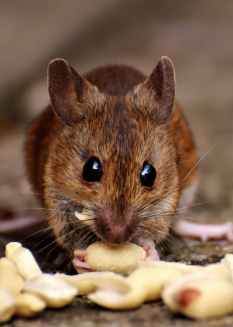
You are sitting at home and all of a sudden a little gray rodent with relatively large ears and small black eyes scurries across the room! It is about 1/2 ounce in weight and if an adult 5 1/2 to 7 1/2 inches long, including its 3 – 4 inch tail. Of course, you must know by now that I am describing a house mouse. The house mouse is considered one of the most troublesome and economically important rodents in the United States. They can cause damage to property and transmit diseases such as salmonellosis and swine dysentery. You will know you have mice if you see small droppings, fresh gnaw marks and mouse nests made from fine shredded paper or other fibrous material. They are active mostly at night, but can occasionally be seen during daylight hours. Mice are excellent climbers and can jump 10 inches from the floor to a flat surface; they can squeeze through openings slightly larger than 1/4 inch in diameter. They can also survive a 9-foot drop and climb up most vertical surfaces.
Exclusion is the most common in the fight against house mice. Prevent mice from entering buildings by eliminating openings that are 1/4” or larger. Use sealants or mortar to help fill the gaps. Spray-in-place foams and steel wool pads will fill the gaps, but they won’t do much to stop mice from entering. Make sure doors, windows and screens fit tightly. Cover the edges of doors and windows with metal to prevent gnawing.
Population reduction is the last method for controlling mice. Traps and baits are two common population reduction methods. To ensure success with traps, you need to use a sufficient number of traps in areas where mice are living. Snap traps or multiple-capture traps can be used to capture mice. Double setting snap traps, placing two traps close to each other, will yield the best results in situations with high activity. Multi-catch traps can catch several mice at a time without resetting. Glue boards are another alternative to traps. These sticky boards catch and hold mice as they try to move throughout the home. Be sure to use sticky boards in locations where non-target animals or items won’t get stuck in them. If this does happen, use an oily material, like vegetable or mineral oil, to dissolve the sticky substance. To make the traps more appealing you can apply a food source such as peanut butter or a chocolate chip melted to the trigger or you can secure a cloth scented with a food source to the traps’ trigger.
Baits are another population reduction method. Be sure to read and follow all directions on baits. When choosing baits, consider the location and method of applications and any non-target pets and children. Choose the type of bait for your specific location and application. Mice have been known to move pelleted baits without eating them. Just because you have an empty box, doesn’t mean they have eaten the bait. Bait stations or bait blocks ensure that the critter actually ate the bait.
Use caution when cleaning up droppings, nests, or mouse remains. This can help to decrease the potential spread of diseases carried by mice like Hantavirus. Use protective waterproof gloves and spray the carcass and trap or nest with a household disinfectant or a 10% bleach solution. Use a sealable bag turned inside out to pick up the mouse. To remove feces or urine, spray the area with a disinfectant until wet and wipe up with a towel, rag or mop. Don’t use the vacuum or broom to collect dry feces as that can cause the material to go into the air and be inhaled.
For more information on mouse control, refer to NebGuide, Controlling House Mice that can be accessed at http://extensionpubs.unl.edu or through your local extension office.
With cool temperatures, pests start seeking shelter for warm places like your house, so this week I’m sharing information on keeping these pests out of your house.
Some of the more common nuisance pests include occasional invaders like boxelder bugs, multicolored Asian Lady Beetles, millipedes, and crickets. These pests don’t do any harm once inside the home; they are just looking for a cozy place to spend the winter. Proper identification of the insect will assure the proper control method. Boxelder bugs are black and orange true ‘bugs’ that can be found in large numbers around foundations sunning themselves or trying to find their way inside. Multicolored Asian Lady Beetles are the orange ‘ladybugs’ with black spots. Their distinct smell and ability to bite makes them even more of a nuisance once inside the home. Millipedes are often misidentified as ‘wire worms.’ These skinny, brown critters have two legs per body segment and will curl up when disturbed. Crickets hop their way into homes and provide ‘music’ in the night with their chirping. Commonly it’s the black field cricket that migrates inside, but there are others that follow right behind.
Wolf spiders may look scary, but they are more bark than bite. These large, hairy spiders can be found both outdoors and occasionally inside the home. They are not poisonous nor do they want to disturb people. They are hunting spiders, so they don’t spin a web or a trap, but prefer to chase down their prey. They often find their way into homes in the fall following their favorite food source the cricket.
The saying “an ounce of prevention is worth a pound of cure” has never been more true. Discouraging occasional invaders from entering the house is going to take a little work, but it will be worth it in the long run. Start by finding and sealing up any cracks or spaces they could enter through with silicone caulk or expanding foam. Make sure that window screens are in good repair and that doors are tight fitting. Also remove any dead plant debris from window wells.
Pests can be discouraged from entering the house in a number of ways. The most common way is by applying an outdoor perimeter insecticide treatment. These insecticides are labeled for various pests and often times have residual effects to help protect the house for longer. Read and follow the label instructions on how and where these products should be applied. Ideally, try to apply these insecticides out from the foundation about five to ten feet around the perimeter of the home. The insecticides will help to decrease the numbers of pests that make it inside the house, but don’t expect it to stop all of them.
Monitor the home regularly to see what pests have made their way inside. Glue boards are sticky boards used to catch and hold pests as they try to move throughout the home. Be sure to use sticky boards in locations where non-target animals, like pets, won’t get stuck in them. If something other than the target pest does happen to get ‘caught’ in the trap, use an oily material, like vegetable or mineral oil, to dissolve the sticky substance on the trap. When properly placed, these traps will allow you to see which pests are inside the home and their approximate numbers.
Once pests are found inside the home, there are a few techniques that you can use. The handy broom and dustpan or the vacuum are two techniques; they are also very environmentally friendly and very cost effective. Be careful when selecting insecticides for use inside the home. Read and follow instructions carefully as many of these products have to come into contact with the insect themselves and don’t offer much residual protection. With a little prevention and monitoring you can ensure that you are sharing your home with wanted house guests this fall and winter.
The kids are back in school, the first Husker football game will start in a couple of weeks – it is officially fall! During this time of year, it is an ideal time to seed the cool season turfgrasses tall fescue and Kentucky bluegrass. For all of you horticulture enthusiasts, be sure to follow Nicole Stoner, extension educator focused in horticulture’s blog or go to Nebraska Extension’s Hort Update newsletter.
This week, I took some of the lawn tips from August 19th edition of Hort Update on site preparation for lawn seeding or over seeding. For success, seedbed preparation is important to assure seed to soil contact.
For newly planted turf, complete the following steps:
1). Remove all construction debris, branches, etc.
2). Control perennials weeds with glyphosate (Roundup). Two to three applications at the recommended timing may be needed.
3). Establish grade for proper surface drainage.
4). Use a rotary tiller or other cultivation equipment to work the soil to a depth of six inches, incorporate compost while tilling. Avoid tillage of wet soil as this creates compaction. Do not try to improve clay soil by tilling in sand as this can increase compaction. For clay soils, spread a one inch layer of compost over the site and till it in. Then spread another one inch layer and till perpendicular to the first tillage.
5). Allow soil to settle after tilling and prior to seeding.
6). Keep the soil moist after seeding.
To over seed your lawn, complete the following:
1). Mow the area 1 to 1.5 inches tall.
2). If there is excess thatch, one-half inch thick or more, power rake aggressively and removed debris.
3). Aerify the area, punching 20 to 40 holes per sq. ft. with the largest tines available. Make at least two to three passes over the area to be seeded.
4). Apply a starter fertilizer.
5). Seed using a drop spreader or power overseeder (slit or slicer seeder).
6). Keep the soil moist.
Fall is also a great time to fertilize cool season grasses. Elizabeth Killinger, extension educator reminds us that cool season grasses, like Kentucky bluegrass and tall fescue, are beginning to wake up from the summer slump and are vigorously growing. Actively growing turf means the perfect time to apply fertilizer applications. Fertilizing in mid-September encourages new vegetative growth, like tillers, rhizomes, and stolons, which help fill in those thin areas left behind by disease or summer stress and increase density of the turf. September fertilization also encourages root production and making of products that will be stored in the plants’ crown. A turfgrass that has ample stored ‘food’ reserves will be better able to survive winters’ stresses.
With the difficult times in our ag economy and difficult times many Nebraskans are facing with the flooding and blizzards, know that you are NOT alone and being #NebraskaStrong means being strong enough to ask for help.
Mosquitoes are a huge irritation in the summer months. Mosquitoes are a type of insect that is in the same order as flies, which means they are closely related to flies and gnats, which all tend to bother us. Mosquitoes are also vectors of many different diseases. Because of these factors, we need to do what we can to eliminate the problem and reduce mosquito populations.
The best way to avoid any pathogens transmitted by mosquitoes is to prevent being bitten. Like any pest management program, IPM is the strategy that works best to prevent mosquito bites at home in the yard. Sanitation is a must to eliminate breeding sites and harborage locations of mosquitoes. Female mosquitoes lay eggs on the surface of standing water and the larvae (“wigglers”) require water to survive before pupation. Removal of stagnant water in a variety of containers such as flowerpots, buckets, gutters, pool covers, used tires, and dog bowls will break the mosquito life cycle. A general rule is to dump any water that has been standing for more than five days.
Culex mosquitoes are active biters in the evening, so it is important to wear long sleeves and pants or permethrin-treated clothing when outdoors between dusk and dawn. The effective insect repellents applied to skin include those with the active ingredients: DEET, picaridin, or the oil of lemon eucalyptus.
As far as chemical control, Mosquito Dunks contain the active ingredient bacterium, Bacillus thurengiensis israelensis (Bti), which is toxic to mosquito larvae when consumed, but non-toxic to humans, pets, pollinators, fish, and other wildlife. They are sold in hardware stores, and will dissolve in standing water such as water troughs, fishponds, rain barrels, and birdbaths. They are effective immediately and can last for a month. (We have mosquito dunks in our Extension office free from Public Health Solutions.)
It is not recommend to use foggers or adulticide treatments by homeowners. These treatments are not effective for more than a couple of days and should only be used a few days ahead of a large outdoor get-together if absolutely necessary.
It is best to utilize IPM to reduce your exposure to mosquitoes because they spread many diseases including West Nile Virus and the Zika virus. Most people who get West Nile Virus have no symptoms or have flu-like symptoms. However, from 2001 to 2009 1,100 deaths in the U.S. were attributed to West Nile Virus. Most of the deaths occurred in people ages 65 and older.
As for the Zika Virus, it has been known about since 1947, but has just recently hit the news as it spreads more. Zika does appear to have minimal impacts on adult humans, but if a pregnant woman becomes infected, her fetus may suffer from developmental abnormalities such as microcephaly. The good news is that the main mosquito that transmits Zika isn’t in Nebraska. The mosquito that most commonly transmits zika to humans is the yellow fever mosquito, Aedes aegypti. We are not on high alert for Zika in Nebraska, but it is still a good idea to protect yourself from mosquito bites to reduce the chance of West Nile and other mosquito vectored diseases.
Information for this article came from Nicole Stoner, Drs. Jody Green and Jonathan Larson, Nebraska Extension Educators.