Horticulture, Programming

Lawn & Garden Tips

Some of the most frequent calls we receive in our office is lawn and garden questions. Nebraska Extension horticulturist, Nicole Stoner will be in the area with the program, “Lawn & Garden Tips”. This class will discuss water use in your lawn, problems that develop from improper irrigation and diseases found in lawns and vegetable gardens. The course will be in Geneva at the Fillmore County Extension Office on Wednesday, June 5th from 6-7:30 p.m. with a $5.00 which includes light refreshments. Preregister by May 29th to 402-759-3712 or brandy.vandewalle@unl.edu.

Lawn & Garden Tips_Geneva[1].jpg

Crops, Horticulture, Irrigation, Livestock, Programming

Ag Offers Rewards, but can be Stressful Too

Recently I presented a webinar with my colleague, Glennis McClure that reminds us of daily stress in our lives, especially for farmers and ranchers. Agriculture is a stressful occupation and while it provides numerous rewards, it does not come without challenges. Too much stress can contribute to health issues and make us more accident prone.

close up composition conceptual creativity
Photo by Pedro Figueras on Pexels.com

The National Center for Farmer Health points out that stress is the human response to any change that is perceived as a challenge or a threat. Changes that cause worry, frustration or upheaval and seem beyond our control can cause stress. An example that hits close to home for Nebraska farmers and ranchers is the recent weather-related disasters. Attitudes, perceptions and meanings that people assign to events determine a large part of one’s stress levels.

There are many symptoms of stress that impact our body, mind and actions. For example, physical symptoms might include nausea, shortness of breath, shaky legs, headaches, and fatigue just to name a few. When under stress, some people may experience moodiness, frustration, anger, loneliness, anxiety or depression and even suicidal thoughts. Sleeping too much or too little, increased use of alcohol or drugs, withdrawal from others and exhibiting nervous behaviors are all examples of how our actions might change when stressed.

honeycrisp health illustration
Photo by rawpixel.com on Pexels.com

The good news is there are many ways to reduce stress. A summary of ways to decrease stress as compiled by Susan Harris-Broomfield, Nebraska extension educator includes:

  • Exercising ½ hour a day every day or every other day
  • Getting enough sleep to meet the demands of your body
  • Accepting that stress is a part of life and not dwelling on it
  • Learning to relax which could include taking deep breaths
  • Balance work and family time
  • Connect with sources of support
  • Eat a well-balanced diet
  • Talk with a friend or counselor
  • Don’t be afraid to ask for help.

If you recognize someone in distress, express your concern to them and ask about their situation. Do this in a non-judgmental way and actively listen to them. People in distress might turn to suicide and a majority of people who attempt suicide have given a clue or warning to someone. Don’t ignore indirect references to death or suicide. In fact it is a myth that talking about suicide with someone may give them the idea to carry it out. Asking someone about potential suicidal thoughts they may have or discussing it openly is one of the most helpful things you can do for someone who is suicidal. If someone indicates they are thinking of suicide, do not leave them alone. Call for help and/or take them to a hospital or health care provider. The National Suicide Prevention Lifeline can be reached at 1-800-273-TALK (8255). This hotline can be accessed day or night.

In keeping with the #NebraskaStrong idea, remember to be strong and seek out help as needed and assist others who may need help. In Nebraska, our Rural Response Hotline can be accessed at 1-800-464-0258. When a farmer, rancher, or rural resident calls the hotline and requests help with stress related issues, they are connected to an experienced staff person who is trained to help callers through the Counseling, Outreach and Mental Health Therapy program. Staff members are trained to work with individuals over the phone or in their home, providing confidential information and assistance.

A recording of the webinar, in addition to resources utilized for this program can be found at https://go.unl.edu/wellnessintoughtimes.  More resources, especially disaster-related resources can be accessed on the flood.unl.edu website. For more information, contact me at brandy.vandewalle@unl.edu or (402)759-3712.

Crops, Horticulture, Irrigation, Livestock, Programming

Wellness in Tough Times webinar

Farmers and ranchers have many stressors in their lives.  Weather challenges and disasters like many Nebraskans have recently experienced have led to uncertainty in their crop and livestock operations. Machinery breakdowns, debt loads, volatile markets, sleep deprivation, changing regulations, and the stress of holding onto a multi-generational farm/ranch all play a part of the stress and mental health of a farmer or rancher. Farmers and ranchers know the importance of planning and talking about their financial health to bankers, financial planners, spouses, etc. but might not realize how important it is to spend time on their mental health.

A free webinar will be offered April 23 via the web for farm and ranch families.  The webinar will take place at noon (CST) and can be accessed at go.unl.edu/farmstresswebinar.WellnessToughTime.png  Wellness in Tough Times will be presented by my colleague, Nebraska Extension Educator Glennis McClure and myself from 12:00 – 1:00 p.m. (CST). This free webinar is available for farm and ranch families to participate and will provide strategies for dealing with the stress of farming or ranching in today’s difficult economic environment.

Participants will learn: How to recognize the signs and symptoms of stress; understand the role stress plays in our lives; and strategies and resources to manage stress.

For more information, contact me at brandy.vandewalle@unl.edu or (402)759-3712. Dates and locations for a separate workshop available to agribusiness professionals and service providers working with farmers and ranchers will be released soon:  Communicating with Farmers Under Stress. For more information on this workshop contact Susan Harris-Broomfield susan.harris@unl.edu


Crops, Horticulture, Irrigation, Livestock, Youth

Coping with Stress During a Crisis  

With the flooding and blizzard conditions affecting a large portion of the state, this week I looked up some Extension resources and decided to write some of the research ideas for dealing with stress and how to help the whole family cope. First of all, our Nebraska Extension publication, Effective Management of Stress & Crisis points out numerous tips that come from worldwide research on strong families. It involves research from more than 24,000 family members in 35 countries. While the publication identifies 18 ideas, I selected the top ten that interest me. For the remainder of the ideas, go online to the publication which can be accessed through our extension.unl.edu website and search for “Effective Management of Stress & Crisis.”

close up composition conceptual creativity
Photo by Pedro Figueras on Pexels.com

Ideas for coping with stress and crisis include:

  • Look for something positive to focus and focus on that positive element in a difficult situation.
  • Keep things in perspective. “These things too, shall pass.”
  • Pull together rather than apart. Don’t see the problem as an individual’s problem but as a challenge for the whole family.
  • Focus on what is most important and minimize fragmentation. Without focusing on the essentials, the details, details, details can get you edgy, even hysterical.
  • Go to the flow to some degree. Sometimes you are relatively powerless in the face of crisis. At this point it can be useful to simply tell yourself to “let it go.”
  • Know how to laugh and know how to cry, for both are essential to maintain an emotional balance in life.
  • Create a life full of meaning and purpose. All people face severe crises in life. You will not be able to avoid these challenges. Rather, your aim can be to live a useful life of service to your community. This brings richness and dignity to your life, in spite of the troubles you endure.
  • Realize that suffering can be a catalyst for positive growth. Crisis, by definition, is a difficult time in your life. However, it also can be a turning point, planting the seeds for a satisfying and successful future. This is hard to internalize but useful to remember.
  • Identify spiritually with the grand procession of life: Through good times and bad, we, as individuals, come and go, but life from whence we all spring is eternal. There is something satisfying and soothing about that thought.
  • Get help outside the nuclear family when needed. Seek help from extended family members, supportive friends, neighbors, colleagues, members of your religious community, professionals in the community, or others. In a manner of speaking, it takes a whole village to resolve a crisis.

    person wearing clear plastic raincoat and pair of yellow rainboots
    Photo by Valeria Boltneva on Pexels.com

While it might be “easier said than done” to follow the above strategies, giving every effort to embrace a positive approach to deal with a crisis will help you and your family more effectively handle the situation at hand. Disasters, whether natural or human-made leave today’s families facing difficult times. Our ranching and farming families have especially been impacted by the recent floods and blizzards. Let’s remember to pull together as a state and help our fellow Nebraskans through this difficult time, as the recovery and rebuilding process will take a long time.

Horticulture, Youth

Christmas Tree Trivia

Let’s talk trivia thanks to some facts from the Nebraska Christmas Tree Growers Association webpage:

christmas ornaments on christmas tree
Photo by freestocks.org on Pexels.com

Q: For every real Christmas tree harvested, how many seedlings are planted in its place?   A: 2 to 3

Q: How many acres are in production for growing Christmas trees in the U.S?  A:  About 1 million acres

Q: What is the average growing time for a tree to reach average retail height of 6 feet?  A:  7 years

Q: What are the top selling Christmas trees?  A: Balsam Fire, Douglas Fir, Fraser Fir, Noble Fir, Scotch Pine, Virginia Pin, White Pine

Q: How many Nebraska counties have Christmas tree growers?  A:  15

I wish you and your family a very blessed Holiday season!

Horticulture

Holiday Greenery and Trees  

Deciding on an artificial versus real Christmas tree is a matter of personal preference. Growing up, we had an artificial tree mostly because my mom’s allergies were very sensitive to the smell of pines and our house was pretty small so having a small tree we knew would fit in our dining room was preferred. We did however one year have a pine tree that we cut out of our windbreak that needed to come down and I remember how big, beautiful and magical it was!  There are pros to cons for both. If you decide to go real, here are some tips to help you.

berry branch christmas christmas balls
Photo by Negative Space on Pexels.com

Popular Christmas tree species include Frasier Fire, Balsam Fire, Douglas Fir, Scotch Pine, Black Hills Spruce (White Spruce variant) and Eastern White Pine. Firs have a strong and pleasant smell most people enjoy while spruces have a strong odor but many folks do not find it as pleasant. Also look at the needle sizes and branch strength depending on what type of ornaments you will place on the tree. Firs usually have short needles and strong branches, while pines often bend with the weight of heavy ornaments.

Once you make your tree selection, clean it thoroughly from needles lodged among the branches. Make a fresh straight cut across the trunk about an inch from the original cut which will open the stem for water intake. The Nebraska Christmas Tree Growers Association also recommends to keep the water level above the fresh cut; if the water level drops below the fresh cut a seal will form as it does on fresh flowers and a new cut will be necessary.  When purchasing a tree, you can drive to a “Choose and Cut” Tree Farm and pick out your own tree, or many retailers also sell them. Just be sure and find one that is fresh. To locate a “Choose and Cut” tree farm, the Nebraska Department of Agriculture’s website has a list of locations to choose.

If you don’t want a real tree, you can also make or purchase your own greenery from your own landscape. Nicole Stoner, extension horticulturalist wrote a blog on “Holiday Plants” and provided suggestions for using greenery to bring a nice holiday scent inside the home. White pine, juniper, spruce, ivy and holly are all great choices of live greenery for your home this holiday season. You can take these directly from your landscape, just be careful when you prune these decorations off of your living plants. Don’t make all of cuts in the same location and try to make them far enough back in the plant that the other branches cover the cuts. Use a hand pruner to make good cuts that will not harm your tree or shrub. These can then be used in swags or wreaths. Several years ago, I even participated in a workshop that took real branches to make outdoor arrangements in pots when watered well.

Horticulture

Do you have uninvited houseguests?  

You are sitting at home and all of a sudden a little gray rodent with relatively large ears and small black eyes scurries across the room!   It is about 1/2 ounce in weight and if an adult 5 1/2 to 7 1/2 inches long, including its 3 – 4 inch tail.  Of course, you must know by now that I am describing a house mouse.  The house mouse is considered one of the most troublesome and economically important rodents in the United States.  They can cause damage to property and transmit diseases such as salmonellosis and swine dysentery.  You will know you have mice if you see small droppings, fresh gnaw marks and mouse nests made from fine shredded paper or other fibrous material.  They are active mostly at night, but can occasionally be seen during daylight hours.  Mice are excellent climbers and can jump 10 inches from the floor to a flat surface; they can squeeze through openings slightly larger than 1/4 inch in diameter.  They can also survive a 9-foot drop and climb up most vertical surfaces.

waiting relax lying mouse
Photo by Pixabay on Pexels.com

Exclusion is the most common in the fight against house mice.  Prevent mice from entering buildings by eliminating openings that are 1/4” or larger.  Use sealants or mortar to help fill the gaps.  Spray-in-place foams and steel wool pads will fill the gaps, but they won’t do much to stop mice from entering.  Make sure doors, windows and screens fit tightly.  Cover the edges of doors and windows with metal to prevent gnawing.

Population reduction is the last method for controlling mice.  Traps and baits are two common population reduction methods.  To ensure success with traps, you need to use a sufficient number of traps in areas where mice are living.  Snap traps or multiple-capture traps can be used to capture mice.  Double setting snap traps, placing two traps close to each other, will yield the best results in situations with high activity.  Multi-catch traps can catch several mice at a time without resetting.  Glue boards are another alternative to traps.  These sticky boards catch and hold mice as they try to move throughout the home.  Be sure to use sticky boards in locations where non-target animals or items won’t get stuck in them.  If this does happen, use an oily material, like vegetable or mineral oil, to dissolve the sticky substance.  To make the traps more appealing you can apply a food source such as peanut butter or a chocolate chip melted to the trigger or you can secure a cloth scented with a food source to the traps’ trigger.

Baits are another population reduction method.  Be sure to read and follow all directions on baits.  When choosing baits, consider the location and method of applications and any non-target pets and children.  Choose the type of bait for your specific location and application.  Mice have been known to move pelleted baits without eating them.  Just because you have an empty box, doesn’t mean they have eaten the bait.  Bait stations or bait blocks ensure that the critter actually ate the bait.

Use caution when cleaning up droppings, nests, or mouse remains.   This can help to decrease the potential spread of diseases carried by mice like Hantavirus.  Use protective waterproof gloves and spray the carcass and trap or nest with a household disinfectant or a 10% bleach solution. Use a sealable bag turned inside out to pick up the mouse.  To remove feces or urine, spray the area with a disinfectant until wet and wipe up with a towel, rag or mop.  Don’t use the vacuum or broom to collect dry feces as that can cause the material to go into the air and be inhaled.

For more information on mouse control, refer to NebGuide, Controlling House Mice that can be accessed at http://extensionpubs.unl.edu or through your local extension office.

A portion of this article was taken from Elizabeth Killinger who is the Horticulture Extension Educator with Nebraska Extension in Hall County.


Horticulture

Fall Insect Invaders

This time of year, we often receive questions on a variety of pests, especially “bugs” entering homes or around the house. Last year, Extension horticulturalist, Elizabeth Killinger provided great information how to prepare your house to keep these invaders from living in your house, which I decided to share this week.

brown yellow black cross orb weaver spider
Photo by Pixabay on Pexels.com

Some of the more common nuisance pests include occasional invaders like boxelder bugs, multicolored Asian Lady Beetles, millipedes, and crickets.  These pests don’t do any harm once inside the home; they are just looking for a cozy place to spend the winter. Proper identification of the insect will assure the proper control method.  Boxelder bugs are black and orange true ‘bugs’ that can be found in large numbers around foundations sunning themselves or trying to find their way inside. Multicolored Asian Lady Beetles are the orange ‘lady bugs’ with black spots.  Their distinct smell and ability to bite makes them even more of a nuisance once inside the home.  Millipedes are often misidentified as ‘wire worms.’  These skinny, brown critters have two legs per body segment and will curl up when disturbed.  Crickets hop their way into homes and provide ‘music’ in the night with their chirping.  Commonly it’s the black field cricket that migrates inside, but there are others that follow right behind.

animal antenna arthropod background
Photo by Miguel Á. Padriñán on Pexels.com

Wolf spiders may look scary, but they are more bark than bite.  These large, hairy spiders can be found both outdoors and occasionally inside the home.  They are not poisonous nor do they want to disturb people.  They are hunting spiders, so they don’t spin a web or a trap, but prefer to chase down their prey.  They often find their way into homes in the fall following their favorite food source the cricket.

The saying “an ounce of prevention is worth a pound of cure” has never been more true.  Discouraging occasional invaders from entering the house is going to take a little work, but it will be worth it in the long run.  Start by finding and sealing up any cracks or spaces they could enter through with silicone caulk or expanding foam.  Make sure that window screens are in good repair and that doors are tight fitting.  Also remove any dead plant debris from window wells.

Pests can be discouraged from entering the house in a number of ways.  The most common way is by applying an outdoor perimeter insecticide treatment.  These insecticides are labeled for various pests and often times have residual effects to help protect the house for longer.  Read and follow the label instructions on how and where these products should be applied.  Ideally, try to apply these insecticides out from the foundation about five to ten feet around the perimeter of the home. The insecticides will help to decrease the numbers of pests that make it inside the house, but don’t expect it to stop all of them.

Monitor the home regularly to see what pests have made their way inside.  Glue boards are sticky boards used to catch and hold pests as they try to move throughout the home.  Be sure to use sticky boards in locations where non-target animals, like pets, won’t get stuck in them.  If something other than the target pest does happen to get ‘caught’ in the trap, use an oily material, like vegetable or mineral oil, to dissolve the sticky substance on the trap.  When properly placed, these traps will allow you to see which pests are inside the home and their approximate numbers.

Once pests are found inside the home, there are a few techniques that you can use. The handy broom and dust pan or the vacuum are two techniques; they are also very environmentally friendly and very cost effective.  Be careful when selecting insecticides for use inside the home.  Read and follow instructions carefully as many of these products have to come into contact with the insect themselves and don’t offer much residual protection. With a little prevention and monitoring you can ensure that you are sharing your home with wanted house guests this fall and winter.

Crops, Horticulture

Sustainable Agriculture Tour Recap

To define sustainable agriculture is quite the task, as many organizations and individuals view what is defined as “sustainable” in different ways. For the purpose of this column, I’ll use the definition that was addressed by Congress in the 1990 “Farm Bill” by USDA. Under that law, “the term sustainable agriculture means an integrated system of plant and animal production practices having a site-specific application that will, over the long term:

  • Satisfy human food and fiber needs;
  • Enhance environmental quality and the natural resource base upon which the agricultural economy depends;
  • Make the most efficient use of nonrenewable resources and on-farm resources and integrate, where appropriate, natural biological cycles and controls;
  • Sustain the economic viability of farm operations; and
  • Enhance the quality of life for farmers and society as a whole.”
IMG_3413.jpg
Lazy Horse Vineyard & Brewing 

This week, Fillmore County was the stop for an annual Sustainable Agriculture tour my colleague Gary Lesoing coordinates so I participated in the Fillmore County stops and decided to share some of what I learned in this week’s column. First the tour went to Lazy Horse Vineyard and Brewing near Ohiowa. For those unfamiliar with Lazy Horse, they grow their own grapes and have a large outdoor porch where guest can enjoy being outside and watch the horses graze the pasture or sit in the gorgeous tasting room, watching the wood fired oven bake delicious pizzas. It’s safe to say, the participants enjoyed their time here.

IMG_3418.jpg
Slezak Ag & Natural Resources can take removed trees and turn them into usable products such as lumber. 

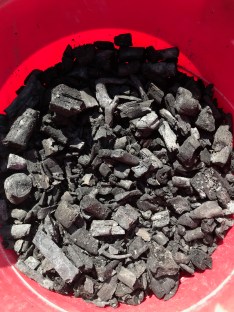
The second and final stop of the tour was Slezak Ag & Natural Resources. They provide “Trees2Products” and sawmill services in addition to creating biochar. Their philosophy is that if someone has a tree coming down, why not utilize it by turning it into somethings useful? For example, rather than burning or burying trees coming down, one can take the logs to Slezak Ag and have it milled and turned into lumber which can create amazing furniture or other creations. One of the other products they are working to produce is biochar. If you haven’t heard of biochar, the USDA’s definition is as follows, “black carbon produced from biomass sources (i.e. woodchips, plant residues, manure or other agricultural waste products) for the purpose of transforming the biomass carbon into a more stable form (carbon sequestration).” Biochar can be used as a soil amendment  that builds soil quality, increases crop yields and sequesters carbon in soils for years to come.

IMG_3421.jpg
Here are samples of biochar. 

For more information on sustainable agriculture projects or to apply for funding on a project, go to https://www.sare.org which is the Sustainable Agriculture Research & Education website. Nebraska’s coordinator, Gary Lesoing is very helpful in helping others learn more about sustainable agriculture practices or opportunities.

Horticulture

Mosquitoes

Mosquitoes are a huge irritation in the summer months. Mosquitoes are a type of insect that is in the same order as flies, which means they are closely related to flies and gnats, which all tend to bother us. Mosquitoes are also vectors of many different diseases. Because of these factors, we need to do what we can to eliminate the problem and reduce mosquito populations.

animal antenna biology bite
Photo by imagesthai.com on Pexels.com

The best way to avoid any pathogens transmitted by mosquitoes is to prevent being bitten. Like any pest management program, IPM is the strategy that works best to prevent mosquito bites at home in the yard. Sanitation is a must to eliminate breeding sites and harborage locations of mosquitoes. Female mosquitoes lay eggs on the surface of standing water and the larvae (“wigglers”) require water to survive before pupation. Removal of stagnant water in a variety of containers such as flowerpots, buckets, gutters, pool covers, used tires, and dog bowls will break the mosquito life cycle. A general rule is to dump any water that has been standing for more than five days.

Culex mosquitoes are active biters in the evening, so it is important to wear long sleeves and pants or permethrin-treated clothing when outdoors between dusk and dawn. The effective insect repellents applied to skin include those with the active ingredients: DEET, picaridin, or the oil of lemon eucalyptus.

As far as chemical control, Mosquito Dunks contain the active ingredient bacterium, Bacillus thurengiensis israelensis (Bti), which is toxic to mosquito larvae when consumed, but non-toxic to humans, pets, pollinators, fish, and other wildlife. They are sold in hardware stores, and will dissolve in standing water such as water troughs, fishponds, rain barrels, and birdbaths. They are effective immediately and can last for a month. (We have mosquito dunks in our Extension office free from Public Health Solutions.)

It is not recommend to use foggers or adulticide treatments by homeowners. These treatments are not effective for more than a couple of days and should only be used a few days ahead of a large outdoor get-together if absolutely necessary.

It is best to utilize IPM to reduce your exposure to mosquitoes because they spread many diseases including West Nile Virus and the Zika virus. Most people who get West Nile Virus have no symptoms or have flu-like symptoms. However, from 2001 to 2009 1,100 deaths in the U.S. were attributed to West Nile Virus. Most of the deaths occurred in people ages 65 and older.

As for the Zika Virus, it has been known about since 1947, but has just recently hit the news as it spreads more. Zika does appear to have minimal impacts on adult humans, but if a pregnant woman becomes infected, her fetus may suffer from developmental abnormalities such as microcephaly. The good news is that the main mosquito that transmits Zika isn’t in Nebraska. The mosquito that most commonly transmits zika to humans is the yellow fever mosquito, Aedes aegypti. We are not on high alert for Zika in Nebraska, but it is still a good idea to protect yourself from mosquito bites to reduce the chance of West Nile and other mosquito vectored diseases.

Information for this article came from Nicole Stoner, Drs. Jody Green and Jonathan Larson, Nebraska Extension Educators.