Uncategorized

Happy Thanksgiving!

The American Farm Bureau Federation annually calculates the cost of a Thanksgiving meal to serve 10 people with plenty of leftovers. This year, with a traditional Thanksgiving meal, Farm Bureau estimated a meal total of $58.08 which is a slight decrease from $61.17 last year. This is a 5% decrease in last year’s cost. The turkey price is about $1.60 per pound compared to last year which is a 6% decrease from last year due to a decrease in demand. Included in the meal is a 16-lb. turkey, bread stuffing, sweet potatoes, rolls with butter, peas, cranberries, a relish tray of carrots and celery, pumpkin pie with whipped cream, and beverages of coffee and milk. While the decline in this year’s Thanksgiving meal costs offers some relief to Americans, this year’s meal is still 19% more expensive than the pre-pandemic levels of 2019. 

Photo by Tima Miroshnichenko on Pexels.com

You can thank our American farmers and ranchers who are able to provide us the bounty of safe and affordable food. Another interesting fact about Thanksgiving is that 88% of Americans are expected to be feasting on turkey for Thanksgiving this year (National Turkey Federation). The top turkey-producing states are: Minnesota, North Carolina, Arkansas, Indiana, Missouri, Virginia, Iowa, and California. The United States is the world’s largest turkey producer and largest exporter of turkey products.

Now let’s talk trivia:

Q: Why are turkeys raised?   A: Because of their excellent quality of meat and eggs

Q: What is a male turkey called?  A:  Tom

Q: What is a female turkey called?  A:  A Hen

Q: What sound do turkeys make?  A: Only tom turkeys gobble; the female makes a clucking sound.

Q: How many feathers does a turkey have at maturity?  A:  3,500 feathers

Q: How big was the heaviest turkey ever raised?  A: 86 pounds, about the size of a large dog

Q: Which gender of turkeys are usually consumed whole?  A: Hens (females) are usually sold as whole birds. Toms (males) are processed into turkey sausage, turkey franks, tenderloins, cutlets and deli meats.

Q: How long does it take a turkey to reach market size?   A: Hens usually grow for 16 weeks and is 8-16 lbs. when processed while tom usually takes 19 weeks to reach market weight and weighs 24 lbs. Large toms (24-40 lbs. are a few weeks older.

Regardless of what you do this Thanksgiving, remember to be thankful for what really matters.

If you need tips or resources to help you prepare a turkey or any other food for Thanksgiving, go to Nebraska Extension’s Food Website at https://food.unl.edu/article/thanksgiving-central.

Thanksgiving Food Safety

Interesting fact, the day after Thanksgiving is the biggest food borne-illness day of the year. Nebraska Extension continues to do their part to help our clientele remain heathy and have good food safety practices. The following are from Extension Educator Cindy Brison and our Food Safety Team.

One of the most frequently asked questions around Thanksgiving is “How do I thaw a frozen turkey?”…including on Thanksgiving morning! The answer to this question is an important step in meal prep for food safety. Unsafe handling and undercooking the turkey can cause foodborne illness. For information on thawing your turkey and more: https://food.unl.edu/how-thaw-turkey 

Do not wash or rinse your raw turkey! Avoid washing or rinsing a turkey (or any eggs, meat or poultry products for that matter) before cooking. Juices can transfer bacteria onto kitchen surfaces, other foods and utensils. If you must wash or rinse your turkey because of brining or other marinating processes, be sure to thoroughly clean and then sanitize all kitchen surfaces to eliminate the risk of cross-contamination. For more safety tips: https://go.unl.edu/washingturkey 

Crops, Programming

Farmers & Ranchers College 

The Farmers & Ranchers College continues to provide high-quality programming to area producers and agribusiness professionals with 2024-25 programming. Farmers & Ranchers College will kick off with its traditional program featuring Dr. David Kohl. The committee will continue the annual Cow/Calf College in January and end with a crop insurance and weather program in February.

This year Farmers & Ranchers College will kick off December 3rd featuring Dr. David Kohl Registration will start at 12:45 p.m. and the program will start at 1:00 p.m. at the Opera House in Bruning, NE. The program is titled, “Economic Realities in the Agricultural Industry: The Pulse.”  What economic realities can we expect to see in the global and domestic agricultural industry?  Dr. Kohl keeps a pulse on trends and factors to be mindful of during the economic downturn. Some of these topics are land and machinery values, interest rates, concentration of agriculture, importance of cash flows, non-financial factors and much more.  

On the road ahead, the good doctor will draw upon his decades of experience as an educator and businessperson to present common financial and business practices that will proactively position your business regardless of the economic cycle.  Don’t miss this high energy session in preparation for 2025! 

Many to the area are very familiar with Dr. Kohl, but if you are not, here are some details about him. Dr. Dave Kohl is an academic Hall of Famer in the College of Agriculture at Virginia Tech, Blacksburg, VA.  Dr. Kohl has keen insight into the agriculture industry gained through extensive travel, research, and involvement in ag businesses.  He has traveled nearly 10 million miles; conducted more than 6,500 presentations; and published more than 2,250 articles in his career. Dr. Kohl’s wisdom and engagement with all levels of the industry provide a unique perspective into future trends.

In 2025, the Partners in Progress –Beef Seminar (Cow/Calf College) will be at U.S. Meat Animal Research Center near Clay Center on January 21st. More details will follow as the date nears. Finally, in February, Farmers & Ranchers College will host a crop insurance and weather update.

Questions on the Farmers & Ranchers College can be directed to the Fillmore County Extension Office at (402) 759-3712. To participate and register, go to the website: go.unl.edu/frcollege.

Uncategorized

Gratitude Improves Health & Well-Being

With November quickly approaching, many people think about Thanksgiving. The word “thanksgiving” means the act of expressing or feeling thankfulness. If you are a parent like me, how often do you tell your children to “say thank you” after receiving something from someone?  When my kids automatically say, “Thank you”, it brings joy to my heart. By teaching youth to automatically say those two small words, my hopes are that it will lead to writing thank you notes and expressing warm words of gratitude to those around them.

Photo by Marcus Wu00f6ckel on Pexels.com

The art and practice of handwriting “thank you notes” can sometimes get lost with all the electronic methods of communication.  When I receive a handwritten thank you that really brings gladness to my heart, I put it in a special file folder on my desk.  Some of those thank you notes are from 4-H’ers, 4-H Alumni, interns, coworkers, etc.  As I write this, I even have a thank you note displayed on my desk from a summer adult 4-H volunteer. As the receiver of a thank you note, I can say it is nice to receive meaningful mail, rather than bills or advertising, but writing thank you notes also brings happiness to my heart. 

Two researchers from Indiana University, Drs. Brown and Wong (2017) researched an authored an article that provides the following psychological benefits of practicing gratitude.

  1. Gratitude unshackles us from toxic emotions. When you write about how grateful you are to others and how much other people have blessed your life, it might become considerably harder for you to ruminate on your negative experiences.
  2. Gratitude helps even if you don’t share it. The mere act of writing a thank you letter can help you appreciate the people in your life and shift your focus away from negative feelings and thoughts.
  3. Gratitude benefits take time. If you participate in a gratitude writing activity, don’t be too surprised if you don’t feel dramatically better immediately after the writing. You might have that quick “rush” of feeling thankful, however, the bigger benefits of gratitude might take time to kick in weeks after your gratitude activity.
  4. Gratitude has lasting effects on the brain. Their research suggested that brain activity was distinct for those who felt more grateful, than those who only performed an act of gratitude related to guilt. Those who were more grateful showed greater activation in their medial prefrontal cortex.

University of Southern California (2019) also found evidence that gratitude can have profound health benefits and provided suggestions on how to practice gratitude. Some of the most effective approaches include maintaining a gratitude journal, writing personal thank-you notes and regularly expressing gratitude to others in person. One might also practice guided meditation, call someone to express thanks or write a note to a friend.

It can be easy to get down with all the negativity on social media, the news or being around negative people, but reminding oneself of the many things one should be thankful for can help improve one’s wellbeing.  I am thankful to all of you who have read my weekly column and support Nebraska Extension!   

Horticulture, Uncategorized

Uninvited Guests (mice)

Temperatures are dipping and that can only mean two things. Halloween will be here soon, and mice will start migrating inside. Take a few steps now to make sure the ‘guests’ that come to your house are the cute ones dressed up in costumes, not the furry, unwelcome kind.

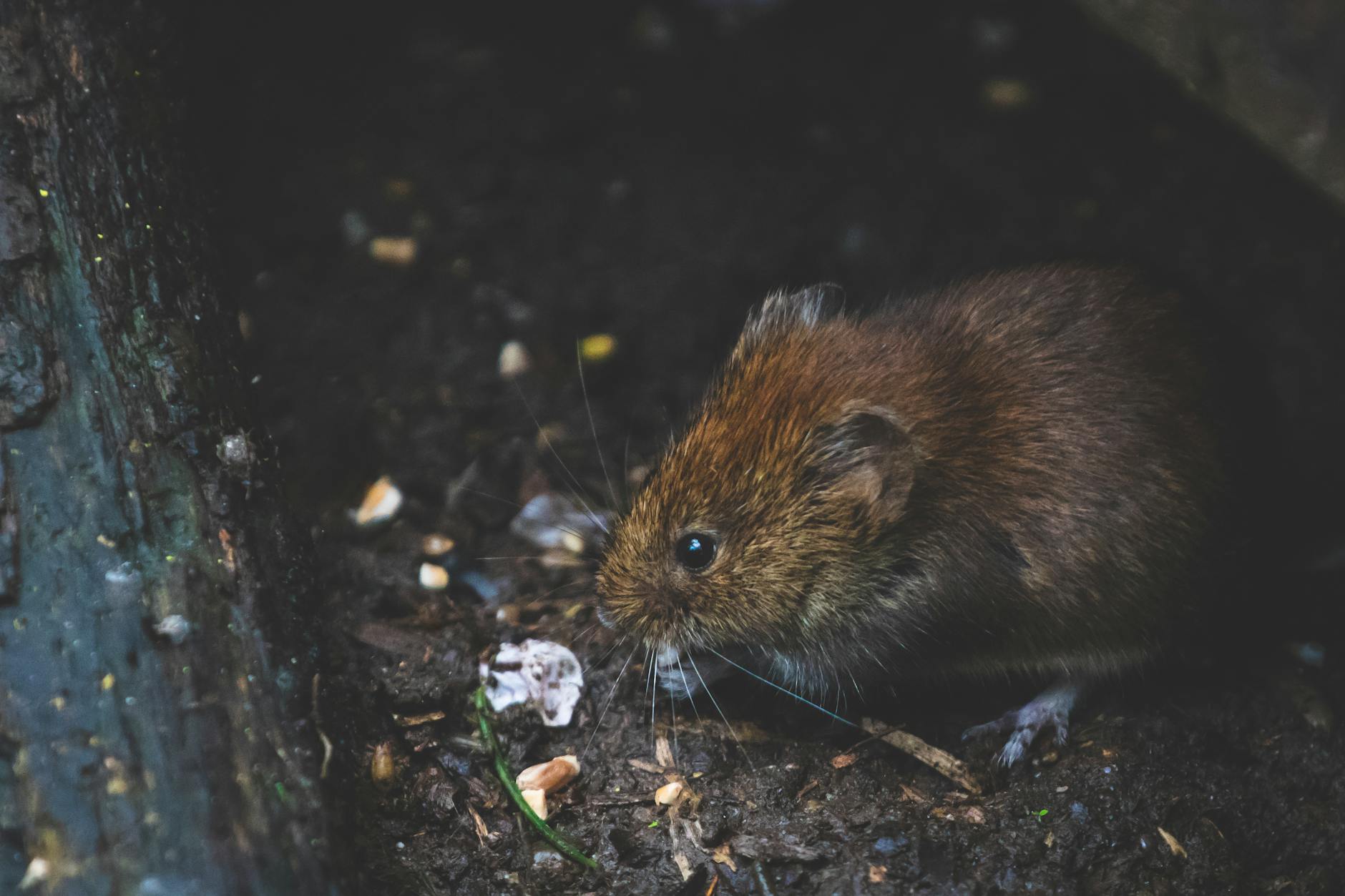
House mice are common guests once the outdoor temperatures drop. These small, light gray, furry rodents have large ears and long tails. Their preferred food is grains, but they will munch on just about anything. One reason mice can be a problem once inside is due to their rapid ability to reproduce. Each year, a female mouse can produce 5-10 litters, with about 5-6 young per litter. Mice make nests out of materials like paper, feathers, or other fluffy materials.

Photo by DSD on Pexels.com

Understanding how mice function helps in the control process. They have relatively poor eyesight and are near-sighted. To make up for this deficit, they utilize their whiskers to feel the walls as they move around. Mice also have extreme physical abilities. They can climb up vertical surfaces, balance along wire cables, jump 10” high or across a 3’ gap, and survive a 9’ drop. Their most impressive feat is being able to squeeze their bodies into holes 1/4” in diameter, the size of a pencil.

If you don’t want these guests to become permanent residents, there are several methods that can be used for controlling mice in the home. Exclusion is the most common in the fight against house mice. Prevent mice from entering buildings by eliminating openings that are 1/4” or larger. Use sealants or mortar to help fill the gaps. Spray-in-place foams and steel wool pads will fill the gaps, but they won’t do much to stop mice from entering. Make sure doors, windows, and screens fit tightly. Cover the edges of doors and windows with metal to prevent gnawing.

Population reduction is another method for controlling mice. Traps and baits are two common population reduction methods. To ensure success with traps, you need to use enough traps in areas where mice are living. Snap traps or multiple-capture traps can be used to capture mice. Double setting snap traps, placing two traps close to each other, will yield the best results in situations with high activity. Multi-catch traps can catch several mice at a time without resetting. Glue boards are another alternative to traps. These sticky boards catch and hold mice as they try to move throughout the home. Be sure to use sticky boards in locations where non-target animals or items won’t get stuck in them. If this does happen, use an oily material, like vegetable or mineral oil, to dissolve the sticky substance. To make the traps more appealing you can apply a food source such as peanut butter, or a chocolate chip melted to the trigger, or you can secure a cloth scented with a food source to the traps’ trigger.

Baits are another population reduction method. Be sure to read and follow all directions on baits. When choosing baits, consider the location and method of applications and any non-target pets and children. Choose the type of bait for your specific location and application. Mice have been known to move pelleted baits without eating them. Just because you have an empty box, doesn’t mean they have eaten the bait. Bait stations or bait blocks ensure that the critter eats the bait. Baits might not be the best option for inside the home, so select their location wisely.

Use caution when cleaning up droppings, nests, or mouse remains. This can help to decrease the potential spread of diseases carried by mice like Hantavirus. Use protective waterproof gloves and spray the carcass and trap or nest with a household disinfectant or a 10% bleach solution. Use a sealable bag turned inside out to pick up the mouse. To remove feces or urine, spray the area with a disinfectant until wet and wipe up with a towel, rag, or mop. Don’t use the vacuum or broom to collect dry feces as that can cause the material to go into the air and be inhaled.

We all want guests to stop by, but with a little work upfront, you can make sure the guests that enter your home will be welcome ones who will yell out ‘Trick or Treat’.

This article was written by Elizabeth Exstrom, Extension Educator with Nebraska Extension in Hall County. For more information contact Elizabeth at elizabeth.exstrom@unl.edu.

Uncategorized

Harvest Safety

It is hard to believe that harvest has started for some. As a reminder with harvest comes more traffic on county roads and other stresses for farmers. It never fails, that equipment can break, there are delays at the elevator and extra-long hours can all add extra stress to farmers. It is important to carefully slow down and realize the many hazards you are being exposed to during harvest.

Photo by Tom Fisk on Pexels.com

An Iowa State Extension publication, Harvest Safety Yields Big Dividends points out that injuries can occur by taking shortcuts to perform routine tasks, not getting enough sleep or regular breaks, or failing to follow safety practices. Some injuries occur when operators are pulled into the intake area of harvesting machines, such as balers, combines, or corn pickers, and many injuries occur from slips or falls around these machines. Exposure to powerful machinery is highest during the harvest season. The equipment must be powerful to effectively handle large amounts of agricultural commodities. When equipment plugs, NEVER try to unplug it with live equipment, instead always disengage power and turn off the engine before trying to manually clear a plugged machine. Regular maintenance of these machines can also make harvest go smoother. Also, lots of accidents happen by the operator slipping and falling off equipment.

In the same publication listed above, there are several tips for reducing fall hazards: 

  • Always keep all platforms free of tools or other objects.
  • Frequently clean the steps and other areas where workers stand to service, mount, and dismount, or operate the machine.
  • Wear well-fitting, comfortable shoes with non-slip soles.
  • Use grab bars when mounting or dismounting machinery.
  • Be sure your position is stable before you work on a machine.
  • Recognize that fatigue, stress, drugs or alcohol, and age may affect stability.

Other helpful tips during harvest are to keep kids away from machinery. Tell them the dangers that can occur and not to play near the equipment, even when it is shut off; you never know when they will be playing in hidden areas of the equipment. Operators should double check where kids are before moving the equipment. Too many accidents can occur when youth are in the path of equipment out of the operator’s view. Operators of all equipment should check in regularly and let someone know where you are. Keep all guards on equipment; it is there for a reason! 

It is also important for the public to understand the increased traffic on public roads and be patient. The greatest threat raised between farm equipment and passenger vehicles is the difference in speed. Farm equipment runs at an average speed of 20 miles per hour while passenger vehicles average 60 miles per hour. If the motor vehicle overtakes a tractor, the impact is comparable to a passenger vehicle hitting a brick wall at 40 miles per hour. If the tractor and a car, mini-van or pickup collides head on, the impact is the same as hitting a brick wall at 60 miles per hour.

Farmers can reduce the chances of an accident by using warning lights, reflectors, and reflective tape on their machinery to keep passenger vehicle operators aware of their presence on roads. Some farmers may choose to install supplemental lights to increase visibility. It also is a good idea for producers to keep off heavily traveled roads as much as possible and avoid moving equipment during the busiest part of the day.

Some farm equipment, such as combines, can take up more than half of the road. Even so, it is up to both drivers to be aware of their own limitations and adjust accordingly. Farmers should not take up more space than is needed, but other drivers should try to provide as much room as possible. It is a good idea for passenger vehicles to turn off onto side or field roads until larger machinery has passed. Whenever possible, farmers should use an escort vehicle such as a pickup to precede or follow large machinery and equipment on public roads. More than one escort may be necessary. Ideally, the escort vehicle would have extra warning lights and a sign indicating oversized or slow equipment ahead or following.

Have a safe harvest!

Uncategorized

National Farm Safety & Health Week

Did you know?  Each year since 1944, the third week of September has been recognized as National Farm Safety & Health Week. This recognition has been an annual promotion initiated by the National Safety Council and has been proclaimed as such by each sitting U.S. President since Franklin D. Roosevelt signed the first document. This year’s theme is “No one can take your place.”

Fall harvest is one of the busiest times of the year which can equate into one of the most dangerous seasons of the year for agriculture. Long hours are spent in the combine and grain cart which can mean less sleep.  The 2019 data for the U.S. Bureau of Labor Statistics indicates that the agricultural sector is still the most dangerous in America with 573 fatalities, or an equivalent of 23.1 deaths per 100,000 workers. The most common causes of fatal accidents are highway transportation and contact with equipment. 

The Upper Midwest Agricultural Safety and Health Center has five webinars during the highly anticipated National Farm Safety and Health Week, September 15-21, 2024. The webinar series will cover a diverse range of topics, each aimed at addressing specific safety and health challenges faced in the agricultural sector with a youth-focus. Led by industry experts and seasoned professionals, these webinars will provide invaluable insights and tips that can help make a difference in preventing incidents and ensuring the well-being of farmers, families, and youth in rural communities. To register for the webinars, go to: https://www.necasag.org/nationalfarmsafetyandhealthweek/

The daily topics for the webinars include:

  • Monday, September 16, 2024 – Equipment and Rural Roadway Safety
  • Tuesday, September 17, 2024 – Health and Wellness
  • Wednesday, September 18, 2024 – Generations of Farming
  • Thursday, September 19, 2024 – Confined Spaces
  • Friday, September 20, 2024 – Reporting Ag Injuries

Some things one can do now as we prepare for harvest are ensuring you have a fully charged and proper fire extinguisher in the combine. With the dry conditions we’ve had, conditions increase the chances of combine fires. One of the most common entanglement hazards is PTO (power take-off) units. Within three-fourths second (the average time it takes to react), more than one complete person will have been wrapped around the shaft before he or she could jump out of the way. Always keep all safety shields and guards in place and always stay clear of moving parts to avoid this hazard. One should also disengage equipment and shut off the engine before working near a PTO and do NOT wear loose-fitting clothes, dangly jewelry, long shoelaces, or scarves near them.

Uncategorized

Back to School Tips

With the school year starting, the busyness of after-school activities and homework assignments will be here soon. As families are pulled in different directions for school, work, and practices, time as a family comes at a premium. Making efforts to build the focus of your children could decrease time spent on homework to free up more time for family activities. Creating a permanent, designated study space is one way to build your youth’s focus. Here are a few items to keep in mind when creating the study space:    

Photo by Pixabay on Pexels.com

Make It Work for You – Every child is different and has different needs. Some prefer a quiet corner in their room while others may prefer to be close to a parent for help at the kitchen table. Just make sure that the traffic and noise of other family members do not become a distraction. 

Manage the Senses – Lighting and noise issues are very common distractions. Tired eyes have more difficulty transferring knowledge into memory. To keep sharp, make sure to provide adequate overhead lighting to limit squinting. Also, check that electronic devices like laptops and tablets are set at a comfortable level. 

Make It Comfortable – Temperature and seating can make a difference in a youth’s ability to concentrate. Make sure that the study space keeps the child relaxed, but alert. It is also important that he or she has adequate space to spread out books, papers and materials to make the space efficient. While a bed may make a great space for spreading out, it may prove too relaxing. Consider a cushioned chair with generous table space. Also, it is important that the chair fit the youth. Dangling legs and hunched shoulders can create distractions as well. 

Keep It Organized – Another way to increase the efficiency of the space is to keep all supplies and materials readily available and easy to find. Any time spent looking for the lost blue marker is time spent away from the task and an opportunity for further distraction. Organized space provides a launching pad for organized study. Keep clutter at a minimum using cubbies, canisters and boxes. A calendar, planner or to-do list can also keep homework assignments and activities prioritized and on track for on-time completion. 

Limit Distractions – While the computer and television can be excellent sources of educational content, they also provide limitless distraction. If the child believes they can focus better with a little background noise, try some recorded music and save the favorite show as a reward when they can spare his or her attention.

Make It Your Own – If the child is expected to spend considerable time in the study space, let him or her decorate the space with posters, pictures or artwork. These items could provide creative inspiration for the child’s next essay or art project. 

This article comes from a series of resources developed by Nebraska Extension, 4-H Youth Development Professionals. Learn more about 4-H at 4h.unl.edu, follow us on Facebook at https://www.facebook.com/Nebraska4H/ or on Twitter at https://twitter.com/nebraska4h. For more information, contact the author – Jennifer Schoen (jschoen4@unl.edu), Extension Educator.

Uncategorized

Agriculture in Ireland & Nebraska

Recently, I was fortunate to serve as a chaperone for 24 youths who traveled to Ireland and learn more about the culture and agriculture.  Agriculture plays a significant role in the economies and cultures of both Ireland and Nebraska, though the two regions differ greatly in terms of climate, farming practices, and agricultural outputs. This article will explore these differences and similarities, shedding light on the unique agricultural landscapes of each region.

 First, let’s compare the climates. Nebraska has hot summers and cold winters with varying rainfall amounts from east to west. Ireland has a temperate maritime climate characterized by mild winters, cool summers, and consistent rainfall throughout the year. This contributes to why Ireland is called “the green island” as it is known as the land of many shades of green. Its climate supports lush, green landscapes and is ideal for pasture-based farming.

Secondly, Ireland’s agriculture relies a lot on pasture-based farming. With grass growing abundantly, it is ideal for dairy, sheep, and beef production. Most farms in Ireland are small family-owned with many farmers having second, off-the-farm jobs. Ireland has 127,000 active farmers and 64% of land is suitable for agriculture. In comparison, data from the 2022 Census of Agriculture shows there are 80,283 producers and Nebraska’s farms and ranches utilize 89% of the state’s total land area. The average farm in Ireland is 82.5 acres, while the average Nebraska farm consists of 991 acres. In Ireland, 90% of Irish beef, sheep meat and dairy produce are exported yearly. Nebraska’s top five ag exports in 2022 were soybeans and soybean products, corn, beef, ethanol and pork.

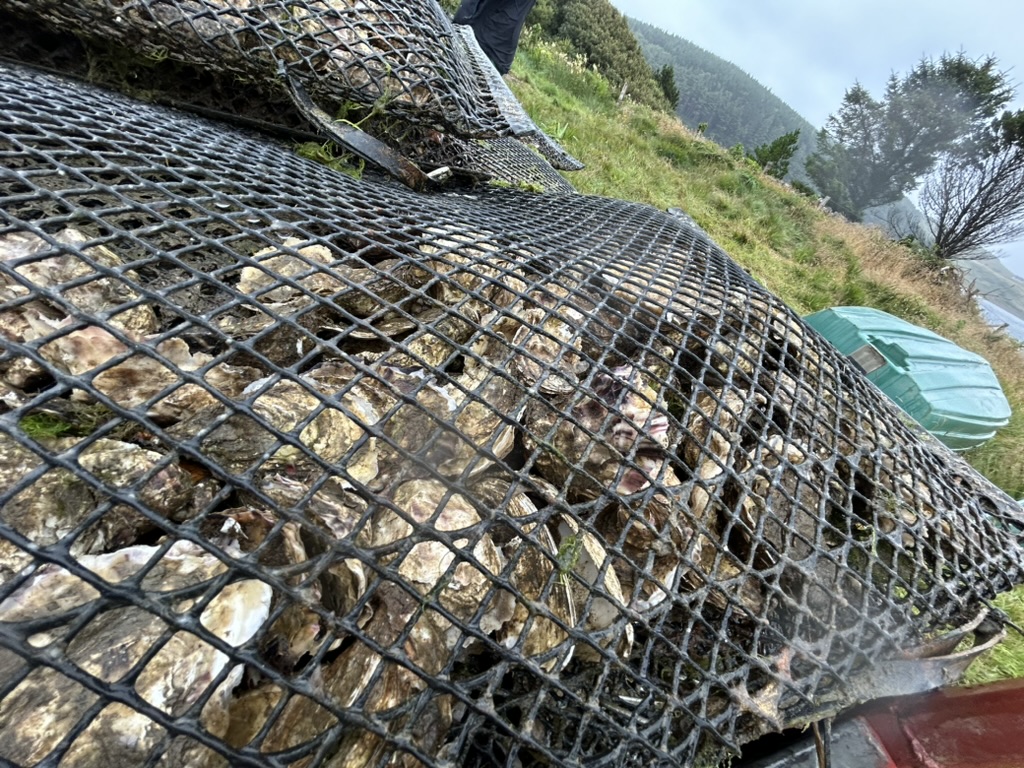
Agriculture is a vital part of Ireland’s economy contributing to exports and rural employment and agriculture is the backbone of Nebraska’s economy as 1 in 4 jobs in Nebraska are related to agriculture. Some of the places in Ireland our group visited were the National Stud Farm, Highbanks Organic Orchards, Wheelock Strawberry Farm, Glengowla Mine & sheepdog herding farm, and a local dairy, beef, vegetable, and oyster farm.

The dairy farm we visited milked 75 head of cows with 1 robotic milker. All Holstein Friesian cows were strictly pasture-fed with a supplement when they were milked. He utilized a pasture rotation and reseeded the pasture about every 5 years with a mix of grasses. During the winter months, cattle are fed mostly haylage with a little bit of corn silage as available. Every farmer is only allowed a certain number of cattle based on acres owned which was a bit of a challenge for him. He purchases replacement heifers and breeds his cows with a beef breed such as Angus or Hereford, selling the calves.

Visiting the beef farm was very interesting. The producer purchases all commercial heifers that feed grass and haylage with some corn silage in the winter. Most beef breeds are commercial and of the Angus, Simmental, Hereford, Charolais, Limousin, or Blue Belgium origin. In the winter, producers are required to move cattle off pastures and put in a drylot situation where some corn silage, haylage, and sometimes fodder beets are fed. Most corn that is grown has around a 170-day maturity and generally requires more input costs than farmers in the U.S. incur.

Oyster Farm

This was an amazing experience to see other types of agricultural systems, but a couple things Ireland and Nebraska have in common are rich agricultural traditions and a commitment to supporting their rural communities.

Uncategorized

Collaboration and Teamwork

After wrapping up another county fair and heading back into other extension programming, it’s good to reflect on the county fair experience as this is one of the capstone experiences for 4-H youth. This marks nearly my nineteenth year in Extension & eighteenth fair which is hard to imagine! I am still amazed and blessed to have so many excellent and caring volunteers to make the fair a positive experience for our youth. The countless hours spent preparing beforehand allows for a much smoother week during the fair. I’d like to give a lot of credit to the entire staff of Fillmore and Clay Counties. Weeks before the fair, data is entered into the computer system, stall assignments are created, awards are ordered, reminders are sent to exhibitors about completing quality assurance, registration deadlines, etc.

Without collaboration, fair would not occur. Also, there is a lot of time spent from volunteers such as Council members and superintendents. From helping with winter/spring weigh-ins to helping answer questions and attend meetings, volunteers are engaged year-round to make the program the best it can be.

An article adapted from Belgrad, W., Fisher, K., & Rayner, S. (1995) best summarizes that “collaboration and teamwork require a mix of interpersonal, problem-solving, and communication skills needed for a group to work together towards a common goal.” The best teams I have worked with put their own agenda aside and work toward the greater good of the team. This article also provides tips for how to develop a collaborative team environment. There are five themes that must be present.

The first is trust. Being honest with the team helps each other develop respect within a team. Give team members the benefit of the doubt and work to eliminate conflicts of interest. The second is to clarify roles. When each team member knows their key roles, they can perform more effectively and can figure out ways to help each other. Next, it is important to communicate openly and effectively. Work to clear up misunderstandings quickly and accurately. It’s best to over-communicate, rather than not communicate. Learn to be a good listener and recognize team member efforts. Fourth is to appreciate the diversity of ideas. Be open-minded and evaluate each new idea and remember that it is okay to disagree with one another but learn how to reach a consensus. Often, much is learned from those who differ from you.  Finally, balance the team’s focus. Regularly review and evaluate the effectiveness of the team. Assign team members specific tasks to evaluate and provide praise to other team members for achieving results.

I’d like to thank the 4-H Council members who have so freely given of their time to make the fair a success. Of course, livestock superintendents put in a large amount of time during the fair with check-in, the show, loading animals, etc. Special thanks to the fair board for their support of the 4-H program and the countless hours they spend setting up for events, etc. Businesses and financial donors help provide youth with incentives for their projects. There are so many other individuals and businesses who are helpful and do things without any recognition and to all of you, thank you! 

Congratulations Clay and Fillmore County 4-H and FFA members on a great county fair!

Source: Belgrad, W., Fisher, K., & Rayner, S. (1995). Tips for Teams: a Ready Reference for Solving Common Team Problems. McGraw-Hill: New York.

Uncategorized

4-H Builds Friendships

As we approach this county fair season, it is important to remember how important it is to focus on the importance of the life skills being taught. As adults, we need to be role models to youth and help them have a positive experience. It’s not the ribbon placing or the trophy that matters but rather the experience one has from participation in activities such as the county fair. 

When I ask 4-H members the question, “What do you like most about 4-H?” they often respond with “the friendships!” 4-H’ers have the unique opportunity to meet and interact with youth from across the county, the state and even the country. 4-H brings together youth with similar interests and you never forget the people you meet through the program.

Friends are vital to school-age youth’s healthy development. Friendships provide youth with more than just fun playmates. Friendships help them develop emotionally and morally. In interacting with friends, youth learn many social skills, such as how to communicate, cooperate, and solve problems. They practice controlling their emotions and responding to the emotions of others. They develop the ability to think through and negotiate different situations that arise in their relationships. Having friends even affects school performance. Youth tend to have better attitudes about school and learning when they have friends there.

Friendships help youth develop emotionally and morally and help them to learn critical life skills such as social skills, communication, cooperation, problem-solving, and many more.  Part of being a good friend is learning how to deal with conflict. There are several strategies to teach youth to resolve problems they have with other youth. 

Strategies for Conflict Resolution

  • When angry, separate yourself from the situation and take time to cool off.
  • Attack the problem, not the person. Start with a compliment.
  • Communicate your feelings assertively, NOT aggressively. Express them without blaming them.
  • Focus on the issue, NOT your position about the issue.
  • Accept and respect that individual opinions may differ. Don’t try to force compliance; work to develop a common agreement.
  • Do not view the situation as a competition in which one person has to win and one has to lose. Work toward a solution that will enable both parties to have some of their needs met.
  • Focus on areas of common interest and agreement, instead of areas of disagreement and opposition.
  • NEVER jump to conclusions or make assumptions about what another person is feeling or thinking.
  • Listen without interrupting. Ask for feedback, if needed, to ensure a clear understanding of the issue.
  • Remember, when only one person’s needs are satisfied in a conflict, it is NOT resolved and will continue.
  • Forget the past and stay in the present.
  • Build “power with” NOT “power over” others.
  • Thank the person for listening.

Find out more about this topic by visiting the Nebraska Extension child and youth development website at http://child.unl.edu/child-care-professionals and click on Expanded Learning Opportunities.

County Fair Schedules

You can find the events for the Clay and Fillmore County Fairs on each extension website or social media. Locally, go to fillmore.unl.edu or clay.unl.edu.