There are many women whether by choice or chance who manage agricultural land. For some, it is their livelihood and business. Other women might have inherited land from a family member and there are also women who just want to learn more about the agricultural business in partnership with a spouse or family member. No matter what the circumstance, Nebraska Extension will be providing a program to equip women with necessary management skills.
A recent news release came out which shared that any female agriculture landowners, farmers, and ranchers looking to increase their business management skills are encouraged to register for the 2019 Women Managing Agricultural Land conference. The conference will be held Dec. 11 at Nebraska Innovation Campus, 2021 Transformation Drive in Lincoln.
The first-ever Women Managing Agricultural Land Conference will allow women to build relationships with each other, attend workshops and gain valuable knowledge. Three keynote speakers and 12 workshops will focus on helping Nebraska farmland owners and tenants navigate the challenges they face.
Participants will have the opportunity to hear from leading experts in land values, Nebraska property taxes, cash rental rates and cultivating landlord-tenant relationships. Jim Jansen, co-author of the Nebraska Farm Real Estate survey, will discuss trends in Nebraska land values. Mykel Taylor, of Kansas State University, will share resources related to negotiations and communication between landowners and tenants. Cathy Anderson, from the Nebraska USDA Farm Service Agency, will discuss the 2018 Farm Bill and its implications for Nebraska agriculture.
The full conference schedule and registration form are available at https://wia.unl.edu/wmal. A registration fee of $45 per person covers materials, meals, and breaks.
The conference is hosted by Nebraska Extension and is inspired by Annie’s Project. In Nebraska, Annie’s Project is supported by Farm Credit Services of America. For more information about the Women Managing Agriculture Land conference, go to wia.unl.edu.
Nebraska Extension and USDA Farm Service Agency in Nebraska will host a series of Farm Bill education meetings over the next two months to assist producers as they begin to make farm-bill related program decisions. The 2018 Farm Bill, signed into law last December, reauthorized the existing Agriculture Risk Coverage (ARC) and Price Loss Coverage (PLC) safety net programs that were in the 2014 Farm Bill, however producers will need to make new program enrollment decisions over the coming months.
While the ARC and PLC programs under the new farm bill remain very similar to the previous farm bill, a few program changes coupled with changes in market conditions and outlook could significantly impact producer decisions.
“These meetings will help producers understand the programs and recent changes, as well as the decisions to be made at sign-up now and in the coming years,” said Nancy Johner, State Executive Director for the USDA Farm Service Agency in Nebraska. “There are some changes, such as an optional PLC program yield update, and other tweaks to the ARC and PLC programs that producers should consider as they make their selections.”
“Producers face a familiar choice between ARC and PLC, but under very different circumstances now as compared to 2014,” said Brad Lubben, Policy Specialist with Nebraska Extension. “Understanding the program mechanics, analysis and available decision tools will help producers make sound enrollment decisions with FSA.”
The joint Nebraska Extension and Nebraska Farm Service Agency producer education meetings are scheduled at numerous locations across the state from late November to mid-December in advance of the coming ARC/PLC enrollment deadlines in early 2020.
The meetings are all free and open to the public. Advance registration is encouraged for planning purposes for materials and facilities. Attendees can register for any of the meetings conveniently on the web at farmbill.unl.edu or by calling or visiting their county FSA or Extension office. The educational programs are each set to run three hours in length, featuring information and insight from FSA specialists and Extension experts, as well as other relevant information from local agencies.
The meetings are available statewide with several locations in each region of the state. The schedule for programming closest to us is as follows:
Red Cloud – Community Center – November 25, 1-4 PM
Bruning – Bruning Opera House – December 5, 1:30-4:30 PM
Grand Island – College Park Fonner Park Room – December 5, 1-4 PM
York – York County Fairgrounds Cornerstone Building – December 6, 9 AM-12 NOON
Lincoln – Lancaster County Extension Center – December 16, 9 AM-12 NOON
Kearney – Buffalo County Fairgrounds Antelope Meeting Room – December 17, 1-4 PM
Beatrice – Gage County Fairgrounds 4-H Building – December 17, 9 AM-12 NOON
Geneva – Fillmore County Fairgrounds Ag Hall – December 18, 9 AM-12 NOON
Please check the website for updates on locations, dates and times. All times are local with registration beginning 30 minutes ahead of start. Several additional meetings also are being planned locally across the state in various locations. Keep alert to additional opportunities and details as they are developed by checking the website for information or by contacting your county Extension or FSA office.
There also are resources available online that can educate producers in their ARC/PLC decision-making process. Links to these resources are available from FSA at www.fsa.usda.gov/ne under the Spotlights section or from Extension at farmbill.unl.edu.
The Farmers & Ranchers College was formed in January 2000 with the purpose of providing high quality, dynamic, up to date educational workshops for area agricultural producers in south central Nebraska through a collaborative effort between business, industry and higher education leaders. Furthermore, the Farmers & Ranchers College will provide the tools necessary so that agricultural producers will be able to respond positively to these changes using a profitable decision making process.
The Farmers and Ranchers College is a unique opportunity to educate agricultural producers in south central Nebraska. Approximately two hundred fifty producers participated in the 2018-19 Farmers & Ranchers College programs. Producers attending these workshops managed over 100,000 acres and managed nearly 10,000 head of beef animals. Participants surveyed indicated a potential impact of nearly $1 million from knowledge gained from participating. The 18th annual Partners in Progress- Beef Seminar featured a variety of industry, University and agricultural organization presenters. Ninety-eight percent of participants surveyed were very satisfied or satisfied with the program quality and fifty-five percent indicated that previous programming improved their knowledge of making risk management decisions.
Contributions and support of area businesses allow participants to attend at no cost, however for programs that have meals, it is requested that people RSVP at least a week in advance for an accurate meal count by calling Fillmore County Extension at (402) 759-3712.
The Farmers and Ranchers College Committee consists of Fred Bruning of Bruning, Bryan Dohrman of Grafton, Sarah Miller of Carleton, Jennifer Engle of Fairmont, Ryne Norton of York, Jim Donovan of Geneva, Bryce Kassik of Geneva, Eric Kamler of Geneva, and Brandy VanDeWalle of Ohiowa.
January 28, 2020** – “Partners In Progress Beef Seminar” Cow/Calf College at U.S. MARC near Clay Center, NE from 10-3:30 p.m., Registration at 9:30 a.m.
March 2020 – “Strategies for Family Farming Success in the Shark Tank” with Dr. Ron Hanson, UNL Harlan Agribusiness Professor Emeritus at the Fillmore Co. Fairgrounds- Geneva, NE Details are still being finalized for this program.
** Programs are free; however registration is appreciated for a meal count. Please call the Fillmore Co. Extension Office at (402) 759-3712 one-week prior to the program to reserve your spot.
Free legal and financial clinics are being offered for farmers and ranchers at seven sites across the state in October. The clinics are one-on-one meetings with an agricultural law attorney and an agricultural financial counselor. These are not group sessions, and they are confidential.
The attorney and financial advisor specialize in legal and financial issues related to farming and ranching, including financial and business planning, transition planning, farm loan programs, debtor/creditor law, debt structure and cash flow, agricultural disaster programs, and other relevant matters. Here is an opportunity to obtain an independent, outside perspective on issues that may be affecting your farm or ranch.
To sign up for a free clinic or to get more information, call the Nebraska Farm Hotline at 1-800-464-0258.
The anticipation is building for National 4-H Week which will start October 6-12, 2019, during which millions of youth, parents, volunteers and alumni across the country will be celebrating everything The anticipation is building for National 4-H Week, during which millions of youth, parents, volunteers and alumni across the country will be celebrating everything 4-H. Nebraska 4-H will observe National 4-H Week this year by showcasing the incredible experiences that 4-H offers young people, and will highlight the remarkable 4-H youth in our community who work each day to make a positive impact on those around them.
The theme of this year’s National 4-H Week is Inspire Kids to Do, which highlights how 4-H encourages kids to take part in hands-on learning experiences in areas such as health, science, agriculture and civic engagement. The positive environment provided by 4-H mentors ensures that kids in every county and parish in the country ̶ from urban neighborhoods to suburban schoolyards to rural farming communities ̶ are encouraged to take on proactive leadership roles and are empowered with the skills to lead in life and career.
In both Fillmore and Clay Counties more than 200 4-H youth and 50 volunteers from the community are involved in 4‑H. One of the most anticipated events of National 4-H Week every year is 4-H National Youth Science Day, which sees hundreds of thousands of youth across the nation taking part in the world’s largest youth-led STEM challenge. The exciting theme for this year’s challenge is Game Changers, which will run throughout October. Developed by Google and West Virginia University Extension Service, Game Changers will teach kids coding skills through fun exercises including gaming, puzzles and physical activity.
About 4-H:
4-H, the nation’s largest youth development and empowerment organization, cultivates confident kids who tackle the issues that matter most in their communities right now. In the United States, 4-H programs empower six million young people through the 110 land-grant universities and Cooperative Extension in more than 3,000 local offices serving every county and parish in the country. Outside the United States, independent, country-led 4-H organizations empower one million young people in more than 50 countries. National 4-H Council is the private sector, non-profit partner of the Cooperative Extension System and 4-H National Headquarters located at the National Institute of Food and Agriculture (NIFA) within the United States Department of Agriculture (USDA).
With county fair being over and in the midst of state fair time, I often am asked, “What are you doing now that fair is over?” The answer to that question is, “A lot!” This week, I’m focusing on the delivery methods of 4-H which involves much more than fair! In fact, in Clay and Fillmore counties, our small staff reaches 1 in 2 age-eligible youth and families in our respective counties. In Nebraska, 4-H reaches 1 in 3 age-eligible youth and families in all 93 counties with the support of over 12,000 volunteers. Nebraska 4-H strives to enable all youth to develop strong personal mindsets and the social skills necessary for successful futures.
The Nebraska 4-H Youth Development Program strives to empower youth to reach their full potential working and learning in partnership with caring adults. 4-H reaches youth through club, camp, afterschool, school enrichment, and special interest programs. The traditional 4-H club and camp experience are likely the familiar methods people are most familiar. Working with 4-H club leaders, parents and club members throughout the county fair is a very visible time. Youth can go to our state 4-H camp, area camps or participate in day camps or workshops which many people, again are familiar.
Our office coordinated a “Beef Day” with an area school to compliment the school beef booster program.
Did you know that extension staff work year-round to deliver programs to youth during the school year? School enrichment programs are learning experiences offered to students during school hours by local 4-H staff. These programs are designed to enhance the subject matter being studied in the classroom, provide hands-on education, introduce a new topic to students, or spark a new interest! The 4-H school enrichment program is a great way to connect and collaborate between your local Extension office and achieve school classroom educational goals. Locally, current programs focus on Career Development, STEM, and Agricultural Literacy.
Locally, some of the school enrichment programs include: Farm to the Cart, My Clothing & Weather, Beef Cattle from A to Z, Soils is Not a Dirty Word, Plant Parts we Eat, How Did That Get in my Lunchbox, Pumpkin Life Cycle, Positively Popcorn, Hot House Detective, Bacteriology, Embryology, & GPS/Geocaching. We also have beef related topics that can be used in collaboration with local school Beef Boosters to provide the educational component to students. Most of these programs are at no cost or have a minimal fee. If you are interested; be sure to check out our website at fillmore.unl.edu.
Embryology is one of the favorite programs that classroom teachers request every year.
There are some extension offices that provide after-school workshops or educational sessions for youth. Finally, there are special interest types of programs that extension staff provide. Locally, examples of these include the upcoming AgVenture Day which is a collaborative effort among the South Central Cattle Women and Extension. At this program, area 4th graders learn about agricultural products and how their food is produced. In the spring, Progressive Agriculture Safety Day reaches over 120 youth with presentations to keep participants safe.
To identify the impact that the 4-H Program is making in the lives of youth ages 5-18, various research studies have been conducted across Nebraska and the nation. For example, a nationwide longitudinal study by Tufts University (2013) found that compared to their peers, youth involved in 4-H programs are nearly 4 times more likely to make contributions to their communities (grades 7-12). Also, 4-H’ers are about 2 times more likely to be civically active (grades 8-12). The same study found that 4-H young people are nearly 2 times more likely to participate in science, engineering and computer technology programs during out-of-school time (grades 10-12). Finally, 4-Her’s are nearly 2 times more likely to make healthier choices (grade 7).
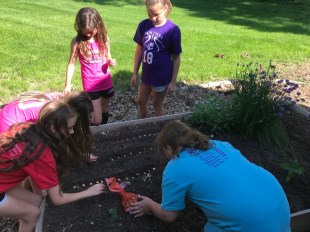
Youth plant our raised beds in front of the office in addition to a community garden with produce donated to the food pantry or senior center.
Next time you consider asking an extension staff “What are you doing now that fair is over?”, consider instead asking, “What programs or projects have you been working on?” I’m sure you will hear about some of the school enrichment programs, in addition to the countless efforts related to foods, early childhood development, crops, livestock, horticulture, community development and other youth development programs. For more information about Nebraska Extension’s educational programs, research and initiatives, go to extension.unl.edu.
On July 23, 2019, the sixth annual Crop Scouting Competition for Nebraska youth was held in which seven teams from across Nebraska competed. It was held at the Eastern Nebraska Research and Extension Center near Mead, Nebraska on July 23, 2019. Teams of students (those completing 5-12th grades) participated by completing a written knowledge test and seven crop scouting exercises in field plots.
The purpose of the competition was to provide students an opportunity to learn crop scouting and principles of integrated pest management (IPM) for corn and soybeans in Nebraska, to obtain knowledge and skills that will be helpful in future careers and to demonstrate newer crop scouting technologies.
Results from the 2019 competition were as follows:
First place- Colfax County 4-H (R. J. Bayer, Jestin Bayer, Austin Steffensmeier, Logan Nelson, and Brad Kratochvil)
Second place – Kornhusker Kids 4-H Club #1 (Payton & Levi Schiller, Matthew Rolf, and Kaleb Hasenkamp)
Third place – Kornhusker Kids 4-H Club #2 (Landon Hasenkamp, Ethan Kreikmeier, James Rolf, and Ian Schiller)
Also participating was
Humphrey FFA with Bryce Classen, Jacob Brandl, and Mikayla Martensen
Twin River FFA with Keaton Zarek, Kyle Kemper, Jacob Czarnick, and Landon Cuba
Auburn FFA with Kellen Moody, Austin Youngquit, Braden Gerdes, and Riley Stukenholtz
Wayne FFA with Justus Greves, Noah Lutt, Tyler Reinhardt, Elle Barnes, and Alyssa Carlson
Top-scoring teams won prizes: $500 for first, $250 for second, $100 for third place. The top two teams will represent Nebraska at the regional competition held in Iowa on August 26, 2019.
Teams were expected to know the basics of scouting corn and soybean fields. This included crop staging; looking for patterns of crop injury; disease, insect and weed seedling identification; etc.
Kornhusker Kids team determine the corn growth during the program.
More information about the crop scouting competition are available online at cropwatch.unl.edu/youth. Click on the link that says, “Crop Scouting Competition”.
This program was sponsored by DuPont Pioneer, the Nebraska Independent Crop Consultant Association and Farm Credit Services of America in collaboration with Nebraska Extension. If you know of a company or you would are interested in sponsoring the 2020 program, please contact me at brandy.vandewalle@unl.edu.
My youngest daughter, Meredith has been learning responsibility with her first bucket calf.
Webster’s Third International Dictionary defines sportsmanship as “conduct becoming an individual involving fair and honest competition, courteous relations and graceful acceptance of results”. Sportsmanship starts with parents teaching their youth how to accept a win or a loss, although in the 4-H youth development program, even if the youth receives a red ribbon, nothing is lost as long as some basic knowledge and skills were gained. Too often in our society we focus on the tangible results of a ribbon or trophy and don’t think about the process that youth went through to achieve the end results and what was learned from that process.
I often use the example that as a youth, I’ll never forget receiving a red ribbon for a market heifer; I was disappointed, but will never forget my dad asking me, what the judge said in the comments. After we talked it over, I realized his reasoning and was able to understand the type of animal I should select the following year. That was a lesson I’ll never forget. My parents instilled the value of hard work into my sister and I and any animal we showed we bought with our own money to build a small cow/calf herd or they came from our own herd. We rarely had the award-winning animal and were extremely excited to even receive a purple ribbon. The learning that occurred, memories and fun we had were just as valuable then if we would have received a trophy or plaque.
For these reasons, it is really rewarding to work with youth who are happy with any ribbon placing- white, red, blue or purple. It really is just one person’s opinion on one particular day!
The 4-H Program focuses on providing positive youth development and developing young people as future leaders. A ribbon or plaque placing does not achieve this; rather it is the process, skills and effort that went into the project. It is also important to mention that the entire 4-H program extends beyond the county fair and is done through educational workshops, career portfolios, leadership experiences and much more and is a year-round program.
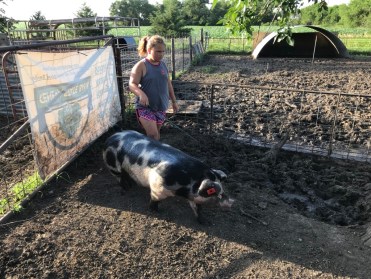
My oldest daughter, McKenzie added pigs to her 4-H project this year and has been having to learn lots more responsibility and patience.
Positive Youth Development
National 4-H reminds us that there are four critical components of a successful learning experience which include a sense of belonging, independence, mastery and generosity. During county fair and all 4-H programming, it is important that youth experience these.
Belonging
Youth need to know they are cared about by others and feel a sense of connection to others in the group. As the facilitator, it is important to provide youth the opportunity to feel physically and emotionally safe while actively participating in a group. Create a safe and inclusive environment and foster a positive relationship with youth learners. Use discussion questions that encourage youth to learn from each other, synthesize and use ideas collaboratively.
Independence
Youth need to know that they are able to influence people and events through decision-making and action. They learn to better understand themselves and become independent thinkers. Throughout each curriculum, youth are given opportunities to develop and reflect upon thoughts and responses to the challenges, explorations, and investigations. Youth begin to understand that they are able to act as change agents with confidence and competence as a result of their learning.
Mastery
In order to develop self-confidence youth need to feel and believe they are capable and they must experience success at solving problems and meeting challenges. Youth need a breadth and depth of topics that allow them to pursue their own interests. Introduce youth to expert knowledge and guide them toward their own sense of mastery and accomplishment.
Generosity
Youth need to feel their lives have meaning and purpose. Throughout each curriculum, youth are encouraged to broaden their perspectives, find relevance in the topic area and bring ideas back to their community.
Adapted from 4-H Essential Elements of 4-H Youth Development, Dr. Cathann Kress, 2004.
The difference between a good farmer and a great manager often comes down to knowing the true financial position of a farm. Good records make it possible to track an operation’s true financial position. Inaccurate records can lead to misguided management decisions.
“Good Farmer to Great Manager” Record-keeping classes will teach farmers and ranchers to keep accurate records for their operations. These classes will be held at three locations:
Lincoln, July 18 – 19 at the Lancaster County Extension Office
Bridgeport, July 25 – 26 at the Prairie Winds Community Center
Grand Island, July 30 – 31 at the Hall County Extension Office
Each class will run from 1p.m. until 5 p.m. the first day, and 8 a.m. until noon the second day. The course fee is $50 per participant; class size is limited to 25 people per location. Register online at https://www.regonline.com/registration/Checkin.aspx…
Keeping good records is less about using a certain software and more about gathering and organizing information, according to Tina Barret the Executive Director of Nebraska Farm Business Inc. and course instructor. “In this class, you will learn about what information you should have easily available as part of your farm or ranch records. When you have good records, everything from tax preparation, annual loan renewals, and financial analysis become much easier,” she said. “More importantly, it will allow you to make financial management decisions that improve your business.”




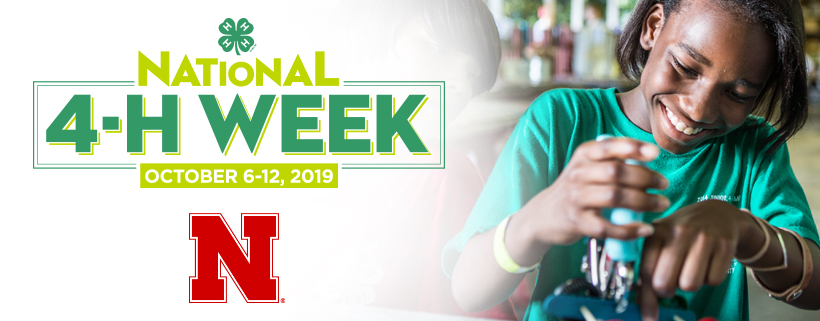 The anticipation is building for National 4-H Week which will start October 6-12, 2019, during which millions of youth, parents, volunteers and alumni across the country will be celebrating everything The anticipation is building for National 4-H Week, during which millions of youth, parents, volunteers and alumni across the country will be celebrating everything 4-H. Nebraska 4-H will observe National 4-H Week this year by showcasing the incredible experiences that 4-H offers young people, and will highlight the remarkable 4-H youth in our community who work each day to make a positive impact on those around them.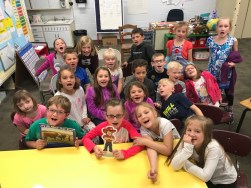

 On July 23, 2019, the sixth annual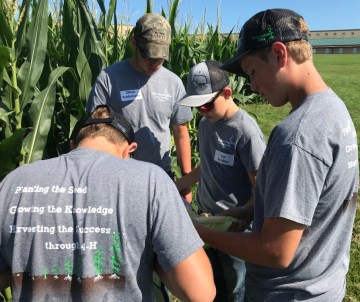


 Views from VanDeWalle