Youth

 Comfort in a Changing World

By Guest Columnist: Dr. Michelle Krehbiel, Nebraska Extension 4-H Youth Development

“I don’t like this!” This statement is one that children or youth might use during a heated game, when being asked to correct unwanted behavior or when plans change.  For those children and youth who were looking forward to milestones like field days, end of school year celebrations, prom, or graduation, they have reason to believe that life can be sad, frustrating, and difficult.

adult alone anxious black and white
Photo by Kat Jayne on Pexels.com

The question is how do we, as nurturing adults, help young people cope with these emotions and equip them with the skills they need to be caring, connected, and capable adults?  Any loss for a child or youth, such as a failing an exam, death of a pet, changes in family structure, or events from a disaster, can lead to a wide variety of feelings such as disappointment, sadness, loneliness, or anger.  These feelings are common reactions to such experiences.

As caring adults, we can do the following to help young people cope.

  • Acknowledge feelings and allow youth to talk about their feelings and concerns. Let youth know that it is okay to be sad, scared or confused. Identifying and naming a feeling can be very helpful in trying to understand and make meaning of a situation.
  • Be a calm and reassuring presence. Remind youth that over time things will get better.
  • Help youth form positive coping skills by setting a healthy example of how to manage feelings like grief, anxiety, fear, or sadness. Teach young people that exercising, meditation, writing in a journal, engaging in a favorite hobby like art, cooking, gardening or sewing are healthy ways to work through disappointment, loss, and grief.
  • Expressing gratitude for things that make life enjoyable is another way teach positive coping skills.
  • Create an environment where youth can interact with their peers. Using video conferencing, having telephone conversations, or writing letters are ways of connecting with peers. These connections can be helpful ways to provide emotional support for youth, especially for adolescents.
  • Simply, listen. If ever youth need adults to listen, it is now. Being able to talk about an experience can support making meaning of a situation which is an important part of grieving. Remember you don’t have to have all the answers. Silence is okay. Youth just need to know you care.

Sometime life can be difficult, unfair, and painful. While adults cannot prevent or change all of these experiences, they can play a significant role in helping young people cultivate and practice skills that give them the ability to develop resiliency or the ability to overcome hardship. The Center on the Developing Child at Harvard University recommends that adults build supportive adult-child relationships as a way to strengthen a young person’s resiliency.  Taking the time to listen and communicate with young people, being a positive example of healthy coping skills, and simply just being a calming reassuring presence are action steps that adults can implement now.  As adults, let’s take the time to prepare young people to become caring, connected and capable adults.

For more information and resources about youth social emotional development in difficult times can be found at https://disaster.unl.edu/families or by contacting your local county Nebraska Extension office.

Comfort in a Changing World Resources

The Center on the Developing Child at Harvard has some great resources.  This link is specific to resiliency but I would encourage you take some time to explore other parts of the website.

https://developingchild.harvard.edu/science/key-concepts/resilience/

Youth.gov which is a website supported by the United State federal government.  Its’ content was produced but multiple government agencies and has some excellent youth development resources.  This link is specific to resiliency.  https://youth.gov/youth-topics/youth-mental-health/definitions-developmental-competencies

Child Trends has some great work on resiliency. Here is a link to one of their resources. https://www.childtrends.org/what-can-schools-do-to-build-resilience-in-their-students

Additionally, they have a great publication on youth and the COVID19 pandemic.  https://www.childtrends.org/publications/ways-to-promote-childrens-resilience-to-the-covid-19-pandemic

Lastly, this is a nice general resources on common mental health issues from Australia.  I have always found Australia to have outstanding youth resources.   https://resources.beyondblue.org.au/prism/file?token=BL/1060  (publication on anxiety and depression)


Youth

Parent & Child Care Provider Resources

The Learning Child team with Nebraska Extension provides affordable, research-based, educational programs, and resources. Information in each program is based on research from faculty right here at the University of Nebraska-Lincoln. The goal is to empower all adults who care for young children by providing high-quality professional development that sets the stage for lifelong learning, discovery, and success. The Learning Child (TLC) is here to help take what is learned from professional development and research and put it into practice.031F7806-4ADB-49E3-8C0B-6452F29C7D0E_1_105_c.jpeg

Communities caring for children and youth want answers regarding what to do before, during, and after an emergency event, disaster, or crisis. It is important to remember that all children and youth react differently to major changes in their lives. The Learning Child team has various resources that may be of help to adults and the families, children, and youth in the community.

Nebraska Extension’s Learning Child and 4-H Youth Development teams have developed a one page handout listing all of the resources.  This handout is electronically accessible and printable.  It is available in English and Spanish. To access the handouts please visit the BOX link and share it with those you feel may benefit.

Here are a few more resources that may be of help:

Helping Children Cope – Suggestions and Strategies

The most important way to support children and youth is to talk, comfort, and reassure them they are loved and supported regarding their experiences. Using children’s literature in an interactive way, caregivers can help children heal. The Learning Child team has identified books to support children’s coping and understanding of their feelings after experiencing a major stressor, disaster, loss, and/or grief. Free storybook reading guides accompany the books. The guides provide adults with suggested activities and probing questions to help children personally connect with the experiences of the characters in the books.

Parents and educators are in the best position to help children and youth cope. Nebraska Extension’s Learning Child in collaboration with 4-H Youth Development have developed a simple one-page handout that is electronically accessible and printable with online videos, classes, and activities for young children (birth to age eight) and school-age children. This website has resources to support children’s coping and understanding of their feelings. It is common for children and youth to experience grief, frustration, anger, and a lost sense of security after experiencing a major change, loss, or grief.

Online Professional Development – Childcare Providers

The Learning Child team provides automatically approved in-service hours with research-based information from the University of Nebraska – Lincoln, Nebraska Extension. Online offeringsprovide information and strategies on how to support the early growth and development of young children.

A Beautiful Day – Virtual early childhood space

Beautiful Day.png

A Beautiful Day is a virtual early childhood space designed to connect with children and families in Nebraska and across the world. UNL faculty and collaborators created this space as a way to share ideas, to foster learning and play, and to support caregivers experiencing physical distancing. The team is creating and adding more videos on a regular basis. This space is a safe video based platform with no ads, to share ideas, foster learning and play, and to support all adults caring for children who are experiencing physical distancing.

Inspiration for A Beautiful Day came from Fred Rogers who said, “Look for the helpers. You will always find people who are helping.” This project involves the following collaborators: Child, Youth and Families Studies, Ruth Staples Child Development Laboratory, College of Education and Human Sciences, Nebraska Extension, and the Buffett Early Childhood Institute.

Stay Connected as a Family – Celebrate your strengths!

Strong families have the ability to manage stress and crisis in their lives in positive, creative ways. There are strengths families use to create positive environments, however, to take care of your family and others, you must first take care of yourself. The Nebraska Extension team has compiled resources for family support and mental health for adults and families.

Readers may contact Lynn DeVries, Learning Child Educator at ldevries6@unl.edu or members of the Learning Child interest group at TLC@unl.edu if they have any questions about these resources.

Youth

4-H Reaches Youth With Two New Live Video Programs

Recently, Nebraska Extension staff led hundreds of youth in a kitchen science experiment focused on chemical reactions — the kind with vinegar and baking soda that is a staple at elementary school science fairs. For the inaugural program on March 17th, youth from more than 200 locations across Nebraska and four other states engaged in science out of their own homes.CBD83E1B-9F88-4378-82FB-F8A0DD5620AA_1_105_c

This was the first in a series of live videos that Nebraska 4-H plans to stream each Tuesday and Thursday at 2 p.m. Central Time for as long as schools remain closed to slow the spread of COVID-19. The series, called Living Room Learning, aims to provide fun, engaging, educational activities that families can complete together with supplies they probably already have on hand, said Kathleen Lodl, associate dean of Nebraska Extension.

For families across Nebraska and throughout the United States, where they are now is at home, and in many cases, parents are trying to balance their own work obligations with their children’s learning. Nebraska 4-H has a strong history of interacting with youth in ways that build life skills such as communication and leadership, while also educating them in content areas including STEM, healthy living and entrepreneurship. In addition, 4-H extension educators across the state already have relationships with 4-H clubs, schools and parents.

Youth who took part in the livestream were able to see the other participants and use a chat box to discuss the project and share other information, such as where they were from. The young learners seemed to love seeing other participants in their homes across the state and beyond. Living Room Learning is geared toward third- through fifth-graders, though younger and older kids can participate, too.4h_mark1

Nebraska 4-H has also launched the Boredom Buster Challenge, a live video series geared toward middle schoolers and focused on entrepreneurship. Like Living Room Learning, the Boredom Buster Challenge encourages participants to take advantage of the opportunities for interaction offered through the livestream as they learn about the fundamentals of entrepreneurship and challenge themselves to think of alternative uses for common household items, among other activities. The Boredom Buster Challenge will take place at 2 p.m. Central Time on Mondays and Wednesdays.

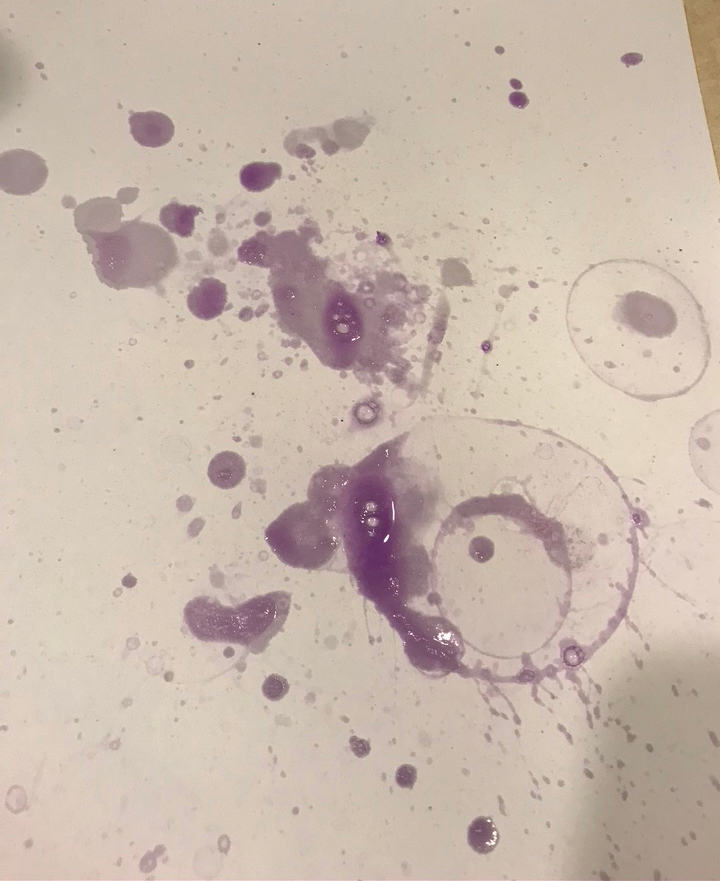
Forthcoming Living Room Learning livestreams will focus on healthy living, STEM and citizenship, among other topics. One activity will guide youth in making marbled paper, which they’ll turn into a card to send to someone in their community. As 4-H leaders plan activities, they ensure that the four “H’s”  — head, heart, hands and health — are represented, and that each lesson fosters creative thinking and independence.

For a schedule of upcoming Living Room Learning activities and past livestreams, visit https://4h.unl.edu/living-room-learning. For a schedule and past videos of the Boredom Buster Challenge, visit https://4h.unl.edu/boredom-buster-challenge.

Source: Cara Pesek, IANR Media

CBD83E1B-9F88-4378-82FB-F8A0DD5620AA_1_105_c.jpeg

Programming, Youth

Tractor safety course to teens across Nebraska

Members of the Central States Center for Agricultural Safety and Health at the University of Nebraska Medical Center, College of Public Health will provide a tractor safety course in May and June of 2020 at 11 sites across Nebraska in partnership with Nebraska Extension. The course provides extensive training on tractor and all-terrain vehicle safety with a variety of hands-on activities. Instilling an attitude of ‘making safety a priority’ and respect for agricultural equipment are primary goals of the course.TractorCourse

Teens 14 or 15 years of age who work on farms, or others who are interested in learning about safe farming practices, are encouraged to register for the Nebraska Extension Tractor Safety & Hazardous Occupations Course. Anyone under age 14 is not eligible to take the class.

Federal law prohibits children under 16 years of age from using certain equipment on a farm unless their parents or legal guardians own the farm. However, certification received through the course grants an exemption to the law allowing 14- and 15-year-olds to drive a tractor and to do field work with certain mechanized equipment.

Susan Harris-Broomfield, University of Nebraska Extension Educator reports that a common cause of agricultural-related injuries and deaths in Nebraska is overturned tractors and ATVs. She emphasized that this course is designed to train students how to avoid these incidents as well as many other hazards on the farm and ranch.

Cost of the course is $60 and includes educational materials, instruction, supplies, and lunch. The first day of class will cover the required elements of the National Safe Tractor and Machinery Operation Program, hands-on participation, concluding with a written test which students must pass to attend the second day of training.

The second day of training will include a driving test and equipment operation and ATV safety lessons. Students must demonstrate competence in hitching and unhitching equipment and driving a tractor and trailer through a standardized course. Instructors will also offer education about safe behaviors and laws for ATVs, utility-task vehicles (UTVs), and other off-road vehicles (ORVs).

Instructors for the course are members of the Central States Center for Agricultural Safety and Health: Aaron Yoder, Ph.D., Ellen Duysen, MPH; UNMC graduate student Alyssa Damke; and Nebraska Extension educators Troy Ingram, Randy Saner, Chandra Giles, and John Thomas.

Classes begin at 8 a.m. or 9 a.m., depending on location, and end times vary depending on the number of participants.  If classes do not fill to the minimum of 10 participants, an option will be offered to do Day 1 training online and Day 2 in person.

Dates, training site locations, and site coordinator phone numbers are below:

  • May 21 & 22 – Weeping Water, Fairgrounds, (402) 267-2205
  • May 26 & 27 – Ord, Fairgrounds (308) 728-5071;
  • May 28 & 29 – Wayne, Fairgrounds (402) 375-3310
  • June 1 & 2 – O’Neill, Plains Equipment, (402) 336-2760
  • June 3 (first day is online) – Gordon, Fairgrounds, (308) 327-2312
  • June 4 & 5 – Ainsworth, Evangelical Free, (402) 387-2213
  • June 9 & 10 – Geneva, Fairgrounds, (402) 759-3712
  • June 11 & 12 – North Platte, West Central Research, Extension and Education Center, (308) 532-2683
  • June 16 & 17 – Kearney, Buffalo County Extension Office (308) 236-1235
  • June 18 & 19 – Hastings, Adams County Extension Office (402) 461-7209
  • June 29 & 30 – Gering, Legacy Museum (308) 632-1480.

For more information or to register, contact the appropriate Extension office above. The registration form is located at kearney.unl.edu.

Crops, Irrigation, Livestock, Youth

Disaster Anniversaries

Birthdays, anniversaries and holidays are days to celebrate annually with joy and happiness. If you are like me, I’m sure there are also dates that might bring feelings of anxiety, stress and sadness. For example, I’ll never forget where I was when September 11, 2001 happened. I’ll never forget days that various people in my life were impacted by serious illnesses or passed away. Many Nebraskans will never forget March 15, 2019 when the ‘bomb cyclone’ hit causing massive and historic flooding in the state. This date forever changed the lives of many and will take years for many to recover. As March 15, approaches, our Nebraska Extension team put out resources which I decided to share in my column this week.

gray scale photo of trees
Photo by Ian Turnell on Pexels.com

The Substance Abuse and Mental Health Services Administration (SAMHSA) has the following tips for how to cope with these trigger events.

  • Be aware that special days may be difficult. It’s common for some stress and other emotional reactions to happen around the anniversary of an event. Simply recognizing that your feelings are normal will help. Dealing with some of your losses and the new realities you’re facing after a disaster can be challenging. Try not to be too hard on yourself.
  • Be gentle with yourself. Show yourself the same kindness and patience you’d give to others during this time. Allow yourself to feel angry or sad and recognize that these emotions are natural.
  • Participate in activities that you enjoy. This may be different depending on the individual. Some people like to reflect in solitude while others may prefer spending time with family and friends for support. Some of these activities may include: singing, prayer, meditation, attending a spiritual service, going to the movies, or just getting together with loved ones to share a meal.
  • Talk about your losses if you need to. If you want to talk about your losses since the disaster, you can. If you want to talk about the future, you can do that, too. Be sure to share your thoughts and feelings with someone you trust. That can be a friend or family member or a health care professional.
  • Draw on your faith/spirituality. For many, faith and other spiritual beliefs are a source of strength and comfort every day, and most especially during difficult times. Reach out to your faith adviser, spiritual community, or anyone that you feel comfortable talking with about your beliefs to support and console you.
  • Accept kindness and help from others. Support from family and friends is essential to healing. It’s often difficult for people to accept help because they don’t want to be a burden to others, or don’t want to appear weak. Allow the people in your life to show their care and concern.
  • Help others. For some people, volunteering is a healthy way to heal and they get a great deal of satisfaction from helping others. Some activities can be as simple as donating food, clothing, and other items.

    beach depression sad tattoo
    Photo by Pixabay on Pexels.com

While it is hard to cope with these trigger dates, know that you are not alone and you are cared about, especially by Nebraska Extension. Nebraska Extension, along with numerous other partners has recently created the “Nebraska Needs You” campaign and is working to support others in times of difficulty. We have the Rural Family Stress & Wellness Team, that I am a part of which participates in activities supporting the wellness of rural Nebraska communities by working with community partners and the University of Nebraska. Resources can be found at ruralwellness.unl.edu.

(Source: The Substance Abuse and Mental Health Services Administration)

Crops, Uncategorized, Youth

Innovative Youth Corn Challenge

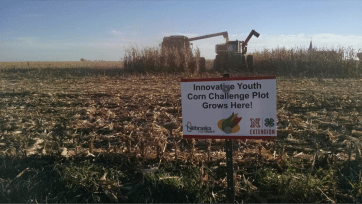
Science, technology, engineering, and math (STEM) careers are in high demand and will continue to be in future years. To engage youth in crop science based education, the Innovative Youth Corn Challenge (IYCC) was created as a partnership between the Nebraska Corn Board and Nebraska Extension.  Since the Innovative Youth Corn Challenge program’s inception in 2012, 53 teams have participated in the program with 32 teams successfully harvesting and analyzing their plot data. A total of 148 youth have participated. This contest, open to 4-H or FFA members, guided participants through all aspects of corn production, as well as agricultural careers related to corn production.IYCC brand.png

The winning team from the 2019 growing season was the Kornhusker Kids 4-H Club which included Kaleb and Landon Hasenkamp,  Matthew and James Rolf, Levi Schiller, Ian and Payton Schiller. They worked with the UNL Project SENSE on an in-season nitrogen management program comparing using in-canopy sensors, a drone MZR treatment, or their standard grower treatment. Their results showed that the grower strips had the highest yield of 256.6 bu/acre but cost the most.  The MZR treatment yielded 238.67 bu/acre. The Project SENSE treatment yielded 245.5 bu/acre and had the best return on investment. Also, it is important to note is that this team randomized their treatments and had 3 replications of the plots which is important in figuring out the statistical significance. Their project sponsor was Chris Schiller.

Receiving second place was the Allen-Wakefield FFA Chapter which consisted of Katie Bathke and Ashley Kraemer with Jeff Geiger as their sponsor and Josh Batenhorst as their advisor. They wanted to test a polymicrobial solution for bulk fertilizers called Nachurs Rhyzo-Link LF. The hypothesized that the treated plants would yield better due to the five Bacillus strains creating a better environment for the roots. They found that the Rhyzo-Link plot had a yield of 243 bu/acre compared to 240 bu/acre for the control, with five replications.
C1AD11B5-CA53-4FA1-B59E-8D2F39FF43A8_1_105_c.jpeg

Third place went to the Rising Stars 4-H Club from Platte County which consisted of Kade and Isaac Stromberg with Brad Stephens as their sponsor. They tested seeding a blend of two hybrids compared to each planted separately. They had two replications and found that the blend of Pioneer 1197AM with Dekalb DKC60-88RIB yielded 245.48 bushels/acre, while the 1197 by itself yielded 243.99 and the 60-88 yielded 240.29 by itself. This team also took advantage of an offer from Crop Metrics to have a free soil water sensor placed in their field to monitor irrigation scheduling.

Other teams who completed their plots were the Oakland-Craig FFA team of Joe Monson, Aiden Jorgensen, Ryan Smith, Cole Buress, Hannah Mosemen with Kylie Penke as their sponsor. They tested Envite seed treatment, which is supposed to help non-legume plants fix nitrogen to see if there would be an increased yield when the nitrogen rate on the entire plot was reduced by 40%. They found that the Envite plot had a yield of 232 bu/acre compared to 229 bu/acre for the control.

Also finishing their project was Shelton FFA with Jacob Synder and Andrew Rayburn and Hannah Horak as their advisor. The main topic of their research was a starter fertilizer with a microbial catalyst called Nachur’s Rhyzo-Link 9-15-3. They had 2 reps and found that the Nachur’s Rhyzo-Link yielded 230.25 bu/acre at a cost of $9.95 per acre and no treatment yielded 224.4 bu/acre.

CornPlotPic16.png

Other teams that participated but due to various circumstances were unable to finish their project included Adams Central FFA Chapter, Ord FFA Chapter and the Golden Gate Clever Clovers 4-H Club of Washington County.

As a team, youth worked with an adult mentor throughout the process. Mentors can be extension faculty, ag teachers, or other qualified agronomy professionals.

Other awards handed out during the banquet held on UNL’s East Campus included:

  • The Extra Mile Award went to the Rising Stars 4-H Club.
  • The Innovation Award was presented to the Kornhusker Kids 4-H Club.
  • The Sustainability Award went to the Rising Stars 4-H Club. They utilized the Field to Market tool which is a leading multi-stakeholder initiative that is working to unite the agricultural supply chain in defining, measuring and advancing the sustainability of food, fiber and fuel production in the United States.

To participate in 2020, youth must complete and return an entry form by March 15th to the Fillmore County Extension Office in Geneva, NE. Forms can be downloaded at https://cropwatch.unl.edu/youth/cornchallenge. For more information, contact Brandy VanDeWalle at brandy.vandewalle@unl.edu.

Crops, Horticulture, Irrigation, Livestock, Youth

New Year’s Resolutions

If you are like many nearly half of the American population, you probably have a New Year’s Resolution set for 2020, while 38% of Americans absolutely never make New Year’s Resolution according to research by University of Scranton, 2016. A majority of those resolutions are self-improvement or education related resolutions (47%), weight related (38%), money related (34%) or relationship related (31%).  University of Southern California’s John Monterosso who is an expert on psychology and neuroscience of self-control offers insight on how to achieve setting those resolutions.

pexels-photo-3401900.jpeg
Photo by cottonbro on Pexels.com

Monterosso suggests thinking of a resolution as a special kind of plan and visualizing your future-self. If you have already made that resolution or still working to tweak it, he suggested keeping the following in mind:

  • Failed resolutions are not harmless. Most people don’t like to fail; in fact it hurts our confidence and can actually lead to worse behavior. Keeping this in mind and accepting the fact that one might not have accomplished all that was planned is important. If you get off track, you can always start again and don’t have to wait until a new year.
  • Resolutions work by linking single decisions to a bigger picture. For example, if you have a goal of quitting smoking or eating unhealthy foods and let a craving lead to poor decisions, you might think, “it’s just one cigarette or just one meal of fried foods” which may or may not lead to the continuation of a bad habit. If one takes a resolution seriously, think about the health consequences and the potential “relapse” that could occur.
  • Consider being less ambitious in your resolutions. We tend to be overly confident when making a resolution and think we can change our behavior overnight. While it is good to be confident with your goals, be careful not to make overly ambitious goals. For example, if you plan to work out one hour/day every day of the week and have an already packed life with a career, community obligations and a family, consider starting at 20 minutes/day and work up to more minutes if time allows. Setting a good resolution requires being realistic.
  • Resolutions should not be vague. If you set a resolution of “eating healthier.” What does that mean?  Does it mean drinking 64 oz. of water/day?  Does it mean to include a fruit or vegetable at every meal?  Write down a SMART goal that is Specific, Measurable, Achievable, Realistic, and Time-based.
  • The New Year is a fresh start. Setting resolutions/goals at the first of the year helps us “clean the slate” and put past failures away. It gives us a sense of confidence and optimism. Capitalize on that.
  • Even successful resolutions can be mistakes. If you set restrict your diet to the point of starvation or over-exercise to the point of hurting yourself, you must be able to adapt, know yourself and use common sense and wisdom to correct the resolution.

In summary, Monterosso suggests that done correctly, “resolutions play a role in great human achievements.”

Extension’s Help with Resolutions

As stated above, almost half of resolutions made include education or self-improvement. If you need any educational resources or materials on nearly any subject, Extension has resources. Whether it is information on a website, talking with an extension professional, utilizing an app from your smart-phone, attending a face-to-face program, participation in a webinar or many other avenues, Extension works to solve complex problems for clients. If you haven’t been to Extension’s website recently, I encourage you to go to extension.unl.edu. There you will find an abundance of resources on topics such as food, nutrition and health, cropping & water systems, community vitality, community environment, learning child, beef systems and 4-H youth development. Consider attending a program or utilizing a resource to help you achieve a resolution or goal you may have.

For a list of extension programs in the area, visit our website or call our office at (402) 759-3712.

Uncategorized, Youth

Happy Thanksgiving!

Let’s talk about the Thanksgiving meal, include some facts about Thanksgiving and examine reasons to be thankful. First of all, according to the USDA, about $670 million is the monetary value of turkeys consumed for Thanksgiving every year which is based on an estimated 46 million turkeys and 92 cent-per-pound. On average, it costs about $50 for a 10-person Thanksgiving meal. Included in the $50 meal is the turkey, bread stuffing, sweet potatoes, rolls with butter, peas, cranberries, a relish tray of carrots and celery, pumpkin pie with whipped cream and beverages of coffee and milk (Source: American Farm Bureau).  You can thank our American farmers and ranchers who are able to provide us the bounty of safe and affordable food we are able to consume.

2_thanksgiving_digital.jpgNow let’s talk trivia:

Q: Why are turkeys raised?   A: Because of their excellent quality of meat and eggs

Q: What is a male turkey called?  A:  Tom

Q: What is a female turkey called?  A:  A Hen

Q: What sound do turkeys make?  A: Only tom turkeys gobble; the female makes a clucking sound.

Q: How many feathers does a turkey have at maturity?  A:  3,500 feathers

Q: How long does it take a turkey to reach market size?   A: Hens usually grow for 16 weeks and is 8-16 lbs. when processed while tom usually takes 19 weeks to reach market weight and weighs 24 lbs. Large toms (24-40 lbs. are a few weeks older.

Regardless of what you do this Thanksgiving, remember to be thankful for what really matters

2_thanksgiving_digital.jpg

Crops, Livestock, Youth

Remember Ag Safety

Last week I attended the Progressive Agriculture Safety Day coordinator training. This training provides excellent resources for the annual Progressive Agriculture Safety Day we have each May in Geneva. By participating in this program, national donors provides us the opportunity to provide youth t-shirts, access to vital curriculum materials and other support. At the training, two staggering statistics reinforced my reason for continually offering this program to area youth. In North America, every 3 days, a child dies due to an ag-related accident. Also, in North America, every day 33 youth are injured in an agricultural setting.img_6564

The vision of Progressive Agriculture Foundation is that “no child would become ill, injured or die from farm, ranch or rural activities.” As the mother of two school-aged children, I try to stress the importance of safety in and around crop and livestock areas, but it just takes one moment for an accident to happen so please remember to take it slow and easy this harvest season. The stress of farming and ranching is large and taking care of yourself is important not only for your health but to those around you.

Our local ag safety day planning committee will be meeting after the first of the year to plan our program. If you or your business would like to contribute financially to our local youth or be involved in our program, please contact me at (402) 759-3712 or brandy.vandewalle@unl.edu and I’d be glad to talk about ways to effectively teach our youth about ag safety.

Youth

Tips for a Healthier Halloween

For many, autumn events like Halloween are a time to wear costumes, go trick-or-treating, go to parties with friends, and eat sweet treats. Celebrations such as Halloween are a chance to not only have fun, but also provide healthy snack options and be physically active with friends and family. Make your Halloween season healthier this year by getting plenty of physical activity to balance food intake and help children choose wisely and eat their treats in moderation. My colleague, Megan Burda found some great tips on making Halloween healthier. Below are tips to make your Halloween healthier for trick-or-treaters and guests.

holiday autumn orange face
Photo by Public Domain Pictures on Pexels.com

Hand out healthier treats.

  • Give out healthier treats for trick-or-treaters and party guests this year. The calories in all those bite-size treats can add up quickly. There are lots of options when it comes to healthier food treats.
  • Examples include cereal bars, packages of dried fruit, baked pretzels, trail mix, animal crackers, mini boxes of raisins, graham crackers, sugar-free gum or hard candy, snack-sized pudding containers, individual applesauce containers or squeeze pouches, sugar-free hot chocolate or apple cider packets, individual juice boxes (100% juice), or fig cookies.

Try out non-food treats.

  • If you want to steer away from handing out food this year, children will also enjoy non-food treats, such as things you would put in birthday goodie bags. Some non-food items are suitable for all ages, but small items should be limited to kids over age three.
  • Examples include small toys, pocket-sized games, plastic costume jewelry, glow sticks, tiny decks of cards, pencils, pencil toppers, fancy erasers, stickers (including reflective safety stickers), bookmarks, bottles of bubbles, whistles, coloring books, or small packages of crayons.

Promote physical activity.

  • Use party games and trick-or-treat time as a way to fit in 60 minutes of physical activity for kids. You can encourage and pump up the enthusiasm for being more active by providing small and inexpensive toys that promote activity.
  • Items could include a bouncy ball, jump rope, side walk chalk for a game of hopscotch or foursquare, or a beanbag for hacky sack.

Moderation is key.

  • Halloween is a great time to discuss and demonstrate the importance of moderation. Keep track of children’s candy so they don’t go overboard in one sitting. Let them pick out a few treats on Halloween night and then let them have a few pieces each day after that.
  • Show kids treats can fit into a healthy eating plan in small amounts. Combine a treat, such as fun-size candy, with a healthy snack like a piece of fruit. Be sure they eat the fruit first so they don’t fill up on the candy.

Survive sweet treats at work.

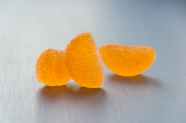
close up photography of orange candies
Photo by Mareefe on Pexels.com
  • Snack- or fun-size candies are small and easy to eat, but eating several throughout the day can add up to extra calories. Keep the wrappers where you can see them so they don’t accidentally pile up.
  • If you can’t just eat a few treats at work, start bringing healthier alternatives with you. Stock your snack bag or desk drawer with fruit cups, dried fruit, lightly sweetened whole grain cereal, graham crackers, low-fat pudding cups, popcorn, or granola bars.
  • Remember that friends or co-workers may also be struggling to stay motivated to make healthy changes. Lean on each other and be there when others need encouragement. This year, make an effort to bring healthier treat options to work.

Find recipes and learn more at https://food.unl.edu.