Programming, Youth

National 4-H Week

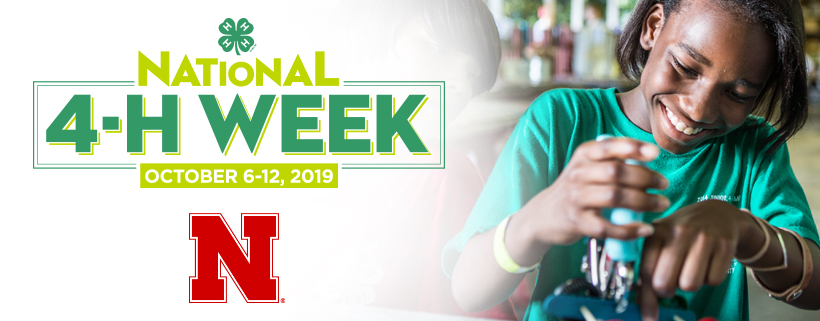
NE-4H-820x321_FB-Header.jpgThe anticipation is building for National 4-H Week which will start October 6-12, 2019, during which millions of youth, parents, volunteers and alumni across the country will be celebrating everything The anticipation is building for National 4-H Week, during which millions of youth, parents, volunteers and alumni across the country will be celebrating everything 4-H. Nebraska 4-H will observe National 4-H Week this year by showcasing the incredible experiences that 4-H offers young people, and will highlight the remarkable 4-H youth in our community who work each day to make a positive impact on those around them.

The theme of this year’s National 4-H Week is Inspire Kids to Do, which highlights how 4-H encourages kids to take part in hands-on learning experiences in areas such as health, science, agriculture and civic engagement. The positive environment provided by 4-H mentors ensures that kids in every county and parish in the country  ̶  from urban neighborhoods to suburban schoolyards to rural farming communities  ̶  are encouraged to take on proactive leadership roles and are empowered with the skills to lead in life and career.

In both Fillmore and Clay Counties more than 200 4-H youth and 50 volunteers from the community are involved in 4‑H.  One of the most anticipated events of National 4-H Week every year is 4-H National Youth Science Day, which sees hundreds of thousands of youth across the nation taking part in the world’s largest youth-led STEM challenge. The exciting theme for this year’s challenge is Game Changers, which will run throughout October. Developed by Google and West Virginia University Extension Service, Game Changers will teach kids coding skills through fun exercises including gaming, puzzles and physical activity.

 About 4-H:

4-H, the nation’s largest youth development and empowerment organization, cultivates confident kids who tackle the issues that matter most in their communities right now. In the United States, 4-H programs empower six million young people through the 110 land-grant universities and Cooperative Extension in more than 3,000 local offices serving every county and parish in the country. Outside the United States, independent, country-led 4-H organizations empower one million young people in more than 50 countries. National 4-H Council is the private sector, non-profit partner of the Cooperative Extension System and 4-H National Headquarters located at the National Institute of Food and Agriculture (NIFA) within the United States Department of Agriculture (USDA).

Learn more about 4-H at www.4-H.org, find us on Facebook at www.facebook.com/4-H and on Twitter at https://twitter.com/4H.

Youth

Project Helps Young Flood Survivors Heal Through Reading

Since March 13, several communities in Nebraska have received historic rainfall along with damaging winds. Residents continue to work together as they recover from severe weather events. Flooding5.28.13.jpg

If you or someone you know was directly involved in this disaster, you probably have experienced a wide range of emotions. Like adults, young children may have difficulty expressing their feelings, which may lead to difficulties with coping and understanding their feelings. Young children may exhibit intense emotions and engage in challenging behaviors while others may have separation anxiety, bed-wetting or be very quiet.

In supporting young children with these different reactions and feelings, it is important for adults to remain calm and approach behaviors in a thoughtful way. Parents and childcare providers are in the best position to help young children cope. It is in our calm that children learn how to respond during difficult situations. A particularly engaging way to help young children understand their feelings and reactions is with storybook reading. Using children’s literature in an interactive way can help children heal by better understanding their experiences (Betzalel and Shechtman, 2010) and can improve their coping skills (Burns-Nader & Hernandez-Reif, 2016; Nicholson & Pearson, 2003; Pola & Nelson, 2014). Additionally, it provides the parent or caregiver with tools to increase their own understanding of how young children may experience traumatic events such as natural disasters.

books school stacked closed
Photo by Pixabay on Pexels.com

In response to the March 13 disasters, Nebraska Extension’s The Learning Child team created the Read for Resilience program. The team identified nine children’s books to support their coping and understanding feelings after experiencing a disaster, loss and/or grief. Then team members developed reading guides to accompany the books to provide parents and caregivers with age-appropriate probing questions to explore children’s thoughts and feelings. The guides also include suggested activities to further extend children’s ability to process their feelings and experiences.

Parents and caregivers of youth can receive up to five free books through this program (approximately a $100 value). To request a free book or to download a storybook guide, please visit http://child.unl.edu/read4resilience, complete a short survey and select the book(s) which meets your child’s need. Holly Hatton-Bowers and Amy Napoli, assistant professors of child, youth and family studies and early childhood Extension specialists, are the lead organizers of this program. Team members include Lynn DeVries, Jaci Foged, Carrie Gottschalk, Lisa Poppe, Lee Sherry, Jackie Steffen, LaDonna Werth, Tasha Wulf, Karen Wedding and Kathleen Lodl.

One person who requested books wrote, “Thank you, thank you for your support for our children! We have a 6-year-old daughter and a 2-year-old daughter. We have noticed through conversation and drawing with our 6-year-old that she has been affected by the flooding. The books will assist us greatly in helping our daughters understand the impact the flood has had on our family and reassurance that they are safe. I still have a picture that our 6-year-old drew of a child surrounded by water and she told me that she prayed for ‘all the flooding’ in school that day.”

To ensure that this program continues, The Learning Child team is accepting monetary donations which can be given through the 4-H Foundation. These donations will be used to purchase books so parents and caregivers receive them at no charge.

“We’re hoping Read for Resilience will empower caregivers of young children to support them as they cope and understand their feelings around loss or grief,” Hatton-Bowers said. “This is another way that Nebraska Extension will be there to help families and communities for the long haul.”

Source: Reading For Resilience Program, Jaci Foged, Nebraska Extension in Lancaster County.

Programming, Youth

4-H School Enrichment & More

With county fair being over and in the midst of state fair time, I often am asked, “What are you doing now that fair is over?” The answer to that question is, “A lot!” This week, I’m focusing on the delivery methods of 4-H which involves much more than fair!  In fact, in Clay and Fillmore counties, our small staff reaches 1 in 2 age-eligible youth and families in our respective counties. In Nebraska, 4-H reaches 1 in 3 age-eligible youth and families in all 93 counties with the support of over 12,000 volunteers. Nebraska 4-H strives to enable all youth to develop strong personal mindsets and the social skills necessary for successful futures.

The Nebraska 4-H Youth Development Program strives to empower youth to reach their full potential working and learning in partnership with caring adults. 4-H reaches youth through club, camp, afterschool, school enrichment, and special interest programs. The traditional 4-H club and camp experience are likely the familiar methods people are most familiar. Working with 4-H club leaders, parents and club members throughout the county fair is a very visible time. Youth can go to our state 4-H camp, area camps or participate in day camps or workshops which many people, again are familiar.

UNADJUSTEDNONRAW_thumb_823e
Our office coordinated a “Beef Day” with an area school to compliment the school beef booster program.

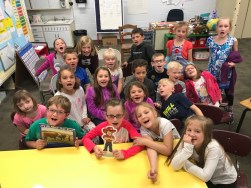
Did you know that extension staff work year-round to deliver programs to youth during the school year? School enrichment programs are learning experiences offered to students during school hours by local 4-H staff. These programs are designed to enhance the subject matter being studied in the classroom, provide hands-on education, introduce a new topic to students, or spark a new interest! The 4-H school enrichment program is a great way to connect and collaborate between your local Extension office and achieve school classroom educational goals. Locally, current programs focus on Career Development, STEM, and Agricultural Literacy.

Locally, some of the school enrichment programs include: Farm to the Cart, My Clothing & Weather, Beef Cattle from A to Z,  Soils is Not a Dirty Word, Plant Parts we Eat, How Did That Get in my Lunchbox, Pumpkin Life Cycle, Positively Popcorn, Hot House Detective, Bacteriology, Embryology, & GPS/Geocaching. We also have beef related topics that can be used in collaboration with local school Beef Boosters to provide the educational component to students. Most of these programs are at no cost or have a minimal fee. If you are interested; be sure to check out our website at fillmore.unl.edu.

UNADJUSTEDNONRAW_thumb_7ed7
Embryology is one of the favorite programs that classroom teachers request every year.

There are some extension offices that provide after-school workshops or educational sessions for youth. Finally, there are special interest types of programs that extension staff provide. Locally, examples of these include the upcoming AgVenture Day which is a collaborative effort among the South Central Cattle Women and Extension. At this program, area 4th graders learn about agricultural products and how their food is produced. In the spring, Progressive Agriculture Safety Day reaches over 120 youth with presentations to keep participants safe.

To identify the impact that the 4-H Program is making in the lives of youth ages 5-18, various research studies have been conducted across Nebraska and the nation. For example, a nationwide longitudinal study by Tufts University (2013) found that compared to their peers, youth involved in 4-H programs are nearly 4 times more likely to make contributions to their communities (grades 7-12). Also, 4-H’ers are about 2 times more likely to be civically active (grades 8-12). The same study found that 4-H young people are nearly 2 times more likely to participate in science, engineering and computer technology programs during out-of-school time (grades 10-12). Finally, 4-Her’s are nearly 2 times more likely to make healthier choices (grade 7).

UNADJUSTEDNONRAW_thumb_82cc
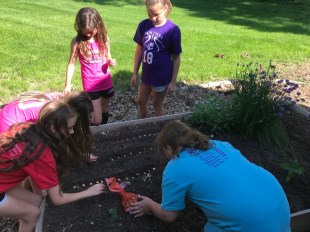
Youth plant our raised beds in front of the office in addition to a community garden with produce donated to the food pantry or senior center.

Next time you consider asking an extension staff “What are you doing now that fair is over?”, consider instead asking, “What programs or projects have you been working on?”  I’m sure you will hear about some of the school enrichment programs, in addition to the countless efforts related to foods, early childhood development, crops, livestock, horticulture, community development and other youth development programs. For more information about Nebraska Extension’s educational programs, research and initiatives, go to extension.unl.edu.

Youth

Back to School Tips

With the school year starting, this means the busyness of afterschool activities and homework assignments will be here soon. As families are pulled in different directions for school, work and practices, time as a family comes at a premium. Making efforts to build the focus of your children could decrease time spent on homework to free up more time for family activities. Creating a permanent, designated study space is one way to build your youth’s focus.

UNADJUSTEDNONRAW_thumb_8812
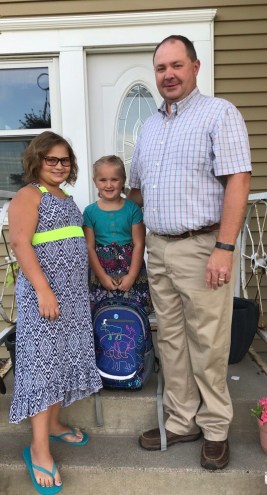
My oldest started 6th grade today and my youngest started kindergarten. My husband, Kurt continues to teach agriculture education.

Here are a few items to keep in mind when creating the study space:

Make It Work For You – Every child is different and has different needs. Some prefer a quiet corner in their room while others may prefer to be close to a parent for help at the kitchen table. Just make sure that the traffic and noise of other family members do not become a distraction.

Manage the Senses – Lighting and noise issues are very common distractions. Tired eyes have more difficulty transferring knowledge into memory. To keep sharp, make sure to provide adequate overhead lighting to limit squinting. Also, check that electronic devices like laptops and tablets are set at a comfortable level.

Make It Comfortable – Temperature and seating can make a difference in a youth’s ability to concentrate. Make sure that the study space keeps the child relaxed, but alert. It is also important that he or she has adequate space to spread out books, papers and materials to make the space efficient. While a bed may make a great space for spreading out, it may prove too relaxing. Consider a cushioned chair with generous table space. Also, it is important that the chair fit the youth. Dangling legs and hunched shoulders can create distractions as well.

Keep It Organized – Another way to increase the efficiency of the space is to keep all supplies and materials readily available and easy to find. Any time spent looking for the lost blue marker is time spent away from the task and an opportunity for further distraction. Organized space provides a launching pad for organized study. Keep clutter at a minimum using cubbies, canisters and boxes. A calendar, planner or to-do list can also keep homework assignments and activities prioritized and on track for on-time completion.

close up of woman working
Photo by Pixabay on Pexels.com

Limit Distractions – While the computer and television can be excellent sources of educational content, they also provide limitless distraction. If the child believes they can focus better with a little background noise, try some recorded music and save the favorite show as a reward when they can spare his or her attention.

Make It Your Own – If the child is expected to spend considerable time in the study space, let him or her decorate the space with posters, pictures or artwork. These items could provide creative inspiration for the child’s next essay or art project.

This article comes from a series of resources developed by Nebraska Extension, 4-H Youth Development Professionals. Learn more about 4-H at 4h.unl.edu, follow us on Facebook at https://www.facebook.com/Nebraska4H/ or on Twitter at https://twitter.com/nebraska4h. For more information, contact the author – Jennifer Schoen (jschoen4@unl.edu), Extension Educator.


Crops, Irrigation, Programming, Youth

Youth Learn Crop Scouting Skills

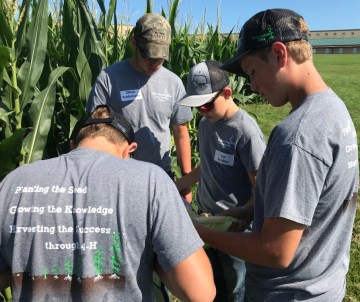
group 0On July 23, 2019, the sixth annual Crop Scouting Competition for Nebraska youth was held in which seven teams from across Nebraska competed. It was held at the Eastern Nebraska Research and Extension Center near Mead, Nebraska on July 23, 2019. Teams of students (those completing 5-12th grades) participated by completing a written knowledge test and seven crop scouting exercises in field plots.

The purpose of the competition w­­­as to provide students an opportunity to learn crop scouting and principles of integrated pest management (IPM) for corn and soybeans in Nebraska, to obtain knowledge and skills that will be helpful in future careers and to demonstrate newer crop scouting technologies.

Results from the 2019 competition were as follows:

First place- Colfax County 4-H (R. J. Bayer, Jestin Bayer, Austin Steffensmeier, Logan Nelson, and Brad Kratochvil)

Second place – Kornhusker Kids 4-H Club #1 (Payton & Levi Schiller, Matthew Rolf, and Kaleb Hasenkamp)

Third place – Kornhusker Kids 4-H Club #2 (Landon Hasenkamp, Ethan Kreikmeier, James Rolf, and Ian Schiller)

Also participating was

Humphrey FFA with Bryce Classen, Jacob Brandl, and Mikayla Martensen

Twin River FFA with Keaton Zarek, Kyle Kemper, Jacob Czarnick, and Landon Cuba

Auburn FFA with Kellen Moody, Austin Youngquit, Braden Gerdes, and Riley Stukenholtz

Wayne FFA with Justus Greves, Noah Lutt, Tyler Reinhardt, Elle Barnes, and Alyssa Carlson

Top-scoring teams won prizes: $500 for first, $250 for second, $100 for third place. The top two teams will represent Nebraska at the regional competition held in Iowa on August 26, 2019.

Teams were expected to know the basics of scouting corn and soybean fields. This included crop staging; looking for patterns of crop injury; disease, insect and weed seedling identification; etc.

corn growth staging, maturity, development 2
Kornhusker Kids team determine the corn growth during the program.

More information about the crop scouting competition are available online at cropwatch.unl.edu/youth. Click on the link that says, “Crop Scouting Competition”.

This program was sponsored by DuPont Pioneer, the Nebraska Independent Crop Consultant Association and Farm Credit Services of America in collaboration with Nebraska Extension. If you know of a company or you would are interested in sponsoring the 2020 program, please contact me at brandy.vandewalle@unl.edu.

Livestock, Programming, Youth

Sportsmanship & Youth Development

UNADJUSTEDNONRAW_thumb_8427
My youngest daughter, Meredith has been learning responsibility with her first bucket calf.

Webster’s Third International Dictionary defines sportsmanship as “conduct becoming an individual involving fair and honest competition, courteous relations and graceful acceptance of results”.  Sportsmanship starts with parents teaching their youth how to accept a win or a loss, although in the 4-H youth development program, even if the youth receives a red ribbon, nothing is lost as long as some basic knowledge and skills were gained. Too often in our society we focus on the tangible results of a ribbon or trophy and don’t think about the process that youth went through to achieve the end results and what was learned from that process.

I often use the example that as a youth, I’ll never forget receiving a red ribbon for a market heifer; I was disappointed, but will never forget my dad asking me, what the judge said in the comments.  After we talked it over, I realized his reasoning and was able to understand the type of animal I should select the following year. That was a lesson I’ll never forget.  My parents instilled the value of hard work into my sister and I and any animal we showed we bought with our own money to build a small cow/calf herd or they came from our own herd. We rarely had the award-winning animal and were extremely excited to even receive a purple ribbon. The learning that occurred, memories and fun we had were just as valuable then if we would have received a trophy or plaque.

For these reasons, it is really rewarding to work with youth who are happy with any ribbon placing- white, red, blue or purple. It really is just one person’s opinion on one particular day!

The 4-H Program focuses on providing positive youth development and developing young people as future leaders. A ribbon or plaque placing does not achieve this; rather it is the process, skills and effort that went into the project.  It is also important to mention that the entire 4-H program extends beyond the county fair and is done through educational workshops, career portfolios, leadership experiences and much more and is a year-round program.

UNADJUSTEDNONRAW_thumb_851e
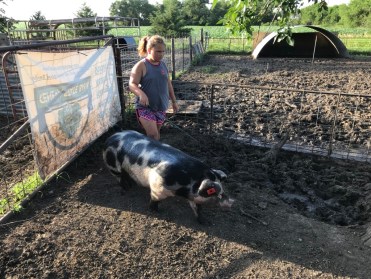
My oldest daughter, McKenzie added pigs to her 4-H project this year and has been having to learn lots more responsibility and patience.

Positive Youth Development

National 4-H reminds us that there are four critical components of a successful learning experience which include a sense of belonging, independence, mastery and generosity. During county fair and all 4-H programming, it is important that youth experience these.

Belonging

Youth need to know they are cared about by others and feel a sense of connection to others in the group. As the facilitator, it is important to provide youth the opportunity to feel physically and emotionally safe while actively participating in a group. Create a safe and inclusive environment and foster a positive relationship with youth learners. Use discussion questions that encourage youth to learn from each other, synthesize and use ideas collaboratively.

Independence

Youth need to know that they are able to influence people and events through decision-making and action. They learn to better understand themselves and become independent thinkers. Throughout each curriculum, youth are given opportunities to develop and reflect upon thoughts and responses to the challenges, explorations, and investigations. Youth begin to understand that they are able to act as change agents with confidence and competence as a result of their learning.

Mastery

In order to develop self-confidence youth need to feel and believe they are capable and they must experience success at solving problems and meeting challenges. Youth need a breadth and depth of topics that allow them to pursue their own interests. Introduce youth to expert knowledge and guide them toward their own sense of mastery and accomplishment.

Generosity

Youth need to feel their lives have meaning and purpose. Throughout each curriculum, youth are encouraged to broaden their perspectives, find relevance in the topic area and bring ideas back to their community.

Adapted from 4-H Essential Elements of 4-H Youth Development, Dr. Cathann Kress, 2004.

Youth

4-H Builds Friendships

As we approach this county fair season, it is important to remember how important it is to focus on the important on the life skills being taught. As adults we need to be role models to youth and help them have a positive experience. It’s not the ribbon placing or the trophy that matters but rather the experience one has from participation in activities such as county fair.

portrait photo of three smiling girls
Photo by Di Lewis on Pexels.com

When I ask 4-H members the question, “What do you like most about 4-H?” they often respond with “the friendships!” 4-H’ers have the unique opportunity to meet and interact with youth from all across the county, the state and even the country. 4-H brings together youth with similar interests and you never forget the people you meet through the program.

Friends are vital to school-age youth’s healthy development. Friendships provide youth with more than just fun playmates. Friendships help them develop emotionally and morally. In interacting with friends, youth learn many social skills, such as how to communicate, cooperate, and solve problems. They practice controlling their emotions and responding to the emotions of others. They develop the ability to think through and negotiate different situations that arise in their relationships. Having friends even affects school performance. Youth tend to have better attitudes about school and learning when they have friends there.

Friendships help youth develop emotionally and morally, and help them to learn critical life skills such as social skills, communication, cooperation, problem solving, and many more.  Part of being a good friend is learning how to deal with conflict. There are a number of strategies to teach youth to resolve problems they have with other youth.

Strategies for Conflict Resolution

photo of people doing jump shot on beach
Photo by KULDEEPSINH VAGHELA on Pexels.com
  • When angry, separate yourself from the situation and take time to cool off.
  • Attack the problem, not the person. Start with a compliment.
  • Communicate your feelings assertively, NOT aggressively. Express them without blaming.
  • Focus on the issue, NOT your position about the issue.
  • Accept and respect that individual opinions may differ. Don’t try to force compliance; work to develop common agreement.
  • Do not view the situation as a competition in which one person has to win and one has to lose. Work toward a solution that will enable both parties to have some of their needs met.
  • Focus on areas of common interest and agreement, instead of areas of disagreement and opposition.
  • NEVER jump to conclusions or make assumptions about what another person is feeling or thinking.
  • Listen without interrupting. Ask for feedback, if needed, to assure a clear understanding of the issue.
  • Remember, when only one person’s needs are satisfied in a conflict, it is NOT resolved and will continue.
  • Forget the past and stay in the present.
  • Build “power with” NOT “power over” others.
  • Thank the person for listening.

Find out more about this topic by visiting the Nebraska Extension child and youth development web site at http://child.unl.edu/child-care-professionals and click on Expanded Learning Opportunities. To request additional information or programs contact Leanne Manning, Extension Educator at leanne.manning@unl.edu or 402-821-2151.