Irrigation, Programming, Youth

Irrigation Lessons for Youth

With my agricultural education degree, I enjoy creating lessons and activities for youth and often able to utilize that background by creating lessons for others. With Nebraska ExtensionScreen Shot 2019-06-07 at 2.36.33 PM.png as a leader in irrigation management and development of the Nebraska Agricultural Water Management Network, it is only fitting for Nebraska Extension to provide youth education related to irrigation.

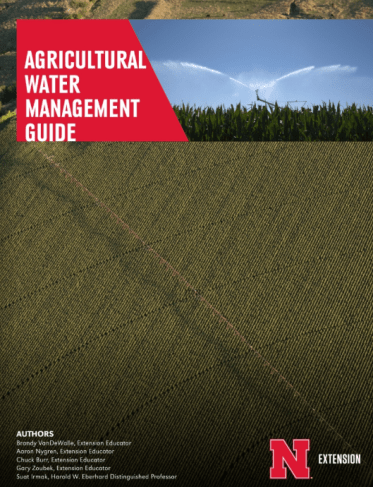
With that in mind, a series of lessons have been created to accompany the recently developed Agricultural Water Management Guide. This online magazine-type resource introduces readers to irrigation and its use and benefits to Nebraska crop production. This guide serves as a resource for anyone wanting to learn more about irrigation management. It has embedded videos and links for further information, making it interactive. Teachers or informal educators can utilize the guide as an informative reference for themselves or encourage youth to read it themselves.

To compliment the Agricultural Water Management Guide, six lesson plans with activities have been created. Each lesson has learning objectives, careers associated with the topic, educational standards and hands-on activities related to irrigation. A basic ag water management lesson helps youth understand basics principles of soil and water management. Other lesson plan topics include: irrigation management planning & tools used, center pivot irrigation, furrow irrigation, subsurface drip irrigation, and variable rate irrigation. Extension has also developed YouTube videos to compliment these lessons in the classroom.

These materials can all be found on Nebraska Extension’s CropWatch website at cropwatch.unl.edu/youth and click on the irrigation lessons tab.


Crops, Programming, Youth

Youth Crop Scouting Competition

Connecting Youth with Crops

Looking for a fun club project? Want to unite your club members? Running out of ideas for club meetings?  If you answered, “yes” to any of these questions, help is on the way!  Nebraska Extension is pleased to present the 6th annual Crop Scouting Competition for Nebraska youth. Youth interested in crops have the opportunity to learn about crop growth & development and basic crop scouting principles.Crop Scout Design (1)

Don’t know a lot about crops?  Ask a local agronomist to assist by providing a short lesson on crop production. You can have the agronomist meet with youth a little during each meeting or outside of the meeting. This is one way to engage those youth interested in crops.

This contest will be held at the ARDC near Mead, Nebraska on July 23, 2019. The event will include both indoor and outdoor events. Teams of junior high and high school students (those completing 5-12th grades) from across Nebraska are invited to participate. This event is limited to the first ten teams who sign-up!

Clubs or other organizations may enter a team composed of three to five participants. An adult team leader must accompany each team of students. Team leaders could be FFA advisors, crop consultants, extension staff, coop employees, etc.

Top-scoring teams win prizes: $500 for first, $250 for second, $100 for third place. Top two teams will be eligible for regional competition in August at Iowa this year.

Teams will be expected to know the basics of scouting corn and soybean fields. This includes crop staging; looking for patterns of crop injury; disease, insect and weed seedling identification; etc. Other topics many include but are not limited to, pesticide safety, nutrient disorders, and herbicide injury.

More information about the crop scouting competition and instructions on how to register a team are available online at cropwatch.unl.edu/youth. Register at: https://go.unl.edu/cropscoutingreg

Teams must be registered by July 18. This program is sponsored by Nebraska Independent Crop Consultant Association, DuPont Pioneer, Farm Credit Services of America and Nebraska Extension.

Livestock, Youth

Celebrate Beef Month

UNADJUSTEDNONRAW_thumb_8215
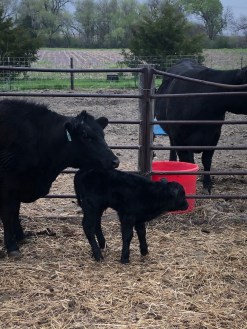
My daughter’s bucket calf from two years ago had a calf and she was ecstatic; it has been a great learning experience for her, in addition to teaching responsibility.

As we enter into the spring and summer months, nothing smells better than a delicious, juicy hamburger or steak on the grill and being able to barbecue outside with friends and family. It’s no surprise then that May is National Beef Month!  The beef industry is especially important to Nebraska’s economy. In fact, according to the USDA National Ag Statistics Service, Nebraska ranks top in the nation with beef and beef product exports and second in the nation for having approximately 6.8 million head of all cattle and calves in the state (February 2019). So, why is Nebraska, the beef state?  It has a unique mix of natural resources and according to the Nebraska Beef Council, cattle turn grass from 24 million acres of rangeland and pasture, more than one half of Nebraska’s land mass, into protein and many other products for humans. Land that is grazed allows more people to be fed than otherwise possible and more than one billion bushels of corn are produced in Nebraska, of which 40% is fed to livestock in the state.

Now that I have explained how and why the beef industry is important to Nebraska, let’s explore the health benefits of beef. Beef is a good source of zinc, iron and protein and there are 29 cuts of beef that meet the government labeling guidelines for being lean. In fact, a 3 ounce cooked serving of lean beef (which is about the size of a deck of cards) provides 10 essential nutrients and about half of the daily value of protein in about 170 calories. According to recent research from Purdue University, the cuts of beef considered lean can be included as a part of a heart-healthy diet to support cardiovascular health and has consistently demonstrated that the nutrients in beef promote health through life.UNADJUSTEDNONRAW_thumb_823e.jpg

With May as beef month, my colleague and I recently provided beef program to students at Shickley Public Schools. I taught lessons to the elementary students on the importance of agriculture, with an emphasis on beef production. With the disconnect most consumers have with agriculture, it is important to teach people, especially youth the facts about agriculture. Some of the classes were taught the difference between beef and dairy cattle, as there are many people who do not understand the differences between the two. Extension assistants Rachel Adam and Nathan Haman taught middle and high school youth about beef nutrition by bringing in the Mobile Beef Lab.

If you would like more information on beef production, you can view our Nebraska Extension website beef.unl.edu. Our Extension experts have a variety of articles from beef nutrition to reproduction to lease information. If you would like recipes or tips for preparing beef, you can also check out Nebraska Extension’s food.unl.edu website. There are some great tips on saving money when purchasing beef and links to the Nebraska Beef Council’s website which has great recipes as well.

Enjoy some beef today!

Programming, Youth

Tractor Safety Training for Teen Farm/Ranch Workers

Screen Shot 2019-04-04 at 11.47.48 AM.pngFederal law prohibits youth under 16 years of age from using specific equipment on a farm unless parents or legal guardians own the farm.  Certification received through a course provided by Nebraska Extension grants an exemption to the law, allowing 14- and 15-year-olds to drive a tractor and work with certain mechanized equipment.

Nebraska Extension’s Tractor Safety & Hazardous Occupations Courses take place at 12 Nebraska locations this year for teens 14 or 15 years of age who will work on a farm.  Anyone older than 15 is also welcome to attend, but those under age 14 are not eligible to take the class.  Extensive training on tractor and ATV safety occurs during in-class lessons with hands-on activities.  Instilling an attitude of safety and a respect for agricultural equipment are primary goals of the course.

The first day of classroom instruction includes hands-on demonstrations, concluding with a written test.  Classroom instruction will cover the required elements of the National Safe Tractor and Machinery Operation Program.  Students are required to pass the test before taking the driving test on day two.  The second day will include a physical driving test with equipment operation and ATV safety lessons.  To receive certification, students must demonstrate competence in hitching and unhitching equipment and driving a tractor and trailer through a standardized course.  Instructors will offer an ATV simulator experience to learn about safe behaviors and laws for ATVs and UTVs.  Students will also complete homework assignments for the second day.

All on-site classes begin at 8:00 A.M. and end times will vary, depending on the number of participants.  Training site locations closest to us, Site Coordinator contact numbers, and dates of training are as follows:

Training Site Location                         Site Coordinator         Dates of Training
Fairgrounds, Geneva                          (402) 759-3712           May 20 & 21
Fairgrounds, Nelson                            (402) 225-2092           May 22 & 23
Extension Office, Grand Island         (308) 385-5088           May 28 & 29

Cost of the course is $60, which includes educational materials, instruction, supplies, and lunches.  Print and complete a registration found at kearney.unl.edu, and submit with payment to the appropriate Extension office location at least one week before the course (call the specific location number listed above for mailing address and instructions).

Programming, Youth

Progressive Ag Safety Day

Statistics from those impacted by a farm-related injury or death are sobering. Many know someone who was impacted by a farm accident that in many cases could have been prevented. This is why I feel so passionately about conducting the Annual Progressive Safety Day each year. The Progressive Agriculture Foundation provides safety and health information to rural communities that need it, which is why I’ve teamed up with them. The mission of Progressive Agriculture Days is simple – to provide education, training, and resources to make farm and ranch life safer and healthier for children and their communities.

2019PAFSafetyDay_English.jpg

During the program’s first year, a total of 2,800 participants and volunteers were reached throughout the South and Midwest and now the program impacts close to 110,000 annually. To date, the program has impacted more than 1.6 million children and adults.

Current 1st through 6th graders are invited to attend Progressive Agriculture Safety Day on Thursday, May 23, 2019 at the Fillmore County Fairgrounds.  Youth will participate in a variety of events designed to help them be aware of safety in potentially hazardous situations such as electricity, emergencies, disability awareness, PTO demonstration, agricultural literacy, chemical look-alikes and others.  This year, each youth will walk away with their own first-aid kit. Registration and consent form is REQUIRED by all youth who participate. This can be found at fillmore.unl.edu or by stopping by the Extension Office in Geneva or Clay Center.

April 19th is early bird registrationat only $5 per child that includes a t-shirt, lunch, snack and goodie bag. After April 19th,  registration increases to $10 per youth in order to participate.

This event is conducted by Nebraska Extension in Fillmore/Clay Counties, Shickley and Fillmore Central FFA chapters, 4-H, WIFE, and Fillmore County Emergency Management. For more info or to register, call 402-759-3712 or email brandy.vandewalle@unl.edu.

Crops, Horticulture, Irrigation, Livestock, Youth

Coping with Stress During a Crisis  

With the flooding and blizzard conditions affecting a large portion of the state, this week I looked up some Extension resources and decided to write some of the research ideas for dealing with stress and how to help the whole family cope. First of all, our Nebraska Extension publication, Effective Management of Stress & Crisis points out numerous tips that come from worldwide research on strong families. It involves research from more than 24,000 family members in 35 countries. While the publication identifies 18 ideas, I selected the top ten that interest me. For the remainder of the ideas, go online to the publication which can be accessed through our extension.unl.edu website and search for “Effective Management of Stress & Crisis.”

close up composition conceptual creativity
Photo by Pedro Figueras on Pexels.com

Ideas for coping with stress and crisis include:

  • Look for something positive to focus and focus on that positive element in a difficult situation.
  • Keep things in perspective. “These things too, shall pass.”
  • Pull together rather than apart. Don’t see the problem as an individual’s problem but as a challenge for the whole family.
  • Focus on what is most important and minimize fragmentation. Without focusing on the essentials, the details, details, details can get you edgy, even hysterical.
  • Go to the flow to some degree. Sometimes you are relatively powerless in the face of crisis. At this point it can be useful to simply tell yourself to “let it go.”
  • Know how to laugh and know how to cry, for both are essential to maintain an emotional balance in life.
  • Create a life full of meaning and purpose. All people face severe crises in life. You will not be able to avoid these challenges. Rather, your aim can be to live a useful life of service to your community. This brings richness and dignity to your life, in spite of the troubles you endure.
  • Realize that suffering can be a catalyst for positive growth. Crisis, by definition, is a difficult time in your life. However, it also can be a turning point, planting the seeds for a satisfying and successful future. This is hard to internalize but useful to remember.
  • Identify spiritually with the grand procession of life: Through good times and bad, we, as individuals, come and go, but life from whence we all spring is eternal. There is something satisfying and soothing about that thought.
  • Get help outside the nuclear family when needed. Seek help from extended family members, supportive friends, neighbors, colleagues, members of your religious community, professionals in the community, or others. In a manner of speaking, it takes a whole village to resolve a crisis.

    person wearing clear plastic raincoat and pair of yellow rainboots
    Photo by Valeria Boltneva on Pexels.com

While it might be “easier said than done” to follow the above strategies, giving every effort to embrace a positive approach to deal with a crisis will help you and your family more effectively handle the situation at hand. Disasters, whether natural or human-made leave today’s families facing difficult times. Our ranching and farming families have especially been impacted by the recent floods and blizzards. Let’s remember to pull together as a state and help our fellow Nebraskans through this difficult time, as the recovery and rebuilding process will take a long time.

Crops, Irrigation, Livestock, Programming, Youth

Celebrate Agriculture

UNADJUSTEDNONRAW_thumb_7b68.jpg
 It is a highlight for my girls to ride in the combine at harvest time; my girls have the opportunity to experience harvest with my Dad. 

Growing up on a small farm in Saline County, I appreciate the work of our farmers and ranchers. My dad still farms and my girls enjoy visiting the farm and I hope I can instill the same hard-working values and beliefs my parents instilled in my sister and I. This is part of the reason, my husband and I have starting raising a few chickens and have bucket calves for the girls to care for. With my husband as the Fillmore Central ag education instructor and myself as an extension educator for UNL, we hope to be teaching future generations the vast opportunities available in the agricultural industry. This week marks the time to celebrate agriculture so I have included some of the Agriculture Council of America’s press release in my column this week as well as some of Extension’s work in ag literacy2019AgDay 235x250.jpg

The Agriculture Council of America (ACA) will host National Agriculture Day on March 14, 2019. National Ag Day is celebrated in classrooms and communities across the country. The theme for National Ag Day 2019 is “Agriculture: Food For Life.”

On March 14, 2019, ACA will host major events in the nation’s capital including an event at the National Press Club as well as a Taste of Agriculture Celebration. Additionally, the ACA will bring approximately 100 college students to Washington to deliver the message of Ag Day. These events honor National Agriculture Day and mark a nationwide effort to tell the true story of American agriculture and remind citizens that agriculture is a part of all of us. A number of producers, agricultural associations, corporations, students and government organizations involved in agriculture are expected to participate

National Ag Day is organized by the Agriculture Council of America. ACA is a nonprofit organization composed of leaders in the agricultural, food and fiber community, dedicating its efforts to increasing the public’s awareness of agriculture’s role in modern society. The National Ag Day program encourages every American to:

  • Understand how food and fiber products are produced.
  • Appreciate the role agriculture plays in providing safe, abundant and affordable products.
  • Value the essential role of agriculture in maintaining a strong economy.
  • Acknowledge and consider career opportunities in the agriculture, food and fiber industry.

You might be glad to know that Nebraska Extension has a team of extension staff working on programming to educate consumers and youth about agriculture and tell the story of the American farmer and rancher. This is being done through agricultural literacy-focused festivals and programs, development of beef-booster curriculum, quality assurance programs and many others. Through 2018, over 51,000 Nebraska youth and adults statewide made changes and/or reinforced knowledge of food safety practices from when food is produced until food reaches consumers’ plates. Their actions will influence both the safety of food consumed by them and others.

Nebraska Extension’s team finalized and utilized five questions to evaluate youth programming focused on Consumer Confidence topics. Compiled results from youth who participated in three state-wide programs (Animals Inside & Out, AgCiting Science & Ag Festivals, which Fillmore & Clay County youth participated) for over 5400 elementary youth in 2018 showed: 97% of youth stated yes “I learned something new” as a result of the program, 97% of youth stated yes “I know farmers make good choices to keep our food safe”, 95% of youth stated yes “I can make healthy decisions about my food”, 95% of youth stated yes “I better understand where my food comes from” & 86% of youth stated yes “I will share with others about agriculture”. Forty-five certifications were provided in 2018 with 2,879 Beef Cattle Producers completed Beef Quality Assurance Certification which is valid for 3 years. In 2018, 9,189 Nebraska Youth participated in the Youth for Quality Care of Animals. This program trains youth of the Quality Assurance practices for all food animal species.

To see more of the impact Nebraska Extension’s programs had in 2018, go to https://extension.unl.edu/impact/.

Programming, Youth

This is 4-H

My colleague, Megan Burda in York County did a great job describing 4-H in one of her recent columns so I decided to share facts about 4-H in case you are unfamiliar or haven’t experience 4-H in many years, as it has changed and evolved with the times.4h_mark1

The 4-H Pledge – I pledge my head to clearer thinking, my heart to greater loyalty, my hands to larger service, and my health to better living, for my club, my community, my country, and my world.

Head, Heart, Hands, and Health are the four H’s that describe how youth are engaged in the 4-H program.  Using their heads they learn to manage many different things in their 4-H projects and life. Through their heart, they learn to relate to others and be caring to those around them and their projects.  With their hands, 4-Hers are able to work on various projects. By living healthy they are practicing being capable of caring for self and others.

How can being involved in 4-H foster youth’s success?  In 2002 the 4-H Study of Positive Youth Development longitudinal study began and was then repeated annually for eight years.  There were more than 7,000 adolescents from across 42 states in the United States that participated in the study. The Tufts research team examined how structured-out-of-school time learning, leadership experiences, and adult mentoring that young people receive through 4-H plays a role in helping them achieve success.

4-Hers practice responsibility by being involved in a variety of different projects offered through the program.  The project areas are Animal Science, Communication and Expressive Arts, Entrepreneurship, Environmental Education and Earth Sciences, Family and Consumer Sciences, Healthy Lifestyle Education, Leadership and Citizenship, Plant Science, and Plant Science and Technology.  If a youth chooses to participate in a Healthy Lifestyle Education project, they may learn the skill of meal planning for themselves and their family.  This skill could lead to them actually planning out healthy meals for themselves and their family members and may even include keeping a food budget for their family.

4-Hers practice responsibility by caring for animals daily in various animal science projects. 4-Hers make sure their animals have a safe place to be, have appropriate food and water, and that their animals are cared for and can be handled.  This takes much time and dedication by the 4-Her and their family and does not just happen one week out of the year at the county fair.  4-Hers in livestock projects take 4-H Livestock Quality Assurance to help prepare them for daily care and management.  They also work closely with their family members and veterinarian and participate in animal science contests throughout the year.

The Tufts research longitudinal study showed that compared to their peers, youth involved in 4-H programs excelled in several areas.

4-Hers are:

  • Nearly 4x more likely to make contribution to their communities.
  • About 2x more likely to be civically active.
  • Nearly 2x more likely to participate in science programs during out-of-school time, 2x more likely (Grade 10) and nearly 3x more likely (Grade 12) to take part in science program compared to girls in other out-of-school time activities.
  • Nearly 2x more likely to make healthier choices.

For information on how you can be involved in 4-H in Fillmore County, go to fillmore.unl.edu or for Clay County 4-H information, go to clay.unl.edu.

 Source: The Positive Development of Youth; Comprehensive Findings from the 4-H Study of Positive Youth Development, Institute for Applied Research in Youth Development, Tufts University. 

Horticulture, Youth

Christmas Tree Trivia

Let’s talk trivia thanks to some facts from the Nebraska Christmas Tree Growers Association webpage:

christmas ornaments on christmas tree
Photo by freestocks.org on Pexels.com

Q: For every real Christmas tree harvested, how many seedlings are planted in its place?   A: 2 to 3

Q: How many acres are in production for growing Christmas trees in the U.S?  A:  About 1 million acres

Q: What is the average growing time for a tree to reach average retail height of 6 feet?  A:  7 years

Q: What are the top selling Christmas trees?  A: Balsam Fire, Douglas Fir, Fraser Fir, Noble Fir, Scotch Pine, Virginia Pin, White Pine

Q: How many Nebraska counties have Christmas tree growers?  A:  15

I wish you and your family a very blessed Holiday season!

Programming, Youth

Recognizing Youth’s Efforts

One of the great things I have the opportunity to observe in my role as a youth development educator is how youth grow and develop from year to year. Youth, just like other living things such as plants need a nourishing, supportive, and protective environment. The 4-H youth development program utilizes the “essential elements” research to ensure that a youth development program is met. This means that each young person needs to:

4h_mark1

  • Know they are cared about by others: that they belong
  • Feel and believe they are capable and successful: that they have mastery
  • Know they are able to influence people and events: that they have independence
  • Practice helping others: that they can demonstrate generosity.

From research, it was concluded that there are eight critical elements that must be present for positive and effective experiences and opportunities benefiting youth. These eight elements are known as the eight essential elements and are summarized below:

  1. A positive relationship with a caring adult.
  2. A safe emotional and physical environment
  3. An inclusive environment
  4. Engagement in learning
  5. Opportunity for mastery
  6. Opportunity to see oneself as an active participant in the future
  7. Opportunity for self-determination
  8. Opportunity to value and practice service for others
IMG_3872
Fair may be over, but chores still need to be done. Here, my daughter McKenzie does chores after school.

The 4-H program uses recognition as one strategy to help youth become more capable and competent, thus creating an opportunity for mastery. In fact, recognition is a huge incentive to promote further learning and can inspire young people to continue participating and learning. 4-H has several ways we recognize youth. One of the most visible is during the county fair, which young receive ribbons and perhaps even trophies. This provides immediate feedback for youth based on the quality of their end product. There is so much more to the 4-H program than the county fair which youth benefit. Youth complete essentially a “record book” which documents the progression of skills and activities youth have learned from completing not only their fair projects, but participation in other 4-H activities throughout the year. Youth also have the opportunity to self-reflect on a variety of accomplishments throughout their 4-H year. The Diamond Clover program’s goal is to provide 4-H members a rich and diverse learning experience and is designed for members of all ages.

It is that time of year, that both the Clay and Fillmore County 4-H programs will be highlighting those 4-H youth who have earned various 4-H awards. If you are in Fillmore County, I encourage you to attend the Amazing Race/4-H Recognition event which will start at 2:00 p.m. on October 28th at the Fillmore County Fairgrounds. Any youth, whether in 4-H or not, will compete in teams of four or less to complete some fun and unique tasks. Following the Amazing Race activity, 4-H’ers will be recognized for their achievements around 3:00 p.m. with an ice cream social. More information can be found at fillmore.unl.edu.

If you are in Clay County, the annual 4-H Achievement Program will be held Friday, November 2, at 7:00pm at the Fairgrounds.  4-Her’s should bring a dessert to share.

For more information on how to get youth involved in America’s largest youth development organization that empowers nearly six million young people across the U.S., you can check out Nebraska 4-H’s website or contact me at brandy.vandewalle@unl.edu.