
 Thanks to all who are currently serving or have served!
Landlord-Tenant Workshops
Nebraska Extension’s CropWatch recently announced a series of workshops that will help landlords and tenants with common land management questions that are often asked. Both parties want to ensure they are treated fairly and keeping up with market practices. This week, I’ve decided to share upcoming workshops and dates close to the area, including one we will be having in Geneva.

Current and future landowners and tenants should make plans to attend free upcoming land management workshops sponsored by Nebraska Extension. The workshops will be held at nine sites across Nebraska this fall. “Managing Agricultural Land for the 21st Century” will cover current trends in cash rental rates, lease provisions, and crop and grazing land considerations.
Nebraska Extension Educators Allan Vyhnalek, Aaron Nygren, Erin Laborie, Ben Beckman and Jim Jansen conduct research and outreach in land management, agronomy and beef production. They will address common agricultural landlord and tenant questions such as, What does an equitable rental rate look like for my land? How do I manage a farmland lease? What should I expect for communications between the landlord and tenant? What does a soil test tell me? I hear about organic or natural production; how does that vary from what my farmer is currently doing? If corn or soybeans are not making money, should something else be raised on my land? What are key pasture leasing considerations including stocking rates? Who is responsible for cedar tree removal from grazing land?
These workshops will provide participants with up-to-date information so they can be confident about their lease arrangements. To ensure enough handouts please register at go.unl.edu/landlordtenant or call the phone number listed for each location. Lunch arrangements will be handled by each host location.
Registration at each location will start at 9:15 a.m., program starting at 9:30 a.m., and ending by 3:00 p.m.
Workshop dates and locations within our area include:
- COLUMBUS: Nov. 20 at the Platte County Extension Office, 2715 13th St., 402-563-4901, attendees will be dismissed to have lunch off site
- NORFOLK: Dec. 3 at the Divots Convention Center, 4200 W Norfolk Ave. 402-370-4040, lunch will be sponsored
- BEATRICE: Dec. 19 at the Gage County Extension Office, 1115 W Scot St., 402-233-1384, lunch will be sponsored
- HASTINGS: Dec. 20 at the Adams County Fairgrounds, 947 S Baltimore Ave, 402-461-7209, lunch will be sponsored
- GENEVA: Feb. 12 at the Fillmore County Fairgrounds, Geneva, 402-759-3712, lunch sponsored by the Farmers & Ranchers College
These programs are free and open to the public with funding provided by the North Central Extension Risk Management Education Center and USDA National Institute of Food and Agriculture under award number 2015-49200-24226. For more information or assistance, please contact Allan Vyhnalek at 402-472-1771 or avyhnalek2@unl.edu, or Jim Jansen, at 402-261-7572 or jjansen4@unl.edu.
Happy Halloween!

Do you have uninvited houseguests?
You are sitting at home and all of a sudden a little gray rodent with relatively large ears and small black eyes scurries across the room! It is about 1/2 ounce in weight and if an adult 5 1/2 to 7 1/2 inches long, including its 3 – 4 inch tail. Of course, you must know by now that I am describing a house mouse. The house mouse is considered one of the most troublesome and economically important rodents in the United States. They can cause damage to property and transmit diseases such as salmonellosis and swine dysentery. You will know you have mice if you see small droppings, fresh gnaw marks and mouse nests made from fine shredded paper or other fibrous material. They are active mostly at night, but can occasionally be seen during daylight hours. Mice are excellent climbers and can jump 10 inches from the floor to a flat surface; they can squeeze through openings slightly larger than 1/4 inch in diameter. They can also survive a 9-foot drop and climb up most vertical surfaces.

Exclusion is the most common in the fight against house mice. Prevent mice from entering buildings by eliminating openings that are 1/4” or larger. Use sealants or mortar to help fill the gaps. Spray-in-place foams and steel wool pads will fill the gaps, but they won’t do much to stop mice from entering. Make sure doors, windows and screens fit tightly. Cover the edges of doors and windows with metal to prevent gnawing.
Population reduction is the last method for controlling mice. Traps and baits are two common population reduction methods. To ensure success with traps, you need to use a sufficient number of traps in areas where mice are living. Snap traps or multiple-capture traps can be used to capture mice. Double setting snap traps, placing two traps close to each other, will yield the best results in situations with high activity. Multi-catch traps can catch several mice at a time without resetting. Glue boards are another alternative to traps. These sticky boards catch and hold mice as they try to move throughout the home. Be sure to use sticky boards in locations where non-target animals or items won’t get stuck in them. If this does happen, use an oily material, like vegetable or mineral oil, to dissolve the sticky substance. To make the traps more appealing you can apply a food source such as peanut butter or a chocolate chip melted to the trigger or you can secure a cloth scented with a food source to the traps’ trigger.
Baits are another population reduction method. Be sure to read and follow all directions on baits. When choosing baits, consider the location and method of applications and any non-target pets and children. Choose the type of bait for your specific location and application. Mice have been known to move pelleted baits without eating them. Just because you have an empty box, doesn’t mean they have eaten the bait. Bait stations or bait blocks ensure that the critter actually ate the bait.
Use caution when cleaning up droppings, nests, or mouse remains. This can help to decrease the potential spread of diseases carried by mice like Hantavirus. Use protective waterproof gloves and spray the carcass and trap or nest with a household disinfectant or a 10% bleach solution. Use a sealable bag turned inside out to pick up the mouse. To remove feces or urine, spray the area with a disinfectant until wet and wipe up with a towel, rag or mop. Don’t use the vacuum or broom to collect dry feces as that can cause the material to go into the air and be inhaled.
For more information on mouse control, refer to NebGuide, Controlling House Mice that can be accessed at http://extensionpubs.unl.edu or through your local extension office.
A portion of this article was taken from Elizabeth Killinger who is the Horticulture Extension Educator with Nebraska Extension in Hall County.
Recognizing Youth’s Efforts
One of the great things I have the opportunity to observe in my role as a youth development educator is how youth grow and develop from year to year. Youth, just like other living things such as plants need a nourishing, supportive, and protective environment. The 4-H youth development program utilizes the “essential elements” research to ensure that a youth development program is met. This means that each young person needs to:

- Know they are cared about by others: that they belong
- Feel and believe they are capable and successful: that they have mastery
- Know they are able to influence people and events: that they have independence
- Practice helping others: that they can demonstrate generosity.
From research, it was concluded that there are eight critical elements that must be present for positive and effective experiences and opportunities benefiting youth. These eight elements are known as the eight essential elements and are summarized below:
- A positive relationship with a caring adult.
- A safe emotional and physical environment
- An inclusive environment
- Engagement in learning
- Opportunity for mastery
- Opportunity to see oneself as an active participant in the future
- Opportunity for self-determination
- Opportunity to value and practice service for others
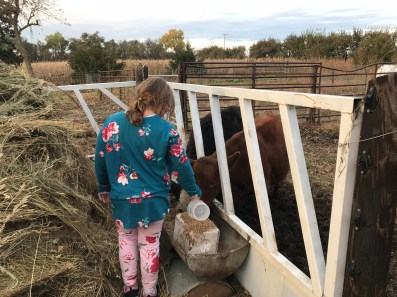
The 4-H program uses recognition as one strategy to help youth become more capable and competent, thus creating an opportunity for mastery. In fact, recognition is a huge incentive to promote further learning and can inspire young people to continue participating and learning. 4-H has several ways we recognize youth. One of the most visible is during the county fair, which young receive ribbons and perhaps even trophies. This provides immediate feedback for youth based on the quality of their end product. There is so much more to the 4-H program than the county fair which youth benefit. Youth complete essentially a “record book” which documents the progression of skills and activities youth have learned from completing not only their fair projects, but participation in other 4-H activities throughout the year. Youth also have the opportunity to self-reflect on a variety of accomplishments throughout their 4-H year. The Diamond Clover program’s goal is to provide 4-H members a rich and diverse learning experience and is designed for members of all ages.
It is that time of year, that both the Clay and Fillmore County 4-H programs will be highlighting those 4-H youth who have earned various 4-H awards. If you are in Fillmore County, I encourage you to attend the Amazing Race/4-H Recognition event which will start at 2:00 p.m. on October 28th at the Fillmore County Fairgrounds. Any youth, whether in 4-H or not, will compete in teams of four or less to complete some fun and unique tasks. Following the Amazing Race activity, 4-H’ers will be recognized for their achievements around 3:00 p.m. with an ice cream social. More information can be found at fillmore.unl.edu.
If you are in Clay County, the annual 4-H Achievement Program will be held Friday, November 2, at 7:00pm at the Fairgrounds. 4-Her’s should bring a dessert to share.
For more information on how to get youth involved in America’s largest youth development organization that empowers nearly six million young people across the U.S., you can check out Nebraska 4-H’s website or contact me at brandy.vandewalle@unl.edu.
Soybean Grain Storage
With all of the moisture we’ve been receiving and producers needing to return to the fields, there has been lots of questions and issues regarding grain storage. North Dakota Extension Agricultural engineer and professor, Kenneth Hellevang recently wrote an article that provides valuable information on soybean drying advice which I’ve decided to include in this week’s column. I am not an expert in this area so further questions can be directly to Dr. Hellevang by accessing his website at https://www.ag.ndsu.edu/extension-aben.
Soybeans at 11 percent moisture have similar storage characteristics to wheat or corn at about 13.5 percent moisture, so 16% moisture soybeans might be expected to store similar to about 19% moisture corn. If is important to be able to aerate the soybeans to keep them cool. The amount of natural air drying that will occur in late October and early November is limited. The equilibrium moisture content of soybeans for air at 40 degrees and 70 percent relative humidity is about 12 percent, so drying of soybeans above 12 percent would be expected with this air condition. However, the drying rate will be slow at typical in-bin drying airflow rates. An airflow rate of 1 cubic foot per minute per bushel (cfm/bu.) is expected to dry 18 percent moisture soybeans in about 60 days. With an airflow rate of 1.5 cfm/bu the drying time is reduced to about 40 days. The drying time for 16% moisture soybeans is slightly less. The drying time of 16% moisture soybeans is about 50 days. Adding supplemental heat to raise the air temperature by 3 to 5 degrees will permit drying the soybeans to about 11 percent moisture in about 40 to 45 days. Increasing the airflow rate proportionally reduces the drying time.
The moisture holding capacity of air is reduced at lower air temperatures. As average air temperatures approach 35 degrees, natural air drying becomes inefficient and not economical. Adding heat would cause the beans on the bottom of the bin to be dried to a lower moisture content and it would increase drying speed only slightly. Cool the soybeans to between 20 and 30 degrees for winter storage and complete drying in the spring. Hellevang recommends starting drying in the spring when outdoor temperatures are averaging about 40 degrees.
The type of fan greatly affects the airflow provided per horsepower, so use a fan selection software program such as the one developed by the University of Minnesota. It is available on the NDSU grain drying and storage Web site.
Soybeans can be dried in a high-temperature dryer, but the plenum temperature needs to be limited to minimize damage to the beans. Refer to the manufacturer’s recommendations for maximum drying temperature. Typically the maximum drying temperature for nonfood soybeans is about 130 degrees. Even at that temperature, some skins and beans will be cracked.
One study found that with a dryer temperature of 130 degrees, 50 to 90 percent of the skins were cracked and 20 to 70 percent of the beans were cracked. Another study found that 30 percent of the seed coats were cracked if the drying air relative humidity was 30 percent. Roughly with each 20 degree increase in drying temperature, the air relative humidity is reduced to one-half. Air at 50 degrees and 80 percent relative humidity will have a relative humidity of about 40 percent when heated to 70 degrees. Monitor the soybean seeds coming from the dryer and manage the dryer temperature based on the amount of damage occurring.
There is a risk of fires when drying soybeans. Soybean pods and other trash can accumulate in the dryer and become combustible. Assure that there is not an accumulation of trash in the dryer that becomes combustible. Also, assure that the soybean continue to flow in all sections of the dryer. Monitor the dryer continuously to limit fire potential. Clean the dryer frequently to reduce the potential for debris becoming combustible.
Author Credit: Kenneth Hellevang, Ph.D., PE, Extension Engineer, Professor at the Agricultural & Biosystems Engineering Department, North Dakota State University Extension
National Farmer’s Day
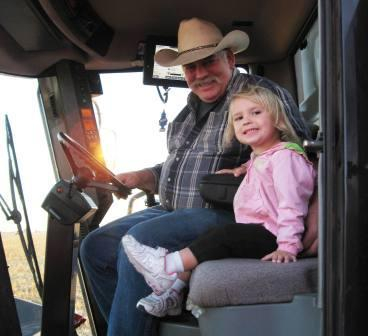
There are so many “days” such as “national ice cream day”, “national punctuation day”, etc. which I quite honestly don’t pay attention. Today, however I noticed that it is National Farmer’s Day and felt like that is something to spend a little bit of time recognizing. October 12th is a day for us to pay tribute to farmers throughout our great nation.
Have you thanked a farmer lately? Farmers work long and hard hours and there is no guarantee of good yields. As is the case lately, farmers are at the mercy of the weather and waiting to return to harvest due to wet conditions.
Agriculture and farmers are the backbone of our society and economy! Thank you to all of the farmers who feed and clothe us!
#NationalFarmersDay
You Can’t See Your Own Dirt
Good Read by my Extension Colleague Deb Weitzenkamp!

I’m at a national conference, and while there, I’ve met and talked with tons of people from other states and had the opportunity to talk with plenty of people from Nebraska. Last night as I was thinking about some of these conversations, I had the epiphany that “People Can’t See Their Own Dirt”….let me explain.
Within our professions we expend a great deal of energy trying to fix problems. And, we also are able to quickly identify problems. When we are transferred to another county/state/position in Extension, we quickly can assess where these problems are, and are frustrated, perhaps even dumbfounded that the previous person at that position either didn’t identify the problem or either refused or was incapable in some way of addressing the problem. And yet, as we exited our initial position we also are able to identify issues that we weren’t able to address in the time…
View original post 241 more words
Pumpkins, Spiders, and Mums
Great tips on pumpkins, spiders and mums!


Now that October is here, we begin to get prepared for Halloween, a day which I personally enjoy. Pumpkins, spiders, and fall flowers are all part of this festival. So, I won’t miss the chance to help you with your holiday decorations and traditions.
Pumpkins
 Pumpkins can be used for so many things including carving, decoration, pies, and many other food products. If planted later in the summer growing season, your pumpkins should just be maturing, or have matured within the last couple of weeks. If you are unsure, pumpkins are mature when the rind is hard and can resist penetration from a fingernail.
Pumpkins do need to be harvested prior to a hard frost. They can be ok out on the vine for a light frost, but a hard frost will damage the pumpkin and can damage storage potential and more likely cause the pumpkins to rot. They should…
View original post 554 more words
Happy National 4-H Week!