Youth

State Fair and Its Impact on Youth

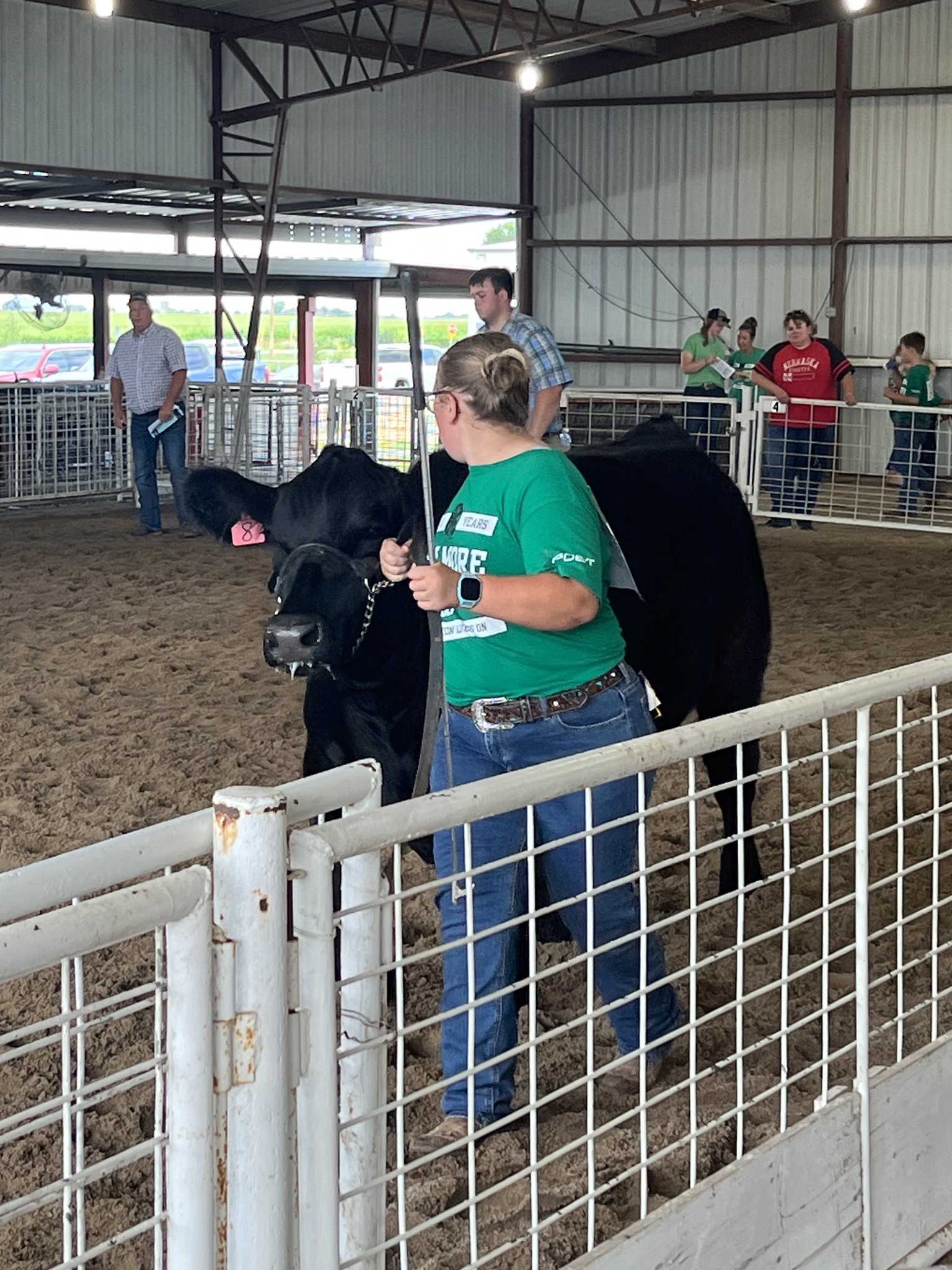
As you read this, the Nebraska State Fair is in full swing! While many think of special foods, entertainment, carnival rides, and competition as the hallmarks of a state fair, the event means much more to 4-H and FFA members. For them, the fair is the culmination of months—sometimes years—of hard work, dedication, and learning. It is an opportunity for their efforts to be recognized on a statewide stage.

In 2024, Kaitlin Rogers, a 4-H Youth Development Educator with the University of Delaware Extension, shared three key reasons why state fair participation benefits youth. While some benefits are most visible in live competitions such as livestock shows or public speaking contests, youth exhibiting static projects also gain valuable experiences.

  1. Responsibility and Personal Growth
    Advancing to the state fair requires commitment, time management, and accountability. Whether preparing a show animal, perfecting a recipe, or readying an art project, youth learn to take ownership of their work. Competitive events foster humility in success and grace in defeat—building resilience, empathy, and emotional maturity. In livestock competitions, exhibitors also take on the responsibility of animal care and answering questions from spectators, further developing personal growth.
  • Networking and Connection
    State fairs provide opportunities to connect with diverse audiences. Youth meet peers from across the state who share similar interests, often forming lasting friendships and exchanging ideas. They also gain valuable insights from judges, fellow competitors, and other exhibitors, whether in person or through viewing others’ work. These connections can broaden perspectives and inspire future goals.
  • Life Skill Development
    The preparation process sharpens essential life skills such as time management, goal setting, and perseverance. For example, a baked good might require multiple attempts to perfect, while showing an animal can demand patience—especially if the animal behaves differently in the show ring than at home. These experiences build confidence, pride, and practical abilities that serve youth in academics, careers, and personal life.

When you visit the Nebraska State Fair, take time to tour the livestock barns and 4-H/FFA exhibit buildings. Congratulate youth on their accomplishments, whether in person or when you see them back home. In a world where young people face many challenges, your encouragement may be the boost they need to take their next step forward with confidence.

The Nebraska State Fair runs August 22 – September 1, 2025, in Grand Island, Nebraska.

Uncategorized

Resiliency: What is It?

Resiliency: what is it and why is it important?  In short, resiliency is the “ability to bounce back from challenges or hardships”. According to the Center on the Developing Child from Harvard University, “Reducing the effects of significant adversity on children’s healthy development is essential to the progress and prosperity of any society. Science tells us that some children develop resilience, or the ability to overcome serious hardship, while others do not. Understanding why some children do well despite adverse early experiences is crucial because it can inform more effective policies and programs that help more children reach their full potential.”

According to the Connect with Kids network, adapted from “Project Resilience”, there are

seven attributes that describe ways you can show resiliency when facing challenges. Keep in mind that you – like most people – may show some, but not all, of these attributes/strengths when faced with difficult situations.

  • INSIGHT—Having insight means asking questions of yourself, even when the questions are difficult. If you answer honestly, you can learn and move forward. Having insight helps you understand the problem and how to best solve it. Insight helps you analyze the situation from as many perspectives as you can.
  • INDEPENDENCE—Showing independence means keeping a healthy distance between yourself and other people so you can think things through and do what is best for you. It also means knowing how to step away from people who seem to cause trouble or make things worse by their words or actions.
  • RELATIONSHIPS—Building relationships means finding connections with people that are healthy for both of you and keeping those relationships growing.
  • INITIATIVE—Taking the initiative means taking control of the problem and working to solve it. It means asking questions of yourself and answering them as honestly as you can, so you can move past a sticky situation. Sometimes people who take initiative become the leaders in activities and teamwork.
  • CREATIVITY—Using creativity requires that you use your imagination or resourcefulness to express your feelings, thoughts, and plans in some unique way. Remember that when you make something happen, it shows resiliency of spirit and a positive attitude.
  • HUMOR—Humor is the ability to find something funny (especially yourself!) in a situation, even when things seem bad. Humor often gives you the perspective needed to relieve tension and make a situation better.
  • MORALITY— Being a person of morality means knowing the difference between right and wrong and being willing to choose and stand up for what is right.

In conclusion, it is important for both youth and parents to communicate ways how they can adapt to change, stress or problems and are able to take things in stride. The result of this bouncing back is a feeling of success and confidence.

Uncategorized

Gratitude Improves Health & Well-Being

With November quickly approaching, many people think about Thanksgiving. The word “thanksgiving” means the act of expressing or feeling thankfulness. If you are a parent like me, how often do you tell your children to “say thank you” after receiving something from someone?  When my kids automatically say, “Thank you”, it brings joy to my heart. By teaching youth to automatically say those two small words, my hopes are that it will lead to writing thank you notes and expressing warm words of gratitude to those around them.

Photo by Marcus Wu00f6ckel on Pexels.com

The art and practice of handwriting “thank you notes” can sometimes get lost with all the electronic methods of communication.  When I receive a handwritten thank you that really brings gladness to my heart, I put it in a special file folder on my desk.  Some of those thank you notes are from 4-H’ers, 4-H Alumni, interns, coworkers, etc.  As I write this, I even have a thank you note displayed on my desk from a summer adult 4-H volunteer. As the receiver of a thank you note, I can say it is nice to receive meaningful mail, rather than bills or advertising, but writing thank you notes also brings happiness to my heart. 

Two researchers from Indiana University, Drs. Brown and Wong (2017) researched an authored an article that provides the following psychological benefits of practicing gratitude.

  1. Gratitude unshackles us from toxic emotions. When you write about how grateful you are to others and how much other people have blessed your life, it might become considerably harder for you to ruminate on your negative experiences.
  2. Gratitude helps even if you don’t share it. The mere act of writing a thank you letter can help you appreciate the people in your life and shift your focus away from negative feelings and thoughts.
  3. Gratitude benefits take time. If you participate in a gratitude writing activity, don’t be too surprised if you don’t feel dramatically better immediately after the writing. You might have that quick “rush” of feeling thankful, however, the bigger benefits of gratitude might take time to kick in weeks after your gratitude activity.
  4. Gratitude has lasting effects on the brain. Their research suggested that brain activity was distinct for those who felt more grateful, than those who only performed an act of gratitude related to guilt. Those who were more grateful showed greater activation in their medial prefrontal cortex.

University of Southern California (2019) also found evidence that gratitude can have profound health benefits and provided suggestions on how to practice gratitude. Some of the most effective approaches include maintaining a gratitude journal, writing personal thank-you notes and regularly expressing gratitude to others in person. One might also practice guided meditation, call someone to express thanks or write a note to a friend.

It can be easy to get down with all the negativity on social media, the news or being around negative people, but reminding oneself of the many things one should be thankful for can help improve one’s wellbeing.  I am thankful to all of you who have read my weekly column and support Nebraska Extension!   

Uncategorized

Back to School Tips

With the school year starting, the busyness of after-school activities and homework assignments will be here soon. As families are pulled in different directions for school, work, and practices, time as a family comes at a premium. Making efforts to build the focus of your children could decrease time spent on homework to free up more time for family activities. Creating a permanent, designated study space is one way to build your youth’s focus. Here are a few items to keep in mind when creating the study space:    

Photo by Pixabay on Pexels.com

Make It Work for You – Every child is different and has different needs. Some prefer a quiet corner in their room while others may prefer to be close to a parent for help at the kitchen table. Just make sure that the traffic and noise of other family members do not become a distraction. 

Manage the Senses – Lighting and noise issues are very common distractions. Tired eyes have more difficulty transferring knowledge into memory. To keep sharp, make sure to provide adequate overhead lighting to limit squinting. Also, check that electronic devices like laptops and tablets are set at a comfortable level. 

Make It Comfortable – Temperature and seating can make a difference in a youth’s ability to concentrate. Make sure that the study space keeps the child relaxed, but alert. It is also important that he or she has adequate space to spread out books, papers and materials to make the space efficient. While a bed may make a great space for spreading out, it may prove too relaxing. Consider a cushioned chair with generous table space. Also, it is important that the chair fit the youth. Dangling legs and hunched shoulders can create distractions as well. 

Keep It Organized – Another way to increase the efficiency of the space is to keep all supplies and materials readily available and easy to find. Any time spent looking for the lost blue marker is time spent away from the task and an opportunity for further distraction. Organized space provides a launching pad for organized study. Keep clutter at a minimum using cubbies, canisters and boxes. A calendar, planner or to-do list can also keep homework assignments and activities prioritized and on track for on-time completion. 

Limit Distractions – While the computer and television can be excellent sources of educational content, they also provide limitless distraction. If the child believes they can focus better with a little background noise, try some recorded music and save the favorite show as a reward when they can spare his or her attention.

Make It Your Own – If the child is expected to spend considerable time in the study space, let him or her decorate the space with posters, pictures or artwork. These items could provide creative inspiration for the child’s next essay or art project. 

This article comes from a series of resources developed by Nebraska Extension, 4-H Youth Development Professionals. Learn more about 4-H at 4h.unl.edu, follow us on Facebook at https://www.facebook.com/Nebraska4H/ or on Twitter at https://twitter.com/nebraska4h. For more information, contact the author – Jennifer Schoen (jschoen4@unl.edu), Extension Educator.

Crops, Horticulture, Irrigation, Livestock, Programming

Ag Offers Rewards, but can be Stressful Too

Recently I presented a webinar with my colleague, Glennis McClure that reminds us of daily stress in our lives, especially for farmers and ranchers. Agriculture is a stressful occupation and while it provides numerous rewards, it does not come without challenges. Too much stress can contribute to health issues and make us more accident prone.

close up composition conceptual creativity
Photo by Pedro Figueras on Pexels.com

The National Center for Farmer Health points out that stress is the human response to any change that is perceived as a challenge or a threat. Changes that cause worry, frustration or upheaval and seem beyond our control can cause stress. An example that hits close to home for Nebraska farmers and ranchers is the recent weather-related disasters. Attitudes, perceptions and meanings that people assign to events determine a large part of one’s stress levels.

There are many symptoms of stress that impact our body, mind and actions. For example, physical symptoms might include nausea, shortness of breath, shaky legs, headaches, and fatigue just to name a few. When under stress, some people may experience moodiness, frustration, anger, loneliness, anxiety or depression and even suicidal thoughts. Sleeping too much or too little, increased use of alcohol or drugs, withdrawal from others and exhibiting nervous behaviors are all examples of how our actions might change when stressed.

honeycrisp health illustration
Photo by rawpixel.com on Pexels.com

The good news is there are many ways to reduce stress. A summary of ways to decrease stress as compiled by Susan Harris-Broomfield, Nebraska extension educator includes:

  • Exercising ½ hour a day every day or every other day
  • Getting enough sleep to meet the demands of your body
  • Accepting that stress is a part of life and not dwelling on it
  • Learning to relax which could include taking deep breaths
  • Balance work and family time
  • Connect with sources of support
  • Eat a well-balanced diet
  • Talk with a friend or counselor
  • Don’t be afraid to ask for help.

If you recognize someone in distress, express your concern to them and ask about their situation. Do this in a non-judgmental way and actively listen to them. People in distress might turn to suicide and a majority of people who attempt suicide have given a clue or warning to someone. Don’t ignore indirect references to death or suicide. In fact it is a myth that talking about suicide with someone may give them the idea to carry it out. Asking someone about potential suicidal thoughts they may have or discussing it openly is one of the most helpful things you can do for someone who is suicidal. If someone indicates they are thinking of suicide, do not leave them alone. Call for help and/or take them to a hospital or health care provider. The National Suicide Prevention Lifeline can be reached at 1-800-273-TALK (8255). This hotline can be accessed day or night.

In keeping with the #NebraskaStrong idea, remember to be strong and seek out help as needed and assist others who may need help. In Nebraska, our Rural Response Hotline can be accessed at 1-800-464-0258. When a farmer, rancher, or rural resident calls the hotline and requests help with stress related issues, they are connected to an experienced staff person who is trained to help callers through the Counseling, Outreach and Mental Health Therapy program. Staff members are trained to work with individuals over the phone or in their home, providing confidential information and assistance.

A recording of the webinar, in addition to resources utilized for this program can be found at https://go.unl.edu/wellnessintoughtimes.  More resources, especially disaster-related resources can be accessed on the flood.unl.edu website. For more information, contact me at brandy.vandewalle@unl.edu or (402)759-3712.

Crops, Irrigation, Livestock, Uncategorized

Mental Health is Just as Important as Financial Health

Picture this. Someone is showing physical signs of stress – maybe it’s a heart attack or even a broken leg.  Who might arrive to the scene first?  It probably will be an EMT or other first responder. Their role is to keep the person alive or comfortable until that person reaches the hospital where doctors and other medical professionals will treat that patient. What happens if a person is showing signs of mental distress or even suicidal signs? There are classes available called, “Mental Health First Aid” which provides people the opportunity to properly help others receive professional help he/she might need. Things as simple as listening to the person non-judgmentally and encouraging them to seek professional help might just save that person’s life. Calling the suicide hotline with the person can also help that person realize that they can get through the crisis in their life.

board game business challenge chess
Photo by Pixabay on Pexels.com

Farmers and ranchers have many stressors in their life. Weather challenges and disasters like many Nebraskans have recently experienced have led to uncertainty in their crop and livestock operations. Machinery breakdowns, debt loads, volatile markets, long days with sleep deprivation, government regulations, and the stress of holding onto a multi-generational farm/ranch all play a part of the stress and mental health of a farmer or rancher. Farmers and ranchers know the importance of  planning and talking about their financial health to bankers, financial planners, spouses, etc. but might not realize how important it is to spend time on their mental health.

A North Dakota State University Extension publication reminds farmers that “just as farms need to be operated in a sustainable way that preserves resources for the long term, an individual’s life needs to be managed in a sustainable way for long-term well-being. Feeling overly tired, overwhelmed by stresses or under constant pressure is not a recipe for a sustainable lifestyle.” There are physical, mental, emotional/spiritual, personal/relational, work/professional and financial/practical strategies for coping with stress. For example, get at least 7-8 hours of restful sleep is one physical way to take care of yourself. Take 10 minutes and reflect on blessings in your life in as a mental strategy to dealing with stress. Emotional or spiritual coping strategies are to pray, do random acts of kindness and something as simple as eating a meal with a friend of loved one. A personal or relational coping strategy is to plan a small getaway with a family member or spend time playing games with family or friends. For a work strategy, talk to other farmers about their strategies or plan your next day at the end of a work day and set priorities ahead of time. Finally, financial/practical coping strategies are to schedule time to organize your records or finances monthly and create a family budget and live within your means.Assess for risk of suicide or harm. Listen non-judgmentally. Give re-assurance and information. Encourage appropriate professional help. Encourage self-help and other support strategies.

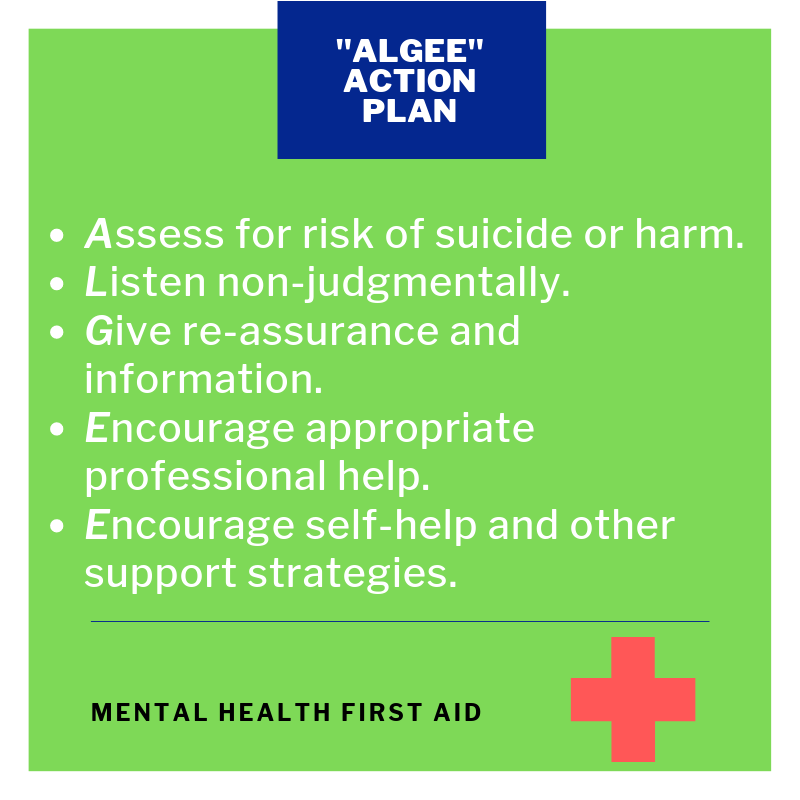
At the Mental Health First Aid workshop, an action plan to help others with potential mental health problems is referred to as “ALGEE.” The action plan is as follows:

  • Assess for risk of suicide or harm.
  • Listen non-judgmentally.
  • Give re-assurance and information.
  • Encourage appropriate professional help.
  • Encourage self-help and other support strategies.

If you or someone you know needs help, there are several resources. The Nebraska Family Helpline can be reached at 1-888-866-8660, the Nebraska Rural Response Hotline at 1-800-464-0258 or the National Suicide Prevention Lifeline at 1-800-273-TALK (8255).

Disaster Resources

Nebraska Extension is pushing out information to help.  Please use or share the website https://flood.unl.edu  It’s a key resource full of science-based information

Knowing the legal rights, benefits and resources available to low-income survivors of a disaster is crucial to recovery. Legal Aid of Nebraska can help. Apply online at disaster.legalaidofnebraska.org/apply, or call the Disaster Relief Hotline at 1-844-268-5627.