
If you have recently enjoyed some juicy pork loin, pork chops, sausage, or my favorite – bacon, then you should thank a pork producer. In Nebraska, we grow nearly 7.8 million pigs each year from 1,230 family farms, making us the sixth-largest pork-producing state. These family farms have people who are locally involved in various community organizations, schools, churches, etc., and have families of their own to feed. This is just one of the reasons you know that pig farmers raise a safe, wholesome product that you can serve your family. According to the Nebraska Pork Producers Association, there are nearly 18,000 jobs involved in pork production and an economic impact of 1.66 billion dollars in Nebraska.
October is National Pork Month, and the Nebraska Pork Producers Association website has some fantastic recipes on their website which can be found at nepork.org. There are also some delicious recipes including an air fryer pork and apple burger and pork rice bowl recipes on Extension’s food.unl.edu website.
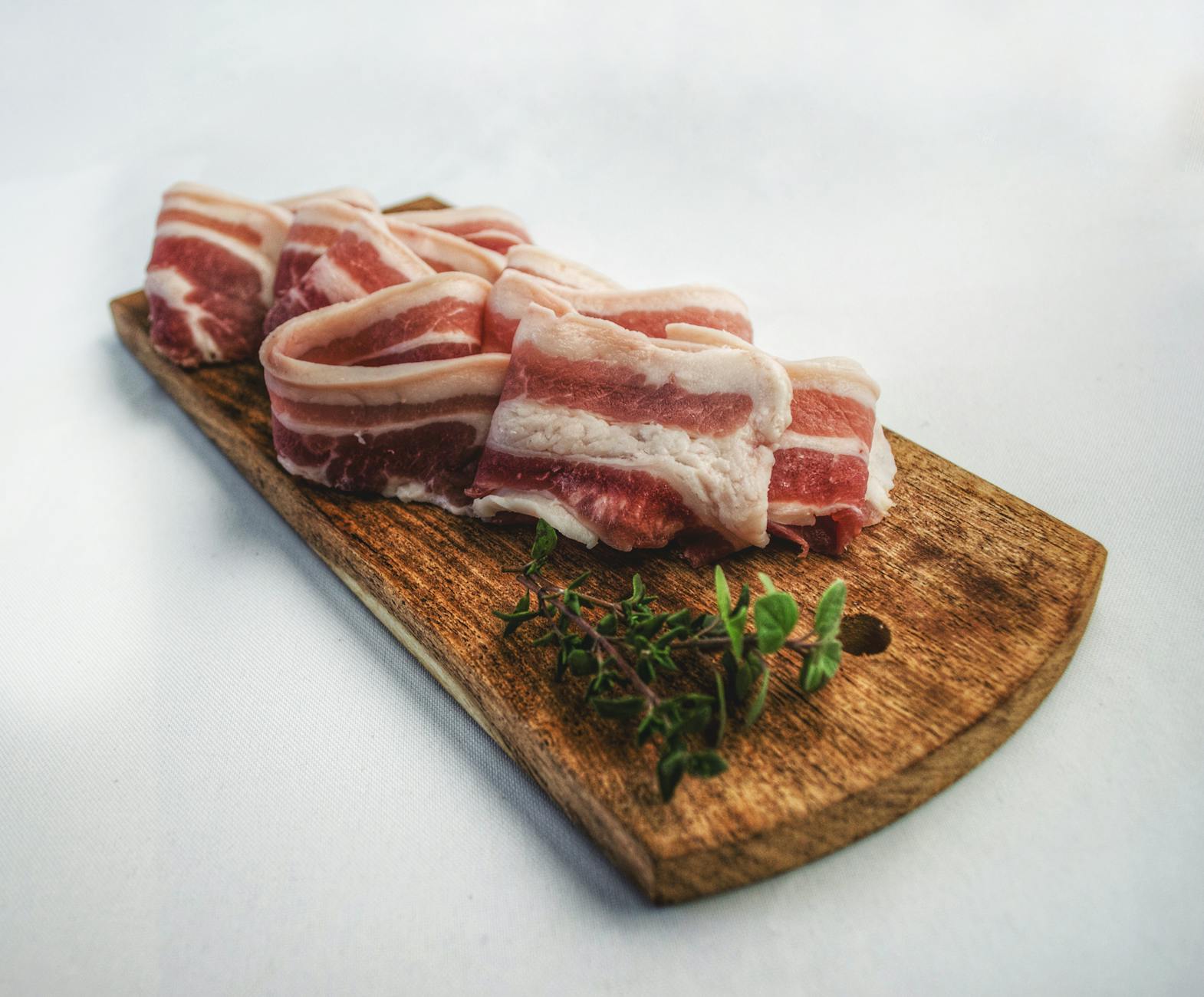
Speaking of meat, did you know that pork carcasses are separated based on percent fat-free lean (%FFL), which estimates how many pounds of boneless, closely trimmed retail cuts (BCTRC) that animal will provide. Let’s take an example hog that has a live weight of 275 lbs. If that animal had a dressing percentage (the amount of weight from the live animal that makes it to the carcass) of 75%, the carcass weight would be 210 lbs. With a percent fat-free lean of 57%, the boneless, closely trimmed retail cuts (BCTRC) of meat would be 120 lbs. A fun fact is that Americans on average eat around 18 pounds of bacon each year. That’s about 5.6 billion pounds for the entire United States.
Wholesale cuts are large meat cuts that the animal carcass is cut into for ease in handling and shipping. Some wholesale cuts are higher in value than others. In hogs, the wholesale cuts are the shoulder/“Boston butt”, shoulder/“picnic”, loin, belly, and leg/“ham”. These cuts are then broken down into retail cuts which is what most consumers will purchase at the grocery store. Some popular examples include sliced bacon and spare ribs from the side and country-style ribs, tenderloin, and center cut chops from the loin.
Often when any meat turns out dry, it is prepared and cooked incorrectly. Using a meat thermometer is one of the best ways to ensure meat is not overcooked. For example, boneless pork chops and pork tenderloin only need an internal temperature of 145 degrees (Fahrenheit). Ground pork patties should reach an internal temperature of 160 degrees. For more tips on properly preparing pork, which include grilling pork, air frying pork, using an instant pot, roasting pork, and more, go to the National Pork Board’s website at pork.org. Happy National Pork Month!
 Views from VanDeWalle