Horticulture

Insect Invaders

With cool temperatures, pests start seeking shelter for warm places like your house, so this week I’m sharing information on keeping these pests out of your house.

animal biology blur close up
Photo by Johnny Mckane on Pexels.com

Some of the more common nuisance pests include occasional invaders like boxelder bugs, multicolored Asian Lady Beetles, millipedes, and crickets.  These pests don’t do any harm once inside the home; they are just looking for a cozy place to spend the winter. Proper identification of the insect will assure the proper control method.  Boxelder bugs are black and orange true ‘bugs’ that can be found in large numbers around foundations sunning themselves or trying to find their way inside. Multicolored Asian Lady Beetles are the orange ‘ladybugs’ with black spots.  Their distinct smell and ability to bite makes them even more of a nuisance once inside the home.  Millipedes are often misidentified as ‘wire worms.’  These skinny, brown critters have two legs per body segment and will curl up when disturbed.  Crickets hop their way into homes and provide ‘music’ in the night with their chirping.  Commonly it’s the black field cricket that migrates inside, but there are others that follow right behind.

nature insect macro spider
Photo by Pixabay on Pexels.com

Wolf spiders may look scary, but they are more bark than bite.  These large, hairy spiders can be found both outdoors and occasionally inside the home.  They are not poisonous nor do they want to disturb people.  They are hunting spiders, so they don’t spin a web or a trap, but prefer to chase down their prey.  They often find their way into homes in the fall following their favorite food source the cricket.

The saying “an ounce of prevention is worth a pound of cure” has never been more true.  Discouraging occasional invaders from entering the house is going to take a little work, but it will be worth it in the long run.  Start by finding and sealing up any cracks or spaces they could enter through with silicone caulk or expanding foam.  Make sure that window screens are in good repair and that doors are tight fitting.  Also remove any dead plant debris from window wells.

Pests can be discouraged from entering the house in a number of ways.  The most common way is by applying an outdoor perimeter insecticide treatment.  These insecticides are labeled for various pests and often times have residual effects to help protect the house for longer.  Read and follow the label instructions on how and where these products should be applied.  Ideally, try to apply these insecticides out from the foundation about five to ten feet around the perimeter of the home. The insecticides will help to decrease the numbers of pests that make it inside the house, but don’t expect it to stop all of them.

Monitor the home regularly to see what pests have made their way inside.  Glue boards are sticky boards used to catch and hold pests as they try to move throughout the home.  Be sure to use sticky boards in locations where non-target animals, like pets, won’t get stuck in them.  If something other than the target pest does happen to get ‘caught’ in the trap, use an oily material, like vegetable or mineral oil, to dissolve the sticky substance on the trap.  When properly placed, these traps will allow you to see which pests are inside the home and their approximate numbers.

Once pests are found inside the home, there are a few techniques that you can use. The handy broom and dustpan or the vacuum are two techniques; they are also very environmentally friendly and very cost effective.  Be careful when selecting insecticides for use inside the home.  Read and follow instructions carefully as many of these products have to come into contact with the insect themselves and don’t offer much residual protection. With a little prevention and monitoring you can ensure that you are sharing your home with wanted house guests this fall and winter.

Uncategorized

Wild Cucumber

These have been growing like crazy this year, so thought I’d share as I’ve been receiving questions on them.

Nicole Stoner's avatarPlants and Pests with Nicole

Windbreaks are very important to many acreage owners throughout Nebraska. A windbreak is used to block the wind, as the name implies. Winter winds can be very strong and a windbreak will help to reduce those winds, which will in turn reduce heating bills. Windbreaks can be built from a variety of trees and shrubs which are typically fairly tolerant of many problems. However, we do still see problems from bagworms, some fungal diseases, and weeds growing around the trees. A windbreak weed that is quite prevalent this year is wild cucumber or burcucumber.

About Wild Cucumber

Wild cucumber is an annual weed that grows up and over our windbreak trees. Due to all the rain we saw this spring, it is growing voraciously over our trees across the Nebraska countryside. It vines and has leaves similar to cucumber plants. The leaves are arranged alternately along the stem and have…

View original post 353 more words

Programming, Youth

4-H School Enrichment & More

With county fair being over and in the midst of state fair time, I often am asked, “What are you doing now that fair is over?” The answer to that question is, “A lot!” This week, I’m focusing on the delivery methods of 4-H which involves much more than fair!  In fact, in Clay and Fillmore counties, our small staff reaches 1 in 2 age-eligible youth and families in our respective counties. In Nebraska, 4-H reaches 1 in 3 age-eligible youth and families in all 93 counties with the support of over 12,000 volunteers. Nebraska 4-H strives to enable all youth to develop strong personal mindsets and the social skills necessary for successful futures.

The Nebraska 4-H Youth Development Program strives to empower youth to reach their full potential working and learning in partnership with caring adults. 4-H reaches youth through club, camp, afterschool, school enrichment, and special interest programs. The traditional 4-H club and camp experience are likely the familiar methods people are most familiar. Working with 4-H club leaders, parents and club members throughout the county fair is a very visible time. Youth can go to our state 4-H camp, area camps or participate in day camps or workshops which many people, again are familiar.

UNADJUSTEDNONRAW_thumb_823e
Our office coordinated a “Beef Day” with an area school to compliment the school beef booster program.

Did you know that extension staff work year-round to deliver programs to youth during the school year? School enrichment programs are learning experiences offered to students during school hours by local 4-H staff. These programs are designed to enhance the subject matter being studied in the classroom, provide hands-on education, introduce a new topic to students, or spark a new interest! The 4-H school enrichment program is a great way to connect and collaborate between your local Extension office and achieve school classroom educational goals. Locally, current programs focus on Career Development, STEM, and Agricultural Literacy.

Locally, some of the school enrichment programs include: Farm to the Cart, My Clothing & Weather, Beef Cattle from A to Z,  Soils is Not a Dirty Word, Plant Parts we Eat, How Did That Get in my Lunchbox, Pumpkin Life Cycle, Positively Popcorn, Hot House Detective, Bacteriology, Embryology, & GPS/Geocaching. We also have beef related topics that can be used in collaboration with local school Beef Boosters to provide the educational component to students. Most of these programs are at no cost or have a minimal fee. If you are interested; be sure to check out our website at fillmore.unl.edu.

UNADJUSTEDNONRAW_thumb_7ed7
Embryology is one of the favorite programs that classroom teachers request every year.

There are some extension offices that provide after-school workshops or educational sessions for youth. Finally, there are special interest types of programs that extension staff provide. Locally, examples of these include the upcoming AgVenture Day which is a collaborative effort among the South Central Cattle Women and Extension. At this program, area 4th graders learn about agricultural products and how their food is produced. In the spring, Progressive Agriculture Safety Day reaches over 120 youth with presentations to keep participants safe.

To identify the impact that the 4-H Program is making in the lives of youth ages 5-18, various research studies have been conducted across Nebraska and the nation. For example, a nationwide longitudinal study by Tufts University (2013) found that compared to their peers, youth involved in 4-H programs are nearly 4 times more likely to make contributions to their communities (grades 7-12). Also, 4-H’ers are about 2 times more likely to be civically active (grades 8-12). The same study found that 4-H young people are nearly 2 times more likely to participate in science, engineering and computer technology programs during out-of-school time (grades 10-12). Finally, 4-Her’s are nearly 2 times more likely to make healthier choices (grade 7).

UNADJUSTEDNONRAW_thumb_82cc
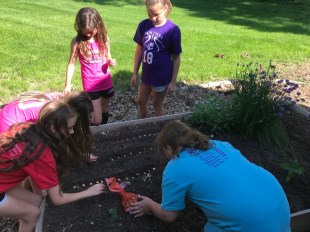
Youth plant our raised beds in front of the office in addition to a community garden with produce donated to the food pantry or senior center.

Next time you consider asking an extension staff “What are you doing now that fair is over?”, consider instead asking, “What programs or projects have you been working on?”  I’m sure you will hear about some of the school enrichment programs, in addition to the countless efforts related to foods, early childhood development, crops, livestock, horticulture, community development and other youth development programs. For more information about Nebraska Extension’s educational programs, research and initiatives, go to extension.unl.edu.

Horticulture

Fall Lawn Care Reminders

The kids are back in school, the first Husker football game will start in a couple of weeks – it is officially fall! During this time of year, it is an ideal time to seed the cool season turfgrasses tall fescue and Kentucky bluegrass. For all of you horticulture enthusiasts, be sure to follow Nicole Stoner, extension educator focused in horticulture’s blog or go to Nebraska Extension’s Hort Update newsletter.

This week, I took some of the lawn tips from August 19th edition of Hort Update on site preparation for lawn seeding or over seeding. For success, seedbed preparation is important to assure seed to soil contact.

For newly planted turf, complete the following steps:

1). Remove all construction debris, branches, etc.
2). Control perennials weeds with glyphosate (Roundup). Two to three applications at the recommended timing may be needed.
3). Establish grade for proper surface drainage.
4). Use a rotary tiller or other cultivation equipment to work the soil to a depth of six inches, incorporate compost while tilling. Avoid tillage of wet soil as this creates compaction. Do not try to improve clay soil by tilling in sand as this can increase compaction. For clay soils, spread a one inch layer of compost over the site and till it in. Then spread another one inch layer and till perpendicular to the first tillage.
5). Allow soil to settle after tilling and prior to seeding.
6). Keep the soil moist after seeding.

To over seed your lawn, complete the following:

1). Mow the area 1 to 1.5 inches tall.
2). If there is excess thatch, one-half inch thick or more, power rake aggressively and removed debris.
3). Aerify the area, punching 20 to 40 holes per sq. ft. with the largest tines available. Make at least two to three passes over the area to be seeded.
4). Apply a starter fertilizer.
5). Seed using a drop spreader or power overseeder (slit or slicer seeder).
6). Keep the soil moist.

Fall is also a great time to fertilize cool season grasses. Elizabeth Killinger, extension educator reminds us that cool season grasses, like Kentucky bluegrass and tall fescue, are beginning to wake up from the summer slump and are vigorously growing.  Actively growing turf means the perfect time to apply fertilizer applications.  Fertilizing in mid-September encourages new vegetative growth, like tillers, rhizomes, and stolons, which help fill in those thin areas left behind by disease or summer stress and increase density of the turf.  September fertilization also encourages root production and making of products that will be stored in the plants’ crown.  A turfgrass that has ample stored ‘food’ reserves will be better able to survive winters’ stresses.

Youth

Back to School Tips

With the school year starting, this means the busyness of afterschool activities and homework assignments will be here soon. As families are pulled in different directions for school, work and practices, time as a family comes at a premium. Making efforts to build the focus of your children could decrease time spent on homework to free up more time for family activities. Creating a permanent, designated study space is one way to build your youth’s focus.

UNADJUSTEDNONRAW_thumb_8812
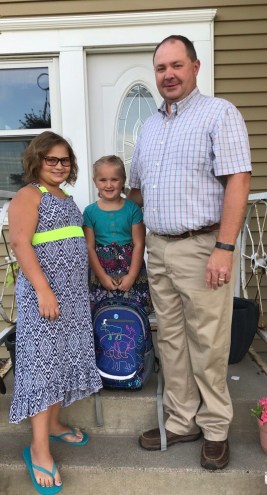
My oldest started 6th grade today and my youngest started kindergarten. My husband, Kurt continues to teach agriculture education.

Here are a few items to keep in mind when creating the study space:

Make It Work For You – Every child is different and has different needs. Some prefer a quiet corner in their room while others may prefer to be close to a parent for help at the kitchen table. Just make sure that the traffic and noise of other family members do not become a distraction.

Manage the Senses – Lighting and noise issues are very common distractions. Tired eyes have more difficulty transferring knowledge into memory. To keep sharp, make sure to provide adequate overhead lighting to limit squinting. Also, check that electronic devices like laptops and tablets are set at a comfortable level.

Make It Comfortable – Temperature and seating can make a difference in a youth’s ability to concentrate. Make sure that the study space keeps the child relaxed, but alert. It is also important that he or she has adequate space to spread out books, papers and materials to make the space efficient. While a bed may make a great space for spreading out, it may prove too relaxing. Consider a cushioned chair with generous table space. Also, it is important that the chair fit the youth. Dangling legs and hunched shoulders can create distractions as well.

Keep It Organized – Another way to increase the efficiency of the space is to keep all supplies and materials readily available and easy to find. Any time spent looking for the lost blue marker is time spent away from the task and an opportunity for further distraction. Organized space provides a launching pad for organized study. Keep clutter at a minimum using cubbies, canisters and boxes. A calendar, planner or to-do list can also keep homework assignments and activities prioritized and on track for on-time completion.

close up of woman working
Photo by Pixabay on Pexels.com

Limit Distractions – While the computer and television can be excellent sources of educational content, they also provide limitless distraction. If the child believes they can focus better with a little background noise, try some recorded music and save the favorite show as a reward when they can spare his or her attention.

Make It Your Own – If the child is expected to spend considerable time in the study space, let him or her decorate the space with posters, pictures or artwork. These items could provide creative inspiration for the child’s next essay or art project.

This article comes from a series of resources developed by Nebraska Extension, 4-H Youth Development Professionals. Learn more about 4-H at 4h.unl.edu, follow us on Facebook at https://www.facebook.com/Nebraska4H/ or on Twitter at https://twitter.com/nebraska4h. For more information, contact the author – Jennifer Schoen (jschoen4@unl.edu), Extension Educator.


Crops, Irrigation, Programming, Youth

Youth Learn Crop Scouting Skills

group 0On July 23, 2019, the sixth annual Crop Scouting Competition for Nebraska youth was held in which seven teams from across Nebraska competed. It was held at the Eastern Nebraska Research and Extension Center near Mead, Nebraska on July 23, 2019. Teams of students (those completing 5-12th grades) participated by completing a written knowledge test and seven crop scouting exercises in field plots.

The purpose of the competition w­­­as to provide students an opportunity to learn crop scouting and principles of integrated pest management (IPM) for corn and soybeans in Nebraska, to obtain knowledge and skills that will be helpful in future careers and to demonstrate newer crop scouting technologies.

Results from the 2019 competition were as follows:

First place- Colfax County 4-H (R. J. Bayer, Jestin Bayer, Austin Steffensmeier, Logan Nelson, and Brad Kratochvil)

Second place – Kornhusker Kids 4-H Club #1 (Payton & Levi Schiller, Matthew Rolf, and Kaleb Hasenkamp)

Third place – Kornhusker Kids 4-H Club #2 (Landon Hasenkamp, Ethan Kreikmeier, James Rolf, and Ian Schiller)

Also participating was

Humphrey FFA with Bryce Classen, Jacob Brandl, and Mikayla Martensen

Twin River FFA with Keaton Zarek, Kyle Kemper, Jacob Czarnick, and Landon Cuba

Auburn FFA with Kellen Moody, Austin Youngquit, Braden Gerdes, and Riley Stukenholtz

Wayne FFA with Justus Greves, Noah Lutt, Tyler Reinhardt, Elle Barnes, and Alyssa Carlson

Top-scoring teams won prizes: $500 for first, $250 for second, $100 for third place. The top two teams will represent Nebraska at the regional competition held in Iowa on August 26, 2019.

Teams were expected to know the basics of scouting corn and soybean fields. This included crop staging; looking for patterns of crop injury; disease, insect and weed seedling identification; etc.

corn growth staging, maturity, development 2
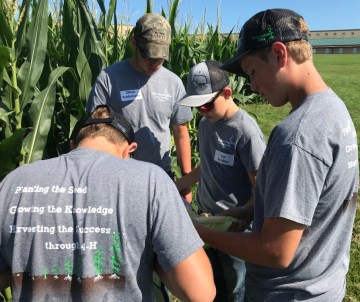
Kornhusker Kids team determine the corn growth during the program.

More information about the crop scouting competition are available online at cropwatch.unl.edu/youth. Click on the link that says, “Crop Scouting Competition”.

This program was sponsored by DuPont Pioneer, the Nebraska Independent Crop Consultant Association and Farm Credit Services of America in collaboration with Nebraska Extension. If you know of a company or you would are interested in sponsoring the 2020 program, please contact me at brandy.vandewalle@unl.edu.

Uncategorized

JenREES 7-28-19

JenBrhel's avatarJenResources

Southern Rust in Nebraska was confirmed in Nuckolls, Thayer, and Fillmore counties last week. The lesions were typically on one leaf in an isolated portion of fields at low incidence and severity. I was recommending to watch the fields instead of spraying right away. Greatly appreciate everyone who has gotten samples to me this month and to neighboring Extension offices serving as drop off points for samples. I’ve been looking at samples since early July and honestly, common rust at times has exhibited signs similar to southern rust. At my blog site (https://jenreesources.com), I’ve posted photos showing the differences of common vs. southern rust that we’re seeing this year. Southern rust typically is orange to tan colored with tiny, clustered pustules on the upper leaf surface. Common rust has had an orange appearance to it at times with smaller lesions than the ‘typical’ brick red larger ones. However, in…

View original post 681 more words

Crops, Irrigation, Livestock

Stress is a Part of Life

First of all, I’d like to give a shout-out to the many volunteers who helped contribute to a successful county fair!  Without great volunteers so freely giving their time and talents to the youth in the 4-H program, 4-H would not be the success it is! I would like to personally thank all of the extension staff, fair board members, 4-H Council members, superintendents, and other volunteers for their dedication to the 4-H program. Fair can be a stressful time; however, when we don’t lose sight of its purpose can create long-lasting and positive memories.

woman working girl sitting
Photo by Alexander Dummer on Pexels.com

Speaking of stress, this week I’ve captured a few stress relieving tips to consider as summer comes to an end and youth will be in school. Stress is a part of life; we can’t live without it, but sometimes we feel that we can’t live with it!

Stress comes from many sources: a family crisis such as death, divorce or long separation; It might be from overloaded schedules; maybe expectations that cannot be met or unexpected circumstances; A loss of job, health, home or friendship; it can even come from a happy event as marriage, the birth of a child, or moving into a new home. Regardless of the cause, the following are three ways you can manage your stress: alter it, avoid it, or accept it.

Alter your life by removing the source of stress. Some stressors can be relieved by better planning or organization in your life. Simple things like having emergency supplies on hand, not shopping at the busiest times of the week, or organizing your work space can each be stress relievers. If morning schedules are tight, lay out children’s clothes or set the table for breakfast the night before.

Avoiding stress is another management strategy. Learn to say no, when an addition to your schedule will only add to your stress. If you are stressed by long waits, plan something to do (like reading a book) while you wait for an appointment. If there is too much tension in your home or office, go for a walk to clear your mind and relieve the tension.

man in blue and brown plaid dress shirt touching his hair
Photo by Nathan Cowley on Pexels.com

Find a way to accept the stressors that we have no control over. Talking to a trusted friend will help you put things in perspective. Keeping in good health by eating well, getting enough sleep and keeping a routine are essential. Look for the good. Even in the worst of circumstances, there are things that can bring a smile to your face, reasons to be thankful, and opportunities to help others.

Source: How to Manage Daily Stress@ by Dr. Herbert G. Lingren, Extension Family Scientist, NF98-388.

Resources for Nebraska Farmers, Ranchers, and Their Families
We hope you reach out if you are feeling stressed.

  • Rural Response Hotline: The hotline offers access to many attorneys, financial advisors, professional counselors, mediators, clergy, and others. There are 167 behavioral health professionals working with the Rural Response Hotline.  Ask about no-cost vouchers for counseling services. 800-464-0258
  • National Suicide Prevention Lifeline: A national network of local crisis centers that provides free and confidential emotional support to people in suicidal crisis or emotional distress 24 hours a day, 7 days a week. 800-273-8255.
    – Crisis Text Line: Free, 24/7 support for those in crisis, connecting people in
    crisis to trained Crisis Counselors. Text GO to 741741
  • Veterans Crisis Line: Connect with this resource to reach caring, qualified responders within the Department of Veterans Affairs. Many of them are Veterans themselves. 800-273-8255, Press 1 or Text to 838255
  • Negotiations Program: Mediation services for agricultural borrowers, creditors, and USDA program participants. Free one-on-one education on agricultural financial and legal matters. 402-471-4876
  • The Boys Town National Hotline: Not just for boys. For all teens and their parents, this hotline is available 24 hours a day, 365 days a year, with specially trained counselors. A TDD line is available (1-800-448-1833), allowing counselors to communicate with speech-impaired and deaf callers. 800-448-3000
  • SAMHSA National Helpline: Free, confidential, 24/7, 365-day-a-year treatment referral in English and Spanish for individuals and families experiencing issues with alcohol, prescription drug, or other substance abuse. 800-662-HELP (4357)

YOU ARE NOT ALONE.
We care about you!

Crops, Irrigation, Livestock

FSA County Committee Nomination Deadline

It is important for one to stand for what they believe in and takes an active role in one’s community. Effective leadership is crucial to any community or organization.  An effective leader understands the issues at-hand, is knowledgeable in his/her area, knows the proper ways to motivate others, embraces change, can work in a variety of settings and with a variety of personalities, and involves the group or followers in important decision-making. That being said, remember that a leader is not only a political figure or someone that is well known, but a leader can be a farmer, local businessmen/women, or anyone in a community or organization.  For those individuals desiring to take on leadership roles, consider serving on the FSA County Committee. Details for how to step into this role follow.

houses in farm against cloudy sky
Photo by Pixabay on Pexels.com

The U.S. Department of Agriculture (USDA) Farm Service Agency (FSA) encourages all farmers, ranchers, and FSA program participants to take part in the County Committee election nomination process.

FSA’s county committees are a critical component of the day-to-day operations of FSA and allow grassroots input and local administration of federal farm programs.

Committees are comprised of locally elected agricultural producers responsible for the fair and equitable administration of FSA farm programs in their counties. Committee members are accountable to the Secretary of Agriculture. If elected, members become part of a local decision making and farm program delivery process.

A county committee is composed of three elected members from local administrative areas (LAA). Each member serves a three-year term. One-third of the seats on these committees are open for election each year.

County committees may have an appointed advisor to further represent the local interests of underserved farmers and ranchers. Underserved producers are beginning, women and other minority farmers and ranchers and landowners and/or operators who have limited resources.

All nomination forms for the 2019 election must be postmarked or received in the local USDA service center by Aug. 1, 2019. For more information on FSA county committee elections and appointments, refer to the FSA fact sheet: Eligibility to Vote and Hold Office as a COC Member available online at: fsa.usda.gov/elections.