Horticulture, Programming

Butterflies

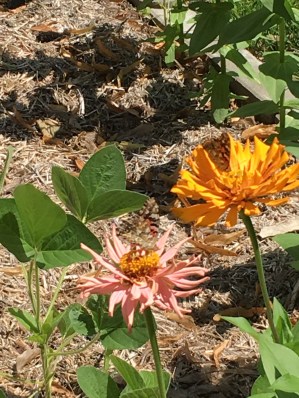
IMG_8962.jpgThe office has received numerous questions regarding the abundance of butterflies (most of what I’ve seen are Painted Lady butterflies) in the area.  An extension entomologist told me the following: “It is hard to pinpoint reasons these insects survive and flourish better in one year over another.  Painted Lady butterflies overwinter in southern areas of the country and migrate north in the spring.  They have a broad food host range which includes thistle plants.  If any of these food sources are abundant, the weather is favorable and natural enemy populations are minimal, the butterflies can grow and develop quite successfully.  This results in the high population that we are seeing now.” Hopefully this answers questions you might have. Butterfly information can be found at http://lancaster.unl.edu/pest/butterflies.shtml.

Programming, Youth

Summer Can Stress You Out

IMG_8706.jpg
My daughter showed a bucket calf as an “official”       4-H’er!  I’m proud to say that she didn’t care whether she received a red ribbon in horticulture or a purple on her calf, she just had fun!
IMG_8761
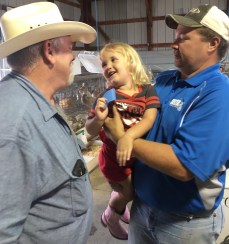
My youngest created memories with “Grandpa Beek” (my Dad) at the fair. That is what matters!

First of all, I’d like to give a shout-out to the many volunteers who helped contribute to a successful county fair!  Without great volunteers so freely giving their time and talents to the youth in the 4-H program, 4-H would not be the success it is! I would like to personally thank all of the extension staff, fair board members, 4-H Council members, superintendents, and other volunteers for their dedication to the 4-H program. Fair can be a stressful time; however, when we don’t lose sight of its purpose can create long-lasting and positive memories.

Stress comes from many sources: a family crisis such as death, divorce or long separation; It might be from overloaded schedules; maybe expectations that cannot be met or unexpected circumstances; A loss of job, health, home or friendship; it can even come from a happy event as marriage, the birth of a child, or moving into a new home. Regardless of the cause, the following are three ways you can manage your stress: alter it, avoid it, or accept it.

stressedout.png

Alter your life by removing the source of stress. Some stressors can be relieved by better planning or organization in your life. Simple things like having emergency supplies on hand, not shopping at the busiest times of the week, or organizing your work space can each be stress relievers. If morning schedules are tight, lay out children’s clothes or set the table for breakfast the night before.

Avoiding stress is another management strategy. Learn to say no, when an addition to your schedule will only add to your stress. If you are stressed by long waits, plan something to do (like reading a book) while you wait for an appointment. If there is too much tension in your home or office, go for a walk to clear your mind and relieve the tension.

Find a way to accept the stressors that we have no control over. Talking to a trusted friend will help you put things in perspective. Keeping in good health by eating well, getting enough sleep and keeping a routine are essential. Look for the good. Even in the worst of circumstances, there are things that can bring a smile to your face, reasons to be thankful, and opportunities to help others.

Source: How to Manage Daily Stress@ by Dr. Herbert G. Lingren, Extension Family Scientist, NF98-388.


Crops, Youth

Bacterial Leaf Streak

nature-field-sun-agriculture.jpg

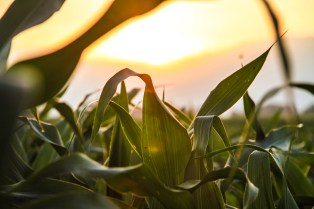
My colleague from York County, Jenny Rees provided a quick summary of bacterial leaf streak (BLS) which has been confirmed in corn in various parts of the state.  Lesions can look similar to other diseases such as gray leaf spot (GLS). The major difference between BLS and GLS is that the lesion margins of bacterial leaf streak are wavy whereas they are blunt in gray leaf spot.  It’s important to tell the difference between the two since fungicides will not control bacterial diseases.  On CropWatch at http://cropwatch.unl.edu, there is an article showing a number of corn diseases and how to identify them.  Be sure to check it out and when in doubt, you can always get a sample to your local Extension educator or the plant and pest diagnostic lab.

Tamra Jackson-Ziems also has a Youth BLS Survey and competition with cash prizes for BLS envelopeFFA Chapters, 4-H Clubs, or other youth groups that submit the most POSITIVE samples from different fields.  Groups submitting 3 or more positive samples also get a certificate identifying them as “Certified Crop Disease Detectives!”  Youth packets can be be obtained from Tamra directly by emailing her at:  tjackson3@unl.edu

Youth

A Grand Champion Fair Experience

img_0797.jpg

As I write this, the Clay County Fair is in full-swing and the Fillmore County Fair about to begin, so this article highlights some interesting findings about what youth enjoy the most during a county fair experience. Every county fair, provides 4-H youth across the state with an opportunity to showcase the project work that they have completed throughout the year and to receive recognition for their efforts.

Model rockets that have been assembled from basic materials, cookies that will make your mouth water, sheep that are sheared for the big show, and many other exhibits can most likely be seen at your local county fair. Through these projects, youth develop self-confidence by experiencing success at solving problems and meeting challenges. County fairs provide a safe environment for youth to make mistakes and to receive constructive feedback, not only through competition, but also through their participation.

4-H youth look forward to the county fair because of the fun that this time of year brings. In a recentimg_5911.jpg study, many youth reported that they are motivated each year to participate in the county fair because they have fun. Whether showing a market steer, modeling a garment in the Fashion Revue, or exhibiting a GIS map of a local park, youth across all project areas compete and participate in the county fair activities because they are fun.


Youth also shared that “achieving goals,” “spending time with friend,” and “teamwork” contributed toward their engagement in the annual county fair. Recognition, competition, fair premiums, and qualifying for the state fair ranked low in comparison to these other motivating factors.

Important educational youth development opportunities also exist within the 4-H fair experience. By completing 4-H projects and activities at the local fair and throughout the year, youth are mastering skills to make positive career and life choices. It is important for youth to discover in a non-threatening setting that certain vocations may or may not be right for them.

Give 4-H youth at your local county fair a grand champion experience by providing constructive feedback and encouragement. Your words and actions will allow youth to discover their own personal strengths and weaknesses through their 4-H project areas, all while having fun in a positive county fair environment.

Source: Eric Stehlik, Extension Assistant in Saline County. This article comes from a series of resources developed by 4-H Youth Development professionals.

Livestock, Youth

Sportsmanship & Youth Development

Webster’s Third International Dictionary defines sportsmanship as “conduct becoming to an individual involving fair and honest competition, courteous relations and graceful acceptance of results”.  Sportsmanship starts with parents teaching their youth how to accept a win or a loss, although in the 4-H youth development program, even if the youth receives a red ribbon, nothing is lost as long as some basic knowledge and skills were gained. Too often in our society we focus on the tangible results of a ribbon or trophy and don’t think about the process that youth went through to achieve the end results and what was learned from that process.

iStock-171344495.jpg

I often use the example that as a youth, I’ll never forget receiving a red ribbon for a market heifer; I was disappointed, but will never forget my dad asking me, what the judge said in the comments.  After we talked it over, I realized his reasoning and was able to understand the type of animal I should select the following year. That was a lesson I’ll never forget.  My parents instilled the value of hard work into my sister and I and any animal we showed we bought with our own money to build a small cow/calf herd or they came from our own herd. We rarely had the award-winning animal and were extremely excited to even receive a purple ribbon. The learning that occurred, memories and fun we had were just as valuable than if we would have received a trophy or plaque.  For these reasons, it is really rewarding to work with youth who are happy with any ribbon placing- white, red, blue or purple. It really is just one person’s opinion on one particular day!

The 4-H Program focuses on providing positive youth development and developing young people as future leaders. A ribbon or plaque placing does not achieve this; rather it is the process, skills and effort that went into the project.  It is also important to mention that the entire 4-H program extends beyond the county fair and is done through educational workshops, career portfolios, leadership experiences and much more and is a year round program.

IMG_8478
As a first-time 4-H’er, one of the things I try to emphasize to my daughter is the importance of doing the best you can, learning and having fun! It can be disappointing to put a lot of work into a project and not receive champion or desired results, but the sooner she learns that you can’t always win, the better!

Three reasons adults and teen leaders should be concerned with developing sportsmanship are:

  1. Youth programs are easier to conduct and are more positive experiences for everyone involved if good sportsmanship is demonstrated.
  2. The development of sportsmanship is an important part of youth development. Youth and adults who develop and show good sportsmanship get along better, and are much more successful on a long-term basis in becoming self-directing, productive, contributing, competent, caring, capable adults, than are those whose behavior is un-sportsmanship-like.
  3. Sportsmanship is one of the key elements of civilized society. Those who think of the “big picture” know the reasons for developing sportsmanship extend beyond an individual, a community, or a program. When societies allow sportsmanship to decline, their civilizations also decline.

As we get ready for anotherCounty Fair, let’s be reminded that the end result is not the ribbon placing, but the skills that each youth learned!

Source: Kathryn J. Cox, Ohio Extension 4-H Specialist, Youth Development, Developing Sportsmanship- A Resource For Preparing Youth And Their Families For Participation in Competitive Programs and Events, 2006

Programming, Youth

Fair Season

For many 4-H and FFA youth, projects have been well underway since the first of the year and beyond. 4-H and FFA youth enroll in projects, utilize curriculum and resources designed to help youth grow essential skills needed to enter exhibits at the fair which showcase their knowledge and skills gained. Extension staff and 4-H volunteers have offered numerous educational workshops for youth in a wide variety of topics from computer coding, cupcake decorating, plant science investigation, sewing, fishing and others. Youth have also participated in public speaking, a culinary food challenge and soon the clothing and fashion day.

Probably the most visible part of the 4-H youth development program is the county fair. The fair provides youth the opportunity to showcase their exhibits with community members. In our area, fairs are rapidly approaching.

The 2017 Clay County Fair will be July 6-9, 2017 in Clay Center, NE and the 2017 Fillmore County Fair will be July 9-15, 2017 in Geneva, NE.

Crops, Livestock

Reminders for Farmers

For those you receive the electronic Farm Service newsletter, the information below is just a reminder to:

  • CERTIFY YOUR PLANTED ACRES:  If you do not have a certification appointment, call and get it scheduled. The deadline to complete 2017 acreage reporting is July 17.
  • ARC/PLC CONTRACT SIGNATURES DUE AUGUST 1:  Producers are reminded that the deadline to return signatures for the 2017 ARC/PLC farm safety net program is August 1. All signatures must be returned by this date to ensure payment for the 2017 crop year.

FSA Loan Servicing, Other Organization Resources Available During Financial Stress

money bag
Credit: bubaone

There are options for Farm Service Agency loan customers during financial stress. If you are a borrower who is unable to make payments on a loan, contact Ben Herink, your local FSA Farm Loan Manager, to learn about the options available to you.

Farmers and ranchers also can access assistance through other entities in Nebraska that offer services during financially challenging times. The Rural Response Hotline provides referral and support services for farmers, ranchers and rural residents and their families. The number to call is (800) 464-0258.

The Nebraska Department of Agriculture manages the Negotiations Program, which offers mediation services for agricultural borrowers, creditors and USDA program participants. Through this program, participants also can access free one-on-one education on agricultural financial and legal matters. For information, call (800) 446-4071.

iStock-619536964.jpg
Credit: Alex Belomlinsky

Nebraska Extension has developed an initiative called “Strengthening Nebraska’s Agricultural Economy” that features a series of educational materials on the Extension Crop Watch and Beef websites. The materials are designed to provide producers with ideas for reducing input costs, increasing efficiencies and improving profitability. Find the materials at CropWatch.unl.edu and Beef.unl.edu.

Crops, Irrigation

NE Ag Water Management Network

Agricultural irrigation system watering corn field in summer

If you have irrigated ground and are looking for ways to save money, reduce nutrient loss and use less water, consider joining the Nebraska Agricultural Water Management Network, or NAWMN.  Evaluation results have shown a one to two-inch savings of irrigation since it’s inception. The Network has been having significant impacts on both water and energy conservation due to farmers adopting information and implementing technologies in their irrigation management. The cost of applying an additional 2 inches of water is going to vary depending on your depth to water, system pressure, and equipment costs, but could easily run from $10 to $30 per acre.

irrigatepump

To determine the actual cost, I recommend using the IrrigateCost app, developed by Nebraska Extension. The app, which is available for both Apple and Android products, allows users to input their specific information such as acres irrigated, pumping lift, system PSI, pump and pivot life, and inches applied as well as related costs such as for the well and engine, labor, energy, district fees, and taxes. The app then calculates total irrigation, total ownership, and total operating costs. It also breaks down costs by irrigation well, pump, gear head, pump base, diesel engine and tank and system and calculates per acre annual cost and per acre-inch annual cost.

A couple of the tools the NAWMN uses are ETgages® or Atmometers which mimic crop evapotranspiration or ET and Watermark soil matrix sensors which measure soil matric potential or the energy required to remove water from the soil. These two tools have really worked well and have made irrigation management much easier than those gut feelings.  The more information you have the better decisions you can make!

If you are in the NAWMN, and have not already installed your equipment, be sure to remember to start the soaking/drying cycle on your Watermark sensors to be sure they work! It’s also important to replace the #54 alfalfa canvas covers and wafers on a regular basis at the start of each season. For more information, go to: http://water.unl.edu/web/cropswater/nawmdn.

Once you have your ETgage out, I hope you will post your weekly readings to the Nebraska Ag Water Management Network (NAWMN) website. As a reminder, once you are on the main screen, you can login to your site by entering your site name and password and clicking on “Login.” Once you have logged in, you will be taken to your weekly data from past weeks, including last year. To enter your weekly data, click on the “Add new ETgage reading” link which will take you to the data entry page where you can enter your growth stage, rainfall, and ETgage change.

If you’ve forgotten your site name or password, please contact Aaron Nygren at anygren2@unl.edu or 402-352-3821.

Source: UNL CropWatchwebsite

Crops, Programming

Weed Management/Cover Crops Field Day

During the summer, our crops extension team has some great field days to share research and management strategies to farmers. One of those opportunities to learn more about weed management and cover crops will be on June 28 at the South Central Agricultural Laboratory near Clay Center.  There is no charge for the field day with registration beginning at 8 a.m. and field day from 8:30 a.m.-12:15 p.m.  Lunch will be served which will then be followed by a cover crop field day from 1-3 p.m.  marestailThe weed management field day will include on-site demonstrations of herbicides for weed control in corn, popcorn, and soybean as well as a view of ongoing cover crop research. An early morning demonstration will focus on weed control in soybeans followed by a demonstration of projects for weed control in corn, popcorn and sorghum. Onsite demonstration of cover crop research will highlight the afternoon session.soybeans

Soybean demonstrations will include an unbiased comparison of herbicide programs of different companies for weed control in Roundup Ready, Liberty Link, and Xtend soybeans.  Weed control and crop safety in Roundup Ready 2Xtend Soybean, Balance Bean, Bolt Soybean, and Conventional Soybean will also be discussed.

Corn demonstrations include an unbiased comparison of several herbicide programs by different companies for weed control in glyphosate- plus glufosinate-resistant corn. Effect of row spacing and herbicide on weed control in popcorn, DiFlexx DUO for weed control in corn, INZEN sorghum, and injury symptoms of dicamba or 2,4-D on a number of crops will also be discussed.

Afternoon demonstrations of cover crop research will include cover crops in corn and soybean systems including planting dates, plant populations, and maturities. Participants will walk cover crop experiments planted in corn and/or soybean.  Cover crop pluses and minuses: Bio-mass, nitrogen for the following crop, nitrates, erosion, water use, and crop yields will also be discussed.

Certified Crop Advisor (CCA) continuing education units will be available.  There is no cost to attend the field day, but participants are asked to register at http://agronomy.unl.edu/fieldday.  The South Central Agricultural Laboratory is 4.5 miles west of the intersection of Highways 14 and 6, or 12.4 miles east of Hastings on Highway 6. GPS coordinates of the field day site are 40.57539, -98.13776.

Other programs relatively close to our area include:
June 22:  Cover Crop Conference, 2 p.m., Holthus Convention Center York.
July 18:  Crop Management Diagnostic Clinic:  Soil Health, ARDC (now ENREC) near Mead