Irrigation

Scheduling the Last Irrigation

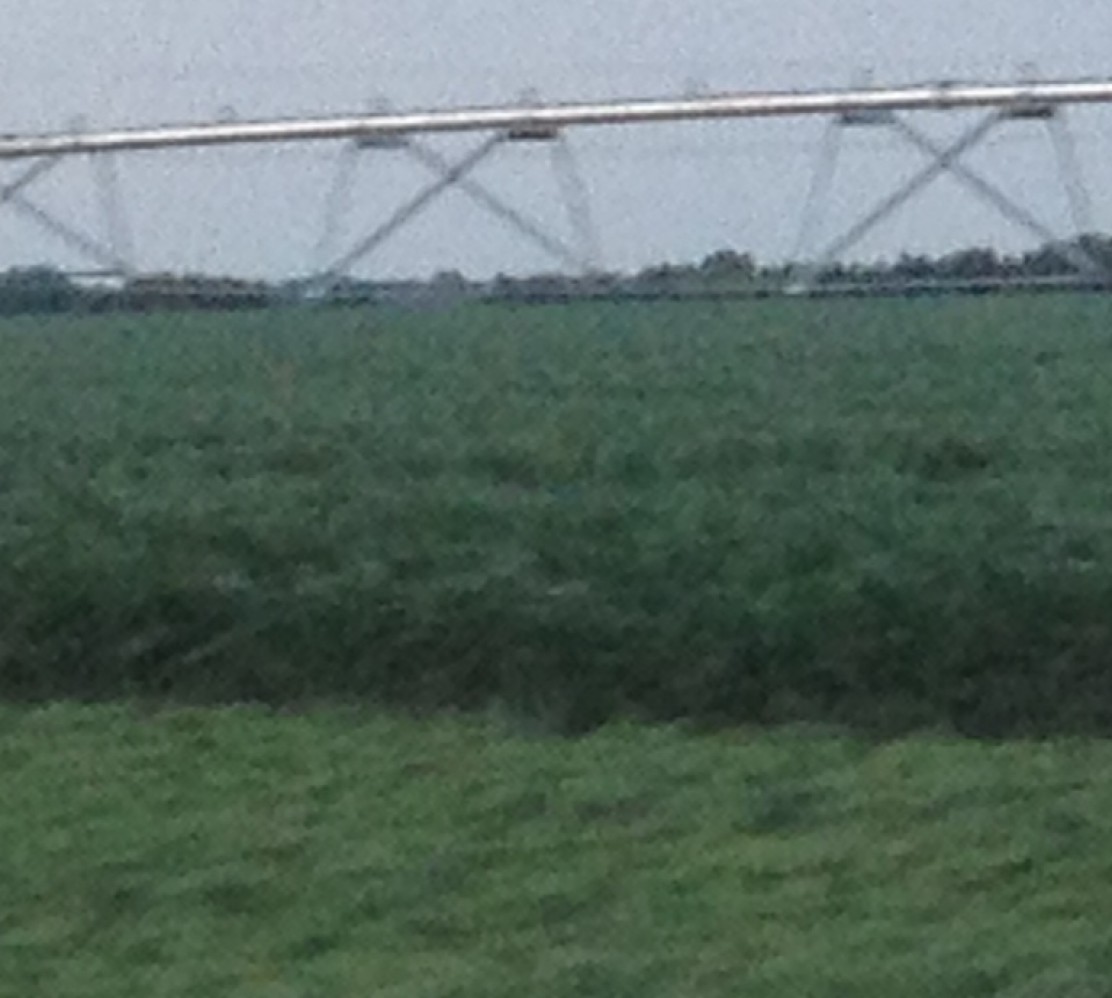
For some corn and soybeans in our area it will soon be time to start thinking of the last irrigation. Producers with watermark sensors should be checking them to see how many inches they have to carry plants through to physiological maturity. Corn that hasn’t approached full dent and soybeans in the R5 stage has a coefficient of 1.1. To estimate crop water use we multiply 0.8 times 1.1 for a total crop ET of 0.88 inches a week or about 0.13 inches a day.cropped-cornpivotblogpic1.jpg

As the crop begins to reach maturity, the crop water use slows. For example, corn at ¼ milk line requires 3.75 inches until maturity, while corn at ½ milk line only needs 2.25 inches. Soybeans at R5 (beginning seed enlargement) need 6.5 inches while soybeans at R6 (end of seed enlargement) need 3.5 inches.

Generally speaking, a silt loam soil can hold 2.2 inches per foot or 8.8 inches in the top 4 feet. The target is to have 60% available soil moisture depleted at the end of the season. My colleague from York, Gary Zoubek provided a good example, which relates to most soils in the area. His example uses a silt loam soil. If we draw down the available soil water to 60%, we would have 0.88 inch of water per foot of soil or 3.5 inches remaining in the top four feet of soil. Even though you have 3.5 inches remaining, if you draw the soil water past 60%, it can affect yields; therefore, our target is to have 60% depleted at the end of the season. This will leave room to capture 5.28 inches of water during the off-season from rain or snowfall.

For more information on the last irrigation, Predicting the Last Irrigation of the Season is available online or by stopping in the office.

Uncategorized

4 tips on finding and reading scientific papers…

A great article to find information from credible sources!

lindsaychichester's avatarAgricultural with Dr. Lindsay

People quote a lot of “research” on the internet, however, the sources are generally not peer reviewed or from reputable resources.

  1. A super handy tip when trying to find peer reviewed or credible information is to type what you want to look up and then follow it with site:edu. For example, this would look like heat stress site:edu. Adding the site:edu ensures that research which has been peer reviewed or research done by a university come up first in your search. These are generally seen as more credible than popular media and various websites. Also, it also puts you in touch with people who are “experts” on a topic, so you could potentially follow up on a topic.
  2. Another fun fact… If Google is your go-to for looking up a topic, then go to Google scholar.Google scholar “provides a simple way to broadly search for scholarly literature…

View original post 236 more words

Programming

Husker Harvest Days

Before you know it, September will be here; for many in agriculture, that means learning about new technologies and services at Husker Harvest Days near Grand Island, NE! As a youth, our FFA Chapter had the opportunity to attend, which was a huge eye-opening experience to the careers available in the agricultural industry. Now, as an extension educator for Nebraska Extension I try and assist by working at the IANR building. It still is an eye-opening experience to learn or experience emerging technologies, etc. This year’s Husker Harvest Days is Sept. 15-17.HHDwordle
“Successfully weathering extremes” is the theme for Nebraska Extension exhibits dealing largely with planning for potential weather extremes from climate change on the farm and ranch, as well as climate change-induced challenges and opportunities in our everyday lives. Ronnie Green, NU Vice President, IANR Harlan Vice Chancellor and Interim Senior Vice Chancellor for Academic Affairs at UNL points out, “This is such an important topic on so many levels that we will examine it from many angles over both this and next year’s Husker Harvest Days shows. It’s part of our focus on critical and groundbreaking research and initiatives that are important not only to all Nebraskans, but nationally and globally, as we enhance our reputation as a leader in critically important research.”

UNL’s Husker Red steel building at Lot 321 will allow participants to receive the latest information on the challenges and opportunities facing the economics of agriculture, including variability and extremes in planning successful agricultural operations. They will view individual exhibits focused on: The Nebraska Climate Report’s take home messages; forage alternatives for improving the resiliency of Nebraska beef systems; planning for climate resilient irrigation systems; designing climate resilient confined livestock systems; perennial forages for biofuels production; use of cover crops to improve resilience to higher intensity precipitation; the role seasonal forecasts will play in future agricultural decisions; and the role of corn yield projections based upon climate/weather in agricultural decisions.

UNL’s adjacent open lots, east of Husker Red building, will feature living exhibits of demonstration cover crops, plantings of switch grass for ethanol production and other uses, technologies for conserving water use in irrigation, and shade systems for reducing heat stress in feedlots. Also inside the Husker Red building, IANR staff will be available to answer questions on a variety of extension and research-related topics, provide copies of helpful NebGuides, and direct those needing further help to extension experts in their local area.

IANR has been part of Husker Harvest Days for nearly 40 years, since the very first show in 1978. “We enjoy the opportunity to bring the University of Nebraska-Lincoln to Husker Harvest Days and seeing all the people that stop in to see us each year,” Green said. “We always appreciate the opportunity to visit with stakeholders about what they see as Nebraska’s main challenges and opportunities. We are your land-grant university,” he said.

Source: Steven W. Ress, communications coordinator, Nebraska Water Center, Robert B. Daugherty Water for Food Institute, (402) 472-3305, sress@nebraska.edu
Youth

Sportsmanship & Youth Development

Webster’s Third International Dictionary defines sportsmanship as “conduct becoming to an individual involving fair and honest competition, courteous relations and graceful acceptance of results”. Sportsmanship starts with parents teaching their youth how to accept a win or a loss, although in the 4-H youth development program, even if the youth receives a red ribbon, nothing is lost as long as some basic knowledge and skills were gained. Too often in our society we focus on the tangible results of a ribbon or trophy and don’t think about the process that youth went through to achieve the end results and what was learned from that process.

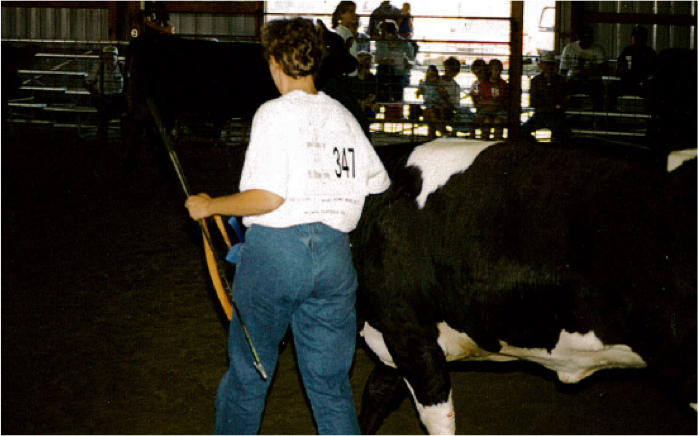
I enjoyed showing cattle and while purples were exciting to receive, the ribbon placing didn't matter; it was the learning experience and fun had with friends!
I enjoyed showing cattle and while purples were exciting to receive, the ribbon placing didn’t matter; it was the learning experience and fun had with friends!

I often use the example that as a youth, I’ll never forget receiving a red ribbon for a market heifer; I was disappointed, but will never forget my dad asking me, what the judge said in the comments. After we talked it over, I realized his reasoning and was able to understand the type of animal I should select the following year. That was a lesson I’ll never forget. My parents instilled the value of hard work into my sister and I and any animal we showed we bought with our own money to build a small cow/calf herd or they came from our own herd. We rarely had the award-winning animal and were extremely excited to even receive a purple ribbon. The learning that occurred, memories and fun we had were just as valuable than if we would have received a trophy or plaque. For these reasons, it is really rewarding to work with youth who are happy with any ribbon placing- white, red, blue or purple. It really is just one person’s opinion on one particular day!

The 4-H Program focuses on providing positive youth development and developing young people as future leaders. A ribbon or plaque placing does not achieve this; rather it is the process, skills and effort that went into the project. It is also important to mention that the entire 4-H program extends beyond the county fair and is done through educational workshops, career portfolios, leadership experiences and much more and is a year round program.

Three reasons adults and teen leaders should be concerned with developing sportsmanship are:

  1. Youth programs are easier to conduct and are more positive experiences for everyone involved if good sportsmanship is demonstrated.
  2. The development of sportsmanship is an important part of youth development. Youth and adults who develop and show good sportsmanship get along better, and are much more successful on a long-term basis in becoming self-directing, productive, contributing, competent, caring, capable adults, than are those whose behavior is un-sportsmanship-like.
  3. Sportsmanship is one of the key elements of civilized society. Those who think of the “big picture” know the reasons for developing sportsmanship extend beyond an individual, a community, or a program. When societies allow sportsmanship to decline, their civilizations also decline.

As we get ready for another Fillmore County Fair, let’s be reminded that the end result is not the ribbon placing, but the skills that each youth learned!

Source: Kathryn J. Cox, Ohio Extension 4-H Specialist, Youth Development, Developing Sportsmanship- A Resource For Preparing Youth And Their Families For Participation in Competitive Programs and Events, 2006

Uncategorized

Happy Independence Day!

Wishing you and yours a Happy 4th of July weekend!  Here are some interesting facts I found on CNN’s website about Independence Day in the United States.

  • America’s 239th Independence Day will be celebrated on Saturday, July 4, 2015.

  • Fireworks sales by wholesalers totaled $508.1 million and sales by retailers totaled $369.4.(Census, 2012)

  • Of the $3.6 million spent on the purchase of U.S. flags, $3.5 million was spent on U.S. flags made in China. (Census, 2014)
  • The Fourth of July is the most popular holiday for grilling out (68 percent), followed by Memorial Day (52 percent) and Labor Day (51 percent). (Hearth, Patio & Barbecue Association, 2013)
Uncategorized

Yard and Garden: Survey

Area listeners of the Yard and Garden Show, here is your chance to be entered for a drawing to share your evaluation!

Nicole Stoner's avatarPlants and Pests with Nicole

Yard and Garden Green LogoIf you are a listener to the Yard and Garden show on KUTT 99.5 FM or online or if you are an avid reader of the blog Q&A, please fill out the 2015 Yard and Garden Survey. When you fill out the survey and put down contact information, you will be entered into a drawing for a gift of University of Nebraska-Lincoln goodies, including 2 shopping bags. Your information will not be redistributed or used for any other purposes than to improve the show and to pick a winner for the prize and your contact information is not linked to your answers. To complete the survey, go to: go.unl.edu/7cza

View original post

Crops, Programming, Youth

Connecting Youth with Crops

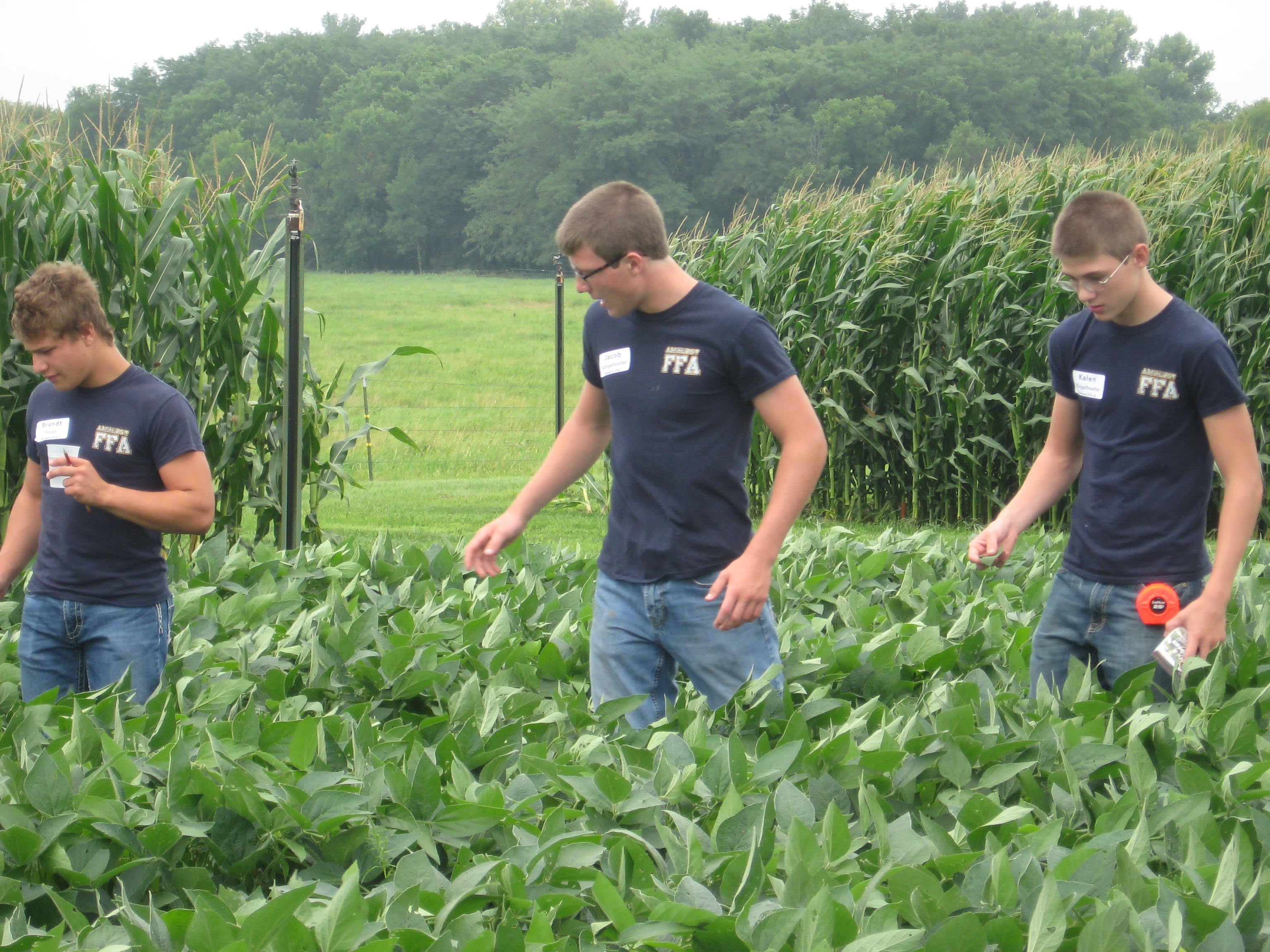
Nebraska Extension is pleased to present the second annual Crop Scouting Competition for Nebraska youth. Youth interested in crops have the opportunity to learn about crop growth & development and basic crop scouting principles.

Don’t know a lot about crops? Ask a local agronomist to assist by providing a short lesson on crop production. You can have the agronomist meet with youth a little during each meeting or outside of the meeting. This is one way to engage those youth interested in crops.IMG_4473

This contest will be held at the ARDC near Mead, Nebraska on August 4, 2015. The event will include both indoor and outdoor events. Teams of junior high and high school students (those completing 7-12th grades) from across Nebraska are invited to participate.

Clubs or other organizations may enter a team composed of three or four participants. An adult team leader must accompany each team of students. Team leaders could be FFA advisors, crop consultants, extension staff, coop employees, etc.

Top-scoring teams win prizes: $500 for first, $300 for second, $250 for third and $100 for fourth place.

Teams will be expected to know the basics of scouting corn and soybean fields. This includes crop staging; looking for patterns of crop injury; disease, insect and weed seedling identification; etc. Other topics many include but are not limited to, pesticide safety, nutrient disorders, and herbicide injury.

More information about the crop scouting competition and instructions on how to register a team are available online at cropwatch.unl.edu/youth. Click on the link that says, “Crop Scouting Competition”.

Teams must be registered by July 15. Registration is $50/team; the fee will be refunded when the team attends the competition. Payment by check is due along with the registration form by July 15. This program is sponsored by DuPont Pioneer, the Nebraska Soybean Board and Nebraska Extension.

Crops, Programming

Weed Control Field Day

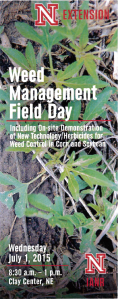
View on-site demonstrations of new weed control technologies and herbicides at the Weed Management Field Day on July 1 at Clay Center. The event, which will be held at the South Central Ag Lab (SCAL), begins at 8:30 and ends at 1 p.m. after a free lunch.

The first morning tour looks at weed control in corn. Demonstrations of new technologies and tours of weed control projects will include:weed field day

  • Comparison of Herbicide Programs for Weed Control in Corn
  • Herbicide Programs in 2,4-D plus Glyphosate-Resistant Corn (Enlist™)
  • Dose Response of Acuron™ Applied PRE for Weed Control in Corn
  • Anthem® Maxx Applied PRE in Corn
  • Evaluate Weed Control and Crop Response of Solstice™
  • Corvus® Followed by DiFlexx™ or Laudis™ plus DiFlexx for Weed Control in Corn

The second tour, starting at 10:30 a.m., includes demonstration of new technologies and herbicides for weed control in soybean, including:

  • Comparison of Herbicide Programs for Weed Control in Soybean
  • Herbicide Programs in Dicamba plus Glyphosate-Resistant Soybean
  • Herbicide Programs in 2,4-D plus Glyphosate-Resistant Soybean (Enlist™)
  • Weed Control in Isoxaflutole-Resistant Soybean (Balance® Bean)
  • Authority®/Anthem®/Marvel™ for Weed Control in Soybean
  • Importance of Soil Residual Herbicides for Weed Contol in Soybean

For more information about this event, see the Program Flyer at cropwatch.unl.edu or contact Amit Jhala , 402-472-1534. Three CEU credits will be awarded. Pre-registrations are requested for a lunch count. Preregister at agronomy.unl.edu/weedresistmgt.

Horticulture

Lawn & Tree Tips

Nebraska Extension offers excellent resources on varying horticultural topics. One of those sources is an online, Horticultural Update newsletter at http://hortupdate.unl.edu/. The most recent articles had lots of great information, so I’ve highlighted two of those in this week’s column.

First, I’m sure you’ve noticed this has been perfect condition for weeds to take over landscapes and gardens in a hurry. The wet weather has also encouraged an increase in broadleaf weeds in turf. Control involves good management to promote a dense, vigorous turf that competes with weeds. Use a tall mowing height of three inches to reduce seed germination and to shade out weed seedlings.

September is the best month to control broadleaf perennial weeds with herbicides. If herbicides are used during summer, read label directions for temperature ranges within which to apply. Hot temperatures will increase damage potential to nontarget plants. Whenever used, spot applications are best as they result in the smallest amount of herbicide being used; saving money and protecting the environment. Read and follow label directions. Labels are the law and herbicides should not be used outside of recommended temperature ranges.

Another thing to watch for is bagworms hatching on evergreens trees. Monitor evergreens for young bagworms. At this time of year, they can be as small as one-fourth inch long. Bagworms are small, brown, triangular-shaped and covered with needles for camouflage.  At this size is the time when products like Bacillus thuringiensis will be most effective in controlling bagworms.

Finally, mosquitoes are awful this year! Public Health Solutions has brought us some mosquito dunks, which can reduce mosquito number by putting them in landscape ponds, livestock tanks and other sources of standing water. Standing water areas can be treated with a biological larvicide. Bacillus thruingiensis israelensis (Bti) or Bacillus sphaericus (Bs) are naturally occurring soil bacterium that control mosquito larvae by disrupting the gut receptors and causes the larvae to stop eating anddie. Biological larvicides are safe to use in water of livestock troughs. Stop in to pick up your free sample of mosquito dunk!

(Source: NE Extension HortUpdate, 2015)

Crops

Managing Windrow Disease In Alfalfa

Recently I received an email from Bruce Anderson about ‘windrow disease’ which I’ve noticed so thought I’d share his information in this week’s column. Windrow disease — that’s the name he gives to the striped appearance in fields where alfalfa windrows remained so long that regrowth was delayed.  Usually it’s due to rained on hay and sometimes, insects.

Windrow disease presents special challenges.  Weeds often invade, requiring spraying to maintain quality and protect stands.  During the next growth period, plants that were not smothered regrow rapidly, while plants underneath the windrow suffer delays.  Part of the field often will begin to bloom while windrow-stressed plants are still short and tender.  So when do you harvest?  When the first plants begin to bloom or do you wait until injured plants are ready?

Bruce suggests using two factors to tell you when you should cut — the health and vigor of your stand and the nutrient needs of your livestock.  For example, is your alfalfa healthy and re-growing well?  If not, wait to cut until stunted plants begin to bloom so you can avoid weakening them even more.

But, if your alfalfa is in good shape, then cut when it will best meet the needs of your animals.  Dairy cows need alfalfa that is cut early, so harvest when the first plants begin to bloom.  Regrowth of injured plants may be slow after cutting, but this sacrifice is needed for profitable milk production.  Beef cows, though, do not need such rich hay.  So if the hay will be fed to beef cattle, let stunted plants recover, and then cut when they are ready to bloom.

Hopefully, by next cut, growth will be more uniform, plants healthy, and production back to normal.