Uncategorized

Positioning Your Business for Agriculture’s Next Decade

The next Farmers & Ranchers College program will be held December 9, 2013 at the Opera House in Bruning, NE starting at 1:00 p.m.  This program will feature Dr. David Kohl, Professor Emeritus with the Dept. of AAEC, VA TECH and will discuss the wild world of global and domestic economics with “black swans” or unusual events around every corner.  Dr. Kohl will discuss the major game changers influencing the agriculture landscape along with a quick tour of global economics and how it is Logoinfluencing land values, commodities, and input costs.  Is agriculture in an asset or credit bubble?  What can you do financially in this business environment to capitalize on the economic volatility?  Dr. Kohl will give tips on management practices that will help you think globally but act locally in strategic and everyday decision-making.  

Livestock, Uncategorized

Thanksgiving Turkey Trivia

As we celebrate everything we are thankful for, remember to thank the farmers and ranchers for providing a safe and healthy food source for all of us to enjoy. Test your knowledge with this trivia about turkeys.

T or F?  A turkey hen lays an egg and 28 days later a baby turkey is born. TRUE

T or F?  The turkey female is known as a hen and male is known as a tom. TRUE thanksgiving-turkey-clipart-1

T or F?  Turkeys are raised for 8-20 weeks depending on desired weights by consumers. TRUE

T or F?  There are several major meat animals native to North America, including the turkey. FALSE. The turkey is the only major meat animal native to North America.

T or F?  Thanksgiving is the holiday most turkey are eaten, followed by Easter. FALSE .  The National Turkey Federation (NTF) estimates that approximately 45 million turkeys are eaten at Thanksgiving, 22 million at Christmas, and 19 million at Easter.

T or F?  Nebraska Turkey Growers Cooperative in Gibbon, Nebraska, the state’s only turkey processing plant, produces more than 55 million pounds of turkey a year. TRUE

Wishing you and yours a happy Thanksgiving!!!

Source: Nebraska Department of Agriculture

Crops, Programming

Farm Leasing

Landlord/Tenant Cash Lease Workshop

On November 20, 2013 a Landlord/Tenant Cash Lease workshop to help landlords and tenants develop a lease that is right for both parties while maintaining positive farm lease relations will be held at the Community Building in Shickley, NE starting at 9:00 a.m. The Nebraska Soybean Board and North Central Risk Management Agency sponsors this free workshop with lunch provided by the Farmers & Ranchers College and additional presentations continuing until 3:00 p.m. Afternoon presentations include information on programs available for producers, including information on the Beginning Farmer program.

As crop budgets tighten, it is more important than ever to learn the latest information about leasing options and issues. Please call the Fillmore County Extension Office at (402) 759-3712 to preregister.

Relatives and Farm Leasing

Hopefully you plan to attend the program described above, but if you were unable to participate, I’ve included excerpts of a recent CropWatch article written by Allan Vyhnalek, Extension Educator in Platte County. Clearly dealing with relatives can be one of the hardest issues to address as it relates to farm leases. However, with good communications and a written lease agreement, you can set up relationships that are not hard on the family.

First, have all leases in writing. This cannot be stressed enough. The handshake lease made by grandparents and great uncles and aunts does nothing but create suspicion and confusion because when that generation passes on, no one knows exactly what the agreement was.

Next, understand there are ownership costs for that land that the tenant is probably just providing without compensation. Items like: mowing road ditches, spraying weeds, controlling volunteer trees, maintaining terraces, maintaining buildings, grading and rocking driveways, and keeping fences up are just a few of the landowner costs that in many cases are just taken care of by the tenant.

In some cases, landlords think they don’t receive enough cash rent from a relative. When we discuss the land ownership costs and how they are taken care of, the landlord quickly realizes that the tenant is providing the labor and cash investment in those items. If the rent isn’t the going “coffee shop” rate, the landowner is simply recognizing that the tenant is receiving a discounted rent as compensation for their efforts to keep the land and property in good order.

The rent to a relative doesn’t have to be at the ‘”top” of the range, but it should be fair. What one family does will be very different from another family. Tenants need to communicate clearly by sharing information about the farm. Information like actual yields and prices received will go a long way to building good trust for the family to continue the leasing arrangement for another generation.

Vyhnalek summarizes the most compelling reason to have a lower rent for a relative is that they are relatives. Especially if we have younger folks coming to replace our older generation, this provides an opportunity to help that generation establish themselves. Utilizing the land resource properly is a business, and the lease should be fair to both parties. With clear communication and having the lease in writing, most problems with lease terms can be minimized.

Programming

Rural Futures Institute

Last week I had the opportunity to attend the Rural Futures Conference held in Lincoln with people from all over the world with the common purpose of finding ways to revitalize rural America. The event opened up with a “Thomas Jefferson” discussing the important role agriculture has in today’s society. He emphasized how we need to bring the culture back into agriculture, meaning its okay to be proud of our rural roots and agricultural backgrounds. It is something we should be proud of and the huge role we have in feeding the world.RuralFutures

This was the second year for the Rural Futures Conference; the Rural Futures Institute’s vision is that it “will be an internationally recognized leader for increasing community capacity as well as the confidence of rural people to address their challenges and opportunities, resulting in resilient and sustainable rural futures.” Furthermore its mission is to build “upon the strengths and assets in rural Nebraska, the Great Plains, and globally, the RFI, through a culture of innovation and entrepreneurship, will mobilize the resources and talents of the University of Nebraska and its partners, including community partners, to create knowledge and action that supports rural people and places to achieve unique paths to their desired futures.”

This year’s conference theme was “beyond boundaries”. This was to remind conference participants that it is essential to step out of our boundaries and comfort zones to make huge strides that are positive for rural communities. Moving out of one’s comfort zone or boundaries is not an easy feat for most people; in fact most people’s natural instinct is to dislike change. In order for the RFI to be successful, however it is crucial that we create synergistic opportunities that allow collaboration to address the complex opportunities and challenges rural communities face.

Also at the conference we were challenged to consider how one person’s “half-baked idea” along with our own “half-baked idea” could create real opportunities or successes. In other words, teamwork will be essential not only for us to solve many world problems but also to reverse the population decline in rural areas. I selected to attend the session on how to engage youth in rural communities in which we brainstormed challenges and opportunities for the younger generation. It was refreshing to have some current college students in attendance and listen to their perspectives. Next steps with the RFI include moving these ideas into action and forming groups with similar interests. There is a RFI grant system, which will also for funding some of the research and outreach opportunities as well.

For more information on the Rural Futures Institute website.

Crops, Livestock

Grazing Corn Stalks

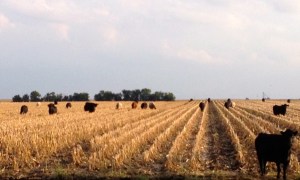
As I drive to work every morning, I go past a field or two being grazed by cattle. Bruce Anderson, UNL Extension Forage Specialist recently wrote an article on grazing corn stalks, which I’ve included in this week’s column.  Grazing corn stalks during winter has many benefits.  It can save over a dollar a day per cow compared to feeding expensive hay.

photo 3

But, the way you manage grazing of stalks by your cattle can have a big effect on its success.  For instance, maybe you have a goal of feeding as little protein supplement as possible while winter grazing.  Then you must make sure you have enough acres of corn stalks so your cattle only need to select just the higher quality plant parts to eat.  And whenever the grain and husks are gone, move to a fresh field.  Or, maybe you use stalks just as a filler to keep cows from bellowing while you limit feed corn, distiller’s grains, or other more nutrient dense feeds.  Then high stocking levels and unrestricted access might be best.

Another strategy might be to stretch winter stalks as far as possible.  In that case, restricting animal access to small areas at a time by strip grazing until nearly all the grazable stalks are gone might be best.  Be careful, though, about forcing cows to eat the lower stalks.  They won’t get much protein or energy from lower stalks but the nitrate levels might be dangerously high.

Whatever your strategy, consider carefully what kind of nutrition animals are getting from the stalk pasture so you neither underfeed nor overfeed expensive supplements.

Also be sure to provide salt, calcium, phosphorus, and vitamin A free choice at all times.  And once all the grain is gone, cows need about half a pound per day of an all-natural protein to meet nutrient needs. Stalk season is here.  Make wise decisions to use them best.

Programming

Task Modifications Can Ease Arthritis Pain

On November 7, UNL Extension is partnering with other groups to conduct the Annual Fillmore County Health Fair to be held at the Fillmore County Fairgrounds from 11:00 – 6:00 p.m. Our office will have a booth with information to keep you healthy and other information our office provides. In addition, the Nebraska AgrAbility Project, which has a partnership with Extension, will be in attendance. One debilitating disease for farmers and ranchers that reduces mobility and physical strength is arthritis.

Sharry Nielsen, UNL extension educator says, “We estimate that there are over 50 million doctor-diagnosed cases of arthritis; to accommodate some arthritis related limitations people can consider some solutions.” One solution uses a very ancient technology, the wheel. Nielsen said that farmers and ranchers could use wheeled devices such as wheelbarrows to transport seed, feed and equipment, which eliminates heavy lifting and puts less stress on joints.

Nielsen suggested using ergonomically designed tools that are of a lighter weight to reduce joint stress, pain and fatigue. “Many farmers think that pain is just part of the job,” she said, “but there really are some steps that they can take to prevent the pain of arthritis.”

To help prevent arthritis, the Nebraska AgrAbility Project has created a brochure describing a series of daily stretches to help joint health. You can view the brochure and other information about arthritis, or stop by their booth at the Health Fair!

Programming

Farmers & Ranchers College Programming

The Farmers & Ranchers College was formed in January, 2000 with the purpose of providing high quality, dynamic, up to date educational workshops for area agricultural producers in south central Nebraska through a collaborative effort between business, industry and higher education leaders. Furthermore, the Farmers & Ranchers College will provide the tools necessary so that agricultural producers will be able to respond positively to these changes using a profitable decision making process.

Logo

The Farmers and Ranchers College is a unique opportunity to educate agricultural producers in south central Nebraska. Nearly four hundred producers from fourteen Nebraska counties and two Kansas counties participated in the 2012-2013 Farmers & Ranchers College programs.

Producers attending these workshops managed over 263,000 acres. Participants surveyed (n=28%) indicated an average of $21.00/acre of knowledge gained from participating for a potential impact of $5.5 million.

Contributions and support of area businesses allow participants to attend at no cost, however for programs that have meals, it is requested that people RSVP at least a week in advance for an accurate meal count by calling Fillmore County Extension at (402) 759-3712.

The Farmers and Ranchers College Committee consists of Fred Bruning of Bruning, Bryan Dohrman of Grafton, Sarah Miller of Carleton, Jennifer Engle of Fairmont, Ryne Norton of York, Jim Donovan of Geneva, Bryce Kassik of Geneva, Gordy Nuss of Sutton, and Brandy VanDeWalle of Ohiowa.

2013 -2014 Farmers & Ranchers College Programming

  • November 20, 2013* – Land Leasing Workshop– Shickley Community Building, 9:00 a.m. – 3:00 p.m. with registration at 8:45 a.m. (Information for young or new farmers will follow the leasing discussion.)
  • December 9, 2013 – “Positioning Your Business for Agriculture’s Next DecadeFeaturing Dr. David Kohl Professor Emeritus, Dept. of AAEC, VA TECH at the Bruning Opera House – Bruning, NE at 1:00 p.m.
  • January 28, 2014* – “Partners In Progress – Beef Seminar” at the U.S. Meat Animal Research Center near Clay Center from 10:00 a.m. to 3:30 p.m., registration at 9:30 a.m.
  • March 18, 2013* – Agricultural Water Update at the Fillmore County Fairgrounds in Geneva from 10 a.m. – 3:00 p.m. with registration at 9:45 a.m.

* Programs are provided at no cost to the public, but registration is appreciated for a meal count. Please call the Fillmore Co. Extension Office at (402) 759-3712 one week prior to the program or email me at brandy.vandewalle@unl.edu.

Crops

Wet Harvest Conditions

There were some places in the county that received over four inches of rain last week within 2 days, thus causing some very wet field conditions making it difficult for harvest. I heard that there were some minimal soybean losses and some dryland corn also down, but for the most part it sounds like we dodged the bullet and things could have been much worse. With all of the rainfall and some damaged crops, producers are most likely anxious to get back in the field. There are a few things one should consider however to determine if it’s worth harvesting while soil conditions are still wet. This week I’ve chosen to use some excerpts from an article, extension engineer Paul Jasa shared in a previous CropWatch article for farmers to consider.

As I write this, it will most likely be atleast a week before some fields dry up enough. Remember that if you leave ruts on the soil surface; compaction occurs below them and that compaction can impede the crop’s roots next season and increase runoff because of reduced infiltration. Compaction is the loss of pore space between soil particles and occurs when that space is squeezed out of the soil and reappears somewhere else, such as in the form of a rut. If a rut wasn’t formed, there was enough soil structure present to support the weight without causing additional compaction.

Jasa discusses the importance of controlling traffic and compaction and says that eighty to 85 percent of soil compaction damage is done with the first pass of the tires. If additional passes are made on the same traffic lanes, little additional compaction occurs. Because once a traffic lane has been driven on and the soil has been firmed up, subsequent passes have little effect on the amount of compaction. By using the same traffic lanes year after year, the soil structure and water infiltration in the untrafficked areas greatly improve.

Controlled traffic lanes improves traction, soil load bearing, and timeliness of planting and harvesting operations while minimizing potential yield reduction from compaction. Compaction is managed, not eliminated, and the area subjected to compaction is minimized. The concept is to separate traffic zones from root zones. Controlled traffic keeps compaction where it is less detrimental to root development and uptake of nutrients and water. Fertilizer placement and furrow irrigation practices can be modified as these traffic zones are established and the traffic lanes are known.

To minimize wheel compaction at harvest time, grain carts should be following the same tracks as the combine. A lot of grain cart drivers think they should move over a few rows and spread out compaction, but this will only compact more of the field. Likewise, grain trucks shouldn’t be driven in the field as the axle loads and tire pressures are not suitable for soils.

If ruts are cut at harvest, wait until the soil is dry to smooth them out to avoid causing additional compaction. This smoothing operation may be a light tillage operation next spring before planting. Deeper tillage in the spring will usually cause more compaction as the soil is wet and the tillage will break up soil structure.

To fracture the compaction in the ruts from this year’s harvest, a producer may have to wait until next fall before the soil is dry enough. However, often the compaction in the bottom of the ruts extends deeper into the soil than most producers will be able to till. This is a case where prevention is far more effective than the cure. It’s best to build soil structure and not drive on wet soils if possible. Controlled traffic, no tillage, and cover crops will all help build soil structure and reduce compaction concerns

(Source: Jasa, Paul. Avoiding Compaction at Harvest, October 13, 2006)

Uncategorized

Uninvited House Guests

You are sitting at home and all of a sudden a little gray rodent with relatively large ears and small black eyes scurries across the room!   It is about 1/2 ounce in weight and if an adult 5 1/2 to 7 1/2 inches long, including its 3 – 4 inch tail.  Of course, you must know by now that I am describing a house mouse.  The house mouse is considered one of the most troublesome and economically important rodents in the United States.  They can cause damage to property and transmit diseases such as salmonellosis and swine dysentery.  You will know you have mice if you see small droppings, fresh gnaw marks and mouse nests made from fine shredded paper or other fibrous material.  They are active mostly at night, but can occasionally be seen during daylight hours.  Mice are excellent climbers and can jump up 12 inches from the floor to a flat surface; they can squeeze through openings slightly larger than 1/4 inch in diameter.

Sanitation, mouse-proof construction, and population reduction allow for effective control of mice.  Mice cannot survive in large numbers if they have few places to rest, hide, or build nests; however a few mice can survive with limited amounts of food and shelter. Proper sanitation is an important step to control mice.  Most buildings that handle food will have problems with mice not matter how clean they are, but the house should be mouse-proofed.   To mouse-proof a house, eliminate all openings larger than 1/4 inch.  Steel wool can be used as a temporary plug; cracks in building foundations and openings for water pipes, vents, etc. can be sealed with metal or concrete.  Doors and windows should fit tightly.  Cover doors and windows with metal to prevent gnawing.  Latex, plastic, rubber, and wood are unsuitable for plugging holes.

Once you find mice in your house, traps can be used to control the population.  The advantages of traps are 1) it does not rely on hazardous rodenticides, 2) it permits the user to view his/her success, and 3) it allows for disposal of trapped mice therefore eliminating dead mouse odors that may occur when poisoning is done.  Peanut butter works great to put on traps because it is easy to use and very attractive to mice.  Simple inexpensive wood-based snap traps are effective, as well as glue traps.  Glue traps must not be in extreme temperatures and can lose their effectiveness over time with dust collecting on them.  Whatever traps, you decide to use, be sure to set them behind objects, in dark corners, and in places where evidence of mouse activity is seen.

For more information on mouse control, refer to NebGuide, Controlling House Mice or through your local extension office.