
Crops, Livestock, Uncategorized

Financial Literacy Workshops

Financial Literacy Class for Farmers and Ranchers

Are you ready to renew your farm or ranch operating note? Learn about preparing the information your lenders need and how to develop a solid financial record keeping system at a Financial Health Check workshop. The workshop will be held January 19th, 9:00 a.m. to 12:30 p.m. at the Clay County Fairgrounds in Clay Center, NE. RSVP to Clay Co. Extension at (402) 762-3644 by Jan. 13th. The cost to attend this workshop is $20 per person. The ideal class size for the financial heath check class is 10-12 participants; classes will be limited to 15. FinHealthImage.png
This workshop is designed to help farmers and ranchers develop a financial plan for their operation during this period of low income. Upon completion of this program, participants will have a better understanding of how financial records can be used to make management decisions and confidently discuss their financial position with their family, business partners, and lenders.

Topics covered include:

  • Basics of balance sheet construction and analysis
  • Cash flow and keeping farm/ranch financial records
  • Income statements for measuring profitability

Quicken Workshop for Farms & Ranches

Keep books for more than just your taxes!  In this 2.5-hour class, you will learn to use Quicken (a minimum cost bookkeeping software) to keep farm/ranch financial records, as well as your household expenses.  This “hands-on” training will help you understand how to set up categories & classes (for taxes & management), use the budget & loan features, and separate enterprise expenses.  You will also learn where to find online Quicken help resources directly related to farm records.

This workshop will be held January 19th, 2:00 p.m. to 4:30 p.m. at the Clay County Fairgrounds in Clay Center, NE. RSVP to Clay Co. Extension at (402) 762-3644 by Jan. 13th. The cost to attend this workshop is $20 per person. The ideal class size for the Quicken workshop is 10-12 participants; classes will be limited to 15.
Crops, Irrigation, Programming, Uncategorized

Precision Ag Data Management Workshop

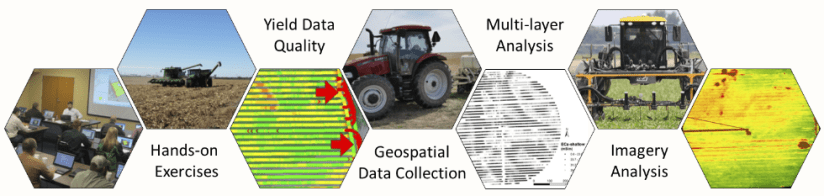
precison-agProduction agriculture continues to evolve into a data-intensive system as producers and other agricultural professionals look for ways to gather more actionable information from their data. Topics for the 2017 Nebraska Extension Precision Ag Data Management Workshops were developed to provide hands-on data analysis instruction on how to apply variable rate technologies for improving crop production efficiency and on-farm economics. Sessions will teach attendees options for creating management zones within fields as well as how to create variable rate application maps (for planting) and evaluate planting studies using GPS-enabled yield monitor data. In addition, exercises will provide information related to creating profitability maps using different data layers collected during the growing season.

Four two-day workshops will be held in Lincoln, York, Norfolk, and North Platte during January and February. Interested individuals can register for one or both days.

Program Sites
Lincoln — Jan. 10-11
York — Jan. 12-13
North Platte — Jan. 26-27
Norfolk — Feb. 7-8

For more information, please visit the 2017 Nebraska Extension Precision Ag Data Management Workshop registration website at http://agronomy.unl.edu/precisionag

Please contact Joe Luck (402-472-1488 or jluck2@unl.edu) if you have questions related to the workshops.

Crops, Irrigation, Programming, Uncategorized

Successful Farmer Series

Now that the growing season is coming to an end, there are many opportunities in the upcoming months to enhance your knowledge and garner new ideas to take back to your operation. Nebraska Extension provides numerous workshops, conferences and trainings all across the state to help you increase your profitability and environmental stewardship.successfulfarmer

One opportunity available to southeast Nebraska is the Successful Farmer Series. It is unlike many other Extension educational events and that it encompasses a host of agricultural topics in six individual events. Each event covers a different topic and you can choose which topics/events you wish to attend. Each topic will feature two to three speakers from the University of Nebraska-Lincoln. We will also invite other experts surrounding the topic to be in attendance and address more specific questions or interact with attendees during the breaks.

This is the second year of the Successful Farmer Series and the reviews from year one were quite positive. Nearly 90% of the attendees said they are very likely to attend the series in 2016-2017, so spots may fill up fast.

Workshops are every other Friday this winter (except December 30th) from 9:00 am until 11:30 am at the Lancaster Extension Education Center in Lincoln. CEUs are available and Refreshments will be provided.

Here are the dates and topics for this year’s Successful Farmer Series:

  • December 16th – Cover Crops & Wheat
  • January 6th – Ag Management Technology
  • January 20th – Farm Financial Management
  • February 3rd – Soil & Climate Tools
  • February 17th – Soybeans
  • March 3rd – Corn

The cost to attend is $5 for individual workshops or you can sign up for the entire series and pick which events to attend for $15. Pre-registration at least two days in advance is appreciated by contacting Karen Wedding at 402-441-7180 or online. Pay at the door, check or cash.

 (Source: Tyler Williams, Extension Educator in Lancaster County)

Crops, Livestock, Programming, Uncategorized

Agriculture at the Crossroads

The agricultural economic reset is in the mid inning, analogous to a baseball game. What forces will change the current economics? How will interest rate and land value changes influence profitability and your balance sheet? Dr. David Kohl, Professor Emeritus with the Dept. of AAEC, VA TECH will present his challenges & opportunities tool kit to give you some tools to help your business position for success so be sure to attend this information packed, high energy session, sponsored by the Farmers & Ranchers College.kohl-program

This year’s program will focus on how to be a better borrower in these economic times. Dr. Kohl will discuss burn rates on working capital and burn rate on collateral. A special segment will examine what adjustments producers are making to navigate the economic white waters and position the business to evaluate opportunities.

This educational program will be held December 14, 2016 starting at 1:00 p.m. at the Bruning Opera House with registration starting at 12:30 p.m. Due to the generous support of area businesses and organizations, this program is free, but arrive early to save yourself a seat!

To speed up the registration process, online registration is available at fillmore.unl.edu; this will enable you to put your initials by your name, rather than filling in your full name and contact information.  

Crops, Livestock, Programming, Uncategorized

Farmers & Ranchers College

frcollege-logo-front-panelThe Farmers & Ranchers College was formed in January 2000 with the purpose of providing high quality, dynamic, up to date educational workshops for area agricultural producers in south central Nebraska through a collaborative effort between business, industry and higher education leaders. Furthermore, the Farmers & Ranchers College will provide the tools necessary so that agricultural producers will be able to respond positively to these changes using a profitable decision making process.

The Farmers and Ranchers College is a unique opportunity to educate agricultural producers in south central Nebraska. Approximately four hundred producers participated in the 2015-16 Farmers & Ranchers College programs. Producers attending these workshops managed over 215,000 acres. Participants surveyed indicated an average of $15.00/acre of knowledge gained from participating for a potential impact of $3 million.frcollege15-16impactinfographic

The fifteenth annual Partners in Progress- Beef Seminar featured a variety of industry, University and agricultural organization presenters. Participants managed over 10,000 head of cattle and indicated that on average the information presented will increase their profitability $17.80/head with a total potential impact of over $180,000.

Contributions and support of area businesses allow participants to attend at no cost, however for programs that have meals, it is requested that people RSVP at least a week in advance for an accurate meal count by calling Fillmore County Extension at (402) 759-3712.

The Farmers and Ranchers College Committee consists of Fred Bruning of Bruning, Bryan Dohrman of Grafton, Sarah Miller of Carleton, Jennifer Engle of Fairmont, Ryne Norton of York, Jim Donovan of Geneva, Bryce Kassik of Geneva, Eric Kamler of Geneva, and Brandy VanDeWalle of Ohiowa.

frcollegeregqrcode
Save time at the registration table. Register online!

2016-17 Program Schedule:

December 14, 2016 – “Agriculture at the Crossroads” w/ Dr. David Kohl, Professor Emeritus, Dept. of AAEC, VA TECH at the Opera House in Bruning, NE from 1-4:00 pm

January 31, 2017** – “Partners In Progress Beef Seminar” Cow/Calf College at U.S. MARC near Clay Center, NE from 10-3:30 a.m., Registration at 9:30

February 22, 2017** – Managing for Difficult Times (Cutting costs without cutting yields) at Fillmore Co. Fairgrounds- Geneva, NE from 9:30 – 3:00 p.m.,Registration at 9 a.m.

February 27, 2017** – Tips & Tricks for the Women of Agriculture at Lazy Horse Winery near Ohiowa, NE with registration at 5:45 and program starting at 6:00 p.m.

** Programs are free; however registration is appreciated for a meal count. Please call the Fillmore Co. Extension Office at (402) 759-3712 one-week prior to the program to reserve your spot.

Crops, Uncategorized

Harvest Safety

It is hard to believe that harvest will soon be in full swing! With harvest comes more traffic on the county roads and other stresses for farmers. It never fails, that equipment can break, there can be delays at the elevator and those extra-long hours can all add extra stress to farmers. That being said, it is important to carefully slow down and realize the many hazards you are being exposed to during harvest.

An Iowa State Extension publication, Harvest Safety Yields Big Dividends points out that injuries can occur by taking shortcuts to perform routine tasks, not getting enough sleep or regular breaks, or failing to follow safety practices. Some injuries occur when operators are pulled into the intake area of harvesting machines, such as balers, combines, or corn pickers, and many injuries occur from slips or falls around these machines. Exposure to powerful machinery is highest during the harvest season. The equipment must be powerful to effectively handle large amounts of agricultural commodities. When equipment plugs, NEVER try to unplug it with live equipment, instead always disengage power and turn off the engine before trying to manually clear a plugged machine. Regular maintenance of these machines can also make harvest go smoother. Also, lots of accidents actually happen by the operator slipping and falling off equipment.

In the same publication listed above, there are several tips for reducing fall hazards:

  • Always keep all platforms free of tools or other objects.
  • Frequently clean the steps and other areas where workers stand to service, mount and dismount, or operate the machine.
  • Wear well-fitting, comfortable shoes with non-slip soles.
  • Use grab bars when mounting or dismounting machinery.
  • Be sure your position is stable before you work on a machine.
  • Recognize that fatigue, stress, drugs or alcohol, and age may affect stability.

Other helpful tips during harvest are to keep kids away from machinery. Tell them the dangers that can occur and not to play near the equipment, even when it is shut off; you never know when they will be playing in hidden areas of the equipment. Operators should double check where kids are before moving the equipment. Too many accidents can occur when youth are in the path of equipment out of the operator’s view. Operators of all equipment should check in regularly and let someone know where you are. Keep all guards on equipment; it is there for a reason!

slow-downIt is also important for the public to understand the increased traffic on public roads and be patient. The greatest threat raised between farm equipment and passenger vehicles is the difference in speed. Farm equipment runs at an average speed of 20 miles per hour while passenger vehicles average 60 miles per hour. If the motor vehicle overtakes a tractor, the impact is comparable to a passenger vehicle hitting a brick wall at 40 miles per hour. If the tractor and a car, mini-van or pickup collides head on, the impact is the same as hitting a brick wall at 60 miles per hour.

Farmers can reduce the chances of an accident by using warning lights, reflectors and reflective tape on their machinery to keep passenger vehicle operators aware of their presence on roads. Some farmers may choose to install supplemental lights to increase visibility. It also is a good idea for producers to keep off heavily traveled roads as much as possible and avoid moving equipment during the busiest part of the day.

CornEarWebSome farm equipment, such as combines, can take up more than half of the road. Even so, it is up to both drivers to be aware of their own limitations and adjust accordingly. Farmers should not take up more space than is needed, but other drivers should try to provide as much room as possible. It is a good idea for passenger vehicles to turn off onto side or field roads until larger machinery has passed. Whenever possible, farmers should use an escort vehicle such as a pickup to precede or follow large machinery and equipment on public roads. More than one escort may be necessary. Ideally, the escort vehicle would have extra warning lights and a sign indicating oversized or slow equipment ahead or following.

Have a safe harvest!

Crops, Uncategorized, Youth

Making One Agronomist at a Time

Last week, eight Nebraska youth traveled to Iowa to participate in the 1st Annual Regional Youth Crop Scouting Competition held at Iowa State University’s Field Extension Education Location near Boone, IA. These youth scouted six fields for diseases, insects, abiotic/biotic disorders, weed identification and crop growth stage and development. Teams from IIMG_6290.JPGowa and Indiana also competed. Nebraska teams ranked 4th and 5th respectably. Between all three state competitions, 111 youth competed from Nebraska, Iowa and Indiana. Top two teams from each state competed at the regional competition. Congrats to all of the youth who not only networked with agronomic professionals, but also gained the most by improving life skills related to a potential career path.

While this is one program, which impacts a very small percentage of youth, it is very important to start training the next generation of ag leaders to feed our growing population. In fact the USDA’ National Institute of Food and Agriculture (NIFA) believes so strongly in the future of agricultural career pathways, they are funding $3.1 million through a Food and Agricultural Sciences National Needs Graduate and Postgraduate Fellowship Grants Program (NNF). This fellowship will aid in supporting the next generation of scientists and innovators who will be key to the future of our food and agricultural systems.

The NNF program is for graduate degree (masters and doctoral) programs and postgraduate training. The Nebraska Farmer website says it well, “the purpose of this program is to develop intellectual capital to ensure the preeminence of U.S. food and agricultural systems. This funding invests in experiential learning, including international experiences, for individuals who demonstrate their potential to successfully complete graduate degree programs in disciplines relevant to NIFA’s mission.”

There are eight targeted expertise shortage areas in which applicants should target their projects which include:  animal production; plant production; forest resources; agricultural educators and communicators; agricultural management and economics; food science, human nutrition and human sciences; sciences for agricultural biosecurity; veterinary sciences; food and agriculture data analytics and tools; and integrative biosciences for sustainable food and agricultural systems. Applications are due September 22, 2016. For more information go to the NIFA – NNF website.IMG_6287.JPG

While this program is for graduate and postgraduate degree programs, it all starts by sparking the interest in youth, one at a time with the goal of “making on agronomist at a time.”

For more information on how to engage youth in crops, visit our UNL CropWatch site at http://cropwatch.unl.edu/cropwatch-youth.

Crops, Uncategorized

Saline County Wind Association

The Saline County Wind Association (SCWA) Inc. has voted to enter into negotiations on a wind lease agreement with APEX Clean Energy of Charlottesville, VA. APEX has indicated it plans to build a 300 M/W wind energy facility in the following Townships of Saline and Fillmore Counties: Atlanta, Olive, Turkey Creek, Belle Prairie, Chelsea, Franklin and Glengary.windturbine

APEX has renewable energy projects in 25 states. Most of those projects being wind energy facilities. This will be their first project in Nebraska.

SCWA’s role in this project is: 1) Educate the landowners in the project area about wind farms; 2) Help determine the level of interest in this type of project; 3) If there is sufficient level of interest, to negotiate a wind lease agreement for the landowners that choose to participate in the project.

SCWA Board Chairman, David Vavra, said, “The mission of the Wind Association is to Protect the Land Owners. Not to be for or against wind development, but to educate the landowners so they can make an informed decision as whether or not to sign a wind lease agreement.”

Wind Lease agreements can be 50 to 60 pages long. The SCWA has identified over 20 points of concern that land owners need to be made aware of when signing a lease of this type. These agreements can be in place for up to 50 years.

To help inform and educate the landowners in the proposed area, SCWA will be holding 2 landowner informational meetings in Ohiowa, at 1PM in the Ohiowa Auditorium on Saturday, August 13th, and in Tobias at 7PM in the Tobias Fire Hall on Sunday, August 14th.

Anyone who has land or interest in the project area is encouraged to attend. Even if you are not interested in wind development, you owe it to yourself to be informed.

For more information please call 402-526-0018.

(Source: David Vavra, SCWA Chairman)

Crops, Programming, Uncategorized, Youth

Youth Crop Scouting Competition

Connecting Youth with Crops…

Looking for a fun club project? Want to unite your club members? Running out of ideas for club meetings? If you answered, “yes” to any of these questions, help is on the way! Nebraska Extension is pleased to present the 3rd annual Crop Scouting Competition for Nebraska youth. Youth interested in crops have the opportunity to learn about crop growth & development and basic crobrandy vandewalle slide on crop scout clinicp scouting principles.

Don’t know a lot about crops? Ask a local agronomist to assist by providing a short lesson on crop production. You can have the agronomist meet with youth a little during each meeting or outside of the meeting. This is one way to engage those youth interested in crops.

This contest will be held at the ARDC near Mead, Nebraska on August 2, 2016. The event will include both indoor and outdoor events. Teams of junior high and high school students (those completing 7-12th grades) from across Nebraska are invited to participate.

Clubs or other organizations may enter a team composed of three or four participants. An adult team leader must accompany each team of students. Team leaders could be FFA advisors, crop consultants, extension staff, coop employees, etc.

Top-scoring teams win prizes: $500 for first, $250 for second, $100 for third place.

Teams will be expected to know the basics of scouting corn and soybean fields. This includes crop staging; looking for patterns of crop injury; disease, insect and weed seedling identification; etc. Other topics many include but are not limited to, pesticide safety, nutrient disorders, and herbicide injury.

More information about the crop scouting competition and instructions on how to register a team are available online at cropwatch.unl.edu/youth.  Top two teams will be eligible for regional competition in late August at Iowa.

Teams must be registered by July 18. Registration is $50/team; the fee will be refunded when the team attends the competition. Payment by check is due along with the registration form by July 18. This program is sponsored by DuPont Pioneer, the Nebraska Soybean Board, Nebraska Independent Crop Consultant Association and Nebraska Extension.

Crops, Programming, Uncategorized

Weed Management Field Days

weedmgmtdayGrowers, crop consultants and educators are encouraged to attend Nebraska Extension’s Weed Management Field Day from 8 a.m. to 1 p.m. June 29 at the South Central Agricultural Laboratory near Clay Center. The field day will include on-site demonstrations of new technology and new herbicides for corn, soybean and sorghum. An early morning tour will focus on weed management in soybeans followed by a tour of weed management in corn and sorghum. Field experiments will provide information for weed control options using several herbicide programs.

“Several new herbicides and technologies are coming to the market, including Enlist Corn and Soybean, Roundup Ready 2 Xtend Soybean, Balance Bean and INZEN sorghum” said Extension Weed Management Specialist Amit Jhala. The field day will provide an opportunity to identify several broadleaf and grass weeds commonly found in corn and soybean fields in Nebraska.

Three Certified Crop Advisor (CCA) Continuing Education Units are available in the integrated pest management category. There is no cost to attend the field day, but participants are asked to register at http://agronomy.unl.edu/weedresistmgt. The South Central Agricultural Laboratory is five miles west of the intersection of Highways 14 and 6, or 13 miles east of Hastings on Highway 6.amaranthGrowers, crop consultants and educators interested in management of herbicide-resistant Palmer amaranth are encouraged to attend Nebraska Extension’s Field Day, supported by the Nebraska Corn Board, from 8:30 a.m. to 1:30 p.m. July 12 near Shickley.  Palmer amaranth is a member of the pigweed family and is one of the most troublesome weeds in seed cornfields because of its resistance to atrazine and HPPD inhibitors. Greenhouse dose-response studies have confirmed resistance when atrazine and HPPD inhibitors were applied post-emergence. Palmer amaranth is of particular concern in south-central Nebraska because of its proximity to intense seed corn production, which is heavily reliant on these herbicides for weed.

At the field day, experiments will demonstrate how to control Palmer amaranth in field and seed corn production fields in Nebraska. Keynote speaker, Jason Norsworthy will share his experiences for management of glyphosate-resistant Palmer amaranth. Norsworthy is a professor and endowed chair of weed science at the University of Arkansas.

Three CCA credits will be available. There is no cost to attend the field day. However, pre-registration is required before 3 p.m. on July 11. To register, visit http://agronomy.unl.edu/weedresistmgt.

Directions to the Field Day: From Geneva, go south on Highway 81 for seven miles. Turn west onto Highway 74 for 12 miles. Turn north on Road 2 for three miles. Turn west on Road Q for 0.1 mile. The farm field is on the north side of Road Q.

For more information, contact Amit Jhala at 402-472-1534 or amit.jhala@unl.edu.