Crops, Uncategorized

Field Flooding

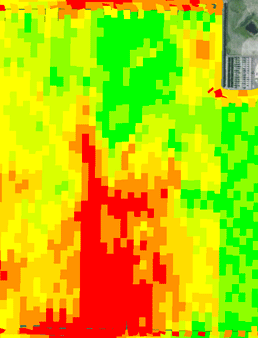
Recent heavy rains in parts of the area reminded me of an article about the survivable chances for corn that has been flooded in low-lying areas so I’ve summarized and put some excerpts from an article written by R.L. Bob Nielsen from the Purdue University, Agronomy Department. Obviously, plants that are completely submerged are at higher risk than those that are partially submerged and the longer an area remains ponded, the higher the risk of plant death.

Nielsen reported that most agronomists believe that young corn can survive up to about 4 days of outrighIMG_5480t ponding if temperatures are relatively cool (mid-60’s F or cooler); fewer days if temperatures are warm (mid-70’s F or warmer). Soil oxygen is depleted within about 48 hours of soil saturation. Without oxygen, the plants cannot perform critical life sustaining functions; e.g. nutrient and water uptake is impaired and root growth is inhibited. Even if surface water subsides quickly, the likelihood of dense surface crusts forming as the soil dries increases the risk of emergence failure for recently planted crops.
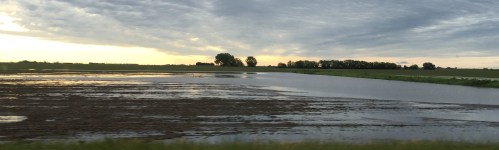
Young corn (less than V-6 stage) is more susceptible to ponding damage than corn beyond the sixth leaf stage. This is because young plants are more easily submerged than older and taller plants and since the corn plant’s growing point remains below ground until about V6. The health of the growing point can be assessed initially by splitting stalks and visually examining the lower portion of the stem. Within 3 to 5 days after water drains from the ponded area, look for the appearance of fresh leaves from the whorls of the plants.

Another consideration is that extended periods of saturated soils AFTER the surface water subsides can also take their toll on the overall vigor of the crop, causing IMG_5475stunted roots and dying roots. As a result, plants may be subject to greater injury during a subsequently dry summer due to their restricted root systems.
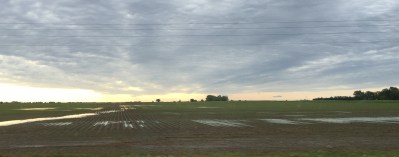
Loss of nutrients is another concern on saturated soils. Significant loss of soil N will cause nitrogen deficiencies and possible additional yield loss. Lengthy periods of wet soil conditions also favor the development of seedling blight diseases, especially those caused by Pythium fungi. Poorly drained areas of fields are most at risk for the development of these diseases and will also be risky for potential replant operations.

There are other diseases that can affect flooded areas of corn as well, but for now, it’s kind of a wait and see until you can get into the field and assess the health of the growing point. For more information refer to Effects of Flooding or Ponding on Young Corn by R.L. Nielsen.

Crops, Irrigation

NE Ag Water Management Network

Planting has been well underway and hopefully we will receive timely rainfall this growing season with little need to irrigate. If you have irrigated ground and are looking for ways to save money, reduce nutrient loss and use less water, consider joining the Nebraska Agricultural Water Management Network, or NAWMN. I’ve been in Extension for nearly eleven years and a program I’ve been involved with that has been a very rewarding program and made a positive impact for many is the Nebraska Agricultural Water Watermark SensorsManagement Network, or NAWMN. Evaluation results have shown a one to two inch savings of irrigation since it’s inception. In 2005, only a few producers in the Upper Big Blue NRD, (shortly followed by the Little Blue NRD) were participating, but as of last fall, this program has reached 1,393 in 18 NRDs and 73 of 93 counties. The Network has been having significant impacts on both water and energy conservation due to farmers adopting information and implementing technologies in their irrigation management.
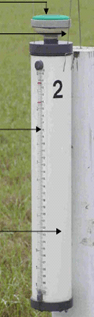
A couple of the tools we use are ETgages® or Atmometers which mimic crop evapotranspiration or ET and Watermark soil matrix sensors which measure soil matric potential or the energy required to remove water from the soil. These two tools have really worked well and have made irrigation management much easier than those gut feelings. The more information you have the better decisions you can make!  ETgage

If you would like to participate in this dynamic program, let me know and I’d be happy to help and get you started! If you are in the NAWMN, consider installing your ETgage soon and once done with planting, start the soaking/drying cycle on your Watermark sensors to be sure they work! It’s also important to replace the #54 alfalfa canvas covers and wafers on a regular basis at the start of each season. For more information, go to Nebraska Extension’s Water Website. 

Crops, Horticulture, Irrigation, Livestock, Programming, Uncategorized, Youth

What is Extension?

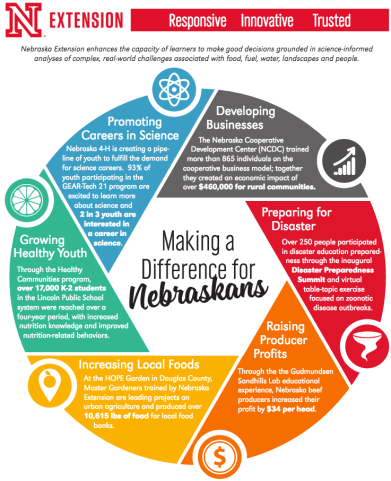
Often times when I tell people I work at the “Extension Office” they have no idea what it is we do. It is so hard to describe without giving a plethora of information. One of our signature programs people often most often associate with is the 4-H program. While this is a large and very successful component of Extension, it is only one of many programs.ExtensionDifferencepic

Everyday, whether you know it or not, you have most likely been indirectly impacted by Extension programming. Extension essentially takes science and research-based information from the University Of Nebraska – Lincoln and delivers it into the hands of the public. We make UNL easily accessible to the public. For example, we provide services and resources to the agricultural community, but also sectors as diverse as nutrition, health care and technology. From border to border, Nebraska Extension is making an incredible impact on the success of our state – its youth, its families, its farms & ranches, its communities, its economy.

For example, as a result of our Learning Child Extension staff, approximately 24,000 children in Nebraska benefit from early childhood professionals and parents who have the essential skills and knowledge to support the healthy growth and development in the children in their care. Take the crops area: last year, Extension presented workshops in 94 locations to over 4,000 participants from 93 Nebraska counties, 9 U.S. states and 4 foreign countries. Our community vitality programming has engaged over 10,000 Nebraskans in Broadband planning and engaged over 2,500 people through the Entrepreneurial Community Activation Process which resulted in community-wide visions, a new economic development corporation being started, community web portal and a young professional network.

Nebraska Extension continues to evolve and is one of the leading Extension programs in the world. In doing so, Extension Educators are more focused in their area of expertise and able to provide clients with robust information. For example, Extension staff covers a specific region to ensure clients are being served well. Each county has access to a professional in the areas of:

  • Community environment (horticulture)
  • Food, Nutrition & Health
  • Crops & Water
  • The Learning Child
  • Community Vitality
  • Beef & Livestock Systems
  • 4-H Youth Development

This has been a very brief overview of Extension and next week we’ll discuss how this impacts our multi-disciplinary programming and Fillmore County.

Crops, Horticulture, Uncategorized

Pesky Purple Weed

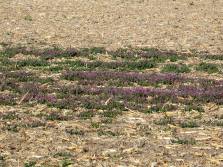
People have asked me about the purple weed that has emerged in fields and lawns. Most likely that flower is henbit that is an annual forb in Nebraska and a member of the mint family, which means it has a square stem. It has distinctive leaves with crenate and lobed leaf margins and purple to pink flowers. For control, this weed is a winter annual, which means the seed germinates in the fall and the small plants overwinter before growing aggressively in early spring. It flowers in April and May and dies in the hot, dry summer weather. Flowers can produce a lot of seed, which is one reason henbit infestations can increase each year.Henbit

Control of henbit this time of year is not recommended because the plant will die shortly. The best option for control is to hand pull the weed in lawns. This has the advantage of minimizing the amount of seed production for next fall. If henbit infestation becomes unacceptable, then apply a PRE herbicide in late summer to early fall. Finally, henbit that does germinate in the fall will be killed with the same POST herbicides that are used to control other pesky weeds like dandelions and creeping Charlie. Other management options for henbit control include, 1) maintaining a healthy and vigorously growing lawn or 2) adding a deep layer of mulch to landscape beds.

Crops, Livestock, Programming, Uncategorized

Passing the Farm to the Next Generation

At our final Farmers & Ranchers College program for the programming year, Dr. Ron Hanson from the University Of Nebraska – Lincoln Ag Economics Department spoke on the Importance of Family Farm Succession. This is never an easy task, yet essential for the farm to be passed on and able to financially operate. Most importantly, it is important to maintain relationships with family members and honor the wishes of the parents who intended for assets to be transferred a certain way.IMG_4969

Hanson had eleven challenges families face in order to being this process.

  1. First consider “Who is family” and is entitled to owning the farm. Are in-laws considered family? Usually excluding in-laws will backfire and cause hard feelings.
  2. It is difficult for parents to not play favorites with their adult kids. Parents should be fair and equitable, which is different than equal. Unfortunately, there are adult kids who are greedy and plan to retire on their parents’ assets, which is not an acceptable retirement plan. Parents should consider who has always taken care of them and which kids will care for them in end of life situations.
  3. Controlling parents need to give control of the farm/ranch to the adult kid who is farming. Serve as mentors and hand over responsibility to the future owner.
  4. Consider when farm ownership will happen. How will those changes occur?
  5. Think about if it is possible to keep the farm in the family. Are there kids who actually want to farm?
  6. Too often families don’t talk about the “what-ifs”. If a parent or adult kid were to tragically die tomorrow, are you prepared for that?
  7. If parents don’t agree on how to transfer assets, more than likely nothing will get done.
  8. Some children feel they are entitled. Children should RESPECT their parents and agree to their parents’ decision. Your parents don’t owe you anything.
  9. Greed has become a curse of family wealth and assets. Wealth can destroy family relationships and end a family legacy. No farm is worth losing family relationships!
  10. Families that don’t communicate openly about the parents plans are more likely to be unsuccessful with a succession plan. Parents must talk openly and honestly to all children – preferably at the same time. Parents should ask their children:
    1. Have we as parents done anything to make you not get along as a family when we are no longer here? If so, please tell me. Then apologize.
    2. Is there any reason you kids can’t get along as a family?
  11. Each family farm/ranch should have a vision. Family members should share this vision.

Family farm succession is time consuming, complicated and emotionally draining, but essential! After all, consider all of the hard work you have done to keep it going through rough economic times; why wouldn’t you put a plan together to protect it?

Crops, Uncategorized

Consider On Farm Research

As margins get tighter in 2016, it will be important for producers to cut their costs. With so many products on the market today, it can be hard to know if they will actually increase yields as they claim, but also if it is economically feasible. The Nebraska On-Farm Research Network can help producers do just that – test products and/or production practices to determine their economic feasibility. With planting season just around the corner, consider joining the Network to evaluate products/production practices which can increase your profitability, while gaining access to Extension specialists and educators who will help you set up your research and guide you through the process. In addition, participants benefit from networking with other farmers and being part of this innovative group.

On-farm research has many variants and approaches. It is research that you do on your field(s) using your equipment and normal production practices. This means the research is directly applicable to your operation. The Nebraska On-Farm Research Network approaches topics that are critical farmer production, profitability and natural resources questions, such as:becker-beans-7-7-08.jpg

  • Nutrient management
  • Pest control
  • Irrigation Strategies
  • Conservation programs
  • New technologies
  • Soil amendments
  • Cultural practices
  • Hybrid and variety selection

Comparisons are identified and designed to answer producers’ production questions. Project protocols are developed first and foremost to meet individual cooperator needs. Only projects that are randomized, replicated and harvested accordingly are reported. Multiple year comparisons are encouraged.

In 2015 alone, 80 on-farm research studies were completed with 66 producers participating in studies. Results were presented to 250 people at update meetings in North Platte, Grand Island, Norfolk, and the ARDC near Mead in February. Planning for 2016 projects is underway. More information about project opportunities will be coming soon. If you have interest in conducting an on-farm research study, let Laura Thompson know (laura.thompson@unl.edu) or myself (brandy.vandewalle@unl.edu)!

Access to the 2015 growing season results can be found on the CropWatch website.

Crops, Uncategorized

Pesticide Container Recycling Program

The Nebraska Pesticide Container Recycling Program completed its 24th season last year. If any businesses would like to serve as a pesticide container recycling sites for 2016, submission of 2016 Recycling Site Information is due by March 18, 2016.

These sites are where the plastic pesticide containers are first inspected by
cooperators, bagged in large plastic bags and then temporarily stored for pick-up by a multi-state subcontractor. Assistance with this recycling effort is vital and appreciated. Plastic from rinsed 1.0 and 2.5 gallon plastic pesticide and adjuvant
containers and plastic crop protection drums of 15, 30 and 55 gallons are accepted. No homeowner plastic pesticide containers are accepted. 

This program has successfully recycled more than 2 million pounds of plastic pesticide containers from Nebraska’s landscape. That’s over
1,000 tons! This is a significant quantity that has helped eliminate much of the improper dumping of the containers in ditches or ineffective
burning of the plastic containers. 

If you hosted a collection site in 2015, please confirm this site for participation in 2016 by completing the on-line form listed in the next
paragraph. If you have not had an inspection/collection site, 2016 may be the year for you to consider providing a location. 

Please complete and submit the on-line, electronic form by March 18h for EACH 2016 recycling site on the Pesticide Education website.

General information about the pesticide container recycling program is available on-line. 

Container Services Network (CSN) have responsibility for pick-up and transportation of containers. CSN supplies large plastic bags that are to be
filled at the collection/inspection sites. CSN then takes possession of the bagged containers when 1,000 lb. or more containers are accumulated. 
Communication directly with CSN is essential to receive sufficient quantities of collection bags and to arrange for pick-up.

Crops, Uncategorized, Youth

Innovative Youth Corn Challenge Results

One of the statewide projects I coordinate engages youth in crop production so I decided to share the results of this program. Nebraska Extension and the Nebraska Corn Board teamed up to offer the fourth Innovative Youth Corn Challenge contest. This contest, open to 4-H members or FFA members, guided participants through all aspects of corn production, as well as agricultural careers related to corn production.IMG_4693 - Version 2.JPG

The 2015 winning team was Kornhusker Kids 4-H Club from Cuming County. The team with the highest percent yield increase over their local county average is the winner. In earning the $1,000 first-place award, Kornhusker Kids 4-H Club decided to test the effect of Procidic with two different application timings to see the effect against Goss’s Wilt and if there were additional plant health benefits. The three treatments were: control, Procidic applied in furrow at planting at 2 oz/ac and Procidic applied in furrow at planting followed by another 2 oz applied post prior to tasseling. Also, important to note is that this team had randomized and replicated plots which is important in figuring out the statistical significance. Their check yielded the highest at 226.7 bushels/acre with the challenge plots yielding 225.4 & 223.7 bushels/acre.

Second-place team overall was the Palmyra FFA Chapter, earning $500 for their efforts. Team members tested the impact of corn sweetener being applied to the corn plant between the V-6 and V-12 stage of development. They sprayed a foliar application of corn sweetener on the growing corn plant with the challenge plot yielding 214.2 bu/acre and check plot yielding 205.3 bu/acre.

Third place went to the Fillmore Central FFA Chapter. They tested nitrogen application rates and tried to push for a higher yield in order to reach the highest potential of their corn variety. They learned that 29.8 pounds of more nitrogen resulted in 14 more bushels per acre with 207.3 pounds of N on their challenge plot yielding 278.2 bu/acre and the check plot with 177 pounds of N yielding 264.2 bu/acre.

Other teams who completed their plots were:

Norfolk FFA did a two pass system, the first pass putting on 65 pounds of nitrogen and the second pass putting on 75 pounds of N and a nitrogen stabilizer to minimize nitrogen loss due to leaching in sandy soils. The main innovation testing was comparing early season fungicide application to no fungicide application. Their challenge plot yielded 191.5 bushel/acre and check at 183.3 bu/acre.

Osceola FFA tested nitrogen application with the check plot of 210 lbs of N at planting and the challenge plot of 210 lbs/acre in addition to 45 pounds of N applied at pre-tassel. Their check plot was 243.5 bushels/acre and challenge was 244.7 bu/acre.

The Stuart FFA Chapter’s goal was to improve the yield of corn by adding the AEGIS ESR plant growth stimulator. The product was applied to corn at V-6. They also measured the amount of water in the cornfield using watermark sensors. They determined that the growth stimulator did increase yield as anticipated, as the challenge plot with AEGIS yielded 5 bushels higher at 230 bu/acre compared to 225 for the check plot.

As a team, youth worked with an adult mentor throughout the process. Mentors can be extension faculty, ag teachers, or other qualified agronomy professionals. Other awards handed out during the banquet held on UNL’s East Campus included:

  • The Extra Mile Award, worth $200, went to the Kornhusker Kids 4-H Club.
  • The Innovation Award, worth $200, was presented to the Palmyra FFA Chapter.
  • The Sustainability Award went to both Kornhusker Kids 4-H Club and Fillmore Central FFA Chapter, which will split the $200 award.

The Sustainability award which uses Field to Market’s Field print Calculator was added this year, led by Randy Pryor, Extension Educator in Saline County. Field to Market, the alliance for sustainable agriculture has grown to 87 members. This group contains multiple fortune 500 companies involved in the nation’s food chain, national farm groups, conservation groups and Nebraska Extension is a new affiliate member. The diverse group is all about defining, measuring and advancing sustainability in the food sector from the farm field to the retail level. The current version of the Fieldprint Calculator is free to use, and these youth were the first 4-H and FFA students in Nebraska to ever use the Fieldprint Calculator for sustainability measures.

The metrics used were:

  • Land use efficiency
  • Soil conservation
  • Soil carbon
  • Irrigation Water Use Efficiency
  • Water Quality Index
  • Energy Use Efficiency
  • And Greenhouse Gas Emissions.

To participate in 2016, youth must complete and return an entry form by March 15th to the Fillmore County Extension Office in Geneva, NE. Forms can be downloaded .

Crops, Programming, Uncategorized

Precision Ag Workshop

Learn how to extract more information from your precision agriculture data at the 2016 Nebraska Extension Precision Ag Data Management workshops this winter.  Presentations and hands-on exercises will cover yield data quality, geospatial data collection, multi-layer analysis and imagery analysis.prescipmap.png

Participants get hands-on training to learn how to get more use from their precision agriculture data. A two all-day workshop will be held at Clay Center with the first day addressing intermediate ag data management topics, while the second day will address more advanced ag data management. Individuals can register for one or both days. Workshops begin with check-in at 8:30 a.m. and sessions from 9 a.m. to 4:30 p.m.

Cost is $75 for one day or $130 for both. Registration includes printed learning guides, a jump drive with workshop tutorials attendees can reference at home, and data.

Day One, Intermediate Ag Data Management Topics:

  • Working with as-applied data, tracking product locations and rates
  • Creating templates to speed up the data import process
  • Terrain analysis diagnostic opportunities and working with LiDAR data
  • Georeferenced soil sample data input and prescription map development options
  • Setting up on farm research trials with precision ag data – case study from Project SENSE: Crop Canopy Sensors for In-Season Nitrogen Management

Day Two, Advanced Ag Data Management:

  • Generating maps from geo-referenced soil samples:  Map interpolation strategies
  • Improving Yield Monitor Data Accuracy with Yield Editor Software from USDA
  • Multi-layer geospatial analysis to determine hybrid performance across changing landscapes
  • Imagery analysis using data from active and passive sensors

On-line preregistration is required and class size is limited to 20 to facilitate the hands-on training. To register online, visit the program website.

Crops, Livestock, Programming, Uncategorized

Helping Farmers & Small Businesses with Employee Relations

HR 4 Ag & Main Street

Many farmers, ranchers and other small business owners often have little to no training in human resources or leadership related training. This can make it difficult to serve as an effective supervisor and can lead to employee-relation issues. Nebraska Extension has just created a new program, HR 4 Ag and Main Street to help those business owners.Blog graphic.png

The HR 4 Ag & Main Street workshop is a three-hour face-to-face session created by Nebraska Extension and designed for farmers/ranchers and other agriculture and main street business owners. The goal of the program is to provide education on human resource management and human risk mitigation strategies to increase your farm, ranch, or other business’ resiliency and stability. Topics to be covered include: recruiting and retaining the best employees, pay and benefits, motivating and engaging employees, communication, building and leading your team, managing conflict, and more.

The program will be presented at four locations across Nebraska this winter in Norfolk, York, North Platte, and Scottbluff.

  • NORFOLK

Tuesday, January 19th from 1:00 – 4:00 pm, at the Lifelong Learning Center. To register call: Northeast Research & Extension Center (402-379-4000)

  • YORK

Tuesday, January 26h from 1:00 – 4:00 pm, at the York County Extension Office. To register call: York County Extension Office (402-362-5508)

  • NORTH PLATTE

Thursday, January 28th from 1:00 – 4:00 pm, at the West Central Research & Extension Center. To register call: West Central Research & Extension Center (308-696-6740)

  • SCOTTSBLUFF

Tuesday, February 9th from 1:00 – 4:00 pm, at the Panhandle Research & Extension Center. To register call: Panhandle Research & Extension Center (308-632-1230)

This program is made possible through a grant by the North Central Risk Management Education Center. For more information contact a HR 4 Ag team member:

  • Ben Dutton, Extension Educator – Red Willow County (308-345-3390)
  • Jessica G. Jones, Extension Educator – Johnson County (402-335-3669)
  • Tim Lemmons, Extension Educator – Northeast Research & Extension Center (402-370-4061)
  • Marilyn Schlake, Extension Educator – UNL Ag Economics Dept. (402-472-4138)
  • Brandy VanDeWalle, Extension Educator – Fillmore County (402-759-3712)
  • Aaron Yoder, Assistant Professor – University of Nebraska Medical Center (402-552-7240)