Uncategorized

Extension Recap from 2020

During the holiday season is often a time to reflect on the year. I have many blessings in my life. First and foremost, I would like to thank my family for being understanding with me as I often travel to evening meetings and conferences that pull me away from home. Secondly, I am fortunate to have great colleagues that help me out and work as a team. I’d also like to thank you, my readers, extension supporters, 4-H volunteers and others who have helped in some capacity with an extension or 4-H program. Without amazing Nebraska Extension supporters, programs wouldn’t be as successful as they are.
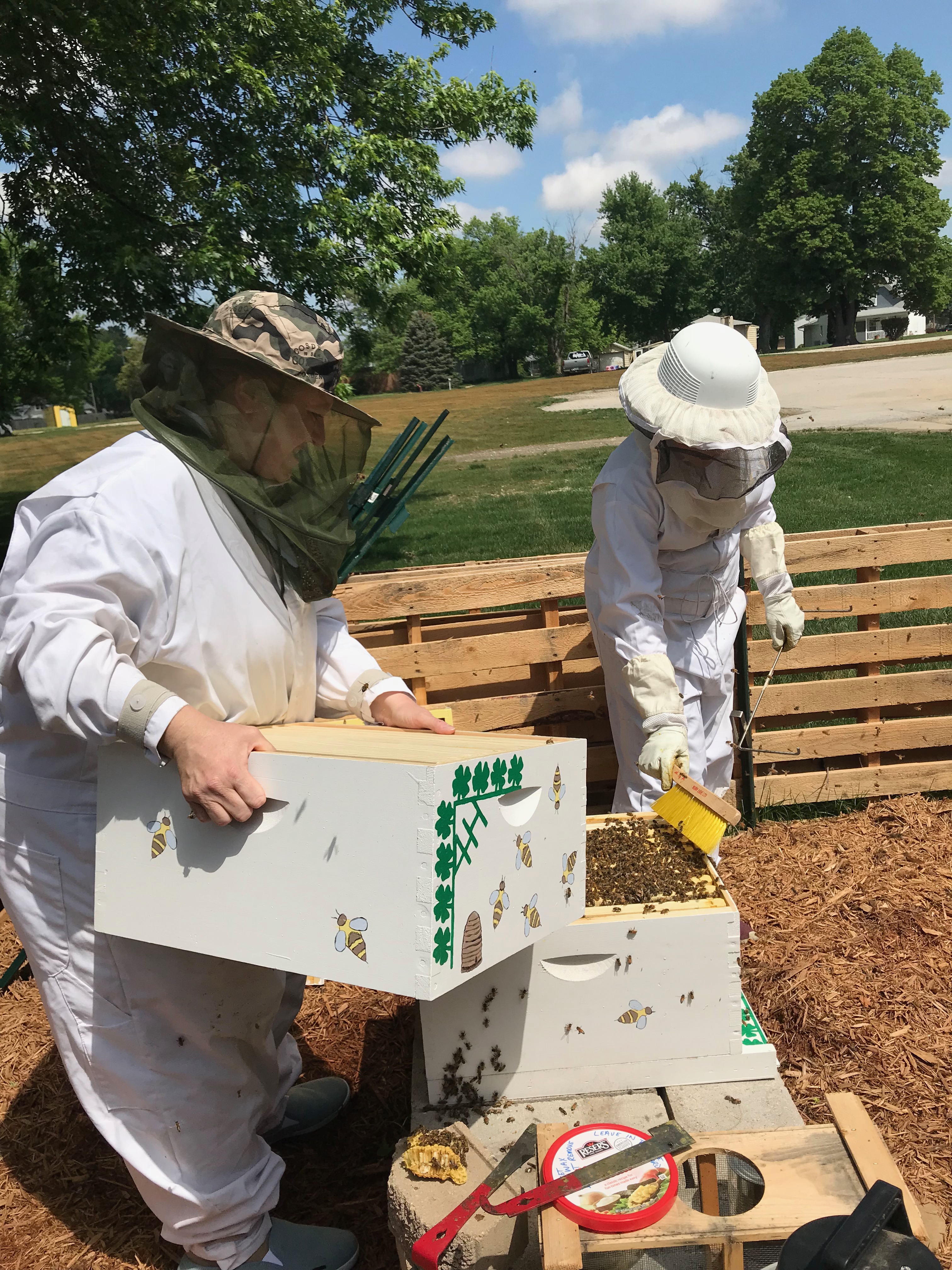
Fillmore County Outdoor Classroom features an apiary.

While I’m not one to boast, I’d like to mention that Nebraska Extension is one of the leading Extension organizations in the country! Utilizing cutting-edge delivery methods and programming ideas, we focus on critical issues identified by Nebraskans through periodic needs assessments. Nebraska Extension is nationally leading 4-H youth engagement by reaching 1 in 3 youth between the ages of 8-18 and we have extension faculty with national and international reputations. Finally, Nebraska Extension engages a large number of Nebraskans in Extension programming every year – from the agricultural community to sectors as diverse as nutrition, health care and technology. From border-to-border Nebraska Extension is making an incredible impact on the success of our state – its youth, its families, its farms and ranches, its communities and its economy. These are broad program accomplishments to look at from a balcony view, but what are some key impacts locally for Clay and Fillmore Counties?

Let’s describe some key accomplishments in Clay County. Nebraska Extension in Clay County and Fillmore County reaches 1 out of 2 age-eligible youth. In 2020, the Clay County 4-H program 254 youth participated in School Enrichment lessons at all four elementary/middle schools in the county. Also, 1 in 2 age-eligible youth participate in Clay County 4-H Youth Development Programs. Fifty-five youth participated in spring/summer virtual educational youth workshops and 64 youth participated in 4-H afterschool programs. To support beef producers, the annual Cow/Calf College provides cutting-edge research practices for producers to consider in their operation. Since its inception in 2001, over 1,275 producers have participated. 

To support ag, people need to know where their food comes from. Fillmore (& Clay) County Extension staff held the 23rd AgVenture Day in collaboration with the South Central Cattlewomen. This year, 154 fourth graders participated in the ag literacy program virtually due to COVID-19. Since 1997, AgVenture Day has taught over 4,000 youth just that.  Also, 1 in 2 age-eligible youth participate in Fillmore County 4-H Youth Development Programs. In 2020, 609 youth were reached through school enrichment programming. With the Farmers & Ranchers College, over 260 people learned how to improve their risk management decision-making, understand financial documents and production costs. Over 260 people participated managing over 120,000 acres and nearly 22,000 head of livestock for potential impact of $1.7 million based on information gained from the programming.

Of course, there are numerous more impacts and programming results to report, but these are some that I decided to include this this week’s column.

Uncategorized

“Oh, what fun it is to”

Meaningful Conversations…

A familiar holiday song pronounces “Oh, what fun it is to ride in a one-horse open sleigh laughing all the way.”  It continues to say, “Making spirits bright.”  The holidays are often times to relax and time to spend with family and friends.  The times with family and friends may be around the dinner table eating or playing a game, decorating the house, playing in the snow, making favorite holiday treats, or watching a movie or the big game.  One of my favorite things about the holidays is the opportunity to slow down and engage in playing games with family while eating cookies or some other tasty holiday treat.  It is in playing games or just having time to catch-up that I able to reconnect with family members and gain insight on what has gone on in their life over past year.

Photo by Nicole Michalou on Pexels.com

Meaningful conversations for me are when I feel heard and listened to and when I return the favor of listening and understanding the person in which I am engaging in conversation.  These conversations can take place while washing dishes, cleaning up the wrapping paper after all the presents are open, doing a puzzle, or at bedtime.  As we approach the holidays, think about ways you can engage with family members or friends about what is taking place in their lives.  Here are some tips for engaging in meaningful conversations.

  • Ask open ended questions.  By asking open-ended questions it gives a person an opening for a longer conversation and dialogue.  Open-ended questions sound like, “How are you feeling?” or “Tell me more about…”  
  • Be prepared to listen attentively.  Put away your phone and turn off all screens and make eye contact with the person to show that you are truly engaged in what they are saying.  Ask follow-up questions that show you are interested, and you want to know more. 
  • Listen without judgement.  Getting a lecture or being told that you are wrong can quickly end a conversation.  Instead ask the person about their feelings regarding the situation.  Share that you are willing to support them. 
  • Capitalize on everyday events to engage in meaningful conversations.  Food preparation, clean-up and mealtimes are a wonderful time to ask family members about their day or what they like about the family, or what is their favorite holiday food.  Bedtimes can also be a time to engage in conversations.  Start a tradition of asking one question a night to discuss.  Here are some questions to get you started in engaging in some meaningful conversation.
    • Tell me about a time when you felt happy.
    • Tell me about your favorite teacher.
    • Who is someone you really respect and why do you respect this person?
    • What is the best way for people to show that you they love you?   
    • What is your favorite time of year?

To ensure the health and safety of family members and friends because of the global pandemic, this year’s holiday celebrations and gatherings will be a bit different, but it doesn’t mean that one has to forgo those meaningful and sometime silly conversations.  These chats can be done in a person or virtually.  It is important to remember that a gift of time is one of the best gifts one can give.  Simply, young people and adults need human connections.  We all need to be heard, loved, and supported.  Take the time this year to listen, share, and to be vulnerable with each over a card game, meal, or while engaging in a favorite holiday tradition.  If you do, it really will “Make spirits bright”. 

(Source: Michelle Krehbiel, Nebraska Extension Youth Development Specialist)

Uncategorized

Strategies for Business Success

To say the year 2020 has been difficult for many businesses is an understatement. Farms and ranches were already dealing with trade wars and daunting price outlooks and then the pandemic hit. It disrupted “business as usual” creating shock and uncertainty for people.  Recently at a Farmers & Ranchers College program, Dr. David Kohl emphasized the importance of maintaining working capital or cash for businesses and families, among other important business principles.

Photo by Pixabay on Pexels.com

Kohl spoke on the “four pillars of the business model of the future” which includes resilience, agility, entrepreneurial/innovation, and a strong business IQ. For a business to be resilient, start with basic goal setting to redefine business, family and personal goals to achieve balance for sustainable success. The business must know its cost of production, implement a marketing and risk management program and benchmark themselves to peers. Regarding agility, the business should have working capital and access to cash during adverse events or if an opportunity presents itself. Examine markets for competitiveness and know when it’s better to improve business efficiency versus diversification or growth.

The third pillar is entrepreneurism and innovation. Analyze monthly or quarterly performance to sustainably move the business to the next level. Dr. Kohl also spoke on the importance of investing in people. Be a “people-first” business and find the right person that will help you move your business forward. You might have to pay more to find the best person, but it could reap rewards in the end. Also, align with the rapidly changing marketplace. Finally, the fourth pillar was to have a strong business IQ. This means to have a written plan with key performance indicators for business improvement. The business IQ management factors include:

  • Knowing the cost of production
  • Knowing cost of production by enterprise  
  • Setting business, family and personal goals 
  • Record keeping system 
  • Projected cash flow 
  • Financial sensitivity analysis
  • Understand financial ratios and breakeven
  • Work with an advisory team and lender
  • Marketing plan written and executed
  • Risk management plan executed
  • Modest lifestyle habits, family living budget
  • Written plan for improvement executed & strong people management
  • Transition plan/business owner plan
  • Educational seminars/courses
  • Attitude – Are you proactive, reactive or indifferent?

Dr. Kohl wrapped up the program with some “wisdom for well-being”. He used the acronym, M.E.D.S. for life. They are:

  • Meditate. In other words, find peaceful time to reflect and think deeply for a period of time. This can be used as a method of relaxation.
  • Exercise. We have been told for years that exercise releases endorphins which trigger a positive feeling in the body.  It’s important to take time out for you and have a balance between work and life/family.
  • Diet. Take care of your physical health.
  • Sleep. Sleep is important because it allows the body to repair and be fit and ready for the next day.

In addition to Dr. Kohl, Eric Snodgrass who is a Senior Atmospheric Scientist at Nutrien Ag Solutions provided fascinating information on weather patterns and trends. He described how El Nino and La Nina impact weather predictions and said that weather cannot be predicted over 21 days. Beware when weather-related products claim they can predict beyond that, as it is not the case. Snodgrass is the Former Director of Undergraduate Studies in Atmospheric Science at Univ. of Illinois Urbana-Champaign and with a dynamic and interactive presentation emphasized the increase in extreme weather events that will occur. For example, the increase in heavier (2.5” or more) rainfall events have been increasing in Nebraska. As producers, it is important to plan for these events and how they will impact your operation.

Uncategorized

Helping Youth During COVID-19 Holidays

Photo by Any Lane on Pexels.com

Handling the stress and mental health effects during a global pandemic is hard for a person at any age, let alone a child. Don’t forget to monitor how children are handling the disappointment and potential changes to routine holiday traditions due to COVID-19. These can lead to feelings of sadness, despair, anger, anxiety and stress. It is important as adults we take time to acknowledge these feelings and talk through them. Listen to them and let them know you care. You don’t have to have all the answers; just assure them you are there to help them through this difficult time.

The 4-H youth development program has always and continues to build a firm foundation for youth that encourages good decision-making and strong interpersonal skills. Social-emotional health is the cornerstone to confident, caring young leaders who understand how to take care of themselves both mentally and physically. The Search Institute’s research has demonstrated that when young people experience developmental relationships with caring adults their outcomes are better, their risk behaviors are lower, and they are more likely to be on the path to thrive in life. The Search Institute has created a checklist with strategies for relationship-building steps during COVID-19. While the list was intended mostly for staff in schools and youth development professionals, they apply to all adults, even parents.

  • Express care. Show youth they matter to you.
    • This could be as simple as telling them you believe in them and you know they will get through this difficult time.
  • Challenge growth. Push youth to keep getting better.
    • An example includes asking the youth what they are or could be doing to help others during this time.
  • Provide support. Help youth complete tasks and achieve goals.
    • Ask how they are feeling about the world, themselves and the future during this time. Indicate that you really hear them when they response and that you care about their feelings.
  • Share power: Treat youth with respect and give them a say.
    • When you can, offer choices rather than mandating a single option.
  • Expand possibilities: Connect youth to people and places that broaden their world.
    • Explore through the Web or social media how young people very different from them around the country or even the world is experiencing COVID-19.

In summary, take time to listen and recognize how youth are feeling. Take this time to creatively and collaboratively brainstorm new alternatives or traditions for the 2020 Holiday season. Take time to practice gratitude and find ways to express gratitude to those less fortunate such as writing a note to someone who might need extra joy in their life. Be kind to yourself and each other.

Source: Search Institute, https://www.search-institute.org/

Uncategorized

Agronomy Project – No Field Required!

Attention all youth interested in agriculture! Do you want to learn about agriculture? Do you want to raise a crop that requires little space? Do you enjoy learning about non-traditional crops? If you answered any of those questions, this project is for you!

The Nebraska Extension Special Agronomy Project gives 4-H members an opportunity to experience a crop that is grown, was grown or has the potential to be grown in Nebraska. Youth participate by receiving seed and resources to grow the crop, research traits of the crop and determine the viability of that crop in the part of the state they live. The project allows 4-H members interested in agronomy to grow something fun, new, and different.   

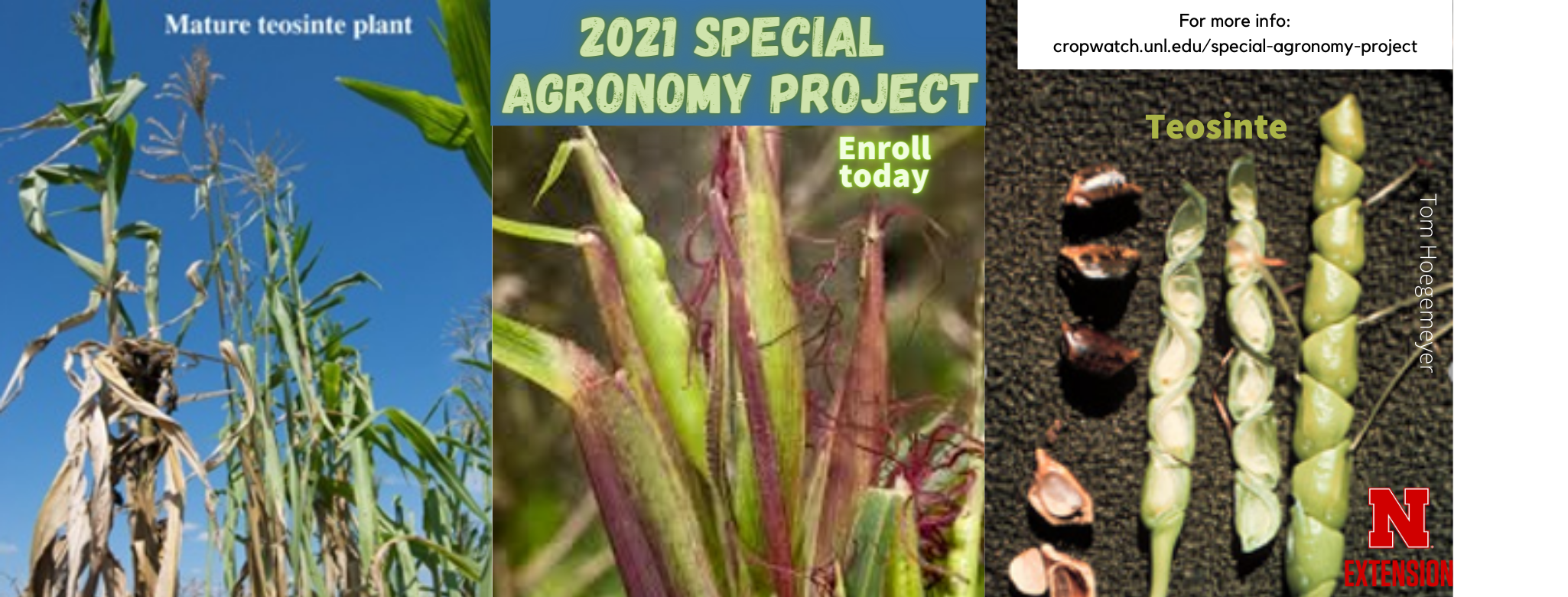
To kick-off the inaugural year of the special agronomy project, youth will explore teosinte. The plant looks and is very similar to corn, in fact it is believed to be the wild ancestor of today’s corn! 

The focus of the 2021 Special Agronomy Project is the Teosinte plant.  Teosinte is the ancestor to today’s corn, including dent, sweet, and popcorn. Native to Mexico and the surrounding area, this plant was adapted and changed by humans over time. There are both similarities and differences between them. Both plants have a tassel at the top. However, instead of a single stalk with a large ear, teosinte has multiple branches that produce many small spikes of trapezoidal seeds if the growing season is long enough. 

Youth should enroll for the Special Agronomy Project through 4-H Online.  Once enrolled in 4-H Online, youth are to call their local office to sign up for the project (order the seeds) by February 1st. By enrolling through 4-H Online, youth will have access to a folder with educational materials including a growing newsletter, potential virtual field trips & evaluation.   

Youth will have three options to enter this project at the county and state fair. One option is a special agronomy educational exhibit which youth share what was learned from the project in either poster (14” x 22”) with a short essay. The second option is to create a short 2-5-minute video presentation related to what they learned about the project. Finally, youth can enter the plants themselves and include supporting documentation about the project. Details can be found on the state fair book webpage and https://cropwatch.unl.edu/special-agronomy-project.

This is the first year for this project. If you have suggestions or any questions about the project, please contact Brandy VanDeWalle at brandy.vandewalle@unl.edu or Aaron Nygren at anygren2@unl.edu.

Uncategorized

Christmas Tree Selection

Extension horticulturist, Nicole Stoner shared some tips on selecting the perfect live Christmas tree. If you have heavy ornaments, consider a Fraser Fir, Scotch pine, blue spruce or Black Hills spruce because they have stiff branches that hold ornaments better. If you’d like a Christmas tree scent, consider a Balsam Fir. If you prefer softer needles, go with a White pine.

Photo by Jonathan Borba on Pexels.com

Stoner also said, when choosing your tree, assess the tree condition. Walk around the tree to look for holes in the branching. Slightly tug on the needles that are on the tree to ensure they are tightly attached to the tree and have some flexibility. Also, give the tree a good shake, if green needles fall off or if it has a lighter green color that is not a fresh tree, choose another. Brown needles will naturally fall from the interior of the tree, that doesn’t mean there is a problem with it.

Finally, she provides some tips for home care of a real tree. When you take your tree home, place it immediately into the tree stand with plenty of water. If the tree was cut within the past 12 hours it doesn’t need to be recut but if it has to sit longer than 12 hours prior to placing it in the stand, it will need to be recut to improve water uptake. Place the tree in a stand that holds at least 1 gallon of water and be sure to add water daily. Research has shown that additives and water alternatives are not as effective as plain water in maintaining a tree through the holiday season.

Keep the tree away from sources of heat to reduce water consumption and help reduce fire hazards. Christmas trees rarely start fires in our homes, but they need to be watered to help them retain their color and keep your floor from getting too messy from fallen needles.

Uncategorized

Happy Thanksgiving!

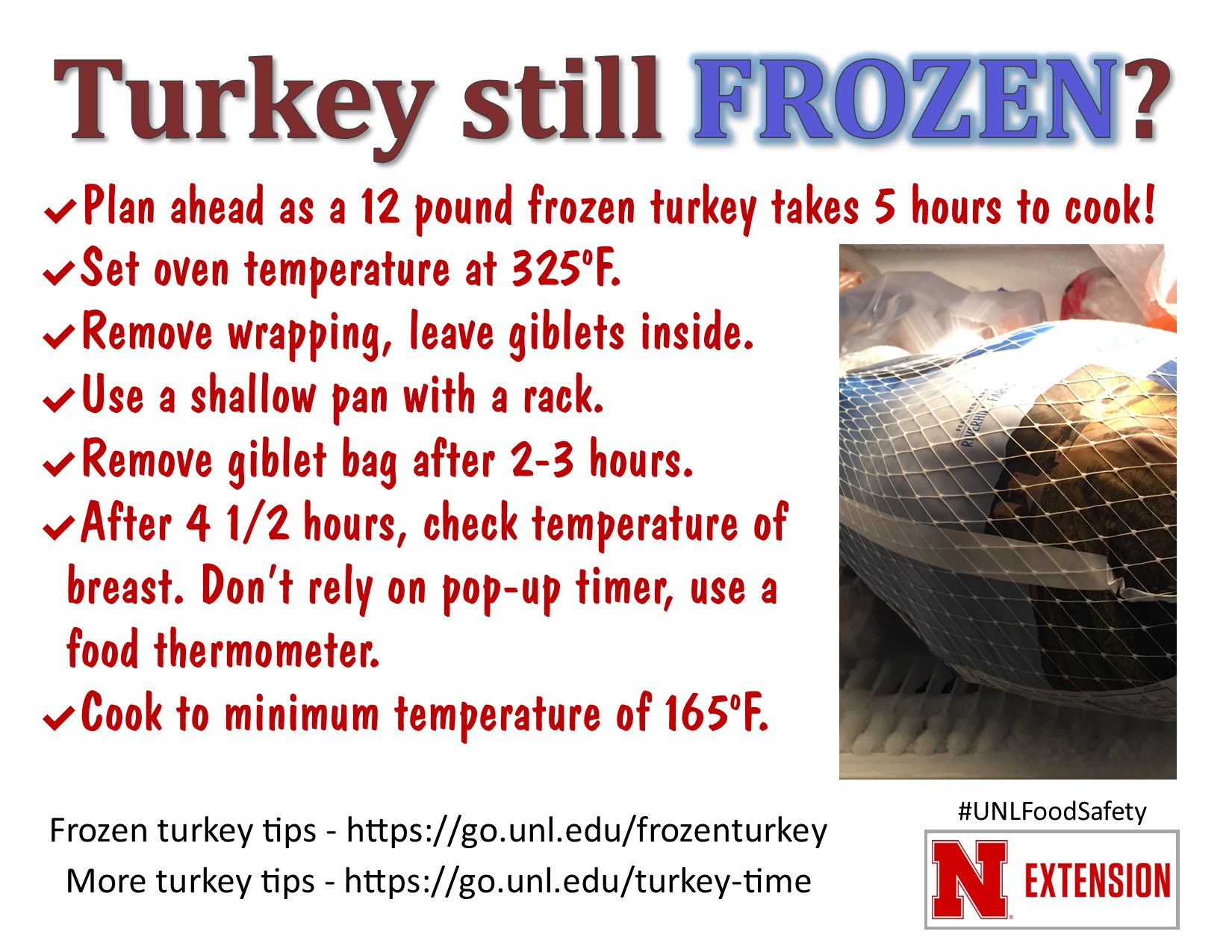
Last week I provided tips for holiday gatherings during the COVID-19 era and ways to stay engaged even if in a virtual setting. One thing that doesn’t have to look different is some of the traditional holiday foods. Trade recipes with family members so you can learn to make that special dish that someone normally brings. If the dish is too large, only make half of the recipe. Worried that a turkey will be too big for your family? Consider making a large one and freezing it so you have meals ready to go for other meals.  

The American Farm Bureau Federation annually calculates the cost of a Thanksgiving meal to serve 10 people with plenty for leftovers. This year, with a traditional Thanksgiving meal, Farm Bureau estimated a meal total of $46.90 which is less that $2.00 from last year. This is largely due to retail turkey prices being the lowest since 2010. Included in the meal is a 16-lb. turkey, bread stuffing, sweet potatoes, rolls with butter, peas, cranberries, a relish tray of carrots and celery, pumpkin pie with whipped cream and beverages of coffee and milk. You can thank our American farmers and ranchers who are able to provide us the bounty of safe and affordable food we are able to consume even through a pandemic. Another interesting fact about Thanksgiving include that 88% of Americans are expected to be feasting on turkey for Thanksgiving this year (National Turkey Federation).

Now let’s talk trivia:

Q: Why are turkeys raised?   A: Because of their excellent quality of meat and eggs

Q: What is a male turkey called?  A:  Tom

Q: What is a female turkey called?  A:  A Hen

Q: What sound do turkeys make?  A: Only tom turkeys gobble; the female makes a clucking sound.

Q: How many feathers does a turkey have at maturity?  A:  3,500 feathers

Q: How big was the heaviest turkey ever raised?  A: 86 pounds, about the size of a large dog

Q: Which gender of turkeys are usually consumed whole?  A: Hens (females) are usually sold as whole birds. Toms (males) are processed into turkey sausage, turkey franks, tenderloins, cutlets and deli meats.

Q: How long does it take a turkey to reach market size?   A: Hens usually grow for 16 weeks and is 8-16 lbs. when processed while tom usually takes 19 weeks to reach market weight and weighs 24 lbs. Large toms (24-40 lbs. are a few weeks older.

Regardless of what you do this Thanksgiving, remember to be thankful for what really matters and stay safe this year.

Uncategorized

Stayed During the Holidays – COVID Style

The holidays are usually a time filled with joy as many reunite with family members not seen as often. You might share special family recipes, play games, watch movies and just “catch up”. COVID-19 has certainly made this very difficult for face-to-face interaction but that doesn’t mean you can’t find other ways to connect. We have to be more creative and purposeful in how to interact.

According to an article published earlier this year by UNL faculty and published on Nebraska Extension’s ruralwellness.unl.edu website, “Research consistently tells us that taking care of others and maintaining meaningful relationships across generations are important for resilience and wellbeing.” (Bulling et al. 2020) Meaningful relationships contribute to a sense of belonging and help us feel connected. Sharing family stories and traditions among multiple generations is also a very special bond.

With the current pandemic, maintaining distance from our loved ones is difficult. We have missed birthdays, special events and probably other annual events or outings. The holiday season often triggers stress and sometimes even depression. Think about all of the demands we add to our plates – shopping, baking, cooking meals, cleaning and hosting events, just to name a few. This year, however, you are probably feeling a different type of stress – lack of normalcy, anxiety and disconnect. While COVID-19 has added new challenges, it has sparked creativity for some people. Like many of you, I’ve been trying to find new ways to stay emotionally connected to loved ones, so I searched and brainstormed some options.

Photo by Mathias P.R. Reding on Pexels.com
  • Host a virtual Holiday meal with friends and family who don’t live with you. You can schedule time to have a virtual meal, say a family blessing together and converse in conversation. You could also have people share recipes and prepare the same special family traditional recipes. Have everyone put their devices on the table so you can talk while enjoying the meal.
  • If you plan to have a meal together, drop off or send an item to that person ahead of time so you can share that item. You can even send matching centerpieces for everyone to display on their table. Even though it might not be the traditional meal, consider using a meal delivery site like “Hello Fresh”, etc. to share the same food.
  • Search online games to play with family members who are in a different location than you. Google, “free online games” and many options will appear, even the AARP has free games, including Atari! Just be aware that if you download an app, there might be add-ons that cost money and it might take some time to explore what will work for you and your family. You can even play card games online at https://playingcards.io/.
  • Send care packages to family members to enjoy or for a special event when you connect virtually. For example, send a hot cocoa packet and small marshmallows and enjoy hot chocolate while virtually watching a movie together.
  • Have a virtual cookie decorating or meal preparation party. Pick out a recipe and make it together virtually. Deliver food to a friend or family members’ porch or mail items such as cookies to those who might need a little extra cheering up.
  • Participate in a gratitude activity, like writing down things you are grateful for and sharing with your friends and family.  Try a gratitude jar or bowl where everyone writes down something, they are grateful for on a slip of paper. During a virtual holiday meal, take turns reading aloud what is in the jar or bowl.
  • For a holiday meal, have your child host “opening” and “closing” ceremonies. This could include a prayer, song, dance or even jokes.
  • Thank people! Decorate your front yard with thank-you signs for essential works, healthcare heroes, teachers and other special people. Have your child paint rocks with kindness messages and set rocks in special places to brighten someone else’s day.

This might be a year to reflect on the things that really matter to you and find ways to allocate more time towards those activities. If you have kids, let them brainstorm for alternative plans and start new traditions. Help children cope with the holiday blues and validate their feelings of disappointment and sadness to their disrupted holiday traditions. Remember that helping children overcome disappointment helps them build resiliency. Teach fun relaxation strategies such as meditation or even trying out a new candle scent or lotion.

Regardless how you celebrate your holiday season, remember that you are not alone. We are all navigating through these uncertain times together and it’s okay to ask for help if things get too overwhelming.

Reaching Out is Nebraska Strong

Reaching out to others and asking for help may look a bit different now but staying emotionally and socially connected is important to our health and wellbeing at all times. Learning to recognize your stressors and how to manage stress can help you personally and those around you. If you recognize someone in distress, use a caring approach in listening to them, and then connect them to resources.

Keep these Hotlines in your phone contacts:

  • Rural Response Hotline: 1-800-464-0258
  • Nebraska Family Helpline: 1-888-866-8660
  • National Disaster Distress Hotline: 1-800-985-5990

Resources: