Crops, Irrigation, Livestock, Programming

Dr. Kohl Recap

UNADJUSTEDNONRAW_thumb_7c93Kicking off the 2018-2019 Farmers & Ranchers College programming year with a full house was Dr. David Kohl, Professor Emeritus from Virginia Tech. As usual, he did an excellent job describing global risks which affect us and how those risks will affect the agricultural industry.  International trade issues continue to emerge and it will be interesting to see how they play out. One of the things to watch closely is China’s “Belt & Road Initiative” which is an ambitious effort to improve regional cooperation and connectivity on a trans-continental scale with China and approximately 65 other countries. This is important to monitor because countries impacted in this Initiative account for about 30 percent of the global GDP and 60% of the world’s population.

In regards to energy economics, the U.S. is the world’s major energy producer. As there is a continued drive towards efficiency, there is also a push for electric vehicles. In fact, Kohl said that Germany and France plan to eliminate combustible engines by the year 2040 and by 2025, one fourth of cars in China will be electric. Since 80% of ag expenses are energy related, this will be a huge impact on the agricultural industry.

Dr. Kohl also stated that the 2020’s will be a decade with lots of change, not only with emerging technologies, but consumer trends, dietary trends and use of “big data”. In the Ag Commodity Super Cycle of 2007-2012, the approximate net farm income in constant dollars was $125,000 which allowed “anyone” to make it financially. From 2013-2017, during the agricultural economic reset, it was $35,000 forcing producers to tighten family living expenses and cost of production. (Data was taken from the Center for Farm Financial Management at the University of Minnesota.) He provided critical financial performance index for debt and risk and critical questions for critical conversations that should occur with one’s lender.

two person doing hand shake
Photo by rawpixel.com on Pexels.com

With my background in leadership studies I found it interesting how more lenders are looking at the character of a client and the role that has in one’s success. Being an honest, ethical and trustworthy client is becoming more important and unfortunately there are character flaws of dishonesty being noticed such as using borrowed money for things not intended to be used for.  I like the adage, “It’s not the bad times that get you in trouble; it’s the good times.” With the past super-cycle, it was really easy for one to become complacent and want more things such as that camper or trip to Disney World, etc. but it’s not likely to resurface anytime soon.

Even with all of the challenges facing agriculture, he stated several reasons to be optimistic about agriculture. A diversified agri-entrepreneur can be successful with multiple income streams. Technology allows individuals to multi-task. Those young people who leave the farm/ranch to work in business or industry or on a different operation are better positioned to be successful because of the knowledge gained with a different point of view. Approximately 21% of American farms have no next generation coming back, so young people interested in farming have a chance to get involved. The younger generation is much more apt to collaborate and work as a team allowing them to help each other. Align yourself with positive people, know your purpose, picture where you plan to go, plan with a business & marketing plan and partner with the right people; doing all of that will help one accomplish more. His advice to young farmers is to invest in productive assets and live modestly. While past generations were independent in nature, future generations will be interdependent and work with people.

Contributions and support of area businesses allow Farmers & Ranchers College program participants to attend at no cost. For more information go.unl.edu/farmersrancherscollege.

Just a reminder of the other Farmers & Ranchers College programming:

2018-2019 Program Schedule

  • January 14, 2019** – “Partners In Progress Beef Seminar” Cow/Calf College at U.S. MARC near Clay Center, NE from 10-3:30 p.m., Registration at 9:30 a.m.
  • February 12, 2019** – “Managing Ag Land in the 21st Century” with Nebraska Extension Educators, Nebraska Extension at the Fillmore Co. Fairgrounds- Geneva, NE from 9:30- 3:00 p.m., Registration at 9:15 a.m.
  • March 14, 2019** – “Connecting Gate to Plate” with Michele Payn with Cause Matters, Corp., one of North America’s leading experts in connecting farm and food at Lazy Horse Vineyard near Ohiowa, NE with registration at 6:00 p.m. Light meal and program to follow.

 ** Programs are free; however registration is appreciated for a meal count. Please call the Fillmore Co. Extension Office at (402) 759-3712 one-week prior to the program to reserve your spot.
Uncategorized

Happy Thanksgiving!

Thanksgiving_1_16x9.jpgLet’s talk about the Thanksgiving meal, include some facts about Thanksgiving and examine reasons to be thankful. First of all, according to the USDA, about $670 million is the monetary value of turkeys consumed for Thanksgiving every year which is based on an estimated 46 million turkeys and 92 cent-per-pound. On average, it costs about $50 for a 10-person Thanksgiving meal. Included in the $50 meal is the turkey, bread stuffing, sweet potatoes, rolls with butter, peas, cranberries, a relish tray of carrots and celery, pumpkin pie with whipped cream and beverages of coffee and milk (Source: American Farm Bureau).  You can thank our American farmers and ranchers who are able to provide us the bounty of safe and affordable food we are able to consume.

Now let’s talk trivia:

Q: Why are turkeys raised?   A: Because of their excellent quality of meat and eggs

Q: What is a male turkey called?  A:  Tom

Q: What is a female turkey called?  A:  A Hen

Q: What sound do turkeys make?  A: Only tom turkeys gobble; the female makes a clucking sound.

Q: How many feathers does a turkey have at maturity?  A:  3,500 feathers

Q: How long does it take a turkey to reach market size?   A: Hens usually grow for 16 weeks and is 8-16 lbs. when processed while tom usually takes 19 weeks to reach market weight and weighs 24 lbs. Large toms (24-40 lbs. are a few weeks older.

Regardless of what you do this Thanksgiving, remember to be thankful for what really matters.

Crops, Irrigation, Livestock, Programming

Agricultural Update & The Road Ahead

nature red forest leaves
Photo by Pixabay on Pexels.com

Those of us in agriculture are no stranger to risks involved with agriculture that are taken every day, whether it is financial, production, legal, price/market or human resource risks.  While we can’t control everything, there are measures that can be taken to protect one’s operation and reduce risk. Each year the Farmers & Ranchers College hosts Dr. David Kohl, Professor Emeritus from Virginia Tech who does an excellent job describing global risks which affect us locally and how those risks will affect the agricultural industry.  He will also provide tips for success and explain how past generations were independent but the importance for future generations to be interdependent and work closely with people.

This year, Dr. Kohl’s program is titled Agricultural Update and the Road Ahead. The program will start at 1:00 p.m. on November 27, 2018 at the Opera House in Bruning, Nebraska. Contributions and support of area businesses allow participants to attend at no cost. To save time at the door, feel free to register online.

The Farmers and Ranchers College Committee consists of Fred Bruning of Bruning, Bryan Dohrman of Grafton, Sarah Miller of Carleton, Jennifer Engle of Fairmont, Ryne Norton of York, Jim Donovan of Geneva, Bryce Kassik of Geneva, Eric Kamler of Geneva, and Brandy VanDeWalle of Ohiowa.

Just a reminder of the other Farmers & Ranchers College programming:

2018-2019 Program Schedule

  • January 14, 2019** – “Partners In Progress Beef Seminar” Cow/Calf College at U.S. MARC near Clay Center, NE from 10-3:30 p.m., Registration at 9:30 a.m.
  • February 12, 2019** – “Managing Ag Land in the 21st Century” with Nebraska Extension Educators, Nebraska Extension at the Fillmore Co. Fairgrounds- Geneva, NE from 9:30- 3:00 p.m., Registration at 9:15 a.m.
  • March 14, 2019** – “Connecting Gate to Plate” with Michele Payn with Cause Matters, Corp., one of North America’s leading experts in connecting farm and food at Lazy Horse Vineyard near Ohiowa, NE with registration at 6:00 p.m. Light meal and program to follow.

 ** Programs are free; however registration is appreciated for a meal count. Please call the Fillmore Co. Extension Office at (402) 759-3712 one-week prior to the program to reserve your spot.

Crops, Irrigation, Livestock, Programming

Landlord-Tenant Workshops

Nebraska Extension’s CropWatch recently announced a series of workshops that will help landlords and tenants with common land management questions that are often asked. Both parties want to ensure they are treated fairly and keeping up with market practices. This week, I’ve decided to share upcoming workshops and dates close to the area, including one we will be having in Geneva.

u s dollar bills pin down on the ground
Photo by Pixabay on Pexels.com

Current and future landowners and tenants should make plans to attend free upcoming land management workshops sponsored by Nebraska Extension. The workshops will be held at nine sites across Nebraska this fall. “Managing Agricultural Land for the 21st Century” will cover current trends in cash rental rates, lease provisions, and crop and grazing land considerations.

Nebraska Extension Educators Allan Vyhnalek, Aaron Nygren, Erin Laborie, Ben Beckman and Jim Jansen conduct research and outreach in land management, agronomy and beef production. They will address common agricultural landlord and tenant questions such as, What does an equitable rental rate look like for my land? How do I manage a farmland lease? What should I expect for communications between the landlord and tenant? What does a soil test tell me? I hear about organic or natural production; how does that vary from what my farmer is currently doing? If corn or soybeans are not making money, should something else be raised on my land? What are key pasture leasing considerations including stocking rates? Who is responsible for cedar tree removal from grazing land?

These workshops will provide participants with up-to-date information so they can be confident about their lease arrangements. To ensure enough handouts please register at go.unl.edu/landlordtenant or call the phone number listed for each location. Lunch arrangements will be handled by each host location.

Registration at each location will start at 9:15 a.m., program starting at 9:30 a.m., and ending by 3:00 p.m.

Workshop dates and locations within our area include:

  • COLUMBUS: Nov. 20 at the Platte County Extension Office, 2715 13th St., 402-563-4901, attendees will be dismissed to have lunch off site
  • NORFOLK: Dec. 3 at the Divots Convention Center, 4200 W Norfolk Ave. 402-370-4040, lunch will be sponsored
  • BEATRICE: Dec. 19 at the Gage County Extension Office, 1115 W Scot St., 402-233-1384, lunch will be sponsored
  • HASTINGS: Dec. 20 at the Adams County Fairgrounds, 947 S Baltimore Ave, 402-461-7209, lunch will be sponsored
  • GENEVA: Feb. 12 at the Fillmore County Fairgrounds, Geneva, 402-759-3712, lunch sponsored by the Farmers & Ranchers College

These programs are free and open to the public with funding provided by the North Central Extension Risk Management Education Center and USDA National Institute of Food and Agriculture under award number 2015-49200-24226. For more information or assistance, please contact Allan Vyhnalek at 402-472-1771 or avyhnalek2@unl.edu, or Jim Jansen, at 402-261-7572 or jjansen4@unl.edu.

Programming, Youth

Recognizing Youth’s Efforts

One of the great things I have the opportunity to observe in my role as a youth development educator is how youth grow and develop from year to year. Youth, just like other living things such as plants need a nourishing, supportive, and protective environment. The 4-H youth development program utilizes the “essential elements” research to ensure that a youth development program is met. This means that each young person needs to:

4h_mark1

  • Know they are cared about by others: that they belong
  • Feel and believe they are capable and successful: that they have mastery
  • Know they are able to influence people and events: that they have independence
  • Practice helping others: that they can demonstrate generosity.

From research, it was concluded that there are eight critical elements that must be present for positive and effective experiences and opportunities benefiting youth. These eight elements are known as the eight essential elements and are summarized below:

  1. A positive relationship with a caring adult.
  2. A safe emotional and physical environment
  3. An inclusive environment
  4. Engagement in learning
  5. Opportunity for mastery
  6. Opportunity to see oneself as an active participant in the future
  7. Opportunity for self-determination
  8. Opportunity to value and practice service for others
IMG_3872
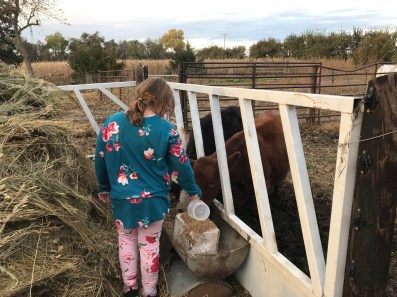
Fair may be over, but chores still need to be done. Here, my daughter McKenzie does chores after school.

The 4-H program uses recognition as one strategy to help youth become more capable and competent, thus creating an opportunity for mastery. In fact, recognition is a huge incentive to promote further learning and can inspire young people to continue participating and learning. 4-H has several ways we recognize youth. One of the most visible is during the county fair, which young receive ribbons and perhaps even trophies. This provides immediate feedback for youth based on the quality of their end product. There is so much more to the 4-H program than the county fair which youth benefit. Youth complete essentially a “record book” which documents the progression of skills and activities youth have learned from completing not only their fair projects, but participation in other 4-H activities throughout the year. Youth also have the opportunity to self-reflect on a variety of accomplishments throughout their 4-H year. The Diamond Clover program’s goal is to provide 4-H members a rich and diverse learning experience and is designed for members of all ages.

It is that time of year, that both the Clay and Fillmore County 4-H programs will be highlighting those 4-H youth who have earned various 4-H awards. If you are in Fillmore County, I encourage you to attend the Amazing Race/4-H Recognition event which will start at 2:00 p.m. on October 28th at the Fillmore County Fairgrounds. Any youth, whether in 4-H or not, will compete in teams of four or less to complete some fun and unique tasks. Following the Amazing Race activity, 4-H’ers will be recognized for their achievements around 3:00 p.m. with an ice cream social. More information can be found at fillmore.unl.edu.

If you are in Clay County, the annual 4-H Achievement Program will be held Friday, November 2, at 7:00pm at the Fairgrounds.  4-Her’s should bring a dessert to share.

For more information on how to get youth involved in America’s largest youth development organization that empowers nearly six million young people across the U.S., you can check out Nebraska 4-H’s website or contact me at brandy.vandewalle@unl.edu.

Crops, Irrigation, Livestock, Programming, Youth

National Farmer’s Day

Combining2011Web
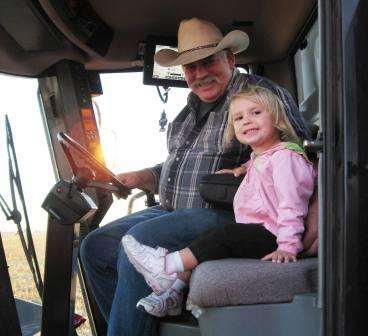
Here is my favorite farmer. Taken a few years ago, my oldest daughter enjoyed riding with “Grandpa Beek” (my Dad) in the combine. So thankful I grew up on a farm!

There are so many “days” such as “national ice cream day”, “national punctuation day”, etc. which I quite honestly don’t pay attention. Today, however I noticed that it is National Farmer’s Day and felt like that is something to spend a little bit of time recognizing. October 12th is a day for us to pay tribute to farmers throughout our great nation.

Have you thanked a farmer lately?  Farmers work long and hard hours and there is no guarantee of good yields. As is the case lately, farmers are at the mercy of the weather and waiting to return to harvest due to wet conditions.

Agriculture and farmers are the backbone of our society and economy!  Thank you to all of the farmers who feed and clothe us!

#NationalFarmersDay

Uncategorized

You Can’t See Your Own Dirt

Good Read by my Extension Colleague Deb Weitzenkamp!

Deb Weitzenkamp's avatarNext Generation Extension

I’m at a national conference, and while there, I’ve met and talked with tons of people from other states and had the opportunity to talk with plenty of people from Nebraska. Last night as I was thinking about some of these conversations, I had the epiphany that “People Can’t See Their Own Dirt”….let me explain.

Within our professions we expend a great deal of energy trying to fix problems. And, we also are able to quickly identify problems. When we are transferred to another county/state/position in Extension, we quickly can assess where these problems are, and are frustrated, perhaps even dumbfounded that the previous person at that position either didn’t identify the problem or either refused or was incapable in some way of addressing the problem. And yet, as we exited our initial position we also are able to identify issues that we weren’t able to address in the time…

View original post 241 more words