Uncategorized

What is NE Extension?

As I approach my twentieth year in Extension later this year, there is one question that many people commonly ask, “What exactly is Extension and what do you do?” While I have a quick answer to that question, there is so much more I’d like to tell them about the great work my colleagues do across the state. Nebraska Extension brings the University of Nebraska’s expertise and research in 8 key impact areas directly to Nebraskans from all walks of life in the state’s 93 counties. Nebraskans turn to Nebraska Extension to strengthen their families, inspire their communities, empower young people, conserve and protect natural resources, and advance their farms, ranches, and businesses.

Every county in Nebraska is served by talented and dedicated Extension faculty and staff. Each county has an educator focused on one of the 8 key areas with accountability to other counties in their specific discipline. This ensures that every county has access to a subject matter expert to provide clients the best answer to any question that might arise, and each county is provided relevant programming in that topical area.

 Annually, Extension faculty complete a yearly report capturing the most important, impactful work completed during that year. As a youth development educator, the statewide goals I aim to accomplish are as follows: “Youth will be prepared to make decisions for today and the future, thrive in their careers, and become competent & connected members of their communities.” In the next two columns, I will share some excerpts from my report to explain some programming you may or may not be aware.

In 2024, I spearheaded state programming that engaged 795 youth in STEM education with a focus on crop science through the Innovative Youth Corn Challenge (IYCC), Youth Crop Scouting Competition (YCSC), and Special Agronomy Project. These efforts generated nearly $13,000 in revenue. I directly taught or facilitated programming for 2,250 youth, contributing 4,518 teaching hours. Through collaboration with Clay and Fillmore County staff, we successfully reached 82% of youth in Clay County and 66% in Fillmore County.

The Bureau of Labor Statistics projects 6% growth in agronomy jobs, with 2,100 new positions expected by 2032. Girdziute et al. (2002) found that youth are often reluctant to pursue agricultural careers due to factors like gender, location, and the belief that agriculture lacks opportunities for personal fulfillment. This emphasizes the need for the ag industry to actively engage youth in the workforce.

A 13-year partnership with the NE Corn Board in the Innovative Youth Corn Challenge (IYCC),a youth on-farm research project has successfully engaged youth in agricultural, science-based learning. A long-term program evaluation shows that over 100 IYCC alumni have pursued agricultural or STEM careers, with nearly 300 youth participating. In the last growing season, 5 teams (43 youth) harvested corn plots, and 2 teams (18 youth) took part in a drone field day, using Tello EDU drones for crop scouting and agricultural literacy projects. Two FFA Chapters created impactful videos of their projects, which were featured in CropWatch, Nebraska Corn Board publications, Nebraska Farmer magazine, and social media. The Arlington FFA video alone has nearly 1,000 views and 6 shares. During the last growing season, 6 participants reported a combined total of 288 hours working on their corn challenge plots. With 43 youth participating, and assuming each spent an average of 48 hours, the total time invested by youth could reach up to 2,064 hours.

  • 100% of current IYCC participants (n=12) enhanced their ability to 1) accurately identify pests, 2) understand crop scouting procedures, 3) set-up research plots, 4) determine profitability of practices and 5) evaluate new products/practices in the field.
  • I enjoyed having a project last for a long duration and seeing the end results.” -Current Participant
  • “There have been numerous individuals that have gone into ag fields. Two have went to farming, one ag retail and one agronomy.” – Former Innovative Youth Corn Challenge advisor

Next week, I’ll share more of how I strive to accomplish this and other goals.

Crops, Livestock, Programming

Ready, Set, Spread: Manure Application Workshops

Turning manure nutrients into better crop yields while protecting the environment will be the focus of ten Nebraska Extension Land Application Training workshops held across the state this February and March, with one held locally in Geneva on February 6th.

Land Application Training workshops focus on what fields should best utilize manure nutrients and other benefits. Each workshop will be highly participant-led with limited seating. Participants will be given a scenario and asked at the end of each activity to determine whether the field will benefit from manure application or whether there are considerations that make the field less desirable for manure application. Based on the activities, participants will then rank each field within the scenario to determine a priority ranking for the entire scenario. Activity topics will include manure nutrient value, transportation cost, soil health, water quality, neighbors, and odors. Regulations and record-keeping about manure storage and application will also be addressed during each workshop.

These manure workshops meet land application training certification needs for livestock producers that are required to do so, but they are open to anyone interested in using manure as a nutrient source on cropland as well. The Land Application Training events run from 9 am to 4 pm local time. I’ve only included some on the eastern side of the state; if you need others, go to water.unl.edu/lat.

Workshop sessions include:

  • Fillmore County Extension Office in Geneva on February 6
  • Madison County Extension Office in Norfolk on February 26
  • Nielsen Community Center in West Point on March 4
  • Rainforth Animal Health in Wisner (en Español) on March 6
  • Platte County Extension Office in Columbus on March 12

New this year, the UNL animal manure management team added two opportunities to take the workshop in Spanish. The content for the workshop will be the same in both languages, but hoping this will give Spanish speakers a chance to focus on the content of the workshop rather than the translation of English materials.

Because of limited seating and a meal provided during each workshop, registration is required and is requested 1 week ahead of each event. To ensure you can attend the location and date most convenient for you, register at water.unl.edu/lat. Workshops cost $75 per operation requiring certification or $25 per person with no expectation of certification. You can learn more about all things manure including these workshops at manure.unl.edu or by reaching out to Leslie Johnson at leslie.johnson@unl.edu.

Livestock, Programming

Cow/Calf College

Cow/Calf College Features Livestock Risk Management Workshop

The University of Nebraska-Lincoln’s Center for Agricultural Profitability and Nebraska Extension will host a risk management workshop in Clay Center to update livestock producers on the latest insurance options and risk management planning strategies. It will be held from 10:30 a.m. to 2 p.m., Jan. 21, at the U.S. Meat Animal Research Center, 844 Road 313.  

The workshop is sponsored by Nebraska Extension’s Cow-Calf College program. Sign-in begins at 10 a.m. In the event of inclement weather, the workshop will be held from 10:30 a.m. to 2 p.m. on Jan. 28 at the same location.  

Attendees will learn strategies designed to reduce risk exposure to achieve a profitable outcome in uncertain times. Current issues facing the cattle industry will be discussed to help producers to make more informed decisions. The goal of this program is to provide producers with the tools and resources needed to navigate the volatile livestock market and better manage risk through the creation of a risk management plan. 

Topics will include managing drought risk with USDA’s Pasture, Rangeland, and Forage (PRF) Insurance and managing price risk with USDA’s Livestock Risk Protection (LRP). PRF is an annual sign-up due on Dec. 1. LRP can be purchased most business days. The Weaned Calf Risk Protection Program, new this year, will also be discussed.  

The workshop is free, and snacks will be provided. Registration is required by Jan. 15 by calling Nebraska Extension in Fillmore County at 402-759-3712.  

This material is based upon work supported by USDA/NIFA under Award Number 2023-70027-40444. 

Programming

Extension Recap from 2024


The holiday season is often a time to reflect on the year. I have many blessings in my life. First and foremost, I would like to thank my family for being understanding with me as I often attend evening meetings and conferences that pull me away from home. Secondly, I am fortunate to have great colleagues who help me and work as a team. I’d also like to thank you, my readers, extension supporters, 4-H volunteers, and others who have helped in some capacity with an extension or 4-H program. Without amazing Nebraska Extension supporters, programs wouldn’t be as successful as they are.

While I’m not one to boast, I’d like to mention that Nebraska Extension is one of the leading Extension organizations in the country! Utilizing cutting-edge delivery methods and programming ideas, we focus on critical issues identified by Nebraskans through periodic needs assessments. Nebraska Extension is nationally leading 4-H youth engagement by reaching 1 in 3 youth between the ages of 8-18 and we have extension faculty with national and international reputations. Finally, Nebraska Extension engages many Nebraskans in Extension programming every year – from the agricultural community to sectors as diverse as nutrition, early childhood education, and youth development. From border-to-border Nebraska Extension is making an incredible impact on the success of our state – its youth, families, farms and ranches, communities, and economy. These are broad program accomplishments to look at from a balcony view, but what are some key impacts locally for Clay and Fillmore Counties?

Nebraska Extension in Clay County and Fillmore County reaches 1 out of 2 age-eligible youth. Clay County youth programming highlights include reaching youth ages 5-18, through school enrichment, traditional 4-H programs, shooting sports, and after-school programming. Junior Leaders mentor younger kids and engage in community service. Specifically:

  • 72 – 7th graders participated in InVenture Day, which is an entrepreneurial event for middle school youth.
  • 442 youth participated in school enrichment programming.
  • 200 youth from 4 counties participated in Connect the Dots, a career preparedness event.
  • 100 youth participated in the Clay County shooting sports program.

 A few Fillmore County accomplishments include:

  • $1,000 public value for the Extension Master Gardener Volunteer program in Fillmore County.
  • 92 middle-schoolers learned what it takes to start a business while working with 15 adult mentors and entrepreneurs.
  • 337 views by producers on an article to aid in cropping decision options after a major county-wide hail event.
  • Pen to Plate was an intergenerational learning experience for participants to learn more about the livestock industry through hands-on learning. 96% of participants strongly agreed or agreed that they learned where meat cuts come from about the animal.

 Of course, there are numerous more impacts and programming results to report, but these are some that I decided to include in this week’s column. For more information and ways to participate in Extension programming go to extension.unl.edu.

Wishing you a very Happy Holiday Season!

Uncategorized

Poinsettias

With Christmas nearly here, I decided to share an article from our Extension Horticulturalist, Nicole Stoner on poinsettias.

Photo by Becerra Govea Photo on Pexels.com

A common holiday gift is the Poinsettia. If you receive one for Christmas this year, do you know how to care for it? Poinsettias are a staple for the Christmas season, but they don’t have to be a short-lived gift that is thrown away at the beginning of the year.  Typically, poinsettias are most commonly found in red, but the color range is constantly expanding. They can now be found in white, pink, green, peach, yellow, or marbled or speckled colors. On an old-fashioned poinsettia, the red-colored portion of the poinsettia is not the flower of the plant. The colored, leaf-like structures are called bracts, which are just modified leaves. The true flower of a poinsettia is the yellow center of the colored bracts.

Poinsettias need to be cared for during transport in addition to regular care. When you first purchase a poinsettia, you need to protect it as you transport it. Wrap it in a plastic bag when you take it outside to protect the plant from the cold, windy outdoor conditions. This should be done when you leave the store when you move it from your car to your home, and if you take it to another house as a gift. Remove that plastic bag each time it gets to the house. Once in its permanent location, remove the decorative foil wrapping from the pot of the plant. This foil can hold onto water for the plant but in a bad way. It can make it so that the plant roots are constantly wet and root rot can occur.

The care of a poinsettia can be easy. Water the plant when the soil becomes dry to the touch, but don’t wait until the plant wilts prior to watering again either. Place poinsettias where they will get indirect light for 6 hours a day. Keep the plant away from cold drafts and keep them from touching a window. This plant prefers temperatures of 60-70 degrees F during the day and 55 degrees F overnight. Avoid fertilization during the flowering period but fertilize monthly with a houseplant fertilizer during the rest of the growing season.

You can keep poinsettias year-round rather than discarding at the end of the Holiday season. After Christmas, grow the poinsettia like you would any other houseplant. Keep it evenly moist and in bright, indirect light. In February or March, cut back the plant to 4-6 inches in height. In May, repot into a larger pot. It can be placed outdoors in spring after frost. In the fall, bring the poinsettia indoors before night temperatures drop below 55-60 degrees F.

Poinsettias will flower after being induced by a photoperiod, like Christmas Cactus. It takes at least 12 hours of darkness per night to initiate flowering. Starting at the end of September, place the poinsettia in a closet or cover it with a box to keep it in total darkness from 5pm until 8am daily. Even the lights in our homes can interfere with the flowering cycle, so it needs to be completely dark around the plant. Once flowering begins, in mid-December, you may discontinue the daily dark period. It will help if you continue this until the bracts are fully expanded. Then, you can enjoy your poinsettia through the holiday season for years to come.

Wishing you and yours a Happy Holiday season!

Uncategorized

Economic Megatrends of Agriculture

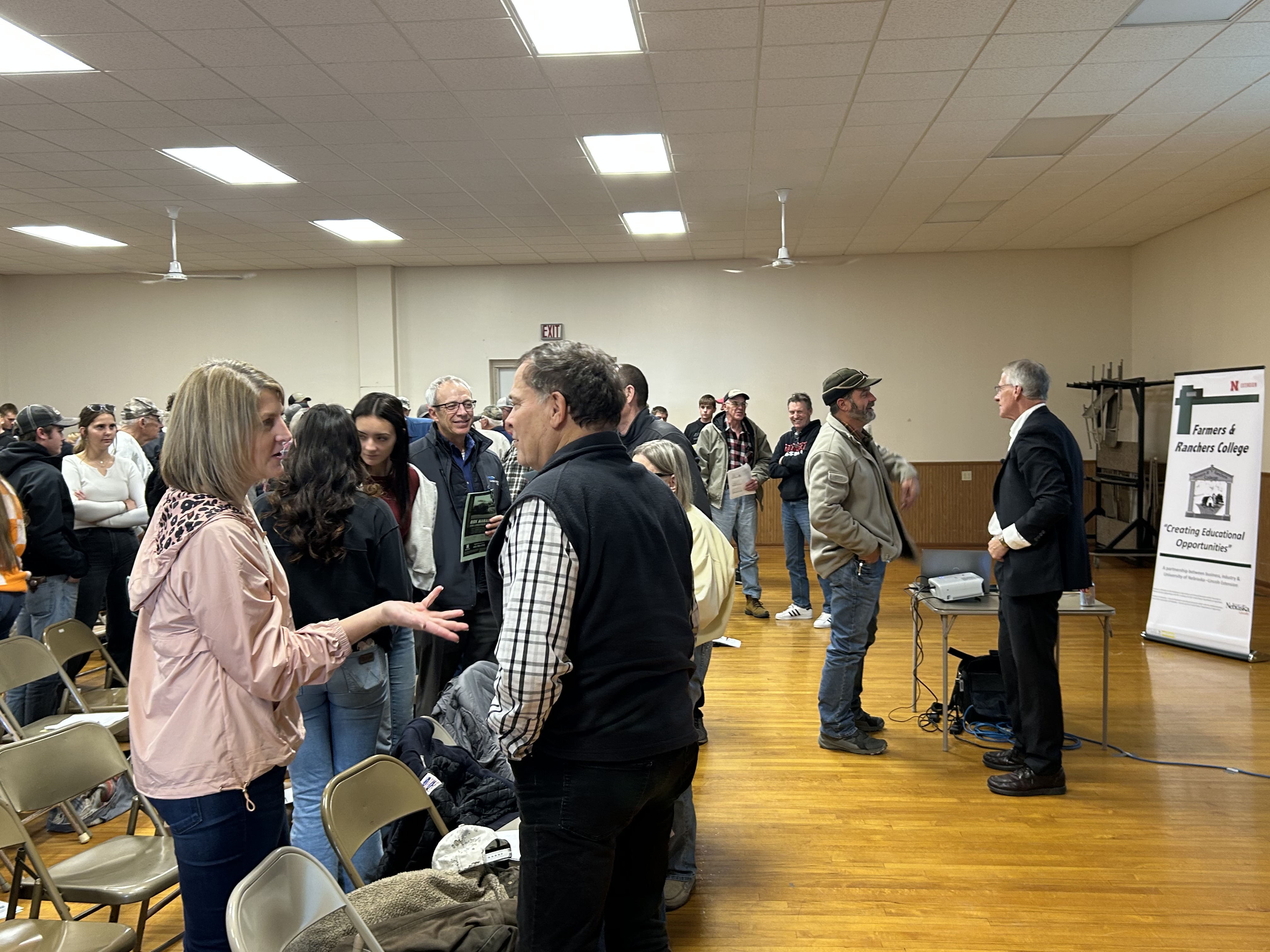
Recently at a Farmers & Ranchers College program, Dr. David Kohl emphasized the importance of following risk management strategies. As always, his global knowledge of events and how they impact U.S. agriculture is fascinating. Dr. Kohl coined three economic characters in the U.S. population to observe the future of the economy – ALICE, HENRY, and HERMAN.

First, the ALICE is Asset Limited, Income Constrained, and Employed. Kohl says this group “has been experiencing financial stress. After the stimulus monies were exhausted, their spending has been curtailed and they are building up credit card and consumer debt. Watch for increases in both credit card and consumer debt delinquencies. Despite this group’s economic and financial stresses, it is not enough to create a full-fledged recession.”

Then there is HENRY: High Earner, Not Rich Yet. Kohl describes this population segment that needing close monitoring. These individuals and households earn $100,000 to $300,000 annually but have difficulty purchasing a home because of large amounts of college debt and consumer spending. If this segment experiences job losses or significant changes in household income and purchasing power, this could push the economy into a recession.

The third character is HERMAN: High Earner, Rick, Mobile, Appreciated Net Worth. These individuals are high earners, rich, mobile, and have appreciated net worth often between $1 and 10 million dollars. If this group has job losses, paper wealth declines in stocks and homes, or loses flexibility and mobility in employment or marketplace dynamics, a recession could be deep and extended. Dr. Kohl said economists and business executives expressed concerns that there is a possibility of a recession in 2025 and that the economy is very fragile to external events.

Dr. Kohl provided many important reminders about caring for one’s physical and mental health. Maintaining a balance between business and life is important in any career, including agricultural producers. Eating a balanced diet, drinking water, exercising, and getting enough sleep are important physically. Mentally, shut off technology and unplug every day, know your life’s purpose, participate in faith or spiritual activities, engage in mental activities, and surround yourself with a supportive network. He praised the 4-H and FFA programs for providing youth a purpose and developing life skills.

To the over 30 students in attendance, he reminded them of the importance of goal setting. Eighty-six percent of the U.S. population have no goals and of the 16% that do, only 4% write them down. Those who write down their goals are much more likely to be successful than those who don’t. Reviewing his Business IQ Management Factor list, he emphasized that some of the hardest questions on his Business IQ list were the ones relating to those having a family succession/transition plan and one’s attitude. Having a positive attitude is important for anyone to succeed.

He also emphasized that youth and/or beginning farmers should work with the older generation to do a narrative or history of the family farm or ranch to preserve the family legacy, ideals, and purpose. Also, to remain positive, practice gratitude. He encouraged everyone to write thank you notes to those who have helped them in some way; they should be hand-written which means a lot more than an email.

In conclusion, there are many factors that determine a successful farm or ranch. Don’t forget to remain engaged with the world, regional, and local economics, and know your cost of production and financial numbers, but it is just as important to take care of yourself and your family. Practice effective physical and mental practices to keep you healthy. As we are in this holiday season, I wish you and yours the best.

Programming

Nebraska Extension Succession Planning Series for Women In Agriculture

A multi-state extension workshop series for women in agriculture will offer strategies to evaluate and improve farm estate and transition plans. Leaving a Lasting Legacy for Midwestern Farm Women: A Succession Planning Series, will be held from 5 to 8 p.m. Central time on Jan. 21, Jan. 28, Feb. 4, and Feb. 11 at sites across Kansas, Nebraska, and Indiana. The series is being produced through a collaborative effort by extension programs at Kansas State University, the University of Nebraska-Lincoln, and Purdue University.

Topics covered will include motivation for succession planning, communicating with family, the financial aspects of estate and transition plans, and the legal aspects of putting a plan in place. A keynote speaker will be simulcast to every workshop location during each meeting, with time for questions and a hands-on activity for participants. A meal will be provided on each date.

“Planning for what happens to your things when you’re gone can be daunting, but it’s so important, especially in agriculture, so that the transition to the next generation goes smoothly,” said Jessica Groskopf, director of the Nebraska Women in Agriculture program. “This series will help women learn best practices and new strategies to help the transition and estate planning processes so they can take that back to their farm or ranch and help lead the way in creating or reevaluating their plans.”

Groskopf said the program’s structure is intended to strengthen networks of women in rural areas, which can provide opportunities for building trust and sharing information. “Connections are so important to rural women,” she said. “We have seen the benefits that come from knowing your peers, having a place to share difficulties, and mitigating the isolation that so many of us in agriculture often feel.”

Locally, the Fillmore County Extension office located at 1340 G Street in Geneva, NE will be one of the hosting sites. The registration fee for in-person attendance is $60 before Jan. 13 and increases to $75 on or after Jan. 13. A virtual option is available for $75. Participants are encouraged to attend all four sessions. More information and registration is available on the Nebraska Women in Agriculture website, https://wia.unl.edu/succession25.

This material is based upon work supported by USDA/NIFA under Award Number2023-70027-40444.

Uncategorized

Happy Thanksgiving!

The American Farm Bureau Federation annually calculates the cost of a Thanksgiving meal to serve 10 people with plenty of leftovers. This year, with a traditional Thanksgiving meal, Farm Bureau estimated a meal total of $58.08 which is a slight decrease from $61.17 last year. This is a 5% decrease in last year’s cost. The turkey price is about $1.60 per pound compared to last year which is a 6% decrease from last year due to a decrease in demand. Included in the meal is a 16-lb. turkey, bread stuffing, sweet potatoes, rolls with butter, peas, cranberries, a relish tray of carrots and celery, pumpkin pie with whipped cream, and beverages of coffee and milk. While the decline in this year’s Thanksgiving meal costs offers some relief to Americans, this year’s meal is still 19% more expensive than the pre-pandemic levels of 2019. 

Photo by Tima Miroshnichenko on Pexels.com

You can thank our American farmers and ranchers who are able to provide us the bounty of safe and affordable food. Another interesting fact about Thanksgiving is that 88% of Americans are expected to be feasting on turkey for Thanksgiving this year (National Turkey Federation). The top turkey-producing states are: Minnesota, North Carolina, Arkansas, Indiana, Missouri, Virginia, Iowa, and California. The United States is the world’s largest turkey producer and largest exporter of turkey products.

Now let’s talk trivia:

Q: Why are turkeys raised?   A: Because of their excellent quality of meat and eggs

Q: What is a male turkey called?  A:  Tom

Q: What is a female turkey called?  A:  A Hen

Q: What sound do turkeys make?  A: Only tom turkeys gobble; the female makes a clucking sound.

Q: How many feathers does a turkey have at maturity?  A:  3,500 feathers

Q: How big was the heaviest turkey ever raised?  A: 86 pounds, about the size of a large dog

Q: Which gender of turkeys are usually consumed whole?  A: Hens (females) are usually sold as whole birds. Toms (males) are processed into turkey sausage, turkey franks, tenderloins, cutlets and deli meats.

Q: How long does it take a turkey to reach market size?   A: Hens usually grow for 16 weeks and is 8-16 lbs. when processed while tom usually takes 19 weeks to reach market weight and weighs 24 lbs. Large toms (24-40 lbs. are a few weeks older.

Regardless of what you do this Thanksgiving, remember to be thankful for what really matters.

If you need tips or resources to help you prepare a turkey or any other food for Thanksgiving, go to Nebraska Extension’s Food Website at https://food.unl.edu/article/thanksgiving-central.

Thanksgiving Food Safety

Interesting fact, the day after Thanksgiving is the biggest food borne-illness day of the year. Nebraska Extension continues to do their part to help our clientele remain heathy and have good food safety practices. The following are from Extension Educator Cindy Brison and our Food Safety Team.

One of the most frequently asked questions around Thanksgiving is “How do I thaw a frozen turkey?”…including on Thanksgiving morning! The answer to this question is an important step in meal prep for food safety. Unsafe handling and undercooking the turkey can cause foodborne illness. For information on thawing your turkey and more: https://food.unl.edu/how-thaw-turkey 

Do not wash or rinse your raw turkey! Avoid washing or rinsing a turkey (or any eggs, meat or poultry products for that matter) before cooking. Juices can transfer bacteria onto kitchen surfaces, other foods and utensils. If you must wash or rinse your turkey because of brining or other marinating processes, be sure to thoroughly clean and then sanitize all kitchen surfaces to eliminate the risk of cross-contamination. For more safety tips: https://go.unl.edu/washingturkey 

Crops, Programming

Farmers & Ranchers College 

The Farmers & Ranchers College continues to provide high-quality programming to area producers and agribusiness professionals with 2024-25 programming. Farmers & Ranchers College will kick off with its traditional program featuring Dr. David Kohl. The committee will continue the annual Cow/Calf College in January and end with a crop insurance and weather program in February.

This year Farmers & Ranchers College will kick off December 3rd featuring Dr. David Kohl Registration will start at 12:45 p.m. and the program will start at 1:00 p.m. at the Opera House in Bruning, NE. The program is titled, “Economic Realities in the Agricultural Industry: The Pulse.”  What economic realities can we expect to see in the global and domestic agricultural industry?  Dr. Kohl keeps a pulse on trends and factors to be mindful of during the economic downturn. Some of these topics are land and machinery values, interest rates, concentration of agriculture, importance of cash flows, non-financial factors and much more.  

On the road ahead, the good doctor will draw upon his decades of experience as an educator and businessperson to present common financial and business practices that will proactively position your business regardless of the economic cycle.  Don’t miss this high energy session in preparation for 2025! 

Many to the area are very familiar with Dr. Kohl, but if you are not, here are some details about him. Dr. Dave Kohl is an academic Hall of Famer in the College of Agriculture at Virginia Tech, Blacksburg, VA.  Dr. Kohl has keen insight into the agriculture industry gained through extensive travel, research, and involvement in ag businesses.  He has traveled nearly 10 million miles; conducted more than 6,500 presentations; and published more than 2,250 articles in his career. Dr. Kohl’s wisdom and engagement with all levels of the industry provide a unique perspective into future trends.

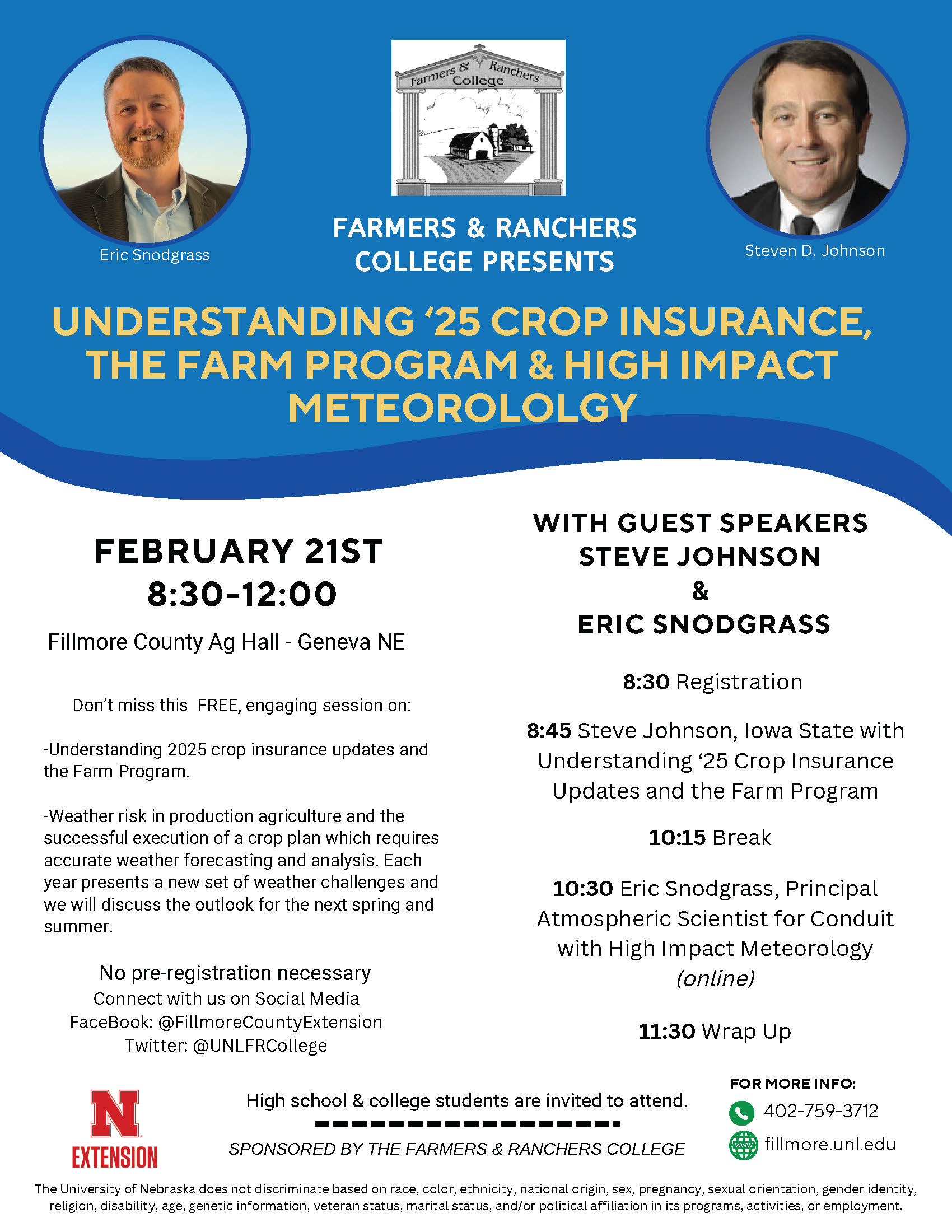
In 2025, the Partners in Progress –Beef Seminar (Cow/Calf College) will be at U.S. Meat Animal Research Center near Clay Center on January 21st. More details will follow as the date nears. Finally, in February, Farmers & Ranchers College will host a crop insurance and weather update.

Questions on the Farmers & Ranchers College can be directed to the Fillmore County Extension Office at (402) 759-3712. To participate and register, go to the website: go.unl.edu/frcollege.