Programming, Uncategorized, Youth

Nebraska Extension creating healthy environments

In an effort to promote the wide variety of programming Nebraska Extension offers, this week’s column features a brief summary from Kayla Colgrove, extension educator in the foods and nutrition area. Nebraska Extension is increasing its healthy lifestyle programming to combat childhood obesity across the state by implementing programs to improve healthy eating and physical activity patterns in youth. Extension professionals focused on food, nutrition, and health, Supplemental Nutrition Assistance Program, Expanded Food and Nutrition Education Program, 4-H and The Learning Child are teaming up to create healthier home, school and community environments to make healthy choices, the more desirable choice.

kids eating healthy
Image courtesy of USDA Ag Research Service

“There is a critical need to reduce childhood overweight and obesity rates by encouraging healthy habits,” said Nebraska Extension Educator Kayla Colgrove. “Extension programming not only improves eating patterns and increases physical activity in youth, but it also helps create those environments that support healthier living.”

Through statewide programming and dynamic partnerships, Extension team members reached over 63,000 Nebraskans with programs focused on healthy habits in 2016. The programs are designed to teach children and youth how to choose healthy food and beverages, prepare food safely, fun ways to be active, alternatives to screen time and more.

Along with the focus on community and home, Extension is also focused on helping to create a healthy environment in Nebraska schools. Recently, a collaboration between Extension, Tri County Public Schools, Nebraska Team Nutrition and several local businesses culminated in a farmers market at the school. During the lunch hour, nearly 400 Tri County students were able to sample a variety of locally grown food, including vegetables from the school’s new hydroponic garden system.

During the farmers market, Colgrove shared smoothie samples with the students that featured spinach as a main ingredient. Other samples included hummus, whole grain bread, local meats from Frank’s Smokehouse, cheese sticks from Classic Dairy and ice cream from Prairieland Dairy. The farmers market was a way to show students the different types of vegetables they could grow in their own garden. The school district’s goal is to grow vegetables that could be introduced into their school lunch program. Their hydroponic garden is soil-less, and feeds plants in water. They are currently growing heads of lettuce.

Extension is also helping Nebraska schools implement smarter lunchroom strategies. This effort is the result of a partnership between Extension, 4-H, SNAP-Ed, Nebraska Department of Education (NDE) Team Nutrition, and Nebraska Department of Health and Human Services (DHHS). The smarter lunchroom strategies provide low to no cost solutions to reduce food waste and increase the consumption of healthy foods. Extension staff provide technical assistance to schools by helping the food service staff identify and diagnose school lunchroom challenges, and develop strategies to promote healthy choices.

Additionally, school enrichment kits are available for elementary school teachers to assist in teaching nutrition and physical activity in their classrooms. The kits are designed to meet national health and state science standards. The kits include education on MyPlate food groups, basic nutrients, label reading, and planning a balanced meal. All materials needed to teach each lesson are included in the kits.

The goals of these efforts are for children and youth to increase consumption of healthy foods and beverages, engage in healthy levels of physical activity, and make the healthy choice, the more desirable choice. To learn more about Extension’s efforts in this area, watch a video at http://go.unl.edu/issue2.

For more information on foods and nutrition, contact my colleague, Kayla Colgrove, Extension Educator at 402-223-1384 or kcolgrove2@unl.edu.
Crops, Irrigation, Livestock, Uncategorized

Census of Agriculture

According to a news release from the National Agricultural Statistics Service (NASS), America’s farmers and ranchers will soon have the opportunity to strongly represent agriculture in their communities and industry by taking part in the 2017 Census of Agriculture. Conducted every five years by the U.S. Department of Agriculture’s (USDA) National Agricultural Statistics Service (NASS), the census, to be mailed at the end of this year, is a complete count of all U.S. farms, ranches, and those who operate them.

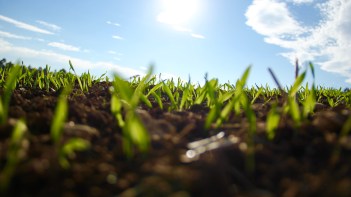
pexels-photo
Photo Credit: pexels.com

The Census of Agriculture is the only source of uniform, comprehensive, and impartial agriculture data for every county in the United States, according to the NASS administrator Huber Hamer.  The Census of Agriculture highlights land use and ownership, operator characteristics, production practices, income and expenditures, and other topics. The 2012 Census of Agriculture revealed that over three million farmers operated more than two million farms, spanning over 914 million acres. This was a four percent decrease in the number of U.S. farms from the previous census in 2007. However, agriculture sales, income, and expenses increased between 2007 and 2012. This telling information and thousands of other agriculture statistics are a direct result of responses to the Census of Agriculture.

Producers who are new to farming or did not receive a Census of Agriculture in 2012 still have time to sign up to receive the 2017 Census of Agriculture report form by visiting http://www.agcensus.usda.gov and clicking on the ‘Make Sure You Are Counted’ button through June. NASS defines a farm as any place from which $1,000 or more of agricultural products were produced and sold, or normally would have been sold, during the census year (2017).

For more information about the 2017 Census of Agriculture and to see how census data are used, visit www.agcensus.usda.gov or call (800) 727-9540.

Programming, Uncategorized, Youth

Progressive Agriculture Safety Day

Statistics from those impacted by aSafety_Day farm-related injury or death are sobering. Many know someone who was impacted by a farm accident that in many cases could have been prevented. This is why I feel so passionately about conducting the Annual Progressive Safety Day each year. The Progressive Agriculture Foundation provides safety and health information to rural communities that need it, which is why I’ve teamed up with them. The mission of Progressive Agriculture Days is simple – to provide education, training, and resources to make farm and ranch life safer and healthier for children and their communities.

During the program’s first year, a total of 2,800 participants and volunteers were reached throughout the South and Midwest and now the program impacts close to 110,000 annually. To date, the program has impacted more than 1.3 million children and adults.

2017 T-shirt DesignCurrent 1st through 6th graders are invited to attend Progressive Agriculture Safety Day on Thursday, May 25, 2017 at the Fillmore County Fairgrounds.  Youth will participate in a variety of events designed to help them be aware of safety in potentially hazardous situations such as bike riding, agricultural settings, electrical safety and others.  This year, youth will walk away with an emergency disaster kit to use in the case of storms and other emergencies. Registration and consent form is REQUIRED by all youth who participate. This can be found at fillmore.unl.edu or by stopping by the Extension Office in Geneva or Clay Center.

April 21st is early bird registration at only $5 per child that includes a t-shirt, lunch, snack and goodie bag. After April 21st registration increases to $10 per youth in order to participate.

This event is conducted by Nebraska Extension in Fillmore/Clay Counties, Shickley and Fillmore Central FFA chapters, 4-H and W.I.F.E. For more info or to register, call 402-759-3712 or email brandy.vandewalle@unl.edu.

Programming, Uncategorized, Youth

Tractor Safety Classes Across Nebraska

Nebraska Extension Tractor Safety & Hazardous Occupations Courses will take place at nine Nebraska locations this year. Teens 14 or 15 years of age who will work on a farm should plan to attend.TractorCourse

Federal law prohibits youth less than 16 years of age from working on a farm for anyone other than parents or legal guardians. Certification received through this course grants an exemption to the law allowing 14- and 15-year-olds to drive a tractor and to do field work with specific mechanized equipment.

The most common cause of agricultural-related death in Nebraska is overturned tractors and all-terrain vehicles (ATVs). Extensive training on Tractor and ATV safety occurs during in-class lessons with hands-on activities. Instilling an attitude of ‘safety first’ and respect for agricultural equipment are primary goals of the course.

The course consists of two days of instruction plus homework assignments. The first day of classroom instruction includes hands-on demonstrations, concluding with a written test. Students are required to pass the test before taking the driving test on day two. Classroom instruction will cover the required elements of the National Safe Tractor and Machinery Operation Program. Students will complete homework assignments that will be due on day two. The second day will include a driving test, equipment operation, and ATV safety lessons. To receive certification, students must demonstrate competence in hitching and unhitching equipment and driving a tractor and trailer through a standardized course.

Two locations, Gordon and McCook, will offer online course instruction to replace the first day of the two-day course. Students complete this at their convenience before attending the driving component of the course on-site.

All on-site classes begin at 8:00 A.M. and end times will vary, depending on the number of participants. Dates, locations, and Site Coordinator phone numbers are as follows: May 30 & 31 – Kearney Fairgrounds (308) 236-1235; June 1 & 2 – Auburn Fairgrounds (402) 245-4324; June 6 & 7 – Valentine Fairgrounds (402) 376-1850; June 13 & 14 – North Platte West Central Research and Extension Center (308) 532-2683; June 15 & 16 – Gering Legacy Museum (308) 632-1480; June 19 & 20 – Wayne Fairgrounds (402) 584-2234; June 22 – Gordon Fairgrounds (308) 327-2312; June 23 – McCook Fairgrounds (308) 345-3390; July 10 & 11 – Grand Island College Park (308) 385-5088.

Participants must submit registration forms to the location they will attend at least one week before the course. The registration form is available online: kearney.unl.edu. Cost of the course is $60, which includes educational materials, instruction, supplies, and lunches. For more information, contact the Extension Office of the location where student will attend.

Horticulture, Programming, Uncategorized

Extension’s Many Resources

Often times people might only directly experience one or two faucets of extension and not be aware of the multitude of other programming extension provides, some of which indirectly impacts people. One such example is the training extension provides crop consultants; while a farmer might not directly call the extension office, more than likely that crop consultant has either attended training conducted by extension or used research done by extension. Another example that impacts everyone is the ServSafe program which is a program that food-service workers attend and learn how to safely prepare food. If you eat at a restaurant, it is likely that server has learned from Extension programs through the ServSafe program. This month is no different; Extension will be offering two unique and very different programs.

Emerald Ash Borer UpdateEAB

In 2016, Emerald Ash Borer was confirmed in Nebraska resulting in many homeowners being concerned about their trees. There are two upcoming workshops planned in Clay Center and Geneva. Both of these workshops will provide information about the emerald ash borer, what to look for in your ash trees, and management decisions for homeowners to consider.

In Clay Center on Thursday, March 30th from 5:30 – 7:00 p.m. at the Clay County Fairgrounds there will be a program with a light supper. Please RSVP to (402) 762-3644 for planning purposes.

If you can’t make that work for your schedule, there will be a similar program on April 11th at 6:00 p.m. at the Fillmore County Extension Office in Geneva that will include an emerald ash borer update in addition to an update on ice storm damage from this winter. A $5 registration fee includes a meal and handouts; please register to (402) 759-3712 by April 10th for planning purposes.

I am Moving, I am Learning Childcare Workshop

The development of the brain in a I am moving picchild’s first five years of life clearly shapes the learning capacity they have for the rest of their life. Leanne Manning, Extension Educator in Saline County will be presenting the session “Moving with the Brain in Mind” from the I Am Moving, I Am Learning series at a workshop in Geneva at the University of Nebraska Extension Office, 1340 G Street, on Tuesday, April 18th. Participants will learn how the brain structure and functioning can be enhanced through movement and physical activity. The session will follow with “Making the Most of Your Music” as moving to music is a fun and healthy way to encourage movement and physical activity. This workshop helps early childhood programs and parents understand how music helps with physical development and ways to incorporate new vocabulary and actions into children’s music.

There is a fee for the workshop which begins at 6:00 p.m. and ends at 8:00 p.m. Registration should be turned in by Friday, March 31, to University of Nebraska-Lincoln Extension in Saline County. Please contact our office for more information at 402-821-2151 or view details at http://go.unl.edu/imil. Space is limited.

Crops, Horticulture, Irrigation, Livestock, Uncategorized, Youth

Celebrate Agriculture!

The Agriculture Council of America (ACA) hosts National Agriculture Day on March 21, 2017. This marks the 44th anniversary of National Ag Day, which is celebrated in classrooms and communities across the country. The theme for National Ag Day 2017 is “Agriculture: Food For Life.” The purpose of National Agriculture Day is to tell the true story of American agriculture and remind citizens that agriculture is a part of all of us. A number of producers, agricultural associations,Ag Day2017 corporations, students and government organizations involved in agriculture are expected to participate.

National Ag Day is organized by the Agriculture Council of America. ACA is a nonprofit organization composed of leaders in the agricultural, food and fiber community, dedicating its efforts to increasing the public’s awareness of agriculture’s role in modern society. The National Ag Day program encourages every American to:

  • Understand how food and fiber products are produced.
  • Appreciate the role agriculture plays in providing safe, abundant and affordable products.
  • Value the essential role of agriculture in maintaining a strong economy.
  • Acknowledge and consider career opportunities in the agriculture, food and fiber industry.NewAgDay_Original.jpg

Since National Ag Day is one day out of the year, it is important for us to note that we everyday we should promote agriculture and share our story. Did you know how amazing Nebraska agriculture is?  The Nebraska Department of Agriculture publishes some statistics that are interesting to read! For example, nationally, Nebraska ranks first in popcorn production, Great northern bean production and commercial red
meat production. Nebraska ranks second on pinto bean production, number of head of bison and proso millet production. We rank third for corn grain production and corn exports and fourth in cash receipts for all farm commodities. Nebraska ranks fifth soybean and grain sorghum production.

Cash receipts from farm marketings contributed over $23 billion to Nebraska’s economy in 2015 and 6.1 percent of the U.S. total. Every dollar in agricultural exports generates $1.22 in economic activities such as transportation, financing, warehousing and production. Nebraska’s $6.4 billion in agricultural exports in 2015 translate into $7.8 billion in additional economic activity.

One in four jobs in Nebraska is related to agriculture, thus the importance agriculture has on our economy. In Extension, we have several great programs that not only teach youth the importance of agriculture, but also strive to make youth aware of the numerous career opportunities in agriculture. As technology continues to advance, types of careers in agriculture will also continue to expand.

In conclusion, while March 21st is one day devoted to celebrating agriculture, we should celebrate agriculture everyday. If you ate, thank a farmer or rancher who produced your food. From the food we eat to the clothes we wear, tires on our cars, toothpaste, crayons, windshield wiper fluid, etc., we need to thank our American farmers and ranchers for providing us with products that are affordable and good for the environment. Thank you farmers and ranchers!

Uncategorized, Youth

4-H celebrates Nebraska’s 150th birthday with 4-H Clover Chase

NE 150.pngNebraska will commemorate its Sesquicentennial with a yearlong celebration throughout 2017 involving a wide variety of programs and events across the state. Nebraska 4-H youth and volunteers in all 93 counties will have the opportunity to join the Nebraska 150 Celebration by participating in the 4-H Clover Chase developed by Nebraska Extension 4-H Youth Development, in partnership with the Nebraska 4-H Foundation. The 4-H Clover Chase will run from March 1, 2017, until August 15, 2017.

The 4-H Clover Chase is an original event created just for those engaged in 4-H and the Nebraska 150 Celebration. We hope to build a link between 4-H members and the Nebraska 150 celebration. This interactive scavenger hunt will encourage a connection to Nebraska’s history and heritage while fostering a spirit of community involvement and enrichment. The most exciting part is that we will get to see Nebraska through the eyes of 4-H youth.

4-H Clover Chase participants begin by downloading an app that contains a list of over 25 specific challenges. Challenges include taking a photo of a local celebrity, a leading industry, the tallest building in the county, and many more. Each challenge has a point value. Submitting a photo on the app, cloverchase.pnggives participants the allotted points, the goal is to complete enough challenges to reach 150 points. The submitted scavenger hunt photos that will be displayed in the 4-H building during the 2017 Nebraska State Fair, and also on social media using #NE4HChase. Participants have 150 days to complete the “chase.”
Each participant who completes the chase will receive a “4-H Clover Chase” commemorative water bottle. Everyone who receives a prize for completion will be put into a drawing to win a drone with video capability. The county Extension Office with the highest percentage of participation wins a free National Youth Science Day kit.

For more information about the 4-H Clover Chase, contact Nebraska Extension Educator Megan Burda or go to the Clover Chase webpage.

The Nebraska 4-H Youth Development Program strives to empower youth to reach their full potential working and learning in partnership with caring adults. 4-H programming is present in all 93 counties across Nebraska. To learn more visit www.4h.unl.edu.

Crops, Uncategorized, Youth

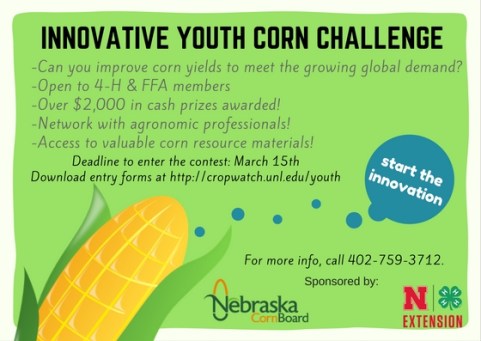
Innovative Youth Corn Challenge

iycc-17-promoAttention 4-H and FFA members! Do you enjoy being outside? Learning new things about crops? Considering a career involving crops, insects, diseases, soils, water or more? Do you want to help figure out how to feed our world’s growing population in a sustainable way?

Nebraska Extension and the Nebraska Corn Board are offering the sixth Innovative Youth Corn Challenge contest. This contest, open to 4-H members (age 10 & older as of Jan. 1st) or FFA members (in-school members), guides participants through all aspects of corn production, as well as agricultural careers related to corn production.

As a team (2 or more participants), youth will be challenged to implement a production practice different than normal to determine if they increased their yield. Economics and sustainability of the practice will also be considered. Yields, cropping history, and production information will be collected in the Corn Yield Challenge management summary.

Each year youth are surveyed and an overwhelming majority indicate an improvement in knowledge in the areas of: economic thresholds to treat pests, crop scouting procedures, financial record keeping, determining if practices on a field are profitable and how to evaluate new products/practices on a field. One youth stated, “I learned about how much time and hard work is needed to care for corn.” Several other youth enjoyed meeting new people (as a result of the Innovative Youth Corn Challenge). Another participant said, “I realize what I do today matters for tomorrow.”iycc-cover

Cash prizes and plaques will be given to the first, second, and third place teams. First place will receive $1,000, second place will receive $500, and third place will receive $250. Sustainability, crop scouting and “extra mile” awards will also be given, each worth $200. A webpage and FaceBook page are available with resources to help participants complete their project that can be found at cropwatch.unl.edu webpage under “related topics” titled “youth and youth activities”.

To participate in 2017, youth must complete an online entry form by March 15th to the Fillmore County Extension Office in Geneva, NE. Hard copy forms can also be downloaded. For more information, contact me at brandy.vandewalle@unl.edu.

Uncategorized, Youth

4-H Teaches Life Skills

The 4-H youth development program uses resources of the land-grant university and the time, talent, and dedication of Extension staff, screened and hardworking leaders and volunteers to teach youth life skills. Nebraska 4-H engages youth through 4-H programs and activities by building positive youth relationships between youth and adults and providing needed support for youth to develop their strengths. Through development of positive partnerships and development of strengths, 4-H programs in Nebraska are developing life skills that help youth become competent when they transition from child to adulthood. A skill is a learned ability and life skills are competencies that assist people in functioning well in the environments in which they life.Kick off graphic 2017.jpg

The life skills model for 4-H as developed by Hendricks (1998) is used in Nebraska. This 4-H framework incorporates the four “H’s” of the clover, head, heart, hands and health. The skills are grouped as they follow below:

HEAD. Thinking skills are as broken down as follows: Learning to learn, decision-making, problem solving, critical thinking, and service learning.
Managing skills are as follows: Goal setting, planning/organizing, wise use of resources, keeping records, and resiliency.

HEART. Relating skills are as follows: Communications, cooperation, social skills, conflict resolution, and accepting differences.
Skills that promote caring include: concern for others, empathy, sharing, nurturing, and relationships.

HANDS. Skills that enhance giving are community service/volunteering, leadership, responsibility, and contribution to a group.
Skills that promote working are: marketable/useable skills, teamwork and being self-motivated.

HEALTH. Living skills youth learn include: healthy life-style choices, stress management, disease prevention and personal safety.
Skills that teach youth a sense of being are: self-esteem, self-responsibility, character, managing feelings and self-discipline.