Programming, Uncategorized, Youth

ATV Safety Training Courses

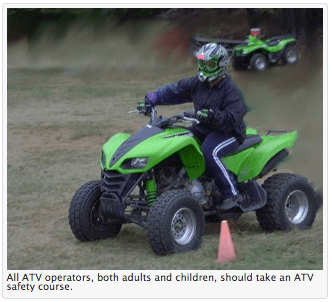
According to the U.S. Consumer Product Safety Commission, there were more than 100,000 injuries from ATVs in 2012 and about 25% of those involved youth under 16 years of age; these were just the emergency department-treated injuries. On average 144 youth die from ATV accidents and 568 adults die from ATV accidents (2001-2008 averages). Riding an adult ATV is much different than a youth riding a bicycle. For comparison, a bicycle can weigh up to 30 pounds, is self-propelled and will go only as fast as a kid can pedal, whereas an adult ATV can weigh up to 600 pounds, is motorized and can go up to 65 mph.ATV

For these reasons, the Nebraska 4-H ATV Safety Program, in collaboration with the American Safety Institute, offers age-specific free e-learning courses to address basic ATV safety principles. Adults, teens, and children will learn how to apply the “golden rules” of ATV riding in an interactive setting. The course includes videos, pictures, and interactive games to make it a fun and effective learning experience for all age groups. After taking the course, users can take an ATV Safety exam and receive a certificate of completion. The entire course takes approximately 2–2.5 hours to complete. You can stop at any point and your progress will be saved so that you can return and pick up right where you left off. It’s free, fun and a great learning experience for ATV riders of all ages. Sign up on the ATV Safety Institute’s website.

Nebraska Extension in Fillmore County is pleased to announce that we are teaming up with Fillmore County Farm Bureau to offer two sessions of a half-day, hands-on training for youth ages 8-18 in Geneva. If numbers warrant, two sessions will be offered on June 29th at the Fillmore County Fairgrounds. The first session will run from 9-Noon with an afternoon session from 1-4:00 p.m. Lunch will be served at noon for both sessions and ATV helmets will be provided through the generous support of Farm Bureau.

The ATV RiderCourse® is a fast-paced, half-day, hands-on training that is exciting and fun. Sessions include: pre-ride inspection, starting and stopping, quick turns, hill riding, and emergency stopping, swerving and riding over obstacles.

The training is conducted by certified RiderCourse® instructors. Whatever your experience, you will come away a better rider. Space is limited, so register by June 22nd by calling the Extension office at (402) 759-3712. A consent form must be completed, in addition to youth taking the course prior to June 29th.

Programming, Uncategorized, Youth

Keeping Youth Safe

That, “no child would become ill, injured or die from farm, ranch and rural activities.” That is the vision for the Progressive Agriculture Foundation. The Progressive Agriculture Foundation governs and secures funding solely to educate youth and families on ways to make farm, ranch and rural life safer for children and their families. The Progressive Agriculture Foundation is the largest rural safety and health education program for children in North America, which Fillmore County is proud to provide one of those programs. In fact, over 400 safety days are held across the United States & Canada reaching over 70,000 participants.IMG_5433

On May 26, 2016, Nebraska Extension in Fillmore County coordinated Progressive Agriculture Safety Day for 108 area youth in collaboration with the local WIFE (Women Involved in Farm Economics) and Fillmore Central and Shickley FFA Chapters. The event for youth who just completed 1st to 6th grades provided hands-on activities for youth on a variety of topics from bike safety to healthy lifestyles to agriculture literacy. This program is possible through the assistance of numerous volunteers from varying agencies or businesses.

IMG_5452
Each youth took home a kit with supplies to get them started should an emergency situation arise. 


This year youth learned what should go into an emergency kit and assemble their own kit to take home. Goody bags with lots of resources and other activities were also sent home with the record-breaking number of participants. IMG_5429

Crops, Uncategorized

Field Flooding

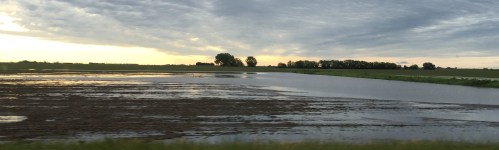
Recent heavy rains in parts of the area reminded me of an article about the survivable chances for corn that has been flooded in low-lying areas so I’ve summarized and put some excerpts from an article written by R.L. Bob Nielsen from the Purdue University, Agronomy Department. Obviously, plants that are completely submerged are at higher risk than those that are partially submerged and the longer an area remains ponded, the higher the risk of plant death.

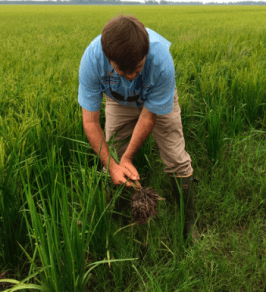
Nielsen reported that most agronomists believe that young corn can survive up to about 4 days of outrighIMG_5480t ponding if temperatures are relatively cool (mid-60’s F or cooler); fewer days if temperatures are warm (mid-70’s F or warmer). Soil oxygen is depleted within about 48 hours of soil saturation. Without oxygen, the plants cannot perform critical life sustaining functions; e.g. nutrient and water uptake is impaired and root growth is inhibited. Even if surface water subsides quickly, the likelihood of dense surface crusts forming as the soil dries increases the risk of emergence failure for recently planted crops.
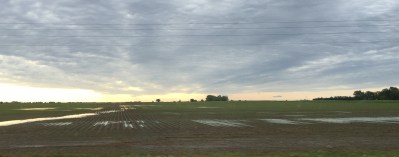
Young corn (less than V-6 stage) is more susceptible to ponding damage than corn beyond the sixth leaf stage. This is because young plants are more easily submerged than older and taller plants and since the corn plant’s growing point remains below ground until about V6. The health of the growing point can be assessed initially by splitting stalks and visually examining the lower portion of the stem. Within 3 to 5 days after water drains from the ponded area, look for the appearance of fresh leaves from the whorls of the plants.

Another consideration is that extended periods of saturated soils AFTER the surface water subsides can also take their toll on the overall vigor of the crop, causing IMG_5475stunted roots and dying roots. As a result, plants may be subject to greater injury during a subsequently dry summer due to their restricted root systems.
Loss of nutrients is another concern on saturated soils. Significant loss of soil N will cause nitrogen deficiencies and possible additional yield loss. Lengthy periods of wet soil conditions also favor the development of seedling blight diseases, especially those caused by Pythium fungi. Poorly drained areas of fields are most at risk for the development of these diseases and will also be risky for potential replant operations.

There are other diseases that can affect flooded areas of corn as well, but for now, it’s kind of a wait and see until you can get into the field and assess the health of the growing point. For more information refer to Effects of Flooding or Ponding on Young Corn by R.L. Nielsen.

Horticulture, Uncategorized, Youth

Hands to Larger Service

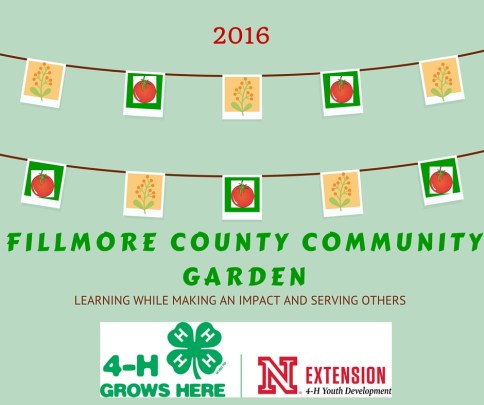
“I give my head to clearer thinking, my heart to greater loyalty and my hands to larger service and my health to better living….” That is how the 4-H Pledge starts out and is just what Fillmore County 4-H’ers have done for five years in a row! In collaboration with the Farm Service Agency and Natural Resources Conversation Service offices in Geneva, 4-H’ers recently planted vegetables for those who might not otherwise have access to fresh produce.ComGardenGraphic16

Over the summer, 4-H’ers, FSA and NRCS staff will take turns caring for the garden, increasing their horticultural skills while learning responsibility, service and other important life skills. This has been a great project each year allowing youth to not only learn, but also fulfill the purpose of 4-H by using their hands for larger service.
IMG_5391Special thanks to Barbur Floral for donating the vegetable plants and Roddy Salmon for tilling the garden and residents at Pioneer Manor for assisting as well! If you or your organization is interested in contributing or participating in the Fillmore County Community Garden this year, please contact the Fillmore County Extension Office.

Programming, Uncategorized, Youth

Extension Intern

This summer, I am fortunate to have an intern through the Nebraska Extension Internship program so this week, she will be sharing some information about her background. Please give her a warm Fillmore County welcome, as you will see her smiling face at various activities this summer.

Hi! My name is Melissa Nordboe and I am the new Fillmore County Extension Intern! I am originally from Ames, NE, which is located right outside of Fremont. I grew up on acreage with my parents and one older sibling where we restore and collect antique tractors, gas engines, and old vehicles. I attended North Bend Central High School in North Bend, NE where I had the privilege of being involved heavily in the North Bend FFA Chapter. I went all the way through and received my American FFA Degree in 2012.melissa

During my time, I was also a member of Dodge County 4-H where I exhibited what seemed like hundreds of projects every year. I was heavily involved in baking, Favorite Foods Day, and woodworking just to name a few. One year, I also showed chickens. I received several awards for my projects and some went to State Fair. 4-H and FFA have always been a huge part of my life and I would not be the person I am today if I hadn’t joined them both at a young age. I also had the privilege of being selected as a Dodge County 4-H Ambassador while in high school and that is where I developed a deeper interest into Nebraska 4-H. Every experience has made an impact in my life one way or another and has made me appreciate all the opportunities I have been given.

I am currently a senior at the University of Nebraska-Lincoln majoring in Agricultural Education with a minor in Agronomy. I will be graduating this August with a Bachelor’s Degree. Agriculture has always been a major part of my life and I want to continue that in hopes of obtaining a job in Nebraska Extension after college. I am so excited to be a part of Fillmore County Extension this summer as their intern and I can’t wait to meet new people and get a glance into the “behind the scenes” of Extension.

Programming, Uncategorized

Extension’s Robust Programming

Last week I briefly highlighted areas Nebraska Extension is involved. This week’s article will touch on some of the key issues Extension focuses, based on stakeholder input. Nebraska faces critical issues we must address to make our world a better place. Many of these issues are complex, multidisciplinary, and challenging, yet they present us with great opportunities to help shape a future that is promising for our state and nation (NE Extension, 2016).” With this in mind, in order for Extension to help clients be successful, Extension faculty and staff are highly focused on specific issues in interdisciplinary teams, called Issue Teams.

IssueTeamThis list will continue to evolve over time as issues change, but currently consist of: Insect ecosystems (including pollinators), healthy lifestyles for children and youth, resistant & invasive pests, Nebraska leaders, college & career success, engaging underserved youth, climate variation, consumer confidence in food, children learning experiences, emerging technology for agriculture, efficient water use, ag producer economic viability, livable communities, STEM careers, water & soil protection, youth entrepreneurship food access and diversified ag production.

With my background in agricultural education, I will be moving towards more youth development programming related to crops and agricultural education. I am able to reciprocate youth crop/ag programming with my colleagues, as they provide programming in their expertise area in Fillmore County. This week I’d like to introduce you to my Extension colleagues serving Fillmore County and their respective regions.

Food, Nutrition & Health – Kayla Colgrove, Gage County
Beef (& Livestock) Systems – Duane Lienemann, Webster County
The Learning Child – Leanne Manning, Saline County
Community Environment (Horticulture) – Nicole Stoner, Gage County
Crops & Water – Me as I transition into more youth development; it will be the new educator in Clay County when hired.
4-H Youth Development – Me! I will also serve Clay County as I move towards more youth programming.

You might wonder how this will impact the service you receive, when in fact Extension always has had a network of faculty in these disciplines. The biggest advantage with this structure change is that faculty is more focused in their respective disciplines, thus providing clients better service and programs. It also helps clientele establish improved relationships with Extension faculty as we serve our accountability regions. Even if you do not physically go into an Extension office or use our web tools, apps or publications, it is likely the information a farmer received from a crop consultant or salesman came from UNL research or Extension programming. Food handlers at restaurants were probably trained by Nebraska Extension’s Serve Safe program and parents going through a divorce take a course taught by, you guessed it – Nebraska Extension faculty! We are sometimes referred to as the ‘best kept secret’ which is why I’m taking some time this week to share just a couple examples of programs you might not be familiar.

As it says on our Extension website, the University of Nebraska-Lincoln Extension is a nationally respected educational leader. We work in a rapidly changing world, yet one familiar phrase seems most appropriate for Extension’s future: “The future is what we choose to make.” We have a responsibility to our clientele and colleagues to maintain high quality educational programs and a relevant and responsive organization.

Crops, Horticulture, Irrigation, Livestock, Programming, Uncategorized, Youth

What is Extension?

Often times when I tell people I work at the “Extension Office” they have no idea what it is we do. It is so hard to describe without giving a plethora of information. One of our signature programs people often most often associate with is the 4-H program. While this is a large and very successful component of Extension, it is only one of many programs.ExtensionDifferencepic

Everyday, whether you know it or not, you have most likely been indirectly impacted by Extension programming. Extension essentially takes science and research-based information from the University Of Nebraska – Lincoln and delivers it into the hands of the public. We make UNL easily accessible to the public. For example, we provide services and resources to the agricultural community, but also sectors as diverse as nutrition, health care and technology. From border to border, Nebraska Extension is making an incredible impact on the success of our state – its youth, its families, its farms & ranches, its communities, its economy.

For example, as a result of our Learning Child Extension staff, approximately 24,000 children in Nebraska benefit from early childhood professionals and parents who have the essential skills and knowledge to support the healthy growth and development in the children in their care. Take the crops area: last year, Extension presented workshops in 94 locations to over 4,000 participants from 93 Nebraska counties, 9 U.S. states and 4 foreign countries. Our community vitality programming has engaged over 10,000 Nebraskans in Broadband planning and engaged over 2,500 people through the Entrepreneurial Community Activation Process which resulted in community-wide visions, a new economic development corporation being started, community web portal and a young professional network.

Nebraska Extension continues to evolve and is one of the leading Extension programs in the world. In doing so, Extension Educators are more focused in their area of expertise and able to provide clients with robust information. For example, Extension staff covers a specific region to ensure clients are being served well. Each county has access to a professional in the areas of:

  • Community environment (horticulture)
  • Food, Nutrition & Health
  • Crops & Water
  • The Learning Child
  • Community Vitality
  • Beef & Livestock Systems
  • 4-H Youth Development

This has been a very brief overview of Extension and next week we’ll discuss how this impacts our multi-disciplinary programming and Fillmore County.

Programming, Uncategorized, Youth

Extension Tractor Safety Courses

Nebraska Extension Tractor Safety/Hazardous Occupations Courses will be offered at seven locations in Nebraska during May and June. Any 14 or 15-year-old teen that plans to work on a farm other than his/her parents’ should plan to attend. Federal law prohibits youth less than 16 years of age from working on a farm for anyone other than his or her parents or guardian.   Certification through the course grants an exemption to the law allowing 14- and 15-year-olds to drive a tractor and to do field work with mechanized equipment.tractorsafety

The most common cause of death in agriculture accidents in Nebraska is overturn from tractors and all-terrain-vehicles (ATVs), according to farm fatality surveillance data. Tractor and ATV overturn prevention are featured in the class work. Instilling an attitude of ‘safety first’ is a primary goal of the course, according to class instructors, where youth have the chance to learn respect for agricultural jobs and the tools involved.

Classes consist of two days of instruction plus homework assignments. Classes are from 8 a.m. – 5 p.m. each day. Class dates and locations closest for our area include:

— May 23-24, Fairgrounds, Kearney
— June 20-21, Fairgrounds, Wayne
— June 23-24, College Park, Grand Island

Pre-registration is strongly encouraged at least one week before a location’s start date to the Extension Office at the course site. Cost is $60, which includes educational materials, testing, supplies, lunches and breaks. For more information, contact Aaron Yoder at (402) 552-7240, aaron.yoder@unmc.edu or Ellen Duysen at (402) 552-3394, ellen.duysen@unmc.edu.

The first day of class will consist of intensive classroom instruction with hands-on demonstrations, concluding with a written test that must be completed satisfactorily before students may continue driving tests the next day.  Classroom instruction will cover the required elements of the National Safe Tractor and Machinery Operation Program. Homework will be assigned to turn in the next day.

The second day will include testing, driving and operating machinery. Students must demonstrate competence in hitching equipment and driving a tractor and trailer through a standardized course as well as hitching PTO and hydraulic systems.

Crops, Horticulture, Uncategorized

Pesky Purple Weed

People have asked me about the purple weed that has emerged in fields and lawns. Most likely that flower is henbit that is an annual forb in Nebraska and a member of the mint family, which means it has a square stem. It has distinctive leaves with crenate and lobed leaf margins and purple to pink flowers. For control, this weed is a winter annual, which means the seed germinates in the fall and the small plants overwinter before growing aggressively in early spring. It flowers in April and May and dies in the hot, dry summer weather. Flowers can produce a lot of seed, which is one reason henbit infestations can increase each year.Henbit

Control of henbit this time of year is not recommended because the plant will die shortly. The best option for control is to hand pull the weed in lawns. This has the advantage of minimizing the amount of seed production for next fall. If henbit infestation becomes unacceptable, then apply a PRE herbicide in late summer to early fall. Finally, henbit that does germinate in the fall will be killed with the same POST herbicides that are used to control other pesky weeds like dandelions and creeping Charlie. Other management options for henbit control include, 1) maintaining a healthy and vigorously growing lawn or 2) adding a deep layer of mulch to landscape beds.

Programming, Uncategorized, Youth

Progressive Ag Safety Day

Statistics from those impacted by a farm-related injury or death are sobering. Many know someone who was impacted by a farm accident that in many cases could have been prevented. This is why I feel so passionately about conducting the Annual Progressive Safety Day each year. The Progressive Agriculture Foundation provides safety and health information to rural communities that need it, which is why I’ve teamed up with them. The mission of Progressive Agriculture Days is simple – to provide education, training, and resources to make farm and ranch life safer and healthier for children and their communities.Safety_Day

During the program’s first year, a total of 2,800 participants and volunteers were reached throughout the South and Midwest and now the program impacts close to 110,000 annually. To date, the program has impacted more than 1.3 million children and adults.

Current 1st through 6th graders are invited to attend Progressive Agriculture Safety Day on Thursday, May 26, 2016 at the Fillmore County Fairgrounds. Youth will participate in a variety of events designed to help them be aware of safety in potentially hazardous situations such as bike riding, agricultural settings, electrical safety and others. This year, youth will walk away with an emergency disaster kit to use in the case of storms and other emergencies. Registration and consent form is REQUIRED by all youth who participate. This can be found on the Fillmore County Extension website.

April 28th is early bird registration at only $3 per child that includes a t-shirt, lunch, snack and goodie bag. After April 28th registration increases to $5 per youth in order to participate.

This event is hosted by Nebraska Extension in Fillmore County, Shickley and Fillmore Central FFA chapters, 4-H and W.I.F.E. For more info or to register, call 402-759-3712 or email brandy.vandewalle@unl.edu.