Programming, Uncategorized, Youth

NE Extension Tractor Safety Courses

With planting season right around the corner, there will be a lot of tractors out on the roadways. As a reminder, any 14 or 15 year old who plans to work on a farm other than his/her parents’ needs to participate in Nebraska Extension’s Tractor Safety/Hazardous Occupations Course. This course will be offered at seven locations in Nebraska during May and June.

Federal law prohibits youth less than 16 years of age from working on a farm for anyone other than his or her parents or guardian. Certification through the course grants an exemption to the law allowing 14- and 15-year-olds to drive a tractor and to do field work with mechanized equipment.TractorCourse
The most common cause of death in agriculture accidents in Nebraska is overturn from tractors and all-terrain-vehicles (ATVs), according to farm fatality surveillance data. Tractor and ATV overturn prevention are featured in the class work. Instilling an attitude of ‘safety first’ is a primary goal of the course, according to class instructors, where youth have the chance to learn respect for agricultural jobs and the tools involved.

Classes consist of two days of instruction plus homework assignments. Classes are from 8 a.m. – 5 p.m. each day. Dates and locations include:

— May 23-24, Fairgrounds, Kearney
— May 26-27, Fairgrounds, McCook
— June 2-3, Fairgrounds, Valentine
— June 13-14, West Central Research and Extension Center, North Platte
— June 16-17, Legacy of the Plains Museum, Gering
— June 20-21, Fairgrounds, Wayne
— June 23-24, College Park, Grand Island
— July 6-7, Fairgrounds, Gordon

Pre-registration is strongly encouraged at least one week before a location’s start date to the Extension Office at the course site. Cost is $60, which includes educational materials, testing, supplies, lunches and breaks. For more information, contact Aaron Yoder at (402) 552-7240, aaron.yoder@unmc.edu or Ellen Duysen at (402) 552-3394, ellen.duysen@unmc.edu.

The first day of class will consist of intensive classroom instruction with hands-on demonstrations, concluding with a written test that must be completed satisfactorily before students may continue driving tests the next day.  Classroom instruction will cover the required elements of the National Safe Tractor and Machinery Operation Program. Homework will be assigned to turn in the next day.

The second day will include testing, driving and operating machinery. Students must demonstrate competence in hitching equipment and driving a tractor and trailer through a standardized course as well as hitching PTO and hydraulic systems.
Uncategorized, Youth

4-H Youth Development Impacts

The mission of Nebraska 4-H is to empower youth to reach their full potential working and learning in partnership with caring adults. Nebraska 4-H strives to help young people achieve their greatest potential by introducing high-quality youth development experiences into the lives of Nebraska youth and families. Engagement in 4-H results in youth who are making positive decisions related to their health and their future goals. Further, they are advocates and leaders determined to leave a lasting impact on Nebraska communities. By taking part in Nebraska 4-H, youth are preparing for a successful future by focusing on 4-H Science, Agricultural Literacy, Career Development and College Readiness, Citizenship and Leadership, and Healthy Living.

IMG_1048
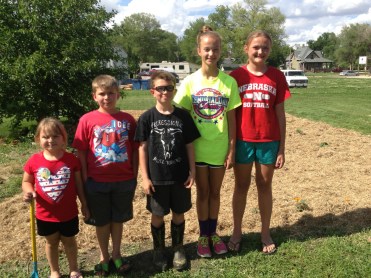
4-H’ers have planted a community garden and given the fresh produce to the local food pantry and a local Senior Center.

In Nebraska, 1 in 3 age-eligible youth across all 93 counties are enrolled in 4-H, for a total enrollment reaching approximately 140,000 youth. Nearly 56,000 youth participated in school enrichment experiences. Over 25,000 Nebraska youth were members of a 4-H club. Nearly 8,000 youth and adults participated in 4-H camping programs. 12,000 volunteers share their time and resources with Nebraska 4-H.

Locally, in 2015 we had 204 youth enrolled in the Fillmore County 4-H program and nearly 400 youth were reached through school enrichment or agricultural literacy based programs. February is Nebraska 4-H Month and ALL youth and their families are invited to attend the Annual 4-H Kick-Off celebration on February 21st from 5-7:00 p.m. at the Fillmore Co. fairgrounds to learn more about 4-H and kick off the 2016 year. kickoff2016The event will showcase 4-H projects, information on the upcoming year, games and 4-H fun. All attendees will be invited to participate in multiple mini projects including fishing, animal science, face painting and more! Did I mention there will be inflatables? As well as, pictures with Lil’ Green and prizes galore! Concessions available.

Crops, Uncategorized, Youth

Innovative Youth Corn Challenge Results

One of the statewide projects I coordinate engages youth in crop production so I decided to share the results of this program. Nebraska Extension and the Nebraska Corn Board teamed up to offer the fourth Innovative Youth Corn Challenge contest. This contest, open to 4-H members or FFA members, guided participants through all aspects of corn production, as well as agricultural careers related to corn production.IMG_4693 - Version 2.JPG

The 2015 winning team was Kornhusker Kids 4-H Club from Cuming County. The team with the highest percent yield increase over their local county average is the winner. In earning the $1,000 first-place award, Kornhusker Kids 4-H Club decided to test the effect of Procidic with two different application timings to see the effect against Goss’s Wilt and if there were additional plant health benefits. The three treatments were: control, Procidic applied in furrow at planting at 2 oz/ac and Procidic applied in furrow at planting followed by another 2 oz applied post prior to tasseling. Also, important to note is that this team had randomized and replicated plots which is important in figuring out the statistical significance. Their check yielded the highest at 226.7 bushels/acre with the challenge plots yielding 225.4 & 223.7 bushels/acre.

Second-place team overall was the Palmyra FFA Chapter, earning $500 for their efforts. Team members tested the impact of corn sweetener being applied to the corn plant between the V-6 and V-12 stage of development. They sprayed a foliar application of corn sweetener on the growing corn plant with the challenge plot yielding 214.2 bu/acre and check plot yielding 205.3 bu/acre.

Third place went to the Fillmore Central FFA Chapter. They tested nitrogen application rates and tried to push for a higher yield in order to reach the highest potential of their corn variety. They learned that 29.8 pounds of more nitrogen resulted in 14 more bushels per acre with 207.3 pounds of N on their challenge plot yielding 278.2 bu/acre and the check plot with 177 pounds of N yielding 264.2 bu/acre.

Other teams who completed their plots were:

Norfolk FFA did a two pass system, the first pass putting on 65 pounds of nitrogen and the second pass putting on 75 pounds of N and a nitrogen stabilizer to minimize nitrogen loss due to leaching in sandy soils. The main innovation testing was comparing early season fungicide application to no fungicide application. Their challenge plot yielded 191.5 bushel/acre and check at 183.3 bu/acre.

Osceola FFA tested nitrogen application with the check plot of 210 lbs of N at planting and the challenge plot of 210 lbs/acre in addition to 45 pounds of N applied at pre-tassel. Their check plot was 243.5 bushels/acre and challenge was 244.7 bu/acre.

The Stuart FFA Chapter’s goal was to improve the yield of corn by adding the AEGIS ESR plant growth stimulator. The product was applied to corn at V-6. They also measured the amount of water in the cornfield using watermark sensors. They determined that the growth stimulator did increase yield as anticipated, as the challenge plot with AEGIS yielded 5 bushels higher at 230 bu/acre compared to 225 for the check plot.

As a team, youth worked with an adult mentor throughout the process. Mentors can be extension faculty, ag teachers, or other qualified agronomy professionals. Other awards handed out during the banquet held on UNL’s East Campus included:

  • The Extra Mile Award, worth $200, went to the Kornhusker Kids 4-H Club.
  • The Innovation Award, worth $200, was presented to the Palmyra FFA Chapter.
  • The Sustainability Award went to both Kornhusker Kids 4-H Club and Fillmore Central FFA Chapter, which will split the $200 award.

The Sustainability award which uses Field to Market’s Field print Calculator was added this year, led by Randy Pryor, Extension Educator in Saline County. Field to Market, the alliance for sustainable agriculture has grown to 87 members. This group contains multiple fortune 500 companies involved in the nation’s food chain, national farm groups, conservation groups and Nebraska Extension is a new affiliate member. The diverse group is all about defining, measuring and advancing sustainability in the food sector from the farm field to the retail level. The current version of the Fieldprint Calculator is free to use, and these youth were the first 4-H and FFA students in Nebraska to ever use the Fieldprint Calculator for sustainability measures.

The metrics used were:

  • Land use efficiency
  • Soil conservation
  • Soil carbon
  • Irrigation Water Use Efficiency
  • Water Quality Index
  • Energy Use Efficiency
  • And Greenhouse Gas Emissions.

To participate in 2016, youth must complete and return an entry form by March 15th to the Fillmore County Extension Office in Geneva, NE. Forms can be downloaded .

Crops, Programming, Youth

Science & Research SHOULD Matter

Last week, you might recall that I shared how society in general has become more science illiterate over the past decades and basic definitions of science and research. One particular part of the science definition important to consider and has implications on the agricultural industry. Science as defined by Merriam-Webster, “The state of knowing: knowledge as distinguished from ignorance or misunderstanding”. “As distinguished from ignorance or misunderstanding”… When people make decisions based on science, they are using facts to support their decision; however recently, large companies and food chains are making decisions with ignorance and misunderstanding, rather than using science.

As an educator, the first thing I want to do (and often do), when various companies use their money and marketing schemes to attack agriculture convois fire back with facts and data explaining why or how that particular company is wrong with their bold statements that a majority of the time, have no sound science or data to back their decisions. Some people just don’t enough about an issue or haven’t researched an issue from credible sources and providing the science-based information might work; however an overwhelming majority of consumers just believe what they hear from large companies. After all, large companies have deep pockets to spend on advertising and are savvy in their approaches, such as Chipotle. Blasting the average Harvestwebconsumer with facts is usually not the most effective way to communicate with them. First, we must “meet them where they are.” Find something you have in common with them and try to understand why they feel a particular way about an issue.

An example approach I might take is to engage in conversation with an anti-GMO (genetically modified organism) person. First, find some things we have in common. It might be they have two young children like me, so we can talk about what it is like to be a working mother and raising children. Then, ask that person, why they feel a particular way about GMOs. In a non-defensive way, I can share with them my experiences and knowledge of GMOs and that I have no problems with them and they won’t harm my children. Even if this conversation doesn’t change the person’s mind, it might make them have some respect for my point of view and agree there is a place for all kinds of foods and agriculture. While I understand this type of approach takes time and might not always work, whenever one becomes defensive, it never seems to do any good.

When you take the science illiteracy component and add how disconnected consumers are from agriculture, it is inevitable that misinformation and emotion-driven decisions will be made. Our role as agriculturalists is to engage with people first, and then educate – a clear message I received from the AgChat Foundation conference last year. We need to be engaged in these difficult conversations to help educate others.

As a farmer’s daughter, I can assure my non-agricultural friends, famers are some of the hardest working and intelligent people you will ever meet. I also feel privileged to work with farmers and ranchers and the future of agriculture through our youth. Agriculture is and will always be the backbone of our country and without it, we would not be here today.

Crops, Programming, Youth

Does Science & Research Even Matter?

What is science? What is research? Why does science and research matter? Do they even matter anymore? According to Merriam-Webster, science is defined as, “knowledge about or study of the natural world based on facts learned through experiments and observation.” It also goes on to say, “the state of knowing: knowledge as distinguished from ignorance or misunderstanding” or “knowledge covering general truths or the operation of general laws especially as obtained and tested through scientific method.” Merriam-Webster defines research as, “careful study that is done to find and report new knowledge about something” or “the activity of getting information about a subject.”apple

In this article, I’ve decided to write a two-part series focusing on concerns regarding how decisions of large companies and even consumer decisions are made. First of all, I do not claim to be a scientist or researcher, but my role in Extension requires me to provide clientele research-based, scientific driven information. This is one of the great things about all Extension systems! We do not get paid from companies, so we are non-biased and have access to some of the best researchers in their field who are working on cutting-edge research. When a client calls and needs information, I have access to a whole network of researchers or others with higher education in that particular subject. I can provide my client with solid, data-driven information so he/she can make the best decision possible to solve their problem.

For example, if a client has a horticultural question, I might know the answer based on experience of the topic, but if not, I have a network of horticulturists who have been trained in that area to answer the question. If a client has a question related to food safety, we have a great website with reliable information I can direct them or again, a network of educators focused in nutrition and food-science to refer them. The United States is the envy of many countries for having such a system!

You might be wondering where I am going with this and how does this relate to my definition of science and research at the beginning of this article. The point is, University and even industry scientists have an important role in solving important issues ahead of us such as feeding the growing population and dealing with climate variability and weather extremes. According to Anastasiya Borys in an article from the Harvard Political Review, the decline in the United States’ position as the global leader in science could not only diminish U.S. economic growth, but our national security. In 2014, China graduated more English-speaking engineers than the United States and America’s share of high-tech exports fell from 21 to 14 percent, while China’s rose from seven to 20 percent. There are efforts to improve youth’s interest in science, technology, engineering and math underway in the United States, of which Extension and 4-H are involved.

The above facts are evidence that somewhere along the way, the average American lost a firm grasp of basic scientific facts and concepts. In 2004, the National Science Board published information supporting that “scientific literacy in the United States (and in other countries) is fairly low. Scientific literacy is defined as knowing basic facts and concepts about science and having an understanding of how science works.” Michigan State University Professor, Jon Miller reported that “over recent decades, the number of public policy controversies that require some scientific or technical knowledge for effective participation has been increasing…. (including) any number of issues, such as the siting of nuclear power plants…. and the need for an informed citizenry in the formation of public policy.” Miller, who wrote this article in 2007 pointed out, “Having a basic knowledge of scientific principles is no longer a luxury but, in today’s complex world, a necessity.”

Next week, I’ll explain how this relates to the agricultural industry.

Youth

Youth Celebrate National 4-H Week

More than 6 million young people across the country today will celebrate National 4-H Week, an annual celebration of 4-H during the first full week of October. During this week, Fillmore County 4-H will showcase the great things 4-H offers young people and highlight the incredible 4-H youth in the community who work each day to make a positive impact on the community. This year, 4-H will also showcase a refresh of its brand, revealing new photography and creative materials that show the various life skills 4-H grows in young people.national_4h_week_logo

Fillmore County 4-H’ers are celebrating with a decorated pumpkin contest, wearing their 4-H shirts with pride, the option to participate in the Quilts of Valor Project, and National 4-H Youth Science Day. Through school-enrichment, community events and regular 4-H enrollment, the Fillmore County Extension Program has impacted approximately 64% of youth ages 8-18. In 2015, there were 190 youth enrolled in the Fillmore County 4-H Program, making it the largest youth organization in the County.

Research has proven that participation in 4-H has a significant positive impact on young people. Recent findings from the Tufts University 4-H Study of Positive Youth Development indicate that, when compared to their peers, young people in 4-H are:

  • Nearly four times more likely to contribute to their communities,
  • Two times more likely to pursue healthy behaviors like, and
  • Two times more likely to engage in Science, Technology, Engineering and Math (STEM) programs in the out-of-school time.

Also during National 4-H Week, hundreds of thousands of youth from all around the nation will complete a single, innovative experiment on 4-H National Youth Science Day, which will be held on Wednesday, October 7, 2015. The 2015 National Science Experiment Motion Commotion empowers youth to explore the physics of motion and distracted driving. Developed by Oregon State University Cooperative Extension, this exciting activity combines a speeding car collision and a distracted driving demonstration in a simulated activity that investigates the physical and human factors of motion. To learn more about National Youth Science Day, please visit http://www.4-h.org/nysd/.Join4H

About 4-H:

4-H, the nation’s largest youth development organization grows confident young people who are empowered for life today and prepared for career tomorrow. 4-H programs empower nearly six million young people across the U.S. through experiences that develop critical life skills. 4-H is the youth development program of our nation’s Cooperative Extension System and USDA, and serves every county and parish in the U.S. through a network of 110 public universities and more than 3000 local Extension offices. Globally, 4-H collaborates with independent programs to empower one million youth in 50 countries. The research-backed 4-H experience grows young people who are four times more likely to contribute to their communities; two times more likely to make healthier choices; two times more likely to be civically active; and two times more likely to participate in STEM programs.

Learn more about 4-H at www.4-H.org, find us on Facebook at www.facebook.com/4-H and on Twitter at https://twitter.com/4H. Locally, we can be found at Fillmore County 4-H FaceBook page.

Youth

Agriculture Matters!

With harvest underway for many, it is a time to not only practice road safety, but a time to reflect on the many blessings we have to be thankful. Recently, South Central Cattlewomen and Nebraska Extension teamed up to provide the annual AgVenture Day for over 150 area fourth graders. This is an event I love doing every year because it gets the kids excited and surprised about how important agriculture is in our daily lives. The United States has the best agricultural production in the world and some of the smartest and most innovative farmers and ranchers.

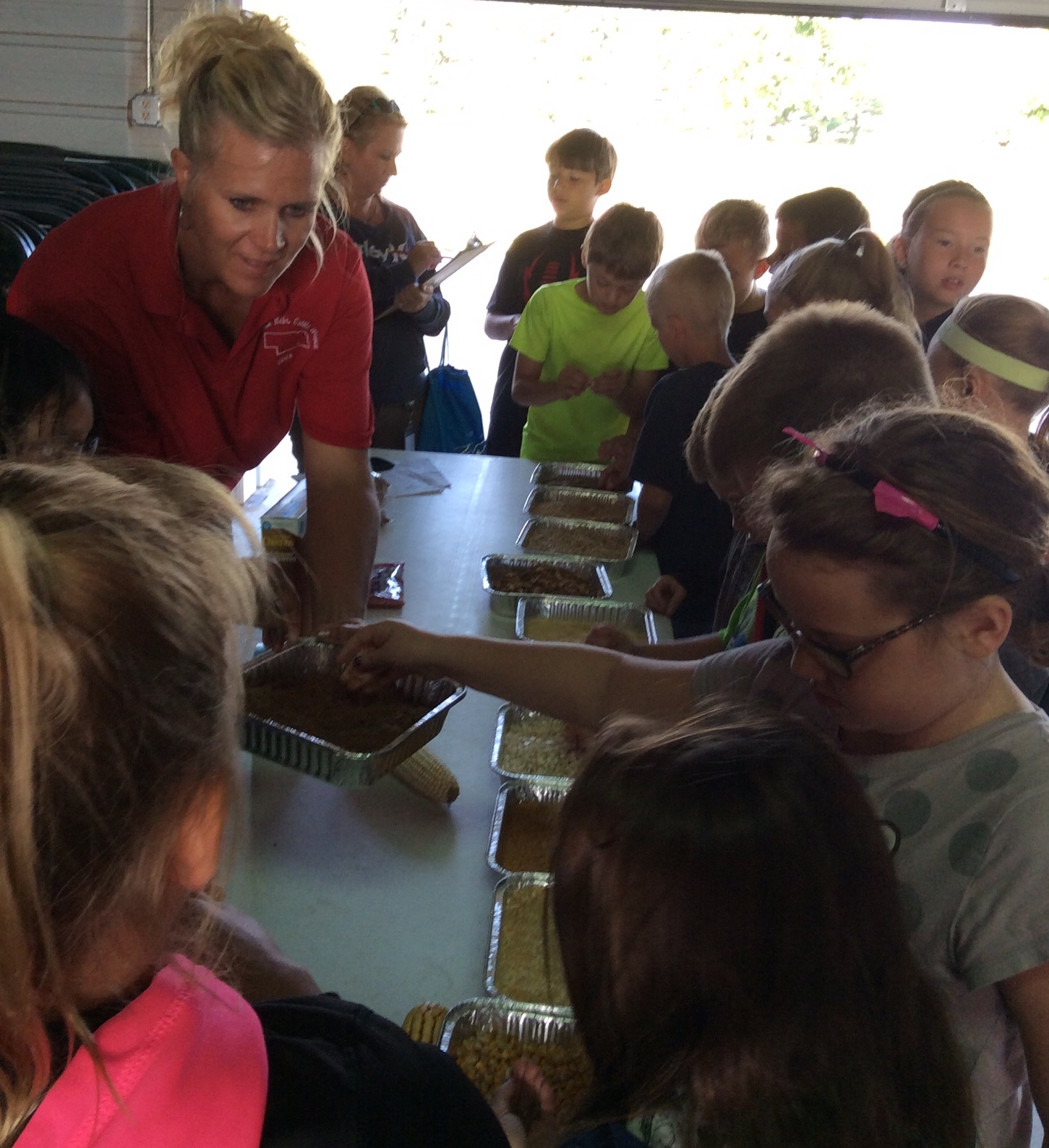
Students from area schools learned about Nebraska’s number one industry, agriculture through hands-on learning.  Youth were actively engaged in hands-on activities such as Great Grains, which showed youth the types of grains grown in Nebraska, in addition to products that we use everyday produced from grains.
Students  learn about Nebraska’s number one industry, agriculture through hands-on learning. Here, youth actively engage in hands-on activities such as Great Grains, which showed youth  types of grains grown in Nebraska, in addition to products that we use everyday produced from grains.

According to the Nebraska Department of Agriculture and USDA National Ag Statistics Service, Nebraska ranks 1st in the following: beef and veal exports, commercial red meat production, all cattle on feed, Great Northern beans production, irrigated land harvested and even popcorn production! We rank second in pinto beans and proso millet production and third in corn for grain production, all dry edible bean production and cash receipts for all farm commodities at over 23.5 billion dollars! Other brief highlights include, ranking fifth in soybean and grain sorghum production, sixth in swine production and 7th for alfalfa production. (Facts based on February 2015 Nebraska Agriculture Fact Card.)

Not only is agriculture the backbone of our economy, one in four jobs in Nebraska is related to agriculture. Nebraska’s farms and ranches cover 45.2 million acres, which is 92% of the state’s total land area!

Still don’t think agriculture is important? Look at the list of products produced from corn and soybeans alone: oils, soaps, cosmetics, plastics, inks, pet food, fuel, crayons, diapers, soda, toothpaste and the list continues! From beef byproducts (products we derive from the animal other than meat) we get leather products such as baseballs, luggage and clothing, but also medicines, tires, fertilizers, gelatin, explosives, asphalt, film, cake mixes, lotions, conditioners, shampoos, etc., etc., etc. In short, what is important to note is that if you eat or use any product from the store, in one way or the other it was impacted directly from agriculture! We can not and could not live a day without agriculture!

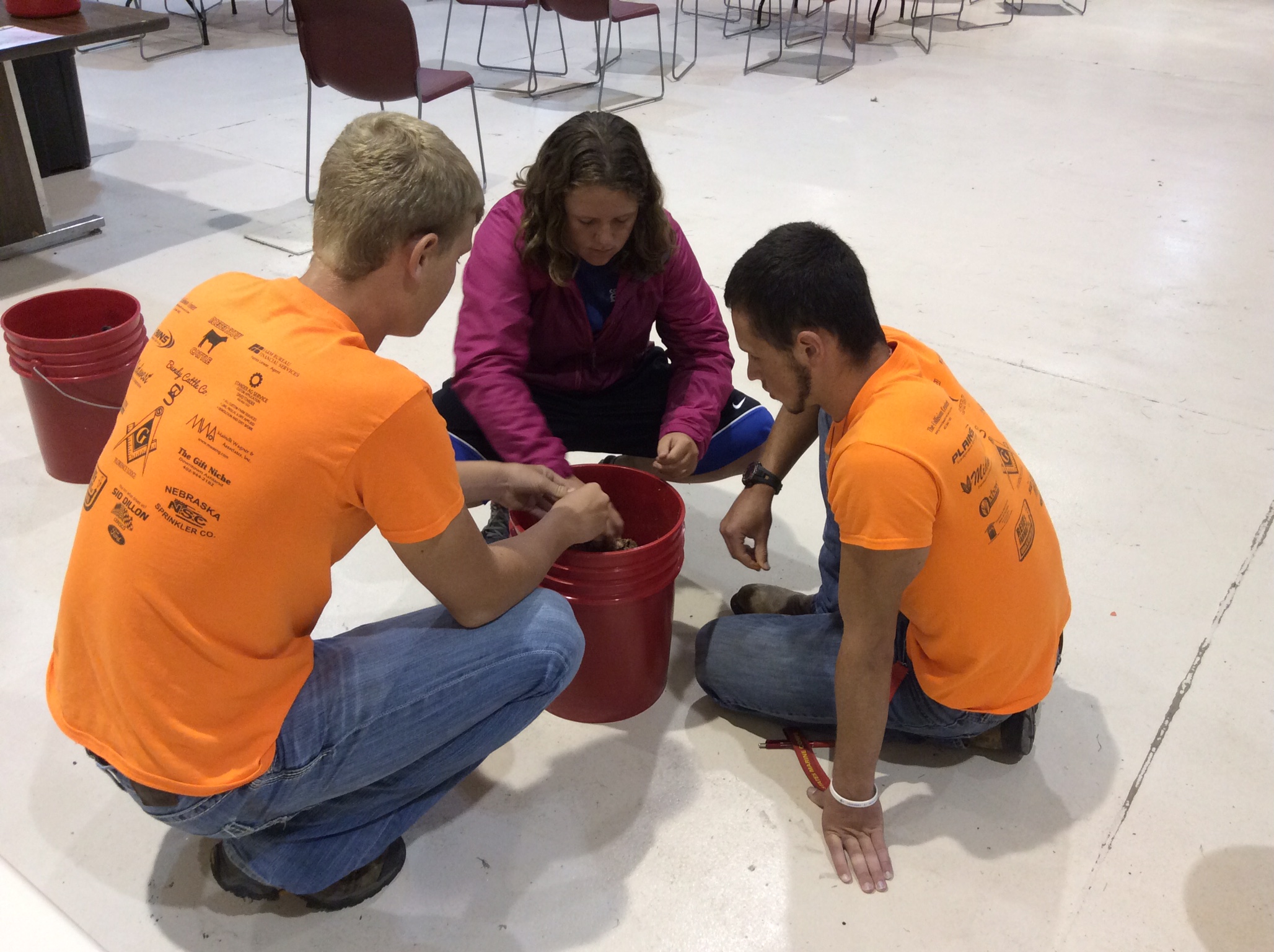
At a recent event, youth were able to see livestock first-hand. This session, youth enjoyed learning about sheep production.

Other interesting facts include:

  • A single bushel of corn will sweeten more than 400 cans of soda.
  • Farmers grow corn on every continent except Antarctica.
  • A typical, full-grown Holstein cow produces 60 pounds of milk daily.
  • Heart valves from pigs are used to replace damaged or diseased human heart valves.
  • Soybeans can produce two times as much protein per acre than any other major vegetable or grain crop, which is great for building strong muscles.
  • Grain sorghum is gluten free which is great for those with wheat allergies.

Without agriculture, we cannot survive and would have social unrest. So as you see all of those farmers driving combines, tractors with grain carts and trucks hauling the grain to town, stop and think how important they are so that you and I can live a great and healthy life! Thank you farmers and ranchers for EVERYTHING!

Crops, Youth

Youth Crop Scouting Results

Nebraska Extension is pleased to announce eight teams from across Nebraska competed in the second annual Crop Scouting Competition for Nebraska youth. It was held in at the ARDC near Mead, Nebraska on August 4, 2015. Teams of students (those completing 7-12th grades) participated by completing a written knowledge test and eight crop scouting exercises in field plots.IMG_0078_2

The purpose of the competition was to provide students an opportunity to learn crop scouting and principles of integrated pest management (IPM) for corn and soybeans in Nebraska, to obtain knowledge and skills that will be helpful in future careers and to demonstrate newer crop scouting technologies.

Results from the 2015 competition were as follows:

First place- Colfax County 4-H

Second place – Humphrey FFA IMG_0084_2

Third place – Amherst FFA

Also participating were

  • Ashland-Greenwood FFA
  • Sumner/Eddyville/Miller FFA with two teams
  • Pawnee City FFA with two teams

Top-scoring teams won prizes: $500 for first, $300 for second, $100 for third place.

Teams were expected to know the basics of scouting corn and soybean fields. This included crop staging; looking for patterns of crop injury; disease, insect and weed seedling identification; etc.IMG_0077

More information about the crop scouting competition are available online at cropwatch.unl.edu/youth. Click on the link that says, “Crop Scouting Competition”. Next year’s competition will be held August 2nd, 2015 at UNL’s ARDC again.

This program was sponsored by DuPont Pioneer, the Nebraska Soybean Board, in collaboration with Nebraska Extension.

Youth

Sportsmanship & Youth Development

Webster’s Third International Dictionary defines sportsmanship as “conduct becoming to an individual involving fair and honest competition, courteous relations and graceful acceptance of results”. Sportsmanship starts with parents teaching their youth how to accept a win or a loss, although in the 4-H youth development program, even if the youth receives a red ribbon, nothing is lost as long as some basic knowledge and skills were gained. Too often in our society we focus on the tangible results of a ribbon or trophy and don’t think about the process that youth went through to achieve the end results and what was learned from that process.

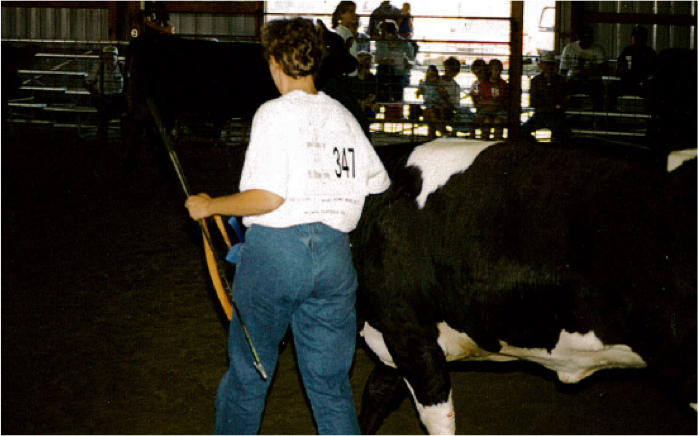
I enjoyed showing cattle and while purples were exciting to receive, the ribbon placing didn't matter; it was the learning experience and fun had with friends!
I enjoyed showing cattle and while purples were exciting to receive, the ribbon placing didn’t matter; it was the learning experience and fun had with friends!

I often use the example that as a youth, I’ll never forget receiving a red ribbon for a market heifer; I was disappointed, but will never forget my dad asking me, what the judge said in the comments. After we talked it over, I realized his reasoning and was able to understand the type of animal I should select the following year. That was a lesson I’ll never forget. My parents instilled the value of hard work into my sister and I and any animal we showed we bought with our own money to build a small cow/calf herd or they came from our own herd. We rarely had the award-winning animal and were extremely excited to even receive a purple ribbon. The learning that occurred, memories and fun we had were just as valuable than if we would have received a trophy or plaque. For these reasons, it is really rewarding to work with youth who are happy with any ribbon placing- white, red, blue or purple. It really is just one person’s opinion on one particular day!

The 4-H Program focuses on providing positive youth development and developing young people as future leaders. A ribbon or plaque placing does not achieve this; rather it is the process, skills and effort that went into the project. It is also important to mention that the entire 4-H program extends beyond the county fair and is done through educational workshops, career portfolios, leadership experiences and much more and is a year round program.

Three reasons adults and teen leaders should be concerned with developing sportsmanship are:

  1. Youth programs are easier to conduct and are more positive experiences for everyone involved if good sportsmanship is demonstrated.
  2. The development of sportsmanship is an important part of youth development. Youth and adults who develop and show good sportsmanship get along better, and are much more successful on a long-term basis in becoming self-directing, productive, contributing, competent, caring, capable adults, than are those whose behavior is un-sportsmanship-like.
  3. Sportsmanship is one of the key elements of civilized society. Those who think of the “big picture” know the reasons for developing sportsmanship extend beyond an individual, a community, or a program. When societies allow sportsmanship to decline, their civilizations also decline.

As we get ready for another Fillmore County Fair, let’s be reminded that the end result is not the ribbon placing, but the skills that each youth learned!

Source: Kathryn J. Cox, Ohio Extension 4-H Specialist, Youth Development, Developing Sportsmanship- A Resource For Preparing Youth And Their Families For Participation in Competitive Programs and Events, 2006

Crops, Programming, Youth

Connecting Youth with Crops

Nebraska Extension is pleased to present the second annual Crop Scouting Competition for Nebraska youth. Youth interested in crops have the opportunity to learn about crop growth & development and basic crop scouting principles.

Don’t know a lot about crops? Ask a local agronomist to assist by providing a short lesson on crop production. You can have the agronomist meet with youth a little during each meeting or outside of the meeting. This is one way to engage those youth interested in crops.IMG_4473

This contest will be held at the ARDC near Mead, Nebraska on August 4, 2015. The event will include both indoor and outdoor events. Teams of junior high and high school students (those completing 7-12th grades) from across Nebraska are invited to participate.

Clubs or other organizations may enter a team composed of three or four participants. An adult team leader must accompany each team of students. Team leaders could be FFA advisors, crop consultants, extension staff, coop employees, etc.

Top-scoring teams win prizes: $500 for first, $300 for second, $250 for third and $100 for fourth place.

Teams will be expected to know the basics of scouting corn and soybean fields. This includes crop staging; looking for patterns of crop injury; disease, insect and weed seedling identification; etc. Other topics many include but are not limited to, pesticide safety, nutrient disorders, and herbicide injury.

More information about the crop scouting competition and instructions on how to register a team are available online at cropwatch.unl.edu/youth. Click on the link that says, “Crop Scouting Competition”.

Teams must be registered by July 15. Registration is $50/team; the fee will be refunded when the team attends the competition. Payment by check is due along with the registration form by July 15. This program is sponsored by DuPont Pioneer, the Nebraska Soybean Board and Nebraska Extension.