Horticulture

Do you have uninvited houseguests?  

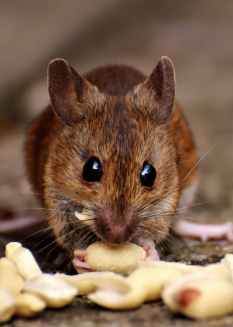
You are sitting at home and all of a sudden a little gray rodent with relatively large ears and small black eyes scurries across the room!   It is about 1/2 ounce in weight and if an adult 5 1/2 to 7 1/2 inches long, including its 3 – 4 inch tail.  Of course, you must know by now that I am describing a house mouse.  The house mouse is considered one of the most troublesome and economically important rodents in the United States.  They can cause damage to property and transmit diseases such as salmonellosis and swine dysentery.  You will know you have mice if you see small droppings, fresh gnaw marks and mouse nests made from fine shredded paper or other fibrous material.  They are active mostly at night, but can occasionally be seen during daylight hours.  Mice are excellent climbers and can jump 10 inches from the floor to a flat surface; they can squeeze through openings slightly larger than 1/4 inch in diameter.  They can also survive a 9-foot drop and climb up most vertical surfaces.

brown rat eating food
Photo by Alexas Fotos on Pexels.com

Exclusion is the most common in the fight against house mice.  Prevent mice from entering buildings by eliminating openings that are 1/4” or larger.  Use sealants or mortar to help fill the gaps.  Spray-in-place foams and steel wool pads will fill the gaps, but they won’t do much to stop mice from entering.  Make sure doors, windows and screens fit tightly.  Cover the edges of doors and windows with metal to prevent gnawing.

Population reduction is the last method for controlling mice.  Traps and baits are two common population reduction methods.  To ensure success with traps, you need to use a sufficient number of traps in areas where mice are living.  Snap traps or multiple-capture traps can be used to capture mice.  Double setting snap traps, placing two traps close to each other, will yield the best results in situations with high activity.  Multi-catch traps can catch several mice at a time without resetting.  Glue boards are another alternative to traps.  These sticky boards catch and hold mice as they try to move throughout the home.  Be sure to use sticky boards in locations where non-target animals or items won’t get stuck in them.  If this does happen, use an oily material, like vegetable or mineral oil, to dissolve the sticky substance.  To make the traps more appealing you can apply a food source such as peanut butter or a chocolate chip melted to the trigger or you can secure a cloth scented with a food source to the traps’ trigger.

Baits are another population reduction method.  Be sure to read and follow all directions on baits.  When choosing baits, consider the location and method of applications and any non-target pets and children.  Choose the type of bait for your specific location and application.  Mice have been known to move pelleted baits without eating them.  Just because you have an empty box, doesn’t mean they have eaten the bait.  Bait stations or bait blocks ensure that the critter actually ate the bait.

Use caution when cleaning up droppings, nests, or mouse remains.   This can help to decrease the potential spread of diseases carried by mice like Hantavirus.  Use protective waterproof gloves and spray the carcass and trap or nest with a household disinfectant or a 10% bleach solution. Use a sealable bag turned inside out to pick up the mouse.  To remove feces or urine, spray the area with a disinfectant until wet and wipe up with a towel, rag or mop.  Don’t use the vacuum or broom to collect dry feces as that can cause the material to go into the air and be inhaled.

For more information on mouse control, refer to NebGuide, Controlling House Mice that can be accessed at http://extensionpubs.unl.edu or through your local extension office.

Crops

Harvest Safety

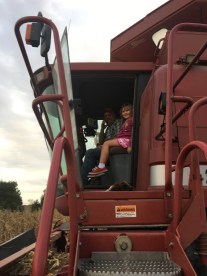
It is hard to believe that harvest is starting and just as a reminder that with harvest comes more traffic on the county roads and other stresses for farmers. It never fails, that equipment can break, there can be delays at the elevator and those extra-long hours can all add extra stress to farmers. That being said, it is important to carefully slow down and realize the many hazards you are being exposed to during harvest.IMG_3695

An Iowa State Extension publication, Harvest Safety Yields Big Dividends points out that injuries can occur by taking shortcuts to perform routine tasks, not getting enough sleep or regular breaks, or failing to follow safety practices. Some injuries occur when operators are pulled into the intake area of harvesting machines, such as balers, combines, or corn pickers, and many injuries occur from slips or falls around these machines. Exposure to powerful machinery is highest during the harvest season. The equipment must be powerful to effectively handle large amounts of agricultural commodities. When equipment plugs, NEVER try to unplug it with live equipment, instead always disengage power and turn off the engine before trying to manually clear a plugged machine. Regular maintenance of these machines can also make harvest go smoother. Also, lots of accidents actually happen by the operator slipping and falling off equipment.

In the same publication listed above, there are several tips for reducing fall hazards:

  • Always keep all platforms free of tools or other objects.
  • Frequently clean the steps and other areas where workers stand to service, mount and dismount, or operate the machine.
  • Wear well-fitting, comfortable shoes with non-slip soles.
  • Use grab bars when mounting or dismounting machinery.
  • Be sure your position is stable before you work on a machine.
  • Recognize that fatigue, stress, drugs or alcohol, and age may affect stability.

img_6564

Other helpful tips during harvest are to keep kids away from machinery. Tell them the dangers that can occur and not to play near the equipment, even when it is shut off; you never know when they will be playing in hidden areas of the equipment. Operators should double check where kids are before moving the equipment. Too many accidents can occur when youth are in the path of equipment out of the operator’s view. Operators of all equipment should check in regularly and let someone know where you are. Keep all guards on equipment; it is there for a reason!

It is also important for the public to understand the increased traffic on public roads and be patient. The greatest threat raised between farm equipment and passenger vehicles is the difference in speed. Farm equipment runs at an average speed of 20 miles per hour while passenger vehicles average 60 miles per hour. If the motor vehicle overtakes a tractor, the impact is comparable to a passenger vehicle hitting a brick wall at 40 miles per hour. If the tractor and a car, mini-van or pickup collides head on, the impact is the same as hitting a brick wall at 60 miles per hour.

Farmers can reduce the chances of an accident by using warning lights, reflectors and reflective tape on their machinery to keep passenger vehicle operators aware of their presence on roads. Some farmers may choose to install supplemental lights to increase visibility. It also is a good idea for producers to keep off heavily traveled roads as much as possible and avoid moving equipment during the busiest part of the day.

Some farm equipment, such as combines, can take up more than half of the road. Even so, it is up to both drivers to be aware of their own limitations and adjust accordingly. Farmers should not take up more space than is needed, but other drivers should try to provide as much room as possible. It is a good idea for passenger vehicles to turn off onto side or field roads until larger machinery has passed. Whenever possible, farmers should use an escort vehicle such as a pickup to precede or follow large machinery and equipment on public roads. More than one escort may be necessary. Ideally, the escort vehicle would have extra warning lights and a sign indicating oversized or slow equipment ahead or following.

Have a safe harvest!

Youth

Project Helps Young Flood Survivors Heal Through Reading

Since March 13, several communities in Nebraska have received historic rainfall along with damaging winds. Residents continue to work together as they recover from severe weather events. Flooding5.28.13.jpg

If you or someone you know was directly involved in this disaster, you probably have experienced a wide range of emotions. Like adults, young children may have difficulty expressing their feelings, which may lead to difficulties with coping and understanding their feelings. Young children may exhibit intense emotions and engage in challenging behaviors while others may have separation anxiety, bed-wetting or be very quiet.

In supporting young children with these different reactions and feelings, it is important for adults to remain calm and approach behaviors in a thoughtful way. Parents and childcare providers are in the best position to help young children cope. It is in our calm that children learn how to respond during difficult situations. A particularly engaging way to help young children understand their feelings and reactions is with storybook reading. Using children’s literature in an interactive way can help children heal by better understanding their experiences (Betzalel and Shechtman, 2010) and can improve their coping skills (Burns-Nader & Hernandez-Reif, 2016; Nicholson & Pearson, 2003; Pola & Nelson, 2014). Additionally, it provides the parent or caregiver with tools to increase their own understanding of how young children may experience traumatic events such as natural disasters.

books school stacked closed
Photo by Pixabay on Pexels.com

In response to the March 13 disasters, Nebraska Extension’s The Learning Child team created the Read for Resilience program. The team identified nine children’s books to support their coping and understanding feelings after experiencing a disaster, loss and/or grief. Then team members developed reading guides to accompany the books to provide parents and caregivers with age-appropriate probing questions to explore children’s thoughts and feelings. The guides also include suggested activities to further extend children’s ability to process their feelings and experiences.

Parents and caregivers of youth can receive up to five free books through this program (approximately a $100 value). To request a free book or to download a storybook guide, please visit http://child.unl.edu/read4resilience, complete a short survey and select the book(s) which meets your child’s need. Holly Hatton-Bowers and Amy Napoli, assistant professors of child, youth and family studies and early childhood Extension specialists, are the lead organizers of this program. Team members include Lynn DeVries, Jaci Foged, Carrie Gottschalk, Lisa Poppe, Lee Sherry, Jackie Steffen, LaDonna Werth, Tasha Wulf, Karen Wedding and Kathleen Lodl.

One person who requested books wrote, “Thank you, thank you for your support for our children! We have a 6-year-old daughter and a 2-year-old daughter. We have noticed through conversation and drawing with our 6-year-old that she has been affected by the flooding. The books will assist us greatly in helping our daughters understand the impact the flood has had on our family and reassurance that they are safe. I still have a picture that our 6-year-old drew of a child surrounded by water and she told me that she prayed for ‘all the flooding’ in school that day.”

To ensure that this program continues, The Learning Child team is accepting monetary donations which can be given through the 4-H Foundation. These donations will be used to purchase books so parents and caregivers receive them at no charge.

“We’re hoping Read for Resilience will empower caregivers of young children to support them as they cope and understand their feelings around loss or grief,” Hatton-Bowers said. “This is another way that Nebraska Extension will be there to help families and communities for the long haul.”

Source: Reading For Resilience Program, Jaci Foged, Nebraska Extension in Lancaster County.

Horticulture

Insect Invaders

With cool temperatures, pests start seeking shelter for warm places like your house, so this week I’m sharing information on keeping these pests out of your house.

animal biology blur close up
Photo by Johnny Mckane on Pexels.com

Some of the more common nuisance pests include occasional invaders like boxelder bugs, multicolored Asian Lady Beetles, millipedes, and crickets.  These pests don’t do any harm once inside the home; they are just looking for a cozy place to spend the winter. Proper identification of the insect will assure the proper control method.  Boxelder bugs are black and orange true ‘bugs’ that can be found in large numbers around foundations sunning themselves or trying to find their way inside. Multicolored Asian Lady Beetles are the orange ‘ladybugs’ with black spots.  Their distinct smell and ability to bite makes them even more of a nuisance once inside the home.  Millipedes are often misidentified as ‘wire worms.’  These skinny, brown critters have two legs per body segment and will curl up when disturbed.  Crickets hop their way into homes and provide ‘music’ in the night with their chirping.  Commonly it’s the black field cricket that migrates inside, but there are others that follow right behind.

nature insect macro spider
Photo by Pixabay on Pexels.com

Wolf spiders may look scary, but they are more bark than bite.  These large, hairy spiders can be found both outdoors and occasionally inside the home.  They are not poisonous nor do they want to disturb people.  They are hunting spiders, so they don’t spin a web or a trap, but prefer to chase down their prey.  They often find their way into homes in the fall following their favorite food source the cricket.

The saying “an ounce of prevention is worth a pound of cure” has never been more true.  Discouraging occasional invaders from entering the house is going to take a little work, but it will be worth it in the long run.  Start by finding and sealing up any cracks or spaces they could enter through with silicone caulk or expanding foam.  Make sure that window screens are in good repair and that doors are tight fitting.  Also remove any dead plant debris from window wells.

Pests can be discouraged from entering the house in a number of ways.  The most common way is by applying an outdoor perimeter insecticide treatment.  These insecticides are labeled for various pests and often times have residual effects to help protect the house for longer.  Read and follow the label instructions on how and where these products should be applied.  Ideally, try to apply these insecticides out from the foundation about five to ten feet around the perimeter of the home. The insecticides will help to decrease the numbers of pests that make it inside the house, but don’t expect it to stop all of them.

Monitor the home regularly to see what pests have made their way inside.  Glue boards are sticky boards used to catch and hold pests as they try to move throughout the home.  Be sure to use sticky boards in locations where non-target animals, like pets, won’t get stuck in them.  If something other than the target pest does happen to get ‘caught’ in the trap, use an oily material, like vegetable or mineral oil, to dissolve the sticky substance on the trap.  When properly placed, these traps will allow you to see which pests are inside the home and their approximate numbers.

Once pests are found inside the home, there are a few techniques that you can use. The handy broom and dustpan or the vacuum are two techniques; they are also very environmentally friendly and very cost effective.  Be careful when selecting insecticides for use inside the home.  Read and follow instructions carefully as many of these products have to come into contact with the insect themselves and don’t offer much residual protection. With a little prevention and monitoring you can ensure that you are sharing your home with wanted house guests this fall and winter.

Uncategorized

Wild Cucumber

These have been growing like crazy this year, so thought I’d share as I’ve been receiving questions on them.

Nicole Stoner's avatarPlants and Pests with Nicole

Windbreaks are very important to many acreage owners throughout Nebraska. A windbreak is used to block the wind, as the name implies. Winter winds can be very strong and a windbreak will help to reduce those winds, which will in turn reduce heating bills. Windbreaks can be built from a variety of trees and shrubs which are typically fairly tolerant of many problems. However, we do still see problems from bagworms, some fungal diseases, and weeds growing around the trees. A windbreak weed that is quite prevalent this year is wild cucumber or burcucumber.

About Wild Cucumber

Wild cucumber is an annual weed that grows up and over our windbreak trees. Due to all the rain we saw this spring, it is growing voraciously over our trees across the Nebraska countryside. It vines and has leaves similar to cucumber plants. The leaves are arranged alternately along the stem and have…

View original post 353 more words

Programming, Youth

4-H School Enrichment & More

With county fair being over and in the midst of state fair time, I often am asked, “What are you doing now that fair is over?” The answer to that question is, “A lot!” This week, I’m focusing on the delivery methods of 4-H which involves much more than fair!  In fact, in Clay and Fillmore counties, our small staff reaches 1 in 2 age-eligible youth and families in our respective counties. In Nebraska, 4-H reaches 1 in 3 age-eligible youth and families in all 93 counties with the support of over 12,000 volunteers. Nebraska 4-H strives to enable all youth to develop strong personal mindsets and the social skills necessary for successful futures.

The Nebraska 4-H Youth Development Program strives to empower youth to reach their full potential working and learning in partnership with caring adults. 4-H reaches youth through club, camp, afterschool, school enrichment, and special interest programs. The traditional 4-H club and camp experience are likely the familiar methods people are most familiar. Working with 4-H club leaders, parents and club members throughout the county fair is a very visible time. Youth can go to our state 4-H camp, area camps or participate in day camps or workshops which many people, again are familiar.

UNADJUSTEDNONRAW_thumb_823e
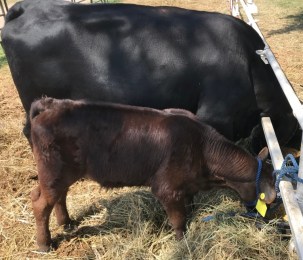
Our office coordinated a “Beef Day” with an area school to compliment the school beef booster program.

Did you know that extension staff work year-round to deliver programs to youth during the school year? School enrichment programs are learning experiences offered to students during school hours by local 4-H staff. These programs are designed to enhance the subject matter being studied in the classroom, provide hands-on education, introduce a new topic to students, or spark a new interest! The 4-H school enrichment program is a great way to connect and collaborate between your local Extension office and achieve school classroom educational goals. Locally, current programs focus on Career Development, STEM, and Agricultural Literacy.

Locally, some of the school enrichment programs include: Farm to the Cart, My Clothing & Weather, Beef Cattle from A to Z,  Soils is Not a Dirty Word, Plant Parts we Eat, How Did That Get in my Lunchbox, Pumpkin Life Cycle, Positively Popcorn, Hot House Detective, Bacteriology, Embryology, & GPS/Geocaching. We also have beef related topics that can be used in collaboration with local school Beef Boosters to provide the educational component to students. Most of these programs are at no cost or have a minimal fee. If you are interested; be sure to check out our website at fillmore.unl.edu.

UNADJUSTEDNONRAW_thumb_7ed7
Embryology is one of the favorite programs that classroom teachers request every year.

There are some extension offices that provide after-school workshops or educational sessions for youth. Finally, there are special interest types of programs that extension staff provide. Locally, examples of these include the upcoming AgVenture Day which is a collaborative effort among the South Central Cattle Women and Extension. At this program, area 4th graders learn about agricultural products and how their food is produced. In the spring, Progressive Agriculture Safety Day reaches over 120 youth with presentations to keep participants safe.

To identify the impact that the 4-H Program is making in the lives of youth ages 5-18, various research studies have been conducted across Nebraska and the nation. For example, a nationwide longitudinal study by Tufts University (2013) found that compared to their peers, youth involved in 4-H programs are nearly 4 times more likely to make contributions to their communities (grades 7-12). Also, 4-H’ers are about 2 times more likely to be civically active (grades 8-12). The same study found that 4-H young people are nearly 2 times more likely to participate in science, engineering and computer technology programs during out-of-school time (grades 10-12). Finally, 4-Her’s are nearly 2 times more likely to make healthier choices (grade 7).

UNADJUSTEDNONRAW_thumb_82cc
Youth plant our raised beds in front of the office in addition to a community garden with produce donated to the food pantry or senior center.

Next time you consider asking an extension staff “What are you doing now that fair is over?”, consider instead asking, “What programs or projects have you been working on?”  I’m sure you will hear about some of the school enrichment programs, in addition to the countless efforts related to foods, early childhood development, crops, livestock, horticulture, community development and other youth development programs. For more information about Nebraska Extension’s educational programs, research and initiatives, go to extension.unl.edu.

Horticulture

Fall Lawn Care Reminders

The kids are back in school, the first Husker football game will start in a couple of weeks – it is officially fall! During this time of year, it is an ideal time to seed the cool season turfgrasses tall fescue and Kentucky bluegrass. For all of you horticulture enthusiasts, be sure to follow Nicole Stoner, extension educator focused in horticulture’s blog or go to Nebraska Extension’s Hort Update newsletter.

This week, I took some of the lawn tips from August 19th edition of Hort Update on site preparation for lawn seeding or over seeding. For success, seedbed preparation is important to assure seed to soil contact.

For newly planted turf, complete the following steps:

1). Remove all construction debris, branches, etc.
2). Control perennials weeds with glyphosate (Roundup). Two to three applications at the recommended timing may be needed.
3). Establish grade for proper surface drainage.
4). Use a rotary tiller or other cultivation equipment to work the soil to a depth of six inches, incorporate compost while tilling. Avoid tillage of wet soil as this creates compaction. Do not try to improve clay soil by tilling in sand as this can increase compaction. For clay soils, spread a one inch layer of compost over the site and till it in. Then spread another one inch layer and till perpendicular to the first tillage.
5). Allow soil to settle after tilling and prior to seeding.
6). Keep the soil moist after seeding.

To over seed your lawn, complete the following:

1). Mow the area 1 to 1.5 inches tall.
2). If there is excess thatch, one-half inch thick or more, power rake aggressively and removed debris.
3). Aerify the area, punching 20 to 40 holes per sq. ft. with the largest tines available. Make at least two to three passes over the area to be seeded.
4). Apply a starter fertilizer.
5). Seed using a drop spreader or power overseeder (slit or slicer seeder).
6). Keep the soil moist.

Fall is also a great time to fertilize cool season grasses. Elizabeth Killinger, extension educator reminds us that cool season grasses, like Kentucky bluegrass and tall fescue, are beginning to wake up from the summer slump and are vigorously growing.  Actively growing turf means the perfect time to apply fertilizer applications.  Fertilizing in mid-September encourages new vegetative growth, like tillers, rhizomes, and stolons, which help fill in those thin areas left behind by disease or summer stress and increase density of the turf.  September fertilization also encourages root production and making of products that will be stored in the plants’ crown.  A turfgrass that has ample stored ‘food’ reserves will be better able to survive winters’ stresses.

Youth

Back to School Tips

With the school year starting, this means the busyness of afterschool activities and homework assignments will be here soon. As families are pulled in different directions for school, work and practices, time as a family comes at a premium. Making efforts to build the focus of your children could decrease time spent on homework to free up more time for family activities. Creating a permanent, designated study space is one way to build your youth’s focus.

UNADJUSTEDNONRAW_thumb_8812
My oldest started 6th grade today and my youngest started kindergarten. My husband, Kurt continues to teach agriculture education.

Here are a few items to keep in mind when creating the study space:

Make It Work For You – Every child is different and has different needs. Some prefer a quiet corner in their room while others may prefer to be close to a parent for help at the kitchen table. Just make sure that the traffic and noise of other family members do not become a distraction.

Manage the Senses – Lighting and noise issues are very common distractions. Tired eyes have more difficulty transferring knowledge into memory. To keep sharp, make sure to provide adequate overhead lighting to limit squinting. Also, check that electronic devices like laptops and tablets are set at a comfortable level.

Make It Comfortable – Temperature and seating can make a difference in a youth’s ability to concentrate. Make sure that the study space keeps the child relaxed, but alert. It is also important that he or she has adequate space to spread out books, papers and materials to make the space efficient. While a bed may make a great space for spreading out, it may prove too relaxing. Consider a cushioned chair with generous table space. Also, it is important that the chair fit the youth. Dangling legs and hunched shoulders can create distractions as well.

Keep It Organized – Another way to increase the efficiency of the space is to keep all supplies and materials readily available and easy to find. Any time spent looking for the lost blue marker is time spent away from the task and an opportunity for further distraction. Organized space provides a launching pad for organized study. Keep clutter at a minimum using cubbies, canisters and boxes. A calendar, planner or to-do list can also keep homework assignments and activities prioritized and on track for on-time completion.

close up of woman working
Photo by Pixabay on Pexels.com

Limit Distractions – While the computer and television can be excellent sources of educational content, they also provide limitless distraction. If the child believes they can focus better with a little background noise, try some recorded music and save the favorite show as a reward when they can spare his or her attention.

Make It Your Own – If the child is expected to spend considerable time in the study space, let him or her decorate the space with posters, pictures or artwork. These items could provide creative inspiration for the child’s next essay or art project.

This article comes from a series of resources developed by Nebraska Extension, 4-H Youth Development Professionals. Learn more about 4-H at 4h.unl.edu, follow us on Facebook at https://www.facebook.com/Nebraska4H/ or on Twitter at https://twitter.com/nebraska4h. For more information, contact the author – Jennifer Schoen (jschoen4@unl.edu), Extension Educator.


Crops, Irrigation, Programming, Youth

Youth Learn Crop Scouting Skills

group 0On July 23, 2019, the sixth annual Crop Scouting Competition for Nebraska youth was held in which seven teams from across Nebraska competed. It was held at the Eastern Nebraska Research and Extension Center near Mead, Nebraska on July 23, 2019. Teams of students (those completing 5-12th grades) participated by completing a written knowledge test and seven crop scouting exercises in field plots.

The purpose of the competition w­­­as to provide students an opportunity to learn crop scouting and principles of integrated pest management (IPM) for corn and soybeans in Nebraska, to obtain knowledge and skills that will be helpful in future careers and to demonstrate newer crop scouting technologies.

Results from the 2019 competition were as follows:

First place- Colfax County 4-H (R. J. Bayer, Jestin Bayer, Austin Steffensmeier, Logan Nelson, and Brad Kratochvil)

Second place – Kornhusker Kids 4-H Club #1 (Payton & Levi Schiller, Matthew Rolf, and Kaleb Hasenkamp)

Third place – Kornhusker Kids 4-H Club #2 (Landon Hasenkamp, Ethan Kreikmeier, James Rolf, and Ian Schiller)

Also participating was

Humphrey FFA with Bryce Classen, Jacob Brandl, and Mikayla Martensen

Twin River FFA with Keaton Zarek, Kyle Kemper, Jacob Czarnick, and Landon Cuba

Auburn FFA with Kellen Moody, Austin Youngquit, Braden Gerdes, and Riley Stukenholtz

Wayne FFA with Justus Greves, Noah Lutt, Tyler Reinhardt, Elle Barnes, and Alyssa Carlson

Top-scoring teams won prizes: $500 for first, $250 for second, $100 for third place. The top two teams will represent Nebraska at the regional competition held in Iowa on August 26, 2019.

Teams were expected to know the basics of scouting corn and soybean fields. This included crop staging; looking for patterns of crop injury; disease, insect and weed seedling identification; etc.

corn growth staging, maturity, development 2
Kornhusker Kids team determine the corn growth during the program.

More information about the crop scouting competition are available online at cropwatch.unl.edu/youth. Click on the link that says, “Crop Scouting Competition”.

This program was sponsored by DuPont Pioneer, the Nebraska Independent Crop Consultant Association and Farm Credit Services of America in collaboration with Nebraska Extension. If you know of a company or you would are interested in sponsoring the 2020 program, please contact me at brandy.vandewalle@unl.edu.