With my agricultural education degree, I enjoy creating lessons and activities for youth and often able to utilize that background by creating lessons for others. With Nebraska Extension as a leader in irrigation management and development of the Nebraska Agricultural Water Management Network, it is only fitting for Nebraska Extension to provide youth education related to irrigation.
With that in mind, a series of lessons have been created to accompany the recently developed Agricultural Water Management Guide. This online magazine-type resource introduces readers to irrigation and its use and benefits to Nebraska crop production. This guide serves as a resource for anyone wanting to learn more about irrigation management. It has embedded videos and links for further information, making it interactive. Teachers or informal educators can utilize the guide as an informative reference for themselves or encourage youth to read it themselves.
To compliment the Agricultural Water Management Guide, six lesson plans with activities have been created. Each lesson has learning objectives, careers associated with the topic, educational standards and hands-on activities related to irrigation. A basic ag water management lesson helps youth understand basics principles of soil and water management. Other lesson plan topics include: irrigation management planning & tools used, center pivot irrigation, furrow irrigation, subsurface drip irrigation, and variable rate irrigation. Extension has also developed YouTube videos to compliment these lessons in the classroom.
Growers, crop consultants, ag professionals, and extension educators are encouraged to attend Nebraska Extension’s weed management field day from 8.30 a.m. to 1 p.m. June 26 at the University of Nebraska–Lincoln’s South Central Agricultural Laboratory near Clay Center.
The field day will include on-site demonstrations of herbicides for weed control in corn, popcorn and soybean. An early morning demonstration will focus on weed control in soybeans followed by a demonstration of projects for weed control in corn and popcorn.
“A number of projects will be demonstrated during the field day, including weed control in XtendFlex soybean, Enlist Corn, and Alite 27 Soybean,” said Extension Weed Management Specialist Amit Jhala.
New this year for participants to learn about research project aimed at terminating cereal rye before and after planting soybean and control of volunteer corn in Enlist Corn. Certified Crop Advisor (CCA) continuing education units are available. There is no cost to attend the field day, but participants are asked to register at http://agronomy.unl.edu/fieldday.
The South Central Agricultural Laboratory is 4.5 miles west of the intersection of Highways 14 and 6, or 12.4 miles east of Hastings on Highway 6. GPS coordinates of the field day site is 40.57539, -98.13776.
Looking for a fun club project? Want to unite your club members? Running out of ideas for club meetings? If you answered, “yes” to any of these questions, help is on the way! Nebraska Extension is pleased to present the 6th annual Crop Scouting Competition for Nebraska youth. Youth interested in crops have the opportunity to learn about crop growth & development and basic crop scouting principles.
Don’t know a lot about crops? Ask a local agronomist to assist by providing a short lesson on crop production. You can have the agronomist meet with youth a little during each meeting or outside of the meeting. This is one way to engage those youth interested in crops.
This contest will be held at the ARDC near Mead, Nebraska on July 23, 2019. The event will include both indoor and outdoor events. Teams of junior high and high school students (those completing 5-12th grades) from across Nebraska are invited to participate. This event is limited to the first ten teams who sign-up!
Clubs or other organizations may enter a team composed of three to five participants. An adult team leader must accompany each team of students. Team leaders could be FFA advisors, crop consultants, extension staff, coop employees, etc.
Top-scoring teams win prizes: $500 for first, $250 for second, $100 for third place. Top two teams will be eligible for regional competition in August at Iowa this year.
Teams will be expected to know the basics of scouting corn and soybean fields. This includes crop staging; looking for patterns of crop injury; disease, insect and weed seedling identification; etc. Other topics many include but are not limited to, pesticide safety, nutrient disorders, and herbicide injury.
More information about the crop scouting competition and instructions on how to register a team are available online at cropwatch.unl.edu/youth. Register at: https://go.unl.edu/cropscoutingreg
Teams must be registered by July 18. This program is sponsored by Nebraska Independent Crop Consultant Association, DuPont Pioneer, Farm Credit Services of America and Nebraska Extension.
Some of the most frequent calls we receive in our office is lawn and garden questions. Nebraska Extension horticulturist, Nicole Stoner will be in the area with the program, “Lawn & Garden Tips”. This class will discuss water use in your lawn, problems that develop from improper irrigation and diseases found in lawns and vegetable gardens. The course will be in Geneva at the Fillmore County Extension Office on Wednesday, June 5th from 6-7:30 p.m. with a $5.00 which includes light refreshments. Preregister by May 29th to 402-759-3712 or brandy.vandewalle@unl.edu.
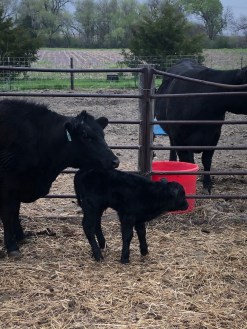
My daughter’s bucket calf from two years ago had a calf and she was ecstatic; it has been a great learning experience for her, in addition to teaching responsibility.
As we enter into the spring and summer months, nothing smells better than a delicious, juicy hamburger or steak on the grill and being able to barbecue outside with friends and family. It’s no surprise then that May is National Beef Month! The beef industry is especially important to Nebraska’s economy. In fact, according to the USDA National Ag Statistics Service, Nebraska ranks top in the nation with beef and beef product exports and second in the nation for having approximately 6.8 million head of all cattle and calves in the state (February 2019). So, why is Nebraska, the beef state? It has a unique mix of natural resources and according to the Nebraska Beef Council, cattle turn grass from 24 million acres of rangeland and pasture, more than one half of Nebraska’s land mass, into protein and many other products for humans. Land that is grazed allows more people to be fed than otherwise possible and more than one billion bushels of corn are produced in Nebraska, of which 40% is fed to livestock in the state.
Now that I have explained how and why the beef industry is important to Nebraska, let’s explore the health benefits of beef. Beef is a good source of zinc, iron and protein and there are 29 cuts of beef that meet the government labeling guidelines for being lean. In fact, a 3 ounce cooked serving of lean beef (which is about the size of a deck of cards) provides 10 essential nutrients and about half of the daily value of protein in about 170 calories. According to recent research from Purdue University, the cuts of beef considered lean can be included as a part of a heart-healthy diet to support cardiovascular health and has consistently demonstrated that the nutrients in beef promote health through life.
With May as beef month, my colleague and I recently provided beef program to students at Shickley Public Schools. I taught lessons to the elementary students on the importance of agriculture, with an emphasis on beef production. With the disconnect most consumers have with agriculture, it is important to teach people, especially youth the facts about agriculture. Some of the classes were taught the difference between beef and dairy cattle, as there are many people who do not understand the differences between the two. Extension assistants Rachel Adam and Nathan Haman taught middle and high school youth about beef nutrition by bringing in the Mobile Beef Lab.
If you would like more information on beef production, you can view our Nebraska Extension website beef.unl.edu. Our Extension experts have a variety of articles from beef nutrition to reproduction to lease information. If you would like recipes or tips for preparing beef, you can also check out Nebraska Extension’s food.unl.edu website. There are some great tips on saving money when purchasing beef and links to the Nebraska Beef Council’s website which has great recipes as well.
With planting and other field work underway, farmers put in lots of long hours. This week I’ve decided to share some information that not only applies to farmers, but anyone who might be working long hours or simply isn’t getting enough sleep. My colleague, Susan Harris-Broomfield has written the following article with some interesting facts and tips on getting more sleep.
How much sleep did you get last night? If you live in Nebraska, there is about a 30% chance that it was less than seven hours and not enough for a body to recharge all its parts. The Center for Disease Control and Prevention (CDC) has made it official: Sleep Deprivation is a public health problem. Fifty years ago, Americans slept an hour to an hour and a half more than they do today. Some might be proud of accomplishing more in a day and sleeping less, but they should consider how the body deprives itself of crucial processes when that happens. While proper nutrition and activity rank right up there, sleep performs magic that no other body function does:
Sleep flushes diseased and damaged bits of toxins and waste from our brains. It also performs a process called consolidation, which cements information learned throughout the day into the brain and retains it.
Sleep plays a role in metabolism and helps control hunger hormones.
Sleeping triggers tissue growth that heals injuries and creates virus-fighting cells to boost immunity to illness.
Creativity, energy levels, and positive moods increase with sleep, while it also fights stress.
Muscles and organs rebuild critical cells during sleep.
Sleep is the single most effective way to reset body functions for good health. Going without it means risking a whole slew of body breakdowns, including high blood pressure, diabetes, heart disease, and even obesity.
One of the main symptoms of all sleep problems is daytime sleepiness. Sometimes sleep deprivation will show itself in other ways, such as irritability, confusion, memory loss, concentration problems, or depression. This can be deadly for farmers and ranchers using heavy equipment, handling chemicals, or working with livestock. A study from colleagues at UNMC (Siu et al., 2015) involved farmers performing four balance tests using a pressure mat for several weeks. As sleep time decreased, they became less stable – 7.4 times worse when they slept less than their average weekly hours the night before the test, and that was still with at least five hours of sleep! In another study, adolescent youth on farms were significantly more likely to get injured if they slept less than 9.25 hours per night (Stallones et al., 2006).
It is crucial for farmers and ranchers to respect the need for adequate sleep and make it a priority in daily routines. A few ways to achieve better quality sleep include the following:
Go to bed, and more importantly, get up at the same time every day. Use the alarm clock the right way: NO snooze button. Get up and get out on time.
Sleep in a room temperature of 60 to 68 degrees.
Turn off all devices so there is no lighting up, dinging, vibrating, or ringing. Phone alarms still work in silenced or airplane modes.
Allow eyes to take in plenty of bright light first thing in the morning and avoid it in the evening. Lower lights in the house after the sun goes down.
Consider a sleep study either in-home or at a clinic or hospital near you. Ask your physician.
For program information about sleep deprivation, and how to conquer it, contact Nebraska Extension’s Rural Health, Wellness, and Safety Educator Susan Harris-Broomfield: susan.harris@unl.edu or (308) 832-0645.
Recently I presented a webinar with my colleague, Glennis McClure that reminds us of daily stress in our lives, especially for farmers and ranchers. Agriculture is a stressful occupation and while it provides numerous rewards, it does not come without challenges. Too much stress can contribute to health issues and make us more accident prone.
The National Center for Farmer Health points out that stress is the human response to any change that is perceived as a challenge or a threat. Changes that cause worry, frustration or upheaval and seem beyond our control can cause stress. An example that hits close to home for Nebraska farmers and ranchers is the recent weather-related disasters. Attitudes, perceptions and meanings that people assign to events determine a large part of one’s stress levels.
There are many symptoms of stress that impact our body, mind and actions. For example, physical symptoms might include nausea, shortness of breath, shaky legs, headaches, and fatigue just to name a few. When under stress, some people may experience moodiness, frustration, anger, loneliness, anxiety or depression and even suicidal thoughts. Sleeping too much or too little, increased use of alcohol or drugs, withdrawal from others and exhibiting nervous behaviors are all examples of how our actions might change when stressed.
The good news is there are many ways to reduce stress. A summary of ways to decrease stress as compiled by Susan Harris-Broomfield, Nebraska extension educator includes:
Exercising ½ hour a day every day or every other day
Getting enough sleep to meet the demands of your body
Accepting that stress is a part of life and not dwelling on it
Learning to relax which could include taking deep breaths
Balance work and family time
Connect with sources of support
Eat a well-balanced diet
Talk with a friend or counselor
Don’t be afraid to ask for help.
If you recognize someone in distress, express your concern to them and ask about their situation. Do this in a non-judgmental way and actively listen to them. People in distress might turn to suicide and a majority of people who attempt suicide have given a clue or warning to someone. Don’t ignore indirect references to death or suicide. In fact it is a myth that talking about suicide with someone may give them the idea to carry it out. Asking someone about potential suicidal thoughts they may have or discussing it openly is one of the most helpful things you can do for someone who is suicidal. If someone indicates they are thinking of suicide, do not leave them alone. Call for help and/or take them to a hospital or health care provider. The National Suicide Prevention Lifeline can be reached at 1-800-273-TALK (8255). This hotline can be accessed day or night.
In keeping with the #NebraskaStrong idea, remember to be strong and seek out help as needed and assist others who may need help. In Nebraska, our Rural Response Hotline can be accessed at 1-800-464-0258. When a farmer, rancher, or rural resident calls the hotline and requests help with stress related issues, they are connected to an experienced staff person who is trained to help callers through the Counseling, Outreach and Mental Health Therapy program. Staff members are trained to work with individuals over the phone or in their home, providing confidential information and assistance.
A recording of the webinar, in addition to resources utilized for this program can be found at https://go.unl.edu/wellnessintoughtimes. More resources, especially disaster-related resources can be accessed on the flood.unl.edu website. For more information, contact me at brandy.vandewalle@unl.edu or (402)759-3712.
Eleven years ago I met twenty-nine talented individuals with a passion of agriculture through the Nebraska LEAD program. To date, I remain friends with many of them and the networking opportunities have been tremendous. The in-state seminars challenged me to think outside of the box and remain an advocate for agriculture. I could go on and on about the excellent opportunities the LEAD program has provided, but I challenge you to experience it yourself!
The Nebraska LEAD Program is dedicated to building future Nebraska leaders so that our food and fiber system is preserved and enhanced. If you would like to be a part of the leadership necessary to chart the course . . . now and in the future, and you are presently involved in production agriculture or agribusiness, there will never be a better time to make application to the Nebraska LEAD Program. Fellowship applications for Nebraska LEAD (Leadership Education/Action Development) Group 38 are now available for men and women involved in production agriculture or agribusiness and are due on June 15. Up to 30 motivated men and women with demonstrated leadership potential are selected annually for the Nebraska LEAD Program. Generally the program is for people between the ages of 25-55 years of age.
Photo by Markus Spiske temporausch.com on Pexels.com
In addition to monthly three-day seminars throughout Nebraska from mid-September through late March each year, Nebraska LEAD Fellows also participate in a 10-day National Study/Travel Seminar during the first year and a two week International Study/Travel Seminar during the second year.
Content essential to leadership focuses on public policy issues, natural resources, community development, interpersonal skill development, communications, education, economics, and social and cultural understanding. Soon beginning its 39th year, the program is operated by the Nebraska Agricultural Leadership Council, a nonprofit organization in collaboration with the University of Nebraska-Lincoln’s Institute of Agriculture and Natural Resources and in cooperation with Nebraska colleges and universities, business and industry, and individuals throughout the state.
Applications are due no later than June 15 and are available via e-mail from the Nebraska LEAD Program. Please contact Shana at sgerdes2@unl.edu. You may also request an application by calling (402) 472-6810.
Nebraska LEAD Program offices are in the Institute of Agriculture and Natural Resources at the University of Nebraska-Lincoln. If you are even thinking about applying, contact me and I’d be more than happy to share my experiences with you and visit with you about this life-changing opportunity!
Farmers and ranchers have many stressors in their lives. Weather challenges and disasters like many Nebraskans have recently experienced have led to uncertainty in their crop and livestock operations. Machinery breakdowns, debt loads, volatile markets, sleep deprivation, changing regulations, and the stress of holding onto a multi-generational farm/ranch all play a part of the stress and mental health of a farmer or rancher. Farmers and ranchers know the importance of planning and talking about their financial health to bankers, financial planners, spouses, etc. but might not realize how important it is to spend time on their mental health.
A free webinar will be offered April 23 via the web for farm and ranch families. The webinar will take place at noon (CST) and can be accessed at go.unl.edu/farmstresswebinar. Wellness in Tough Times will be presented by my colleague, Nebraska Extension Educator Glennis McClure and myself from 12:00 – 1:00 p.m. (CST). This free webinar is available for farm and ranch families to participate and will provide strategies for dealing with the stress of farming or ranching in today’s difficult economic environment.
Participants will learn: How to recognize the signs and symptoms of stress; understand the role stress plays in our lives; and strategies and resources to manage stress.
For more information, contact me at brandy.vandewalle@unl.edu or (402)759-3712. Dates and locations for a separate workshop available to agribusiness professionals and service providers working with farmers and ranchers will be released soon: Communicating with Farmers Under Stress. For more information on this workshop contact Susan Harris-Broomfield susan.harris@unl.edu

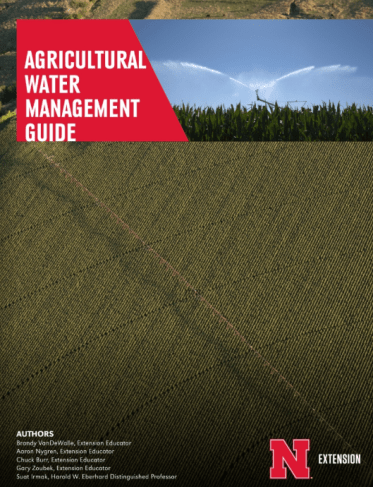 as a leader in irrigation management and development of the Nebraska Agricultural Water Management Network, it is only fitting for Nebraska Extension to provide youth education related to irrigation.
 Growers, crop consultants, ag professionals, and extension educators are encouraged to attend Nebraska Extension’s weed management field day from 8.30 a.m. to 1 p.m. June 26 at the University of Nebraska–Lincoln’s South Central Agricultural Laboratory near Clay Center.

![Lawn & Garden Tips_Geneva[1].jpg](https://vandewalleviews.com/wp-content/uploads/2019/05/lawn-garden-tips_geneva1.jpg?w=522&h=675)







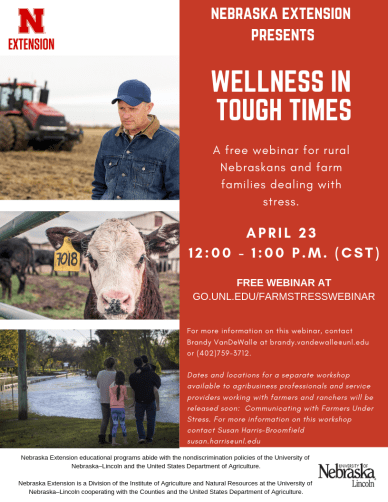 Wellness in Tough Times will be presented by my colleague, Nebraska Extension Educator Glennis McClure and myself from 12:00 – 1:00 p.m. (CST). This free webinar is available for farm and ranch families to participate and will provide strategies for dealing with the stress of farming or ranching in today’s difficult economic environment.
