This year has been difficult for our lawns. Since our cold April, our temperatures skyrocketed and we haven’t had many rain events throughout this spring and early summer. This has been causing our lawns to look a little ragged and brown.
Ascochyta
Many cool season lawns throughout Eastern Nebraska have begun to look brown due to Ascochyta leaf blight, a widespread disease found throughout the early part of summer this year. Mowing during the hot Memorial Day weekend seemed to have worsened the symptoms of this disease.
Symptoms
A close-up of the blades of turf infected by Ascochyta
Ascochyta is a diseased that is stress-induced and often shows up in the early summer when the weather shifts from cold and wet to hot and very dry. Ascochyta is a dieback from the tip of the leaf blades of cool season turf. Red-brown spots can also…
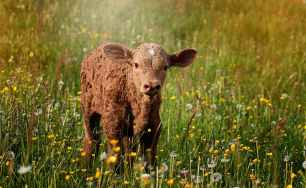
McKenzie giving her calf a bath. We split the pen so that some of it is seeded to millet for grazing later this summer.
Recently, my husband and I added fencing for my daughter’s 4-H second year bucket calves and hope she can eventually expand to a small cattle herd someday. That is what I did through my 4-H and FFA projects so hopefully she will want to follow in my footsteps. With an area of bare soil, my Dad recommended seeding some millet for grazing, not to mention holding soil in place to prevent dusty conditions. We had to water the area to get the seed up, but now have a decent stand. This past week, my colleague Brad Schick who is focused in the beef area published an article on Extension’s BeefWatch website which I’ve decided to share with you this week.
Brad shares how grazing summer annual grasses is a great way to add flexibility to an operation, but in order to make it worth your time and money some management decisions are required. Your goals and your location will determine what type of summer annual you should plant. His article will addresses the type of annual and planting date, timing of grazing, prussic acid and nitrate concerns.
The most common summer annuals for grazing are sorghum-sudangrass (often call sudex), sudangrass, pearl millet, foxtail millet, and teff. For forages that can be grazed slightly earlier, the sorghums and sudangrasses can be used, but should only be planted once the soil temperature is above 60 degrees Fahrenheit. Generally, a late May to early June planting date will meet the 60 degree Fahrenheit requirement.
For millets and teff, the soil temperature needs to be 65-70 degrees F before planting. Planting into soil that maintains a lower temperature can cause stunted growth and reduce forage yield. Planting mid- to late June and into July should give good results with enough water. The millets and teff are fairly drought tolerant, and more tolerant to drought than the sudangrasses and sorghums.
Another consideration for planting is forage availability. A good rule to follow is that forage will be ready to graze 6-8 weeks after planting. To reduce the chance of forage getting ahead of the cattle, stagger plantings of a forage type by two weeks. By staggering planting, rotational grazing can be implemented and the forage will be grazed more efficiently. Staggering of planting can be done using one forage type such as sorghum-sudangrass, or using two or more types. For example, sorghum-sudangrass is planted on a portion of the field. Two weeks later on the next portion of the field, sorghum-sudangrass or a different annual such as pearl millet is planted as long as temperature requirements are met.
Maximizing the harvest efficiency while grazing annual forages is a significant factor when planning the annual type and planting date. However, issues can occur when cattle moves are not managed properly. Use a short, rotational system for grazing. Fields should have a minimum of three paddocks to allow for regrowth after the first rotation. A goal should be to graze the paddocks for about 7-10 days and allowing regrowth for at least 14-20 days.
Grazing sorghum-sudangrass should be delayed until plants are 18-24 inches tall in order to avoid prussic acid poisoning, which can cause death in cattle. Sudangrass, foxtail and pearl millet, can be grazed once they reach 15-20 inches in height. Another guideline is to graze all these summer annuals leaving about 6-8 inches of stubble during that 7-10 day rotation. If choosing between leaving cattle on a paddock for a longer or shorter time, just remember that retaining some leaf area will cause more photosynthesis and ultimately a faster regrowth.
A significant concern for grazing some summer annuals is prussic acid poisoning, also known as cyanide poisoning. The regrowth and young leaves of the sorghums, sudangrasses, and sorghum-sudangrasses produce prussic acid and can be deadly if cattle consume a high concentration. Graze when the plants have reached an appropriate height and time the grazing periods appropriately. Turning cattle out full and with plenty of water will reduce the chance of prussic acid poisoning. Nitrates in grazing situations are generally not a concern if the forage isn’t grazed too low because the lower one-third of the plant will contain the highest nitrate concentration. Nitrates are something to watch when grazing any summer annual grass, even beyond drought years.
Grazing summer annual grasses can be a great addition to an operation when annuals are chosen correctly and grazing plans are used. Finally, planting a few extra acres of summer annuals is a good option as part of a drought plan for either grazing or haying. It’s also a fall back to the annuals grazing program just in case growth and regrowth isn’t as productive as planned. Summer annuals are also a great option before reseeding an aging alfalfa stand. This can provide quality hay or grazing. Setting clear goals can make grazing summer annuals worth your time and money.
For more information on this topic, check out Brad’s article with resources at beefwatch.unl.edu.
If you would like to participate in a dynamic irrigation program, called the Nebraska Ag Water Management Network, let me know and I’d be happy to help and get you started! If you are in the NAWMN, consider installing your ETgage soon and once done with planting, start the soaking/drying cycle on your Watermark sensors to be sure they work! It’s also important to replace the #54 alfalfa canvas covers and wafers on a regular basis at the start of each season. For more information, go to: https://nawmn.unl.edu/.
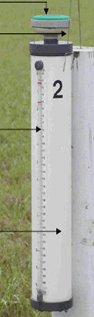
I plan to report the weekly evapotranspiration (ET) in my weekly blog. The ETgage I check is in the center of the county, just south of Geneva; hopefully it will help others become aware or have an idea what the local ET is.
The ETgage I check outside of Geneva changed 2.0 inches for the week of May 25-June 1st. Corn in the V-4 stage has a coefficient of .18”. To calculate how much water, corn at V-4 stage used you simply multiply .18” x 2.0” for a weekly use of .36” or .05 inches/day. Corn approaching V-6 would have used .70”/week or .07” per day. Fortunately, we received about 1.2” rain in this location as well.
For more information about ETgages and Watermark sensors, check out the NAWMN website https://nawmn.unl.edu/.
To see on-site demonstration of new technologies and herbicides for weed control in corn, soybean sorghum and cover crops research, plan to participate in the Weed Management & Cover Crops Field Day held June 27, 2018 from 8:30 a.m. – 3:00 p.m. Registration starts at 8:00 a.m. for this free event which will be held at the South Central Ag Lab near Clay Center, NE. Thanks to numerous sponsors, this event is free for participants. Registration is appreciated for a meal count and can be done by going to http://agronomy.unl.edu/fieldday.
Some topics include: comparison of herbicide programs for weed control in soybeans and corn, weed control and crop safety in MGI soybean, response of white and yellow popcorn hybrids to glyphosate Enlist DUO, or XtendiMax (26), control of Roundup Ready/Liberty Link volunteer corn in Enlist corn, weed control and crop response in INZEN sorghum, soybean yield and critical time for weed removal as influenced by soil applied herbicide. In addition, an overview of the effects of cover crops on weed suppression pests and beneficial insects will be shared.
There are CCA credits available for those who need them. More information may be obtained by contacting Roger Elmore at roger.elmore@unl.edu or (402) 472-1451.
Growers can learn about the latest wheat varieties and view many of them in the field at the Wednesday, May 30th Wheat Variety Plot Tour near Fairbury. The event, sponsored by Nebraska Extension, will begin at 6:30 p.m. in a plot hosted by Mark Knobel.
Speakers include Stephen Baenziger, University of Nebraska-Lincoln professor and wheat breeder, Paul Jasa, Nebraska extension engineer, will provide tips on setting no-till drills to increase wheat stand consistency. He will also share cover crop opportunities following wheat and Stephen Wegulo, Nebraska Extension plant pathologist, will discuss wheat disease prevention strategies in southern Nebraska.
From Fairbury: Travel northeast on Highway 136 for 3 miles and turn north on 571 Avenue. Go north for 2.6 miles on 571 Avenue. Turn east on 716 Road for 0.2 mile. Plot is on the south side of the road. GPS Coordinates 40.204547, -97.120798.
Alternate Route: On Highway 15, go 2 miles north of Fairbury, take 716 Road east 3.2 miles (Note: Two miles is minimum maintenance. If it’s muddy, consider taking Road 715 or Road 718 as alternate roads.) Fresh kolace will be served made from winter wheat!
For more information about the plot tour, contact Randy Pryor at the UNL Extension Office in Saline County at 402-821-2151 or e-mail rpryor1@unl.edu or view the program flyer.
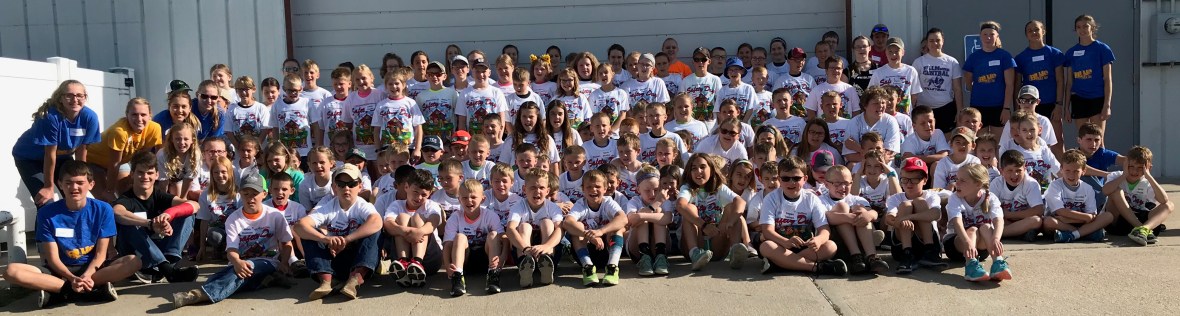
That, “no child would become ill, injured or die from farm, ranch and rural activities.” That is the vision for the Progressive Agriculture Foundation. The Progressive Agriculture Foundation governs and secures funding solely to educate youth and families on ways to make farm, ranch and rural life safer for children and their families. The Progressive Agriculture Foundation is the largest rural safety and health education program for children in North America, which Fillmore County is proud to provide one of those programs. In fact, over 400 safety days are planned across the United States & Canada reaching over 104,000 participants in 2018 alone. Since 1995, the Progressive Ag Safety Foundation and its sponsors has provided resources for over 6,972 safety days have occurred reaching nearly 1.3 million participants and over 347,000 volunteers.
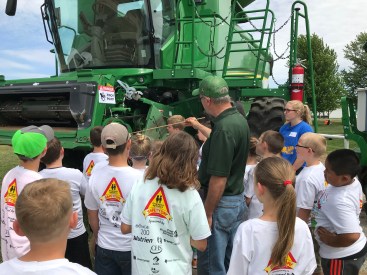
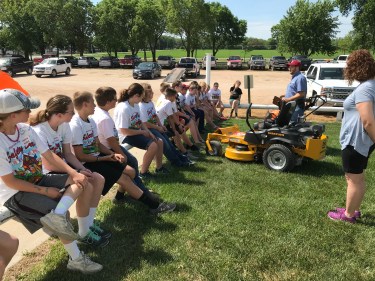
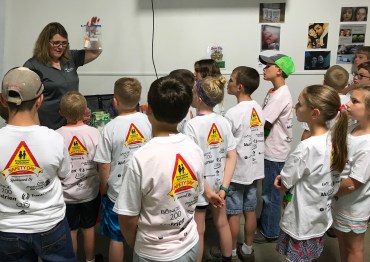
On May 24, 2018 Nebraska Extension in Fillmore & Clay Counties coordinated Progressive Agriculture Safety Day for 128 area youth in collaboration with the local WIFE (Women Involved in Farm Economics), Emergency Management and Fillmore Central and Shickley FFA Chapters. The event for youth who just completed 1st to 6th grades provided hands-on activities for youth on a variety of topics from knife safety to healthy lifestyles to lawnmower safety.
This program is possible through the assistance of numerous volunteers from varying agencies or businesses including Plains Power, Nick’s Farm Store, Perennial Public Power, Fortify Group, Nebraska Extension, Shickley and Fillmore Central FFA Chapters. Sponsorship from W.I.F.E. (Women Involved in Farm Economics), Fortify, Fillmore County Emergency Management, Fortigen, Sutton Vision Center and Harre Seed. Lunch was served and provided by the Fillmore Central FFA Booster Club.
New this year, youth learned about the severity of the opioid epidemic and were given information on its devastating effects on people. Goody bags with lots of resources and other activities were sent home with the record-breaking number of participants. Each family received a weather radio this year as well. Local coordinator, Brandy VanDeWalle attends the annual Progressive Agriculture Safety Day training and works to coordinate this collaborative event. For information on how to be involved locally in the future, contact Brandy at the Fillmore County Extension Office at 402-759-3712.
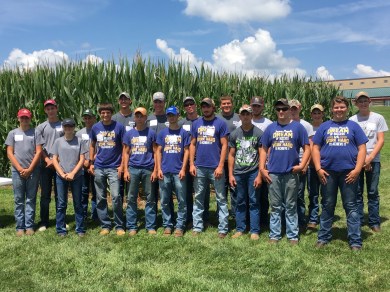
Looking for a fun project for 4-H or FFA youth? Want to unite your club members? Running out of ideas for youth projects? If you answered, “yes” to any of these questions, help is on the way! Nebraska Extension is pleased to present the 5th annual Crop Scouting Competition for Nebraska youth. Youth interested in crops have the opportunity to learn about crop growth & development and basic crop scouting principles.
Don’t know a lot about crops? Ask a local agronomist to assist by providing a short lesson on crop production. You can have the agronomist meet with youth a little during each meeting or outside of the meeting. This is one way to engage those youth interested in crops.
This contest will be held at the ARDC near Mead, Nebraska on July 26, 2018. The event will include both indoor and outdoor events. Teams of junior high and high school students (those completing 5-12th grades) from across Nebraska are invited to participate. This event is limited to the first ten teams who sign-up!
Clubs or other organizations may enter a team composed of three to five participants. An adult team leader must accompany each team of students. Team leaders could be FFA advisors, crop consultants, extension staff, coop employees, etc.
Top-scoring teams win prizes: $500 for first, $250 for second, $100 for third place. Top two teams will be eligible for regional competition in August at Nebraska.
Teams will be expected to know the basics of scouting corn and soybean fields. This includes crop staging; looking for patterns of crop injury; disease, insect and weed seedling identification; etc. Other topics many include but are not limited to, pesticide safety, nutrient disorders, and herbicide injury.
More information about the crop scouting competition and instructions on how to register a team are available online at cropwatch.unl.edu/youth. Register at: go.unl.edu/cropscoutingregistration. For more questions, contact me at brandy.vandewalle@unl.edu or (402) 759-3712.
Teams must be registered by July 18. This program is sponsored by Nebraska Independent Crop Consultant Association, DuPont Pioneer, Farm Credit Services of America and Nebraska Extension.
Nebraska Extension will be hosting a risk management workshop for cattle producers on Thursday, June 7, 2018 from 5:30 to 8:30 p.m. at the Eastern Nebraska Research and Extension Center (formerly ARDC) near Mead, NE. Cattle producers will learn how to reduce risk exposure associated with cattle marketing and forage production to achieve a profitable outcome in uncertain times. This material is funded in partnership by USDA, Risk Management Agency.
Topics covered during the workshop will include determining your production strategies for the cow herd, marketing tools to protect against price declines, and programs for protecting against weather related forage losses. Specific topics covered during the workshop will discuss new and existing marketing options, insurance options, and disaster programs available to cattle producers as well as the current and long range weather outlook.
The workshop does not have a cost for attending and a meal will be provided, but registration is required to ensure an accurate meal count. For more information and to pre-register by June 4, please call Nebraska Extension in Saunders County at 402-624-8030.
It’s certainly proving to be a dry spring so far. One of the ways to better manage irrigation costs is through participation in the Nebraska Ag Water Management Network. In addition to saving costs and water, producers report a reduction in nutrient loss. Evaluation results have shown a one to two-inch savings of irrigation since its inception. The Network has been having significant impacts on both water and energy conservation due to farmers adopting information and implementing technologies in their irrigation management. The cost of applying an additional 2 inches of water is going to vary depending on your depth to water, system pressure, and equipment costs, but could easily run from $10 to $30 per acre.
To determine the actual cost, I recommend using the IrrigateCost app, developed by Nebraska Extension. The app, which is available for both Apple and Android products, allows users to input their specific information such as acres irrigated, pumping lift, system PSI, pump and pivot life, and inches applied as well as related costs such as for the well and engine, labor, energy, district fees, and taxes. The app then calculates total irrigation, total ownership, and total operating costs. It also breaks down costs by irrigation well, pump, gear head, pump base, diesel engine and tank and system and calculates per acre annual cost and per acre-inch annual cost.
A couple of the tools the NAWMN uses are ETgages® or Atmometers which mimic crop evapotranspiration or ET and Watermark soil matrix sensors which measure soil matric potential or the energy required to remove water from the soil. These two tools have really worked well and have made irrigation management much easier than those gut feelings. The more information you have the better decisions you can make!
If you are in the NAWMN, and have not already installed your equipment, be sure to remember to start the soaking/drying cycle on your Watermark sensors to be sure they work! It’s also important to replace the #54 alfalfa canvas covers and wafers on a regular basis at the start of each season. For more information, go to: http://water.unl.edu/web/cropswater/nawmdn.
Once you have your ETgage out, I hope you will post your weekly readings to the Nebraska Ag Water Management Network (NAWMN) website. As a reminder, once you are on the main screen, you can login to your site by entering your site name and password and clicking on “Login.” Once you have logged in, you will be taken to your weekly data from past weeks, including last year. To enter your weekly data, click on the “Add new ETgage reading” link which will take you to the data entry page where you can enter your growth stage, rainfall, and ETgage change.
If you’ve forgotten your site name or password, please contact Aaron Nygren at anygren2@unl.edu or 402-352-3821.


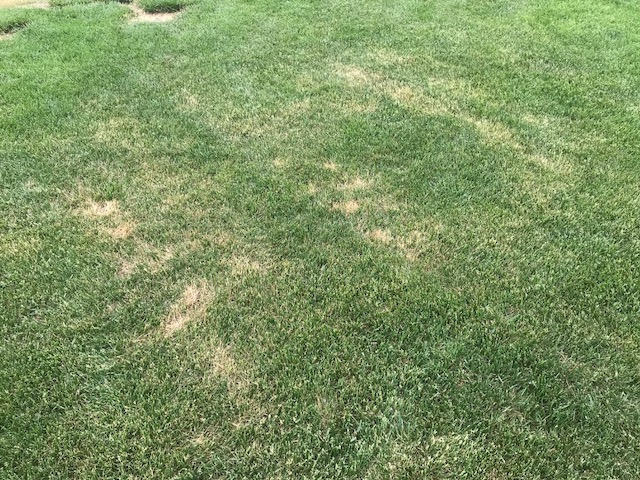 Symptoms from Ascochyta Leaf Blight
 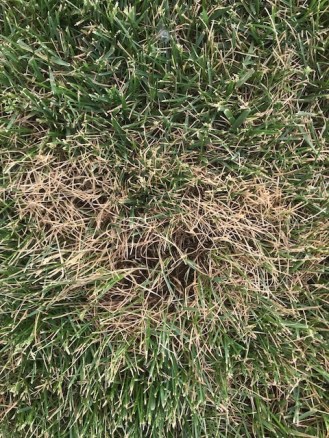 A close-up of the blades of turf infected by Ascochyta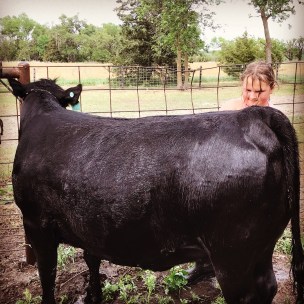





 ngine and tank and system and calculates per acre annual cost and per acre-inch annual cost.
