Horticulture, Uncategorized

Uninvited Guests (mice)

Temperatures are dipping and that can only mean two things. Halloween will be here soon, and mice will start migrating inside. Take a few steps now to make sure the ‘guests’ that come to your house are the cute ones dressed up in costumes, not the furry, unwelcome kind.

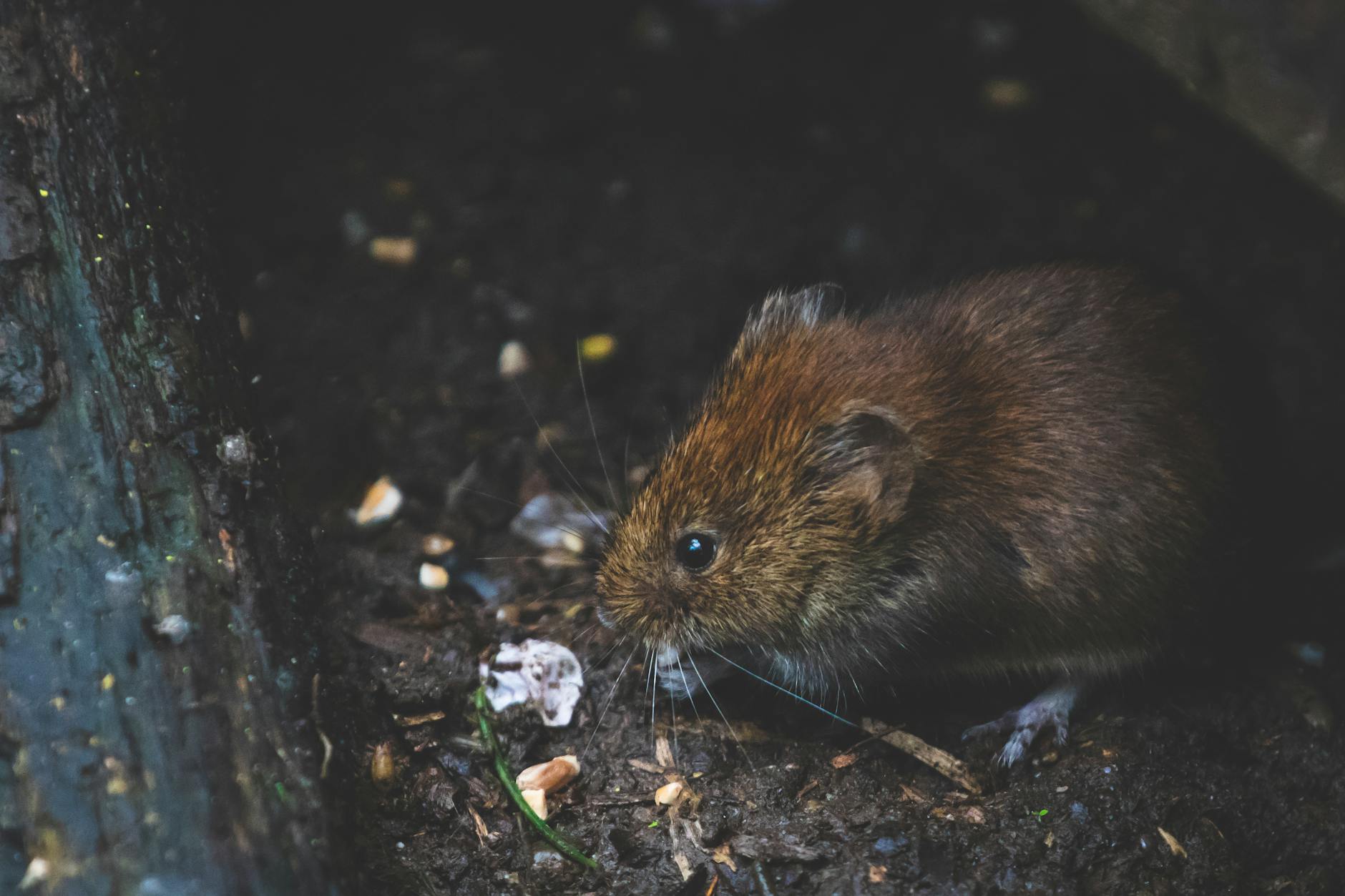
House mice are common guests once the outdoor temperatures drop. These small, light gray, furry rodents have large ears and long tails. Their preferred food is grains, but they will munch on just about anything. One reason mice can be a problem once inside is due to their rapid ability to reproduce. Each year, a female mouse can produce 5-10 litters, with about 5-6 young per litter. Mice make nests out of materials like paper, feathers, or other fluffy materials.

Photo by DSD on Pexels.com

Understanding how mice function helps in the control process. They have relatively poor eyesight and are near-sighted. To make up for this deficit, they utilize their whiskers to feel the walls as they move around. Mice also have extreme physical abilities. They can climb up vertical surfaces, balance along wire cables, jump 10” high or across a 3’ gap, and survive a 9’ drop. Their most impressive feat is being able to squeeze their bodies into holes 1/4” in diameter, the size of a pencil.

If you don’t want these guests to become permanent residents, there are several methods that can be used for controlling mice in the home. Exclusion is the most common in the fight against house mice. Prevent mice from entering buildings by eliminating openings that are 1/4” or larger. Use sealants or mortar to help fill the gaps. Spray-in-place foams and steel wool pads will fill the gaps, but they won’t do much to stop mice from entering. Make sure doors, windows, and screens fit tightly. Cover the edges of doors and windows with metal to prevent gnawing.

Population reduction is another method for controlling mice. Traps and baits are two common population reduction methods. To ensure success with traps, you need to use enough traps in areas where mice are living. Snap traps or multiple-capture traps can be used to capture mice. Double setting snap traps, placing two traps close to each other, will yield the best results in situations with high activity. Multi-catch traps can catch several mice at a time without resetting. Glue boards are another alternative to traps. These sticky boards catch and hold mice as they try to move throughout the home. Be sure to use sticky boards in locations where non-target animals or items won’t get stuck in them. If this does happen, use an oily material, like vegetable or mineral oil, to dissolve the sticky substance. To make the traps more appealing you can apply a food source such as peanut butter, or a chocolate chip melted to the trigger, or you can secure a cloth scented with a food source to the traps’ trigger.

Baits are another population reduction method. Be sure to read and follow all directions on baits. When choosing baits, consider the location and method of applications and any non-target pets and children. Choose the type of bait for your specific location and application. Mice have been known to move pelleted baits without eating them. Just because you have an empty box, doesn’t mean they have eaten the bait. Bait stations or bait blocks ensure that the critter eats the bait. Baits might not be the best option for inside the home, so select their location wisely.

Use caution when cleaning up droppings, nests, or mouse remains. This can help to decrease the potential spread of diseases carried by mice like Hantavirus. Use protective waterproof gloves and spray the carcass and trap or nest with a household disinfectant or a 10% bleach solution. Use a sealable bag turned inside out to pick up the mouse. To remove feces or urine, spray the area with a disinfectant until wet and wipe up with a towel, rag, or mop. Don’t use the vacuum or broom to collect dry feces as that can cause the material to go into the air and be inhaled.

We all want guests to stop by, but with a little work upfront, you can make sure the guests that enter your home will be welcome ones who will yell out ‘Trick or Treat’.

This article was written by Elizabeth Exstrom, Extension Educator with Nebraska Extension in Hall County. For more information contact Elizabeth at elizabeth.exstrom@unl.edu.

Livestock

Pork Month- October

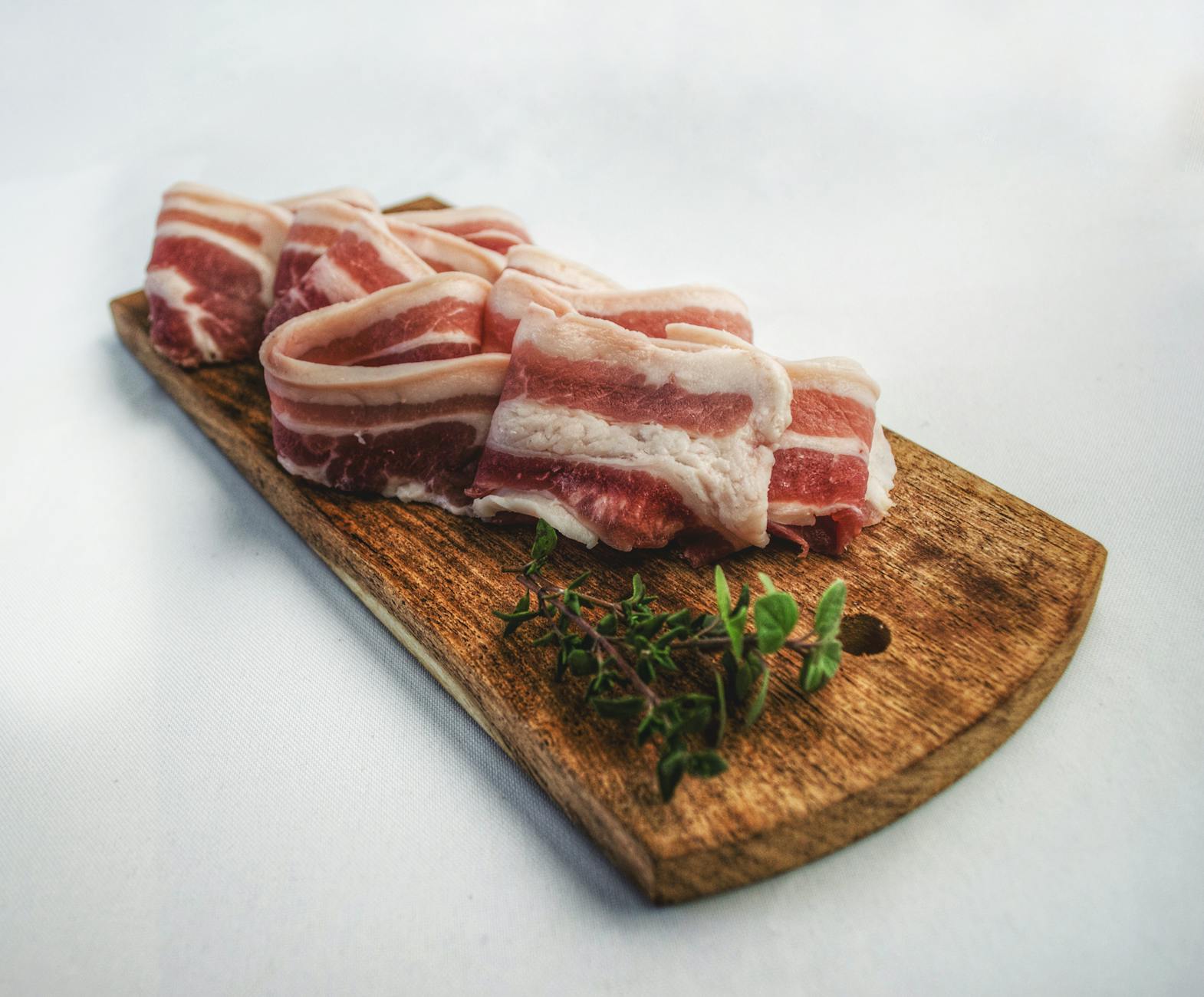
If you have recently enjoyed some juicy pork loin, pork chops, sausage, or my favorite – bacon, then you should thank a pork producer. In Nebraska, we grow nearly 7.8 million pigs each year from 1,230 family farms, making us the sixth-largest pork-producing state. These family farms have people who are locally involved in various community organizations, schools, churches, etc., and have families of their own to feed. This is just one of the reasons you know that pig farmers raise a safe, wholesome product that you can serve your family. According to the Nebraska Pork Producers Association, there are nearly 18,000 jobs involved in pork production and an economic impact of 1.66 billion dollars in Nebraska.

October is National Pork Month, and the Nebraska Pork Producers Association website has some fantastic recipes on their website which can be found at nepork.org. There are also some delicious recipes including an air fryer pork and apple burger and pork rice bowl recipes on Extension’s food.unl.edu website.

Photo by Nicolas Postiglioni on Pexels.com

Speaking of meat, did you know that pork carcasses are separated based on percent fat-free lean (%FFL), which estimates how many pounds of boneless, closely trimmed retail cuts (BCTRC) that animal will provide.  Let’s take an example hog that has a live weight of 275 lbs. If that animal had a dressing percentage (the amount of weight from the live animal that makes it to the carcass) of 75%, the carcass weight would be 210 lbs. With a percent fat-free lean of 57%, the boneless, closely trimmed retail cuts (BCTRC) of meat would be 120 lbs. A fun fact is that Americans on average eat around 18 pounds of bacon each year. That’s about 5.6 billion pounds for the entire United States.

Wholesale cuts are large meat cuts that the animal carcass is cut into for ease in handling and shipping. Some wholesale cuts are higher in value than others. In hogs, the wholesale cuts are the shoulder/“Boston butt”, shoulder/“picnic”, loin, belly, and leg/“ham”. These cuts are then broken down into retail cuts which is what most consumers will purchase at the grocery store. Some popular examples include sliced bacon and spare ribs from the side and country-style ribs, tenderloin, and center cut chops from the loin.

Often when any meat turns out dry, it is prepared and cooked incorrectly.  Using a meat thermometer is one of the best ways to ensure meat is not overcooked. For example, boneless pork chops and pork tenderloin only need an internal temperature of 145 degrees (Fahrenheit). Ground pork patties should reach an internal temperature of 160 degrees. For more tips on properly preparing pork, which include grilling pork, air frying pork, using an instant pot, roasting pork, and more, go to the National Pork Board’s website at pork.org. Happy National Pork Month!

Youth

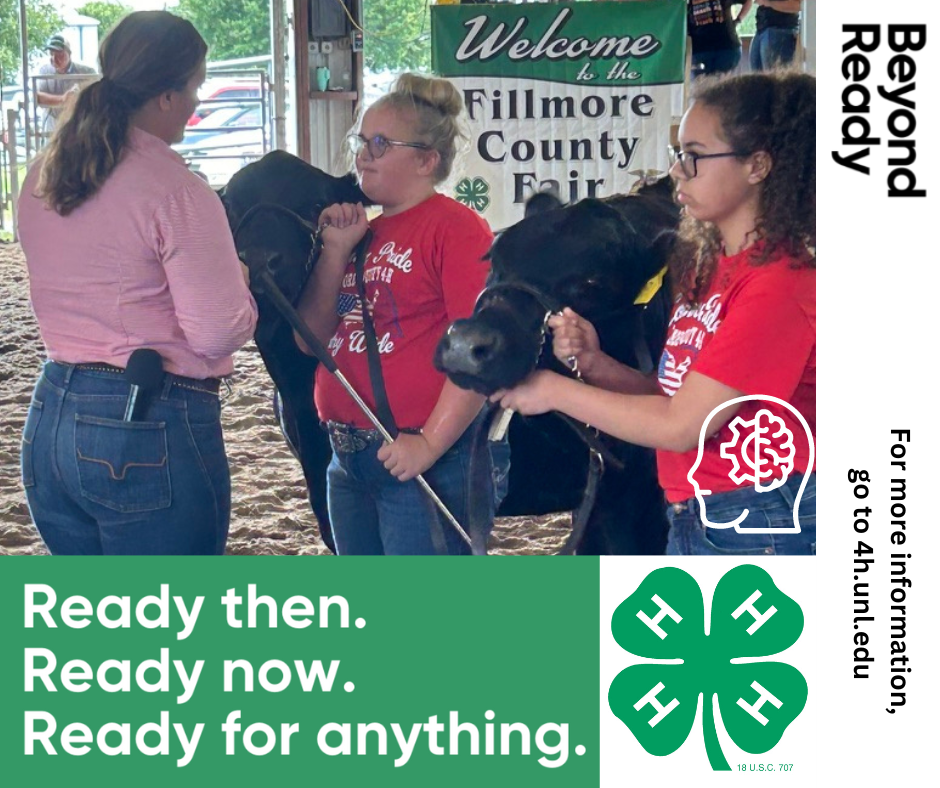
Ready then. Ready now. Ready for anything.  

Celebrate National 4-H Week!

Nebraska 4-H is building a ready generation in a world of change. Today’s youth are growing up in a unique moment where the world is rapidly changing – life following a pandemic, and artificial intelligence are just a few factors affecting mental health, confidence, and the ability to find contentment in life. 

Since its beginning more than 120 years ago, 4-H has become the nation’s largest youth development organization. Nationally, 4-H serves over 6 million youth, ages 5-19, in rural, urban, and suburban communities in every state across the nation. In Nebraska, 4-H reaches one out of three who are age-eligible.  Young people need positive youth development experiences more now than ever. 4-H equips youth with skills for the future while meeting them where they are today. 4-H provides opportunities and experiences that shape young people into their full, authentic selves, enabling them to shine both now and in the future.  

The citizens of our state have helped shape the educational priorities for the Nebraska 4-H program. These programs incorporate quality learning experiences and science literacy, which are delivered through clubs, camps, school enrichment, afterschool, and special interest opportunities. Everything offered by Nebraska 4-H Youth Development is built around positive youth development (https://4h.unl.edu/pyd) as a way of preparing young people who are engaged, healthy, productive, and beyond ready for their future. 

Engaged, Healthy, and Productive Youth 

4-H embraces diversity in people, careers, and perspectives. Every child is valuable and deserves the support and freedom to choose their own path. 4-H believes in the potential of all youth and strives to let their talents flourish. 

Nebraska 4-H fosters youths’ commitment to their communities and growing future leaders. Through community development programs, youth develop and exercise leadership skills, gain a greater awareness of their civic responsibilities, and participate in service projects. They also provide youth voice to community decision bodies and are engaged, well-informed citizens who are active in their local and global communities.   

4-H has proven to instill confidence and resiliency. Dedicated to empowering youth in both body and mind, we rely on scientifically-backed studies and programming that drive youth forward so they can be prepared for anything.  

Nebraska 4-H educates youth about making healthy and safe decisions in their daily lives. Through healthy living programs, youth gain knowledge and develop skills for making healthy and safe decisions in their daily lives, acquire an understanding of what positive relationships look like, practice healthy and safe decision-making, and exhibit increased resiliency.  

4-H equips youth with skills for the future while meeting them where they are today. Through 4-H, opportunities and experiences are offered that shape youth into their full, authentic selves, enabling them to shine both now and in the future. Through College and Career Success programs, 4-H youth develop the knowledge, skills, and mindsets through experiential learning opportunities to explore potential postsecondary education and career options. Nebraska 4-H prepares youth to make informed decisions about their careers and college paths. Programs assist young people with developing skills that will lead to greater persistence in college and employability.  

To learn more about how you can get involved, visit 4h.unl.edu.

Horticulture

Pumpkins

I love this time of year for several reasons. First, it is harvest time; watching the combines in the fields brings back great memories of riding in the combine with my dad as a child. Secondly, I love the changing colors of the trees and the slight chill in the air. Finally, I love pumpkins and going to the pumpkin patch with my girls, so I’m sharing some fun information about pumpkins this week.

October is National Pumpkin Month. Pumpkins are a member of the Cucurbitaceae family, which also includes squash, cantaloupe, cucumbers, watermelon, and gourds. Every part of the pumpkin was used by American Indians. Pumpkins and squashes were baked or roasted whole in a fire, cut up and boiled, added to soups and stews, or made into porridge and pudding.  Strips of pumpkin were dried and woven into mats and the dried outer shells of pumpkins and squashes found new life as water vessels, bowls, and storage containers.

Photo by Ivan Samkov on Pexels.com

Did you know that pumpkin is an excellent source of vitamin A and a good source of fiber? Also, a one-ounce portion of hulled pumpkin seeds is considered 20-ounce equivalent in the Protein foods group. All parts of the pumpkin are used worldwide as ingredients in dishes – even the pumpkin leaves!  Cooked pumpkin leaves and peeled shoots are a staple in many Asian and African countries and are served with rice or porridge. The flavor is said to be a mixture of green beans, asparagus, broccoli, and spinach. Use tender, young pumpkin leaves for best results.  Fresh pumpkins are best if you select small, heavy ones for cooking because they contain more edible flesh. Pumpkins for carving are not so great for cooking, but the edible seeds are great for roasting!  My grandma always made the best pumpkin seeds!

            If you have never made roasted pumpkin seeds, here are some tips from the National Center for Home Food Preservation:

  • Drying seeds and roasting seeds are two different steps:
  • To dry: Carefully wash pumpkin seeds to remove the clinging fibrous pumpkin tissue. Pumpkin seeds can be dried in a dehydrator at 115 to 120°F for 1 to 2 hours, or in an oven on warm for 3 to 4 hours. Stir frequently to avoid scorching.
  • To roast: toss dried pumpkin seeds with oil and your favorite seasonings such as salt, pepper, garlic, or cumin. Roast in a preheated oven at 250°F for 10 to 15 minutes. Once cooled, place the roasted pumpkin seeds in a sealed container and store at room temperature.

When selecting pumpkins for carving and fall decoration, choose varieties that suit your style! Traditional carving pumpkins are medium to large- in size, deep orange, and lightly ribbed with a strong handle. For painting, look for a small pumpkin with a strong handle and a smooth surface. Add additional interest to fall décor using miniature pumpkins with unique colors and patterns. Miniature pumpkins are typically less than 2 pounds and can be found in a variety of shapes and colors. The diversity among pumpkin varieties is incredible! With sizes ranging from 4 ounces to over 1,000 pounds, various unique shapes, and brilliant colors like orange, yellow, white, green, blue, gray, pink, and tan, there are endless opportunities to select the perfect pumpkin.

This information was taken from Nebraska Extension’s food.unl.edu website which has more great pumpkin and fall recipes and nutrition information.

Uncategorized

Harvest Safety

It is hard to believe that harvest has started for some. As a reminder with harvest comes more traffic on county roads and other stresses for farmers. It never fails, that equipment can break, there are delays at the elevator and extra-long hours can all add extra stress to farmers. It is important to carefully slow down and realize the many hazards you are being exposed to during harvest.

Photo by Tom Fisk on Pexels.com

An Iowa State Extension publication, Harvest Safety Yields Big Dividends points out that injuries can occur by taking shortcuts to perform routine tasks, not getting enough sleep or regular breaks, or failing to follow safety practices. Some injuries occur when operators are pulled into the intake area of harvesting machines, such as balers, combines, or corn pickers, and many injuries occur from slips or falls around these machines. Exposure to powerful machinery is highest during the harvest season. The equipment must be powerful to effectively handle large amounts of agricultural commodities. When equipment plugs, NEVER try to unplug it with live equipment, instead always disengage power and turn off the engine before trying to manually clear a plugged machine. Regular maintenance of these machines can also make harvest go smoother. Also, lots of accidents happen by the operator slipping and falling off equipment.

In the same publication listed above, there are several tips for reducing fall hazards: 

  • Always keep all platforms free of tools or other objects.
  • Frequently clean the steps and other areas where workers stand to service, mount, and dismount, or operate the machine.
  • Wear well-fitting, comfortable shoes with non-slip soles.
  • Use grab bars when mounting or dismounting machinery.
  • Be sure your position is stable before you work on a machine.
  • Recognize that fatigue, stress, drugs or alcohol, and age may affect stability.

Other helpful tips during harvest are to keep kids away from machinery. Tell them the dangers that can occur and not to play near the equipment, even when it is shut off; you never know when they will be playing in hidden areas of the equipment. Operators should double check where kids are before moving the equipment. Too many accidents can occur when youth are in the path of equipment out of the operator’s view. Operators of all equipment should check in regularly and let someone know where you are. Keep all guards on equipment; it is there for a reason! 

It is also important for the public to understand the increased traffic on public roads and be patient. The greatest threat raised between farm equipment and passenger vehicles is the difference in speed. Farm equipment runs at an average speed of 20 miles per hour while passenger vehicles average 60 miles per hour. If the motor vehicle overtakes a tractor, the impact is comparable to a passenger vehicle hitting a brick wall at 40 miles per hour. If the tractor and a car, mini-van or pickup collides head on, the impact is the same as hitting a brick wall at 60 miles per hour.

Farmers can reduce the chances of an accident by using warning lights, reflectors, and reflective tape on their machinery to keep passenger vehicle operators aware of their presence on roads. Some farmers may choose to install supplemental lights to increase visibility. It also is a good idea for producers to keep off heavily traveled roads as much as possible and avoid moving equipment during the busiest part of the day.

Some farm equipment, such as combines, can take up more than half of the road. Even so, it is up to both drivers to be aware of their own limitations and adjust accordingly. Farmers should not take up more space than is needed, but other drivers should try to provide as much room as possible. It is a good idea for passenger vehicles to turn off onto side or field roads until larger machinery has passed. Whenever possible, farmers should use an escort vehicle such as a pickup to precede or follow large machinery and equipment on public roads. More than one escort may be necessary. Ideally, the escort vehicle would have extra warning lights and a sign indicating oversized or slow equipment ahead or following.

Have a safe harvest!

Horticulture

Tree Planting Tips

There is always room to plant another tree, in our own yard or even at a public location such as parks, churches, and schools. Good plant growth starts with proper planting. If a tree is not planted correctly it will struggle for many years and maybe even die after only a few years in the ground. Nicole Stoner, local Horticulture Extension Educator and Certified Arborist has great information to consider when planting trees.

Photo by Lerkrat Tangsri on Pexels.com

Diversity

Deciding what tree to plant is very important and can be a difficult decision because there are so many trees to choose from. Diversity is key when choosing your tree. The general rule is to plant no more than 10% of a tree species, no more than 20% of a tree genus, and no more than 30% of a tree family in a respective urban area.

Diversity of our tree species helps reduce future problems from widespread disease and insect outbreaks. Look around at what types of trees you have and what types of trees your neighbors have before deciding on a new tree, try to avoid over-planting the same few trees throughout the neighborhood. Plus, diversity of trees is more aesthetically pleasing because of the different leaf and bark textures, different bloom times, and overall differences in trees.

Planting a Tree

The most important factor to keep in mind when planting trees is planting it correctly to ensure healthy growth. First, remove all the burlap and any other materials from the root ball before planting. Also remove any tags, twine, or wire from the tree. Remember to remove all the grass and weeds that are within the area you will be planting the tree. Dig a hole that is 2-3 times wider and no deeper than the root ball and loosen up the sides of the hole. Plant the tree so that first lateral roots are just below the soil surface. Do not amend the soil that is in the hole, backfill with the existing soil. Make sure that the entire root ball is covered with soil to avoid drying out.

Care of Trees

Keep newly planted trees well-watered. Always water newly planted trees, shrubs, or any other plant immediately after planting. Trees should be watered every 10-14 days throughout the growing season and even some during the winter on warmer days. Each watering should give the tree 1-2 inches of water. The best way to determine if a tree needs to be watered is to insert a soil probe or 12-inch-long screwdriver into the ground around the tree. If it goes in easily there is no need to water, if it is difficult at any point then water is necessary for the tree.

A mulch ring should be established and maintained around every tree. Organic mulch, or wood chips, are a better choice than inorganic mulches. It will help keep the roots cool in the summer and regulated to a uniform temperature through the winter. Mulch will also help keep weeds down and reduce competition from those weeds for water and nutrients. Reducing weed competition around the tree reduces damage to the trunk from lawn mowers and trimmers. Finally, mulch is a way to hold moisture for use later by the tree. Mulch rings should be only 2-3 inches deep and in a circle around the tree at least 2-3 feet out.

Uncategorized

National Farm Safety & Health Week

Did you know?  Each year since 1944, the third week of September has been recognized as National Farm Safety & Health Week. This recognition has been an annual promotion initiated by the National Safety Council and has been proclaimed as such by each sitting U.S. President since Franklin D. Roosevelt signed the first document. This year’s theme is “No one can take your place.”

Fall harvest is one of the busiest times of the year which can equate into one of the most dangerous seasons of the year for agriculture. Long hours are spent in the combine and grain cart which can mean less sleep.  The 2019 data for the U.S. Bureau of Labor Statistics indicates that the agricultural sector is still the most dangerous in America with 573 fatalities, or an equivalent of 23.1 deaths per 100,000 workers. The most common causes of fatal accidents are highway transportation and contact with equipment. 

The Upper Midwest Agricultural Safety and Health Center has five webinars during the highly anticipated National Farm Safety and Health Week, September 15-21, 2024. The webinar series will cover a diverse range of topics, each aimed at addressing specific safety and health challenges faced in the agricultural sector with a youth-focus. Led by industry experts and seasoned professionals, these webinars will provide invaluable insights and tips that can help make a difference in preventing incidents and ensuring the well-being of farmers, families, and youth in rural communities. To register for the webinars, go to: https://www.necasag.org/nationalfarmsafetyandhealthweek/

The daily topics for the webinars include:

  • Monday, September 16, 2024 – Equipment and Rural Roadway Safety
  • Tuesday, September 17, 2024 – Health and Wellness
  • Wednesday, September 18, 2024 – Generations of Farming
  • Thursday, September 19, 2024 – Confined Spaces
  • Friday, September 20, 2024 – Reporting Ag Injuries

Some things one can do now as we prepare for harvest are ensuring you have a fully charged and proper fire extinguisher in the combine. With the dry conditions we’ve had, conditions increase the chances of combine fires. One of the most common entanglement hazards is PTO (power take-off) units. Within three-fourths second (the average time it takes to react), more than one complete person will have been wrapped around the shaft before he or she could jump out of the way. Always keep all safety shields and guards in place and always stay clear of moving parts to avoid this hazard. One should also disengage equipment and shut off the engine before working near a PTO and do NOT wear loose-fitting clothes, dangly jewelry, long shoelaces, or scarves near them.

Youth

Empathy Has Power

A couple of weeks ago, I was fortunate to teach 10 middle school youth a leadership curriculum that included topics such as active listening, making introductions, utilizing their strengths, and how effective leaders and teams use synergy and empathy. There was a great video I shared with the youth titled, “Empathy Can Change the World.” It was a powerful video as it illustrated the power of having compassion for others. So this week, I thought I’d share how empathy can have long-lasting, positive impacts.

Photo by Kevin Malik on Pexels.com

Empathy can often be confused with sympathy. Sympathy is a feeling of concern for someone who is going through something difficult, while empathy is the ability to share in someone’s emotional experience. Sympathy is more cognitive and involves keeping some distance, while empathy is more emotional and requires putting yourself in the other person’s shoes. Helen Riess, Associate Professor of Psychiatry at Harvard Medical School, points out that, “The ability to connect empathically with others—to feel with them, to care about their well-being, and to act with compassion—is critical to our lives, helping us to get along, work more effectively, and thrive as a society.”

Empathy relies on specific parts of the brain that enable an emotional connection with others and provide us with the motivation to care. Some people can absorb another’s pain or emotions and genuinely care for a person. People who have a difficult time expressing empathy usually desire to preserve their own well-being and focus on carrying on with their own lives. Riess describes other instances where empathy is crucial—for example, when we encounter people who are different from us, when we ourselves have made a mistake and need self-empathy, in our workplaces, and even within government.

For people who do not naturally possess empathy, it can be learned. In fact, the educational sector has curricula and lessons teaching youth how to be more empathetic. Literature shows many benefits of empathy in education, including building a positive classroom culture, strengthening community, and preparing students to be leaders in their own communities. Developing an empathetic classroom involves creating an environment where youth feel safe and secure, ensuring consistency and predictability, and helping youth practice self-regulation skills. Relationships matter. Help kids build relationships that inspire them to trust and care for others.

In conclusion, students who are empathetic are more cooperative in class, have better relationships with their teachers, and are more engaged in school. Increased empathy can decrease bullying and aggression among kids and make them kinder and more inclusive toward classmates. More empathetic children are more likely to show prosocial behavior, such as sharing, helping, and comforting others.

To end this article, I will use a quote from Helen Riess: “We have hope to help shape a more civil society, respectful discourse, understanding of others, and a humane world.”

Uncategorized

Back to School Tips

With the school year starting, the busyness of after-school activities and homework assignments will be here soon. As families are pulled in different directions for school, work, and practices, time as a family comes at a premium. Making efforts to build the focus of your children could decrease time spent on homework to free up more time for family activities. Creating a permanent, designated study space is one way to build your youth’s focus. Here are a few items to keep in mind when creating the study space:    

Photo by Pixabay on Pexels.com

Make It Work for You – Every child is different and has different needs. Some prefer a quiet corner in their room while others may prefer to be close to a parent for help at the kitchen table. Just make sure that the traffic and noise of other family members do not become a distraction. 

Manage the Senses – Lighting and noise issues are very common distractions. Tired eyes have more difficulty transferring knowledge into memory. To keep sharp, make sure to provide adequate overhead lighting to limit squinting. Also, check that electronic devices like laptops and tablets are set at a comfortable level. 

Make It Comfortable – Temperature and seating can make a difference in a youth’s ability to concentrate. Make sure that the study space keeps the child relaxed, but alert. It is also important that he or she has adequate space to spread out books, papers and materials to make the space efficient. While a bed may make a great space for spreading out, it may prove too relaxing. Consider a cushioned chair with generous table space. Also, it is important that the chair fit the youth. Dangling legs and hunched shoulders can create distractions as well. 

Keep It Organized – Another way to increase the efficiency of the space is to keep all supplies and materials readily available and easy to find. Any time spent looking for the lost blue marker is time spent away from the task and an opportunity for further distraction. Organized space provides a launching pad for organized study. Keep clutter at a minimum using cubbies, canisters and boxes. A calendar, planner or to-do list can also keep homework assignments and activities prioritized and on track for on-time completion. 

Limit Distractions – While the computer and television can be excellent sources of educational content, they also provide limitless distraction. If the child believes they can focus better with a little background noise, try some recorded music and save the favorite show as a reward when they can spare his or her attention.

Make It Your Own – If the child is expected to spend considerable time in the study space, let him or her decorate the space with posters, pictures or artwork. These items could provide creative inspiration for the child’s next essay or art project. 

This article comes from a series of resources developed by Nebraska Extension, 4-H Youth Development Professionals. Learn more about 4-H at 4h.unl.edu, follow us on Facebook at https://www.facebook.com/Nebraska4H/ or on Twitter at https://twitter.com/nebraska4h. For more information, contact the author – Jennifer Schoen (jschoen4@unl.edu), Extension Educator.

Uncategorized

Agriculture in Ireland & Nebraska

Recently, I was fortunate to serve as a chaperone for 24 youths who traveled to Ireland and learn more about the culture and agriculture.  Agriculture plays a significant role in the economies and cultures of both Ireland and Nebraska, though the two regions differ greatly in terms of climate, farming practices, and agricultural outputs. This article will explore these differences and similarities, shedding light on the unique agricultural landscapes of each region.

 First, let’s compare the climates. Nebraska has hot summers and cold winters with varying rainfall amounts from east to west. Ireland has a temperate maritime climate characterized by mild winters, cool summers, and consistent rainfall throughout the year. This contributes to why Ireland is called “the green island” as it is known as the land of many shades of green. Its climate supports lush, green landscapes and is ideal for pasture-based farming.

Secondly, Ireland’s agriculture relies a lot on pasture-based farming. With grass growing abundantly, it is ideal for dairy, sheep, and beef production. Most farms in Ireland are small family-owned with many farmers having second, off-the-farm jobs. Ireland has 127,000 active farmers and 64% of land is suitable for agriculture. In comparison, data from the 2022 Census of Agriculture shows there are 80,283 producers and Nebraska’s farms and ranches utilize 89% of the state’s total land area. The average farm in Ireland is 82.5 acres, while the average Nebraska farm consists of 991 acres. In Ireland, 90% of Irish beef, sheep meat and dairy produce are exported yearly. Nebraska’s top five ag exports in 2022 were soybeans and soybean products, corn, beef, ethanol and pork.

Agriculture is a vital part of Ireland’s economy contributing to exports and rural employment and agriculture is the backbone of Nebraska’s economy as 1 in 4 jobs in Nebraska are related to agriculture. Some of the places in Ireland our group visited were the National Stud Farm, Highbanks Organic Orchards, Wheelock Strawberry Farm, Glengowla Mine & sheepdog herding farm, and a local dairy, beef, vegetable, and oyster farm.

The dairy farm we visited milked 75 head of cows with 1 robotic milker. All Holstein Friesian cows were strictly pasture-fed with a supplement when they were milked. He utilized a pasture rotation and reseeded the pasture about every 5 years with a mix of grasses. During the winter months, cattle are fed mostly haylage with a little bit of corn silage as available. Every farmer is only allowed a certain number of cattle based on acres owned which was a bit of a challenge for him. He purchases replacement heifers and breeds his cows with a beef breed such as Angus or Hereford, selling the calves.

Visiting the beef farm was very interesting. The producer purchases all commercial heifers that feed grass and haylage with some corn silage in the winter. Most beef breeds are commercial and of the Angus, Simmental, Hereford, Charolais, Limousin, or Blue Belgium origin. In the winter, producers are required to move cattle off pastures and put in a drylot situation where some corn silage, haylage, and sometimes fodder beets are fed. Most corn that is grown has around a 170-day maturity and generally requires more input costs than farmers in the U.S. incur.

Oyster Farm

This was an amazing experience to see other types of agricultural systems, but a couple things Ireland and Nebraska have in common are rich agricultural traditions and a commitment to supporting their rural communities.