Uncategorized

Back to School Tips

With the school year starting, the busyness of after-school activities and homework assignments will be here soon. As families are pulled in different directions for school, work, and practices, time as a family comes at a premium. Making efforts to build the focus of your children could decrease time spent on homework to free up more time for family activities. Creating a permanent, designated study space is one way to build your youth’s focus. Here are a few items to keep in mind when creating the study space:    

Photo by Pixabay on Pexels.com

Make It Work for You – Every child is different and has different needs. Some prefer a quiet corner in their room while others may prefer to be close to a parent for help at the kitchen table. Just make sure that the traffic and noise of other family members do not become a distraction. 

Manage the Senses – Lighting and noise issues are very common distractions. Tired eyes have more difficulty transferring knowledge into memory. To keep sharp, make sure to provide adequate overhead lighting to limit squinting. Also, check that electronic devices like laptops and tablets are set at a comfortable level. 

Make It Comfortable – Temperature and seating can make a difference in a youth’s ability to concentrate. Make sure that the study space keeps the child relaxed, but alert. It is also important that he or she has adequate space to spread out books, papers and materials to make the space efficient. While a bed may make a great space for spreading out, it may prove too relaxing. Consider a cushioned chair with generous table space. Also, it is important that the chair fit the youth. Dangling legs and hunched shoulders can create distractions as well. 

Keep It Organized – Another way to increase the efficiency of the space is to keep all supplies and materials readily available and easy to find. Any time spent looking for the lost blue marker is time spent away from the task and an opportunity for further distraction. Organized space provides a launching pad for organized study. Keep clutter at a minimum using cubbies, canisters and boxes. A calendar, planner or to-do list can also keep homework assignments and activities prioritized and on track for on-time completion. 

Limit Distractions – While the computer and television can be excellent sources of educational content, they also provide limitless distraction. If the child believes they can focus better with a little background noise, try some recorded music and save the favorite show as a reward when they can spare his or her attention.

Make It Your Own – If the child is expected to spend considerable time in the study space, let him or her decorate the space with posters, pictures or artwork. These items could provide creative inspiration for the child’s next essay or art project. 

This article comes from a series of resources developed by Nebraska Extension, 4-H Youth Development Professionals. Learn more about 4-H at 4h.unl.edu, follow us on Facebook at https://www.facebook.com/Nebraska4H/ or on Twitter at https://twitter.com/nebraska4h. For more information, contact the author – Jennifer Schoen (jschoen4@unl.edu), Extension Educator.

Uncategorized

Agriculture in Ireland & Nebraska

Recently, I was fortunate to serve as a chaperone for 24 youths who traveled to Ireland and learn more about the culture and agriculture.  Agriculture plays a significant role in the economies and cultures of both Ireland and Nebraska, though the two regions differ greatly in terms of climate, farming practices, and agricultural outputs. This article will explore these differences and similarities, shedding light on the unique agricultural landscapes of each region.

 First, let’s compare the climates. Nebraska has hot summers and cold winters with varying rainfall amounts from east to west. Ireland has a temperate maritime climate characterized by mild winters, cool summers, and consistent rainfall throughout the year. This contributes to why Ireland is called “the green island” as it is known as the land of many shades of green. Its climate supports lush, green landscapes and is ideal for pasture-based farming.

Secondly, Ireland’s agriculture relies a lot on pasture-based farming. With grass growing abundantly, it is ideal for dairy, sheep, and beef production. Most farms in Ireland are small family-owned with many farmers having second, off-the-farm jobs. Ireland has 127,000 active farmers and 64% of land is suitable for agriculture. In comparison, data from the 2022 Census of Agriculture shows there are 80,283 producers and Nebraska’s farms and ranches utilize 89% of the state’s total land area. The average farm in Ireland is 82.5 acres, while the average Nebraska farm consists of 991 acres. In Ireland, 90% of Irish beef, sheep meat and dairy produce are exported yearly. Nebraska’s top five ag exports in 2022 were soybeans and soybean products, corn, beef, ethanol and pork.

Agriculture is a vital part of Ireland’s economy contributing to exports and rural employment and agriculture is the backbone of Nebraska’s economy as 1 in 4 jobs in Nebraska are related to agriculture. Some of the places in Ireland our group visited were the National Stud Farm, Highbanks Organic Orchards, Wheelock Strawberry Farm, Glengowla Mine & sheepdog herding farm, and a local dairy, beef, vegetable, and oyster farm.

The dairy farm we visited milked 75 head of cows with 1 robotic milker. All Holstein Friesian cows were strictly pasture-fed with a supplement when they were milked. He utilized a pasture rotation and reseeded the pasture about every 5 years with a mix of grasses. During the winter months, cattle are fed mostly haylage with a little bit of corn silage as available. Every farmer is only allowed a certain number of cattle based on acres owned which was a bit of a challenge for him. He purchases replacement heifers and breeds his cows with a beef breed such as Angus or Hereford, selling the calves.

Visiting the beef farm was very interesting. The producer purchases all commercial heifers that feed grass and haylage with some corn silage in the winter. Most beef breeds are commercial and of the Angus, Simmental, Hereford, Charolais, Limousin, or Blue Belgium origin. In the winter, producers are required to move cattle off pastures and put in a drylot situation where some corn silage, haylage, and sometimes fodder beets are fed. Most corn that is grown has around a 170-day maturity and generally requires more input costs than farmers in the U.S. incur.

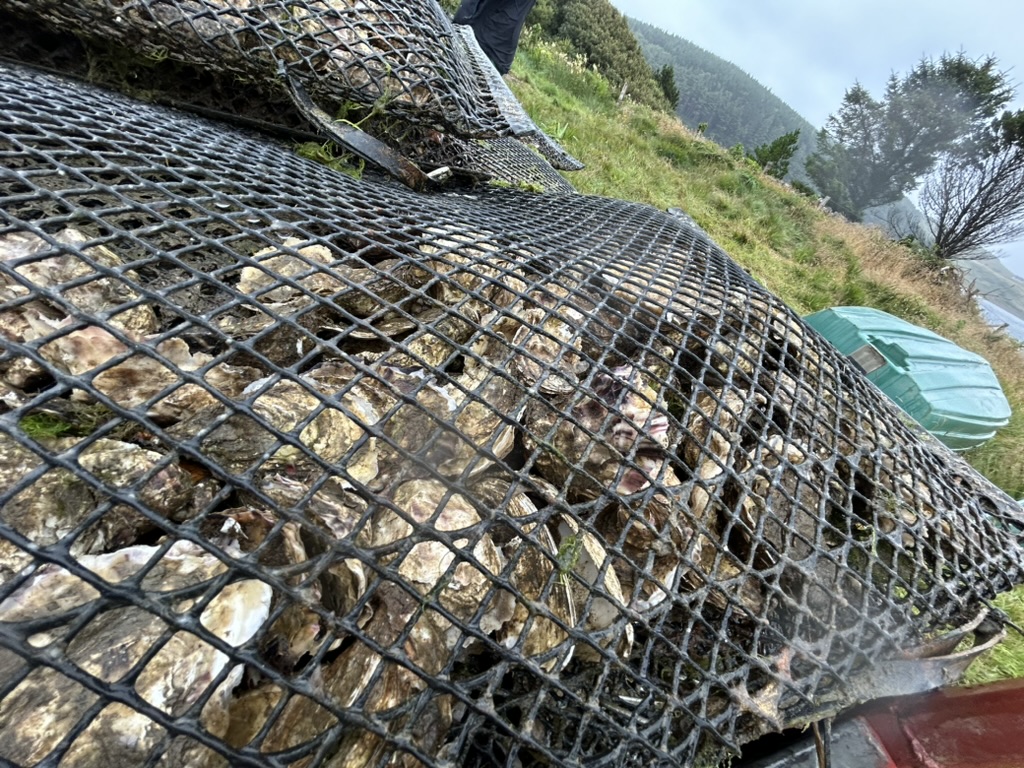
Oyster Farm

This was an amazing experience to see other types of agricultural systems, but a couple things Ireland and Nebraska have in common are rich agricultural traditions and a commitment to supporting their rural communities.

Uncategorized

Collaboration and Teamwork

After wrapping up another county fair and heading back into other extension programming, it’s good to reflect on the county fair experience as this is one of the capstone experiences for 4-H youth. This marks nearly my nineteenth year in Extension & eighteenth fair which is hard to imagine! I am still amazed and blessed to have so many excellent and caring volunteers to make the fair a positive experience for our youth. The countless hours spent preparing beforehand allows for a much smoother week during the fair. I’d like to give a lot of credit to the entire staff of Fillmore and Clay Counties. Weeks before the fair, data is entered into the computer system, stall assignments are created, awards are ordered, reminders are sent to exhibitors about completing quality assurance, registration deadlines, etc.

Without collaboration, fair would not occur. Also, there is a lot of time spent from volunteers such as Council members and superintendents. From helping with winter/spring weigh-ins to helping answer questions and attend meetings, volunteers are engaged year-round to make the program the best it can be.

An article adapted from Belgrad, W., Fisher, K., & Rayner, S. (1995) best summarizes that “collaboration and teamwork require a mix of interpersonal, problem-solving, and communication skills needed for a group to work together towards a common goal.” The best teams I have worked with put their own agenda aside and work toward the greater good of the team. This article also provides tips for how to develop a collaborative team environment. There are five themes that must be present.

The first is trust. Being honest with the team helps each other develop respect within a team. Give team members the benefit of the doubt and work to eliminate conflicts of interest. The second is to clarify roles. When each team member knows their key roles, they can perform more effectively and can figure out ways to help each other. Next, it is important to communicate openly and effectively. Work to clear up misunderstandings quickly and accurately. It’s best to over-communicate, rather than not communicate. Learn to be a good listener and recognize team member efforts. Fourth is to appreciate the diversity of ideas. Be open-minded and evaluate each new idea and remember that it is okay to disagree with one another but learn how to reach a consensus. Often, much is learned from those who differ from you.  Finally, balance the team’s focus. Regularly review and evaluate the effectiveness of the team. Assign team members specific tasks to evaluate and provide praise to other team members for achieving results.

I’d like to thank the 4-H Council members who have so freely given of their time to make the fair a success. Of course, livestock superintendents put in a large amount of time during the fair with check-in, the show, loading animals, etc. Special thanks to the fair board for their support of the 4-H program and the countless hours they spend setting up for events, etc. Businesses and financial donors help provide youth with incentives for their projects. There are so many other individuals and businesses who are helpful and do things without any recognition and to all of you, thank you! 

Congratulations Clay and Fillmore County 4-H and FFA members on a great county fair!

Source: Belgrad, W., Fisher, K., & Rayner, S. (1995). Tips for Teams: a Ready Reference for Solving Common Team Problems. McGraw-Hill: New York.

Uncategorized

4-H Builds Friendships

As we approach this county fair season, it is important to remember how important it is to focus on the importance of the life skills being taught. As adults, we need to be role models to youth and help them have a positive experience. It’s not the ribbon placing or the trophy that matters but rather the experience one has from participation in activities such as the county fair. 

When I ask 4-H members the question, “What do you like most about 4-H?” they often respond with “the friendships!” 4-H’ers have the unique opportunity to meet and interact with youth from across the county, the state and even the country. 4-H brings together youth with similar interests and you never forget the people you meet through the program.

Friends are vital to school-age youth’s healthy development. Friendships provide youth with more than just fun playmates. Friendships help them develop emotionally and morally. In interacting with friends, youth learn many social skills, such as how to communicate, cooperate, and solve problems. They practice controlling their emotions and responding to the emotions of others. They develop the ability to think through and negotiate different situations that arise in their relationships. Having friends even affects school performance. Youth tend to have better attitudes about school and learning when they have friends there.

Friendships help youth develop emotionally and morally and help them to learn critical life skills such as social skills, communication, cooperation, problem-solving, and many more.  Part of being a good friend is learning how to deal with conflict. There are several strategies to teach youth to resolve problems they have with other youth. 

Strategies for Conflict Resolution

  • When angry, separate yourself from the situation and take time to cool off.
  • Attack the problem, not the person. Start with a compliment.
  • Communicate your feelings assertively, NOT aggressively. Express them without blaming them.
  • Focus on the issue, NOT your position about the issue.
  • Accept and respect that individual opinions may differ. Don’t try to force compliance; work to develop a common agreement.
  • Do not view the situation as a competition in which one person has to win and one has to lose. Work toward a solution that will enable both parties to have some of their needs met.
  • Focus on areas of common interest and agreement, instead of areas of disagreement and opposition.
  • NEVER jump to conclusions or make assumptions about what another person is feeling or thinking.
  • Listen without interrupting. Ask for feedback, if needed, to ensure a clear understanding of the issue.
  • Remember, when only one person’s needs are satisfied in a conflict, it is NOT resolved and will continue.
  • Forget the past and stay in the present.
  • Build “power with” NOT “power over” others.
  • Thank the person for listening.

Find out more about this topic by visiting the Nebraska Extension child and youth development website at http://child.unl.edu/child-care-professionals and click on Expanded Learning Opportunities.

County Fair Schedules

You can find the events for the Clay and Fillmore County Fairs on each extension website or social media. Locally, go to fillmore.unl.edu or clay.unl.edu.     

Uncategorized

Helping Others

One of the things I love about rural communities is the amount of help and support given when people go through difficult times. I can attest to that, on several occasions. For example, when my mom had her stroke in 2011, neighbors, coworkers and friends stepped up to provide support, send cards and helped when I was needing to make trips to visit her. Also in 2011, 2012 and 2014, I was laid up with ankle surgery and very blessed that many people in the community helped watch my girls, made meals for our family, and showed many other acts of kindness.  A quote by Ralph Waldo Emerson is one of my favorites, “The purpose of life is not to be happy. It is to be useful, to be honorable, to be compassionate, to have it make some difference that you have lived and lived well.”

A part of the 4-H pledge is to “pledge one’s hands to larger service” and “heart to greater loyalty”. These are the values we try to instill in our 4-H youth. It is great to see youth helping each other during 4-H workshops and programs and friendships being made. There is research that shows how helping others has benefits for themselves. A professor, Thomas G. Plante from Santa Clara University, and adjunct clinical professor of psychiatry at Stanford University has found that his students who attend a spring break trip working with people in poor and marginalized areas managed stress better than those who did not attend trips. He believes the research finding is due to a matter of perspective. Additionally, when helping others, you generally experience more empathy, compassion, and solidarity with others as well.

As we approach county fair season, it is important to remind adults, as well as youth of 4-H’s core values of helping others with our hands. It might improve their stress management abilities and make for a smoother fair for all involved. Rather than seeking out problems, remember the 4-H pledge and help others. You’ll likely be happier and create a better experience for everyone around you. So, instead of only worrying about your exhibits or animals or trying to get others in trouble, consider helping a fellow exhibitor and fill one’s bucket with water or call that person and tell them their animal is running low on water. If an exhibitor is struggling to know where to check-in their static exhibit, offer to help them.

By practicing these small acts of kindness, you might be surprised how much less stressed you and those around you will be. I am certainly appreciative of 4-H parents who can help my daughters when I am busy with my job. “I pledge my head to clearer thinking, my heart to greater loyalty, my hands to larger service and my health to better living, for my club, my community, my country and my world.”  If we practice these principles, we can make a positive difference in the lives of others.

County Fair Schedules

You can find the 4-H events for the Clay and Fillmore County Fairs on each extension website or social media. Locally, go to fillmore.unl.edu or clay.unl.edu.     

Uncategorized

Dairy Month


June is Dairy Month, so I decided to share fun facts and information about the dairy industry this week. The Dairy Alliance has great resources and educational materials, including videos showcasing how today’s dairy farms operate. Dairy farmers know that healthy and happy cows produce more high-quality milk, so their cows’ well-being and comfort are their top priority.

Let’s explore some fun facts about dairy, starting with the fact that all 50 states have dairy farms, and 97% of dairies are family-operated. Also, it takes 5-7 minutes for a cow to be milked and dairy cows drink about 30-50 gallons of water daily! An average dairy cow weighs about 1,200 pounds and eats about 100 pounds of feed each day. There are 6 breeds of dairy cows: Holstein, Jersey, Guernsey, Brown Swiss, Ayrshire and Milking Shorthorn. Most people picture Holstein cows when they think of dairy and Holstein’s spots are like fingerprints – no two cows have the same pattern of black and white spots!

If we look at the nutritional benefits of dairy, first about 73% of calcium available in our food supply is provided by milk and milk products. Milk is packed with essential nutrients including protein, calcium, and vitamin D and chocolate milk’s combination of fluids, carbohydrates, and protein helps rehydrate and refuel muscles after a workout. To get the same amount of calcium provided by one 8-ounce glass of milk, you would have to eat 4.5 servings of broccoli, 16 servings of spinach, or 5.8 servings of whole wheat bread.

Photo by Matthias Zomer on Pexels.com


Next time you enjoy a delicious pizza or satisfying ice cream cone, appreciate the dairy farmers who work 365 days a year to provide you with a safe, nutritious, and wholesome product.

(Sources: American Dairy Association & the Dairy Alliance)

Uncategorized

South Central Ag Lab Weed Management Field Day

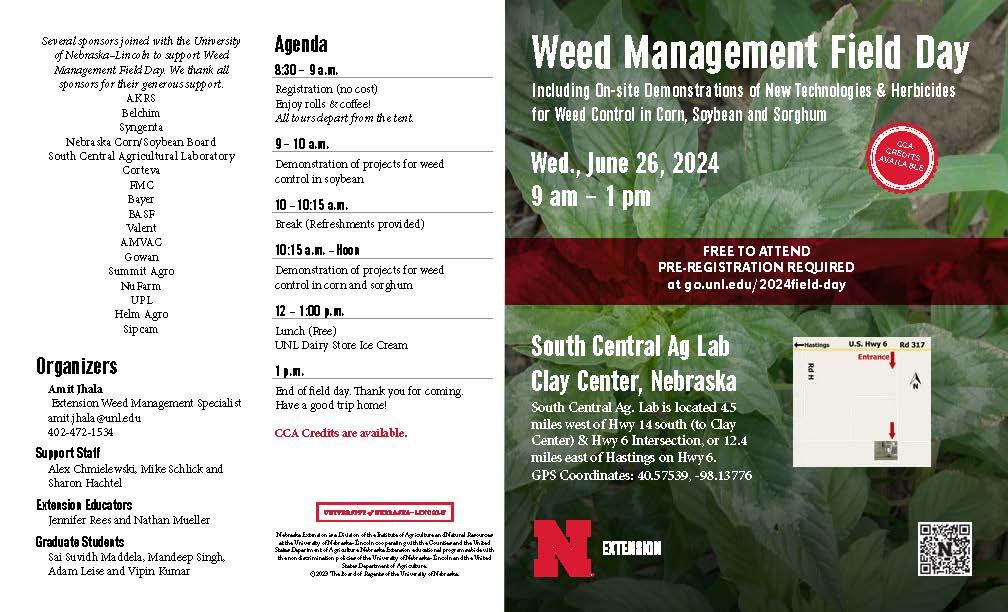
Those interested in learning the latest in weed management technologies and herbicides for weed control in corn, soybeans and sorghum are invited to attend Nebraska Extension Weed Management Field Day to be held on Wednesday June 26, 2024 from 9 am to 1 pm at South Central Ag Lab near Clay Center, NE. The Field Day is free to attend and lunch; UNL Dairy Store Ice cream will be provided. Register is required at https://agronomy.unl.edu/fieldday.

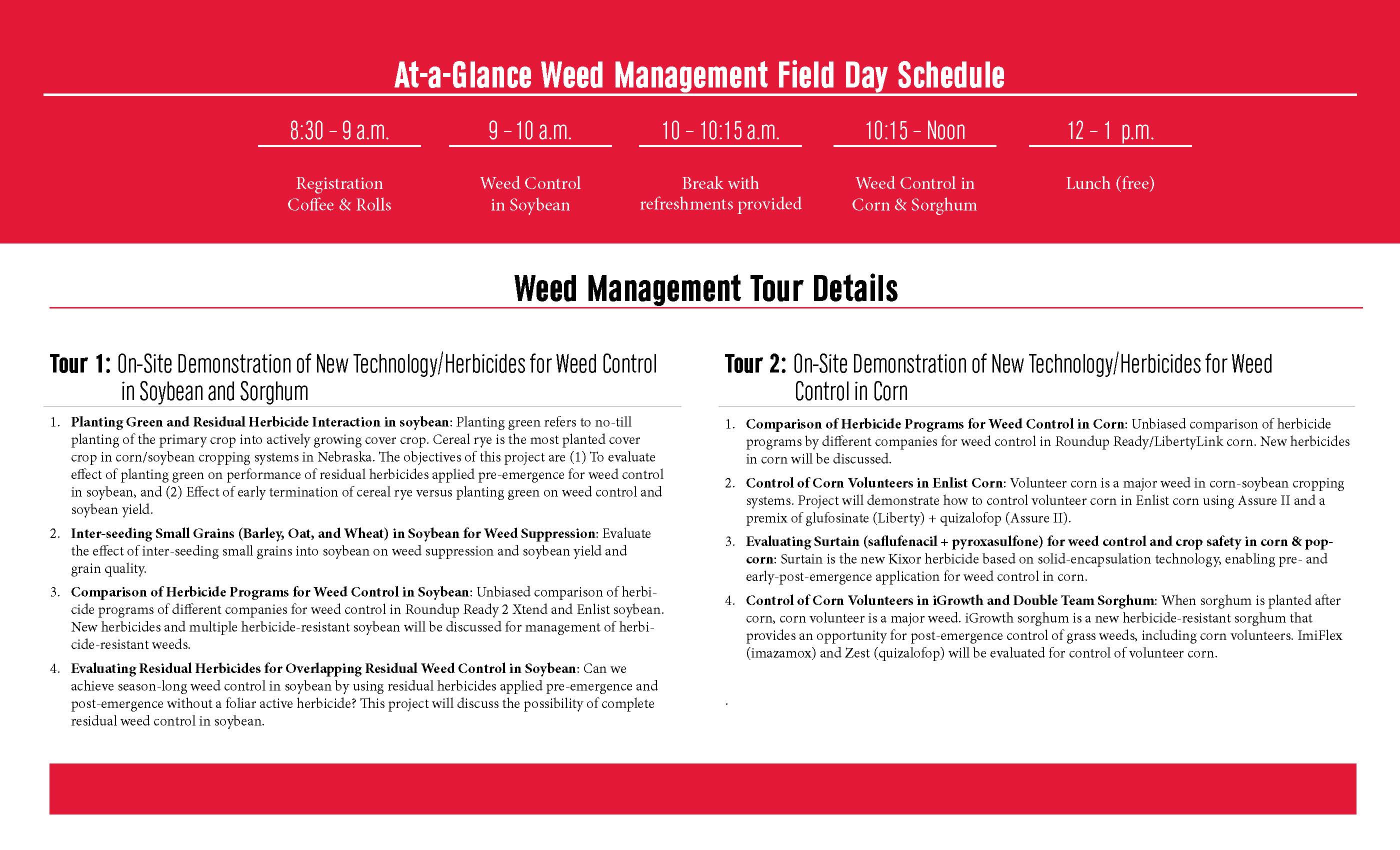
Tour one features onsite demonstrations of new technology/herbicides for weed control in soybeans in sorghum such as:

  • Planting Green and Residual Herbicide Interaction in soybean: Planting green refers to no-till planting of the primary crop into actively growing cover crop. Cereal rye is the most planted cover crop in corn/soybean cropping systems in Nebraska. The objectives of this project are (1) To evaluate effect of planting green on performance of residual herbicides applied pre-emergence for weed control in soybean, and (2) Effect of early termination of cereal rye versus planting green on weed control and soybean yield.
  • Inter-seeding Small Grains (Barley, Oat, and Wheat) in Soybean for Weed Suppression: Evaluate the effect of inter-seeding small grains into soybean on weed suppression and soybean yield and grain quality.
  • Comparison of Herbicide Programs for Weed Control in Soybean: Unbiased comparison of herbicide programs of different companies for weed control in Roundup Ready 2 Xtend and Enlist soybean. New herbicides and multiple herbicide-resistant soybean will be discussed for management of herbicide-resistant weeds.
  • Evaluating Residual Herbicides for Overlapping Residual Weed Control in Soybean: Can we achieve season-long weed control in soybean by using residual herbicides applied pre-emergence and post-emergence without a foliar active herbicide? This project will discuss the possibility of complete residual weed control in soybean.

Tour two features onsite demonstrations of new technology/herbicides for weed control in corn such as:

  • Comparison of Herbicide Programs for Weed Control in Corn: Unbiased comparison of herbicide programs by different companies for weed control in Roundup Ready/LibertyLink corn. New herbicides in corn will be discussed.
  • Control of Corn Volunteers in Enlist Corn: Volunteer corn is a major weed in corn-soybean cropping systems. Project will demonstrate how to control volunteer corn in Enlist corn using Assure II and a premix of glufosinate (Liberty) + quizalofop (Assure II).
  • Evaluating Surtain (saflufenacil + pyroxasulfone) for weed control and crop safety in corn & popcorn: Surtain is the new Kixor herbicide based on solid-encapsulation technology, enabling pre- and early-post-emergence application for weed control in corn.
  • Control of Corn Volunteers in iGrowth and Double Team Sorghum: When sorghum is planted after corn, corn volunteer is a major weed. iGrowth sorghum is a new herbicide-resistant sorghum that provides an opportunity for post-emergence control of grass weeds, including corn volunteers. ImiFlex (imazamox) and Zest (quizalofop) will be evaluated for control of volunteer corn.
Uncategorized

Youth Crop Scouting Competition – Connecting Youth with Crops

Looking for a fun club project? Want to unite your club members? Running out of ideas for club meetings?  If you answered, “yes” to any of these questions, help is on the way!  Nebraska Extension is pleased to present the 11th annual Crop Scouting Competition for Nebraska youth. Youth interested in crops can learn about crop growth & development and basic crop scouting principles. 

Don’t know a lot about crops?  Ask a local agronomist to assist by providing a short lesson on crop production. You can have the agronomist meet with the youth a little during each meeting or outside of the meeting. This is one way to engage those youth interested in crops. 

This contest will be held at the Eastern Nebraska Research & Extension Center near Mead, Nebraska on August 7, 2024. The event will include both indoor and outdoor events. Teams of junior high and high school students (those completing 5-12th grades) from across Nebraska are invited to participate. This event is limited to the first ten teams who sign up! 

            Clubs or other organizations may enter a team composed of three to five participants. An adult team leader must accompany each team of students. Team leaders could be FFA advisors, crop consultants, extension staff, coop employees, etc. 

Top-scoring teams win prizes: $500 for first, $250 for second, $100 for third place. The top two teams will be eligible for the regional competition held in Nebraska this year.

Teams will be expected to know the basics of scouting corn and soybean fields. This includes crop staging; looking for patterns of crop injury; disease, insect and weed seedling identification; etc. Other topics may include but are not limited to, pesticide safety, nutrient disorders, and herbicide injury. 

More information about the crop scouting competition and instructions on how to register a team are available online at cropwatch.unl.edu/youth. Register at: https://go.unl.edu/cropscoutingreg

Teams must be registered by July 15. This program is sponsored by Nebraska Independent Crop Consultant Association, Ward Laboratories, the Nebraska Soybean Board and Nebraska Extension.

Youth

Heavy Equipment Career Exploration Day

Youth are invited to register and attend the Heavy Equipment Career Exploration Day set for Thursday, June 13, 2024, at Central Community College – Hastings Campus. This program is open to any youth entering 8th through 12th grade in fall 2024. Participants will navigate and drive CCC’s virtual heavy equipment simulators, get behind-the-wheel experience with a variety of Heavy Equipment, learn about CCC’s Heavy Equipment program, and enjoy a panel discussion from heavy equipment operators. Attendees and families may participate in campus tours at the conclusion of the program. Participants can find registration information at https://go.unl.edu/heavyequipment.

Registration is $30 with a May 31st deadline. For questions, please contact Beth Janning at the Adams County Extension Office; 402.461.7209. This program is a partnership with Central Community College, Nebraska Extension 4-H Youth Development, and Nebraska Local Technical Assistance Program (LTAP). 

Uncategorized

Inspiring Rich Conversations Through Questions

Photo by Miguel u00c1. Padriu00f1u00e1n on Pexels.com

With the school year complete, hopefully, an opportunity to spend more time with your child exists. Reconnect and reflect on the school year and plan for the summer. Sarah Roberts and Jackie Steffen, Learning Child Extension Educators provided great tips on how to inspire conversations with your child by asking powerful questions which I’ve included in this week’s column. 

Questions are powerful tools, and they encourage children to think at a higher level. The types of questions you ask young children can affect the quality of your conversation with them. Some questions only elicit rote answers and, therefore, will not spark a meaningful conversation or connection. Others encourage thought-provoking conversations and ideas. Having intentional and meaningful conversations with young children is critical to providing an atmosphere of emotional security. Engaging with and listening to children helps them to feel valued and respected. They learn to feel safe talking with you and sharing thoughts and feelings that may be otherwise difficult to discuss.

Here Are Some Ways to Inspire Rich Conversations:

  • Try to ask more open-ended questions. Open-ended questions are questions that cannot be answered with one word. Instead of asking, “How was your day?” consider rephrasing and saying, “Tell me about the favorite parts of your day.”
  • Distractions are all around us. Take time to fully engage with young children and practice active listening in a one-on-one environment. That means removing electronics and getting down on their level. Giving children your full attention demonstrates that you respect them and what they have to say.
  • Make conversations a habit. The time of day that works best is different for everyone. Some might be able to connect deeply on the “to and from” activity/school commutes, others at bedtime or maybe around the table. Take notice of when your child feels the most comfortable opening up to you.
  • Do your homework. If your child is in school and you have access to daily announcements, lesson plans or newsletters, use that information to help spark conversations. Children can fail to mention exciting events unintentionally. They may be surprised with some pieces of information that you know about their day.
  • Finally, remember that conversations are a two-way street. If you ask too many questions, children can feel like they are being drilled. Do not just ask questions; open up and talk about YOUR day. Being authentic and modeling good communication with other adults in their school or home will encourage children to join in on conversations. Asking higher-level questions takes practice and time. Think about what information you want to share with your child and what you would like to know from them. Be genuine. If it is tough to talk to them, don’t worry. It is important to start practicing conversation skills, especially when children are young. Have fun and keep a sense of humor and wonder. Children will follow your lead.

    Here are a Few Open-Ended Questions to Get You Started:
  • If you were the family chef, what would you make today for breakfast (lunch, dinner)? Why?
  • If you could do anything today, what would it be?
  • What was your favorite part about the holidays this year?
  • This year has been hard for lots of people. Is there anything positive you experienced? What things do you wish you could change?
  • If you could ask me anything (teachers or parents), what would it be?

References: “Big Questions for Young Minds: Extending Children’s Thinking”  by Janis Strasser and Lisa Mufson Bresson