Crops, Programming

Agriculture: What’s Around the Corner & Down the Road?

Back by popular demand is Dr. Dave Kohl, Professor Emeritis from Agricultural and Applied Economics at Virginia Tech.  He will speak on “Agriculture: What’s Around the Corner & Down the Road” from 1:00-4:00 p.m. at the Opera House in Bruning, NE on December 10th. Focusing on the wild world of global and domestic economics, Dr. Kohl will highlight the unusual events around every corn and discuss the “black swans” and how they impact agricultural businesses and producers. He will discuss the major game changers influencing the agriculture landscape along with a quick tour of the economics of the world and how it is influencing land values, commodities, and input costs.  Is agriculture in an asset or credit bubble?  What can you do financially in this business environment to capitalize on the economic volatility?  Dr. Kohl will give tips on management practices that will help you think globally but act locally in strategic and everyday decision making. Logo

The Farmers & Ranchers College was formed in January, 2000 with the purpose of providing high quality, dynamic, up to date educational workshops for area agricultural producers in south central Nebraska through a collaborative effort between business, industry and higher education leaders.  The Farmers and Ranchers College Committee consists of Fred Bruning of Bruning, Bryan Dohrman of Grafton, Sarah Miller of Carleton, Eric Milton of Milligan, Jim Donovan of Geneva, Bryce Kassik of Geneva, Gordy Nuss of Sutton, and Brandy VanDeWalle of Ohiowa.

For more information on the various Farmers & Ranchers College programs, please go to the Fillmore Co. website or call the Fillmore County Extension office at (402) 759-3712.

Horticulture

Holiday Tree Preparation

With the Holiday season approaching, I thought it was appropriate to include some pointers that Kelly Feehan, UNL Extension Horticulturist provided on selecting a real Christmas tree. If you plan to use a live cut tree, buy a fresh tree. The best way to ensure freshness is to buy from a local grower. To locate area Christmas trees growers, refer to the Nebraska Christmas Tree Growers list found on the Nebraska Department of Agriculture website. There are over 22 Christmas tree farms in the state, located across different areas in 17 counties so it shouldn’t be difficult to find a tree farm. Most of these farms, you can also select the live and harvest it so freshness is not a concern.

When buying an already cut tree, check the tree closely for freshness. Do not buy a tree with brittle or shedding needles. Tap the base of the trunk on the ground and comb your fingers through branches to look for shedding needles. Bend a few needles in half to check for brittleness. After bringing the tree home, make a clean cut across the base of the trunk to better allow the tree to take up water. Keep the tree in a sturdy stand that holds at least one gallon of water. Check the stand daily as a fresh tree can take up one or more gallons of water each day. Selecting Nebraska grown trees and checking for freshness will help increase safety during the holidays.

Kelly also has tips for cutting holiday greenery. Cutting holiday greenery from your own landscape can help ensure freshness. Pine, fir and cedar are good to use for indoor decoration as they dry out slowly and hold their needles best at warm indoor temperatures. For safety, be aware the red berries of Japanese Yew are poisonous, as are the green needles. Avoid the use of this greenery or be sure to keep Japanese Yew greenery out of reach of children and pets, and do not discard it where cattle or horses might eat it. Cutting greenery is pruning so use clean, sharp cutters and well placed, evenly distributed cuts. This is not the ideal time to prune, so don’t harvest too much greenery and make discreet cuts. Keep greenery in a cool location out of sunlight with the cut ends in water until ready to use the greens. Crush the ends of woody stems to allow the cuttings to take in more water. Immerse greenery in water overnight just before arranging it. This will allow it to absorb moisture and remain fresh longer.

More horticultural tips, including holiday greenery tips can be found on UNL Extension’s Environmental website.

Crops

Thank a Farmer

Growing up on a small corn/soybean farm and raising cattle, I often take for granted the opportunities I had being actively involved in production agriculture. My dad is still a farmer and I enjoy being able to take my daughter to Grandpa’s for a ride in the tractor, etc.  My husband also grew up on a farm with livestock, so my daughter has an equal opportunity to be around agriculture as well. Sometimes it is easy to consider farming the norm, especially living in a rural community. The point I’m trying to make is that too often farming and ranching is considered just another job. We forget the risks they take every day.

According to the National Institute for Occupational Safety and Health, farming continues to be one of the most dangerous occupations in the United States. In 2008, 623 people died and 60,000 people suffered from permanently disabling injuries on farms and ranches in the United States. Agriculture has a death rate of 29 per 100,000 workers, which is higher than the death rate in mining (National Safety Council, 2010).

In addition to the physical danger of the equipment itself, the economic and market conditions change regularly, so profits are uncertain, creating emotional distress. Some people still have the farm pictured as it was in the 1940 & 1950’s which was a much simpler time. Although the physical demands were more, technology didn’t change as quickly as it does today and the knowledge needed to manage agricultural operations is greater. It used to be that young people would graduate from high school and return straight to the farm which was usually sufficient to be successful. In today’s agricultural setting, youth need to further their education, at the minimum, an associate’s degree, but preferred a bachelor’s degree. It is also essential to remain a lifelong leaner from attending other non-formal educational opportunities such as extension programming, etc.

Today’s producers not only need to have a knowledge of basic cropping practices, but risk management knowledge, farm policy and regulatory requirements, sufficient knowledge of today’s modern technology and the list goes on. In addition, as consumers become increasingly disconnected where their food comes from, they must educate consumers how food is produced or product marketing skills, whether it is through social media or day-to-day communication.

With the expected increase in the global population to reach 9 billion by 2050, current food production will need to almost double, therefore farmers and ranchers are extremely important people. More land gets consumed everyday by industrial uses, so those in the agricultural industry will need to continue improving the efficiency of production with less land. Youth unsure of a career path should consider agriculture!  The opportunities in agriculture are abundant and exciting! It’s not just cows, plows and sows, but science, technology, and innovation!

As families gather for Thanksgiving, not only should you give thanks for family & friends, health, and the many other blessings we have in our life, but give thanks for farmers and ranchers who prepare a wholesome, nutritious and safe meal for you every day! Happy Thanksgiving!

Turkey Tidbits

  • The National Turkey Federation (NTF) estimates that approximately 45 million turkeys are eaten at Thanksgiving, 22 million at Christmas, and 19 million at Easter.
  • Ninety-one percent of Americans surveyed by the NTF eat turkey at Thanksgiving. The average weight of turkeys purchased for Thanksgiving is 15 pounds; that’s about 675 million pounds of turkey consumed in the United States on Thanksgiving Day.
Crops

Innovative Youth Corn Challenge Banquet Approaching

When I first came into Extension I sought for ways to incorporate my agricultural education teaching experience with the adult crops programming.  Last year, I was able to get a project up and rolling which I’ve been involved and is approaching its one year completion which is exciting to see my two passions – youth and agriculture come together.

The University of Nebraska-Lincoln Extension and the Nebraska Corn Board have teamed up to offer the First Annual Innovative Youth Corn Challenge contest. This contest was open to 4-H members or FFA members and challenged them to create an innovative, yet economical way to increase yields in their own corn plot. As a team youth were challenged to implement a production practice different than normal to determine if they increased their yield.  Yields, cropping history, and production information is being gathered by participants.

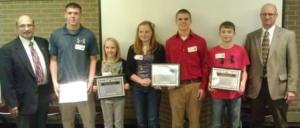
Six teams completed proposals and projects in this pilot year. Teams are the Super Strong H’s 4-H club from Polk County, Humphrey FFA, Wrangler’s 4-H Club from Platte County, Fillmore Central FFA, David City FFA, and the Pioneers 4-H Club from Madison County.

Cash prizes and plaques will be given to the first, second, and third place teams at the Corn Yield Challenge Banquet set for December 5, 2012 at UNL’s East Campus.

Youth interested in participating next year should go to cropwatch.unl.edu/youth/ website. For more information, contact myself at brandy.vandewalle@unl.edu.

Crops

Cropping Fertilizer Update

Producers are now thinking about soil fertility needs for next growing season. It is always important to soil sample to ensure you are applying the correct amounts of fertilizer, but with this past season’s drought it’s even more important!  Soil nitrates may be higher than normal this fall, especially in rain fed fields. Take soil samples and determine residual soil nitrate levels before deciding on fertilizer N application rates. Remember that soil temperature.    As I write this, soil temperatures are between 44-45 degrees in Fillmore County.)

If you have collected soil samples, you can go UNL CropWatch’s Soils page to calculate fertilizer recommendations based on your soil test results.

My colleague, Gary Zoubek reminds producers that timing is important when applying nitrogen, ideally it’s best to apply the nitrogen near the time the crop will be using it, and thus, split applications are often are the best!  You don’t want to apply it all in the fall, plan to sidedress or chemigate some on.  Often conditions are not always ideal in the spring or you do not have enough time, so we understand why some producers make applications in the fall.  We also know that if we don’t get excessive rains, we won’t move the nitrogen that’s been applied, but we’re all hoping for above normal precipitation this fall, winter and spring.

In addition, we’re always looking for producers interested in conducting On-Farm Research.  If you you’re planning to make fall anhydrous ammonia applications and would consider doing a timing study comparing fall vs. spring or sidedress,  email me at brandy.vandewalle@unl.edu.   I would be glad to work with you.

 UNL Extension’s Hort Update

The latest horticulture update explained that late October, average soil temperatures across the state ranged from 50 to 59 degrees F. Even with freezing air temperatures, root and rhizome growth can continue until soil temperatures drop below 40 degrees. Fall root growth aids drought recovery but only if adequate soil oxygen and moisture is available. Continue to provide moisture in the absence of rainfall without overwatering so soil oxygen levels are lowered due to saturated soils. Planting of deciduous trees and shrubs can also continue.

 Landlord/Tenant Workshop in Fairmont!   

This free workshop is sponsored by the Nebraska Soybean Board and the North Central Risk Management Agency in collaboration with our local Famers & Ranchers College committee.  A meal and handouts are included. Handouts and materials will be available on a first-come, first-serve basis. This program will be on November 13, 2012 at the Fairmont Legion from 11-3:00 p.m. with registration at 10:30 a.m. Please RSVP by November 6th via email at brandy.vandewalle@unl.edu.      

Uncategorized

Producers, read about a great opportunity on fertilizer research options for your farm by Jenny Rees:

JenBrhel's avatarJenResources

November 1 is just around the corner-the beginning of when fall fertilizing occurs in this area of the State.  Hopefully many of you have taken soil samples as excess nitrate is to be expected after this drought year.  This is an excellent time to consider evaluating your nitrogen program by starting an on-farm research trial!

On-farm research is using your own equipment, in your own fields, over single or multiple growing seasons allowing you to determine the most economical, efficient, and sustainable practice for the production of irrigated and/or dryland crops on your own farm.

What are the soil fertility questions you have for your farm?

Right now, with fertilizing on producers’ minds, we’re hoping you will consider a soil fertility study.  We have several example nutrient protocols including the UNL N fertility rate compared to +/- 30 lbs, and considerations for nitrogen timing…

View original post 433 more words

Crops, Programming

Landlord/Tenant Workshop & Returning to the Farm Program

Developing farm cash leases that meet the needs of both landlord and tenant, while maintaining a positive relationship, is the goal of these workshops.  Both tenants and the landlord are encouraged to attend!  A team of UNL Extension Educators will be on hand to discuss these topics and provide common sense tips during the presentation.  Managing the 2012 drought and implications for 2013 will also be discussed.

Session presenter Al Vyhnalek points out that “Putting together the right lease isn’t about what is being discussed at the coffee shop, or what a university survey of cash lease rates says; it is about what fits both the landlord and tenant for their circumstance and situation. Attending this presentation will provide a set of ideas to work from as those specifics are discussed.”

Topics include:  Expectations from the lease, including goal setting for the rental property; Lease communication, determining appropriate information sharing for both the tenant and landlord; Tips for farm leases that include relatives; Alternative cash lease arrangements, flexible provision considerations for your situation; How the 2012 drought affects leases, irrigation systems, grain bin rental, and other topics related to leases will be discussed as time allows.ing this presentation will provide a set of ideas to work from as those specifics are discussed.”

This free workshop is sponsored by the Nebraska Soybean Board and the North Central Risk Management Agency in collaboration with our local Famers & Ranchers College committee.  A meal and handouts are included. Handouts and materials will be available on a first-come, first-serve basis. This program will be on November 13, 2012 at theFairmont Legion from 11-3:00 p.m. with registration at 10:30 a.m. Please RSVP by November 6th. To register, contact our office at (402)759-3712 or via email at brandy.vandewalle@unl.edu.

 Returning to the Farm Workshop Planned

The past several years our UNL Agricultural Economic Department has conducted “Returning to the Farm Workshops” designed for farm families transitioning their operation.  This year the sessions will be held Friday Dec. 7th from 2:00 – 9:00 p.m. & Saturday Dec. 8th from 8:30 a.m. to 3:30 p.m. and Friday Jan. 11th from 2:00 – 9:00 p.m. and Sat. 12th from 8:30 a.m. to 3:30 p.m. in Lincoln at the Holiday Inn Downtown.

The cost of the conference is $350 for the first 4 family members, plus $40 for each family member after the first 4. This fee covers instruction, handout materials, meeting room costs, refreshment breaks, Saturday continental breakfast and most meals.  The registration deadline is November 30, 2012 and it’s limited to the first 15 families with paid registrations.

Crops, Programming

Farmers & Ranchers College Year Planned

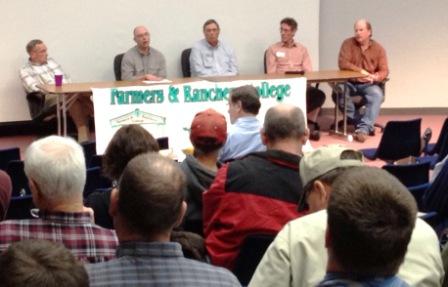
The Farmers & Ranchers College was formed in January, 2000 with the purpose of providing high quality, dynamic, up to date educational workshops for area agricultural producers in south central Nebraska through a collaborative effort between business, industry and higher education leaders. Furthermore, the Farmers & Ranchers College will provide the tools necessary so that agricultural producers will be able to respond positively to these changes using a profitable decision making process.

The Farmers and Ranchers College is a unique opportunity to educate agricultural producers in south central Nebraska. Four hundred producers from twenty counties and three states participated in the 2011-2012 Farmers & Ranchers College programs. Producers attending these workshops managed over 284,000 acres. Participants surveyed indicated an average of $12.12/acre of knowledge gained from participating for a potential impact of $3.4 million.

Contributions and support of area businesses allow participants to attend at no cost, however for programs that have meals, it is requested that people RSVP at least a week in advance for an accurate meal count by calling Fillmore County Extension at (402) 759-3712.

The Farmers and Ranchers College Committee consists of Fred Bruning of Bruning, Bryan Dohrman of Grafton, Sarah Miller of Carleton, Eric Milton of Milligan, Jim Donovan of Geneva, Bryce Kassik of Geneva, Gordy Nuss of Sutton, and Brandy VanDeWalle of Ohiowa.

2012 -2013 Farmers & Ranchers College Programming

  • November 13, 2012 – Landowner/Tenant Lease Workshop – Fairmont Legion, 11-3:00, registration at 10:30 a.m.*
  • December 10, 2012 – “Agriculture: What’s Around the Corner & Down the RoadFeaturing Dr. David Kohl Professor Emeritus, Dept. of AAEC, VA TECH at the Bruning Opera House – Bruning, NE at 1:00 p.m.
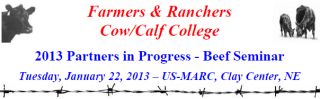
  • January 22, 2013 – “Partners In Progress – Beef Seminar” at the U.S. Meat Animal  Research Center near Clay Center from 10:00 a.m. to 3:30 p.m., registration at 9:30 a.m.*
  • March 14,2013 – Keeping Your Farm in the Family for the Next Generation” Featuring Ron Hanson, UNL at Evening with Friends in Milligan with meal at 6:00 p.m. and program to follow.*

* Programs are provided at no cost to the public, but registration is appreciated for a meal count. Please call the Fillmore Co. Extension Office at (402) 759-3712 one week prior to the program.

Uncategorized

Next Year’s Field Plans

With harvest almost complete for some producers or in full swing, now is the time to reflect on both the challenges and successes from this dry growing season. As you harvested many fields, did you notice any trouble-some spots where excess weeds were present?  Did you notice areas that were pretty variable in yield?  Did you evaluate any practices you might have implemented for the first time?  Were you surprised by any yields from your fields?  While this was a very trying year with the drought, there are many things you can control or work to improve if you didn’t obtain desirable results.

Harvest provides an opportunity for a final evaluation of your weed management program and to a lesser extent, your insect management program. As you travel over all of your fields, take a minute to record observations such as where weeds are present.  Be sure to note the exact locations and details so you know how to correct it for next year.

It is also important to take soil samples with this year’s drought. Have you sampled for soybean cyst nematode in soybean fields with less yield than anticipated?

On-Farm Research Opportunities

Now is also a good time to think how weather conditions in 2012 might impact performance of crop inputs and management practices in 2013. Locally, we have the Greater Quad County On-Farm Research group who participates in various trials, but last year a collaborative statewide effort was launched, the Nebraska On-Farm Research Network. Two of my colleagues, Gary Zoubek and Keith Glewen are co-coordinators for the project and recently suggested in a CropWatch article that whether one’s corn and soybean production is dryland or irrigated, inputs and certain production practices may respond differently in 2013 as a result of unprecedented drought conditions this past growing season.

The Nebraska On-Farm Research Network provides growers the framework and opportunity to conduct relevant research in their own fields, using their own farm machinery. With the assistance of UNL faculty, farm operators can make valid, field-sized and replicated comparisons which can provide growers valuable economic information.

For more information, see the On-Farm Research section of CropWatch. The Nebraska On-Farm Research Network is sponsored by UNL Extension in partnership with the Nebraska Corn Growers Association and the Nebraska Corn Board.

Youth

Celebrate National 4-H Week October 7-13

October 7-13 is National 4-H Week, and Fillmore County is celebrating the 4-H youth who have made an impact on the community, and are stepping up to the challenges of a complex and changing world.  4-H youth are a living breathing, culture-changing revolution for doing the right thing, breaking through obstacles and pushing our country forward by making a measurable difference right where they live.

During 4-H Week  in Fillmore County youth will be participating in fun events:

Monday through Friday of 4-H Week, youth who guess the correct number of candy in a jar will win up to $25 gift certificate to purchase anything of their choosing in our 4-H Source Catalog!

Tuesday youth are encouraged to wear their 4-H shirts to school and eligible for a prize.

-Hundreds of thousands of youth from all around the nation will complete an innovative experiment on 4-H National Youth Science Day, which will be held on Wednesday, Oct. 10, 2012. The 2012 National Science Experiment, 4-H Eco-Bot Challenge, explores how robots can be used to preserve and protect the environment, while offering a glimpse into the future of science, technology, engineering and math. Locally, youth can participate in National Youth Science Day at the Extension Office from 4-6:00 p.m. Please register by Oct. 8th.

Thursday, past and current 4-Her’s are encouraged to share how 4-H has made an impact in their life on the Fillmore County 4-H FaceBook page. Person’s story with the most likes, is eligible for a prize as well.

Friday, spread the word about 4-H to your friends at Friday night football games or around town by handing out green and white mints to others, etc.

Learn how you can Join the Revolution of Responsibility, or contact your local Extension office. In Fillmore County, you can call (402) 759-3712 or email me at brandy.vandewalle@unl.edu