Crops, Livestock

Grazing Corn Stalks in No-till Fields

The drought this year has left many cattle producers in a bind. Hay prices are high and pastures are burnt up which leaves corn stalks as an excellent grazing option. While many producers annually graze cornstalks, this year it will be of even more importance. Cattle are already in stalks and there are lots of corn fields being baled for forage.

A recent UNL CropWatch article by Charles Wortmann, Terry Klopfenstein, and Aaron Stalker showed that in a corn-soybean rotation study conducted from 1996 to 2011, the effects on yields of the following crop were determined for fall-winter grazing (November to February) and spring grazing (February to mid-April, the time of greatest concern of compaction by animal traffic on thawed and wet soil). The field was irrigated and had three treatments (fall/winter grazed, spring grazed, and ungrazed) which have been maintained in the same area since 1996. The stocking rate was with yearlings at 2.5 times the normal level since 2000. On average, yield of the following soybean crop was increased by about 2 bu/ac with fall-winter grazing, and 1.3 bu/ac with spring grazing, compared with no grazing of corn stalks. Yield of corn as the second crop after grazing was not significantly affected. There is ongoing research which will be reported in the 2013 Nebraska Beef Cattle Report which include a dryland trial.

The article concluded that grazing corn stalks is compatible with no-till management in eastern Nebraska and probably is for irrigated fields throughout the state with no loss in average grain yield expected. With wet soil conditions in the spring, consider removing cattle from the field or taking other steps management steps to minimize the effect of compaction.

Programming

Mentally Coping with Drought

With harvest underway, most likely producers are suffering yield losses in rainfield fields. Many producers will have very high energy bills from the long irrigation season. High nitrate issues are of concern for livestock producers. The list goes on for the problems this year’s drought caused. With that can come an emotional stress that directly impact farm families as they cope with those burdens.

After the Drought, a September 27 one-hour national webinar will address this topic and the resources available to help farm families cope. The program’s goal is to provide farm families, Extension educators, and other agriculture professionals with basic resources to address mental/behavioral issues related to the drought.

Program topics will include:

  • Mental health issues likely to be encountered by drought-stressed farmers, such as depression, anxiety disorders, suicidal thoughts and actions, and substance abuse
  • Proper identification of signs and symptoms
  • Appropriate responses when interacting with farm family members
  • Referral sources for additional assistance
  • Training opportunities available through Mental Health First Aid.

More information is available at UNL Extension’s CropWatch website.

Crops

Grain Storage

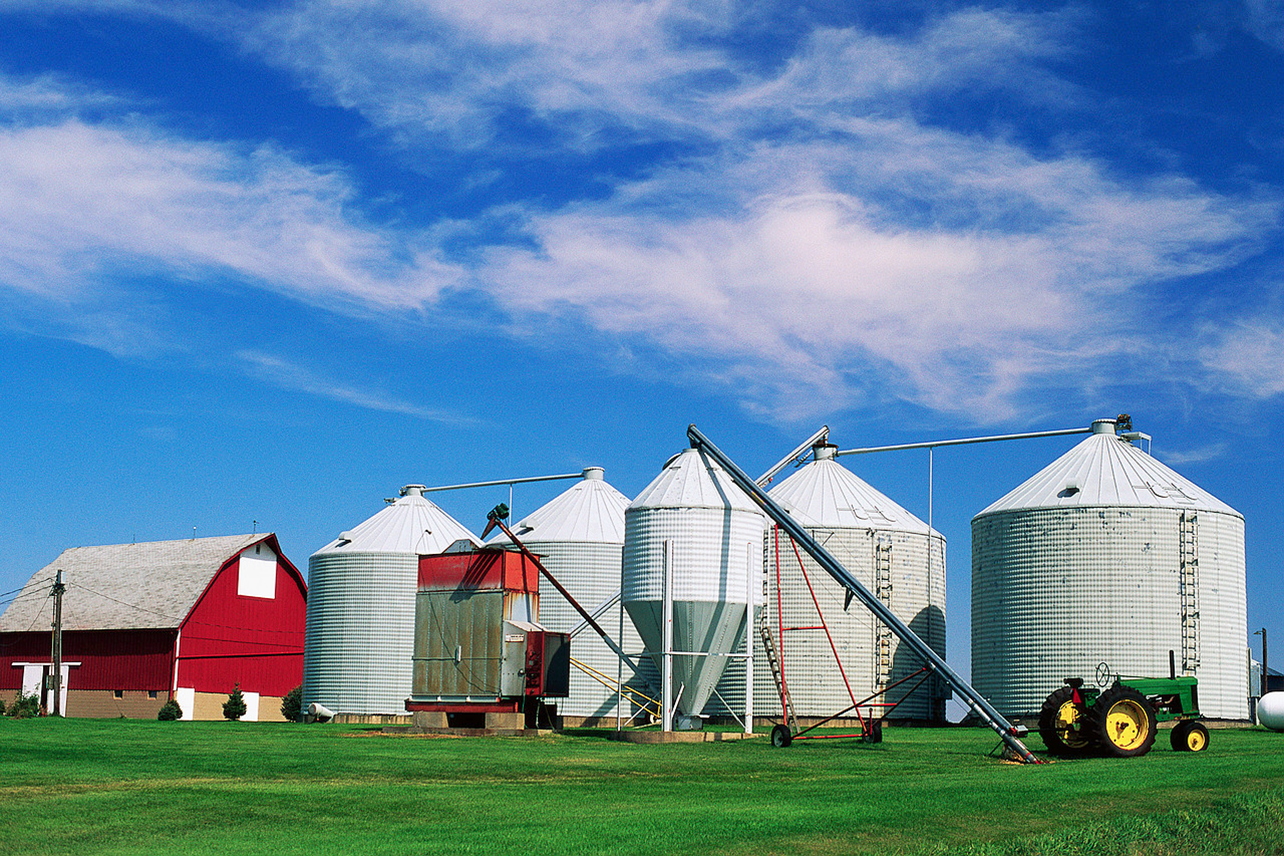
With harvest well underway, it is always important to ensure proper grain storage, especially as farmers build larger grain bins than in the past. This week, I’ve decided to share an article written by my Extension colleague, Tom Dorn in Lancaster County which was featured on UNL Extension’s CropWatch website, Managing Large Grain Bins for Potential Mycotoxin Contamination. Dorn points out that a typical on-farm grain bin traditionally was 27 to 36 feet in diameter and would hold 18 to 22 feet of grain depth. Now it is common on many farms to build 42- to 48-foot diameter bins that can hold 28 to 32 feet of grain depth.

Photo courtesy from http://sdcornblog.org/archives/tag/grain-bin

These large bins work well for storing dry grain and regulating grain temperature. The low airflow rates that are good for controlling grain temperature require relatively low static pressure to move the air through the grain mass. Generally, fans intended for temperature control are sized to produce 0.2 to 0.3 cubic feet of air per minute per bushel (cfm/bu) through the grain. Many fan manufacturers produce a 10 horsepower axial-flow fan capable of producing 0.3 cfm/bu in a 48-foot diameter bin with 30 feet of corn depth.

Using a 48-foot diameter bin for drying corn is a much different situation. The minimum airflow recommended for drying corn in Nebraska is 1.0 cfm/bushel. An even higher airflow is required for grain that has, or even might have storage molds that could continue to grow and produce mycotoxins in storage. The higher airflow will dry the grain more quickly. Drying time is proportional to the airflow, cfm/bu, and the airflow a fan can produce is affected by the grain depth. Therefore, Dorn recommends reducing grain depth to provide higher airflow (1.25 cfm/bu or higher) and shorter drying times.

Remember, while a minimum of 1.25 cfm/bu is recommended, providing more airflow is better. Drying time is inversely proportional to the airflow (cfm/bu). An airflow of 2 cfm/bu will dry corn in half the time as an airflow of 1 cfm/bu.

To achieve the recommended 1.25 cfm/bu in a 48-foot diameter bin using only one 40 hph fan, grain depth would need to be limited to 8 feet or less. If two 40 hp fans are used, grain depth needs to be 15 feet or less to achieve the recommended airflow.

If mycotoxins are suspected in corn, grain depths in large bins may need to be adjusted to facilitate quick drying. For more information on grain bin storage visit the Lancaster County Extension site.

Crops

Harvest Safety

It is hard to believe that harvest is upon us! With harvest comes more traffic on the county roads and other stresses for farmers. It never fails, that equipment can break, there can be delays at the elevator and those extra-long hours can all add extra stress to farmers. That being said, it is important to carefully slow down and realize the many hazards you are being exposed to during harvest.

An Iowa State Extension publication, Harvest Safety Yields Big Dividends points out that injuries can occur by  taking shortcuts to perform routine tasks, not getting enough sleep or regular breaks, or failing to follow safety practices. Some injuries occur when operators are pulled into the intake area of harvesting machines, such as balers, combines, or corn pickers, and many injuries occur from slips or falls around these machines. Exposure to powerful machinery is highest during the harvest season. The equipment must be powerful to effectively handle large amounts of agricultural commodities. When equipment plugs, NEVER try to unplug it with live equipment, instead always disengage power and turn off the engine before trying to manually clear a plugged machine. Regular maintenance of these machines can also make harvest go smoother. Also, lots of accidents actually happen by the operator slipping and falling off equipment.

In the same publication listed above, there are several tips for reducing fall hazards:

  • Always keep all platforms free of tools or other objects.
  • Frequently clean the steps and other areas where workers stand to service, mount and dismount, or operate the machine.
  • Wear well-fitting, comfortable shoes with non-slip soles.
  • Use grab bars when mounting or dismounting machinery.
  • Be sure your position is stable before you work on a machine.
  • Recognize that fatigue, stress, drugs or alcohol, and age may affect stability.

Other helpful tips during harvest are to keep kids away from machinery. Tell them the dangers that can occur and not to play near the equipment, even when it is shut off; you never know when they will be playing in hidden areas of the equipment. Operators should double check where kids are before moving the equipment. Too many accidents can occur when youth are in the path of equipment out of the operator’s view. Operators of all equipment should check in regularly and let someone know where you are. Keep all guards on equipment; it is there for a reason!

It is also important for the public to understand the increased traffic on public roads and be patient. The greatest threat raised between farm equipment and passenger vehicles is the difference in speed. Farm equipment runs at an average speed of 20 miles per hour while passenger vehicles average 60 miles per hour. If the motor vehicle overtakes a tractor, the impact is comparable to a passenger vehicle hitting a brick wall at 40 miles per hour. If the tractor and a car, mini-van or pickup collides head on, the impact is the same as hitting a brick wall at 60 miles per hour.

Farmers can reduce the chances of an accident by using warning lights, reflectors and reflective tape on their machinery to keep passenger vehicle operators aware of their presence on roads. Some farmers may choose to install supplemental lights to increase visibility. It also is a good idea for producers to keep off heavily traveled roads as much as possible and avoid moving equipment during the busiest part of the day.

Some farm equipment, such as combines, can take up more than half of the road. Even so, it is up to both drivers to be aware of their own limitations and adjust accordingly. Farmers should not take up more space than is needed, but other drivers should try to provide as much room as possible. It is a good idea for passenger vehicles to turn off onto side or field roads until larger machinery has passed. Whenever possible, farmers should use an escort vehicle such as a pickup to precede or follow large machinery and equipment on public roads. More than one escort may be necessary. Ideally, the escort vehicle would have extra warning lights and a sign indicating oversized or slow equipment ahead or following.

Have a safe harvest!

Crops

Potential Aflatoxin Issues

About a month ago, I received a call from a grain handling facility wanting to prepare their customers for testing of aflatoxin in corn. UNL Extension has several resources regarding aflatoxin and a recent CropWatch article written by Tamra Jackson-Ziems hit on the following key points.

  • Drought and high temperatures as we experienced this growing season can promote the development of Aspergillus ear rot; the fungi that cause this disease can produce aflatoxin. Aflatoxin is a mycotoxin which can be toxic to animal and human consumers and at various concentrations can lead to dockage or rejection at grain handling facilities.
  • Notable aflatoxin contamination appears to be in a small percentage of southeast Nebraska fields, based on samples submitted to several laboratories in the area.
  • At low concentrations, mycotoxins can be safely consumed and are common. Farmers and crop consultants should scout high risk fields for Aspergillus ear rot as an indicator for aflatoxin, but only lab testing of grain samples can accurately identify the concentrations of aflatoxin.
  • Laboratories that can test for aflatoxin must be certified by the federal Grain Inspection Service and Grain Inspection, Packers, and Stockyards Administration, or GIPSA.  A list of those facilities can be found at GIPSA’S website.

Tamra reports that high risk factors for aflatoxin contamination in corn are:

  • Drought-damaged fields, including rainfed (dryland) fields and non-irrigated pivot corners
  • Fields or areas with higher incidence of corn ear-feeding insects, such as the corn ear worm
  • Grain damaged before or during harvest or after harvest while in storage

Jackson-Ziems also points out that ear rot diseases and aflatoxin are not evenly distributed across fields or in the grain, so scouting and/or sampling should include a substantial portion, at least several acres.  Finally, if you have fields at risk of aflatoxin contamination, it is recommended that grain is kept separate from grain at less of a risk.

Crops

Cover Crops during Drought

Recently I’ve been asked by several producers about the feasibility of planting cover crops during drought so I researched several different articles. Kris Nichols a soil microbiologist with USDA ARS in North Dakota says that when in a drought, farmers should consider planting a cover crop as they play a vital role in soil and plant health. Nichols said in a Farm Industry News article, “Many times during a drought, plants are not as much water stressed as they are nutrient stressed. The way plants get nutrients from the soil to their roots is through water. In times of drought, plants will sometimes give off their own water supply to create a water fill around the roots so nutrients can travel.”

Will there be enough moisture for the cover crops to germinate? According to Justin Fruechte, cover crop and forage specialist for Millborn Seeds in South Dakota, even in drought stricken areas, cover crops can still grow. Fruechte says that, “Most species have very fine seeds and require little moisture to germinate. When planting into dry soil, be sure to close the furrow tightly and that seed will wait for moisture.”

UNL Extension Educator, Paul Hay pointed out that for those needing grazing, turnips can be seeded in the later part of August until early September. Fall rains will dictate the amount of growth. For those with experience, there is lots of feed long after the tops are gone, as the cattle root out the tubers. Oats can also be a late fall opportunity for haying or grazing. Oats will do better in fall production. Wheat, rye or triticale would be better choices for spring pastures which could be grazed off before killing them and planting summer crops.

Crops

Grazing Alfalfa

A question brought up regards grazing alfalfa fields that are too short to cut. Bruce Anderson, UNL Forage Specialist wrote the following article earlier this year which is another resource for livestock producers. One thing that can’t be emphasized enough is the need to have cows full when turning out and to turn them out early in the afternoon rather than morning as there is less chance of dew and the alfalfa tends to contain more carbohydrates and less bloat-increasing proteins at that time of day.

Anderson went on to say that both drought-stunted alfalfa and well-growing alfalfa might fill the role of a temporary pasture.  To get started, he recommends dividing fields so animals graze no longer than 5 days at a time on any one area.  One rule of thumb is that one ton of standing alfalfa hay will provide about 45 cow days of grazing.  If you estimate your alfalfa would yield one ton of hay if you cut it right now, then one acre should feed 45 cows for one day.  Also if possible, limit the size of paddocks to 10 acres or less to get more uniform grazing.  After grazing a paddock, plan grazing and haying so at least 35 days of regrowth will occur before harvesting the same area again.

To reduce bloat, begin grazing alfalfa after it begins to bloom.  Short, drought-stunted, yet blooming alfalfa should be pretty safe.  Also, be sure animals are full before first turning onto alfalfa and never let animals get hungry.  In addition, begin grazing mid-afternoon and do not turn them onto fresh alfalfa that is moist with dew, rain, or irrigation.  Yearlings tend to bloat less than cows, but feeding supplements like poloxalene, rumensin, and oxytetracycline can help reduce bloat for all classes of cattle.

These precautions and management practices can help you use alfalfa for pasture and overcome the late summer pasture slump.

Crops

Corn Stalk Nitrate Risk

It is crazy to see harvest underway and corn fields being picked in areas already! With the lack of forage for livestock and some dry land crops burnt, I’ve been receiving several questions about nitrates in corn stalks for grazing. Bruce Anderson, UNL Forage Specialist recently wrote an article on the nitrate risk when grazing corn stalks which I’ve inserted below.

Anderson poses the following questions: Will drought-stressed corn stalks have high nitrates?  Probably.  Are they dangerous to graze?  Maybe.  Should you use them?  Don’t know because nitrates are unpredictable.  There are however certain characteristics about nitrates in corn stalks and grazing animals that can be used to develop better answers to these important questions. For starters, testing for nitrates is absolutely essential for making wise decisions and you need to sample the right plant material for testing to get useful information.

What is the right material?  Begin by looking for the most dangerous situations such as patches of dryland corn less than three feet tall which cows will seek out and graze right to the ground.  Sample the whole plant.  If nitrates are dangerously high, consider fencing it out.  For taller, heavier plants where cows are unlikely to eat the bottom stalk unless forced, test the whole plant except for that part of the stalk the cows won’t eat.  Maybe sample plants in areas that received both manure and nitrogen fertilizer.  Bruce also reminds producers to not forget about the weeds. Pigweed, lambsquarter, kochia, nightshade, and other weeds can be toxic.

Finally, Anderson reminds us that nitrates in drinking water can make the situation worse so check your those levels and be extra cautious using protein supplements based on non-protein nitrogen sources like urea. Be extra careful grazing corn stalks this year to keep your animals safe.

Soybean Pest Updates

Several years ago I was called to a Thayer county field where I found soybean stem borer present. Then I sampled several fields in Fillmore County and found them as well. Now is the time to be cognizant of this if you notice dead leaves and lodging. There are no control measures at this time, but monitoring your fields and being aware of fields with large populations will help minimize losses due to lodging by harvesting those fields first.

Two of my colleagues, Loren Giesler and John Wilson have recently pointed out that “this year’s drought conditions may hold one benefit for soybean producers: a better opportunity than most years to scout for the elusive soybean cyst nematode (SCN).” They go on to say that damage due to soybean cyst nematode typically does not show any above ground symptoms, especially with normal conditions for soybean production. In years with stressful conditions, especially drought stress, symptoms will be more evident.

Patches of stunted, yellow, and/or wilted soybeans could indicate the presence of SCN. The nematode population will vary across the field and will be found in dense pockets. You may see patches of soybeans that are more affected with gradients of damage extending out from a center area which corresponds to these pockets of higher soybean cyst nematode. This will look much like a low spot in the field that has a root rot problem.

If you see these symptoms and have not tested for SCN in your fields, consider collecting soil from these sites. The Nebraska Soybean Board funds a free sample program
. Send in your soil sample to receive have it tested and determine the egg density in your field. Sample bags are available at the extension office or by calling (402) 472-2559.

Crops, Irrigation

Crop ET/Final Irrigation Weekly Report

The ETgage reading south of Geneva dropped 1.1 inches for the week of Aug. 3 – 10th. Corn and soybeans in our area is ready to start thinking of the last irrigation. Those producers with watermark sensors should be checking them to see how many inches they have to carry plants through to physiological maturity.  Corn that hasn’t approached full dent and soybeans in the R5 stage has a coefficient of 1.1. To estimate crop water use we multiply 1.1 times 1.1 for a total crop ET of 1.2 inches a week or about 0.17 inches a day.

As the crop begins to reach maturity, the crop water use slows. For example, corn at ¼ milk line requires 3.75 inches until maturity, while corn at ½ milk line only needs 2.25 inches. Soybeans at R5 (beginning seed enlargement) need 6.5 inches while soybeans at R6 (end of seed enlargement) need 3.5 inches.

Generally speaking, a silt loam soil can hold 2.2 inches per foot or 8.8 inches in the top 4 feet. The target is to have 60% available soil moisture depleted at the end of the season.  My colleague from York, Gary Zoubek provided a good example in a recent CropWatch article which relates to most soils in the area. His example uses a silt loam soil. If we draw down the available soil water to 60%, we would have 0.88 inch of water per foot of soil or 3.5 inches remaining in the top four feet of soil. Even though you have 3.5 inches remaining, if you draw the soil water past 60%, it can affect yields; therefore, our target is to have 60% depleted at the end of the season. This will leave room to capture 5.28 inches of water during the off season from rain or snowfall.

For more information on the last irrigation, read Predicting the Last Irrigation of the Season.

Expected Yields

With the drought conditions, I’ve been getting questions on thoughts about yields. Fortunately, several of my colleagues have recently written a great article on UNL CropWatch which uses UNL’s Hybrid-Maize, a model to simulate expected yields based on historical data, etc. Here are the highlights from their article:

  • Projected 2012 end-of-season corn yields are, on average, 30% (dryland) and 8% (irrigated) below the long-term averages.
  • There is very high probability (near 100%) of below-average dryland yields and also a high probability (3 out of 4) of below-average irrigated yields at all locations except dryland corn at Brookings, S.D. and irrigated corn at O’Neill.
  • If dry hot conditions persist for the coming weeks, we expect that projected yields would drop further under both dryland and irrigated condition
Crops

Crop ET Weekly Report

The ETgage reading south of Geneva dropped 2.4 inches for the week of July 15 – July 27th. Corn and soybeans in our area has a coefficient of 1.1 inches so it used 2.64 inches or .38 inches per day!  We received almost .20 inches of rain and unfortunately as I write this, there is no decent chance of precipitation in sight. One interesting fact I came across from The New York Times showed that more than half of the country was under moderate to extreme drought in June, the largest area of the contiguous United States affected by such dryness in nearly 60 years. Nearly 1,300 counties across 29 states have been declared federal disaster areas.

Drought Resources

With drought conditions extending through most of Nebraska, UNL Extension has created a new website with resources for agricultural producers, homeowners and all seeking information for coping with this emerging issue. To access these materials, go to UNL Extension’s Drought Site.

North Central Nebraska Fires

Along with drought comes concern for fires, as witness by the Fairfield Creek Fire in the Niobrara river valley in north central Nebraska. Once of my Extension colleagues, Dennis Bauer shared the following article which depicts some of the many challenges ahead for producers in that area.

North Central Nebraska livestock producers have been hit with a one -two punch, drought and now fire.  The extremely dry conditions, coupled with the fire which has burned tens of thousands of acres of pasture land, and that continues to burn, has turned this into a disaster of major proportions.

The fire has consumed hundreds of miles of permanent fence, along with what little summer grass was left for several thousand cows and calves to feed on.  The fences that have been destroyed will have to be rebuilt before grazing can resume next year, if weather conditions permit a good growing season.

The North Central Development Center in Ainsworth has set up a fund to take monetary donations to help with the cost of the fire.  Donations may be made on line through PayPal.

Donations of wire and post may be delivered to the Farmers and Ranchers Coop in Ainsworth Ne., 224 South Main St.  Contact is Rocky Sheehan, Plant Manager, phone – 402-387-2810.

Individuals who wish to specify their donations to help with fencing materials and hay may send checks to the University of Nebraska Extension office in Ainsworth. The mailing address is BKR Extension office, 148 West 4th Street, Ainsworth, NE. 69210.  Donations will be deposited into the NCDC Fire Relief Fund.

100% of the funds collected will go to help those who have been affected by the fire.  All needs will be taken from the fund, whether it is fencing, hay, feed for animals, personal needs of those impacted by the fire and help for other fire departments that have responded to our distress.

For more information please contact the UNL extension office in Ainsworth 1-800-634-8951 or e-mail dbauer1@unl.edu.  The NCDC can also be contacted at 402-387-2740 for more information.