Crops, Uncategorized

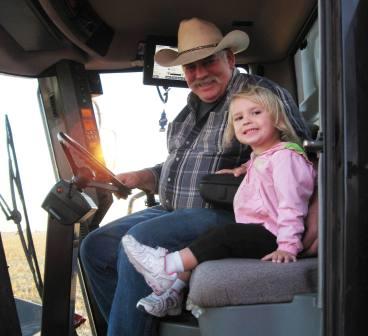
Things to do in the Combine

Things to do while in the combine

With harvest in full swing, many farmers are probably reflecting on the season, but might not be taking notes for next year. This is the time to start planning for next year’s crops.  While in the combine, look for weed and insect problems to fix for next year. Harvest provides an opportunity for a final evaluation of your weed management program and to a lesser extent, your insect management program. As you travel over all of your fields, take a minute to record observations such as where weeds are present.  Be sure to note the exact locations and details so you know how to correct it for next year.

The next step of being a “crop scene investigator” is to make the linkages and relate weed or insect problems with management decisions that were made.  Use your yield monitor to help you adjust your problem areas. 

Former UNL Weeds Specialist, Alex Martin once provided the following on weed management: Small grass and broadleaf weeds are likely to have developed after the first month of the growing season, perhaps after a POST treatment or cultivation or after a PRE treatment has become ineffective. These smaller, late developing weeds may produce seed and perpetuate the problem but are unlikely to have impacted yield. These late developing weeds are most likely in areas where the crop canopy developed more slowly, allowing penetration of the light necessary for weed establishment. Large weeds present at harvest likely are escapes which were not controlled by your primary weed management program. Depending on the number of these weeds, a change may be indicated for your weed management program. 

You may be able to see indications of herbicide resistance at harvest although the picture would have been clearer with an earlier examination. Herbicide resistance is first evident as a limited number of escapes in the field. There are many causes of weed escapes other than herbicide resistance. The key is to look for scattered large plants or small patches that were not controlled by your primary program. Dead weeds adjacent to the large ones provide even more evidence that resistance may be present. These fields should be monitored closely the next year.

Weed patches indicate that your weed management program is not uniformly effective across the field. There may be several causes, however the effect is the same – these field areas will have higher concentrations of weed seed as compared to the rest of the field. This means the problem next year will be most serious in these patches. If you continue to manage the field as in the past, the patches will persist or become larger. A change in management is needed to prevent “growing” these weed patches.

Finally, perennial weeds typically occur in patches and many are less susceptible than annuals to most weed management programs. Perennials usually call for special attention not warranted on the entire field. Identifying problem areas in the fall can make it easier to target them in the spring.

With a little extra effort at harvest you can gather information that will be useful in developing next year’s weed management program.

Crops, Uncategorized

Thistle Control & Fall Needle Drop

Control Thistles during October

As a kid growing up on the farm, my sister and I were always responsible for controlling the thistles in our pastures and on the farm which usually meant picking the heads off of them and using a shovel to dig the plant out.  Along with hauling irrigation pipe, it was not the most enjoyable job on the farm, but it did teach us hard work and responsibility.  If you have thistles and don’t enjoy digging them, now is actually the time to control them with herbicides.

If you walk out to the usual patches, I’ll bet you find many thistle seedlings.  Most thistle seedlings this fall will be small, in a flat, rosette growth form, and they are very sensitive now to certain herbicides.  So spray this fall and thistles will not be a big problem next year.

Bruce Anderson, UNL Forage Specialist offers some great information on controlling thistles this fall. Several herbicides are effective and recommended for thistle control.  Maybe the most effective is a newer herbicide called Milestone, or a combination of Milestone and 2,4-D called Forefront.  Two other very effective herbicides are Tordon 22K and Grazon.  But be careful with Tordon and Grazon since they also can kill woody plants, including trees you might want to keep.  2,4-D also works well while it’s warm, but you will get better thistle control by using a little less 2,4-D and adding a small amount of Banvel or dicamba to the mix.   

Other herbicides also help control thistles in pastures – like Redeem, Cimarron, and Curtail.  No matter which weed killer you use, though, be sure to read and follow label instructions, and be sure to spray on time.

Next year, avoid overgrazing your pastures so your grass stands get thicker and compete with any new thistle seedlings.  Give some thought now to thistle control during October and November.  Your pastures can be cleaner next spring.

 Evergreens turning brown?

If you have noticed that some of your coniferous trees have started to turn brown and have been loosing needles, more than likely your trees are going through a normal phase of their life cycle called fall needle drop.  This can cause concern for homeowners when they see their evergreen trees turn brown, but realize that  the older needles on the inside of evergreen trees are shed each fall after they turn yellow, brown or reddish tan in color.  Some years the process is very subtle and therefore not noticed, especially when it is on the inside part of the tree.  Pine trees can hold their needles for 2-5 or more years, depending on the species. Spruce trees generally hold onto their needles longer than pine trees do, approximately 5-7 years.

Fall needle drop is a natural condition and is not a sign of disease or insect infestation; however, any factor that increases stress on evergreen trees will intensify the autumn needle drop. Stress factors include drought, herbicide injury, root damage and insect or disease damage.

Uncategorized

USDA Outlines SURE Eligibility Requirements for 2011 and 2012 Crops

Ryne Norton, County USDA Farm Service Agency (FSA) Executive Director Ryne Norton, announced that legislative authority for the USDA LogoSupplemental Revenue Assistance Payments (SURE) program ends on September 30, 2011. Producers must meet specific eligibility requirements to receive SURE assistance for disasters that occur on or before September 30, 2011, and affect fall 2011 and 2012 crops.

The SURE program compensates producers for production and/or quality losses during times of disaster. Producers can apply for a 2011 or 2012 SURE payment if a crop of economic significance located in a primary or contiguous disaster county under a Secretarial Disaster Designation suffered at least a 10 percent loss because of disaster occurring on or before September 30, 2011.

Crops are not required to be harvested on or before September 30, 2011, to maintain SURE eligibility. A loss claim will only trigger after FSA determines that the loss was because of disaster occurring on or before September 30, 2011. Losses that result from disasters that occur after September 30, 2011, will not be eligible for SURE benefits.

Producers with 2011 and 2012 crops that suffer losses caused by disasters that occur on or before September 30, 2011, must also meet the following criteria:

  • For insured crops, the insurance policy defines the coverage period as beginning on or before September 30, 2011
  • For Noninsured Crop Disaster Assistance Program (NAP) crops, the coverage period begins on or before September 30, 2011
  • The final planting date according to RMA and FSA (NAP crops only) occur on or before September 30, 2011.

Ryne also points out that, “If the crop is planted prior to September 30, 2011, but the final planting date is after September 30, 2011, the crop will not be eligible for SURE benefits.”

The sign-up period for 2011 and 2012 SURE will not begin until after the national average market prices are determined for each respective crop year, which is normally one year after the applicable crop year.  For questions regarding the SURE program, please contact the Fillmore County FSA office at 402-759-4463.

 Cover Crops Program

Cover crops will be the focus of a Wednesday, September 28 field day at UNL’s Agricultural Research and Development Center (ARDC) near Mead (1071 County Road G, Ithaca, NE). This free event will be from 1 to 5 p.m. with plenty of time for discussion and to answer your cover crop questions.

The field day will showcase 33 cover crop plots and discuss cover crop options that help build and feed the soil system. Featured cover crops include grasses, legumes, forages, brassicas, cocktail mixes, and others. While these plots were drilled into wheat residue, cover cropping options after corn and soybean harvest also will be discussed.

Speakers will include UNL Extension and NRCS no-till specialists working with cover crops and several cover crop seed vendors who will share their experiences.  Special thanks to Arrow Seed, Green Cover Seed, and Prairie States Seed for providing the seed for the plots.  Door prizes of cover crop seed will be given away for participants to try cover crops on their own farms.

Crops

Road Safety during Harvest

            When tractors, combines and other large machinery begin to use public roads during harvest season, it is important for both farmers and passenger vehicle operators to use extra caution and respect each other.
            The greatest threat raised between farm equipment and passenger vehicles is the difference in speed. Farm equipment runs at an average speed of 20 miles per hour while passenger vehicles average 60 miles per hour. If the motor vehicle overtakes a tractor, the impact is comparable to a passenger vehicle hitting a brick wall at 40 miles per hour. If the tractor and a car, mini-van or pickup collides head on, the impact is the same as hitting a brick wall at 60 miles per hour.
            Farmers can reduce the chances of an accident by using warning lights, reflectors and reflective tape on their machinery to keep passenger vehicle operators aware of their presence on roads. Some farmers may choose to install supplemental lights to increase visibility. It also is a good idea for producers to keep off heavily traveled roads as much as possible and avoid moving equipment during the busiest part of the day.
            However, other drivers also need to take responsibility. Passenger vehicle operators need to think about what they are doing at all times and should not talk on cell phones while driving. A large number of roads traveled by farmers have loose gravel and soft shoulders or no shoulders at all. Therefore, passenger vehicle operators need to slow down and avoid quick turns or fast breaking that could cause them to loose control of the vehicle.
            Some farm equipment, such as combines, can take up more than half of the road. Even so, it is up to both drivers to be aware of their own limitations and adjust accordingly. Farmers should not take up more space than is needed, but other drivers should try to provide as much room as possible. It is a good idea for passenger vehicles to turn off onto side or field roads until larger machinery has passed. Whenever possible, farmers should use an escort vehicle such as a pickup to precede or follow large machinery and equipment on public roads. More than one escort may be necessary. Ideally, the escort vehicle would have extra warning lights and a sign indicating oversized or slow equipment ahead or following.
            Have a safe harvest!

 Fall Lawn Seeding

            Good turfgrass advice from UNL horticulturist, Kelly Feehan: Tall fescue and Kentucky bluegrass lawns with thin or bare areas are best overseeded now; and the earlier cool season, the better. For each day earlier grass is seeded, two days of growth are gained. August 15 to September 15 is the optimum window to seed cool-season grasses. Winterkill and/or poor establishment could result when seeding earlier or later than this. Try to seed turfgrass by September 15. If not possible, try and seed tall fescue before September 20 and bluegrass before September 30 to reduce the risk of winter injury. When seeding, good seed to soil contact is vital for success. To achieve thisw, gradually lower the mowing height to one and a half to two inches and remove clippings. If thatch exceeds one-fourth inch, power rake to reduce it. Before overseeding, core aerate or plug the area two to three times, then overseed and provide adequate moisture throughout fall.

Crops, Uncategorized, Youth

Youth CropWatch Page

Crops Webpage for Youth

For the last two years, I’ve been working to get a website with resources and lessons for 4-H leaders, extension staff, agricultural education instructors, and youth developed regarding crop production.  I’m happy to announce that this webpage is up and running and can be found at cropwatch.unl.edu/youth.

Youth in Crop Sciences Investigation (CSI) workshops learn about crop production and have the opportunity in investiage what pests might be present in the field.

The objective of this webpage is to provide a one spot stop with crop production information, some of it specific for Nebraska and some general crop information that can be used for a variety of locations. 

The webpage is divided into four main sections: crop and plant science facts, activities for youth, 4-H & FFA projects, and teaching activities & resources. “Crop and plant science facts” provides a short summary of crop statistics and other fun facts. “Activities for youth” has some fun crossword puzzles, word searches and other interactive activities for youth to participate. The 4-H and FFA project page has some of the opportunities available through 4-H and FFA such as Crop Science Investigation workshop series and other events related to crops. Finally, the “Teaching Activities and Resources” page currently has nine lessons available for anyone to download and teach hands-on activities to any age group, depending on how in depth they make the content.

More web-based interactive activities and lessons will be added to this webpage as time passes. I hope you will take some time to explore this webpage and encourage youth to consider a career in crop and plant sciences.

Crops

Soybean Stem Borers Reported

Several years ago I remember receiving a call from a grower who had lots of soybeans that were lodged; after taking a look at the situation, it was confirmed to be the soybean stem borer, which was one of the first times it was reported in Nebraska in recent years. After that, I took a look in more fields and found it as well. This year, it was recently found again in south central Nebraska soybean fields. While Kansas farmers are used to this, we haven’t dealt with this pest much in Nebraska, although it appears to be occurring more or we are more aware of it.

UNL extension entomologists, Bob Wright and Tom Hunt recently wrote an article on CropWatch providing the following information. This beetle (Dectes texanus texanus) has been moving into Nebraska from north central Kansas over the last decade. The last few years soybean stem borer has been reported in soybeans in Fillmore and Clay counties and surrounding areas to the west, east and south. The adult is a gray, elongate beetle about 0.5 inch long with antennae that are longer than the body. Females lay eggs from late June to August on various plants, including cocklebur, giant ragweed, sunflower, and soybean. On soybean, eggs are primarily laid in the leaf petioles. Larvae feed on the pith and tunnel down into the main stem. Each of four larval stages tunnels up and down the stem.

 Initial damage is seen when larvae tunnel down the leaf petiole and enter the stem. The leaf tissue above this point wilts and dies. If you split the leaf petiole, you can see the tunneling and may still see the larva. Economic damage is caused primarily by lodging and subsequent harvest difficulties. Girdling is most severe in earlier maturing varieties, and lodging is most severe in earlier planted soybean.

Chemical treatment of larvae is ineffective because the larvae are in the stem; effective chemical control of the adults is difficult due to the extended adult emergence period. Research found that burying borer-infested stubble after harvest can reduce Dectes populations. Entomologists at Kansas State University have been studying this insect as a pest on soybeans for several years. They have not identified resistance in any commercially available soybean cultivars, and labeled planting time and foliar insecticide applications were not effective. KSU has conducted a great deal of research on this insect. Its reports and extension publications are available online at Soybean Stem Borer.

Fields with a history of injury or with symptoms this year should be carefully watched during August and September. Fields with extensive stalk tunneling by the Dectes stem borer are at risk for lodging and harvest losses, depending on weather conditions. Those fields should be targeted for harvest first to minimize harvest losses due to stem borer injury. In the absence of lodging losses, this insect does not usually cause noticeable yield reductions. For more information on this soybean pest, see the UNL NebGuide.

Programming

NACAA Reflections

Each year the National Association of County Agricultural Agents holds its Annual Meeting for Professional Improvement Conference honoring agricultural extension professionals for their hard work and service.

Reflections on NACAA

Last week I had the opportunity to attend the National Association of County Agricultural Agents professional improvement conference. The conference was held in Overland Park, Kansas and we had the opportunity to tour some of the area.  My husband, Kurt and I went on the “high tunnel tour” which provided lots of great ideas that either traditional farmers expanded on their current operation or new agricultural producers started. Nonetheless, it was a very interesting tour which showed how value-added agriculture or niche markets have their place. We also noticed how much the corn was suffering from drought and feel fortunate for the irrigation we have in our part of the state.

It was great to network with agricultural extension professionals from across the United States. Whether it was discussing programming ideas, learning different types of agriculture and issues foreign to Nebraska, or discussing potential program collaborations, a lot of knowledge was exchanged. One general theme seems to be the same… reduction in resources, while remaining current and relevant. Extension has been at the forefront of providing research-based, relevant and current information to clientele; however you might see different delivery methods.

With the increase in technology, we have been able to reach a larger audience through webinars, podcasts, YouTube, blogs, social media, etc. While we recognize that face to face programs are still important, we must have materials available so that the younger generations can have access to information 24/7. For example, my news column which goes into traditional newspapers also can be found on our Fillmore County Extension website as a pdf, on my blog, (vandewalleviews.wordpress.com) and small pieces of information tweeted on twitter. The major advantage of using multiple methods of delivery is that it reaches a larger audience and is accessible 24/7 and the best thing is most of these are free!

I was fortunate enough to present to my colleagues on some of my work involving crop science investigation with youth. Many other Nebraska Extension professionals presented posters, served on national or regional committees or received other awards. I was honored to be selected by my peers to receive the Nebraska Achievement Award. This year, Nebraska definitely had its presence known and I look forward to implementing some of the ideas learned and continuing to provide high quality, dynamic programs and research-based information to the great people of Nebraska.

Programming

From Farms to Families Field Day

Field Day for Women!

Today’s agriculture is constantly changing, making it important for producers and their families to stay knowledgeable of current issues. Risk management is more important now than ever for agricultural producers, so to address some of the issues producers face, a new program has been developed by UNL Extension.  From Farms to Families is a program designed to empower women in agriculture with a better understanding of the issues that affect their operation’s profitability.

This new and exciting program for women was offered winter of 2011 with good reviews from participants. To continue this program, a special From Farms to Families field day will be held on August 23rd starting at 6:00 p.m. with a light meal included.  Registration is free, however to help with the meal count please call the Fillmore County Extension office at (402) 759-3712 or Thayer County Extension office at (402) 768-7212 by August 19th. Location of the program is at the Joe Birky farm located on county road 16, 1/4 mile south of Hwy. 74.

Specific sessions include a look at irrigation management technologies, field condition updates, range management, and a brief look on current agricultural issues. This program is sponsored by the University of Nebraska-Lincoln Extension and Advanced BioEnergy L.L.C.

Crops

Soybean Management Field Day

Soybean Management Field Day

A Soybean Management Field Day will be held at South Central Ag Lab near Clay Center on August 16th!  I encourage you to register and to go!  If you’ve been to the field days before, changes have been made so that all the demo plots are now research plots-so all the trials will be harvested, data collected, and shared in future meetings and field days.  The theme this year is “Growing Nebraska’s Future” and the event will focus on staying competitive in a global marketplace, increasing profits and meeting the world’s growing food and energy needs starting in Nebraska.
     Topics include: nutrient management and high yield alternatives; pest management and yield enhancement products; weed management; and marketing and risk management. In addition, UNL Extension’s BIT Mobile will be on hand for participants to visit and learn how to optimize irrigation efficiency and energy use with the SoyWater program. If you have unknown crop problems, please bring along your samples for agronomists and plant disease and insect specialists to look at for no charge.
     The field days are sponsored by the Nebraska Soybean Board in partnership with UNL Extension in the university’s Institute of Agriculture and Natural Resources and are funded through checkoff dollars. The efforts of the checkoff are directed by the United Soybean Board promoting effective, efficient, farmer-driven programs.
     The field days begin with 9 a.m. registration and conclude at 2:30 p.m. Free registration is available the day of the event; it would be helpful to RSVP for meal count to 800-529-8030.  More info.

Uncategorized

Sportsmanship

Crop Moisture Update

As I write this, soil moisture has been adequate and therefore in most cases, no need to irrigate. Those with the watermark sensors are able to closely monitor their soil water status and will be able to know when to trigger their first irrigation. With corn growing at a rapid pace, it will be important to check the sensors and once they hit tassel, take an average of the one, two, and three foot sensors. The crop ET reading south of Geneva read 1.4 inches for the period of July 1 – July 8. This means that corn at the V-12 stage has a coefficient of .88 inches, so .88 x 1.4 means that the crop used 1.23 inches/week or .18”/day. Corn at V-14 would use 1.01 X 1.4 and used 1.41 inches/week or .20”/day. Remember to check the Nebraska Ag Water Management website and click on “view ETgage data” to see other local ET and rainfall data. If you have an ETgage you can register it and report your data here as well.

Sportsmanship starts with Adults!

Webster’s Third International Dictionary defines sportsmanship as “conduct becoming to an individual involving fair and honest competition, courteous relations and graceful acceptance of results”. Sportsmanship starts with parents teaching their youth how to accept a win or a loss, although in the 4-H youth development program, even if the youth receives a red ribbon, nothing is lost as long as some basic knowledge and skills were gained. Too often in our society we focus on the tangible results of a ribbon or trophy and don’t think about the process that youth went through to achieve the end results and what was learned from that process.

I often use the example that as a youth, I’ll never forget receiving a red ribbon for a market heifer; I was frustrated, but will never forget my dad asking me, what the judge said in the comments. After we talked it over, I realized his reasoning and was able to understand the type of animal I should select for the following year. That was a lesson I’ll never forget. My dad and mom also told my sister and me that if we wanted a trophy that badly, instead of spending a large amount of money on an animal just to win or using unethical practices, they’d go out and buy us our own trophy. For these reasons, it is really rewarding to work with youth who are happy with any ribbon placing.

Three reasons adults and teen leaders should be concerned with developing sportsmanship are: 1. Youth programs are easier to conduct and are more positive experiences for everyone involved if good sportsmanship is demonstrated. 2. The development of sportsmanship is an important part of youth development. Youth and adults who develop and show good sportsmanship get along better, and are much more successful on a long-term basis in becoming self-directing, productive, contributing, competent, caring, capable adults, than are those whose behavior is un-sportsmanship-like. 3. Sportsmanship is one of the key elements of civilized society. Those who think of the “big picture” know the reasons for developing sportsmanship extend beyond an individual, a community, or a program. When societies allow sportsmanship to decline, their civilizations also decline.

As we get ready for another Fillmore County Fair, let’s be reminded that the end result is not the ribbon placing, but the skills that each youth learned!

Source: Kathryn J. Cox, Ohio Extension 4-H Specialist, Youth Development, Developing Sportsmanship- A Resource For Preparing Youth And Their Families For Participation in Competitive Programs and Events, 2006