Uncategorized

Collaboration and Teamwork

After wrapping up another county fair and heading back into other extension programming, it’s good to reflect on the county fair experience as this is one of the capstone experiences for 4-H youth. This marks nearly my nineteenth year in Extension & eighteenth fair which is hard to imagine! I am still amazed and blessed to have so many excellent and caring volunteers to make the fair a positive experience for our youth. The countless hours spent preparing beforehand allows for a much smoother week during the fair. I’d like to give a lot of credit to the entire staff of Fillmore and Clay Counties. Weeks before the fair, data is entered into the computer system, stall assignments are created, awards are ordered, reminders are sent to exhibitors about completing quality assurance, registration deadlines, etc.

Without collaboration, fair would not occur. Also, there is a lot of time spent from volunteers such as Council members and superintendents. From helping with winter/spring weigh-ins to helping answer questions and attend meetings, volunteers are engaged year-round to make the program the best it can be.

An article adapted from Belgrad, W., Fisher, K., & Rayner, S. (1995) best summarizes that “collaboration and teamwork require a mix of interpersonal, problem-solving, and communication skills needed for a group to work together towards a common goal.” The best teams I have worked with put their own agenda aside and work toward the greater good of the team. This article also provides tips for how to develop a collaborative team environment. There are five themes that must be present.

The first is trust. Being honest with the team helps each other develop respect within a team. Give team members the benefit of the doubt and work to eliminate conflicts of interest. The second is to clarify roles. When each team member knows their key roles, they can perform more effectively and can figure out ways to help each other. Next, it is important to communicate openly and effectively. Work to clear up misunderstandings quickly and accurately. It’s best to over-communicate, rather than not communicate. Learn to be a good listener and recognize team member efforts. Fourth is to appreciate the diversity of ideas. Be open-minded and evaluate each new idea and remember that it is okay to disagree with one another but learn how to reach a consensus. Often, much is learned from those who differ from you.  Finally, balance the team’s focus. Regularly review and evaluate the effectiveness of the team. Assign team members specific tasks to evaluate and provide praise to other team members for achieving results.

I’d like to thank the 4-H Council members who have so freely given of their time to make the fair a success. Of course, livestock superintendents put in a large amount of time during the fair with check-in, the show, loading animals, etc. Special thanks to the fair board for their support of the 4-H program and the countless hours they spend setting up for events, etc. Businesses and financial donors help provide youth with incentives for their projects. There are so many other individuals and businesses who are helpful and do things without any recognition and to all of you, thank you! 

Congratulations Clay and Fillmore County 4-H and FFA members on a great county fair!

Source: Belgrad, W., Fisher, K., & Rayner, S. (1995). Tips for Teams: a Ready Reference for Solving Common Team Problems. McGraw-Hill: New York.
Crops, Irrigation, Livestock

FSA County Committee Nomination Deadline

It is important for one to stand for what they believe in and takes an active role in one’s community. Effective leadership is crucial to any community or organization.  An effective leader understands the issues at-hand, is knowledgeable in his/her area, knows the proper ways to motivate others, embraces change, can work in a variety of settings and with a variety of personalities, and involves the group or followers in important decision-making. That being said, remember that a leader is not only a political figure or someone that is well known, but a leader can be a farmer, local businessmen/women, or anyone in a community or organization.  For those individuals desiring to take on leadership roles, consider serving on the FSA County Committee. Details for how to step into this role follow.

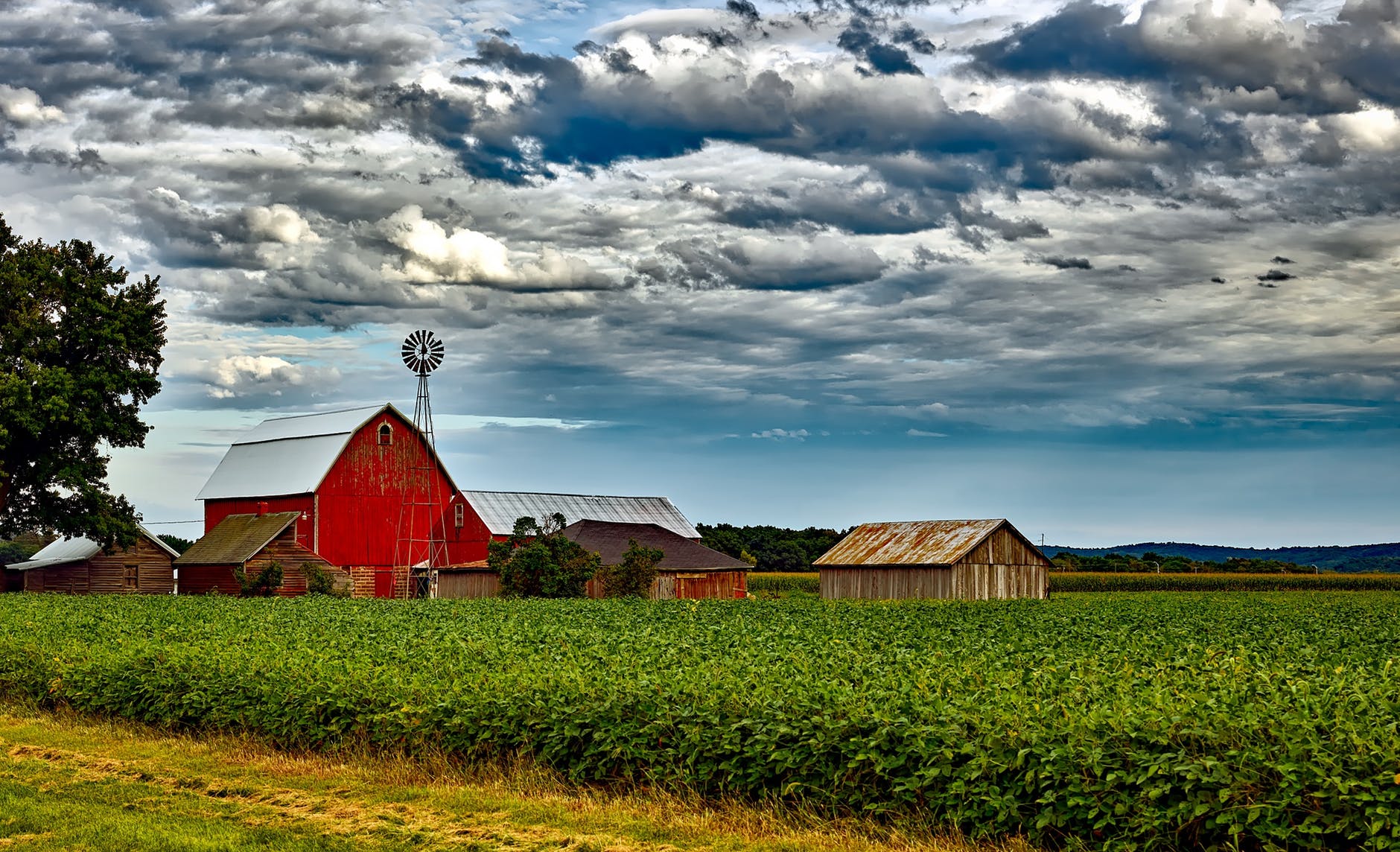
houses in farm against cloudy sky
Photo by Pixabay on Pexels.com

The U.S. Department of Agriculture (USDA) Farm Service Agency (FSA) encourages all farmers, ranchers, and FSA program participants to take part in the County Committee election nomination process.

FSA’s county committees are a critical component of the day-to-day operations of FSA and allow grassroots input and local administration of federal farm programs.

Committees are comprised of locally elected agricultural producers responsible for the fair and equitable administration of FSA farm programs in their counties. Committee members are accountable to the Secretary of Agriculture. If elected, members become part of a local decision making and farm program delivery process.

A county committee is composed of three elected members from local administrative areas (LAA). Each member serves a three-year term. One-third of the seats on these committees are open for election each year.

County committees may have an appointed advisor to further represent the local interests of underserved farmers and ranchers. Underserved producers are beginning, women and other minority farmers and ranchers and landowners and/or operators who have limited resources.

All nomination forms for the 2019 election must be postmarked or received in the local USDA service center by Aug. 1, 2019. For more information on FSA county committee elections and appointments, refer to the FSA fact sheet: Eligibility to Vote and Hold Office as a COC Member available online at: fsa.usda.gov/elections.

Uncategorized, Youth

Leadership Skills Top Ten

Recently I had the opportunity to help recognize 4-H Club Leaders from both Fillmore and Clay counties. With so many organizations, school activities, careers and many other items on parents’ plates, I hope leaders know how much I appreciate their help and commitment to the 4-H program. Without leaders to guide 4-H’ers and lead the meetings, 4-H clubs would not be as successful as they are today.leadership

To describe what a leader is, I’ve made up my own top ten skills that make a good leader.

#10. Flexibility – the ability to go with the flow when needed”

#9. Negotiation – ability to compromise and come up with a “win/win” situation

#8. Creativity – develop solutions and look towards the future

#7. Determination – possess “grit” even when projects don’t go as planned

#6. Mentoring – teaching and helping others

#5. Listening – actively listen to what others might need

#4. Integrity – doing things for the right reason and not self-seeking

#3. Teamwork – ability to bring people together and accomplish a common goal

#2. Compassion – desire to make a positive difference in the lives of others

#1. Communication – articulate ideas clearly to others and in an appropriate manner, most often conflict occurs because others are unaware of a situation

Many of our club leaders possess these skills and I would like to thank them for their years of service. While there is no such think as a perfect leader, whether in a volunteer or career-related position, a leader is able to work as a team, admit when he/she is wrong and work towards the greater good and move an organization forward.

Uncategorized

Agricultural Leadership – LEAD Program

As a LEAD 27 participant, our class traveled to China, South Korea & Hong Kong!

 LEAD Application Deadline is June 15

As the number of individuals involved in agriculture continues to decrease—and the challenges continue to increase—the need for highly trained, effective and articulate spokespersons and leaders in the agricultural industry becomes even more critical. If you would like to be a part of the leadership necessary to chart the course . . . now and in the future, and you are presently involved in production agriculture or agribusiness, there will never be a better time to make application to the Nebraska LEAD Program.

Fellowship applications for Nebraska LEAD (Leadership Education/Action Development) Group XXXI (31) are now available for men and women involved in production agriculture or agribusiness and are due on June 15. Up to 30 motivated men and women who are passionate about our industry will be selected from five geographic areas of the state.

In addition to monthly three-day seminars throughout Nebraska from mid-September through early April each year, Nebraska LEAD Fellows also participate in a 10-day National Study/Travel Seminar to Kansas City, Washington, D.C. and Chicago during the first year, and a two week International Study/Travel Seminar during the second year.

Seminar themes include leadership assessment and potential, natural resources and energy, agricultural policy, leadership through communication, our political process, global perspectives, nuclear energy, social issues, understanding and developing leadership skills, agribusiness and marketing, advances in health care, and the resources and people of Nebraska’s Panhandle.

The Nebraska LEAD Program is designed to prepare the spokespersons, problem-solvers and decision makers for Nebraska and its agricultural industry. In its 30th year, the program is operated by the Nebraska Agricultural Leadership Council, a nonprofit organization, in collaboration with the University of Nebraska-Lincoln’s Institute of Agriculture and Natural Resources and in cooperation with Nebraska colleges and universities, business and industry, and individuals throughout the state.

Applications are due no later than June 15 and are available via e-mail from the Nebraska LEAD Program. Application materials can be requested by contacting Shana at sgerdes2@unl.edu, by calling (402) 472-6810, or by writing Room 318 Biochemistry Hall, University of Nebraska-Lincoln, 68583-0763.

As a graduate of LEAD XXVII, I would highly recommend anyone even thinking about applying to visit with me and I’ll share more personal insights on this excellent program. I can attest to the high quality and how its helped improve my leadership skills and confidence and made me more aware of important issues and opportunities to continually improve myself and knowledge.