
With harvest just around the corner, farmers will soon be putting in long hours to bring in the crop. As National Farm Safety & Health Week approaches, it serves as an important reminder for everyone in rural communities to slow down, stay alert, and make safety a priority during this busy time of year.
Celebrate National Farm Safety and Health Week 2026 with AgriSafe by joining 12 free educational webinars taking place September 21–25. This year’s theme, “Safety Today, Success Tomorrow,” highlights the importance of protecting the health, safety, and well-being of farmers, ranchers, agricultural workers, and their families. Learn from experts on a variety of agricultural safety and health topics throughout the week. Register for one webinar or attend them all!
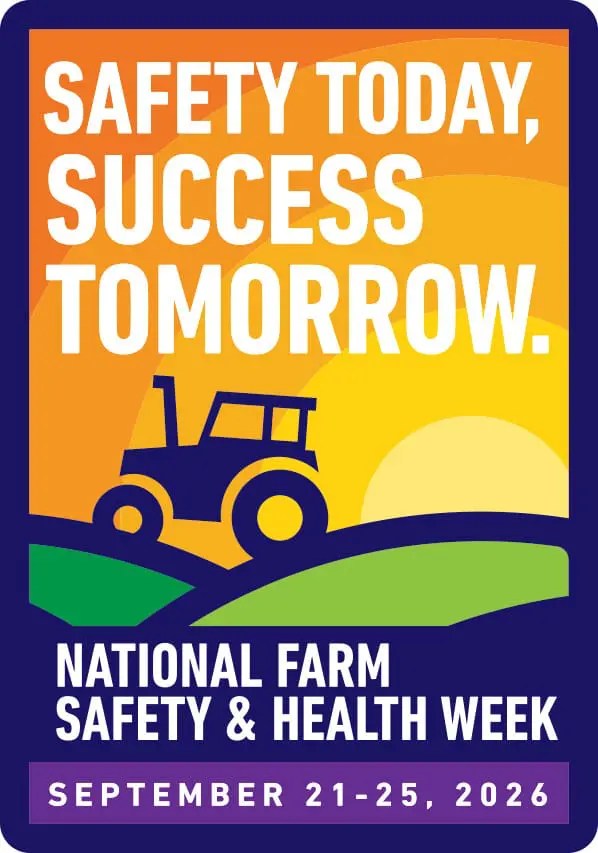
For more information and to register, visit: https://www.agrisafe.org/nfshw/
Agriculture remains one of the most hazardous industries in the United States. In 2023, workers in agriculture, forestry and fishing experienced a fatal injury rate of 24.4 deaths per 100,000 workers, according to the Bureau of Labor Statistics. Transportation incidents, including those involving tractors and ATVs, were the leading cause of fatalities. More than 21,000 nonfatal agricultural injuries resulted in days away from work between 2021 and 2022.
Some things one can do now as we prepare for harvest are ensuring you have a fully charged and proper fire extinguisher in the combine. With the dry conditions we’ve had, conditions increase the chances of combine fires. One of the most common entanglement hazards is PTO (power take-off) units. Within three-fourths second (the average time it takes to react), more than one complete person will have been wrapped around the shaft before he or she could jump out of the way. Always keep all safety shields and guards in place and always stay clear of moving parts to avoid this hazard. One should also disengage equipment and shut off the engine before working near a PTO and do NOT wear loose-fitting clothes, dangly jewelry, long shoelaces, or scarves near them.
Farm safety goes beyond protecting farmers and hired employees. Because farms are often homes as well as workplaces, children, family members, visitors and emergency responders can also be exposed to agricultural hazards. Even motorists traveling rural roads face risks when sharing the road with tractors and other large equipment.
Agricultural workers may encounter a wide range of hazards, including:
- Machinery and vehicles: Tractors, ATVs and other equipment can cause serious injuries.
- Grain bins: Grain engulfment can result in suffocation.
- Chemicals and gases: Pesticides, fertilizers, fuels and gases produced by manure or stored crops can be dangerous.
- Dust: Farm dust may contain mold, bacteria and livestock waste materials that can affect respiratory health.
- Livestock: Animals can cause injuries, while contact with livestock can also expose workers to diseases.
- Falls: Ladders, equipment, grain bins and other elevated areas create fall hazards.
- Electricity: Large equipment contacting overhead power lines can cause electrocution.
- Weather: Extreme heat, cold, storms and other environmental conditions can create serious health risks.
- Noise: Long-term exposure to loud machinery can contribute to hearing loss and tinnitus.
- Sun exposure: Working outdoors increases exposure to ultraviolet radiation and the risk of skin cancer.
Farmers may also face increased risks as they age. The 2022 Census of Agriculture reported the average age of U.S. agricultural producers at 58.1 years. Changes in vision, mobility, reaction time and cognition can make already hazardous tasks more challenging. Another concern is that farmers frequently work alone in remote locations where cell service may be limited. When an accident occurs, this can delay emergency assistance.
Farm safety requires awareness and planning. Take time to identify hazards before beginning a task, use appropriate protective equipment, follow equipment safety procedures and make sure family members and visitors understand areas that may be dangerous.
Agriculture is essential to our communities, but no job is more important than returning home safely at the end of the day. A few extra minutes spent identifying and preventing hazards can help protect farmers, families, employees and everyone who visits or travels through rural communities.


