
Webster’s Third International Dictionary defines sportsmanship as “conduct becoming to an individual involving fair and honest competition, courteous relations and graceful acceptance of results”. Sportsmanship starts with parents teaching their youth how to accept a win or a loss, although in the 4-H youth development program, even if the youth receives a red ribbon, nothing is lost as long as some basic knowledge and skills were gained. Too often in our society we focus on the tangible results of a ribbon or trophy and don’t think about the process that youth went through to achieve the end results and what was learned from that process. 
I often use the example that as a youth, I’ll never forget receiving a red ribbon for a market heifer; I was disappointed, but will never forget my dad asking me, what the judge said in the comments. After we talked it over, I realized his reasoning and was able to understand the type of animal I should select the following year. That was a lesson I’ll never forget. My parents instilled the value of hard work into my sister and I and any animal we showed we bought with our own money to build a small cow/calf herd or they came from our own herd. We rarely had the award-winning animal and were extremely excited to even receive a purple ribbon. The learning that occurred, memories and fun we had were just as valuable than if we would have received a trophy or plaque. For these reasons, it is really rewarding to work with youth who are happy with any ribbon placing- white, red, blue or purple. It really is just one person’s opinion on one particular day!
The 4-H Program focuses on providing positive youth development and developing young people as future leaders. A ribbon or plaque placing does not achieve this; rather it is the process, skills and effort that went into the project. It is also important to mention that the entire 4-H program extends beyond the county fair and is done through educational workshops, career portfolios, leadership experiences and much more and is a year round program.
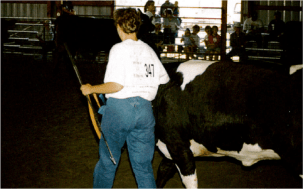
Three reasons adults and teen leaders should be concerned with developing sportsmanship are:
- Youth programs are easier to conduct and are more positive experiences for everyone involved if good sportsmanship is demonstrated.
- The development of sportsmanship is an important part of youth development. Youth and adults who develop and show good sportsmanship get along better, and are much more successful on a long-term basis in becoming self-directing, productive, contributing, competent, caring, capable adults, than are those whose behavior is un-sportsmanship-like.
- Sportsmanship is one of the key elements of civilized society. Those who think of the “big picture” know the reasons for developing sportsmanship extend beyond an individual, a community, or a program. When societies allow sportsmanship to decline, their civilizations also decline.
As we get ready for another Fillmore County Fair, let’s be reminded that the end result is not the ribbon placing, but the skills that each youth learned!
Source: Kathryn J. Cox, Ohio Extension 4-H Specialist, Youth Development, Developing Sportsmanship- A Resource For Preparing Youth And Their Families For Participation in Competitive Programs and Events, 2006

 Growers, crop consultants and educators are encouraged to attend Nebraska Extension’s Weed Management Field Day from 8 a.m. to 1 p.m. June 29 at the South Central Agricultural Laboratory near Clay Center. The field day will include on-site demonstrations of new technology and new herbicides for corn, soybean and sorghum. An early morning tour will focus on weed management in soybeans followed by a tour of weed management in corn and sorghum. Field experiments will provide information for weed control options using several herbicide programs.
 Growers, crop consultants and educators interested in management of herbicide-resistant Palmer amaranth are encouraged to attend Nebraska Extension’s Field Day, supported by the Nebraska Corn Board, from 8:30 a.m. to 1:30 p.m. July 12 near Shickley. Palmer amaranth is a member of the pigweed family and is one of the most troublesome weeds in seed cornfields because of its resistance to atrazine and HPPD inhibitors. Greenhouse dose-response studies have confirmed resistance when atrazine and HPPD inhibitors were applied post-emergence. Palmer amaranth is of particular concern in south-central Nebraska because of its proximity to intense seed corn production, which is heavily reliant on these herbicides for weed.
 heast Omaha. This is the first confirmation of the insect in Nebraska. EAB has killed hundreds of millions of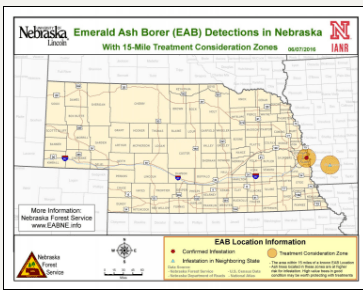


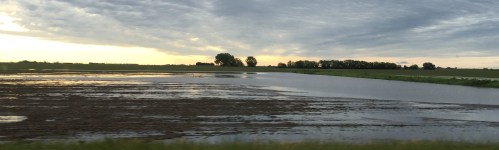 t ponding if temperatures are relatively cool (mid-60’s F or cooler); fewer days if temperatures are warm (mid-70’s F or warmer). Soil oxygen is depleted within about 48 hours of soil saturation. Without oxygen, the plants cannot perform critical life sustaining functions; e.g. nutrient and water uptake is impaired and root growth is inhibited. Even if surface water subsides quickly, the likelihood of dense surface crusts forming as the soil dries increases the risk of emergence failure for recently planted crops.
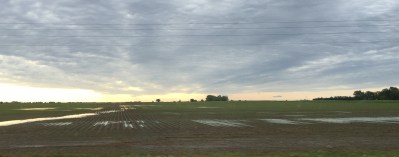 stunted roots and dying roots. As a result, plants may be subject to greater injury during a subsequently dry summer due to their restricted root systems.
 Special thanks to Barbur Floral for donating the vegetable plants and Roddy Salmon for tilling the garden and residents at Pioneer Manor for assisting as well! If you or your organization is interested in contributing or participating in the Fillmore County Community Garden this year, please contact the
 Management Network, or NAWMN. Evaluation results have shown a one to two inch savings of irrigation since it’s inception. In 2005, only a few producers in the Upper Big Blue NRD, (shortly followed by the Little Blue NRD) were participating, but as of last fall, this program has reached 1,393 in 18 NRDs and 73 of 93 counties. The Network has been having significant impacts on both water and energy conservation due to farmers adopting information and implementing technologies in their irrigation management.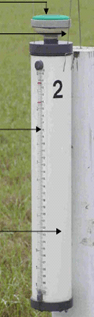
 Views from VanDeWalle