Crops

Alfalfa Weevil Adults on Regrowth

Bruce Anderson, UNL Extension Forage Specialist reminds producers that with late first cuttings of alfalfa, alfalfa weevil activity often increases when this occurs.  Anderson says that weevil larvae generally eat small holes in leaves at the growing tip of alfalfa plants.  As larvae grow, damage increases as the holes become larger.  Severely damaged fields have a grayish appearance because of the drying of skeletonized upper leaves and buds.

Most fields have not had enough damage to need spraying before first cutting.  After harvest, many larvae die when exposed to direct sunlight and high temperatures at the soil surface.  But will enough larvae survive to be a problem for regrowth?

Maybe more likely is survival of weevil adults.  These critters can be really hard on alfalfa regrowth by feeding on the developing crown buds, retarding growth and preventing fields from greening up after harvest.

Your first step in controlling weevil adults is removal of windrows and bales as soon as possible to expose these insects.  Then examine stubble frequently to see if adults are delaying greenup by feeding on new buds, especially where the windrow laid.

If damage is noticed, a threshold guideline has been developed that uses insecticide cost, hay value, and harvest management to help you determine when spraying may be desirable.  This guide, along with other tips to manage alfalfa weevil, is available from local extension offices.

Don’t let alfalfa weevil adults delay second growth of your alfalfa.  Keep a watchful eye on the stubble and spray, but only if necessary. Download our UNL Extension NebGuide for more information.


Crops, Irrigation

Crop ET Weekly Report

Hopefully producers won’t have to irrigate as much this year as they did in 2012, but I’d like you to consider joining a program that can not only improve your irrigation efficiency, but reduce nutrient loss and save you money!  I’ve been in Extension for nearly eight years and a program I’ve been involved with that has been a very rewarding program and made a positive impact for many is the Nebraska Agricultural Water Management Network, or NAWMNWatermark Sensors. My colleague, Gary Zoubek tracks the evaluation results and shared that in 2005 only a few producers in the Upper Big Blue NRD, (shortly followed by the Little Blue NRD) were participating, but this program has now grown to over 800 producers across the state and I’m sure we’ll add another 100 or 200 more this season!

A couple of the tools we use are ETgages® or Atmometers which mimic crop evapotranspiration or ET and Watermark soil matrix sensors which measure soil matric potential or the energy required to remove water from the soil. These two tools have really worked well and have made irrigation management much easier than those gut feelings.  The more information you have the better decisions you can make!

If you would like to participate in this dynamic program, let me know and I’d be happy to help and get you started! If you are in the NAWMN, consider installing your ETgage soon and once done with planting, start the soaking/drying cycle on your Watermark sensors to be sure they work! It’s also important to replace the #54 alfalfa canvas covers and wafers on a regular basis at the start of each season.

As I have done the past couple of years, I plan to report the weekly ET in my weekly columns. The ETgage I check is in the center of the county, just south of Geneva; hopefully it will help others become aware or have an idea what the local ET is.

The ETgage I check outside of Geneva changed 1.4 inches for the week of May 31-June 7th. Corn in the V-4 stage has a coefficient of .18”. To calculate how much water, corn at V-4 stage used you simply multiply .18” x 1.4” for a weekly use of .25” or .04 inches/day. Corn approaching V-6 would have used .49”/week or .07” per day.

Producers with Watermark sensors, which monitor the amount of water available in the soil profile should get them installed soon. Watermark sensors are installed early in the growing season at 1’, 2’, 3’ and in some case 4’ depths!

For more information about ETgages and Watermark sensors, check out the NAWMN website.

Youth

Progressive Ag Safety Day

GroupPic13Web

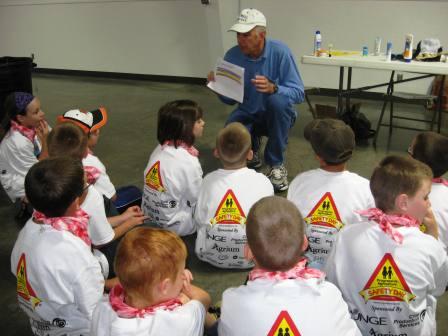
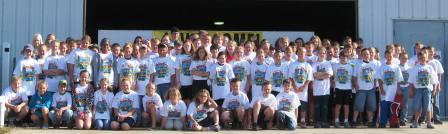
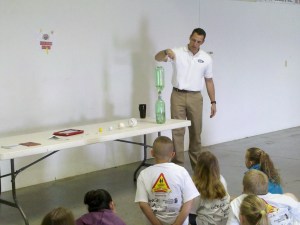
Each year Nebraska’s farmers and ranchers come close to an accident – in the field, in livestock pens, in grain piles. Youth in rural areas are not excluded from this. To help teach youth safe on farms and rural communities, a Progressive Agriculture Safety Day was held in Geneva on May 30, 2013 for area 2-6th grade youth. The program was coordinated by the local WIFE (Women Involved in Farm Economics), Fillmore Central and Shickley FFA Chapters, the University of Nebraska-Lincoln Extension in Fillmore County, and several other local businesses and organizations provided funding.

SunSafetyWEBTopics taught included sun safety, fire safety, internet safety, teamwork/leadership, chemical look-alikes, kids get arthritis too, grain safety, underground utility safety, tractor safety, and agricultural awareness. Nearly 50 older youth and adults volunteered their time to make the event happen.  In addition to these hands-on sessions, youth received a first aid kit to take home, flashlight and a “goodie bag” with educational safety materials reminding them what was learned. Progressive Agriculture Safety Day was conducted through the Progressive Agriculture Foundation, so each participant and volunteer received a t-shirt from Progressive Agriculture sponsors. Special thanks to sponsors for making this event happen at low cost to the youth!GrainBinSafety13WEB

At the conclusion of the day, youth expressed that they had a great time and learned safety tips that may someday save their or someone else’s life.

Crops

Field Flooding & Its Effects

Last week’s heavy rains in parts of the county reminded me of an article I read last year about the survivable chances for corn that has been flooded in low-lying areas so I’ve summarized and put some excerpts from an article written by R.L. Bob Nielsen from the Purdue University, Agronomy Department. Obviously, plants that are completely submerged are at higher risk than those that are partially submerged and the longer an area remains ponded, the higher the risk of plant death.

Wind damge overturned many pivots in Fillmore County and excessive rain caused some flooding.
Wind damge overturned many pivots in Fillmore County and excessive rain caused flooding.

Nielsen reported that most agronomists believe that young corn can survive up to about 4 days of outright ponding if temperatures are relatively cool (mid-60’s F or cooler); fewer days if temperatures are warm (mid-70’s F or warmer). Soil oxygen is depleted within about 48 hours of soil saturation. Without oxygen, the plants cannot perform critical life sustaining functions; e.g. nutrient and water uptake is impaired and root growth is inhibited. Even if surface water subsides quickly, the likelihood of dense surface crusts forming as the soil dries increases the risk of emergence failure for recently planted crops.

Young corn (less than V-6 stage, like our current conditions) is more susceptible to ponding damage than corn beyond the sixth leaf stage. This is because young plants are more easily submerged than older and taller plants and since the corn plant’s growing point remains below ground until about V6. The health of the growing point can be assessed initially by splitting stalks and visually examining the lower portion of the stem. Within 3 to 5 days after water drains from the ponded area, look for the appearance of fresh leaves from the whorls of the plants.

Another consideration is that extended periods of saturated soils AFTER the surface water subsides can also take their toll on the overall vigor of the crop, causing stunted roots and dying roots. As a result, plants may be subject to greater injury during a subsequently dry summer due to their restricted root systems.

Loss of nutrients is another concern on saturated soils. Significant loss of soil N will cause nitrogen deficiencies and possible additional yield loss.  Lengthy periods of wet soil conditions also favor the development of seedling blight diseases, especially those caused by Pythium fungi.  Poorly drained areas of fields are most at risk for the development of these diseases and will also be risky for potential replant operations.

There are other diseases that can affect flooded areas of corn as well, but for now, it’s kind of a wait and see until you can get into the field and assess the health of the growing point. More information from Effects of Flooding or Ponding on Young Corn by R.L. Nielsen.

Youth

Dream Job Anyone?

With the 2013 graduating class preparing for the next chapter in their life, other youth might be wondering what they’d like to do after high school. Rather than asking what they want to major in, ask them what would be their dream job or what do they enjoy doing. From there, college admissions or others such as Extension faculty/staff can help direct youth in the right direction. Recently I had the opportunity to attend an in-service for UNL Extension which updated us on college degree programs and opportunities for students. We spent time on both city and east campus, toured a couple of dorms and brainstormed on ways to help youth decide their preferred college path.

Whether youth attend the University of Nebraska-Lincoln or not, our goal in UNL Extension is to help all youth realize their career goals through 4-H projects, workshops and other programming. For some youth, a two year school might be appropriate, for some starting at a two year school and transferring to a four year might work, and yet for some, a four year school is the best fit. Regardless, receiving some education beyond high school is increasingly important with today’s ever-changing society.

tractorTestLabphoto

Before youth decide on their post-secondary education, it is important to investigate several options.  As a UNL faculty member, I can provide youth with the resources or contacts to explore the numerous options that the University of Nebraska-Lincoln offers. For example, I had the chance to view and visit the UNL Chemistry Department and it was very impressive! With several flat screens, lab stations and other high tech features it made me want to go back to school and take a chemistry course. Not only was the classroom impressive, the professor was very engaging and had some innovative teaching methods. The learning center was equally impressive as it takes into account how today’s students learn best.

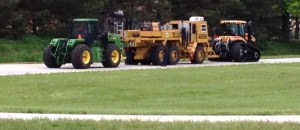
One of the highlights for me was the Agronomy and Horticulture tour. Kim Todd, host of Backyard Farmer and UNL professor, shared the hands-on learning that occurs in landscape design and horticulture courses. Students design, plant and care for landscapes not only on campus, but in the community such as Bryan LGH and other businesses. This provides youth with real world application and experiences.From there, we toured the UNL Tractor Test Lab which provides students interested in mechanical systems and ag engineering hands-in learning and also a job on-campus. UNL Animal Science also provides numerous hands-on learning opportunities such as becoming certified in artificial insemination, etc.  Once again, on campus jobs are offered, including caring for livestock on campus which was one of the jobs I had as an undergraduate. For students with jobs on campus, it continues the learning occurring in the classroom and allows them to see first-hand some of the cutting edge research taking place.

BYG13photo

In conclusion, youth considering college are encouraged to contact college admissions directly by going to their website or are more than welcome to contact their local extension office and we’d be more than happy to locate the correct resources needed. You may email me at brandy.vandewalle@unl.edu or call our office at 402-759-3712. With over 150 majors, more than 400 student-run clubs/organizations, intramural sports and research opportunities with world renowned faculty to provide outstanding academic success, I’m sure youth will be able to start the pathway to achieve their dream job at the University of Nebraska-Lincoln! The University of Nebraska–Lincoln is determined to get you where you want to go. Your story starts at NEBRASKA.

Uncategorized

DriftWatch

Last week I wrote about the amine and ester 2,4-D formulations and that the ester formulation of 2,4-D have higher vapor pressures and tend to volatilize more than amines, therefore one should use an amine formulation when volatilization is a concern with sensitive plants. This week, I received an email about the DriftWatch program so I’ve included a recent press release from Tim Creger with the Nebraska Department of Agriculture below.

The Nebraska Department of Agriculture’s Pesticide Program would like to remind outdoor pesticide applicators – especially those applying volatile herbicides such as 2,4-D and dicamba – to be mindful of the increasing number of commercially-grown sensitive crops in our agricultural landscape.  Applicators are reminded to read and follow the label directions, including any timing, temperature, and wind speed restrictions.  In addition, please utilize DriftWatch™ to locate commercially-grown sensitive crops in your spray area, and adjust your application accordingly.  Sensitive crops include orchards, vineyards, fruits and vegetables, organic crops, nurseries, and tree crops.

DriftWatch™ is a voluntary service; however, new commercial crop locations are added frequently.  Applicators can register their business area in DriftWatch™, which then allows them to receive e-mail notifications when sensitive crops are added to their spray area.

All outdoor applicators should benefit from this service, including those making pesticide applications to roadsides, lawns and other turf sites, and agricultural fields. For more information about DriftWatch, go to the NDA’s website or call the NDA at (402) 471-6851.

Crops, Horticulture

2,4-D Amine vs. Ester Formulations

The other day I got a question from a client regarding the different formulations of 2,4-D, a very common herbicide used widely by gardeners and farmers. I found a great fact sheet from Purdue University which described the differences and is summarized below. It starts out by saying that the amine and ester of 2,4-D are both formulations of one of the oldest and widely used herbicide families, as they were developed in the mid-1940’s by the military for vegetation control. It works as a growth regulator herbicide which induces unorganized growth in the plant which can therefore crush the vascular system of the plant, blocking it off from nutrients, sugar and water.

Used to control annual, biennial, and perennial broadleaf weeds, 2,4-D has little effect on grasses, thus making it the most popular herbicide used in lawns. While it is effective if applied at the correct time, drift can easily occur in non-targeted broadleaf plants due to the result of 2,4-D volatility, its ability to turn into a vapor and move off site. This is how the amine and ester formulations can differ.

Purdue’s publication goes on to summarize that the ester formulation of 2,4-D have higher vapor pressures and tend to volatilize more than amines, therefore one should use an amine formulation when volatilization is a concern with sensitive plants. I always caution people who use 2,4-D that volatility increases in hot, dry weather. When temperatures are above 85 degrees F, only the amine formulations should be used. Ester formulation is more effective at penetrating the leaf cuticle, so amine use rates are usually higher than ester rates to compensate for reduced absorption.

WeedGuide

One weed I’ve been receiving several questions on is the purple flower growing in lawns – most likely henbit. It definitely flourished with last year’s drought, but for best control, apply a broadleaf herbicide in the fall. To achieve 90% control of henbit, apply a post emergent herbicide such as Trimec when in the early growth stage. There are several formulations of Trimec which uses 2,4-D as an active ingredient.

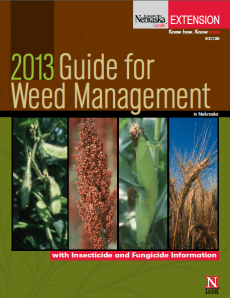
In summary, know which formulation you are working with, apply during the most effective time for your target species and adjust rates accordingly. As always, follow label directions and take the proper safety precautions to protect your health. For more helpful information on which herbicides to apply and when, go to UNL Extension’s Weed Guide.

Uncategorized, Youth

Progressive Ag Safety Day

There is still time to sign up for Ag Safety Day which will be held May 30, 2013 with registration starting at 8:30 a.m. and wrapping up at 1:30 p.m. Area 2nd through 6th graders are invited to attend Progressive Agriculture Safety Day on Thursday, May 30, 2013 at the Fillmore County Fairgrounds.  Youth will participate in a variety of events designed to help them be aware of safety in potentially hazardous hazardous situations such as fires, agricultural settings, the internet and others.  Cost is $5 which includes a t-shirt, lunch, snack and goodie bag.GroupPicWeb

According to the Progressive Agriculture Foundation; statistics are sobering. Even more tragic is that these incidents could have been prevented if simple safety precautions had been followed. That’s why the Progressive Agriculture Foundation is on a crusade for farm safety and health. Their website reminds others that at the heart of this effort is the Progressive Agriculture Safety Day® program, formerly known as the Progressive Farmer Farm Safety Day Camp® program.  Founded by The Progressive Farmer magazine in 1995, the program trains and provides the resources that local communities need to conduct one-day safety programs that are age-appropriate, hands-on, fun, and safe for children. The mission of the Progressive Agriculture Safety Days® is simple – to provide education and training to make farm and ranch life safer and healthier for children and their communities.situations such as fires, agricultural settings, the internet and others.

weather
In 2012, KOLN-KGIN meteorologist, Tony DeGrand came and explained severe weather and the proper precautions to take when in warnings.

Since I have been in Fillmore County, we’ve had an Ag Safety Day every year, with 2013 being the eighth program. On average, seventy elementary and middle school youth participate with another 25-30 high school youth, mostly FFA members assisting and another 25-30 adults assisting in some capacity. Each year, I even learn more from the presenters’ topics and highly encourage you to have your child attend – you never know when just one piece of information could save a life!

This year’s topics include: Fun in the Sun, Kids Get Arthritis Too, Internet Safety, Simulated Smoke House, Look Alikes – Yikes, Spot the Top, Grain Safety, Dig This, AgVentures in Ag and Helpful Hands. This event is hosted by UNL Extension in Fillmore County, Shickley and Fillmore Central FFA chapters, 4-H and W.I.F.E. For more info or to register, call 402-759-3712 or email brandy.vandewalle@unl.edu.

Crops

Spill Prevention Control & Countermeasure (SPCC Plan)

This past week, I’ve received several questions on the “fuel storage” issue which would affect farmers, so this week I turned to my Extension colleague, Dewey Lienemann who wrote an excellent summary of what this all means. I’ve taken some excerpts from his column and hope this helps answer questions.

In 2009, EPA finalized regulations that will require any farm or ranch with above-ground oil storage capacity of greater than 1,320 gallons to have a Spill Prevention Control and Countermeasure (SPCC) plan in place if there is a reasonable expectation a spill would reach waters of the U.S. These Tier I facilities under the current regulations must create a self-certified SPCC plan and have secondary containment available in case of a spill. For farms and ranches with more than 10,000 gallons of such capacity, the Tier II plans must be certified by a professional engineer. Compliance with this regulation could run into the thousands of dollars. Forcing farmers and ranchers to comply with the SPCC rule is an over-burdensome solution in desperate search of a problem that simply does not exist.

SPCC regulations are over thirty years old and were originally intended for the petroleum industry, although EPA contends that agriculture has never been exempt. In 2011, the EPA provided a two-year compliance delay for farmers and ranchers which ends on May 10th of 2013. However, that delay was only for farms established after 2002. Finally, an enforcement delay for the rest of the fiscal year was passed by Congress as part of the 2013 Continuing Resolution to fund the federal government, preventing the EPA from enforcing the rule on farms and ranches until October 1, 2013.

If you do not like this law, it is important farmers and ranchers contact their Senators and Congressmen on the “Farmers Undertake Environmental Land Stewardship Act” (FUELS Act). The bill has been introduced in both the House of Representatives (H.R. 311) as well as the Senate (S. 496). It is time that producers express what they think on this issue.

The FUELS Act raises the Tier I threshold from 1,320-10,000 gallons up to 10,000-42,000 gallons. This move would prevent many farms and ranches from having to comply with this complicated regulation. The FUELS Act would also raise Tier II up from any amount above 10,000 gallons to any amount above 42,000 gallons. While these changes will not completely exempt all farms and ranches, this compromise is a strong step in the right direction.

Finally, Dewey summarized his column with some key points. Tell your senators that you are a good steward of land and water and depend on both. Most importantly bring to them stories of how this will affect or impact your farm or ranch and even your livelihood. Don’t just expect other people to do this and then wonder why nothing happens. Whatever you do, take a moment to write a letter, email, or simply call your Congressman. It could save you a lot of grief and expense!

Uncategorized

Compaction at Planting & Other Educational Resources

As I write this, the ground is wet and there are chances of precipitation. While the moisture is very welcomed, producers might be antsy about the timing, as they try to get in the field. Much research reminds producers that plant roots in compacted, wet soil cannot grow properly and are even more vulnerable to disease.  Paul Jasa, UNL Extension Engineer wrote an excellent article on CropWatch in 2010 that sidewall compaction during planting can be a problem, especially if the crop is “mudded in” and a dry spell occurs after planting.

Jasa goes on to explain other factors other than wet soils that can contribute to sidewall compaction. Planting too shallow can be a problem; in most conditions corn seed should be planted 2-3 inches deep for proper root development. One also should check their seed-vee closers; a variety of attachments are available to help close the seed-vee if the standard closing devices cannot. He provides specific details and types of attachments that you might consider. For more information, go to the archived CropWatch article. Finally another cause for sidewall compaction is lack of soil structure in some tilled fields.

Other Opportunities

In addition to subscribing to UNL Extension’s CropWatch electronic newsletter to remain current on research and recommendations to improve your profitability, there is still room for producers who would like to participate in the Nebraska On-Farm Research Network. Protocols can be found on the CropWatch website. Finally, if you haven’t already planned your irrigation management program for the season, I would encourage you to participate in the Nebraska Agricultural Water Management Network which I’ve worked with for the past 7 ½ years.

A couple of the tools we use are ETgages® or Atmometers which mimic crop evapotranspiration or ET and Watermark soil matrix sensors which measure soil matric potential or the energy required to remove water from the soil. These two tools have really worked well and have made irrigation management much easier than those gut feelings.  The more information you have the better decisions you can make!

If you would like to participate in this dynamic program, let me know and I’d be happy to help and get you started! If you are in the NAWMN, consider installing your ETgage soon and once done with planting, start the soaking/drying cycle on your Watermark sensors to be sure they work! It’s also important to replace the #54 alfalfa canvas covers and wafers on a regular basis at the start of each season. For more information, go to UNL Extension’s Water Website.