Uncategorized

DriftWatch

Last week I wrote about the amine and ester 2,4-D formulations and that the ester formulation of 2,4-D have higher vapor pressures and tend to volatilize more than amines, therefore one should use an amine formulation when volatilization is a concern with sensitive plants. This week, I received an email about the DriftWatch program so I’ve included a recent press release from Tim Creger with the Nebraska Department of Agriculture below.

The Nebraska Department of Agriculture’s Pesticide Program would like to remind outdoor pesticide applicators – especially those applying volatile herbicides such as 2,4-D and dicamba – to be mindful of the increasing number of commercially-grown sensitive crops in our agricultural landscape.  Applicators are reminded to read and follow the label directions, including any timing, temperature, and wind speed restrictions.  In addition, please utilize DriftWatch™ to locate commercially-grown sensitive crops in your spray area, and adjust your application accordingly.  Sensitive crops include orchards, vineyards, fruits and vegetables, organic crops, nurseries, and tree crops.

DriftWatch™ is a voluntary service; however, new commercial crop locations are added frequently.  Applicators can register their business area in DriftWatch™, which then allows them to receive e-mail notifications when sensitive crops are added to their spray area.

All outdoor applicators should benefit from this service, including those making pesticide applications to roadsides, lawns and other turf sites, and agricultural fields. For more information about DriftWatch, go to the NDA’s website or call the NDA at (402) 471-6851.

Crops, Horticulture

2,4-D Amine vs. Ester Formulations

The other day I got a question from a client regarding the different formulations of 2,4-D, a very common herbicide used widely by gardeners and farmers. I found a great fact sheet from Purdue University which described the differences and is summarized below. It starts out by saying that the amine and ester of 2,4-D are both formulations of one of the oldest and widely used herbicide families, as they were developed in the mid-1940’s by the military for vegetation control. It works as a growth regulator herbicide which induces unorganized growth in the plant which can therefore crush the vascular system of the plant, blocking it off from nutrients, sugar and water.

Used to control annual, biennial, and perennial broadleaf weeds, 2,4-D has little effect on grasses, thus making it the most popular herbicide used in lawns. While it is effective if applied at the correct time, drift can easily occur in non-targeted broadleaf plants due to the result of 2,4-D volatility, its ability to turn into a vapor and move off site. This is how the amine and ester formulations can differ.

Purdue’s publication goes on to summarize that the ester formulation of 2,4-D have higher vapor pressures and tend to volatilize more than amines, therefore one should use an amine formulation when volatilization is a concern with sensitive plants. I always caution people who use 2,4-D that volatility increases in hot, dry weather. When temperatures are above 85 degrees F, only the amine formulations should be used. Ester formulation is more effective at penetrating the leaf cuticle, so amine use rates are usually higher than ester rates to compensate for reduced absorption.

WeedGuide

One weed I’ve been receiving several questions on is the purple flower growing in lawns – most likely henbit. It definitely flourished with last year’s drought, but for best control, apply a broadleaf herbicide in the fall. To achieve 90% control of henbit, apply a post emergent herbicide such as Trimec when in the early growth stage. There are several formulations of Trimec which uses 2,4-D as an active ingredient.

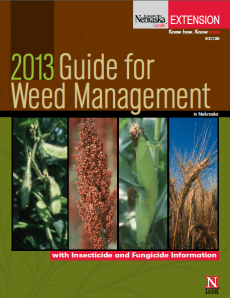
In summary, know which formulation you are working with, apply during the most effective time for your target species and adjust rates accordingly. As always, follow label directions and take the proper safety precautions to protect your health. For more helpful information on which herbicides to apply and when, go to UNL Extension’s Weed Guide.

Uncategorized, Youth

Progressive Ag Safety Day

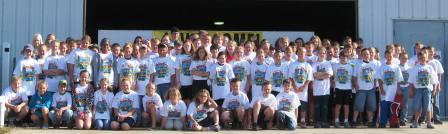
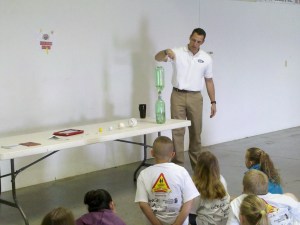
There is still time to sign up for Ag Safety Day which will be held May 30, 2013 with registration starting at 8:30 a.m. and wrapping up at 1:30 p.m. Area 2nd through 6th graders are invited to attend Progressive Agriculture Safety Day on Thursday, May 30, 2013 at the Fillmore County Fairgrounds.  Youth will participate in a variety of events designed to help them be aware of safety in potentially hazardous hazardous situations such as fires, agricultural settings, the internet and others.  Cost is $5 which includes a t-shirt, lunch, snack and goodie bag.GroupPicWeb

According to the Progressive Agriculture Foundation; statistics are sobering. Even more tragic is that these incidents could have been prevented if simple safety precautions had been followed. That’s why the Progressive Agriculture Foundation is on a crusade for farm safety and health. Their website reminds others that at the heart of this effort is the Progressive Agriculture Safety Day® program, formerly known as the Progressive Farmer Farm Safety Day Camp® program.  Founded by The Progressive Farmer magazine in 1995, the program trains and provides the resources that local communities need to conduct one-day safety programs that are age-appropriate, hands-on, fun, and safe for children. The mission of the Progressive Agriculture Safety Days® is simple – to provide education and training to make farm and ranch life safer and healthier for children and their communities.situations such as fires, agricultural settings, the internet and others.

weather
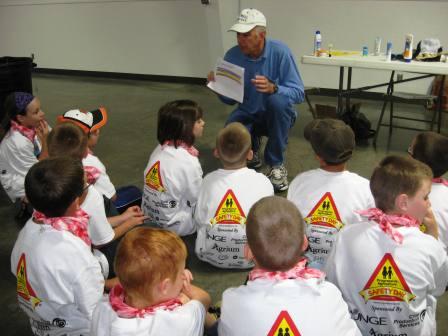
In 2012, KOLN-KGIN meteorologist, Tony DeGrand came and explained severe weather and the proper precautions to take when in warnings.

Since I have been in Fillmore County, we’ve had an Ag Safety Day every year, with 2013 being the eighth program. On average, seventy elementary and middle school youth participate with another 25-30 high school youth, mostly FFA members assisting and another 25-30 adults assisting in some capacity. Each year, I even learn more from the presenters’ topics and highly encourage you to have your child attend – you never know when just one piece of information could save a life!

This year’s topics include: Fun in the Sun, Kids Get Arthritis Too, Internet Safety, Simulated Smoke House, Look Alikes – Yikes, Spot the Top, Grain Safety, Dig This, AgVentures in Ag and Helpful Hands. This event is hosted by UNL Extension in Fillmore County, Shickley and Fillmore Central FFA chapters, 4-H and W.I.F.E. For more info or to register, call 402-759-3712 or email brandy.vandewalle@unl.edu.

Crops

Spill Prevention Control & Countermeasure (SPCC Plan)

This past week, I’ve received several questions on the “fuel storage” issue which would affect farmers, so this week I turned to my Extension colleague, Dewey Lienemann who wrote an excellent summary of what this all means. I’ve taken some excerpts from his column and hope this helps answer questions.

In 2009, EPA finalized regulations that will require any farm or ranch with above-ground oil storage capacity of greater than 1,320 gallons to have a Spill Prevention Control and Countermeasure (SPCC) plan in place if there is a reasonable expectation a spill would reach waters of the U.S. These Tier I facilities under the current regulations must create a self-certified SPCC plan and have secondary containment available in case of a spill. For farms and ranches with more than 10,000 gallons of such capacity, the Tier II plans must be certified by a professional engineer. Compliance with this regulation could run into the thousands of dollars. Forcing farmers and ranchers to comply with the SPCC rule is an over-burdensome solution in desperate search of a problem that simply does not exist.

SPCC regulations are over thirty years old and were originally intended for the petroleum industry, although EPA contends that agriculture has never been exempt. In 2011, the EPA provided a two-year compliance delay for farmers and ranchers which ends on May 10th of 2013. However, that delay was only for farms established after 2002. Finally, an enforcement delay for the rest of the fiscal year was passed by Congress as part of the 2013 Continuing Resolution to fund the federal government, preventing the EPA from enforcing the rule on farms and ranches until October 1, 2013.

If you do not like this law, it is important farmers and ranchers contact their Senators and Congressmen on the “Farmers Undertake Environmental Land Stewardship Act” (FUELS Act). The bill has been introduced in both the House of Representatives (H.R. 311) as well as the Senate (S. 496). It is time that producers express what they think on this issue.

The FUELS Act raises the Tier I threshold from 1,320-10,000 gallons up to 10,000-42,000 gallons. This move would prevent many farms and ranches from having to comply with this complicated regulation. The FUELS Act would also raise Tier II up from any amount above 10,000 gallons to any amount above 42,000 gallons. While these changes will not completely exempt all farms and ranches, this compromise is a strong step in the right direction.

Finally, Dewey summarized his column with some key points. Tell your senators that you are a good steward of land and water and depend on both. Most importantly bring to them stories of how this will affect or impact your farm or ranch and even your livelihood. Don’t just expect other people to do this and then wonder why nothing happens. Whatever you do, take a moment to write a letter, email, or simply call your Congressman. It could save you a lot of grief and expense!

Uncategorized

Compaction at Planting & Other Educational Resources

As I write this, the ground is wet and there are chances of precipitation. While the moisture is very welcomed, producers might be antsy about the timing, as they try to get in the field. Much research reminds producers that plant roots in compacted, wet soil cannot grow properly and are even more vulnerable to disease.  Paul Jasa, UNL Extension Engineer wrote an excellent article on CropWatch in 2010 that sidewall compaction during planting can be a problem, especially if the crop is “mudded in” and a dry spell occurs after planting.

Jasa goes on to explain other factors other than wet soils that can contribute to sidewall compaction. Planting too shallow can be a problem; in most conditions corn seed should be planted 2-3 inches deep for proper root development. One also should check their seed-vee closers; a variety of attachments are available to help close the seed-vee if the standard closing devices cannot. He provides specific details and types of attachments that you might consider. For more information, go to the archived CropWatch article. Finally another cause for sidewall compaction is lack of soil structure in some tilled fields.

Other Opportunities

In addition to subscribing to UNL Extension’s CropWatch electronic newsletter to remain current on research and recommendations to improve your profitability, there is still room for producers who would like to participate in the Nebraska On-Farm Research Network. Protocols can be found on the CropWatch website. Finally, if you haven’t already planned your irrigation management program for the season, I would encourage you to participate in the Nebraska Agricultural Water Management Network which I’ve worked with for the past 7 ½ years.

A couple of the tools we use are ETgages® or Atmometers which mimic crop evapotranspiration or ET and Watermark soil matrix sensors which measure soil matric potential or the energy required to remove water from the soil. These two tools have really worked well and have made irrigation management much easier than those gut feelings.  The more information you have the better decisions you can make!

If you would like to participate in this dynamic program, let me know and I’d be happy to help and get you started! If you are in the NAWMN, consider installing your ETgage soon and once done with planting, start the soaking/drying cycle on your Watermark sensors to be sure they work! It’s also important to replace the #54 alfalfa canvas covers and wafers on a regular basis at the start of each season. For more information, go to UNL Extension’s Water Website.


Programming

Leadership Education/Action Development

Several years ago I met twenty-nine talented individuals with a passion of agriculture through the Nebraska LEAD program. To date, I remain friends with many of them and the networking opportunities have been tremendous. The in-state seminars challenged me to think outside of the box and remain an advocate for agriculture. I could go on and on about the excellent opportunities the LEAD program has provided, but I challenge you to experience it yourself! The Nebraska LEAD program is accepting applications for LEAD Group 33.

My LEAD group XXVII went to China, South Korea and Hong Kong for our International Study Travel Seminar.

Terry Hejny, director of the Nebraska LEAD program announced that “Up to 30 motivated men and women with demonstrated leadership potential will be selected from five geographic districts across our state. Fellowship applications for Nebraska LEAD (Leadership Education/Action Development) Group 33 are available for men and women involved in production agriculture or agribusiness.

In addition to monthly three-day seminars throughout Nebraska from mid-September through early April each year, Nebraska LEAD Fellows also participate in a 10-day National Study/Travel Seminar and a two week International Study/Travel Seminar.

Seminar themes include leadership assessment and potential, natural resources and energy, agricultural policy, leadership through communication, our political process, global perspectives, nuclear energy, social issues, understanding and developing leadership skills, agribusiness and marketing, advances in health care and the resources and people of Nebraska’s Panhandle, Hejny said.

The Nebraska LEAD Program is designed to prepare the spokespersons, problem-solvers and decision makers for Nebraska and its agricultural industry.

In its 32nd year, the program is operated by the Nebraska Agricultural Leadership Council, a nonprofit organization, in collaboration with the University of Nebraska’s Institute of Agriculture and Natural Resources and in cooperation with Nebraska colleges and universities, business and industry, and individuals throughout the state.

Applications are due no later than June 15 and are available via e-mail from the Nebraska LEAD Program. Please contact Shana at sgerdes2@unl.edu.  You can also request an application by writing Room 318 Biochemistry Hall, University of Nebraska-Lincoln, 68583-0763 or by calling 402-472-6810. You can visit the LEAD website for information about the selection process.

Nebraska LEAD Program offices are in the Institute of Agriculture and Natural Resources at the University of Nebraska-Lincoln.

 Source: Terry Hejny, Ph.D., director, Nebraska LEAD Program

Crops

Cash Rental Rates

Each year in March, the UNL Extension Land Value and Cash Rental Rate publication is printed. Many people use this publication which is helpful in getting rental rate discussions started, but should be used as such – a guideline and place to start. I caution all clients who want a magic number that for some, the number reported for our district might be high and for others might be low.  Ultimately it is best for both parties to discuss their own situation.

That being said, in a recent report by Bruce Johnson, UNL ag economist who publishes the survey, he reported the following for a brief summary.  Despite an extreme drought and indicators of weaker agricultural earnings on the horizon, Nebraska’s agricultural land markets remain strong, with an overall increase of 25 percent in the last year. Following the advances of 22 and 32 percent in the previous two years, the 2013 all-land value of $3,040 per acre is more than double the value in early 2010. Survey reporters across the state reported percentage gains for all the farmland classes for the period from Feb. 1, 2012 to Feb. 1, 2013, but “the variation across the classes as well as across sub-state regions was extreme,” Johnson said. Drought conditions in 2012 lifted market demand for irrigated cropland, as irrigated land classes had the largest percentage value gains across the state. In the southern parts of Nebraska (Southwest, South, and Southeast districts) the percentage value advances for irrigated land were particularly strong over the past year.

Johnson went on to explain that survey reporters “frequently commented that current land prices being paid seem over-optimistic.” When asked what they expected land value movements to be for the remainder of 2013 as well as out three to five years, the vast majority of reporters saw a market which had topped out with little if any upward movement in the near future. In fact, a sizable number of reporters thought values could weaken somewhat in the next few years. Johnson points out that, “At some point, the implied economic returns to land as a percent of value can fall to a point where market participants say ‘enough’ and no longer bid values higher.”

The findings in this report are preliminary. A final report will be released this summer.   More information, including tables showing details of average land values for all classes of land. Click on the March 21 Cornhusker Economics.

(Source: Bruce Johnson, Ph.D. & Dan Mosier, Ed Media)

Programming, Youth

Tractor Safety Courses Offered

University of Nebraska-Lincoln Extension Tractor Safety/Hazardous Occupations Courses will be offered at seven locations in Nebraska during May and June.  Any 14 or 15-year-old teen who plans to work on a farm other than their parents’ should plan to attend.  Federal law prohibits youth under 16 years of age from working on a farm for anyone other than their parents.   Certification through the course grants an exemption to the law allowing 14- and 15-year-olds to drive a tractor and to do field work with mechanized equipment.

Harvest

The most common cause of death in agriculture accidents in Nebraska is overturn from tractors and all-terrain-vehicles (ATVs), said Sharry Nielsen, UNL Extension Educator. Tractor and ATV overturn prevention are featured in the class work.  “Instilling an attitude of ‘safety first’ is a primary goal of the course,” Nielsen said. “Where youth have the chance to learn respect for agricultural jobs and the tools involved.”

Classes consist of two days of instruction plus homework assignments. Classes closest to us are from 8 a.m. – 5 p.m. each day. Dates and locations include:

— May 23-24, Fairgrounds, Kearney
— June 10-11, Fairgrounds, Osceola
— June 17-18, College Park, Grand Island

Pre-registration is strongly encouraged at least one week before a location’s start date to the Extension Office at the course site. Cost is $60, which includes educational materials, testing, supplies, lunches and breaks. For more information, contact the Extension Office or Sharry Nielsen at (308) 832-0645, snielsen1@unl.edu.

The first day of class will consist of intensive classroom instruction with hands-on demonstrations, concluding with a written test that must be completed satisfactorily before students may continue driving tests the next day. Classroom instruction will cover the required elements of the National Safe Tractor and Machinery Operation Program. Homework will be assigned to turn in the next day.

The second day will include testing, driving and operating machinery. Students must demonstrate competence in hitching equipment and driving a tractor and trailer through a standardized course as well as hitching PTO and hydraulic systems.

Crops, Youth

Youth Discover Crop Science

Are you interested in science, agriculture, plants, crops, insects, or diseases? If so, join our team of detectives to solve crop-related problems in the Crop Science Investigation (CSI) Big Red Camp! Become a detective while participating in hands-on sessions to learn about and increase your knowledge of crops, science, and agricultural careers. Youth detectives will interact with agronomic professionals across Nebraska to solve experiments in: nutrient management; managing disease, insect and weed problems; water management; crop production, and much more! Do you have what it takes to become a CSI detective?

Logo

There are a variety of careers related to plant sciences such as: Agricultural Communicator; Agronomist; Crop Consultant; Crop Insurance Adjuster; Educator; Co-op Manager; Farmer or Rancher; Farm Credit Banker; Field or Lab Researcher; Plant Breeder; Soil or Water Conservationist; Seed, Fertilizer, or Chemical Sales; or Technical Representative.

Scholarships are available in the amount of $300 to participants who enroll in the Crop Science focus area and submit the following:

  • A short (< 300 words) essay that highlights past crop or plant science related experience and/or interest in pursuing a degree in agronomy or plant-science related areas.
  • A brief essay (< 100 words) on the topic, “What do I hope to learn in the Crop Science Investigation camp?” application can be found at bigredcamps.unl.edu.

To apply for a scholarship, complete the 2013 Big Red Summer Academic Camp Scholarship Application and submit it along with your completed registration materials and a check for the full registration fee, postmarked by April 1, 2013. Winners will be notified by April 19 and will receive a refund when they arrive at camp this summer. Scholarships are for camp registration fees only and do not cover the cost of transportation or other expenses.

Last year, seven youth participated in the camp and one participant said, “It (the camp) let me see all of what an agronomy career is made up of.” All youth said they would recommend this camp to their friends. As I write this, there are several spots already taken, so be sure and get your registration form in soon to ensure a spot at this year’s camp.

To register or download a camp brochure, visit the Big Red Camps site. If you have questions about the camp or the required essays, please feel free to contact Brandy VanDeWalle at brandy.vandewalle@unl.edu or 402-759-3712.

Programming

Keeping Your Farm in the Family for the Next Generation

The final Farmers & Ranchers College program for the 2012-13 programming year will be held on March 14, 2013 starting at 6:00 p.m. with a meal and the program to follow. It will be held at Evening with Friends Restaurant in Milligan and will feature Dr. Ron Hanson, Neal E. Harlan Professor of Agribusiness, Ag Economics Dept., UNL. A description of Hanson’s program is provided below.Logo

The entire process for mapping out a succession plan to transfer the eventual ownership of a family farm from one generation (parents) to the next generation (their adult children) can be an overwhelming task for many families.  Where does this process even begin?  Who makes the final decisions?  Can you be fair to everyone involved?  What if there is not good communications within the family?  How do you keep emotions and personal jealousies from taking over and preventing good decision making?  These are the issues that confront any farm family in determining a succession plan which allows for this successful transfer of farm ownership.

Most farm families would agree that a succession plan needs to be implemented and that any “what if family issues” need to be discussed and eventually resolved.  But this seldom ever happens.  Often farm families never can get past the “family obstacles and personal fears” that can actually become road blocks which prevent a succession plan from being put in place to protect the family farm and to insure that their family farming legacy continues to the next generation.   These obstacles and fears will be identified and discussed with potential solutions so that farm families can move forward in their succession planning process.

This presentation will outline the necessary steps to implement as well as achieve a successful succession plan that hopefully avoids potential misunderstandings between various family members. This lack of clarity and failure to explain specifics by parents when communicating their wishes to their children is often a frequent cause of family conflict/disputes.  Ideas will be shared to work through these emotional and stressful issues in a positive manner.  Parents must embrace a vision for passing on their farm that is shared by all family members involved for this succession process to achieve a successful transition of ownership to their adult children and to insure the next generation of young farm producers.

The Farmers & Ranchers College was formed in January, 2000 with the purpose of providing high quality, dynamic, up to date educational workshops for area agricultural producers in south central Nebraska through a collaborative effort between business, industry and higher education leaders.  The Farmers and Ranchers College Committee consists of Fred Bruning of Bruning, Bryan Dohrman of Grafton, Sarah Miller of Carleton, Eric Milton of Milligan, Jim Donovan of Geneva, Bryce Kassik of Geneva, Gordy Nuss of Sutton, and Brandy VanDeWalle of Ohiowa.

For more information on the various Farmers & Ranchers College programs, please go to the Fillmore Co. Extension website  or call the Fillmore County Extension office at (402) 759-3712.