Crops, Irrigation, Youth

Tree Health & Other Updates

Crop ET Weekly Report

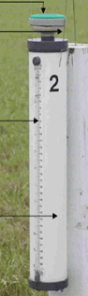
The ETgage I check outside of Geneva changed 1.7 inches for the week of June 16-22nd.   Corn at V-10 would have used 1.23”/week or .18” per day and corn at V-12 used 1.5”/week or .21 inches/day. We were fortunate to receive .80” of rainfall. There have been some producers who use watermark sensors concerned they aren’t working or getting a good enough seal. If that is the case, get another one to place next to the one in question, but remember for most pivot systems in our county, waiting until the sensors average 90-100 for readings is the trigger point.  

 Tree Health

In Nebraska, trees can have a tough time staying healthy. Drought, storm damage, insects and diseases often damage and shorten the life of valuable shade trees. Along with natural stressors, there is man-made damage that can be avoided. Most common is lawn mower and weed trimmer damage to tree trunks. Trees add so much economic and environmental value to our landscapes that care should be taken to prevent trunk damage. It’s easy to do. Just don’t hit trees when mowing the lawn. To prevent this, and improve tree health, remove sod from around a tree trunk and replace it with organic mulch. This will eliminate the need to trim grass around tree trunks. If this is not desirable in a landscape, then hand trim the grass around trees instead of mowing close to the trunk or using a weed trimmer.  Reducing this man-made stress will greatly improve the vigor and life span of valuable trees vigor.

(Source: Kelly Feehan, UNL Extension , 2012)

 Fillmore County 4-H Pre-Fair Events

The Fillmore County Fair is quickly approaching. While county fair is the most visible part of the 4-H program, don’t forget that some 4-H’ers have been hard at work participating in multiple workshops, other contests and practicing community service and leadership projects.

Come and support 4-H’ers with some pre-fair activities  as listed below:
July 10th – Fillmore Co. 4-H Clothing Day, 8:30 a.m. – Ag Hall
July11th – Fillmore Co. 4-H Small Animal Pet Show, 9 a.m. – Ag Hall
July 11th – 4-H Dog Skillathon, following pet show – Ag Hall
July 11th – Horticulture Contest, 1 p.m. – Ag Hall
July 12th – Public Style Review & Talent Show, 7 p.m. – Rialto Theater, Geneva
July 11th – Fair Clean-Up Day, 9 a.m. – Fillmore Co. Fairgrounds
July 14-19th –Fillmore County Fair!
Crops, Programming

Crop Update

Crop ET Weekly Report

The ETgage I check outside of Geneva changed 2.0 inches for the week of June 9-15th. Corn in the V-8 stage has a coefficient of .51”. To calculate how much water, corn at V-8 stage used you simply multiply .51” x 2.0” for a weekly use of 1.02” or .15 inches/day. Corn at V-10 would have used 1.38”/week or .20” per day. We were very fortunate to receive rainfall. The field south of Geneva received 2.3 inches of rain as I write this; at my house we received 3.4 inches.

I did not estimate the crop use for soybeans, since for our area; we typically don’t recommend irrigating them until they reach R3 stage.  Watering too early causes taller beans that use more water but don’t yield more, so it’s important to hold off and apply it when it is need!

 Potential Corn Issues

            Recently in the area there has been the diagnosis of rootless corn syndrome and Goss’s wilt. In short, with the hot, dry and windy weather earlier in the season than normal, some corn was unable to develop its roots as normal and at risk for lodging. Tom Hoegemeyer, Professor of Practice, Department of Agronomy explains this problem along with management strategies on cropwatch.unl.edu.

            The UNL Plant and Pest Diagnostic Clinic has received several samples from south central and eastern Nebraska which tested positive for the leaf blight phase of Goss’s bacterial wilt and blight. This early occurrence could have a severe impact on susceptible hybrids, but one needs to be scouting for it, especially in fields where hail damage has occurred, susceptible hybrids and fields with a history of the disease. Once again, if you think you have it, be sure to bring samples to the office so we can send them to the lab for a positive confirmation. More details can be found on cropwatch.unl.edu.

 Weed Resistance Management Field Day 2012

            Those interested in weed resistance management should attend the 2012 Weed Resistance Management Field Day. This program will be offered in two locations:

  • Big Springs on Wednesday, July 11th
  • David City on Thursday, July 12th

This program will include University and Industry presentations describing herbicide resistance and delivering a unified message about the need for integrated weed management programs to delay the evolution and/or spread of herbicide resistant weeds. Specific topics include glyphosate-resistant kochia at Brule and glyphosate-resistant giant ragweed at David City. The event will be concluded with a talk on how glyphosate-resistant weeds have changed agriculture in the southern US.

There is no cost to attend the Field Day and a complimentary meal will be served for those who have pre-registered. Participants are invited to register by Friday, July 6th so appropriate plans can be made for meals, teaching resources and tour logistics.  This program is sponsored by the Nebraska Soybean Board.

Crops, Horticulture, Irrigation

Crop ET Weekly Report

The ETgage I check outside of Geneva changed 2.1 inches for the week of June 1-8th. Corn in the V-6 stage has a coefficient of .36”. To calculate how much water, corn at V-6 stage used you simply multiply .36” x 2.1” for a weekly use of .75” or .11 inches/day. Corn at V-8 would have used 1.07”/week or .15” per day.

I did not estimate the crop use for soybeans, since for our area; we typically don’t recommend irrigating them until they reach R3 stage.  Watering too early causes taller beans that use more water but don’t yield more, so it’s important to hold off and apply it when it is need! For more information about ETgages and Watermark sensors, check out the NAWMN website.  

 Alfalfa Update

I’ve been wondering how alfalfa fields are holding up with the lack of moisture we’ve received and noticing alfalfa blooming already without a lot of growth. Just in time, Bruce Anderson, UNL Forage Specialist sent his news article answering some of my questions with the following information.

If you grow dryland hay you probably are hoping and praying for rain.  Let’s talk about this year’s hay crop and moisture in a moment.  Bruce reports he’s heard a lot lately about folks cutting alfalfa once, sometimes twice and then not getting hardly any regrowth.  What does come back isn’t very vigorous but it starts blooming in just a few weeks.  What’s going on?

Here’s what Bruce believes happened: it’s a combination of temperatures last winter and spring and moisture.  Winter temperatures were mild, to say the least.  So mild, in fact, that he doesn’t think alfalfa ever went fully dormant.  So all winter long its root system slowly depleted the nutrient reserves it had accumulated during fall winterization.  At the same time, unfrozen soil was slowly drying out.

All this didn’t hurt – at first.  Then the super early warm spring started alfalfa to grow rapidly, which left root reserves at lower than usual levels following first cutting.  That’s why some noticed that regrowth wasn’t as vigorous as expected.

Then he adds the final piece of the puzzle.  Dryland alfalfa fields more than about three years old have extracted most of their available subsoil moisture.  With winter drying out the surface soil, high early season water use to support the first growth, and relatively little spring rain, these fields are becoming exhausted for moisture needed to support growth, which also is needed to replenish nutrient reserves in the roots.  As a result, these fields may struggle to produce much more hay all year, even if they receive average summer precipitation. The take home message Bruce offers is that hay production could be short this year.  Get what you can, while you can.

 Horticultural Updates

Kelly Feehan, UNL Extension horticulturalist reported that if a number of small fruit suddenly drop from healthy fruit trees in June, this is most likely a natural thinning or due to poor pollination. Fruit trees sometimes produce more fruit than the tree can mature. Weather conditions may allow production of more fruit than a tree can support. For example, if late spring frosts that often damage flower buds do not occur, the tree may produce an over-abundance; and a number of tiny fruit may drop in June. This is referred to as natural thinning. Poor pollination can result in fruit drop. If a flower is not pollinated or only partially pollinated, fruit may develop to a pea sized or slightly larger and then drop. In either case, healthy fruit trees usually retain enough fruit to mature to a good size crop. Natural thinning also prevents fruit trees from going into alternate year bearing, where one year the tree has a heavy crop and the next year there is little or no fruit.

I’ve also received questions about chrysanthemums responding to our early season and unusual weather by already developing flower buds. If it is preferred that mums bloom later in the season, early blooming can be delayed by cutting mums back now. This will not harm Chrysanthemums and it will result in bushier plants with more flowers later this summer. Not only this year, when mums are setting buds early; but in all years it is recommended to pinch mums by removing the top two to three inches of grow one to three times early in the growing season. Pinching needs to stop by late June, or blooming of mums could be delayed too late into the season and increase the risk of frost damage this fall. Mums are pinched by snipping off the top two to three inches of each stem. Use your fingers or a snipping shears. Try to make the cut right above a leaf to eliminate a brown stub forming

Crops, Irrigation

Updates

Crop ET Weekly Report
Today I helped install an ETgage and Watermark Sensors for a couple producers with the assistance of an Intern who will be assisting me with irrigation tasks and working with area producers. Jordan Wachal started in our office after Memorial Day and will be specifically working with producers to help evaluate irrigation system efficiencies and offer any suggestions for improvement. Jordan comes from Schuyler, Nebraska and is working on his Bachelor of Science in Civil Engineering from the University of Nebraska-Lincoln.
The ETgage I check outside of Geneva changed 1.4 inches for the week of May 26-June 1st. Corn in the V-6 stage has a coefficient of .36”. To calculate how much water, corn at V-6 stage used you simply multiply .36” x 1.4” for a weekly use of .49” or .07 inches/day. Corn at or approaching V-8 would have used .71”/week or .10” per day. Producers with Watermark sensors, which monitor the amount of water available in the soil profile should get them installed soon. Watermark sensors are installed early in the growing season at 1’, 2’, 3’ and in some case 4’ depths! For more information about ETgages and Watermark sensors, check out the NAWMN website.

Forecasting Stalk Borer Growth Stage

Bob Wright, Extension Entomologist provided a short update on UNL’s CropWatch website on stalk borer development. Wright estimated stalk borer development indicates that growers from southwest to northeast Nebraska should be making treatment decisions based on field scouting. He pointed out that, based on research at Iowa State University, stalk borer egg hatch begins at about 575 DD and ends at 750 DD. Scouting should begin when 1,300-1400 DD have accumulated. This corresponds with the beginning of larvae moving out of grassy hosts. Determine the need for treatment when 1,400-1,700 DD have accumulated.

As I write this, Fillmore County accumulated a range of 1800-1900 degree days. For more information on stalk borer life cycle and scouting recommendations, see the May 11, 2012 CropWatch article, Timetable for Common Stalk Borer Scouting Moves Up.

Average Crop Revenue Election (ACRE) Production Certifications

Farms that are enrolled in ACRE must provide their 2011 production certification to FSA by July 15, 2012. A benchmark yield must also be established for farms that elected ACRE in 2011, or if this was the first year a certain commodity was planted since the farm elected ACRE in 2009. Establishment of the benchmark yield requires a certification of historic production for the 2006 thru 2010 crop years. Failure to certify 2011 actual production and applicable 2006-2010 benchmark production by July 15, 2012, will result in ineligibility for all 2012 ACRE payments, including the direct payments.

Irrigation

Irrigation Update/Water for Food Conference

Last week, I reflected on the Rural Futures Conference I attended. This week I have my first Crop ET report to publish and found it only fitting to then talk about the Water for Food Conference quickly approaching.

First, the ETgage I have just outside of Geneva changed 1.9 inches for the week of May 11-18th. Producers using the ETgage should remember this doesn’t mean crops used this much water since corn in the V-4 stage has a coefficient of .18”. To calculate how much water, corn at V-4 stage used you simply multiply .18” x 1.9” for a weekly use of .34” or .05 inches/day. Corn approaching V-6 would have used .67”/week or .10” per day. 

As I write this column, later today I will be helping a producer who is new to the Nebraska Ag Water Management Network install his ETgage and Watermark sensors, which are the second tool we use which monitor the amount of water available in the soil profile. Watermark sensors are installed early in the growing season at 1’, 2’, 3’ and in some case 4’ depths!  The sensors are glued to plastic pvc pipe so we can remove them at the end of the season and use them for several years. 

 Just a reminder to producers with sensors, before we install them, they need to be soaked in water, dry for 24 hours, soak and dry them again twice.  Then install the sensors wet; which improves the response time for the sensors.  By installing them early in the season in a representative part of the field, you will have another tool to make irrigation management decisions with! 

For more information about ETgages and Watermark sensors, check out the NAWMN website. 

Global Water for Food Conference

The fourth global Water for Food Conference, May 30-June 1, will bring together international experts to explore how advances in science, technology and policy can help rain fed and irrigated agriculture feed the world. “Blue Water, Green Water and the Future of Agriculture” is the theme of this year’s conference, hosted by the Robert B. Daugherty Water for Food Institute at the University of Nebraska and the Bill & Melinda Gates Foundation, at the Cornhusker Hotel in Lincoln, Neb.

An IANR news release reports that the conference fosters international dialogue on key issues related to the use of water for agriculture and provides opportunities to learn from speakers with extensive experience and perspectives from diverse cultures. Last year’s conference drew more than 450 participants from 24 nations, including representatives from universities, agriculture, industry, government and nongovernmental organizations worldwide. The conference theme focuses on “blue water” drawn from aquifers, rivers and lakes to fuel irrigated agriculture, and “green water” that falls as precipitation and is stored in fields to sustain rain fed crops. To meet the growing global food demand, agriculture will need to find ways to use less water and boost both rain fed and irrigated crop yields.

The Water for Food Conference is the preeminent event of the university’s Robert B. Daugherty Water for Food Institute, a research, policy and education institute established in 2010 and committed to efficiently using the world’s limited freshwater resources to ensure a reliable food supply.

Programming

Rural Futures

Last week, I had the opportunity to attend the Rural Futures Conference (RFC) in Lincoln. This was an excellent conference with cutting edge and interactive presenters and panelists. This conference was the beginning of the creation of a Rural Futures Institute (RFI). IANR Vice Chancellor, Ronnie Green pointed out that the University of Nebraska is committed to creating a transformative institution focused on rural Nebraska, the Great Plains and beyond.

This RFC allowed nearly 500 individuals from 10 different land grant institutions, community economic development professionals, stakeholders and anyone with a passion on rural communities to brainstorm fundamentals of what the RFI will look like. It also helped participants gain an understanding of four core values the RFI should address.

  1. Transdisciplinary work is essential. UNL Extension has already recognized this, but it is important we all practice this more. In other words, it is essential for University professionals to network and brainstorm with others outside of their areas of specialty or department. Speaker, Frans Johansson provided excellent examples of how “diversity drives innovation”. “Intersections” are the best way to create new ideas by linking multidisciplinary ideas together to create an innovative approach to solving a problem.
  2. Innovation and entrepreneurship are crucial. In order for rural communities to remain viable, they must think outside of the box and develop an entrepreneurial and innovative culture.
  3. It is more than economics. In order for rural communities to survive or thrive, basic human services such as health care and education should be present in communities. The RFC fore ward also stated that “an important level of consideration is the civic, cultural, design and artistic elements that attend to aspects of human and community development that can’t be counted and measured, and can’t be justified only with economic returns.” The RFI must build on the legacy and richness of communities.
  4. Deep collaborations are a foundational element. The creation of the Rural Futures Institute must create deep and meaningful partnerships which allows for adequate collaboration.

The thought of forming a Rural Futures Institute and providing resources towards improving rural communities seems daunting, but as one speaker best put it, “small bests can equal big wins”, meaning to start small and build upon those small (often times more manageable) tasks. We also need to improve the messages we convey to others about our communities. Too often, we depreciate our communities’ assets by assuming there is nothing special/unusual about our communities; instead we should be bragging about all the things we appreciate about our communities or rural way of life.

In summary, UNL will be celebrating the 150th year of the Morrill Act (which created land grant universities among others) in September. Stay tuned for more about the Rural Futures Institute as more develops.

Crops

Field Flooding & Its Effects

 Last week’s heavy rains in parts of the county reminded me of an article I read last year about the survivable chances for corn that has been flooded in low-lying areas so I’ve summarized and put some excerpts from an article written by R.L. Bob Nielsen from the Purdue University, Agronomy Department. Obviously, plants that are completely submerged are at higher risk than those that are partially submerged and the longer an area remains ponded, the higher the risk of plant death.

Nielsen reported that most agronomists believe that young corn can survive up to about 4 days of outright ponding if temperatures are relatively cool (mid-60’s F or cooler); fewer days if temperatures are warm (mid-70’s F or warmer). As I write this, today’s high is expected to be 83 degrees and tomorrow at 90 degrees, so this isn’t necessarily good news for those corn plants in standing water. Soil oxygen is depleted within about 48 hours of soil saturation. Without oxygen, the plants cannot perform critical life sustaining functions; e.g. nutrient and water uptake is impaired and root growth is inhibited.

Even if surface water subsides quickly, the likelihood of dense surface crusts forming as the soil dries increases the risk of emergence failure for recently planted crops. Young corn (less than at the V6 stage, like our current conditions) is more susceptible to ponding damage than corn beyond the sixth leaf stage. This is because young plants are more easily submerged than older and taller plants and since the corn plant’s growing point remains below ground until about V6. The health of the growing point can be assessed initially by splitting stalks and visually examining the lower portion of the stem. Within 3 to 5 days after water drains from the ponded area, look for the appearance of fresh leaves from the whorls of the plants.

Another consideration is that extended periods of saturated soils AFTER the surface water subsides can also take their toll on the overall vigor of the crop, causing stunted roots and dying roots. As a result, plants may be subject to greater injury during a subsequently dry summer due to their restricted root systems.

Loss of nutrients is another concern on saturated soils. Significant loss of soil N will cause nitrogen deficiencies and possible additional yield loss. Lengthy periods of wet soil conditions also favor the development of seedling blight diseases, especially those caused by Pythium fungi. Poorly drained areas of fields are most at risk for the development of these diseases and will also be risky for potential replant operations. There are other diseases that can affect flooded areas of corn as well, but for now, it’s kind of a wait and see until you can get into the field and assess the health of the growing point.

More information can be found from the Effects of Flooding or Ponding on Young Corn article by R.L. Nielsen.

Crops, Irrigation

Crops Update & NRD Partnerships

As I drive across the area, I’ve noticed that corn is emerged and planting appears to be going well for producers. As I write this a thunderstorm is brewing so hopefully we’ll continue to receive adequate moisture and you won’t have to irrigate much this year, but I’d like you to consider joining a program that can not only improve your irrigation efficiency, reduce nutrient loss and save you money! I’ve been in Extension for nearly six years and a program I’ve been involved with that has been a very rewarding program and made a positive impact for many is the Nebraska Agricultural Water Management Network, or NAWMN.

My colleague, Gary Zoubek tracks the evaluation results and shared that in 2005 only a few producers in the Upper Big Blue NRD, (shortly followed by the Little Blue NRD) were participating, but this program has now grown to over 700 producers across the state and I’m sure we’ll add another 100 or 200 more this season! A couple of the tools we use are ETgages® or Atmometers which mimic crop evapotranspiration or ET and Watermark soil matrix sensors which measure soil matric potential or the energy required to remove water from the soil. These two tools have really worked well and have made irrigation management much easier than those gut feelings. The more information you have the better decisions you can make!

 If you would like to participate in this dynamic program, let me know and I’d be happy to help and get you started! If you are in the NAWMN, consider installing your ETgage soon and once done with planting, start the soaking/drying cycle on your Watermark sensors to be sure they work! It’s also important to replace the #54 alfalfa canvas covers and wafers on a regular basis at the start of each season. For more information, check out our website.

Natural Resource Districts Celebrate 40 years!
Speaking of Extension collaborating with NRDs, did you know that according to NRD staff, 2012 marks the 40th Anniversary of Nebraska’s unique Natural Resources District system. NRDs are local government entities with broad responsibilities to protect our natural resources. Major Nebraska river basins form the boundaries of the 23 NRDs, enabling districts to respond best to local conservation and resource management needs. NRDs rely on locally-elected conservation board members who have the ability, the heart, and the motivation to care for our natural resources.

According to Alyssa Smola, NARD, Nebraska’s natural resources districts protect lives, property and the future of Nebraska’s natural resources through a variety of projects, programs and partnerships. Projects and programs range from flood control structures, cost-share funding, tree plantings, and water quality and quantity management. Many of these would not be possible without strong partnerships with other organizations; partnerships that provide opportunities for land owners and provide protection and conservation of Nebraska’s natural resources.

Programming, Youth

UNL Extension Tractor Safety Courses

 University of Nebraska-Lincoln Extension Tractor Safety/Hazardous Occupations Courses will be offered at seven locations in Nebraska during May and June.

Federal law prohibits youth under 16 years of age from working on a farm other than their parents’. Certification through the course grants an exemption to the law allowing 14- and 15-year-olds to drive a tractor and to do field work with mechanized equipment. The most common cause of death in agriculture accidents in Nebraska is overturn from tractors and all-terrain-vehicles (ATV), said Sharry Nielsen, UNL Extension Educator and course instructor, and are topics covered in-depth in the class work.

Classes consist of two days of instruction plus homework assignments. Classes are from 8 a.m.- 5 p.m. each day. Dates and locations closest to our area include:

— May 24-25, Fairgrounds, Kearney 
— June 14-15, Fairgrounds, Beatrice
— June 18-19, College Park, Grand Island

Pre-registration is strongly encouraged at least one week before a location’s start date to site coordinator’s Extension office. Cost is $60, which includes educational materials, testing, supplies, lunches and breaks. For more information, contact the Extension Office or Sharry Nielsen at (308) 832-0645, snielsen1@unl.edu.

The first day of class will consist of intensive classroom instruction with hands-on demonstrations, concluding with a written test that must be completed satisfactorily before the student may continue driving tests the next day. Classroom instruction will cover the required elements of the National Safe Tractor and Machinery Operation Program. Homework will be assigned to turn in the next day.

The second day will consist of testing, driving and operating machinery. Students must demonstrate competence in hitching equipment and driving a tractor and trailer through a standardized course as well as hitching PTO and hydraulic systems.

Programming, Youth

Progressive Agriculture Safety Day

Each year, many children are killed or injured on America’s farms and ranches. This summer, safety days such as the one being conducted on May 30, 2012 in Geneva, are being held in many locations across the United States and Canada.  These events teach rural children how to prevent injuries and reduce the risk of farm incidents. During safety days, children participate in interactive activities that reinforce the importance of taking responsibility for their own safety, respecting parents’ safety rules and sharing safety tips with their friends and family. 

Any youth who will be completing 3rd through 6th grade is invited to attend Progressive Agriculture Safety Day on Wednesday, May 30, 2012 at the Fillmore County Fairgrounds. This event is hosted by UNL Extension in Fillmore County, Shickley and Fillmore Central FFA chapters, 4-H and W.I.F.E.

Specifically at this year’s event, youth will participate in a variety of events designed to help them be aware of safety in potentially hazardous situations such as being on a farm or living in rural communities, severe weather, bike riding, etc. Youth will also enjoy sessions such as pedestrian bingo, seatbelt safety, assemble first aid kits to take home, learn more about where their food comes from and even receive a FREE bicycle helmet!  This year’s premier event will feature a mock accident conducted by local emergency responders.

Local agribusiness professionals, merchants, and community members donate their time and resources to ensure this event is a day of fun as well as a valuable learning experience. April 23rd is the deadline for early bird registration which is only $3.00 and includes lunch, snacks, a t-shirt and “goodie bag” with lots of fun materials. Youth are still able to register after April 23rd for a $5 registration fee. Registration forms can be found on the Fillmore County Extension website   For more information or to register, call 402-759-3712 or email bvandewalle2@unl.edu.