Crops, Irrigation, Livestock, Programming

Dr. Kohl Recap

UNADJUSTEDNONRAW_thumb_7c93Kicking off the 2018-2019 Farmers & Ranchers College programming year with a full house was Dr. David Kohl, Professor Emeritus from Virginia Tech. As usual, he did an excellent job describing global risks which affect us and how those risks will affect the agricultural industry.  International trade issues continue to emerge and it will be interesting to see how they play out. One of the things to watch closely is China’s “Belt & Road Initiative” which is an ambitious effort to improve regional cooperation and connectivity on a trans-continental scale with China and approximately 65 other countries. This is important to monitor because countries impacted in this Initiative account for about 30 percent of the global GDP and 60% of the world’s population.

In regards to energy economics, the U.S. is the world’s major energy producer. As there is a continued drive towards efficiency, there is also a push for electric vehicles. In fact, Kohl said that Germany and France plan to eliminate combustible engines by the year 2040 and by 2025, one fourth of cars in China will be electric. Since 80% of ag expenses are energy related, this will be a huge impact on the agricultural industry.

Dr. Kohl also stated that the 2020’s will be a decade with lots of change, not only with emerging technologies, but consumer trends, dietary trends and use of “big data”. In the Ag Commodity Super Cycle of 2007-2012, the approximate net farm income in constant dollars was $125,000 which allowed “anyone” to make it financially. From 2013-2017, during the agricultural economic reset, it was $35,000 forcing producers to tighten family living expenses and cost of production. (Data was taken from the Center for Farm Financial Management at the University of Minnesota.) He provided critical financial performance index for debt and risk and critical questions for critical conversations that should occur with one’s lender.

two person doing hand shake
Photo by rawpixel.com on Pexels.com

With my background in leadership studies I found it interesting how more lenders are looking at the character of a client and the role that has in one’s success. Being an honest, ethical and trustworthy client is becoming more important and unfortunately there are character flaws of dishonesty being noticed such as using borrowed money for things not intended to be used for.  I like the adage, “It’s not the bad times that get you in trouble; it’s the good times.” With the past super-cycle, it was really easy for one to become complacent and want more things such as that camper or trip to Disney World, etc. but it’s not likely to resurface anytime soon.

Even with all of the challenges facing agriculture, he stated several reasons to be optimistic about agriculture. A diversified agri-entrepreneur can be successful with multiple income streams. Technology allows individuals to multi-task. Those young people who leave the farm/ranch to work in business or industry or on a different operation are better positioned to be successful because of the knowledge gained with a different point of view. Approximately 21% of American farms have no next generation coming back, so young people interested in farming have a chance to get involved. The younger generation is much more apt to collaborate and work as a team allowing them to help each other. Align yourself with positive people, know your purpose, picture where you plan to go, plan with a business & marketing plan and partner with the right people; doing all of that will help one accomplish more. His advice to young farmers is to invest in productive assets and live modestly. While past generations were independent in nature, future generations will be interdependent and work with people.

Contributions and support of area businesses allow Farmers & Ranchers College program participants to attend at no cost. For more information go.unl.edu/farmersrancherscollege.

Just a reminder of the other Farmers & Ranchers College programming:

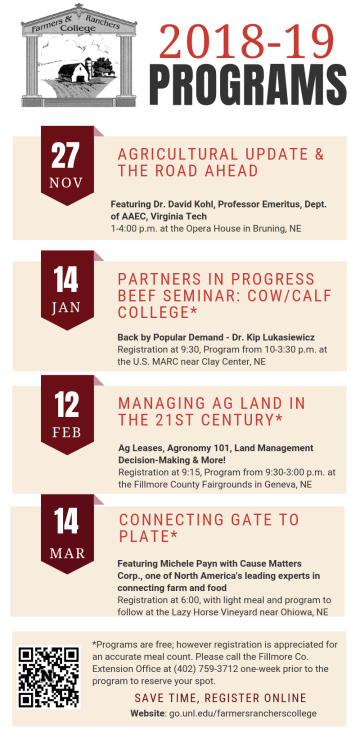
2018-2019 Program Schedule

  • January 14, 2019** – “Partners In Progress Beef Seminar” Cow/Calf College at U.S. MARC near Clay Center, NE from 10-3:30 p.m., Registration at 9:30 a.m.
  • February 12, 2019** – “Managing Ag Land in the 21st Century” with Nebraska Extension Educators, Nebraska Extension at the Fillmore Co. Fairgrounds- Geneva, NE from 9:30- 3:00 p.m., Registration at 9:15 a.m.
  • March 14, 2019** – “Connecting Gate to Plate” with Michele Payn with Cause Matters, Corp., one of North America’s leading experts in connecting farm and food at Lazy Horse Vineyard near Ohiowa, NE with registration at 6:00 p.m. Light meal and program to follow.

 ** Programs are free; however registration is appreciated for a meal count. Please call the Fillmore Co. Extension Office at (402) 759-3712 one-week prior to the program to reserve your spot.

Crops, Irrigation, Livestock, Programming

Agricultural Update & The Road Ahead

nature red forest leaves
Photo by Pixabay on Pexels.com

Those of us in agriculture are no stranger to risks involved with agriculture that are taken every day, whether it is financial, production, legal, price/market or human resource risks.  While we can’t control everything, there are measures that can be taken to protect one’s operation and reduce risk. Each year the Farmers & Ranchers College hosts Dr. David Kohl, Professor Emeritus from Virginia Tech who does an excellent job describing global risks which affect us locally and how those risks will affect the agricultural industry.  He will also provide tips for success and explain how past generations were independent but the importance for future generations to be interdependent and work closely with people.

This year, Dr. Kohl’s program is titled Agricultural Update and the Road Ahead. The program will start at 1:00 p.m. on November 27, 2018 at the Opera House in Bruning, Nebraska. Contributions and support of area businesses allow participants to attend at no cost. To save time at the door, feel free to register online.

The Farmers and Ranchers College Committee consists of Fred Bruning of Bruning, Bryan Dohrman of Grafton, Sarah Miller of Carleton, Jennifer Engle of Fairmont, Ryne Norton of York, Jim Donovan of Geneva, Bryce Kassik of Geneva, Eric Kamler of Geneva, and Brandy VanDeWalle of Ohiowa.

Just a reminder of the other Farmers & Ranchers College programming:

2018-2019 Program Schedule

  • January 14, 2019** – “Partners In Progress Beef Seminar” Cow/Calf College at U.S. MARC near Clay Center, NE from 10-3:30 p.m., Registration at 9:30 a.m.
  • February 12, 2019** – “Managing Ag Land in the 21st Century” with Nebraska Extension Educators, Nebraska Extension at the Fillmore Co. Fairgrounds- Geneva, NE from 9:30- 3:00 p.m., Registration at 9:15 a.m.
  • March 14, 2019** – “Connecting Gate to Plate” with Michele Payn with Cause Matters, Corp., one of North America’s leading experts in connecting farm and food at Lazy Horse Vineyard near Ohiowa, NE with registration at 6:00 p.m. Light meal and program to follow.

 ** Programs are free; however registration is appreciated for a meal count. Please call the Fillmore Co. Extension Office at (402) 759-3712 one-week prior to the program to reserve your spot.
Crops, Irrigation, Livestock, Programming

Landlord-Tenant Workshops

Nebraska Extension’s CropWatch recently announced a series of workshops that will help landlords and tenants with common land management questions that are often asked. Both parties want to ensure they are treated fairly and keeping up with market practices. This week, I’ve decided to share upcoming workshops and dates close to the area, including one we will be having in Geneva.

u s dollar bills pin down on the ground
Photo by Pixabay on Pexels.com

Current and future landowners and tenants should make plans to attend free upcoming land management workshops sponsored by Nebraska Extension. The workshops will be held at nine sites across Nebraska this fall. “Managing Agricultural Land for the 21st Century” will cover current trends in cash rental rates, lease provisions, and crop and grazing land considerations.

Nebraska Extension Educators Allan Vyhnalek, Aaron Nygren, Erin Laborie, Ben Beckman and Jim Jansen conduct research and outreach in land management, agronomy and beef production. They will address common agricultural landlord and tenant questions such as, What does an equitable rental rate look like for my land? How do I manage a farmland lease? What should I expect for communications between the landlord and tenant? What does a soil test tell me? I hear about organic or natural production; how does that vary from what my farmer is currently doing? If corn or soybeans are not making money, should something else be raised on my land? What are key pasture leasing considerations including stocking rates? Who is responsible for cedar tree removal from grazing land?

These workshops will provide participants with up-to-date information so they can be confident about their lease arrangements. To ensure enough handouts please register at go.unl.edu/landlordtenant or call the phone number listed for each location. Lunch arrangements will be handled by each host location.

Registration at each location will start at 9:15 a.m., program starting at 9:30 a.m., and ending by 3:00 p.m.

Workshop dates and locations within our area include:

  • COLUMBUS: Nov. 20 at the Platte County Extension Office, 2715 13th St., 402-563-4901, attendees will be dismissed to have lunch off site
  • NORFOLK: Dec. 3 at the Divots Convention Center, 4200 W Norfolk Ave. 402-370-4040, lunch will be sponsored
  • BEATRICE: Dec. 19 at the Gage County Extension Office, 1115 W Scot St., 402-233-1384, lunch will be sponsored
  • HASTINGS: Dec. 20 at the Adams County Fairgrounds, 947 S Baltimore Ave, 402-461-7209, lunch will be sponsored
  • GENEVA: Feb. 12 at the Fillmore County Fairgrounds, Geneva, 402-759-3712, lunch sponsored by the Farmers & Ranchers College

These programs are free and open to the public with funding provided by the North Central Extension Risk Management Education Center and USDA National Institute of Food and Agriculture under award number 2015-49200-24226. For more information or assistance, please contact Allan Vyhnalek at 402-472-1771 or avyhnalek2@unl.edu, or Jim Jansen, at 402-261-7572 or jjansen4@unl.edu.

Crops, Irrigation, Livestock, Programming, Youth

National Farmer’s Day

Combining2011Web
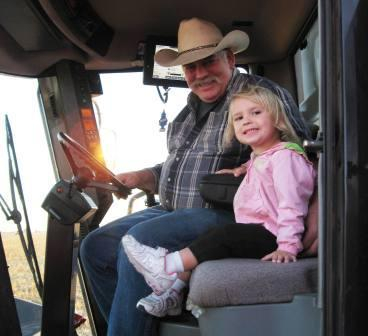
Here is my favorite farmer. Taken a few years ago, my oldest daughter enjoyed riding with “Grandpa Beek” (my Dad) in the combine. So thankful I grew up on a farm!

There are so many “days” such as “national ice cream day”, “national punctuation day”, etc. which I quite honestly don’t pay attention. Today, however I noticed that it is National Farmer’s Day and felt like that is something to spend a little bit of time recognizing. October 12th is a day for us to pay tribute to farmers throughout our great nation.

Have you thanked a farmer lately?  Farmers work long and hard hours and there is no guarantee of good yields. As is the case lately, farmers are at the mercy of the weather and waiting to return to harvest due to wet conditions.

Agriculture and farmers are the backbone of our society and economy!  Thank you to all of the farmers who feed and clothe us!

#NationalFarmersDay

Crops, Irrigation, Livestock, Programming

Farmers & Ranchers College 2018-19

nature-field-sun-agricultureThe Farmers & Ranchers College was formed in January 2000 with the purpose of providing high quality, dynamic, up to date educational workshops for area agricultural producers in south central Nebraska through a collaborative effort between business, industry and higher education leaders. Furthermore, the Farmers & Ranchers College will provide the tools necessary so that agricultural producers will be able to respond positively to these changes using a profitable decision making process.farmersrancherscollege1819dates

The Farmers and Ranchers College is a unique opportunity to educate agricultural producers in south central Nebraska. Approximately three hundred producers participated in the 2017-18 Farmers & Ranchers College programs. Producers attending these workshops managed over 155,000 acres and managed nearly 15,000 head of beef animals. Participants surveyed indicated an average of $6.00/acre of knowledge gained from participating for a potential impact of nearly $1 million. The seventeenth annual Partners in Progress- Beef Seminar featured a variety of industry, University and agricultural organization presenters. Ninety-five percent of participants surveyed were very satisfied or satisfied with the program quality and seventy-six percent indicated that previous programming improved their knowledge of making risk management decisions.

Contributions and support of area businesses allow participants to attend at no cost, however for programs that have meals, it is requested that people RSVP at least a week in advance for an accurate meal count by calling Fillmore County Extension at (402) 759-3712.

The Farmers and Ranchers College Committee consists of Fred Bruning of Bruning, Bryan Dohrman of Grafton, Sarah Miller of Carleton, Jennifer Engle of Fairmont, Ryne Norton of York, Jim Donovan of Geneva, Bryce Kassik of Geneva, Eric Kamler of Geneva, and Brandy VanDeWalle of Ohiowa.

2018-2019 Program Schedule

  • November 27, 2018 – “Agricultural Update & The Road Ahead” w/ Dr. David Kohl, Professor Emeritus, Dept. of AAEC, VA TECH at the Opera House in Bruning, NE from 1-4:00 pm
  • January 14, 2019** – “Partners In Progress Beef Seminar” Cow/Calf College at U.S. MARC near Clay Center, NE from 10-3:30 a.m., Registration at 9:30
  • February 12, 2019** – “Managing Ag Land in the 21st Century” with Nebraska Extension Educators, Nebraska Extension at  the Fillmore Co. Fairgrounds- Geneva, NE from 9:30- 3:00 p.m., Registration at 9:15 a.m.
  • March 14, 2019** – “Connecting Gate to Plate” with Michele Payn with Cause Matters, Corp., one of North America’s leading experts in connecting farm and food at Lazy Horse Vineyard near Ohiowa, NE with registration at 6:00 p.m. Light meal and program to follow.

 ** Programs are free; however registration is appreciated for a meal count. Please call the Fillmore Co. Extension Office at (402) 759-3712 one-week prior to the program to reserve your spot.

Livestock, Programming

Beef Quality Assurance meetings

The Beef Quality Assurance meetings have been finalized. Nebraska Extension Educator and Director of Beef Quality Assurance (BQA), Rob Eirich, will be leading in-person BQA trainings in our area during October. Topics addressed include BQA best management practices, animal handling, and animal health stewardship. These meetings will update producers on implementing BQA practices and answer questions on packer requirements and FDA regulations.

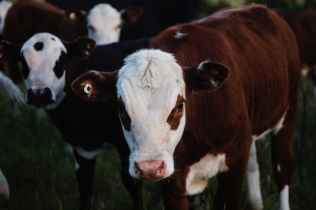
close up photography of a beef cattle
Photo by Kat Jayne on Pexels.com

Dates and locations include:

  • Tuesday, October 2, 1:00 – 3:30 p.m. CST, Ag Hall Fillmore County Fairgrounds in Geneva, NE
  • Tuesday, October 2, 6:30 – 9 p.m. CST, Dick’s Place, Lawrence, NE

All producers are invited to attend. The meetings will also be a Beef Quality Assurance (BQA) Certification for those producers needing certification or recertification. There is a $20 fee for those wanting to become BQA certified/recertified, which is good for a three year time period. There are operation discounts for those certifying more than three individuals.

Refreshments will be provided in Geneva. A meal will be provided in Lawrence. Please pre-register by September 28th to Brad Schick, Nebraska Extension Beef Educator (402-746-3417 or brad.schick@unl.edu ).

Livestock, Youth

Collaboration and Teamwork

As we wrap up county fair related work and head back into other extension programming, I always reflect on the county fair experience. This year’s fair went very well, mostly due to the amount of teamwork and collaboration observed. It was a challenge this year with the Fillmore and Clay County fairs falling right on top of each other, but due to the excellent amount of preparation and teamwork that occurred, fairs went very well. First of all, when it comes to putting together a fair, there are many small, behind the scenes tasks that occur. I’d like to give a lot of credit to the entire staff of Fillmore and Clay Counties. Weeks before the fair, data is entered into the computer system, stall assignments are created, awards ordered, reminders sent to exhibitors about completing quality assurance, registration deadlines, etc. All of this preparation allows for a much smoother fair during the actual week of fair.

IMG_2999.jpg
A highlight of this year’s Fillmore County Fair was a visit from UNL’s Chancellor, Ronnie Green!

Without the collaboration of staff, fair would not occur. Also, there is a lot of time spent from volunteers such as Council members and superintendents. From helping with winter and spring weigh-ins to helping answer questions and attend meetings, volunteers are engaged year-round to make the program the best it can be.

An article adapted from Belgrad, W., Fisher, K., & Rayner, S. (1995) best summarizes that “collaboration and teamwork require a mix of interpersonal, problem-solving, and communication skills needed for a group to work together towards a common goal.” The best teams I have worked with put their own agenda aside and work towards the greater good for the team. This article also provides tips for how to develop a collaborative team environment. There are five themes that must be present.

The first is trust. Being honest with the team helps each other develop respect within a team. Give team members the benefit of the doubt and work to eliminate conflicts of interest. Secondly is to clarify roles. When teach team member knows their key roles, they are able to perform more effectively and can figure out ways to help each other. Next, it is important to communicate openly and effectively. Work to clear up misunderstandings quickly and accurately. Its best to over-communicate, rather than not communicate. Learn to be a good listener and recognize team member efforts. Fourth, is to appreciate diversity of ideas. Be open-minded and evaluate each new idea and remember that it is okay to disagree with one another, but learn how to reach consensus. Often times, much is learned from those who differ from you.  Finally, balance the team’s focus. Regularly review and evaluate effectiveness of the team. Assign team members specific tasks to evaluate and provide praise to other team members for achieving results.

I would certainly like to take some time this week to thank the entire Clay and Fillmore county staff for the hours of time spent. Without the entire staff working together, fair would be miserable.  Also, I’d like to thank the 4-H Council members who have so freely given of their time during the whole year with various tasks and take time away from their own family to help manage the food stand, help clerk auctions, etc. Of course, livestock superintendents put in a large amount of time during the fair during check-in, the show, round robin, auction, etc. Special thanks to the fair board for their support of the 4-H program and the countless hours they spend setting up for events, etc. Businesses and financial donors help provide youth with incentives for their projects. There are so many other individuals and businesses who are helpful and do things without any recognition and to all of you, thank you!

IMG_2959.jpg
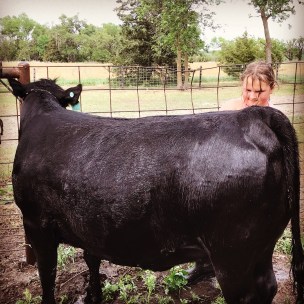
This was the first year, my oldest McKenzie showed a “big” calf, so it was great being able to watch her and be a “mom”. 

This year, I’d also like to thank everyone for allowing me the chance to be a “mom” on beef show day and help McKenzie get her three calves ready.  It was valuable time I was able to spend teaching her and being able to create memories. One of the best quotes someone once told me has stuck with me: “It’s better to be a part of the solution, rather than a part of the problem.” I saw a lot of sportsmanship being conducted in a positive manner this year which is refreshing at a time when so many people in our country, find things that are wrong and focus on those. Congratulations Clay and Fillmore County 4-H and FFA programs on a great week!

Source: Belgrad, W., Fisher, K., & Rayner, S. (1995). Tips for Teams: a Ready Reference for Solving Common Team Problems. McGraw-Hill: New York.


Crops, Irrigation, Livestock

Farm Service Agency County Committee

It is important for one to stand for what they believe in and takes an active role in one’s community. Effective leadership is crucial to any community or organization.  An effective leader understands the issues at-hand, is knowledgeable in his/her area, knows the proper ways to motivate others, embraces change, can work in a variety of settings and with a variety of personalities, and involves the group or followers in important decision-making. That being said, remember that a leader is not only a political figure or someone that is well known, but a leader can be a farmer, local businessmen/women, or anyone in a community or organization.  For those individuals desiring to take on leadership roles, consider serving on the FSA County Committee. Details for how to step into this role follow.

photo of green leaf plants
Photo by Nico Brüggeboes on Pexels.com

Fillmore County USDA Farm Service Agency (FSA) Executive Director Ryne Norton announced that the nomination period for local FSA county committees began on June 15, 2018. Nomination forms must be postmarked or received in the Fillmore County FSA Office by Aug. 1, 2018. Producers play a critical role in the day-to-day operations of FSA, making important decisions on programs dealing with disaster and conservation, emergencies, commodity loan price support, county office employment and other agricultural issues.

“County committees are unique to FSA and allow producers to have a voice on federal farm program implementation at the local level,” said CED Norton. “It is also important that committees are comprised of members who fairly represent the diverse demographics of production agriculture for their community. I encourage all producers, including women, minority and beginning farmers and ranchers, to participate in the nomination and election process.”

Producers can nominate themselves or others. Organizations, including those representing beginning, women and minority producers, may also nominate candidates to better serve their communities. To be eligible to serve on an FSA county committee, producers must participate or cooperate in an FSA program and reside in the area where the election is being held.

This year, nominations and elections for Fillmore County will be held in local administrative area 2, which includes Bennett, Geneva, Grafton, Momence and West Blue Townships. To be considered, a producer must sign an FSA-669A nomination form. The form and other information about FSA county committee elections are available at www.fsa.usda.gov/elections, or from the Fillmore County FSA office. Visit farmers.gov for more information.

Election ballots will be mailed to eligible voters beginning Nov. 5, 2018. Read more to learn about important election dates.

Livestock, Youth

Sportsmanship & Youth Development

awards.jpg

Webster’s Third International Dictionary defines sportsmanship as “conduct becoming to an individual involving fair and honest competition, courteous relations and graceful acceptance of results”.  Sportsmanship starts with parents teaching their youth how to accept a win or a loss, although in the 4-H youth development program, even if the youth receives a red ribbon, nothing is lost as long as some basic knowledge and skills were gained. Too often in our society we focus on the tangible results of a ribbon or trophy and don’t think about the process that youth went through to achieve the end results and what was learned from that process.

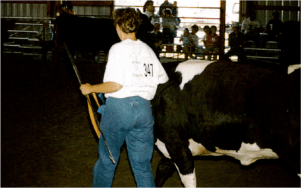
I often use the example that as a youth, I’ll never forget receiving a red ribbon for a market heifer; I was disappointed, but will never forget my dad asking me, what the judge said in the comments.  After we talked it over, I realized his reasoning and was able to understand the type of animal I should select the following year. That was a lesson I’ll never forget.  My parents instilled the value of hard work into my sister and I and any animal we showed we bought with our own money to build a small cow/calf herd or they came from our own herd. We rarely had the award-winning animal and were extremely excited to even receive a purple ribbon. The learning that occurred, memories and fun we had were just as valuable than if we would have received a trophy or plaque.

MeShowing
I enjoyed showing cattle and while purples were exciting to receive, the ribbon placing didn’t matter; it was the learning experience and fun had with friends!

For these reasons, it is really rewarding to work with youth who are happy with any ribbon placing- white, red, blue or purple. It really is just one person’s opinion on one particular day!

The 4-H Program focuses on providing positive youth development and developing young people as future leaders. A ribbon or plaque placing does not achieve this; rather it is the process, skills and effort that went into the project.  It is also important to mention that the entire 4-H program extends beyond the county fair and is done through educational workshops, career portfolios, leadership experiences and much more and is a year-round program.

Three reasons adults and teen leaders should be concerned with developing sportsmanship are:

  1. Youth programs are easier to conduct and are more positive experiences for everyone involved if good sportsmanship is demonstrated.
  2. The development of sportsmanship is an important part of youth development. Youth and adults who develop and show good sportsmanship get along better, and are much more successful on a long-term basis in becoming self-directing, productive, contributing, competent, caring, capable adults, than are those whose behavior is un-sportsmanship-like.
  3. Sportsmanship is one of the key elements of civilized society. Those who think of the “big picture” know the reasons for developing sportsmanship extend beyond an individual, a community, or a program. When societies allow sportsmanship to decline, their civilizations also decline.

As we get ready for another County Fair, let’s be reminded that the end result is not the ribbon placing, but the skills that each youth learned!

Source: Kathryn J. Cox, Ohio Extension 4-H Specialist, Youth Development, Developing Sportsmanship- A Resource For Preparing Youth And Their Families For Participation in Competitive Programs and Events, 2006

Crops, Livestock

Grazing Summer Annuals

IMG_2486.jpg
McKenzie giving her calf a bath. We split the pen so that some of it is seeded to millet for grazing later this summer. 

Recently, my husband and I added fencing for my daughter’s 4-H second year bucket calves and hope she can eventually expand to a small cattle herd someday. That is what I did through my 4-H and FFA projects so hopefully she will want to follow in my footsteps. With an area of bare soil, my Dad recommended seeding some millet for grazing, not to mention holding soil in place to prevent dusty conditions. We had to water the area to get the seed up, but now have a decent stand. This past week, my colleague Brad Schick who is focused in the beef area published an article on Extension’s BeefWatch website which I’ve decided to share with you this week.

Brad shares how grazing summer annual grasses is a great way to add flexibility to an operation, but in order to make it worth your time and money some management decisions are required. Your goals and your location will determine what type of summer annual you should plant. His article will addresses the type of annual and planting date, timing of grazing, prussic acid and nitrate concerns.

The most common summer annuals for grazing are sorghum-sudangrass (often call sudex), sudangrass, pearl millet, foxtail millet, and teff. For forages that can be grazed slightly earlier, the sorghums and sudangrasses can be used, but should only be planted once the soil temperature is above 60 degrees Fahrenheit. Generally, a late May to early June planting date will meet the 60 degree Fahrenheit requirement.

For millets and teff, the soil temperature needs to be 65-70 degrees F before planting. Planting into soil that maintains a lower temperature can cause stunted growth and reduce forage yield. Planting mid- to late June and into July should give good results with enough water. The millets and teff are fairly drought tolerant, and more tolerant to drought than the sudangrasses and sorghums.

Another consideration for planting is forage availability. A good rule to follow is that forage will be ready to graze 6-8 weeks after planting. To reduce the chance of forage getting ahead of the cattle, stagger plantings of a forage type by two weeks. By staggering planting, rotational grazing can be implemented and the forage will be grazed more efficiently. Staggering of planting can be done using one forage type such as sorghum-sudangrass, or using two or more types. For example, sorghum-sudangrass is planted on a portion of the field. Two weeks later on the next portion of the field, sorghum-sudangrass or a different annual such as pearl millet is planted as long as temperature requirements are met.

Maximizing the harvest efficiency while grazing annual forages is a significant factor when planning the annual type and planting date. However, issues can occur when cattle moves are not managed properly. Use a short, rotational system for grazing. Fields should have a minimum of three paddocks to allow for regrowth after the first rotation. A goal should be to graze the paddocks for about 7-10 days and allowing regrowth for at least 14-20 days.

Grazing sorghum-sudangrass should be delayed until plants are 18-24 inches tall in order to avoid prussic acid poisoning, which can cause death in cattle. Sudangrass, foxtail and pearl millet, can be grazed once they reach 15-20 inches in height. Another guideline is to graze all these summer annuals leaving about 6-8 inches of stubble during that 7-10 day rotation. If choosing between leaving cattle on a paddock for a longer or shorter time, just remember that retaining some leaf area will cause more photosynthesis and ultimately a faster regrowth.

A significant concern for grazing some summer annuals is prussic acid poisoning, also known as cyanide poisoning. The regrowth and young leaves of the sorghums, sudangrasses, and sorghum-sudangrasses produce prussic acid and can be deadly if cattle consume a high concentration. Graze when the plants have reached an appropriate height and time the grazing periods appropriately. Turning cattle out full and with plenty of water will reduce the chance of prussic acid poisoning. Nitrates in grazing situations are generally not a concern if the forage isn’t grazed too low because the lower one-third of the plant will contain the highest nitrate concentration. Nitrates are something to watch when grazing any summer annual grass, even beyond drought years.

Grazing summer annual grasses can be a great addition to an operation when annuals are chosen correctly and grazing plans are used. Finally, planting a few extra acres of summer annuals is a good option as part of a drought plan for either grazing or haying. It’s also a fall back to the annuals grazing program just in case growth and regrowth isn’t as productive as planned. Summer annuals are also a great option before reseeding an aging alfalfa stand. This can provide quality hay or grazing. Setting clear goals can make grazing summer annuals worth your time and money.

For more information on this topic, check out Brad’s article with resources at beefwatch.unl.edu.