For the last two years, I’ve been working to get a website with resources and lessons for 4-H leaders, extension staff, agricultural education instructors, and youth developed regarding crop production. I’m happy to announce that this webpage is up and running and can be found at cropwatch.unl.edu/youth.
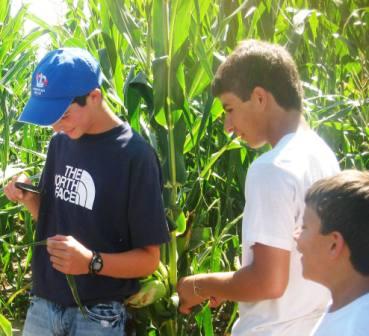
Youth in Crop Sciences Investigation (CSI) workshops learn about crop production and have the opportunity in investiage what pests might be present in the field.
The objective of this webpage is to provide a one spot stop with crop production information, some of it specific for Nebraska and some general crop information that can be used for a variety of locations.
The webpage is divided into four main sections: crop and plant science facts, activities for youth, 4-H & FFA projects, and teaching activities & resources. “Crop and plant science facts” provides a short summary of crop statistics and other fun facts. “Activities for youth” has some fun crossword puzzles, word searches and other interactive activities for youth to participate. The 4-H and FFA project page has some of the opportunities available through 4-H and FFA such as Crop Science Investigation workshop series and other events related to crops. Finally, the “Teaching Activities and Resources” page currently has nine lessons available for anyone to download and teach hands-on activities to any age group, depending on how in depth they make the content.
More web-based interactive activities and lessons will be added to this webpage as time passes. I hope you will take some time to explore this webpage and encourage youth to consider a career in crop and plant sciences.
Each year the National Association of County Agricultural Agents holds its Annual Meeting for Professional Improvement Conference honoring agricultural extension professionals for their hard work and service.
Reflections on NACAA
Last week I had the opportunity to attend the National Association of County Agricultural Agents professional improvement conference. The conference was held in Overland Park, Kansas and we had the opportunity to tour some of the area. My husband, Kurt and I went on the “high tunnel tour” which provided lots of great ideas that either traditional farmers expanded on their current operation or new agricultural producers started. Nonetheless, it was a very interesting tour which showed how value-added agriculture or niche markets have their place. We also noticed how much the corn was suffering from drought and feel fortunate for the irrigation we have in our part of the state.
It was great to network with agricultural extension professionals from across the United States. Whether it was discussing programming ideas, learning different types of agriculture and issues foreign to Nebraska, or discussing potential program collaborations, a lot of knowledge was exchanged. One general theme seems to be the same… reduction in resources, while remaining current and relevant. Extension has been at the forefront of providing research-based, relevant and current information to clientele; however you might see different delivery methods.
With the increase in technology, we have been able to reach a larger audience through webinars, podcasts, YouTube, blogs, social media, etc. While we recognize that face to face programs are still important, we must have materials available so that the younger generations can have access to information 24/7. For example, my news column which goes into traditional newspapers also can be found on our Fillmore County Extension website as a pdf, on my blog, (vandewalleviews.wordpress.com) and small pieces of information tweeted on twitter. The major advantage of using multiple methods of delivery is that it reaches a larger audience and is accessible 24/7 and the best thing is most of these are free!
I was fortunate enough to present to my colleagues on some of my work involving crop science investigation with youth. Many other Nebraska Extension professionals presented posters, served on national or regional committees or received other awards. I was honored to be selected by my peers to receive the Nebraska Achievement Award. This year, Nebraska definitely had its presence known and I look forward to implementing some of the ideas learned and continuing to provide high quality, dynamic programs and research-based information to the great people of Nebraska.
Today’s agriculture is constantly changing, making it important for producers and their families to stay knowledgeable of current issues. Risk management is more important now than ever for agricultural producers, so to address some of the issues producers face, a new program has been developed by UNL Extension. From Farms to Families is a program designed to empower women in agriculture with a better understanding of the issues that affect their operation’s profitability.
This new and exciting program for women was offered winter of 2011 with good reviews from participants. To continue this program, a special From Farms to Families field day will be held on August 23rd starting at 6:00 p.m. with a light meal included. Registration is free, however to help with the meal count please call the Fillmore County Extension office at (402) 759-3712 or Thayer County Extension office at (402) 768-7212 by August 19th. Location of the program is at the Joe Birky farm located on county road 16, 1/4 mile south of Hwy. 74.
Specific sessions include a look at irrigation management technologies, field condition updates, range management, and a brief look on current agricultural issues. This program is sponsored by the University of Nebraska-Lincoln Extension and Advanced BioEnergy L.L.C.
As I write this, soil moisture has been adequate and therefore in most cases, no need to irrigate. Those with the watermark sensors are able to closely monitor their soil water status and will be able to know when to trigger their first irrigation. With corn growing at a rapid pace, it will be important to check the sensors and once they hit tassel, take an average of the one, two, and three foot sensors. The crop ET reading south of Geneva read 1.4 inches for the period of July 1 – July 8. This means that corn at the V-12 stage has a coefficient of .88 inches, so .88 x 1.4 means that the crop used 1.23 inches/week or .18”/day. Corn at V-14 would use 1.01 X 1.4 and used 1.41 inches/week or .20”/day. Remember to check the Nebraska Ag Water Management website and click on “view ETgage data” to see other local ET and rainfall data. If you have an ETgage you can register it and report your data here as well.
Sportsmanship starts with Adults!
Webster’s Third International Dictionary defines sportsmanship as “conduct becoming to an individual involving fair and honest competition, courteous relations and graceful acceptance of results”. Sportsmanship starts with parents teaching their youth how to accept a win or a loss, although in the 4-H youth development program, even if the youth receives a red ribbon, nothing is lost as long as some basic knowledge and skills were gained. Too often in our society we focus on the tangible results of a ribbon or trophy and don’t think about the process that youth went through to achieve the end results and what was learned from that process.
I often use the example that as a youth, I’ll never forget receiving a red ribbon for a market heifer; I was frustrated, but will never forget my dad asking me, what the judge said in the comments. After we talked it over, I realized his reasoning and was able to understand the type of animal I should select for the following year. That was a lesson I’ll never forget. My dad and mom also told my sister and me that if we wanted a trophy that badly, instead of spending a large amount of money on an animal just to win or using unethical practices, they’d go out and buy us our own trophy. For these reasons, it is really rewarding to work with youth who are happy with any ribbon placing.
Three reasons adults and teen leaders should be concerned with developing sportsmanship are: 1. Youth programs are easier to conduct and are more positive experiences for everyone involved if good sportsmanship is demonstrated. 2. The development of sportsmanship is an important part of youth development. Youth and adults who develop and show good sportsmanship get along better, and are much more successful on a long-term basis in becoming self-directing, productive, contributing, competent, caring, capable adults, than are those whose behavior is un-sportsmanship-like. 3. Sportsmanship is one of the key elements of civilized society. Those who think of the “big picture” know the reasons for developing sportsmanship extend beyond an individual, a community, or a program. When societies allow sportsmanship to decline, their civilizations also decline.
As we get ready for another Fillmore County Fair, let’s be reminded that the end result is not the ribbon placing, but the skills that each youth learned!
Source: Kathryn J. Cox, Ohio Extension 4-H Specialist, Youth Development, Developing Sportsmanship- A Resource For Preparing Youth And Their Families For Participation in Competitive Programs and Events, 2006
Be proactive, rather than reactive-County Committee Elections
It is important for one to stand for what they believe in and take an active role in one’s community. Effective leadership is crucial to any community or organization. One of the steps of having effective leadership in any community or organization is to ensure that the right people are in those crucial leadership roles. An effective leader understands the issues at-hand, is knowledgeable in his/her area, knows the proper ways to motivate others, embraces change, can work in a variety of settings and with a variety of personalities, and involves the group or followers in important decision-making. That being said, remember that a leader is not only a political figure or someone that is well-known, but a leader can be a farmer, local businessmen/women, or anyone in a community or organization. One that leads others should be proactive rather than reactive; he/she should plan and effectively lead others with the group’s vision in mind. It is frustrating to hear others complain about various political leaders when often times those complaining never took the time to vote or understand the issue(s) at hand.
One important election at hand in this area is the election of responsible agricultural producers to FSA County Committees. This is important to ALL farmers with large or small operations. County Committees are a direct link between the farm community and the U.S. Department of Agriculture. Committee members are a critical component of the day-to-day operations of FSA. They help deliver FSA farm programs at the local level. They work to make FSA agricultural programs serve the needs of local producers. Committees make decisions on: commodity price support loans and payments, conservation programs, incentive and disaster payments, and other farm disaster assistance. FSA committees operate within official regulations designed to carry out Federal laws. Committee members apply their judgment and knowledge to make local decisions.
Nominations To become a nominee for the COC, eligible individuals must sign nomination form FSA-669A. The form includes a statement that the nominee agrees to serve if elected. This form is available at Service Centers and online at http://www.fsa.usda.gov/elections. Nomination forms for the 2011 election must be postmarked or received in the local Service Center by close of business August 1, 2011.
Agricultural producers who participate or cooperate in an FSA program may be nominated for candidacy for the county committee. Individuals may nominate themselves or others as a candidate. Additionally, organizations representing minority and women farmers or ranchers may nominate candidates. Nomination forms are filed for the COC in the office that administers a producer’s farm records.
Election Period August 1, 2011 – Last day to file nomination forms at the local Service Center
November 4, 2011 – Ballots mailed to eligible voters
December 5, 2011 – Last day to return voted ballots to the Service Center
January 2, 2012 – Newly elected COC members take office
Additional election information may be found at: http://www.fsa.usda.gov/elections. Producers may contact their local Service Center for more information.
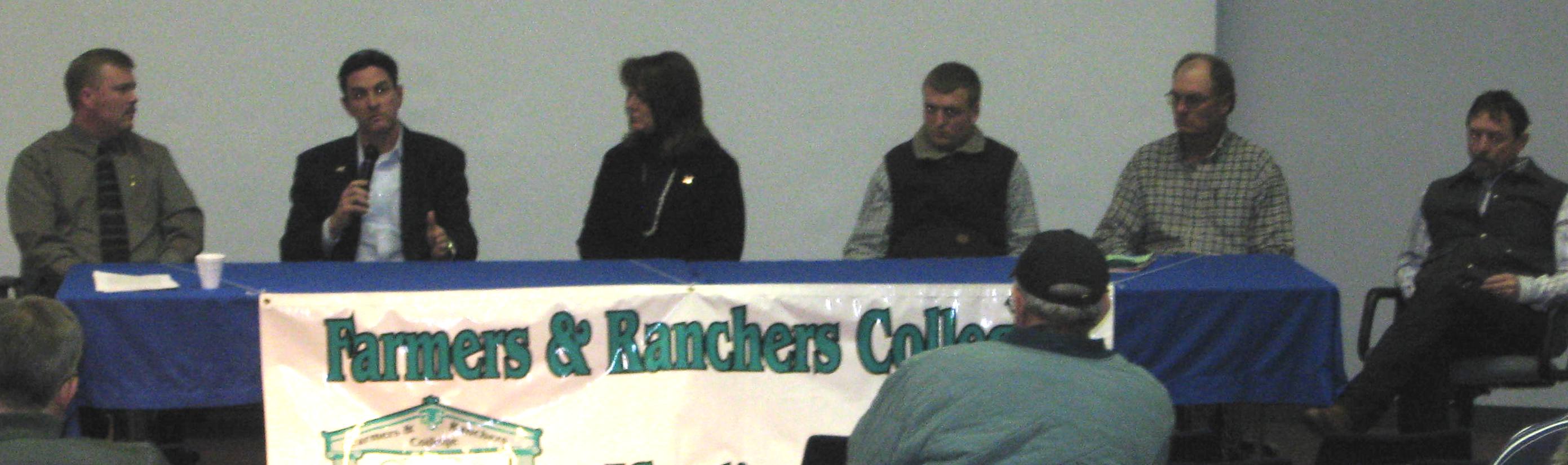
Guest speakers are brought in to help youth meet others involved in agronomy.
As I work with youth in the Crop Science Investigation series, I’m reminding them to consider agriculture as a career choice. Today’s agricultural world faces several challenges, one of them being the decline of our most valuable resource, the future workforce. While Nebraska’s population under 18 years of age grew between the years of 2000 and 2009, this increase was seen in only ten of the 93 counties. Rural communities, including agricultural producers, can benefit from expanding youth into leadership opportunities, therefore mentoring youth leaders (Cantrell, 2010). One strategy to keep youth in rural communities and involved in production agriculture is to involve them in projects that encourage active participation and learn about the wide array of careers related to production agriculture.
To help address this, the University of Nebraska-Lincoln Extension offers Crop Science Investigation (CSI) programming for youth to increase their knowledge and interest with plants, science, and agriculture. Currently, CSI workshops are offered in several counties which consist of local hands-on workshops for 4-H and FFA youth.
A goal I have for the CSI program is to expand it statewide so youth that don’t have a local CSI program have the opportunity to participate. Workshop topics include: marketing, nutrient management, managing disease, insect and weed problems, row spacing, plant population, water management, etc. These sessions build life skills such as; researching scientifically based answers; problem solving, public speaking, etc.
Last week, I had the opportunity to work with ten Fillmore and ten Jefferson county youth teaching them how crops grow and other current agronomic factors. If you know of youth interested in crops, I’d be happy to provide some resources to them or check into the possibilities of forming a CSI group in their area.
I love to spend time outside working in the garden or in the landscape, but unfortunately the mosquitoes have recently started to enjoy spending time outside with me as well. I’ve heard lots of clients already complain about the intense populations of mosquitoes so this week, I’ve decided to share information provided recently by Roberto Cortinas, assistant professor, entomology and veterinary and biomedical sciences and Barb Ogg, Ph.D., extension educator from a recent news release.
There are two types of mosquitoes: floodwater and standing water mosquitoes. Floodwater mosquitoes such as the Aedes vexans, also commonly known as the inland floodwater mosquito lay eggs in dry areas in anticipation of flooding or rain. These eggs may survive a few years without water and hatch into mosquito larvae when water pools in the area. Mosquito larvae develop into pupae and then emerge from the water when they become adult mosquitoes. With the flooding this year, the number of Aedes vexans likely will increase. These mosquitoes transmit dog heartworm, which infects animals, primarily dogs, but it is easily preventable, according to Cortinas. Fortunately, the Aedes vexans mosquitoes are not the key player in the spread of the West Nile virus. The West Nile virus is the most important mosquito-transmitted disease in North America.
In 2010, 39 cases of West Nile were reported in Nebraska with two of those leading to death. The mosquito that spreads West Nile virus is Culex tarsalis, a standing water mosquito. This kind of mosquito prefers to lay eggs in existing, stagnant water sources, such as water in a paper cup or old tires. For the Culex tarsalis mosquito population to increase substantially and increase the risk of West Nile virus transmission the floodwater would have to remain pooled for a few weeks.
To protect oneself against the West Nile virus, control mosquito populations around an area and prevent mosquito bites. Barb Ogg, UNL Extension educator in Lancaster County, said long-term mosquito control starts with people eliminating mosquito breeding grounds instead of just spraying insecticide. If one is going to spray their yard, it’ll be effective for maybe a day or two. Anything in the yard that collects water, such as flower pots, cans and old tires, should be emptied. Dump out the bird bath at least twice a week and check gutters to make sure they are not clogged. For ponds or flooded areas, briquets or granules of the bacteria Bacillus thuringiensis israelensis (Bti) can be used to kill mosquito larvae, but it won’t harm birds, fish mammals and other organisms.
People can avoid getting bitten by mosquitoes by making sure window and door screens are in good condition, and by remaining indoors during dawn and dusk, which is when mosquitoes are most active. When venturing outside, it’s advisable to wear long-sleeved clothing and long pants. Light-colored clothing seems to attract fewer mosquitoes than dark-colored clothing. Mosquito repellents help prevent mosquito bites, too.
The U.S. Centers for Disease Control and Prevention recommends three kinds of mosquito repellents:
DEET is the most common chemical used in insect repellents. DEET is effective, lasts up to eight hours depending on the concentration and is considered “the gold standard” for mosquito repellents. However, many people don’t like DEET because it has an oily feeling and odor.
Picaridin is as effective as DEET but it isn’t as long-lasting. However, it is not greasy and doesn’t have an odor, so some people prefer Picaridin over DEET.
Oil of lemon eucalyptus (PMD) is extracted from the lemon eucalyptus plant. People like it because it’s a natural substance, but it lasts for a shorter period of time than DEET or Picaridin of the same concentration, so it needs to be re-applied more frequently.
This summer we were blessed with not only one intern, but two! We have Molly Traush, our Extension Intern working mostly with the 4-H program. We also have Cale Mages, who has been helping me install irrigation equipment and will be working on a special grant-funded project this summer. Here is a short piece from him.
My name is Cale Mages and I am a summer intern with the Partners in Pollution Prevention program at UNL. I will be working in the Fillmore County Extension Office, specifically working with producers to help evaluate irrigation system efficiencies and offering any suggestions for improvement that I can. So far it has be very enjoyable experience, and I hope to give producers a better understanding of their irrigation systems and find ways they can save money. I am originally from a small town southeast of Kansas City. I will be a 5th year senior at the University of Kansas where I study civil engineering. I have grown up both working and playing outside, so I am glad to have an internship that allows me to keep doing so. I look forward to meeting members of the community and enjoying my time in Fillmore County. Feel free to stop by the extension office with any questions.
We are glad to have both Cale and Molly in the office so please help them both feel welcome this summer.
Flooding Resources
Just a quick mention that there are lots of flood resources available at UNL extension’s website. If you know of someone with these issues, help spread the word.
In early May, parts of the county were very dry; even pivots were running to get the crops out of the ground. With a significant amount of rainfall within the last couple weeks, now brings concern for diseases. Before treating for diseases though, it is important to scout your fields and confirm if and how much disease is present.
Scout for Soybean Seedling Diseases
Wet spring conditions have led to the development of soybean seedling diseases in some Nebraska fields. Seedling damping off and seed rot caused by several fungi commonly occur in Nebraska. Early season damping off and root rots are often followed by premature death, which in many instances may be attributed to fungal infections earlier in the season. In some situations, large areas of a field or even entire fields need to be replanted due to early season fungal problems. This may especially be true in a year like this when cool, wet weather early in the growing season creates favorable conditions for infection by certain soil borne pathogens that attack developing soybean plants.Seedling diseases also are active whenever soils are saturated.
Several soybean disease pathogens may cause damping off or root rot seedling diseases. The most common in Nebraska are species of Phytophthora, Pythium, Rhizoctonia, and Fusarium. All four are capable of killing soybean seedlings or at least causing damage sufficient enough to affect the plant’s ability to achieve full yield potential.
These seedling diseases have similar symptoms, often making diagnosis difficult. Microscopic examination and other laboratory analyses of the diseased seedlings often are necessary to identify the cause and differentiate damage from disease, insect injury, herbicide damage, planting problems, or environmental stresses that have similar symptoms. If you think you have some, we can get those samples to our UNL Plant Pathology lab for proper diagnosis. (Source, CropWatch, May 26, 2011 Issue)
Scab Risk Moderate in South Central Nebraska
The following information was provided by Stephen Wegulo, Extension Plant Pathologist. With wheat flowering occurring or approaching, the National Fusarium Head Blight Risk Assessment Tool has elevated the risk of scab from low to high in an area of southeast Nebraska and to moderate in areas of eastern, south central, southwest, and north central Nebraska. Scab appears in the field as prematurely whitened or bleached heads. Affected heads are partially or entirely bleached and often are seen suddenly scattered over small, large, or entire areas of the field. It is recommended that a fungicide be applied at early flowering to suppress scab in scab-prone areas (southeast, south central, and southwest Nebraska). The fungicides Prosaro and Caramba are good in suppressing scab and very good to excellent in controlling foliar diseases.
Timing of fungicide application for scab suppression is critical. Early flowering is the optimal time. Once bleached heads appear scattered in the field, it is too late to apply a fungicide for scab suppression. For fields where wheat is not flowering yet, if foliar disease pressure is low and the flag and flag -1 leaves are free of disease, delay a fungicide application until early flowering and then apply a fungicide that will both suppress scab and provide protection against foliar diseases.
If foliar disease pressure is high and the flag leaf is at risk of infection, consider applying a fungicide to protect the flag leaf and monitor the risk of scab as heading and flowering approach. In this case a second fungicide application to suppress scab may be warranted in high risk and high yield potential fields, such as irrigated fields, if the risk of scab rises prior to flowering. Refer to a fungicide table for a list of fungicides and their efficacy against various diseases.
As I write this article, parts of Fillmore County received over 4 inches of rain in less than a 24-hour period, which has brought flooding in some fields. You might wonder how this affects the crop condition so I found an article from Purdue University written May, 2010 that describes what could happen. The longer an area remains ponded, the higher the risk of plant death. The article, Effects of Flooding or Ponding on Young Corn was written by R. L. (Bob) Nielson summarizes the following:
Corn that is completely submerged is at higher risk than corn that is partially submerged.
Plants that are only partially submerged may continue to photosynthesize, albeit at limited rates.
Most agronomists believe that young corn can survive up to about 4 days of outright ponding if temperatures are relatively cool (mid-60’s F or cooler); fewer days if temperatures are warm (mid-70’s F or warmer).
Soil oxygen is depleted within about 48 hours of soil saturation. Without oxygen, the plants cannot perform critical life sustaining functions; e.g. nutrient and water uptake is impaired and root growth is inhibited.
Even if surface water subsides quickly, the likelihood of dense surface crusts forming as the soil dries increases the risk of emergence failure for recently planted crops.
The greater the deposition of mud on plants as the water subsides, the greater the stress on the plants due to reduced photosynthesis.
Ironically, such situations would benefit from another rainfall event to wash the mud deposits from the leaves.
Corn younger than about V6 (six fully exposed leaf collars) is more susceptible to ponding damage than is corn older than V6.
This is partly because young plants are more easily submerged than older taller plants and partly because the corn plant’s growing point remains below ground until about V6. The health of the growing point can be assessed initially by splitting stalks and visually examining the lower portion of the stem (Nielsen, 2008). Within 3 to 5 days after water drains from the ponded area, look for the appearance of fresh leaves from the whorls of the plants.
Extended periods of saturated soils AFTER the surface water subsides will take their toll on the overall vigor of the crop.
Some root death will occur and new root growth will be stunted until the soil dries to acceptable moisture contents. As a result, plants may be subject to greater injury during a subsequently dry summer due to their restricted root systems.
Associated with the direct stress of saturated soils on a corn crop, flooding and ponding can cause significant losses of soil nitrogen due to denitrification and leaching of nitrate N.
Significant loss of soil N will cause nitrogen deficiencies and possible additional yield loss.
On the other hand, if the corn dies in the ponded areas it probably does not matter how much nitrogen you’ve lost.
Lengthy periods of wet soil conditions favor the development of seedling blight diseases, especially those caused by Pythium fungi (Sweets, 2008).
Poorly drained areas of fields are most at risk for the development of these diseases and so will also be risky for potential replant operations.
Certain diseases, such as common smut and crazy top, may also become greater risks due to flooding and cool temperatures (Malvick, 2002).
The fungus that causes crazy top depends on saturated soil conditions to infect corn seedlings.
The common smut fungal organism is ubiquitous in soils and can infect young corn plants through tissue damaged by floodwaters. There is limited hybrid resistance to either of these two diseases and predicting damage is difficult until later in the growing season.