Horticulture, Programming, Youth

Biggest Grower Youth Competition

Nebraska Extension and the Department of Agronomy and Horticulture have launched a new student gardening competition to take place this summer. The Biggest Grower competition offers Nebraska high school students the opportunity to learn how to start their own garden and small growing operation. Students will plant, grow, cultivate, harvest and distribute their own fresh specialty crops in a garden space or in containers. Participants will be placed in virtual teams with one team chosen as The Biggest Grower and each team member will be awarded a $50 Amazon gift card. Additionally, one high school junior or senior will be awarded a College of Agricultural Sciences and Natural Resources Department of Agronomy and Horticulture scholarship of $1,000.

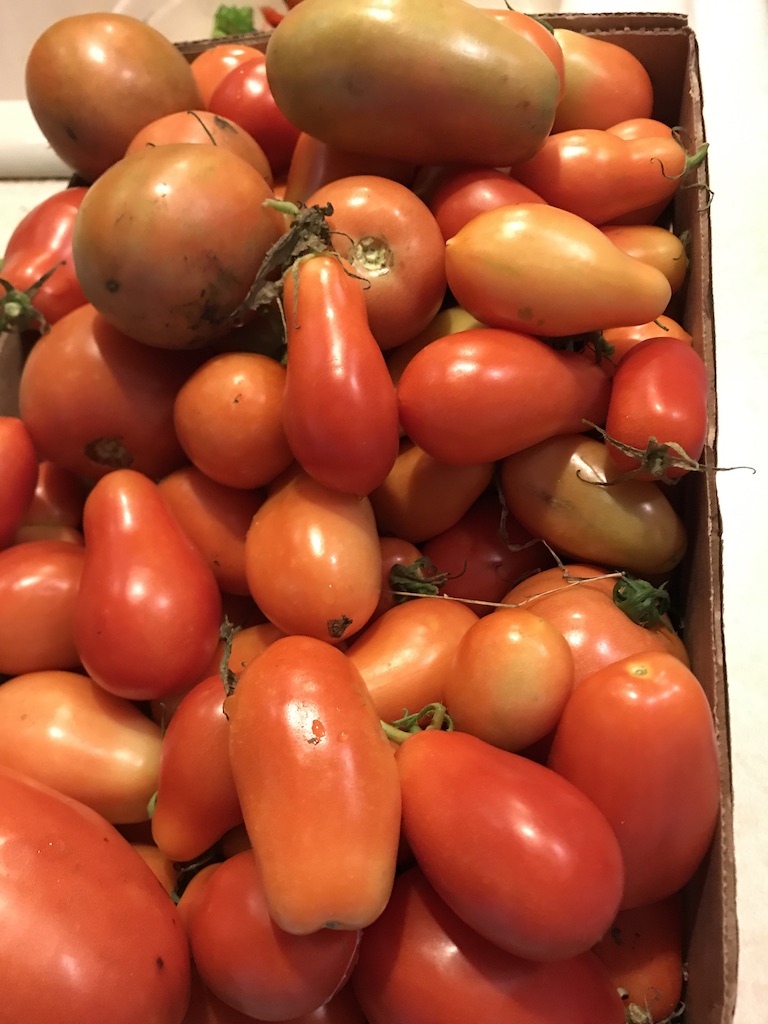
The goal of this competition is to help increase awareness in growing food, improve personal wellness and community involvement, explore opportunities in entrepreneurship and expand the availability of specialty crops in fresh food drought areas.  Stacy Adams, an associate professor of practice in agronomy and horticulture and a Nebraska Extension specialist is in charge of the program.3EC4F63F-DE54-490B-92DE-378D19986434_1_105_c.jpeg

This project can expose Nebraska youth to the fundamentals of plant production and demonstrate career opportunities in agriculture. Funding is provided through the Nebraska Specialty Crop Block Grant Program as a means to enhance the competitiveness of non-commodity specialty crops, such as fruits, vegetables, flowers, nuts and ornamentals.

This competition is beneficial for both rural and urban students; growing specialty crops can expand income potential for farmers as well.

The Biggest Grower competition is free to Nebraska high school students entering the ninth through 12th grade this fall 2020. Nebraska Extension and a university horticulture student, who will be a personal garden mentor, will work with each student virtually on a weekly basis. Participants will be randomly placed into 10, statewide virtual teams of 10 gardeners. These teams will compete over the summer to find out which team is The Biggest Grower.

Students can register at https://agronomy.unl.edu/the-biggest-grower.

Each participant will use an existing garden space at their home or they can choose to grow in pots as a container gardener. Competition garden space as a backyard gardener is limited to 80 square feet, maximum. Participants will complete the activities assigned by the garden mentor and will be given a toolkit consisting of a hand spade, weeding tool, seeds and starter plants.

Participants will be asked to participate and complete the following:

  • 10 weekly activities.
  • develop and cultivate specialty crops in their backyard or container garden.
  • record productivity data in the growers’ leaderboard.
  • record the amount of harvest consumed.
  • record the amount distributed.
  • participate in virtual The Biggest Grower Day hosted by the Department of Agronomy and Horticulture on June 26 from the University of Nebraska–Lincoln East Campus.

High school junior and senior participants, who want to be eligible for the scholarship award, will be asked to write a 350 to 500-word essay on how The Biggest Grower competition affected them and their community, or the use of specialty crops in their future. Students must also enroll in one of four majors within the Department of Agronomy and Horticulture in CASNR at Nebraska.

The competition will begin May 25 and end Aug. 7. After all the data is entered and the essays are reviewed, The Biggest Grower team and the scholarship winner will be announced Sept. 4. Complete application guidelines and more information may be found online.

Source: IANR News & Stacy Adams, Associate Professor Nebraska Extension/ Department of Agronomy and Horticulture

3EC4F63F-DE54-490B-92DE-378D19986434_1_105_c.jpeg

Youth

Cultivate ACCESS Announces New Summer Program

Cultivate ACCESS is an agricultural mentoring program through the University of Nebraska-Lincoln. This program encourages students from rural towns to learn more about agricultural jobs in science, technology, engineering, and math (agSTEM). Participating high school students connect with college students and career professionals through online conversations about agSTEM careers. In this 10-week program students learn how to improve their communication, leadership, and teamwork skills.

Screen Shot 2020-05-08 at 4.29.24 PM.png

Cultivate ACCESS participants include students from all over Nebraska. One participant is a student from McCook, NE interested in working for her family’s business. Another participant lives on the other side of the state in Omaha and aspires to become a zookeeper. These students’ career choices are examples of different careers in agSTEM. One Cultivate ACCESS participant commented on her experiences in the program, “No matter what your background is you can do anything you set your mind to.” If you have an interest in gaining essential employability skills and exploring agSTEM careers this summer, we are currently accepting applications for the 2020 summer session of Cultivate ACCESS starting June 1st and running through August 7th.

Please see our website cultivate.unl.edu to learn more and apply.

Programming, Youth

May Youth Project Workshops

Pick a Project Fridays Square_EDIT.pngClay, Fillmore, Nuckolls, and Thayer counties are hosting a “Pick A Project” Zoom workshop series to encourage local youth to practice their fair project prowess and to learn how to make (or at least get started on) projects for County Fair 2020. We encourage youth ages 8-18 to register for one or all four of the workshops. Even though COVID-19 disruptions have limited in-person programming, we’re excited to inspire 4-H members to practice experiential learning and learn to do new projects.

Register by visiting https://go.unl.edu/4hpickaprojectfridays.

May 8 – Heritage

Join Nuckolls/Thayer 4-H Educator Kylie Kinley as she explores the Heritage project. We’ll peer into the past and brainstorm what historical stories or family heirlooms would make quality projects for fair. Supplies: Pencil and paper, potential heirlooms, family photos, list of family members for family tree drafting.

May 15 – “Coffeecake 201”

Join Clay County 4-H Associate Holli Alley from her kitchen as she bakes coffee cake for the Cooking 201 project. Youth will learn basic baking techniques to perfect yummy coffee cake for the county fair.

May 22 –  “T-shirt Rags to Riches”

Fillmore County 4-H Assistant Rachel Adams will show youth how to use old t-shirts that would normally be used as rags to make a one-of-a-kind rug. Don’t know how to sew? No problem! We’ll use a braiding technique to craft our rugs. This will not be a project we will get done in an hour, but you can work on it in your spare time. Supplies: Old T-shirts cut into 1 ½ inch strips. Around 10 XL shirts or the equivalent would be a good place to start. Avoid too many seams in your strips. You will also need scissors (fabric scissors would work best).

May 29 – World of Weedsplant-148601_1280.png

Join Fillmore County Extension Educator Brandy VanDeWalle & Todd Boller, county weed superintendent, as they explore common weeds and even start you on an exhibit for county fair. Create a Weed Display, which allows original and creative exhibits that contain educational information about weeds, such as interesting information about a weed species, the effects of weed control, herbicide-resistant weeds, what makes a weed, or uses for weeds. Supplies needed: 1-3 weeds to identify, sheet of paper and pencil to brainstorm a poster idea. (Optional: poster board & supplies to get started on a poster.)

Youth

Creating a Routine in Changing Times

By Guest Columnist: Dr. Jill Lingard, Nebraska 4-H Youth Development

With virtual-learning, social distancing, and a long list of cancelled beloved pastimes, life can feel pretty far from what we once knew.  Change is hard.  Yet, amidst a time of uncertainty and change we are searching to find a new normal.  A sense of stability, routine, and familiarity are important for youth.    Parents, care-providers, and youth development professionals can help youth plan their day to reestablish routine. Having a daily routine enables youth to have some control and choice in their life which is important for their well-being.

white blank notebook
Photo by Tirachard Kumtanom on Pexels.com

Consider the following as you develop daily or weekly plans:

  • Engage youth in planning a routine together. Adults and youth may have differing ideas about ways to spend time, start by having a conversation about what expectations you have.  In the beginning of your planning determine what activities that are non-negotiable. Be clear about the expectations that need to be met. If possible, offer some choice for when these “must happen” activities can occur.
  • Find a healthy balance between flexibility and consistency when establishing routine.  Creating plans that are too ambitious or rigid will be difficult for youth and for caring adults in their lives to monitor.
  • Maintain self-care routines. Regularity with hygiene practices, diet, sleep, and exercise will set adults and youth up for success.
  • Stay focused on what youth value. During times of change, it might be tempting for youth to abandon goals that were important to them.  Take this opportunity to talk about why persistence toward goals is important.
  • Create a balanced routine that includes time for unstructured activity and FUN! We all need a healthy amount of free-time, so don’t overschedule the day.  Be aware of the amount of screen time a plan includes.  For free time, consider non-screen activities like playing outside, reading a book for enjoyment, drawing, family game night, cooking, or other hands-on activities.
  • Focus on what youth can control. During periods of change there so many things that can’t be controlled.  Help youth focus on what they CAN do as opposed to what they can’t. This can be an opportunity for youth to explore an interest they haven’t had time for in the past and invest in learning something new.
  • Stay connected. Successful routines should include intentional ways to keep young people connected to the important people in their lives.  Staying connected to those we care about helps manage anxiety and challenges that times of change can create.
  • Practice gratitude. Change can present feelings of loss and it is important to acknowledge and address those feelings.  At the same time, change can be an opportunity to talk about gratitude.  Challenge youth to explore what they are thankful for and look for ways to express that gratitude.

Experiencing change and finding a new normal can be hard. While creating new plans won’t solve all of the challenges associated with change, planning can be a positive way to help young people respond to the uncertainty of the situation by establishing a flexible routine.

More information and resources about youth social-emotional development in difficult times can be found at https://disaster.unl.edu/families or by contacting your local county Nebraska Extension office.

Youth

Coping in Changing Times

This article was written by Dr. Saundra Frerichs, Nebraska Extension 4-H Youth Development.

How can someone like me cope with something so unexpected? As I searched for this answer, I read recommendations for different groups of people: individuals living alone, families, children with special needs, empty nesters, and seniors.   I found suggestions that can help all of us cope.

IMG_8706.jpeg
It seems with the increase in online education, everyone brings their pets to show others!  I appreciate my daughter’s teachers for connecting with them and trying to keep things routine in our new “norm”. 

Create a routine.

Consistency and structure may be calming during times of stress.  This is true whether we are creating a work and learning schedule for the whole family, or creating routines for ourselves when we are home alone.  Use routine to create reasonable expectations for yourself and others.

  • Build off familiar routines from school or work. Create cues for the start and end of each day.    For example, take a quick walk around the block or in the backyard before starting work.
  • Healthy routines include adequate sleep, healthy meals, exercise, and time for social interactions.
  • Plan to work or learn in bursts. Children need learning bursts of 15 to 45 minutes.  Adults can focus longer, but still need regular breaks. Stretch for 5 minutes every 20 minutes if sitting or get up and walk around for 10 minutes.

Check-in with yourself and others.

It is important to take time to check in with yourself and with friends and family.  When connecting with others follow these tips.

  • Acknowledge feelings. For young children use a feeling chart to help them express themselves.   Also, remember to acknowledge your own feelings.  Avoid passing judgement on yourself and other.  There is no right or wrong way to feel.
  • Treat yourself with as much gentleness as you treat others.
  • Resist the need to solve other’s problems. Ask, “How can we work together to make this experience more bearable?” Then be quiet and listen.
  • Encourage yourself and others to be mindful of the present. Avoid worrying about “what ifs.”

Try something new.

With so many events we can’t control, it is important to focus on what we can control.  Trying new activities can give a sense of accomplishment.  You may discover new coping strategies that you can use for the rest of your life.

  • Don’t try to do everything, but do try new things. For example, start a new arts or crafts project, make a new recipe, or read a book for enjoyment.
  • Try yoga or a new exercise video with a spirit of adventure and fun.
  • Try new ways to connect with friends and family like connecting through video calls, virtual play dates, or writing letters.

Use your network.

  • Remember to use your social network. Friends, family, neighbors and co-workers can help you cope.  Make plans to celebrate birthdays, holidays, and other special events in new ways.
  • Use your network to find opportunities for learning, traveling, or playing online.
  • Use your network for support. Would your child be more motivated to do his homework on a video chat with a friend? Would a virtual story time with grandparents at 5:00 help you get supper ready?

During this time of unexpected and unprecedented events, remember it is okay not be the perfect parent or family member, employee, or person.  Simply, don’t expect perfection from yourself or others.  Healthy coping skills will help you and your family navigate this experience.    More information and resources on coping can be found at https://disaster.unl.edu/families or by contacting your local Nebraska Extension office.

Resources to Support Coping in Changing Times

Child Mind Institute provides daily tips and a collection of resources for parents on coping during COVID-19, including resources for supporting children with special needs.

https://childmind.org/coping-during-covid-19-resources-for-parents/

The Center for Disease Control has resources for Daily Live and Coping in response to COVID-19 that cover both physical and mental health concerns.  https://www.cdc.gov/coronavirus/2019-ncov/daily-life-coping/index.html

Child Trends has brought together a great set of resources on promoting resiliency in response to the COVID19 pandemic.  https://www.childtrends.org/publications/ways-to-promote-childrens-resilience-to-the-covid-19-pandemic


Crops, Livestock

COVID-19 Ag Producer Best Management Practices

Spring is a busy time of year for our farmers and ranchers and this year is no different. What is different however is the impact that COVID-19 has had on our rural communities. With kids home and schooling from home, some farm/ranch spouses working from home or not able to work at all, the stress is very real for many. Those of us in agriculture know the work we do to produce food for the world is essential but be sure to take  precautions to protect you and your family during these uncertain and unprecedented times.IMG_8692.jpeg

Recently I came across an article written by Brian Van Der Ley, Veterinary Epidemiologist Extension Specialist with Nebraska Extension. He provided the following are guidelines and recommendations that can be used to implement COVID-19 control in agricultural systems.

  • Stay Informed
    Follow federal, state, and local direction to reduce personal risk for contracting COVID-19 and to limit further transmission if you or your employees become infected. Stay informed at cdc.gov/coronavirus/2019-ncov
  • Make a written plan by addressing the following:
    • What are the essential activities of the operation? (Feeding, farm work, etc.)
    • Who is primarily responsible for completing those activities?
    • How those activities are accomplished? (What basic skills are needed for the activity)
    • Who is available to complete those tasks if the primary individual becomes unavailable?
    • How may essential activities have to be modified if primary individuals are unavailable?
    • Write down the plan in as much detail as possible and make team members aware of the plan to insure continuity of business if COVID-19 infections begin to have a direct impact that disrupts normal management channels. Consider worst case scenarios for this situation (e.g. all team members are in quarantine due to exposure) and how essential operations can continue (e.g. asymptomatic team members self-quarantine at the operation to continue operations) and the logistics required for that plan.
  • Develop plans to separate the teams/family members/hired personnel to prevent transmission. Separate duties and use personal distancing of employees while at work and not at work. Examples – processing livestock, filling planters, brandings, etc.
  • Hold Virtual Meetings
    Consider conducting employee meetings virtually – ZOOM, FaceTime, others. If in person, follow CDC guidelines.
  • Clean High Touch Areas
    Limit use of common areas-use only with social distancing and hygiene guidelines going into and coming out of high touch areas, like meeting rooms, common kitchens, common restrooms, sinks, refrigerators, etc.
  • Clean and disinfect high touch areas frequently
    • Bleach may be used to disinfect surfaces, but the concentration is higher for COVID-19 than for everyday sanitation: 5 tablespoons bleach per gallon of water
    • Clean Vehicles, Tractors, Implements, and Tools.
    • Place hygiene supplies (hand sanitizer, disinfect and/or disinfectant wipes in equipment and other shared areas (e.g. shop). When changing operators/users – when entering and leaving or before and after use.
    • Disinfect hands using sanitizer.
    • Disinfectant all high touch areas (e.g steering wheel, control handles, door handles, syringes, etc.)
    • Consider disposable covers for porous surfaces like seats and other upholstered surfaces.
    • Allow for 3 hour down-time to allow virus to die in confined spaces (e.g. cabs), if possible.
  • Communicate with People Coming to your Location (consultants, veterinarians, dealers, mechanics, etc.)
    • Set up appointments that include time, meeting place, and a plan for transmission control (social distancing, cleaning/disinfection, personal protective equipment, etc.)
    • Confirm that individuals are feeling well and have not traveled to high risk locations prior to departure for visit.
  • Coordinate Delivery of Products and Inputs (feed, medicine, supplements, pesticides, others).
    • Develop non-contact delivery methods (e.g. drop off locations)
    • Wash hands after handling packaging, consider wearing gloves.
    • Consider disinfection of non-porous packaging.
    • For deliveries that require person-to-person interaction:
    • Develop physical reminders for social distancing (tape on floor, barriers, etc.)
    • Practice hand sanitizing/washing before and after interaction
    • Inventorying and back-up planning essential.
    • Identify essential supplies and consider increasing inventory
    • Develop contingency plans if essential supplies become unavailable

(Source: IANR News & author: Brian Van Der Ley, Veterinary Epidemiologist Extension Specialist with Nebraska Extension)

Youth

 Comfort in a Changing World

By Guest Columnist: Dr. Michelle Krehbiel, Nebraska Extension 4-H Youth Development

“I don’t like this!” This statement is one that children or youth might use during a heated game, when being asked to correct unwanted behavior or when plans change.  For those children and youth who were looking forward to milestones like field days, end of school year celebrations, prom, or graduation, they have reason to believe that life can be sad, frustrating, and difficult.

adult alone anxious black and white
Photo by Kat Jayne on Pexels.com

The question is how do we, as nurturing adults, help young people cope with these emotions and equip them with the skills they need to be caring, connected, and capable adults?  Any loss for a child or youth, such as a failing an exam, death of a pet, changes in family structure, or events from a disaster, can lead to a wide variety of feelings such as disappointment, sadness, loneliness, or anger.  These feelings are common reactions to such experiences.

As caring adults, we can do the following to help young people cope.

  • Acknowledge feelings and allow youth to talk about their feelings and concerns. Let youth know that it is okay to be sad, scared or confused. Identifying and naming a feeling can be very helpful in trying to understand and make meaning of a situation.
  • Be a calm and reassuring presence. Remind youth that over time things will get better.
  • Help youth form positive coping skills by setting a healthy example of how to manage feelings like grief, anxiety, fear, or sadness. Teach young people that exercising, meditation, writing in a journal, engaging in a favorite hobby like art, cooking, gardening or sewing are healthy ways to work through disappointment, loss, and grief.
  • Expressing gratitude for things that make life enjoyable is another way teach positive coping skills.
  • Create an environment where youth can interact with their peers. Using video conferencing, having telephone conversations, or writing letters are ways of connecting with peers. These connections can be helpful ways to provide emotional support for youth, especially for adolescents.
  • Simply, listen. If ever youth need adults to listen, it is now. Being able to talk about an experience can support making meaning of a situation which is an important part of grieving. Remember you don’t have to have all the answers. Silence is okay. Youth just need to know you care.

Sometime life can be difficult, unfair, and painful. While adults cannot prevent or change all of these experiences, they can play a significant role in helping young people cultivate and practice skills that give them the ability to develop resiliency or the ability to overcome hardship. The Center on the Developing Child at Harvard University recommends that adults build supportive adult-child relationships as a way to strengthen a young person’s resiliency.  Taking the time to listen and communicate with young people, being a positive example of healthy coping skills, and simply just being a calming reassuring presence are action steps that adults can implement now.  As adults, let’s take the time to prepare young people to become caring, connected and capable adults.

For more information and resources about youth social emotional development in difficult times can be found at https://disaster.unl.edu/families or by contacting your local county Nebraska Extension office.

Comfort in a Changing World Resources

The Center on the Developing Child at Harvard has some great resources.  This link is specific to resiliency but I would encourage you take some time to explore other parts of the website.

https://developingchild.harvard.edu/science/key-concepts/resilience/

Youth.gov which is a website supported by the United State federal government.  Its’ content was produced but multiple government agencies and has some excellent youth development resources.  This link is specific to resiliency.  https://youth.gov/youth-topics/youth-mental-health/definitions-developmental-competencies

Child Trends has some great work on resiliency. Here is a link to one of their resources. https://www.childtrends.org/what-can-schools-do-to-build-resilience-in-their-students

Additionally, they have a great publication on youth and the COVID19 pandemic.  https://www.childtrends.org/publications/ways-to-promote-childrens-resilience-to-the-covid-19-pandemic

Lastly, this is a nice general resources on common mental health issues from Australia.  I have always found Australia to have outstanding youth resources.   https://resources.beyondblue.org.au/prism/file?token=BL/1060  (publication on anxiety and depression)


Youth

Parent & Child Care Provider Resources

The Learning Child team with Nebraska Extension provides affordable, research-based, educational programs, and resources. Information in each program is based on research from faculty right here at the University of Nebraska-Lincoln. The goal is to empower all adults who care for young children by providing high-quality professional development that sets the stage for lifelong learning, discovery, and success. The Learning Child (TLC) is here to help take what is learned from professional development and research and put it into practice.031F7806-4ADB-49E3-8C0B-6452F29C7D0E_1_105_c.jpeg

Communities caring for children and youth want answers regarding what to do before, during, and after an emergency event, disaster, or crisis. It is important to remember that all children and youth react differently to major changes in their lives. The Learning Child team has various resources that may be of help to adults and the families, children, and youth in the community.

Nebraska Extension’s Learning Child and 4-H Youth Development teams have developed a one page handout listing all of the resources.  This handout is electronically accessible and printable.  It is available in English and Spanish. To access the handouts please visit the BOX link and share it with those you feel may benefit.

Here are a few more resources that may be of help:

Helping Children Cope – Suggestions and Strategies

The most important way to support children and youth is to talk, comfort, and reassure them they are loved and supported regarding their experiences. Using children’s literature in an interactive way, caregivers can help children heal. The Learning Child team has identified books to support children’s coping and understanding of their feelings after experiencing a major stressor, disaster, loss, and/or grief. Free storybook reading guides accompany the books. The guides provide adults with suggested activities and probing questions to help children personally connect with the experiences of the characters in the books.

Parents and educators are in the best position to help children and youth cope. Nebraska Extension’s Learning Child in collaboration with 4-H Youth Development have developed a simple one-page handout that is electronically accessible and printable with online videos, classes, and activities for young children (birth to age eight) and school-age children. This website has resources to support children’s coping and understanding of their feelings. It is common for children and youth to experience grief, frustration, anger, and a lost sense of security after experiencing a major change, loss, or grief.

Online Professional Development – Childcare Providers

The Learning Child team provides automatically approved in-service hours with research-based information from the University of Nebraska – Lincoln, Nebraska Extension. Online offeringsprovide information and strategies on how to support the early growth and development of young children.

A Beautiful Day – Virtual early childhood space

Beautiful Day.png

A Beautiful Day is a virtual early childhood space designed to connect with children and families in Nebraska and across the world. UNL faculty and collaborators created this space as a way to share ideas, to foster learning and play, and to support caregivers experiencing physical distancing. The team is creating and adding more videos on a regular basis. This space is a safe video based platform with no ads, to share ideas, foster learning and play, and to support all adults caring for children who are experiencing physical distancing.

Inspiration for A Beautiful Day came from Fred Rogers who said, “Look for the helpers. You will always find people who are helping.” This project involves the following collaborators: Child, Youth and Families Studies, Ruth Staples Child Development Laboratory, College of Education and Human Sciences, Nebraska Extension, and the Buffett Early Childhood Institute.

Stay Connected as a Family – Celebrate your strengths!

Strong families have the ability to manage stress and crisis in their lives in positive, creative ways. There are strengths families use to create positive environments, however, to take care of your family and others, you must first take care of yourself. The Nebraska Extension team has compiled resources for family support and mental health for adults and families.

Readers may contact Lynn DeVries, Learning Child Educator at ldevries6@unl.edu or members of the Learning Child interest group at TLC@unl.edu if they have any questions about these resources.

Uncategorized

 Spotting COVID-19 Misinformation

Recently, the University of Nebraska at Omaha’s Social Media Lab for Research & Engagement within the College of Communication, Fine Arts and Media released ten tips for spotting COVID-10 misinformation which I’ve decided to share this week. The authors, Jeremy Harris Lipschultz, Ph.D., and Adam Tyma, Ph.D. shared ten tips to help you be better informed reader of online media.

facebook application icon
Photo by Pixabay on Pexels.com

The tips are as follows:

  1. Check the source of the social media post: Do you know and trust it as a source of truthful and reliable information?
  2. Only trust experts. Now is not the time to trust this pundit or that pundit, this media celebrity or that YouTuber. If it’s not coming from the CDC or WHO (or, locally, UNMC), walk away.
  3. Check the date: Is this a recent story, or from a long time ago?
  4. Does the message seem credible to you? Is it consistent with other stories? Does it fit with your experiences?
  5. Who shared the post in your newsfeed? Do you know the person? Have they always shared reliable information?
  6. If there is a photograph, does it look real, or could it be doctored?
  7. If there is a video, does it show any possible signs of being edited?
  8. More broadly, is the language in the post boring/objective or is it exciting/subjective? Often, the way the post is written is meant to get you to click without thinking because it might align with your own beliefs.
  9. A good test: right click the link or image to see what the actual URL is. If it does not come from the place that it claims to come from (look for weird letters at the end like .ru, .cn, or others that just seem off), don’t go to it. A URL that ends with .com, .org, .net, or .gov are typically more trustworthy.
  10. Take this time to slow down and reflect on what you know. There is no need to rush to judgment.