Programming, Youth

2020 Youth Crop Scouting Competition Virtual Competition

Nebraska Extension is pleased to present the 6th Crop Scout Design (1)annual Crop Scouting Competition for Nebraska youth. Youth interested in crops have the opportunity to learn about crop growth & development and basic crop scouting principles.
Don’t know a lot about crops?  Ask a local agronomist to assist by providing a short lesson on crop production. You can have the agronomist meet with youth a little during each meeting or outside of the meeting. This is one way to engage those youth interested in crops.

This contest will be held virtually this year on July 28, 2020. Teams of middle school thru high school students (those completing 7-12th grades) from across Nebraska are invited to participate. With the virtual option, there will be a limited space to the first ten teams who register.  Teams will compete in a fun, group online game instead of the written individual test. The scouting exercises will enable teams to work together via zoom. They will be given a scenario or task to complete and communicate their answers to the Nebraska Extension judge.

Clubs or other organizations may enter a team composed of three to five participants. An adult team leader must guide students through the process. Team leaders could be FFA advisors, crop consultants, extension staff, coop employees, etc.

Top-scoring teams win prizes: $500 for first, $250 for second, $100 for third place.   Teams are expected to know the basics of scouting corn and soybean fields. This includes crop staging; looking for patterns of crop injury; disease, insect and weed seedling identification; etc. Other topics many include but are not limited to, pesticide safety, nutrient disorders, and herbicide injury.

Two New Opportunities For Youth This Year

Free package of study materials will be mailed to each team that registers by the deadline! When teams register, we will send one package to every team sponsor that provides an address. Study materials will include

    1. Weed, Disease & insect guide
    2. Corn and soybean field guide
    3. A magnifier for your phone camera (if funding allows)
    4. Additional promotional items

We are also providing, “Office hours with an Agronomist”. Join us for several office hours with an Agronomist. Starting soon, different Nebraska Extension agronomist/specialists will share some scouting information and answer your questions. The office hours are open to all youth in grades 7-12. No registration required. A link will be posted on this webpage on the day of the office hours that will direct you to a zoom meeting to participate.

More information about the crop scouting competition and instructions on how to register a team are available online at cropwatch.unl.edu/youth. Register at: https://go.unl.edu/cropscoutingreg.

Teams must be registered by July 15. This program is sponsored by Nebraska Independent Crop Consultant Association and Nebraska Extension.

Programming, Youth

Fillmore County Fair Schedule

Nebraska Extension -Fillmore County staff have been working closely with the County Fair Board, local Health Department, and 4-H Council to make decisions that will best meet local needs while complying with state/regional/local guidelines and policies.  Decisions have been made keeping local, state and federal regulation and health guidelines in mind.

Nebraska Extension is operating under:

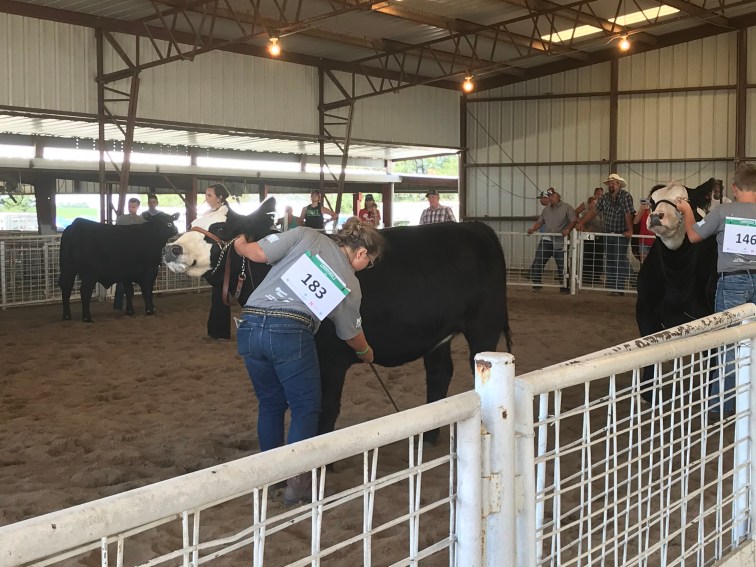
Shows are for only immediate family members/guardians of that exhibitor in attendance at the shows. All livestock shows will be available for online viewing to the best of our abilities.  Please be respectful of our youth and realize this face-to-face option will only happen with community support and being respectful of our youth and following of public health department guidelines.

Livestock shows will be streamlined through striv and can be accessed at go.unl.edu/fillmoreshows. Other updates, including the Fillmore County Static Exhibitor Showcase, livestock programs and Champions of Fillmore County video will be available on the county extension’s website and social media. Go to fillmore.unl.edu for all of the latest updates.

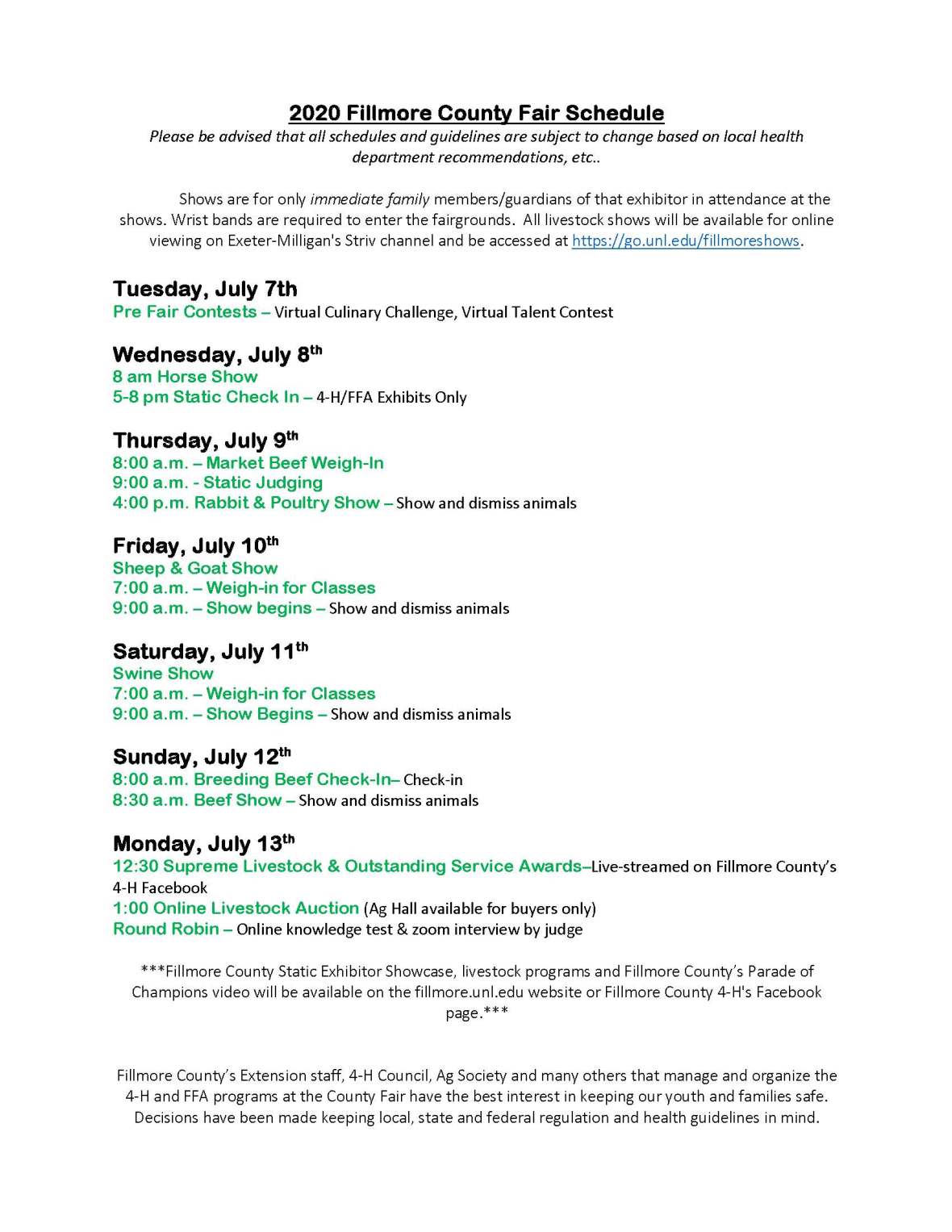
2020 Fillmore County Fair Schedule

Please be advised that all schedules and guidelines are subject to change based on local health department recommendations, etc..

Shows are for only immediate family members/guardians of that exhibitor in attendance at the shows. Wrist bands are required to enter the fairgrounds.  All livestock shows will be available for online viewing on Exeter-Milligan’s Striv channel and be accessed at https://go.unl.edu/fillmoreshows.

Fillmore County Static Exhibitor Showcase, livestock programs and Champions of Fillmore County video will be available on the fillmore.unl.edu website or Fillmore County 4-H’s Facebook page.FillmoreFairPublicSched2020

Youth

Helping Others

hands people friends communication
Photo by Pixabay on Pexels.com

One of the things I love about rural communities is the amount of help and support given when people go through difficult times. I can attest to that, on several occasions. For example, when my mom had her stroke in 2011, neighbors, coworkers and friends        stepped up to provide support, send cards and helped out when I was needing to make trips to visit her. Also in 2011, 2012 and 2014, I was laid up with ankle surgery and very blessed that many people in the community helped watch my girls, made meals for our family and showed many other acts of kindness.  A quote by Ralph Waldo Emerson is one of my favorite, “The purpose of life is not to be happy. It is to be useful, to be honorable, to be compassionate, to have it make some difference that you have lived and lived well.”

Recently, I’d like to give special recognition to County 4-H Councils, 4-H superintendents, FFA advisors and county fair board/ag societies for the numerous hours spent working to allow youth to showcase their projects. I have been so amazed at the creativity, dedication and time spent to help us as Extension staff find ways youth can be celebrated. While county fairs will look different and there won’t be the opportunity to socialize as normal, I am so excited that youth will be able to compete and continue learning life skills.

A part of the 4-H pledge is to “pledge one’s hands to larger service” and “heart to greater loyalty”. These are the values we try to instill in our 4-H youth. It is great to see youth helping each other during 4-H workshops and programs and friendships being made. There is actually research that shows how helping others has benefits for themselves. A professor, Thomas G. Plante from Santa Clara University and adjunct clinical professor of psychiatry at Stanford University has found that his students who attend a spring break trip working with people in poor and marginalized areas managed stress better than those who did not attend trips. He believes the research finding is due to a matter of perspective. Additionally, when helping others, you generally experience more empathy, compassion and solidarity with others as well.

As we approach county fair season, it is important to remind adults, as well as youth of 4-H’s core values of helping others with our hands. It might improve their stress management abilities and make for a smoother fair for all involved. Rather than seeking out problems, remember the 4-H pledge and help others. You’ll likely be happier and create a better experience for everyone around you. So, instead of only worrying about your exhibits or animals or trying to get others in trouble, consider helping a fellow exhibitor and fill one’s bucket with water or calling that person and telling them their animal is running low on water. If an exhibitor is struggling to know where to check-in their static exhibit, offer to help them.

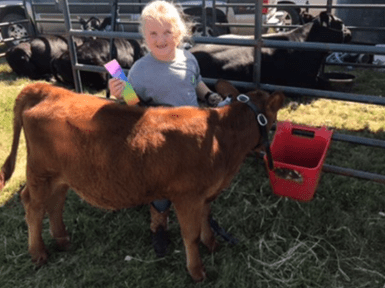
By practicing these small acts of kindness, you might be surprised how much less stressed you and those around you will be. I am certainly appreciative of a 4-H parent who helped my daughter last year by putting her calf in after it somehow got out of its pen. “I pledge my head to clearer thinking, my heart to greater loyalty, my hands to larger service and my health to better living, for my club, my community, my country and my world.”  If we practice these principles, we can make a positive difference in the lives of others.

Youth

Youth Handling Grief

Two of my colleagues provided a great article on helping youth deal with grief during these changing and challenging times so I’ve included it on this blog post.

woman in gray tank top

Could this be Grief? Loss, Disappointment, and Cancellations

Written by Dr. Holly Hatton-Bowers and Dr. Amy Napoli

Many of us have experienced major changes in our daily routines and activities.  We have experienced loss of social connections, normalcy of routine, and a sense that life is forever changed. For youth, they have experienced these changes and losses too. Abrupt school closures, not being able to participate in ceremonies and cancellations of summer camp or family vacations can bring feelings of sadness, disappointment, and frustration.

It’s important to know that youth may be experiencing grief.  According to the National Institute of Health, grief is defined as a reaction to a major loss of someone or something. It is common for young people to feel grief during this time of great uncertainty. For some, this will be their first major encounter with grief; therefore, it can be helpful to understand the experience of grief: the emotions, behaviors, and/or reactions. Grief is universal and also personal.

Grief is normal and can be shown in different ways. Some youth may withdraw and become quiet, some will cry more easily, some will be more argumentative and irritable, push people away or become clingier.  Sometimes feelings of grief will lead to physical symptoms, such headaches or stomach aches. Grief can be overwhelming, confusing, and particularly challenging during a pandemic. Furthermore, grief is cyclical in nature. Unfortunately, it is not something you experience once and then it is over.

What can caring adults do to help young people experiencing grief?   Support them by helping them identify their experience as grief.   Learning about grief can help youth understand their experience, name their experience, and give them some ideas to be in control of their feelings. It is important to remember that youth are resilient. Research finds that in difficult times and changes, having a caring and supportive adult can help young people.

Here are some ways adults can support youth:

  • Be available, present, and patient to talk about grief. Youth may not be ready to talk about their grief, loss, and disappointments right away. Be available and patient when they are ready to talk. It may take time to go through the process of grief.
  • If youth are ready to talk, simply listen. Empathize with them and actively listen through eye contact, limit interrupting, and demonstrate interests through verbal and nonverbal communication. A head nod, gentle pat on the shoulder, or saying “I appreciate you sharing this with me or I am here to listen to you, is there anything else?” are ways to show active listening.
  • Help youth understand that we all have times when we experience grief. You can say, “I understand this is difficult. You seem disappointed. It is really hard to miss out on this. Do you want to talk about it?” When you see youth are upset, it is best to first acknowledge these feelings and offer some understanding. Listen and accept their thoughts and feelings unconditionally and refrain from judgement.
  • Try not to go into a “I need to fix this” mindset. Seeing youth experience strong feelings, like disappointment and grief, can be difficult. Avoid minimizing or reassuring them that “it will be ok” or “it is fine.” These types of statements can feel dismissive. Create a safe space for youth where they can be heard.
  • Acknowledge that everyone responds to grief in different ways. Some youth may be angry, some will be stubborn, sad, or silent. These are all common ways of responding. Let youth express these strong feelings in safe ways.
  • Be a good role model. Youth observe how adults handle disappointment, frustration, sadness, and anger. When you feel upset, model mindful breathing or share your feelings with others, this shows youth it is safe and okay to feel their feelings.
  • Help youth reflect to find meaning in these experiences. It may be helpful to support them in helping others and finding gratitude. When they are ready, ask them what they are learning through this experience.
  • Find moments to laugh and express joy. Help youth understand that it is common to experience different feelings and emotions at the same

These resources can provide additional support and help:

These are difficult and painful times. Youth experiencing grief need a caring, available adult who is there to help them gain skills to be more resilient.  Learning healthy ways to cope with these difficulties and strong feelings are important lifelong skills.
More information and resources about youth social-emotional development in difficult times can be found at http://disaster.unl.edu/families or by contacting your local county Nebraska Extension office.

Photo by Andrea Piacquadio on Pexels.com

Crops, Programming, Youth

Youth Crop Scouting Competition

IMG_3105Looking for a fun club project? Want to unite your club members? Running out of ideas for club meetings?  If you answered, “yes” to any of these questions, help is on the way!  Nebraska Extension is pleased to present the 5th annual Crop Scouting Competition for Nebraska youth. Youth interested in crops have the opportunity to learn about crop growth & development and basic crop scouting principles.

Don’t know a lot about crops?  Ask a local agronomist to assist by providing a short lesson on crop production. You can have the agronomist meet with youth a little during each meeting or outside of the meeting. This is one way to engage those youth interested in crops.

This contest will be held at the ENREC near Mead, Nebraska on July 28, 2020, pending directive health measures at that time. If a live competition is unable to occur, a virtual option will be conducted.  Teams of middle school thru high school students (those completing 5-12th grades) from across Nebraska are invited to participate. This year, to comply with directive health measures, the event is limited to the first five teams who sign-up!

Clubs or other organizations may enter a team composed of three to five participants. An adult team leader must accompany each team of students. Team leaders could be FFA advisors, crop consultants, extension staff, coop employees, etc.

Top-scoring teams win prizes: $500 for first, $250 for second, $100 for third place. Unfortunately, there will not be a regional competition this year.

Teams will be expected to know the basics of scouting corn and soybean fields. This includes crop staging; looking for patterns of crop injury; disease, insect and weed seedling identification; etc. Other topics many include but are not limited to, pesticide safety, nutrient disorders, and herbicide injury.

More information about the crop scouting competition and instructions on how to register a team are available online at cropwatch.unl.edu/youth. Register at: https://go.unl.edu/cropscoutingreg.

Teams must be registered by July 15. This program is sponsored by Nebraska Independent Crop Consultant Association and Nebraska Extension.

Horticulture

Bagworms

One common horticultural pest our office receives questions on is bagworms. Bagworms feed on the foliage of a wide variety of trees and shrubs, but are of most concern for evergreens, especially junipers. Bagworms overwinter as eggs in their bags which are attached to tree branches. The eggs hatch in mid-May to early June. As bagworms grow, leaf fragments are added to bags which often grow to 2 inches in length by the end of the summer. The earliest signs of bagworm injury in evergreens are brown or stressed needles at the tips of branches. Heavy infestations  of older bagworms may completely defoliate a tree or shrub and if severe enough can kill the tree or shrub. Less severe injury will slow growth and stunt plants.

To control bagworms on small trees or small infestations, remove the bags by pulling them off the branches and immersing them in soapy water. If you place the bags next to the tree, the larvae might return to the host plants. If you have bagworms in a windbreak or large tree, insecticides are most effective when applied during early bagworm development. For early season damage, insecticides from mid to late June when bags are less than ½ inch in length are effective. By late August, chemical control is no longer effective as the bagworms have ceased feeding and are enclosed within their bags.

Reduced-risk insecticides to use contain Bacillus thuringiensis (Bt) and insecticidal soaps are quite effective on young bagworm larvae but may require repeated applications. Additional insecticide options for bagworms include: acephate, bifenthrin, carbaryl, cyfluthrin, malathion or others. As always, be sure to read and follow all label instructions and use all insecticides with caution to avoid exposure to humans, pets, wildlife and other non-target organisms.

For more information, check out Nebraska Extension’s NebGuide on bagworms which can be accessed online through extension.unl.edu website.

Crops, Programming, Youth

Tractor safety course for teens

The Central States Center for Agricultural Safety and Health at the University of Nebraska Medical Center, College of Public Health and Nebraska Extension have announced new plans for the tractor safety training course that was originally scheduled to be held at 12 sites across Nebraska this spring and summer. The new plans are designed to protect the health of the students and trainers during the COVID-19 pandemic.  Students will take the first day of the course online through the eXtension Foundation Campus website. After successfully completing the online course and testing, the required driving test will be offered at five locations across Nebraska July 27-31, 2020.

green and yellow tractor on dirt
Photo by John Lambeth on Pexels.com

Teens 14 or 15 years of age who work on farms, or others who are interested in learning about safe farming practices, are encouraged to register for the Course. Anyone under age 14 is not eligible to take the class.

Federal law prohibits children under 16 years of age from using certain equipment on a farm unless their parents or legal guardians own the farm. However, certification received through the course grants an exemption to the law allowing 14- and 15-year-olds to drive a tractor and to do field work with certain mechanized equipment.

Susan Harris, University of Nebraska Extension Educator, reports that a common cause of agricultural-related injuries and deaths in Nebraska is overturned tractors and ATVs. She emphasized that this course is designed to train students how to avoid these incidents as well as many other hazards on the farm and ranch.

The online course will cover the required elements of the National Safe Tractor and Machinery Operation Program, including quizzes which students must pass to attend the driving portion of training. Once a student is registered, they will be sent a training manual, course paperwork and a link to the online course.

The onsite driving training and exam will include a driving test and equipment operation and ATV safety lessons. Students must demonstrate competence in hitching and unhitching equipment and driving a tractor and trailer through a standardized course. Instructors will also offer education about safe behaviors and laws for ATVs, utility-task vehicles (UTVs), and other off-road vehicles (ORVs).

In order to protect students and trainers, the number of students on site will be limited to allow proper social distancing. All students and trainers will be required to wear a mask at all times during instruction and driving. Masks will be provided along with instructions for proper use. Equipment, steering wheels, control knobs, hitches, will be disinfected before and after each student completes their testing. Students who have had a fever or persistent cough within 14 days of testing will be required to reschedule their driving test. Additional driving tests may be added in August to accommodate students who are unable to attend the 5 scheduled trainings.

Instructors for the course are members of the Central States Center for Agricultural Safety and Health: Aaron Yoder, Ellen Duysen; UNMC graduate student Alyssa Damke; and Nebraska Extension educators Troy Ingram, Randy Saner, and John Thomas.

Cost of the modified course is $40 and includes educational materials, online learning link, and supplies. More information on the 2020 Tractor Safety Course can be found at kearney.unl.edu.

Driving dates, site locations, and site coordinator contact information is below:

  • July 27 – Akrs Equipment, 49110 US Hwy 20 in O’Neill, contact Debra Walnofer, 402.336.2760, dwalnofer2@unl.edu
  • July 28 – Legacy of the Plains Museum, 2930 Old Oregon Trail #8500 in Gering, contact Stacy Brown, 308.632.1480, sbrown7@unl.edu
  • July 29 – West Central Research & Extension Center, 402 West State Farm Rd., North Platte, contact
  • Randy Saner or Vicki Neidhardt 308.532.2683, saner@unl.edu
  • July 30 – Hall County Extension, 3180 W. Hwy 34, Grand Island, contact Nancy Usasz, 308.754.5422, usasz@unl.edu
  • July 31 – Cass County Fairgrounds, 8420 144th St, Weeping Water, contact Sandy Prall, 402.267.2205, sprall2@unl.edu

For more information or to register, contact the appropriate Extension staff member above.  Visit kearney.unl.edu for a registration form.

Horticulture, Programming

Online Gardening Program

There has been a huge interest in gardening during this time period. For some people, this might be their first time with a garden and for some, we’ve been gardening for years, but are always looking for tips to improve productivity. If you fit into one of those categories, join Nicole Stoner, Gage County Extension Educator, for an online seminar about managing your backyard garden on Tuesday, June 2, 2020, 6:30 PM – 7:30 PM.  To receive the Zoom login, contact Nicole by Friday, May 29, 2020 at nstoner2@unl.edu.

Gardening Online Program Flyer, 2020

Programming, Youth

Nebraska Extension Showcasing 4-H’ers at County Fairs

Nebraska Extension is working to make sure all 4-H’ers across the state have the opportunity to showcase their hard work come county fair time this summer. Since COVID-19 hit, rest assured Nebraska 4-H faculty and staff have been diligently working on numerous plans and options to celebrate our youth and showcase their hard work. Recently, our Dean and Director, Chuck Hibberd released an article which also describes our efforts.4h_mark1

County fair boards and agricultural societies in Nebraska’s 93 counties are determining what their county fairs will look like – or whether to have them at all — as the state responds to COVID-19. Nebraska Extension is working with these groups to design in-person or virtual 4-H experiences or a combination of both appropriate for each county.  Recommendations of both the governor’s office and Nebraska’s district health departments will determine what strategies will work best on a county-by-county basis.

“We are absolutely committed to making sure all youth who take part in 4-H across Nebraska have the opportunity to exhibit their hard work at a fair,” said Chuck Hibberd, dean and director of Nebraska Extension. “We are equally committed to protecting the health and safety of our youth, volunteers, judges and spectators.

Nebraska has one of the highest 4-H participation rates in the nation, with one in three – a total of over 140,000 — youth engaged in the program. Nebraska Extension began adapting 2020 4-H programming to virtual formats back in March, when social distancing and other directed health measures were first put in place. Locally, I’m proud to say that Clay and Fillmore Counties actually reach one in two – youth engaged in the program.

“Fairs may look different than they have in the past with social distancing, different arrangements for livestock shows, and the possible option for virtual shows; we also know that the fair experience is an important part of a 4-H’ers summer,” Hibberd said. “We are excited to be able to make that happen.”

Additional information for county fairs will be available as details are finalized.  Please be patient with our staff and council members as we work through options.

Crops, Horticulture, Irrigation, Livestock

Hail Know: Resources To Remember This Growing Season

Screen Shot 2020-05-22 at 2.14.03 PMWhen hail strikes and growers have questions, Nebraska Extension has new resources to answer them at Hail Know located online at cropwatch.unl.edu/hailknow. Videos, infographics, and articles by a team of Extension experts in climate science, agronomy, engineering, agricultural technology, economics, and disaster education have been developed to build upon and expand Extension’s hail-related programs. Hail Know focuses on six key topics: Hail formation and storms; damage assessment; crop insurance and risk management; replanting considerations; managing a recovering crop; and cover crops.

In the aftermath of a hailstorm visit Hail Know for the answers and certainty, you need to make sound, research-based decisions to manage your crop. Hail Know is also on social media. Follow @HailKnowUNL on Twitter at twitter.com/HailKnowUNL and like Hail Know on Facebook at facebook.com/HailKnowUNL for all the latest information and updates.

Hail Know is a section of CropWatch.unl.edu, Nebraska Extension’s crop production and crop pest management website. The development of Hail Know was funded by a USDA National Institute of Food and Agriculture (NIFA) Smith-Lever Special Needs Grant with matching funds from the University of Nebraska-Lincoln. The column was co-written with Ashley Mueller, Nebraska Extension Disaster Educator. While you cannot prevent hail, you can prepare for and respond quickly when dealing with hail damage to crops. Nebraska Extension is here to help you make informed, timely decisions. Know your crop, know your tech, know your bottom line.