
What ARE all those annoying little bugs biting us? Check out Nicole’s blog to find the answer!
4-H Week Social Media Contest

Insect Invaders
With the cool temperatures, pests start seeking shelter for warm places like your house, so this week I’m sharing information on keeping these pests out of your house.
Some of the more common nuisance pests include occasional invaders like boxelder bugs, multicolored Asian Lady Beetles, millipedes, and crickets. These pests don’t do any harm once inside the home; they are just looking for a cozy place to spend the winter. Proper identification of the insect will assure the proper control method. Boxelder bugs are black and orange true ‘bugs’ that can be found in large numbers around foundations sunning themselves or trying to find their way inside. Multicolored Asian Lady Beetles are the orange ‘lady bugs’ with black spots. Their distinct smell and ability to bite makes them even more of a nuisance once inside the home. Millipedes are often misidentified as ‘wire worms.’ These skinny, brown critters have two legs per body segment and will curl up when disturbed. Crickets hop their way into homes and provide ‘music’ in the night with their chirping. Commonly it’s the black field cricket that migrates inside, but there are others that follow right behind.

Wolf spiders may look scary, but they are more bark than bite. These large, hairy spiders can be found both outdoors and occasionally inside the home. They are not poisonous, nor do they want to disturb people. They are hunting spiders, so they don’t spin a web or a trap, but prefer to chase down their prey. They often find their way into homes in the fall following their favorite food source the cricket.
The saying “an ounce of prevention is worth a pound of cure” has never been truer. Discouraging occasional invaders from entering the house is going to take a little work, but it will be worth it in the long run. Start by finding and sealing up any cracks or spaces they could enter through with silicone caulk or expanding foam. Make sure that window screens are in good repair and that doors are tight fitting. Also remove any dead plant debris from window wells.
Pests can be discouraged from entering the house in a number of ways. The most common way is by applying an outdoor perimeter insecticide treatment. These insecticides are labeled for various pests and often times have residual effects to help protect the house for longer. Read and follow the label instructions on how and where these products should be applied. Ideally, try to apply these insecticides out from the foundation about five to ten feet around the perimeter of the home. The insecticides will help to decrease the numbers of pests that make it inside the house, but don’t expect it to stop all of them.
Monitor the home regularly to see what pests have made their way inside. Glue boards are sticky boards used to catch and hold pests as they try to move throughout the home. Be sure to use sticky boards in locations where non-target animals, like pets, won’t get stuck in them. If something other than the target pest does happen to get ‘caught’ in the trap, use an oily material, like vegetable or mineral oil, to dissolve the sticky substance on the trap. When properly placed, these traps will allow you to see which pests are inside the home and their approximate numbers.
Once pests are found inside the home, there are a few techniques that you can use. The handy broom and dustpan or the vacuum are two techniques; they are also very environmentally friendly and very cost effective. Be careful when selecting insecticides for use inside the home. Read and follow instructions carefully as many of these products have to come into contact with the insect themselves and don’t offer much residual protection. With a little prevention and monitoring you can ensure that you are sharing your home with wanted house guests this fall and winter.
Youth to Celebrate National 4-H Week
Every year, National 4-H Week sees millions of youth, parents, volunteers and alumni come together to celebrate the many positive youth development opportunities offered by 4-H. The theme for this year’s National 4-H Week, Opportunity4All, is a campaign that was created by National 4-H Council to rally support for Cooperative Extension’s 4-H program and identify solutions to eliminate the opportunity gap that affects 55 million kids across America.
With so many children struggling to reach their full potential, 4-H believes that young people, in partnership with adults, can play a key role in creating a more promising and equitable future for youth, families and communities across the country. In 4-H, we believe every child should have an equal opportunity to succeed. We believe every child should have the skills they need to make a difference in the world.
Fillmore and Clay County 4-H will observe National 4-H Week this year by highlighting some of the inspirational 4-H youth in our community who are working tirelessly to support each other and their communities.
“We believe youth perspectives are so important and a solution to eliminating the opportunity gap, because young people come with new ideas and new ways of seeing the world,” explains Jennifer Sirangelo, President and CEO of National 4-H Council. By encouraging diverse voices and innovative actions, 4-H believes that solutions can be found to address the educational, economic and health issues that have created the opportunity gap.
Check out all of the fun activities that are being done on the Fillmore County website at fillmore.unl.edu, including a pumpkin decorating contest. Wear a 4-H shirt on Wednesday and post on the Fillmore (https://www.facebook.com/fillmorecounty4h) or Clay County (https://www.facebook.com/UNLClayCounty) FaceBook pages! Fillmore County 4-H early enrollment opens October 15th.
In both Clay and Fillmore Counties one out of two, age-eligible 4-H youth from the community are involved in 4‑H. One of the most anticipated events of National 4-H Week every year is the 4-H STEM Challenge, formerly known as National Youth Science Day. The theme of this year’s event, which is expected to see hundreds of thousands of youth across the nation taking part throughout October, is Mars Base Camp. Developed by Google and Virginia Cooperative Extension, Mars Base Camp is a collection of activities that teaches kids ages 8-14 STEM skills, including mechanical engineering, physics, computer science and agriculture.

To learn more about how you can get involved, visit http://www.4-h.org/.
About 4-H
4-H, the nation’s largest youth development and empowerment organization, cultivates confident kids who tackle the issues that matter most in their communities right now. In the United States, 4-H programs empower six million young people through the 110 land-grant universities and Cooperative Extension in more than 3,000 local offices serving every county and parish in the country. Outside the United States, independent, country-led 4-H organizations empower one million young people in more than 50 countries. National 4-H Council is the private sector, non-profit partner of the Cooperative Extension System and 4-H National Headquarters located at the National Institute of Food and Agriculture (NIFA) within the United States Department of Agriculture (USDA).
Learn more about 4-H at www.4-H.org, find us on Facebook at www.facebook.com/4-H and on Twitter at https://twitter.com/4H.
National Farm Safety Week
It is no coincidence that National Farm Safety and Health week falls in September. September marks a busy time for farmers as harvest begins. The busier we get, the increased chance for accidents to occur happens. A couple weeks ago, I provided roadway safety tips for not only farmers, but the general public. This week, I’ve decided to share more tips for farmers to keep safe this harvest season.
According to the National Education Center for Agricultural Safety, the theme for National Farm Safety and Health Week 2020 is “Every Farmer Counts”. The theme is to acknowledge, celebrate, and uplift America’s farmers and ranchers who have encountered many challenges over the past couple of years, yet continue to work hard to provide the food, fiber, and fuel that we need. According to the 2017 Census of Agriculture, there are about 3.4 million agricultural producers in America, which is only about one percent of our population. These farmers and ranchers not only provide the essentials that we need, but they do wonderful things for their families and friends, their communities, and beyond. That is why “Every Farmer Counts” and now is the time to prioritize their safety and health.
Nebraska is fortunate to have the University of Nebraska Medical Center, College of Public Health. UNMC works with the Central States Center for Agricultural Safety and Health and Risto Rautiainen, PhD provides the following farm machinery hazard reminders:
- Protect grain augers to prevent cuts and laceration injuries.
- Protect Power Take-Off shafts with guards to avoid entanglements.
- Old tractors can have poor steps; if possible purchase improved steps to prevent slips and falls.
- Old tractors have poor seats which lead to muscle and joint pain. Replace them to protect your muscles and joints.
- Use good lighting and marking to increase visibility on the road.
- Use protected ladders or (preferably) stairways with guardrails in grain bins to reduce falls.
- Do not enter a bin when the sweep auger is running.
- Oil leaks from worn hydraulic lines can penetrate the skin and enter the blood stream.
- Sharing the road with all types of traffic can be a challenge, so be aware of your surroundings.
- Safety around powerlines should always be front of mind when operating large farm equipment.
Other tips from UNMC, include wearing N95 masks to protect your lungs from dust and wear hearing protection to protect your lungs. Keep fire extinguishers maintained and easily accessible. Talk to your children or children who plan to visit the farm and make sure they are aware of the hazards of large equipment. Do not enter the grain bin alone and communicate with others where you are located.
One thing often not though about is how stress and fatigue can cause accidents. One strategy to prevent clouded thinking is to take time between each task to THINK! Take 5 deep breathes before moving on; this helps your brain function better. During this unique time of uncertainty with low commodity prices, weather-related challenges and in a pandemic, you are an essential work, not only to feed the country but most importantly to your family and friends. Be sure to take care of yourself this harvest season. Get plenty of sleep, eat healthy meals and utilize your network of family and friends and ask for help if needed.
For more tips on farm safety, go to UNMC’s website or The National Education Center for Agricultural Safety’s site. Wishing you all a very successful and safe harvest!
Youth, Science-based School Year Camps
Nebraska 4-H camps in partnership with Douglas-Sarpy County Extension is offering a handful of science-based school-year day camps this fall. Through these experiences, youth have the opportunity to explore the natural world at Schramm State Recreation Area. The sessions are open to all youth ages 6-14. Youth do not need to be enrolled in 4-H to participate. All of the sessions will follow CDC and ACA guidelines for in-person activities, with hand sanitizer, masks, and social distancing. Sessions below are at Schramm State Recreation Area, located midway between Lincoln and Omaha.

Upcoming camps include:
- Crawly Critters Jamboree on Saturday, October 10, 2020 The regular session runs from 9:00 AM – 5:00 PM and is $80. You can do the “Add-On Nighttime Adventure” from 5:00 – 9:00 PM for $20 extra.
Let’s pull our magnifying glasses out and discover some of Nebraska’s crawling critters! Check out some cool insects, amphibians and reptiles with us at our Crawly Critters Jamboree! We will discover some crazy creatures as we investigate the ponds, play with pollinators, visit the Schramm aquarium and drink bug juice! But that’s not all – enjoy a campfire with s’mores and let your imagination run wild with our extended nighttime adventure option! Learn about bats, owls and the stars while exploring the night with all your camp friends!
- Icky, Sticky STEAMY held onFriday, October 16, 2020 from 9:00 AM – 5:00 PM for $80.
No School? No problem! Get MESSY with us on Friday! Join us for an action-packed day of fun and exciting activities! Explore science-y adventures like crawfish dissection, catapults and fishing. Join us for a forest hike and an extreme game of ga-ga! Relax and enjoy science, camp and lots of fun at the Schramm State Recreation Area!
- Blast off with STEAM! is held Saturday, October 17, 2020 from 9:00 AM – 5:00 PM for $80. You can do the “Add-On Nighttime Adventure” from 5:00 – 9:00 PM for $20 extra.
Join us Saturday for an explosive day of awesomeness. Blow off STEAM with rockets, egg drop, slime and more! Have a BLAST with your friends while enjoying a day of science, engineering, outdoor adventures and lots of FUN! But that’s not all – help us explore the night with our action-packed evening adventures as we discover what makes the dark so cool! We are going to look up at the creatures of the night and the bright stars beyond. Owls, bats, stars, campfire songs and gooey s’mores. See you there!
- Spooktacular Halloween Bash is held on Saturday, October 31, 2020 from 9:00 AM – 5:00 PM for $80.
Grab your friends and join us for the spookiest adventure ever! The bats and owls are taking over! Bring your best costume to help scare them away. Dissect owl pellets and examine the skulls of forest creatures. Look out for the pumpkins with faces or maybe create your own! Complete a scavenger hunt around the Schramm trails for extra treats and lots of Halloween MAGIC! We’ll have a super sweet day including caramel apples and tons of camp fun!
Training for ag professionals on crisis, suicidal behavior
An upcoming online training for agricultural professionals will teach individuals how to recognize and respond to potential signs of crisis and suicidal behavior.

Farming and ranching can be stressful in the best of times. Financial worries, unpredictable weather, unpredictable commodity prices, plant pests, livestock diseases and isolation all contribute to a producer’s anxiety. And now Nebraska’s rural communities and families are coping with the unpredictability and imposed isolation produced by the COVID-19 pandemic.
In response to this uncertainty, Nebraska Extension and the Panhandle Public Health District will be offering an online “Question. Persuade. Refer.” training. QPR is a suicide prevention program that teaches participants three steps to help save a life from suicide.
Just as people trained in CPR and the Heimlich maneuver help save thousands of lives each year, people trained in QPR learn how to recognize the warning signs of a suicide crisis and how to question, persuade and refer someone to help.
This 90-minute training will be held online, via Zoom on Thursday Sept. 24, 2020, at 10 a.m. MT. There is no cost to attend the training, but registration is required.
The class is limited to 35 participants. To register, go to https://go.unl.edu/panqpr.
This material is based upon work supported by USDA/NIFA under Award Number 2019-77028-30436.
Source: Dave Ostdiek – Communications Specialist, Panhandle Research and Extension Center, Scottsbluff. You can reach him at 308-632-1230 or via email at dostdiek4@unl.edu.
Harvest Safety
It is hard to believe that harvest will soon be starting and just as a reminder that with harvest comes more traffic on the county roads and other stresses for farmers. It never fails, that equipment can break, there can be delays at the elevator and those extra-long hours can all add extra stress to farmers. That being said, it is important to carefully slow down and realize the many hazards you are being exposed to during harvest.
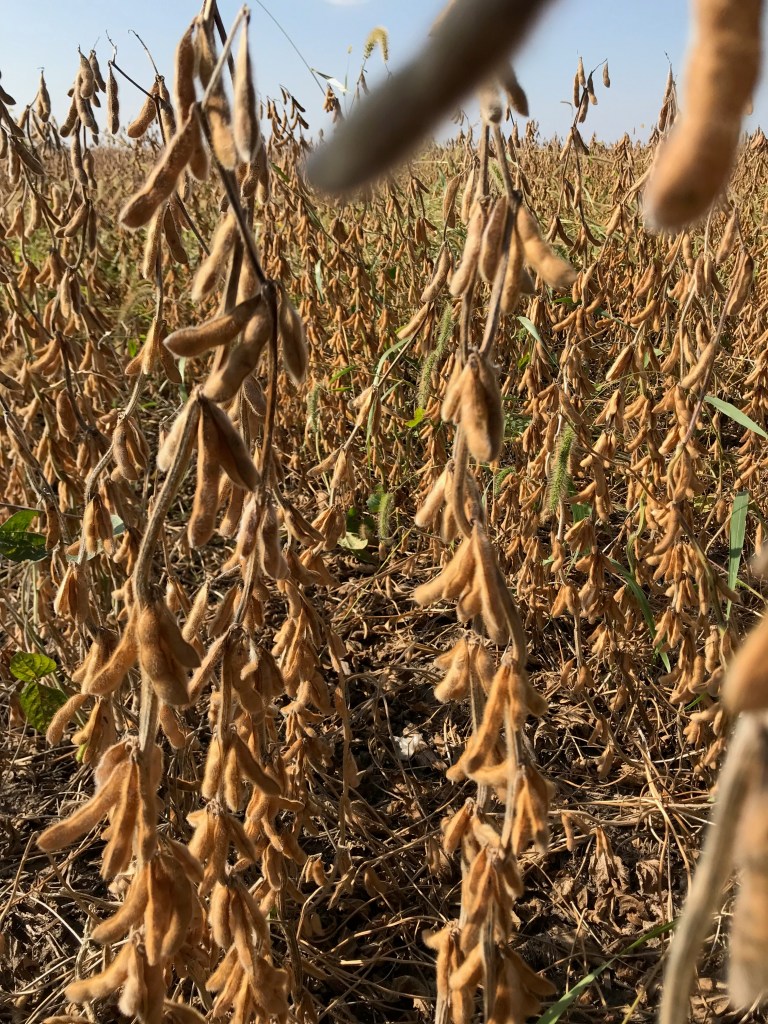
An Iowa State Extension publication, Harvest Safety Yields Big Dividends points out that injuries can occur by taking shortcuts to perform routine tasks, not getting enough sleep or regular breaks, or failing to follow safety practices. Some injuries occur when operators are pulled into the intake area of harvesting machines, such as balers, combines, or corn pickers, and many injuries occur from slips or falls around these machines. Exposure to powerful machinery is highest during the harvest season. The equipment must be powerful to effectively handle large amounts of agricultural commodities. When equipment plugs, NEVER try to unplug it with live equipment, instead always disengage power and turn off the engine before trying to manually clear a plugged machine. Regular maintenance of these machines can also make harvest go smoother. Also, lots of accidents actually happen by the operator slipping and falling off equipment.

In the same publication listed above, there are several tips for reducing fall hazards:
- Always keep all platforms free of tools or other objects.
- Frequently clean the steps and other areas where workers stand to service, mount and dismount, or operate the machine.
- Wear well-fitting, comfortable shoes with non-slip soles.
- Use grab bars when mounting or dismounting machinery.
- Be sure your position is stable before you work on a machine.
- Recognize that fatigue, stress, drugs or alcohol, and age may affect stability.
Other helpful tips during harvest are to keep kids away from machinery. Tell them the dangers that can occur and not to play near the equipment, even when it is shut off; you never know when they will be playing in hidden areas of the equipment. Operators should double check where kids are before moving the equipment. Too many accidents can occur when youth are in the path of equipment out of the operator’s view. Operators of all equipment should check in regularly and let someone know where you are. Keep all guards on equipment; it is there for a reason!
It is also important for the public to understand the increased traffic on public roads and be patient. The greatest threat raised between farm equipment and passenger vehicles is the difference in speed. Farm equipment runs at an average speed of 20 miles per hour while passenger vehicles average 60 miles per hour. If the motor vehicle overtakes a tractor, the impact is comparable to a passenger vehicle hitting a brick wall at 40 miles per hour. If the tractor and a car, mini-van or pickup collides head on, the impact is the same as hitting a brick wall at 60 miles per hour.
Farmers can reduce the chances of an accident by using warning lights, reflectors and reflective tape on their machinery to keep passenger vehicle operators aware of their presence on roads. Some farmers may choose to install supplemental lights to increase visibility. It also is a good idea for producers to keep off heavily traveled roads as much as possible and avoid moving equipment during the busiest part of the day.
Some farm equipment, such as combines, can take up more than half of the road. Even so, it is up to both drivers to be aware of their own limitations and adjust accordingly. Farmers should not take up more space than is needed, but other drivers should try to provide as much room as possible. It is a good idea for passenger vehicles to turn off onto side or field roads until larger machinery has passed. Whenever possible, farmers should use an escort vehicle such as a pickup to precede or follow large machinery and equipment on public roads. More than one escort may be necessary. Ideally, the escort vehicle would have extra warning lights and a sign indicating oversized or slow equipment ahead or following.
Have a safe harvest!
Nebraska State Fair Results
Extension staff and 4-H families put in many hours and hard work at the 2020 Nebraska State Fair. Although it was scaled down very much, it is very much appreciated that the State Fair Board allowed youth to compete and showcase their hard work. If you weren’t able to attend the state fair, 4-H results can be found at: https://nebraska4hresults.com/. On this page, you can also see the show programs, 4-H static exhibit division winners, county booth displays and more!
Best wishes to the FFA youth during the next weekend of state fair!

Land Management Webinar
A very common question we receive every fall or as land leasing is negotiated, is, “What is cash rent in our area?” Fortunately, Nebraska Extension has a yearly publication to provide guidance for this question, however the question a lot of times is, “it depends.” Every person’s situation is different and many factors should be taken into consideration.
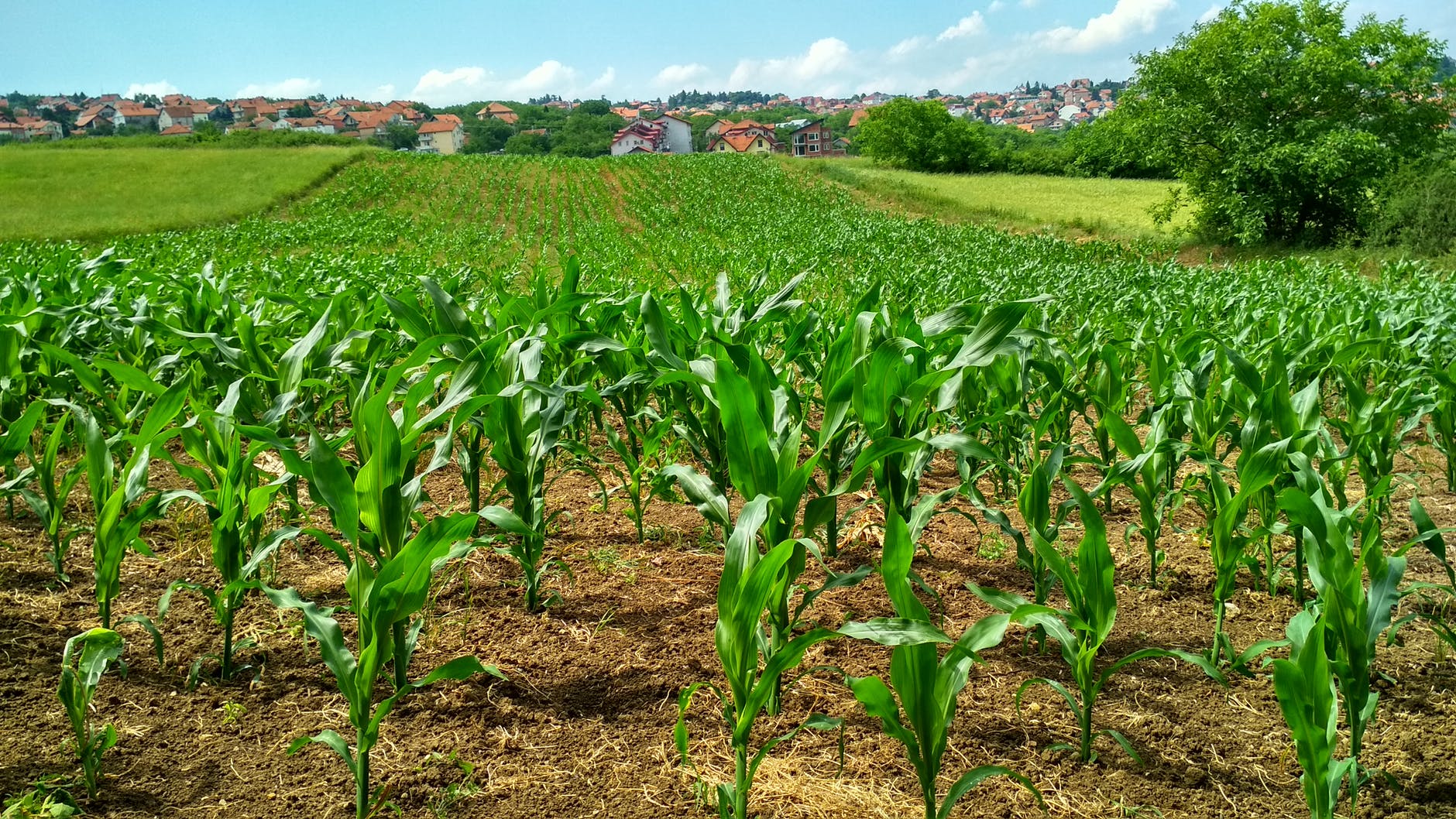
An upcoming Nebraska Extension webinar will focus on land management issues for landlords and tenants to consider in the coming year. Farmland Trends and Lease Considerations for 2021 will be held on Sept. 10, from noon to 1:30 p.m. The virtual workshop will offer information and analysis on cash rental rates, flexible leasing, land/tenant communication, farm succession, and utilizing USDA programs.
It will be presented by Extension educators and agricultural economists Jim Jansen and Austin Duerfeldt, along with Allan Vyhnalek, an extension educator for farm and ranch succession.
The team will be presenting findings on current cash rental rates, innovative strategies for setting equitable lease, and strategic planning for uncertainty due to price volatility in the markets.
The discussion will also address programs and tools available from the USDA to help navigate the uncertainty faced by landowners and operators across the state.
Austin, Allan and Jim have put together an excellent set of topics and have completely rewritten our land management curriculum to help landlords and tenants better manage risk. They encourage landowners, operators, and agribusiness professionals to join in on the live session and hear about new land management strategies as we look forward to the upcoming production year.
The webinar is being held in lieu of the in-person land management meetings that are traditionally held across the state in the summer and fall. Supplemental video presentations will be available and in-person workshops on the topic are intended to resume in late 2020.
It is being presented online as part of an ongoing weekly series produced by the extension Farm and Ranch Management team in the Department of Agricultural Economics. It will be held live on Zoom for approximately 90 minutes, including time for questions from participants.
Registration is free and can be completed at farm.unl.edu/webinars For more information, contact Jim Jansen, Extension Agricultural Economist at 402.472.2560 or jjansen3@unl.edu.

