Programming, Uncategorized

Farm Women are Decision Makers – Annie’s Project Prepares Them Well

It’s been several years since I’ve had the privilege to teach an Annie’s Project class and I’m pleased to announce in January 2016 I will be offering another class. Farm and ranch women are generating a cultural tide in American agriculture that is moving management, assets and opportunities to a new wave of farmers across the country. At Annie’s Project courses, farmwomen become empowered to be better business partners or sole operators through netwAnnieLogoorks and by managing and organizing critical information.

Annie’s Project is a six-week course that is a discussion-based workshop bringing women together to learn from experts in production, financial management, human resources, marketing and the legal field. There’s plenty of time for questions, sharing, reacting and connecting with presenters and fellow participants. It’s a relaxed, fun and dynamic way to learn, grow and meet other farm and agricultural women.

Whether new or experienced, understanding the five areas of agricultural risk, knowing how to analyze agricultural spreadsheets and other necessary skills are vital. Learning them in a friendly environment where questions and discussion are welcomed, allow the learning process to flourish.

Annie’s Project courses have successfully reached more than 9,000 farm and ranch women in 33 states.

Locally, Annie’s Project will start January 25th and run through March 7th in Geneva, NE at the Extension Office on 1340 G Street. Statewide, Farm Credit Services assists in sponsorship of the program. Locally, Flint Hills Resources has generously sponsored nearly all costs making this 18-hour course only $30 per participant! The registration fee guarantees participants a workbook and support materials for all sessions. A light supper will be served before each class at 6 p.m. Course size is limited, so please register soon.

An Annie’s Project alumna says, “I took the class to gain a better understanding about agribusiness and how financial decisions impact our farm operation. I have a better understanding of balance sheets and the futures market…this class has improved communication with my spouse on concerns he works with on a daily basis.”

For more information contact Brandy VanDeWalle, Nebraska Extension Educator at 402-759-3712 or brandy.vandewalle@unl.edu. Registration forms are available at fillmore.unl.edu. More information can be found on the Annie’s Project website..

Programming, Uncategorized

Crop Production Clinics


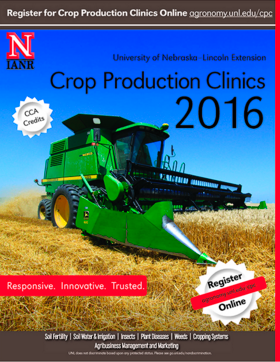
The Annual Crop Production Clinics provide a variety of topics covering farm topics to help producers and agribusiness professionals remain current on research and other relevant topics to improve one’s profitability. A recent CropWatch article summarized what to expect at the Crop Production Clinics in January. Pre-register to guarantee you get a comprehensive pest management guide, meal, and other resources. Some topics covered include:CPCpic16

  • What does it take to produce 80 bu/ac soybean routinely?
  • How can you control glyphosate-resistant weeds?
  • What can you do to delay corn rootworm resistance on your farm?
  • Where is the safety in the farm income safety net?
  • What are the truths and the legends of cover crops?
  • How can you employ climate-resilient irrigation systems?

These are among the many topics to be covered at the 2016 Nebraska Extension Crop Production Clinics this January.  These one-day workshops will be held at nine sites, each featuring location-specific topics as well as timely research updates and recommendations for any farm. Pesticide applicator recertification for private applicators and for commercial/noncommercial ag plant, demonstration/research, and regulatory will also be available. This multi-disciplinary program is designed to help farmers and ag professionals learn about the latest topics with presenters on cropping systems; soil fertility; insect, disease, and weed management; irrigation; soil water management; and agribusiness management and marketing.

All programs start at 8:45 a.m. and end at 4 p.m. A meal and resource materials, including the 2016 Guide for Weed Management in Nebraska and the CPC Proceedings, will be available to those who preregister at agronomy.unl.edu/cpc. Preregistration is $65 or registration is $80 at the door. Preregistration closes 3 p.m. the day before the clinic.

The programs closest to us include:

  • Friday, Jan. 8 — Holthus Convention Center 3130 Holen Ave, York
  • Tuesday, Jan. 12 – Beatrice Country Club 1301 Oak St., Beatrice
  • Wednesday, Jan. 13 — Adams County Fairgrounds 947 S. Baltimore, Hastings
  • Thursday, Jan. 14 — Younes Conference Center 416 W. Talmadge Rd., Kearney
  • Thursday, Jan. 21 —Saunders County Extension Office ARDC (Mead) 1071 County Road G, Ithaca

A maximum of six CCA credits will be provided per day in the areas of crop production (2), nutrient management (1), integrated pest management (6), water management (1), or professional development (2).

For more information, go to agronomy.unl.edu/cpc, or call 402-472-5636. Online preregistration is currently available on the website and program information by site will be added soon.

Horticulture, Uncategorized

Holiday Tree Preparation

With the Holiday season approaching, I thought it was appropriate to include some pointers that Kelly Feehan, UNL Extension Horticulturist provided on selecting a real Christmas tree. If you plan to use a live cut tree, buy a fresh tree. The best way to ensure freshness is to buy from a local grower. To locate area Christmas trees growers, refer to the Nebraska Christmas Tree Growers at nebraskachristmastreegrowers.com. There are 25 Christmas tree farms in the state, located across different areas in 16 counties so it shouldn’t be difficult to find a tree farm. Most of these farms, you can also select the live and harvest it so freshness is nchristmastreeot a concern.

When buying an already cut tree, check the tree closely for freshness. Do not buy a tree with brittle or shedding needles. Tap the base of the trunk on the ground and comb your fingers through branches to look for shedding needles. Bend a few needles in half to check for brittleness. After bringing the tree home, make a clean cut across the base of the trunk to better allow the tree to take up water. Keep the tree in a sturdy stand that holds at least one gallon of water. Check the stand daily as a fresh tree can take up one or more gallons of water each day. Selecting Nebraska grown trees and checking for freshness will help increase safety during the holidays.

Kelly also has tips for cutting holiday greenery. Cutting holiday greenery from your own landscape can help ensure freshness. Pine, fir and cedar are good to use for indoor decoration as they dry out slowly and hold their needles best at warm indoor temperatures. For safety, be aware the red berries of Japanese Yew are poisonous, as are the green needles. Avoid the use of this greenery or be sure to keep Japanese Yew greenery out of reach of children and pets, and do not discard it where cattle or horses might eat it. Cutting greenery is pruning so use clean, sharp cutters and well placed, evenly distributed cuts. This is not the ideal time to prune, so don’t harvest too much greenery and make discreet cuts. Keep greenery in a cool location out of sunlight with the cut ends in water until ready to use the greens. Crush the ends of woody stems to allow the cuttings to take in more water. Immerse greenery in water overnight just before arranging it. This will allow it to absorb moisture and remain fresh longer.

Uncategorized

Thanksgiving Trivia

As we celebrate everything we are thankful for, remember to thank the farmers and ranchers for providing a safe and healthy food source for all of us to enjoy. Test your knowledge with this trivia about turkeys.thanksgiving-turkey-clipart-1

T or F? A turkey hen lays an egg and 28 days later a baby turkey is born.

T or F? The turkey female is known as a hen and male is known as a tom.

T or F? Turkeys are raised for 8-20 weeks depending on desired weights by consumers.


(All answers are true.)
Programming, Uncategorized

Positioning Your Business for Success

The agriculture industry is in a major economic transition. The great commodity super cycle that fueled much of the income statement and balance sheet growth in agriculture is in the rear view mirror. What will be the emerging trends impacting agriculture and rural America’s bottom line in the short and long run? What are the latest trends and views in agriculture? What can you to do position your business for this economic reset?

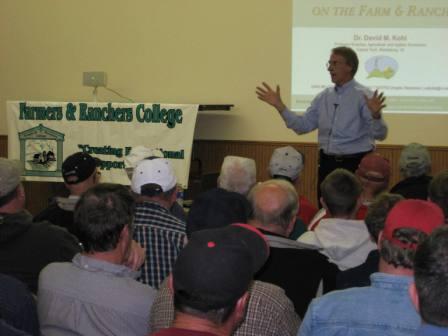
Dr. David Kohl, Professor Emeritus with the Dept. of AAEC, VA TECH will present his challenges & opportunities tool kit to give you some tools to help your business position for success so be sure to attend this information packed, high energy session, sponsored by the Farmers & Ranchers College. This educational program will be held December 15, 2016 starting at 1:00 p.m. at the Bruning Opera House with registration starting at 12:30 p.m. Due to the generous support of area businesses and organizations, this program is free, but arrive early to save yourself a seat!

Crops, Programming

Field Assessments To Improve Efficiency Workshops  

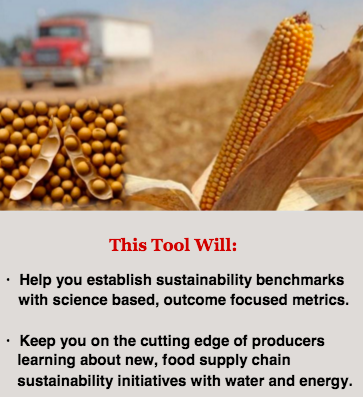
Nebraska Extension in Fillmore County announces that Geneva will be a host site for a new initiative that seeks to enhance the knowledge of Nebraska corn, soybean and wheat producers on their sustainability and operational efficiency measures. Participating farmers will use a new web based tool called the Fieldprint® Calculator. Calculating “Fieldprints” can help growers to establish benchmark data on a field and track improvements overtime, set energy saving and efficiency goals and compare performance against local, state and national benchmarks.FtoMkt1

The Fieldprint Calculator is simple to use, though the technology behind it is very complex.

The new field assessment initiative led by Nebraska Extension is a hands-on workshop and participating growers will take home documentation on eight sustainability and efficiency indicators. These measures are Land Use, Conservation, Soil Carbon, Irrigation Water Use, Water Quality, Energy Use, Greenhouse Gas Emissions and Water Quality. Participants will select a representative crop field for 2015 and complete a data input sheet in advance of the Fieldprint® Calculator workshops. Meals and workshop materials are sponsored thanks to a University of Nebraska Extension Innovation grant. Computer laptops are provided to participants or bring your own.

The workshop instructors include a core team of University of Nebraska Extension Educators and Specialists. They are Randy Pryor, Gary Zoubek, Gary Lesoing, John Hay and Charles Schapiro along with local facilitating Extension Educators.FtoMkt

For more information on the Geneva workshop and to pre-register by the December 3rd deadline, contact the Fillmore County Extension office at 402-759-3712 or email Brandy VanDeWalle at brandy.vandewalle@unl.edu.

Area Workshop Times And Locations:

Lincoln
Monday, December 7, 9 a.m. – 1 p.m.
UNL Extension Office in Lancaster County, 444 Cherrycreek Road
Contact: Tyler Williams, (402) 441-7180 or tyler.williams@unl.edu

Beatrice
Monday, December 7, 5:30 – 9 p.m.
UNL Extension Office in Gage County, 1115 West Scott St.
Contact: Paul Hay, (402) 223-1384 or paul.hay@unl.edu

Auburn
Tuesday, December 8, 9 a.m. – 1 p.m. Nemaha County Hospital Meeting Room, 2022 13th St.
Contact: Gary Lesoing, (402) 274-4755 or gary.lesoing@unl.edu 

Geneva
Tuesday, Dec. 8, 5:30 – 9 p.m. UNL Extension Office in Fillmore County, 1340 G St.
Contact: Brandy VanDeWalle, (402) 759-3712 or brandy.vandewalle@unl.edu

Clay Center
Wednesday, Dec. 9, 9 a.m. – 1 p.m.
UNL Extension Office in Clay County, 111 West Fairfield Contact: Jennifer Rees, (402) 762-3644 or jenny.rees@unl.edu

Central City
Wednesday, Dec. 9, 5:30 – 9 p.m.
UNL Extension Office in Merrick County, 1510 18th St.
Contact: Troy Ingram, (308) 946-3843 or troy.ingram@unl.edu

Fremont
Thursday, Dec. 10, 9 a.m. – 1 p.m. UNL Extension Office in Dodge County, 1206 West 23rd St.
Contact: Nathan Mueller, (402) 727-2775 or nathan.mueller@unl.edu

Mead
Friday, Dec. 11, 9 a.m. – 1 p.m.
UNL Extension Office in Saunders County, 1071 County Road G
Contact: Keith Glewen, (402) 624-8030 or kglewen1@unl.edu


Programming

Cornhusker Economics Outlook Meetings Planned

York will be the location for one of the series of Cornhusker Economics Outlook Meetings offered by Nebraska Extension and the University of Nebraska Lincoln Department of Agricultural Economics.

Topics will include:

  • Kate Brooks, Extension Livestock Economist at UNL will provide outlook and analysis for beef and other livestock producers.
  • Cory Walters, Extension Crop Economist at UNL will discuss the crop outlook and implications for producers.
  • Brad Lubben, Extension Policy Specialist at UNL will discuss the ag policy outlook. Beyond the current policy environment in Washington, Lubben will focus on the role of the farm income safety net and the projected support from farm programs and crop insurance for cash flow planning and risk management decision-making.agoutlook
  • Tina Barrett, Director of Nebraska Farm Business, Inc. will discuss the farm financial outlook and financial management decisions ahead for producers. Building on data from hundreds of farm cooperators in NFBI, Tina will focus on the current financial position and trends for Nebraska agriculture and the financial management challenges and decisions facing producers, with a focus on budgeting and cost control for the year ahead.
  • Jay Parsons, Extension Economist at UNL will discuss farm and ranch risk management issues and decisions. Jay will draw on his expertise in risk management to incorporate the marketing, production, policy, and financial discussion into risk management decisions and strategies for producers for 2016.

The agenda is packaged into a 3-hour format to provide producers the best available information and send them home to ready to make 2016 management and marketing decisions. Although there is no cost to participants, pre-registration is encouraged to plan for facilities, refreshments, and materials. The York session will be held Tuesday, November 17, 1:00 – 4:00 p.m. at the Holthus Convention Center, 3130 Holen Avenue, York, NE 68467.

To register for the York session, call our office at (402) 759-3712 or email Brandy VanDeWalle at brandy.vandewalle@unl.edu.

You can also contact Brad Lubben at 402-472-2235 or blubben2@unl.edu for more information. It should be a great workshop, so I hope we’ll have a large turnout for this meeting.

Crops, Programming, Youth

Science & Research SHOULD Matter

Last week, you might recall that I shared how society in general has become more science illiterate over the past decades and basic definitions of science and research. One particular part of the science definition important to consider and has implications on the agricultural industry. Science as defined by Merriam-Webster, “The state of knowing: knowledge as distinguished from ignorance or misunderstanding”. “As distinguished from ignorance or misunderstanding”… When people make decisions based on science, they are using facts to support their decision; however recently, large companies and food chains are making decisions with ignorance and misunderstanding, rather than using science.

As an educator, the first thing I want to do (and often do), when various companies use their money and marketing schemes to attack agriculture convois fire back with facts and data explaining why or how that particular company is wrong with their bold statements that a majority of the time, have no sound science or data to back their decisions. Some people just don’t enough about an issue or haven’t researched an issue from credible sources and providing the science-based information might work; however an overwhelming majority of consumers just believe what they hear from large companies. After all, large companies have deep pockets to spend on advertising and are savvy in their approaches, such as Chipotle. Blasting the average Harvestwebconsumer with facts is usually not the most effective way to communicate with them. First, we must “meet them where they are.” Find something you have in common with them and try to understand why they feel a particular way about an issue.

An example approach I might take is to engage in conversation with an anti-GMO (genetically modified organism) person. First, find some things we have in common. It might be they have two young children like me, so we can talk about what it is like to be a working mother and raising children. Then, ask that person, why they feel a particular way about GMOs. In a non-defensive way, I can share with them my experiences and knowledge of GMOs and that I have no problems with them and they won’t harm my children. Even if this conversation doesn’t change the person’s mind, it might make them have some respect for my point of view and agree there is a place for all kinds of foods and agriculture. While I understand this type of approach takes time and might not always work, whenever one becomes defensive, it never seems to do any good.

When you take the science illiteracy component and add how disconnected consumers are from agriculture, it is inevitable that misinformation and emotion-driven decisions will be made. Our role as agriculturalists is to engage with people first, and then educate – a clear message I received from the AgChat Foundation conference last year. We need to be engaged in these difficult conversations to help educate others.

As a farmer’s daughter, I can assure my non-agricultural friends, famers are some of the hardest working and intelligent people you will ever meet. I also feel privileged to work with farmers and ranchers and the future of agriculture through our youth. Agriculture is and will always be the backbone of our country and without it, we would not be here today.

Crops, Programming, Youth

Does Science & Research Even Matter?

What is science? What is research? Why does science and research matter? Do they even matter anymore? According to Merriam-Webster, science is defined as, “knowledge about or study of the natural world based on facts learned through experiments and observation.” It also goes on to say, “the state of knowing: knowledge as distinguished from ignorance or misunderstanding” or “knowledge covering general truths or the operation of general laws especially as obtained and tested through scientific method.” Merriam-Webster defines research as, “careful study that is done to find and report new knowledge about something” or “the activity of getting information about a subject.”apple

In this article, I’ve decided to write a two-part series focusing on concerns regarding how decisions of large companies and even consumer decisions are made. First of all, I do not claim to be a scientist or researcher, but my role in Extension requires me to provide clientele research-based, scientific driven information. This is one of the great things about all Extension systems! We do not get paid from companies, so we are non-biased and have access to some of the best researchers in their field who are working on cutting-edge research. When a client calls and needs information, I have access to a whole network of researchers or others with higher education in that particular subject. I can provide my client with solid, data-driven information so he/she can make the best decision possible to solve their problem.

For example, if a client has a horticultural question, I might know the answer based on experience of the topic, but if not, I have a network of horticulturists who have been trained in that area to answer the question. If a client has a question related to food safety, we have a great website with reliable information I can direct them or again, a network of educators focused in nutrition and food-science to refer them. The United States is the envy of many countries for having such a system!

You might be wondering where I am going with this and how does this relate to my definition of science and research at the beginning of this article. The point is, University and even industry scientists have an important role in solving important issues ahead of us such as feeding the growing population and dealing with climate variability and weather extremes. According to Anastasiya Borys in an article from the Harvard Political Review, the decline in the United States’ position as the global leader in science could not only diminish U.S. economic growth, but our national security. In 2014, China graduated more English-speaking engineers than the United States and America’s share of high-tech exports fell from 21 to 14 percent, while China’s rose from seven to 20 percent. There are efforts to improve youth’s interest in science, technology, engineering and math underway in the United States, of which Extension and 4-H are involved.

The above facts are evidence that somewhere along the way, the average American lost a firm grasp of basic scientific facts and concepts. In 2004, the National Science Board published information supporting that “scientific literacy in the United States (and in other countries) is fairly low. Scientific literacy is defined as knowing basic facts and concepts about science and having an understanding of how science works.” Michigan State University Professor, Jon Miller reported that “over recent decades, the number of public policy controversies that require some scientific or technical knowledge for effective participation has been increasing…. (including) any number of issues, such as the siting of nuclear power plants…. and the need for an informed citizenry in the formation of public policy.” Miller, who wrote this article in 2007 pointed out, “Having a basic knowledge of scientific principles is no longer a luxury but, in today’s complex world, a necessity.”

Next week, I’ll explain how this relates to the agricultural industry.

Programming

Farmers & Ranchers College 2015-16 Programming

The Farmers & Ranchers College was formed in January 2000 with the purpose of providing high quality, dynamic, up to date educational workshops for area agricultural producers in south central Nebraska through a collaborative effort between business, industry and higher education leaders. Furthermore, the Farmers & Ranchers College will provide the tools necessary so that agricultural producers will be able to respond positively to these changes using a profitable decision making process.Logo

The Farmers and Ranchers College is a unique opportunity to educate agricultural producers in south central Nebraska. Approximately three hundred producers from fourteen counties and three states participated in the 2014-15 Farmers & Ranchers College programs. Producers attending these workshops managed over 205,000 acres. Participants (46%) surveyed indicated an average of $17.00/acre of knowledge gained from participating for a potential impact of $3 million.

The fourteenth annual Partners in Progress- Beef Seminar featured a variety of industry, University and agricultural organization presenters. Participants managed over 10,000 head of cattle and indicated that on average the information presented will increase their profitability $30/head with a total potential impact of over $300,000.

Contributions and support of area businesses allow participants to attend at no cost, however for programs that have meals, it is requested that people RSVP at least a week in advance for an accurate meal count by calling Fillmore County Extension at (402) 759-3712.Kohl2011 Web

The Farmers and Ranchers College Committee consists of Fred Bruning of Bruning, Bryan Dohrman of Grafton, Sarah Miller of Carleton, Jennifer Engle of Fairmont, Ryne Norton of York, Jim Donovan of Geneva, Bryce Kassik of Geneva, Eric Kamler of Geneva, and Brandy VanDeWalle of Ohiowa.

2015-16 Farmers & Ranchers College Programming

  • December 15, 2015 – “Positioning Your Business for Success” Featuring Dr. David Kohl Professor Emeritus, Dept. of AAEC, VA TECH at the Bruning Opera House – Bruning, NE at 1:00 p.m.
  • January 20, 2016 – “Partners In Progress – Beef Seminar” at the U.S. Meat Animal Research Center near Clay Center from 10:00 a.m. to 3:30 p.m., registration at 9:30 a.m. *
  • March 14, 2016 – Overcoming Challenges with Succession Planning for Families with Dr. Ron Hanson, Neal E. Harlan Professor of Agribusiness, Ag Economics Dept., UNL at Stone Creek in McCool Junction with meal starting at 6:00 p.m. and program to follow. Registration starting at 5:30 p.m. *

*Programs are provided at no cost to the public, but registration is appreciated for a meal count. Please call the Fillmore Co. Extension Office at (402) 759-3712 one-week prior to the program.