Uncategorized

Feeding the Growing World

Last week, Extension faculty and staff from across Nebraska met at the annual state extension conference for professional improvement opportunities, networking and envisioning programming for the future that will make a significant impact on many lives. One of my favorite professional development sessions was “Cancer with Joy” featuring a stage four, thirty-three year old woman who defeated all odds. In her presentation she emphasized the important of facing things with positivity. While most of us know this already, it was an excellent reminder for everyone to face life with positive energy.  She discussed how research shows that people who are happier usually live longer and can battle health challenges better.  

Another major item discussed was the challenges UNL Extension has in contributing to meeting the food demands for the world’s growing population. According to the United Nations, the world’s population hit seven billion on October 31, 2011. The United Nations is projecting the world population to reach 9.3 billion by 2050. As co-leader of the Crops for the Future Extension group, worked on how our programming efforts can help lead the charge in not only making producers more profitability, but the larger goal at hand, being to feed the world. The Institute of Agriculture and Natural Resources at UNL have prestigious faculty such as Stephen Baenziger working to solve this problem and Extension will bring that research to the forefront of producers.

Wrapping up the conference, faculty were able to watch UNL’s month Heuermann Lecture which featured Stephen Baenziger, a small grains breeder in the Department of Agronomy and Horticulture at UNL. Baenziger said that not only will the population reach a over 9 billion, but a wealthier population, will eat the equivalent of what would feed 12 billion today which is causing agricultural scientists to race the clock to produce enough food. His resume was just as impressive as his presentation! The Heuermann Lecture series focuses on providing security in the areas of food, natural resources, and renewable energy for people, as well as on securing the sustainability of rural communities where the vital work of producing food and renewable energy occurs. Learn more about his presentation and past lectures.

Through the Heuermann Lectures, Nebraskans and others can participate in conversations with diverse leaders in various walks of life who are working to meet the world’s food and food-related challenges. The next lecture will be “Conflict & Resolution on the Missouri River” with Bob Kerry on December 12, 2011 at 4:00 p.m. at Hardin Hall in Lincoln or through the web. The 2011 flooding of the Missouri River spawned what is just the latest in a series of conflicts that stretch back to European settlement of land influenced by the river, notes Bob Kerrey, former Nebraska governor and U.S. senator. Kerrey’s Heuermann Lecture focuses on three critical moments when the resolution of conflicts regarding the Missouri River produced federal and/or state laws that continue to affect lives today.

Crops

Farm Service Agency Updates

Below are some items for producers to take notice from Fillmore County FSA Director, Ryne Norton.

Nebraska FSA to Implement GovDelivery

To manage budget constraints, Nebraska FSA will be implementing GovDelivery in FY2012 to distribute newsletters and program information electronically.  Information that is participant or farm specific will continue to be distributed by hard copy mailings.

Producers who choose to participate in GovDelivery will need to fill out Form AD-2047 with their local FSA Office.  The AD-2047 form authorizes us to provide information to customers electronically.  The collection of the AD-2047 is a requirement set by the Office of External Affairs for all email addresses loaded for GovDelivery.

Producers who do not elect to participate in GovDelivery, may not receive future newsletters and program reminders in the mail. 

 USDA Announces Disaster Assistance Sign up for 2010 Crop Losses

USDA Farm Service Agency (FSA) recently announced that the Supplemental Revenue Assistance Payments (SURE) program enrollment for 2010 crop year losses begins November 14, 2011.

Producers across the state experienced several natural disasters during the 2010 crop year that caused hardship and financial losses to many agricultural operations.  According to Ryne Norton, Fillmore County FSA director, “The SURE program provides assistance to producers when disaster strikes, it is encouraged that any producers with 2010 crop losses contact the Fillmore County FSA office to learn more about the program.”

To qualify for a SURE payment, at the 10 percent production loss level the producer’s operation must be located in a county that was declared a disaster for 2010.

Fillmore County did not receive a disaster designation for 2010 therefore producers are eligible for SURE benefits if they had a production loss greater or equal to 50 percent of the normal production for a single crop on the farm.  The definition of a farm for SURE is all crops in which the producer has an interest for the given year.

To meet program eligibility requirements, producers must have obtained a policy or plan of insurance for all insurable crops through the Federal Crop Insurance Corporation and obtained Noninsured Crop Disaster Assistance Program (NAP) coverage on non-insurable crops, if available, from FSA. Eligible farmers and ranchers who meet the definition of a socially disadvantaged, limited resource or beginning farmer or rancher do not have to meet this requirement. Forage crops intended for grazing are not eligible for SURE benefits.

For more information on SURE program eligibility requirements contact the Fillmore County FSA office at 402-759-4463 or visit the website.

Crops, Programming

Landlord/Tenant Cash Lease Workshops

 Do you as a landlord feel that you are not receiving enough money for their cash rent? Do you as a tenant worry about how you will be able to afford to pay rent when yields are poor and/or prices drop? Answers to these and other land lease questions will be provided at the Landlord/Tenant Cash lease workshops being held State-Wide in November and December of 2011. The main purpose of these workshops is to help with establishing and maintaining positive farm leasing relationships.

Topics for discussion include: 1) Expectations from the lease, including goal setting for the rental property; 2) Lease communication, determining appropriate information sharing for both the tenant and landlord; 3) Relatives – tips for farm leases that include relatives; 4) Irrigation System questions, as they pertain to setting lease rates; 5) Alternative cash lease arrangements, flexible provision considerations for your situation and 6) Other topics like grain bin rental will be covered as time allows.

See the list of locations for this set of workshops, which are being sponsored by the Nebraska Soybean Board. All of these workshops will begin with the registration at 5:00 and conclude at 9:00 pm at each location. The meal and handouts are provided. Participation is limited, to register contact the local Extension Office hosting the workshop. The Workshops are free, but you need to register to reserve your spot. Putting together the right lease isn’t about what is being discussed at the coffee shop, or what a University survey of cash lease rates says; it is about what fits both the landlord and tenant for their circumstance and situation. Attending this presentation will provide a set of ideas to work from as those specifics are discussed.

Several sessions include:

November 15 – Wilber – at Sokol Hall – call Saline County Extension – 402-821-2151

December 6 – Hastings – Adams County Fairgrounds – call Adams County Extension – 402-461-7209

December 7 – Central City – Community Room – call Merrick County Extension at 308-946-3843

For more information, please contact Allan Vyhnalek, Extension Educator, UNL, Extension in Platte County. Phone: 402-563-4901 or e-mail AVYHNALEK2@unl.edu

Crops, Youth

Agriculture Careers Galore

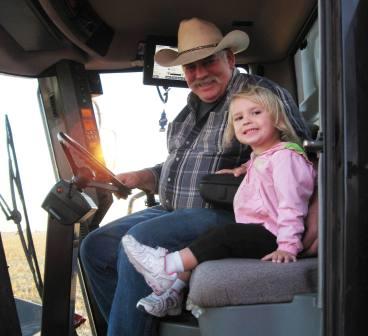
Recently, my three year old daughter had the opportunity to ride with my dad in a combine and loved it!  While this is usually an experience that rural kids have the opportunity to participate, several thoughts came to mind. First, I was somewhat saddened by the fact that my husband and I don’t have a farm and won’t be able to immerse her with all the joys and challenges that living on a farm provides: hauling irrigation pipe, digging thistles, feeding livestock, and also seeing calves born, driving tractors, playing on hay bales, etc.

Then I came to realize that even though my husband and I don’t actually farm, we have been blessed with careers in agriculture that allow us access to work with others in production agriculture, learn about cutting-edge technologies, work with great people and most importantly have the potential to exert a positive difference in the lives of others which is the reason we both majored in agricultural education.  (He is the Fillmore Central agriculture education instructor.)  The point I’m trying to make is that often times youth and even adults think that if you aren’t a farmer or rancher you aren’t involved in an agricultural career when in fact, that couldn’t be farther from the truth.

It is interesting to note that less than 1 percent of Americans claim farming as an occupation, but there are approximately 22 million people who work in agriculture related fields. Agriculture is the nation’s largest employer! There are over 200 different careers one can choose from in the agricultural field alone.  With the diverse careers offered in agriculture, there is practically something for everyone, even if you don’t directly farm or ranch!  

I am proud to say that I work for UNL Extension because of the high quality educational programming we offer. In the agricultural area alone, we teach elementary youth through school enrichment, ag awareness programs, 4-H projects, and assist with many other youth programs such as FFA. Extension provides Crop Production Clinics, Soybean Management Field Days, ag risk management programming, the Nebraska Agricultural Water Management Demonstration Network and many web-based resources such as CropWatch.unl.edu. Taking technical research from scientists and researchers and getting it into an applicable use into the hands of a producer, crop consultant, or rancher is why we are an “extension” of the University of Nebraska-Lincoln. Wherever agriculture is, Extension has a presence in some way, shape or form.

In Nebraska we are also fortunate to have the University of Nebraska-Lincoln’s College of Agricultural Sciences and Natural Resources (CASNR) which offers 28 highly rated academic programs and two pre-professional programs – from Agribusiness to PGA Golf Management – something for everyone.   Its goal is to prepare students as leaders for a future in which demands on food, energy and water systems will challenge sustainability.

When I have my crop science investigation workshops with 4-H’ers we investigate how many careers in our local community are related to agriculture and they are always surprised on the huge impact agriculture has. So whether or not you are the person driving the combine or helping with harvest, there are numerous careers involved in agriculture and I hope you will encourage young people to consider an agricultural career.

Crops, Programming, Uncategorized

Risk Management Education

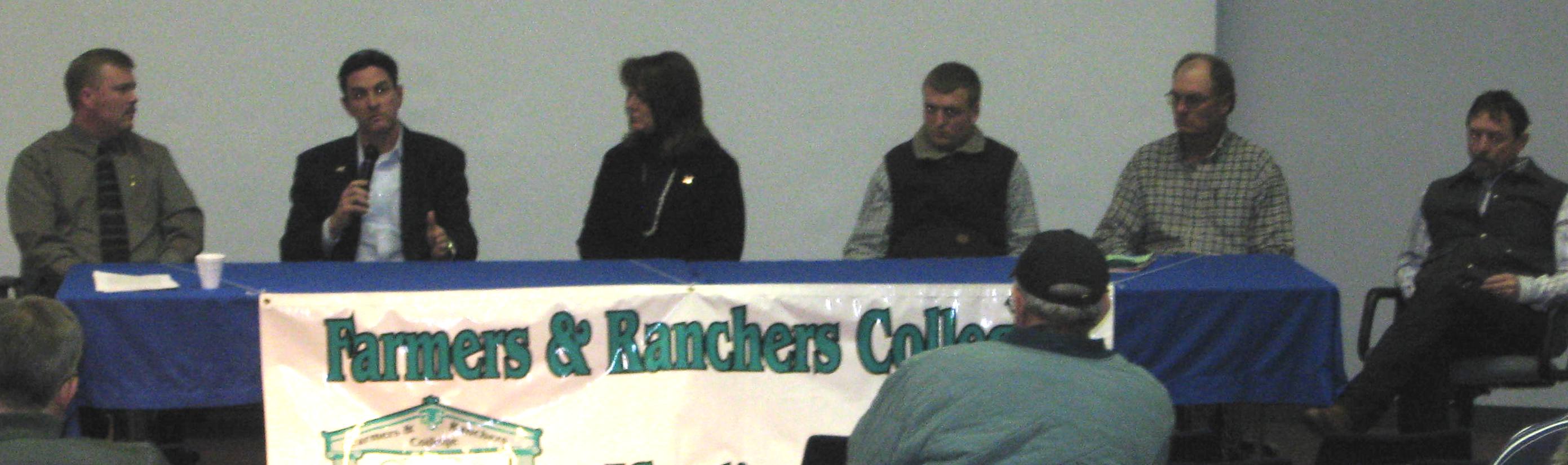
Farmers & Ranchers College Year Planned

The Farmers & Ranchers College was formed in January, 2000 with the purpose of providing high quality, dynamic, up to date educational workshops for area agricultural producers in south central Nebraska through a collaborative effort between business, industry and higher education leaders. Furthermore, the Farmers & Ranchers College will provide the tools necessary so that agricultural producers will be able to respond positively to these changes using a profitable decision making process. The Farmers and Ranchers College is a unique opportunity to educate agricultural producers in south central Nebraska.

During the 2010-11 programs, over 400 farmers, ranchers and agricultural industry representatives from ten counties attended the Farmers & Ranchers College programs. Participants for these programs managed over 150,000 acres and indicated that information learned from attending the program was valued at $20/acre with a potential program impact of around $3 million. Contributions and support of area businesses allow participants to attend at no cost, however for programs that have meals, it is requested that people RSVP at least a week in advance for an accurate meal count by calling Fillmore County Extension at (402) 759-3712.

The Farmers and Ranchers College Committee consists of Fred Bruning of Bruning, Bryan Dohrman of Grafton, Sarah Miller of Carleton, Eric Milton of Milligan, Jim Donovan of Geneva, Bryce Kassik of Geneva, Jake Voss of Davenport, Gordy Nuss of Sutton, and Brandy VanDeWalle of Ohiowa.

 2011 -2012 Farmers & Ranchers College Programming 

  • Nov. 30th – “Global Economic Impacts on the Farm & Ranch” Featuring Dr. David Kohl, 1-4 p.m., Bruning Opera House 
  • Jan. 17th – Cow-Calf College, U.S. MARC near Clay Center from 10:00 a.m. to 3:30 p.m., registration at 9:30 a.m.*
  • Feb. 15th – “Risk Assessed Marketing/Crop Insurance Workshop” Featuring Art Barnaby, KSU with Brad Lubben, UNL at the Fillmore County Fairgrounds – Geneva, NE at 9:00 – 3:30 p.m., registration at 8:30 a.m.* 
  • Mar. 15th – “Discuss the Undiscussabull” Featuring Elaine Froese, Farm Family Coach – Manitoba, Canada – San Carlos room next to Pour House in Friend, NE with 5:30 registration, 6:00 p.m. meal & program to follow**

* Programs are provided at no cost to the public, but registration is appreciated for a meal count. Please call the Fillmore Co. Extension Office at (402) 759-3712 or email to bvandewalle2@unl.edu one week prior to the program.
**Preferred to RSVP 2-3 weeks before event to receive free materials prior to the program.

Crops, Programming, Uncategorized

Farmers & Ranchers College

Farmers & Ranchers College Year Getting Started

The Farmers & Ranchers College was formed in January, 2000 with the purpose of providing high quality, dynamic, up to date educational workshops for area agricultural producers in south central Nebraska through a collaborative effort between business, industry and the University of Nebraska-Lincoln Extension. Furthermore, the Farmers & Ranchers College will provide the tools necessary so that agricultural producers will be able to respond positively to these changes using a profitable decision making process.

 The first session is slated for November 30th at the Bruning Opera House featuring Dr. David Kohl. His interactive presentation will start at 1:00 p.m. and is titled “Global Economic Impacts on the Farm & Ranch”. Twenty-first century agriculture has many more global interconnections than ever before. This workshop will focus on the new mega trends impacting producers’ profitability and lifestyles. What will be the emerging nations’ role? What will be the economic game changers? How can producers position themselves to capitalize on these trends? Do high farmland values represent a credit or asset bubble? Where is the economy heading? Don’t miss this session with Dr. Dave Kohl, Professor Emeritus of Agricultural Finance and Small Business Management at Virginia Tech, as it will increase your economic literacy, which is critical to managing your business and household.

Registration is free due to the generous sponsorship of Farmers & Ranchers College sponsors. For more information, call the Fillmore County Extension Office at (402) 759-3712.

Good Starting Planning Session for Families

The 2011 Ag at the Crossroads Conference will focus on the Theme: “The Transition of Nebraska Agricultural Businesses”. Ag at the Crossroads will be held on Thursday November 3, 2011 with registration at 8:30 am and program from 9:00 am until 3:00 pm at the Lancaster County Events Center in Lincoln, Nebraska. The Nebraska AgRelations Council chose this theme because the generational change bubble is going to result is accelerated ownership changes in Nebraska farms and agricultural businesses in the coming years. AgRelations President Paul Hay says, “We have an outstanding program put together on this incredibly important topic for the future Nebraska agriculture.”

Advance registrations are $45 by October 28 and $50 at the door. Featured speakers are Dave Specht, Coordinator of Family Business Programs and Lecturer at the University of Nebraska-Lincoln College of Business Administration and Ag Economics Departments; Bruce Johnson, Professor of Ag Economics; Larry Kopsa, Partner in Kopsa Otte CPA’s, Joe Hawbaker of Hawbaker Law Office, and Tina Barrett, Executive Director of Nebraska Farm Business, Inc.

You can call 402-472-2821 by October 28 for reservations and pay at the door or send the names of those attending and payment to the Nebraska AgRelations Council, P.O. Box 830918, Lincoln, NE 68583-0918. For more information e-mail Paul C Hay at phay1@unl.edu, call 402-223-1384.

Crops, Uncategorized

Things to do in the Combine

Things to do while in the combine

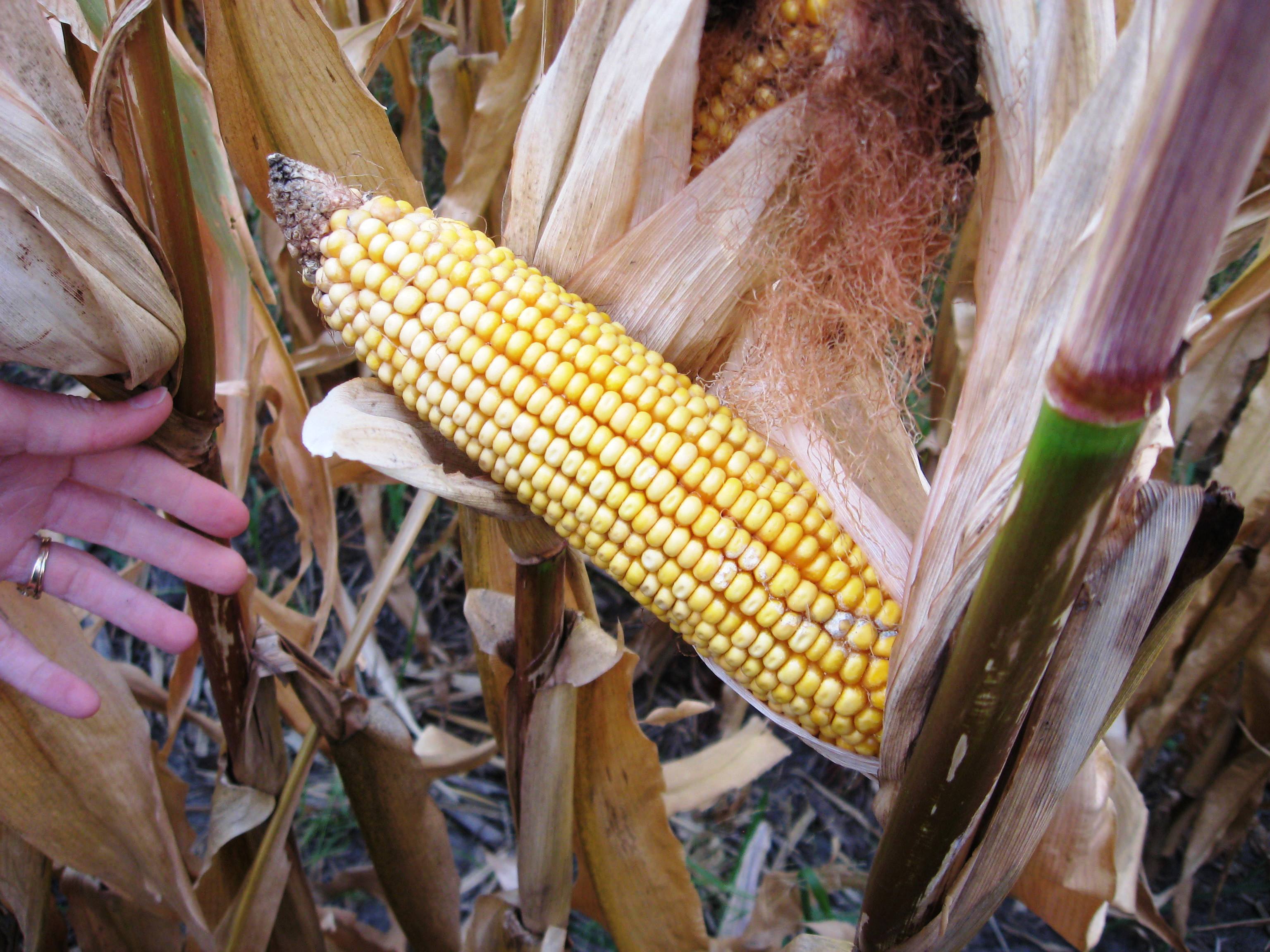
With harvest in full swing, many farmers are probably reflecting on the season, but might not be taking notes for next year. This is the time to start planning for next year’s crops.  While in the combine, look for weed and insect problems to fix for next year. Harvest provides an opportunity for a final evaluation of your weed management program and to a lesser extent, your insect management program. As you travel over all of your fields, take a minute to record observations such as where weeds are present.  Be sure to note the exact locations and details so you know how to correct it for next year.

The next step of being a “crop scene investigator” is to make the linkages and relate weed or insect problems with management decisions that were made.  Use your yield monitor to help you adjust your problem areas. 

Former UNL Weeds Specialist, Alex Martin once provided the following on weed management: Small grass and broadleaf weeds are likely to have developed after the first month of the growing season, perhaps after a POST treatment or cultivation or after a PRE treatment has become ineffective. These smaller, late developing weeds may produce seed and perpetuate the problem but are unlikely to have impacted yield. These late developing weeds are most likely in areas where the crop canopy developed more slowly, allowing penetration of the light necessary for weed establishment. Large weeds present at harvest likely are escapes which were not controlled by your primary weed management program. Depending on the number of these weeds, a change may be indicated for your weed management program. 

You may be able to see indications of herbicide resistance at harvest although the picture would have been clearer with an earlier examination. Herbicide resistance is first evident as a limited number of escapes in the field. There are many causes of weed escapes other than herbicide resistance. The key is to look for scattered large plants or small patches that were not controlled by your primary program. Dead weeds adjacent to the large ones provide even more evidence that resistance may be present. These fields should be monitored closely the next year.

Weed patches indicate that your weed management program is not uniformly effective across the field. There may be several causes, however the effect is the same – these field areas will have higher concentrations of weed seed as compared to the rest of the field. This means the problem next year will be most serious in these patches. If you continue to manage the field as in the past, the patches will persist or become larger. A change in management is needed to prevent “growing” these weed patches.

Finally, perennial weeds typically occur in patches and many are less susceptible than annuals to most weed management programs. Perennials usually call for special attention not warranted on the entire field. Identifying problem areas in the fall can make it easier to target them in the spring.

With a little extra effort at harvest you can gather information that will be useful in developing next year’s weed management program.

Crops, Uncategorized

Thistle Control & Fall Needle Drop

Control Thistles during October

As a kid growing up on the farm, my sister and I were always responsible for controlling the thistles in our pastures and on the farm which usually meant picking the heads off of them and using a shovel to dig the plant out.  Along with hauling irrigation pipe, it was not the most enjoyable job on the farm, but it did teach us hard work and responsibility.  If you have thistles and don’t enjoy digging them, now is actually the time to control them with herbicides.

If you walk out to the usual patches, I’ll bet you find many thistle seedlings.  Most thistle seedlings this fall will be small, in a flat, rosette growth form, and they are very sensitive now to certain herbicides.  So spray this fall and thistles will not be a big problem next year.

Bruce Anderson, UNL Forage Specialist offers some great information on controlling thistles this fall. Several herbicides are effective and recommended for thistle control.  Maybe the most effective is a newer herbicide called Milestone, or a combination of Milestone and 2,4-D called Forefront.  Two other very effective herbicides are Tordon 22K and Grazon.  But be careful with Tordon and Grazon since they also can kill woody plants, including trees you might want to keep.  2,4-D also works well while it’s warm, but you will get better thistle control by using a little less 2,4-D and adding a small amount of Banvel or dicamba to the mix.   

Other herbicides also help control thistles in pastures – like Redeem, Cimarron, and Curtail.  No matter which weed killer you use, though, be sure to read and follow label instructions, and be sure to spray on time.

Next year, avoid overgrazing your pastures so your grass stands get thicker and compete with any new thistle seedlings.  Give some thought now to thistle control during October and November.  Your pastures can be cleaner next spring.

 Evergreens turning brown?

If you have noticed that some of your coniferous trees have started to turn brown and have been loosing needles, more than likely your trees are going through a normal phase of their life cycle called fall needle drop.  This can cause concern for homeowners when they see their evergreen trees turn brown, but realize that  the older needles on the inside of evergreen trees are shed each fall after they turn yellow, brown or reddish tan in color.  Some years the process is very subtle and therefore not noticed, especially when it is on the inside part of the tree.  Pine trees can hold their needles for 2-5 or more years, depending on the species. Spruce trees generally hold onto their needles longer than pine trees do, approximately 5-7 years.

Fall needle drop is a natural condition and is not a sign of disease or insect infestation; however, any factor that increases stress on evergreen trees will intensify the autumn needle drop. Stress factors include drought, herbicide injury, root damage and insect or disease damage.

Uncategorized

USDA Outlines SURE Eligibility Requirements for 2011 and 2012 Crops

Ryne Norton, County USDA Farm Service Agency (FSA) Executive Director Ryne Norton, announced that legislative authority for the USDA LogoSupplemental Revenue Assistance Payments (SURE) program ends on September 30, 2011. Producers must meet specific eligibility requirements to receive SURE assistance for disasters that occur on or before September 30, 2011, and affect fall 2011 and 2012 crops.

The SURE program compensates producers for production and/or quality losses during times of disaster. Producers can apply for a 2011 or 2012 SURE payment if a crop of economic significance located in a primary or contiguous disaster county under a Secretarial Disaster Designation suffered at least a 10 percent loss because of disaster occurring on or before September 30, 2011.

Crops are not required to be harvested on or before September 30, 2011, to maintain SURE eligibility. A loss claim will only trigger after FSA determines that the loss was because of disaster occurring on or before September 30, 2011. Losses that result from disasters that occur after September 30, 2011, will not be eligible for SURE benefits.

Producers with 2011 and 2012 crops that suffer losses caused by disasters that occur on or before September 30, 2011, must also meet the following criteria:

  • For insured crops, the insurance policy defines the coverage period as beginning on or before September 30, 2011
  • For Noninsured Crop Disaster Assistance Program (NAP) crops, the coverage period begins on or before September 30, 2011
  • The final planting date according to RMA and FSA (NAP crops only) occur on or before September 30, 2011.

Ryne also points out that, “If the crop is planted prior to September 30, 2011, but the final planting date is after September 30, 2011, the crop will not be eligible for SURE benefits.”

The sign-up period for 2011 and 2012 SURE will not begin until after the national average market prices are determined for each respective crop year, which is normally one year after the applicable crop year.  For questions regarding the SURE program, please contact the Fillmore County FSA office at 402-759-4463.

 Cover Crops Program

Cover crops will be the focus of a Wednesday, September 28 field day at UNL’s Agricultural Research and Development Center (ARDC) near Mead (1071 County Road G, Ithaca, NE). This free event will be from 1 to 5 p.m. with plenty of time for discussion and to answer your cover crop questions.

The field day will showcase 33 cover crop plots and discuss cover crop options that help build and feed the soil system. Featured cover crops include grasses, legumes, forages, brassicas, cocktail mixes, and others. While these plots were drilled into wheat residue, cover cropping options after corn and soybean harvest also will be discussed.

Speakers will include UNL Extension and NRCS no-till specialists working with cover crops and several cover crop seed vendors who will share their experiences.  Special thanks to Arrow Seed, Green Cover Seed, and Prairie States Seed for providing the seed for the plots.  Door prizes of cover crop seed will be given away for participants to try cover crops on their own farms.

Crops

Road Safety during Harvest

            When tractors, combines and other large machinery begin to use public roads during harvest season, it is important for both farmers and passenger vehicle operators to use extra caution and respect each other.
            The greatest threat raised between farm equipment and passenger vehicles is the difference in speed. Farm equipment runs at an average speed of 20 miles per hour while passenger vehicles average 60 miles per hour. If the motor vehicle overtakes a tractor, the impact is comparable to a passenger vehicle hitting a brick wall at 40 miles per hour. If the tractor and a car, mini-van or pickup collides head on, the impact is the same as hitting a brick wall at 60 miles per hour.
            Farmers can reduce the chances of an accident by using warning lights, reflectors and reflective tape on their machinery to keep passenger vehicle operators aware of their presence on roads. Some farmers may choose to install supplemental lights to increase visibility. It also is a good idea for producers to keep off heavily traveled roads as much as possible and avoid moving equipment during the busiest part of the day.
            However, other drivers also need to take responsibility. Passenger vehicle operators need to think about what they are doing at all times and should not talk on cell phones while driving. A large number of roads traveled by farmers have loose gravel and soft shoulders or no shoulders at all. Therefore, passenger vehicle operators need to slow down and avoid quick turns or fast breaking that could cause them to loose control of the vehicle.
            Some farm equipment, such as combines, can take up more than half of the road. Even so, it is up to both drivers to be aware of their own limitations and adjust accordingly. Farmers should not take up more space than is needed, but other drivers should try to provide as much room as possible. It is a good idea for passenger vehicles to turn off onto side or field roads until larger machinery has passed. Whenever possible, farmers should use an escort vehicle such as a pickup to precede or follow large machinery and equipment on public roads. More than one escort may be necessary. Ideally, the escort vehicle would have extra warning lights and a sign indicating oversized or slow equipment ahead or following.
            Have a safe harvest!

 Fall Lawn Seeding

            Good turfgrass advice from UNL horticulturist, Kelly Feehan: Tall fescue and Kentucky bluegrass lawns with thin or bare areas are best overseeded now; and the earlier cool season, the better. For each day earlier grass is seeded, two days of growth are gained. August 15 to September 15 is the optimum window to seed cool-season grasses. Winterkill and/or poor establishment could result when seeding earlier or later than this. Try to seed turfgrass by September 15. If not possible, try and seed tall fescue before September 20 and bluegrass before September 30 to reduce the risk of winter injury. When seeding, good seed to soil contact is vital for success. To achieve thisw, gradually lower the mowing height to one and a half to two inches and remove clippings. If thatch exceeds one-fourth inch, power rake to reduce it. Before overseeding, core aerate or plug the area two to three times, then overseed and provide adequate moisture throughout fall.