Crops, Livestock, Programming, Uncategorized

Helping Farmers & Small Businesses with Employee Relations

HR 4 Ag & Main Street

Many farmers, ranchers and other small business owners often have little to no training in human resources or leadership related training. This can make it difficult to serve as an effective supervisor and can lead to employee-relation issues. Nebraska Extension has just created a new program, HR 4 Ag and Main Street to help those business owners.Blog graphic.png

The HR 4 Ag & Main Street workshop is a three-hour face-to-face session created by Nebraska Extension and designed for farmers/ranchers and other agriculture and main street business owners. The goal of the program is to provide education on human resource management and human risk mitigation strategies to increase your farm, ranch, or other business’ resiliency and stability. Topics to be covered include: recruiting and retaining the best employees, pay and benefits, motivating and engaging employees, communication, building and leading your team, managing conflict, and more.

The program will be presented at four locations across Nebraska this winter in Norfolk, York, North Platte, and Scottbluff.

  • NORFOLK

Tuesday, January 19th from 1:00 – 4:00 pm, at the Lifelong Learning Center. To register call: Northeast Research & Extension Center (402-379-4000)

  • YORK

Tuesday, January 26h from 1:00 – 4:00 pm, at the York County Extension Office. To register call: York County Extension Office (402-362-5508)

  • NORTH PLATTE

Thursday, January 28th from 1:00 – 4:00 pm, at the West Central Research & Extension Center. To register call: West Central Research & Extension Center (308-696-6740)

  • SCOTTSBLUFF

Tuesday, February 9th from 1:00 – 4:00 pm, at the Panhandle Research & Extension Center. To register call: Panhandle Research & Extension Center (308-632-1230)

This program is made possible through a grant by the North Central Risk Management Education Center. For more information contact a HR 4 Ag team member:

  • Ben Dutton, Extension Educator – Red Willow County (308-345-3390)
  • Jessica G. Jones, Extension Educator – Johnson County (402-335-3669)
  • Tim Lemmons, Extension Educator – Northeast Research & Extension Center (402-370-4061)
  • Marilyn Schlake, Extension Educator – UNL Ag Economics Dept. (402-472-4138)
  • Brandy VanDeWalle, Extension Educator – Fillmore County (402-759-3712)
  • Aaron Yoder, Assistant Professor – University of Nebraska Medical Center (402-552-7240)
Livestock, Youth

Poultry Events Cancelled Across Nebraska

On June 4, 2015 the Nebraska Department of Agriculture cancelled ALL poultry events across AvianInfluenzaNebraska through January 1, 2016. This cancellation comes as an effort to prevent the spread of highly pathogenic H5N2 avian influenza. The ban will include all events where birds are co-mingled including: local and county fairs and festivals, the Nebraska State Fair, Ak-Sar-Ben, swap meets, exotic sales and live bird auctions. Protecting the physical and economic health of Nebraska’s poultry sector is a priority as the virus spreads. Nebraska joins more than 10 states that have taken similar steps to protect their poultry flock.
While the ban will prevent Nebraska 4-H members from taking their birds to the Nebraska county and state fairs this season, youth are still AvianFluContactsencouraged to complete their projects. Nebraska Extension is working to identify options for youth enrolled in poultry projects to showcase their learning and participate in fairs in other ways than having their birds present. “We know 4-H’ers statewide have been learning about the science of animals through their poultry projects; we will help them showcase that work and celebrate their successes in other ways,” says Nebraska Extension associate dean Kathleen Lodl. More information will be available at 4h.unl.edu.

All bird owners, whether commercial producers or backyard enthusiasts, should prevent contact between their birds including wild birds, and report sick birds or unusual bird deaths to state/federal officials. Additional information about H5N2 avian influenza can be found online at www.nda.nebraska.gov.

Livestock

Cow Calf College Program

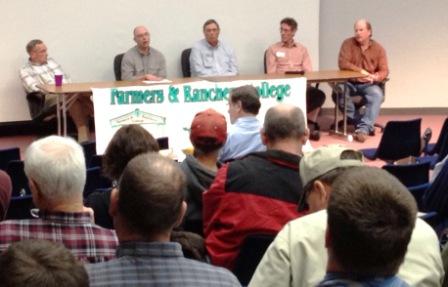
The second program for the Farmers & Ranchers College program is rapidly approaching. My colleague Dewey Lienemann has an excellent Cow/Calf College lined up for cattle producers, which I’ve decided to discuss this week. The annual Cow/Calf College “Partners in Progress – Beef Seminar” will be held at the U.S. Meat Animal Research Center and Great Plains Veterinary Education Center near Clay Center on January 27, 2015 with registration, coffee and donuts starting at 9:00 a.m. and going till 9:30 a.m.  The program will run from 9:35 a.m. until approximately 4:00 p.m. This program is sponsored by Nebraska Extension’s Farmers and Ranchers College and will feature several outstanding speakers discussing issues and management strategies that can affect the profitability of all beef producers. There is no cost for the event and the public is invited. It does include a noon meal that means early registration is necessary to reserve a meal.

The Cow/Calf College usually draws in over 100 people, so sign up to reserve your spot!

The “Cow/Calf College” will begin at 9:35 a.m. with a welcome by Dr. John Pollak, Director of USMARC and Dr. Dale Grotelueschen, Director of the Great Plains Veterinary Education Center. They will introduce former long-time GPVEC Director, Dr. Gary Rupp, who will give a short overview of “Twenty Five Years of Service – GPVEC”. He will be followed by the conference kick-off speaker, Dr. Ronnie Green, NU Vice President and IANR Harlan Vice Chancellor, who will present “Moving the Beef Industry to the Next Level”. Dr. Richard Randle, UNL Extension Beef Cattle Veterinarian, will then explain “Animal Health Issues & Considerations When Re-building the Herd”.

Lunch will be provided and will be handled with a rotation system during two noon sessions featuring South Central Nebraska Cattlemen member and Nebraska Beef Council Board – District 8 Director, Dawn Caldwell, who will provide split sessions on: “Issues, Questions and Answers – Nebraska Beef Council”. You will be able to learn about the check-off proposals as well as other issues that our Beef Council are addressing and have a chance to network and interact with fellow cattlemen from all across Nebraska and other states.

The afternoon session will start with a very timely presentation by Dr. Mary Drewnoski, Beef Systems Specialist at UNL Dept. of Animal Science who will give us an “Utilizing “Cover Crops” as Secondary Forage Crops for Cattle” that is a frequent topic with cattlemen all across the region as we face short acres of pasture and pursue a repopulation of our cattle herds. It may of interest that MARC and UNL Extension are collaborating on a research project on the effect on crop yields and soil by grazing stalks, and cover crops as supplemental feeds with grazing stalks. MARC will allow producers to go out to the field after the meeting and observe the fields and cattle as the study is under progress. It is not often we have an opportunity like this, so take advantage of this tour.

One of the most requested presenters, Dr. Rick Funston, UNL Beef Reproductive Physiology Specialist at West Central Research & Extension Center, who will present “Importance of Early Conception and Factors Influencing It”. This and other research he has done lends heavily towards management practices as we build our herds. Continuing on with the breeding side of the management equation: Dr. Matt Spangler, Beef Genetics Specialist with UNL Dept. of Animal Science will present the capstone presentation on: “Rebuilding Your Herd -Terminal and Maternal Breeding Programs”. As we look to recovering from the lowest numbers of cows since 1949 we must look at our breeding program and the direction we want to take our herd, and this is paramount to our decisions.

All presenters will then join on stage to pull everything together, give their final thoughts and considerations and then avail themselves for a coffee-shop style panel discussion during which cattlemen can ask questions and get answers on topic questions that came to them during the day’s sessions. A chance for door prizes will be awarded to those that stay for the entire event.  Please pre-register by Thursday, January 22th, 2015, by either calling Webster Co. Extension (402) 746-3417 or Fillmore Co. Extension at (402) 759-3712 to insure a seat and lunch. Walk-ins are accepted, but may not get a lunch. Further information may be found on the following website.

Livestock

Black Nightshade & Grazing

Recently I received a question from a producer wanting to graze cattle in stalks but was concerned because of black nightshade in the field. I sought advice from UNL Extension forage specialist, Bruce Anderson and recently he wrote the following article.

Black nightshade is common in corn and soybean fields this fall, especially those with hail damage.  It usually isn’t a problem, but if the population gets high it can poison livestock grazing many of the plants.  Almost all livestock, including cattle, sheep, swine, horses, and poultry are susceptible.  All plant parts contain some of the toxin and the concentration increases as plants mature, except in the berries.  Drying as hay or after a freeze will not reduce the toxicity.photo 3

It is very difficult to determine how much black nightshade is risky.  Guidelines say that a 1000-pound animal that eats one to three pounds per day of fresh black nightshade is at risk of being poisoned.  These guidelines, though, are considered conservative since there is little data on the actual toxicity of nightshade plants.  Also encouraging is that reports of nightshade poisoning have been very scarce in the past.

How will you know how much nightshade your animals will eat?  In a corn stalk or bean stubble field, cattle usually don’t appear to seek out nightshade plants to graze.  However, green plants of nightshade might become tempting to a grazing animal, especially if there is little grain, husks, or leaves to select.

So common sense and good observation must be your guide.  If you see animals selectively graze green plants in stalk or stubble fields, pull them out and wait for a hard freeze before trying again.  Check again every couple days since diet selection may change as more desired residue parts are removed. If still unsure, expose only a few animals at a time to risky feed.

Bruce reminds us, that, “Just remember, an ounce of prevention is worth a pound of cure.”

Livestock, Uncategorized

Thanksgiving Turkey Trivia

As we celebrate everything we are thankful for, remember to thank the farmers and ranchers for providing a safe and healthy food source for all of us to enjoy. Test your knowledge with this trivia about turkeys.

T or F?  A turkey hen lays an egg and 28 days later a baby turkey is born. TRUE

T or F?  The turkey female is known as a hen and male is known as a tom. TRUE thanksgiving-turkey-clipart-1

T or F?  Turkeys are raised for 8-20 weeks depending on desired weights by consumers. TRUE

T or F?  There are several major meat animals native to North America, including the turkey. FALSE. The turkey is the only major meat animal native to North America.

T or F?  Thanksgiving is the holiday most turkey are eaten, followed by Easter. FALSE .  The National Turkey Federation (NTF) estimates that approximately 45 million turkeys are eaten at Thanksgiving, 22 million at Christmas, and 19 million at Easter.

T or F?  Nebraska Turkey Growers Cooperative in Gibbon, Nebraska, the state’s only turkey processing plant, produces more than 55 million pounds of turkey a year. TRUE

Wishing you and yours a happy Thanksgiving!!!

Source: Nebraska Department of Agriculture

Crops, Livestock

Grazing Corn Stalks

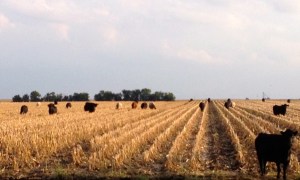
As I drive to work every morning, I go past a field or two being grazed by cattle. Bruce Anderson, UNL Extension Forage Specialist recently wrote an article on grazing corn stalks, which I’ve included in this week’s column.  Grazing corn stalks during winter has many benefits.  It can save over a dollar a day per cow compared to feeding expensive hay.

photo 3

But, the way you manage grazing of stalks by your cattle can have a big effect on its success.  For instance, maybe you have a goal of feeding as little protein supplement as possible while winter grazing.  Then you must make sure you have enough acres of corn stalks so your cattle only need to select just the higher quality plant parts to eat.  And whenever the grain and husks are gone, move to a fresh field.  Or, maybe you use stalks just as a filler to keep cows from bellowing while you limit feed corn, distiller’s grains, or other more nutrient dense feeds.  Then high stocking levels and unrestricted access might be best.

Another strategy might be to stretch winter stalks as far as possible.  In that case, restricting animal access to small areas at a time by strip grazing until nearly all the grazable stalks are gone might be best.  Be careful, though, about forcing cows to eat the lower stalks.  They won’t get much protein or energy from lower stalks but the nitrate levels might be dangerously high.

Whatever your strategy, consider carefully what kind of nutrition animals are getting from the stalk pasture so you neither underfeed nor overfeed expensive supplements.

Also be sure to provide salt, calcium, phosphorus, and vitamin A free choice at all times.  And once all the grain is gone, cows need about half a pound per day of an all-natural protein to meet nutrient needs. Stalk season is here.  Make wise decisions to use them best.

Livestock, Youth

Sportsmanship starts with Adults!

Webster’s Third International Dictionary defines sportsmanship as “conduct becoming to an individual involving fair and honest competition, courteous relations and graceful acceptance of results”.  Sportsmanship starts with parents teaching their youth how to accept a win or a loss, although in the 4-H youth development program, even if the youth receives a red ribbon, nothing is lost as long as some basic knowledge and skills were gained. Too often in our society we focus on the tangible results of a ribbon or trophy and don’t think about the process that youth went through to achieve the end results and what was learned from that process.

I often use the example that as a youth, I’ll never forget receiving a red ribbon for a market heifer; I was frustrated, but will never forget my dad asking me, what the judge said in the comments.  After we talked it over, I realized his reasoning and was able to understand the type of animal I should select for the following year. That was a lesson I’ll never forget.  My dad and mom also told my sister and me that if we wanted a trophy that badly, instead of spending a large amount of money on an animal just to win or using unethical practices, they’d go out and buy us our own trophy.  For these reasons, it is really rewarding to work with youth who are happy with any ribbon placing.

Three reasons adults and teen leaders should be concerned with developing sportsmanship are:

1. Youth programs are easier to conduct and are more positive experiences for everyone involved if good sportsmanship is demonstrated.

2. The development of sportsmanship is an important part of youth development. Youth and adults who develop and show good sportsmanship get along better, and are much more successful on a long-term basis in becoming self-directing, productive, contributing, competent, caring, capable adults, than are those whose behavior is un-sportsmanship-like.

3. Sportsmanship is one of the key elements of civilized society. Those who think of the “big picture” know the reasons for developing sportsmanship extend beyond an individual, a community, or a program. When societies allow sportsmanship to decline, their civilizations also decline.

As we get ready for another Fillmore County Fair, let’s be reminded that the end result is not the ribbon placing, but the skills that each youth learned!

Source: Kathryn J. Cox, Ohio Extension 4-H Specialist, Youth Development, Developing Sportsmanship- A Resource For Preparing Youth And Their Families For Participation in Competitive Programs and Events, 2006

Livestock

Drought Preparation Tips for Livestock Producers

After attending the Farmers & Ranchers College Cow/Calf College, there was lots of discussion on preparing and managing the current drought. First of all, Al Dutcher, our state climatologist drove home the fact that most likely the drought will continue in 2013 based on models and other predictions. That being said, what does this mean for agricultural producers?  Bruce Anderson, UNL Extension Forage Specialist spoke on forage planning for the anticipated drought. Current pastures have weak pasture plants, therefore it will be important to delay the start of spring grazing by 10-14 days, use long recovery periods, resist temptation to restock (too soon) and consider annual crops/pastures to reduce pressure and stress on current pastures. Bruce reminded cattle producers to consider planting small grains in the spring, summer forages such as sorghums, sudans and millets and in the fall consider oats and brassicas such as turnips. He reminded producers to adjust the animal demand, pointing out that 75% of the normal stocking rate could even be an aggressive rate in some situations. With the potential for weeds to come up after a spring rain, proper weed management should be considered as well.WebPicpanel13.2

One grazing source that should be utilized right now is cornstalks. Aaron Stalker, UNL Specialist reminded participants that Nebraska corn residue is in abundance; in fact beef animals graze only 25% of corn! Aaron stressed that the stocking rate is very important in allowing the cattle to effectively graze the stalks. Cows are selective grazers on stalk fields. They will select the corn first, followed by the husks which are the highest in quality of diet. Then they will select leaves which are medium quality and finally the cob and stem last which is lowest in quality. In all the years UNL has conducted research on the agronomic yields associated with cattle grazing, it has shown no decrease in yields, so utilizing these stalks, especially in times when forage is short is very important.

Another important discussion for drought preparation is pasture rental rates which was presented by Allan Vyhnalek, Extension Educator in Platte County. As with anything communication is critical to success for both the tenant and the landlord! While pasture rental rates might be set already between both parties, it is important to consider adjustments based on the 2012 drought and the expected 2013 drought BEFORE the cattle are out on the pasture. Adjustments should consider if there will be a shortened grazing season – how will that change the lease payment? In case of a weed flush, who will pay for the weed control?  If a pond or creek usually used for water is dry, how will the water bill be split? During the growing season, both parties should communicate and provide each other updates.

In conclusion, there are many important considerations when caring for livestock during drought conditions. Taking appropriate planning and management steps now can reduce problems and your risk later.

Crops, Livestock

Grazing Corn Stalks in No-till Fields

The drought this year has left many cattle producers in a bind. Hay prices are high and pastures are burnt up which leaves corn stalks as an excellent grazing option. While many producers annually graze cornstalks, this year it will be of even more importance. Cattle are already in stalks and there are lots of corn fields being baled for forage.

A recent UNL CropWatch article by Charles Wortmann, Terry Klopfenstein, and Aaron Stalker showed that in a corn-soybean rotation study conducted from 1996 to 2011, the effects on yields of the following crop were determined for fall-winter grazing (November to February) and spring grazing (February to mid-April, the time of greatest concern of compaction by animal traffic on thawed and wet soil). The field was irrigated and had three treatments (fall/winter grazed, spring grazed, and ungrazed) which have been maintained in the same area since 1996. The stocking rate was with yearlings at 2.5 times the normal level since 2000. On average, yield of the following soybean crop was increased by about 2 bu/ac with fall-winter grazing, and 1.3 bu/ac with spring grazing, compared with no grazing of corn stalks. Yield of corn as the second crop after grazing was not significantly affected. There is ongoing research which will be reported in the 2013 Nebraska Beef Cattle Report which include a dryland trial.

The article concluded that grazing corn stalks is compatible with no-till management in eastern Nebraska and probably is for irrigated fields throughout the state with no loss in average grain yield expected. With wet soil conditions in the spring, consider removing cattle from the field or taking other steps management steps to minimize the effect of compaction.